博客

  • Caledonia Considers Police Help as Roadside Dumping Persists

    Caledonia Considers Police Help as Roadside Dumping Persists

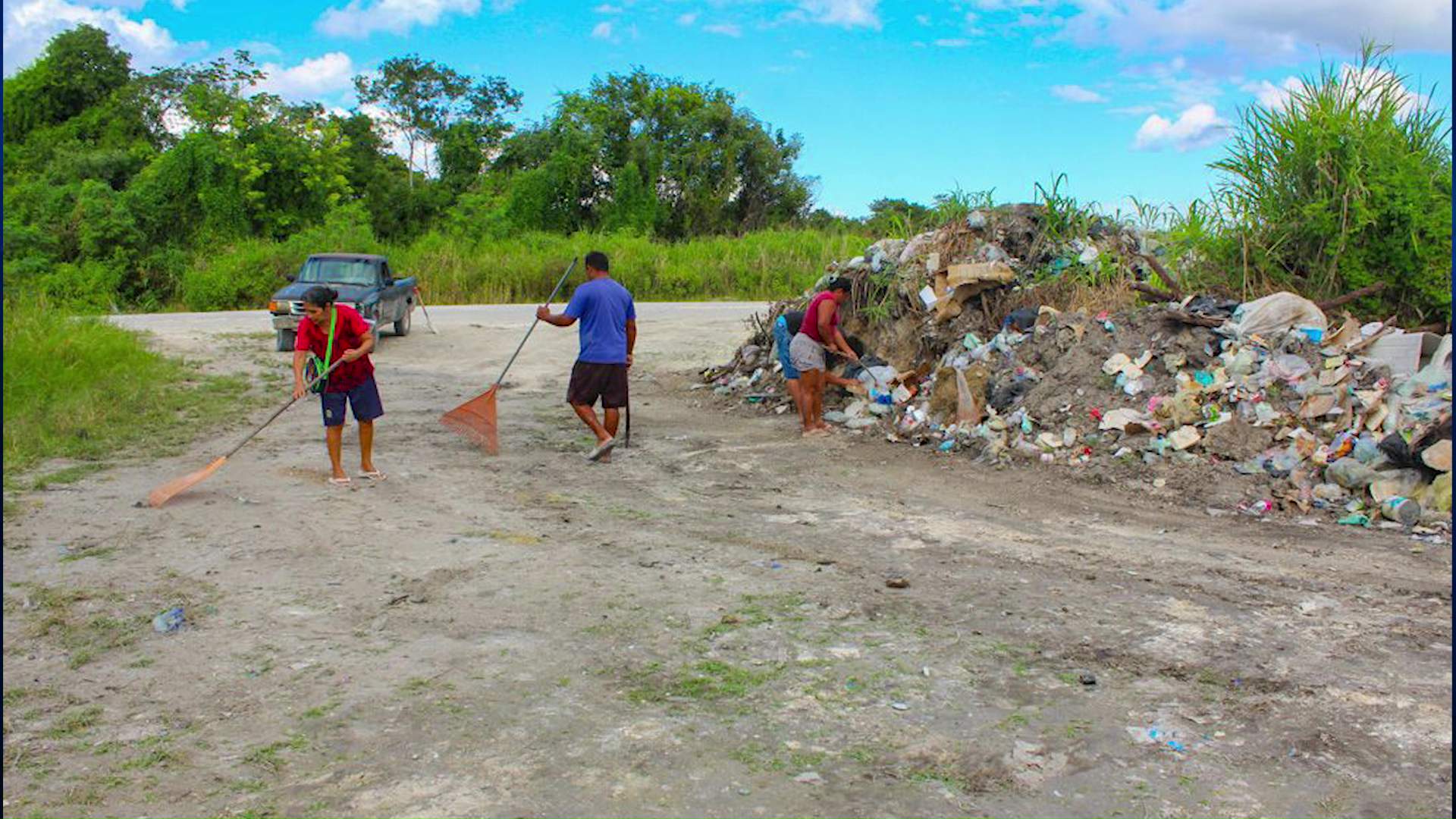
    The village of Caledonia is confronting a persistent environmental challenge as illegal roadside dumping continues to plague the community’s main entrance despite concerted cleanup initiatives. Local residents have expressed mounting frustration over what they describe as more than a mere aesthetic issue, warning that the accumulating refuse now presents genuine safety hazards for both motorists and pedestrians while creating a negative first impression of the village.

    Docia Chan, Vice Chairperson of the Caledonia Village Council, provided insight into the ongoing struggle. “We inherited what was essentially a dump site in complete disarray,” Chan stated. “Since our election, we’ve prioritized transforming this area, recognizing that the garbage accumulation occurs at the very gateway to our community.”

    The council recently conducted a comprehensive cleaning operation last Sunday, leaving the area spotless. However, by Monday, numerous garbage bags had already reappeared along the roadside. This pattern of immediate re-pollution has raised questions about potential intentional disregard for community standards.

    Despite installing warning signs and repeated public appeals, the dumping persists. Chan has issued a renewed call for civic responsibility, urging villagers to dispose of waste properly. The Vice Chairperson indicated that if voluntary compliance fails, the council may escalate enforcement measures through consultation with police officials to identify and penalize offenders, potentially involving formal investigations and legal consequences for those responsible for the environmental violations.


  • Educators, church leaders warn of moral crisis amid youth violence

    Educators, church leaders warn of moral crisis amid youth violence

    Barbados faces a critical juncture as educational and religious leaders sound the alarm on deteriorating moral foundations among youth, following a series of violent crimes involving teenagers. The Caribbean nation is grappling with a pattern of juvenile delinquency that has culminated in two separate murder charges against adolescents aged 16 and 17 within days of each other in December.

    The educational community has responded with urgent calls for systemic change. Greig Walters, Principal of Wesley Hall Juniors, emphasizes that schools must transcend academic instruction to embrace character development. “We have a duty to take care of our students spiritually and morally,” Walters asserts, framing education as holistic development that integrates community engagement and faith-based guidance.

    Statistical evidence underscores the crisis: Recent data from the Criminal Justice Research and Planning Unit reveals 47 young men under 25 currently on remand, highlighting the scale of youth involvement in serious crimes.

    Three prominent church leaders have unanimously endorsed early moral intervention as the cornerstone of reform. Pastor Balsam Gambo of James Street Methodist Church warns that “education without moral grounding creates dangerously intelligent but compass-less adults,” while Reverend Jefferson Alleyne of Chapman Street Church of God advocates for value instillation from foundational levels, comparing it to building construction principles.

    The consensus identifies diminished religious participation as a critical factor. Walters nostalgically recalls when church attendance was non-negotiable and communities collectively oversaw youth development, particularly during holidays. This erosion of traditional structures has created voids in moral supervision that leaders believe must be addressed through collaborative efforts.

    Proposed solutions center on reintegrating spiritual compasses into education, reactivating community-based monitoring systems, and implementing early intervention programs even at primary school levels. Leaders conceptualize this as creating an internalized moral navigation system that activates during ethical dilemmas—what Walters describes as “that voice in your head that guides right from wrong.”

    The religious community positions itself as an essential partner in this moral renaissance, offering faith as the foundational compass for national improvement. As Alleyne concludes, “Collectively, with divine assistance, we can achieve the necessary turnaround in youth development.”

  • Uncle confesses to murder of three-year-old Brianna Genao in Puerto Plata

    Uncle confesses to murder of three-year-old Brianna Genao in Puerto Plata

    Authorities in Puerto Plata have confirmed the tragic death of three-year-old Brianna Genao González following a week-long disappearance case that has shocked the northern Dominican community. The investigation took a devastating turn when Rafael Reyes Núñez Rosario, the maternal uncle of the victim, confessed to both the murder and sexual assault of the minor.

    The case unfolded in the Barrero community of Imbert municipality, where the child was reported missing from her home on December 31st. After days of intensive search operations and rigorous interrogation by the National Police, the breakthrough came when Núñez Rosario, brother of the child’s mother Yesica María González, admitted responsibility for the horrific crime.

    General Jorge Luis Galán Guerrero, regional police director for the North, confirmed that the suspect disclosed burying his niece but claimed inability to recall the exact location of the remains. Recovery teams continue their grim search for the body as judicial proceedings advance. Official details regarding legal actions and charges are expected to be announced imminently as the case transitions from search operation to criminal prosecution.

    The community of Imbert remains in mourning as this family tragedy exposes the devastating consequences of violence against children, with local authorities emphasizing their commitment to pursuing full justice for Brianna.

  • ANU Medical School Closes After Charter Not Renewed, Ministry Confirms

    ANU Medical School Closes After Charter Not Renewed, Ministry Confirms

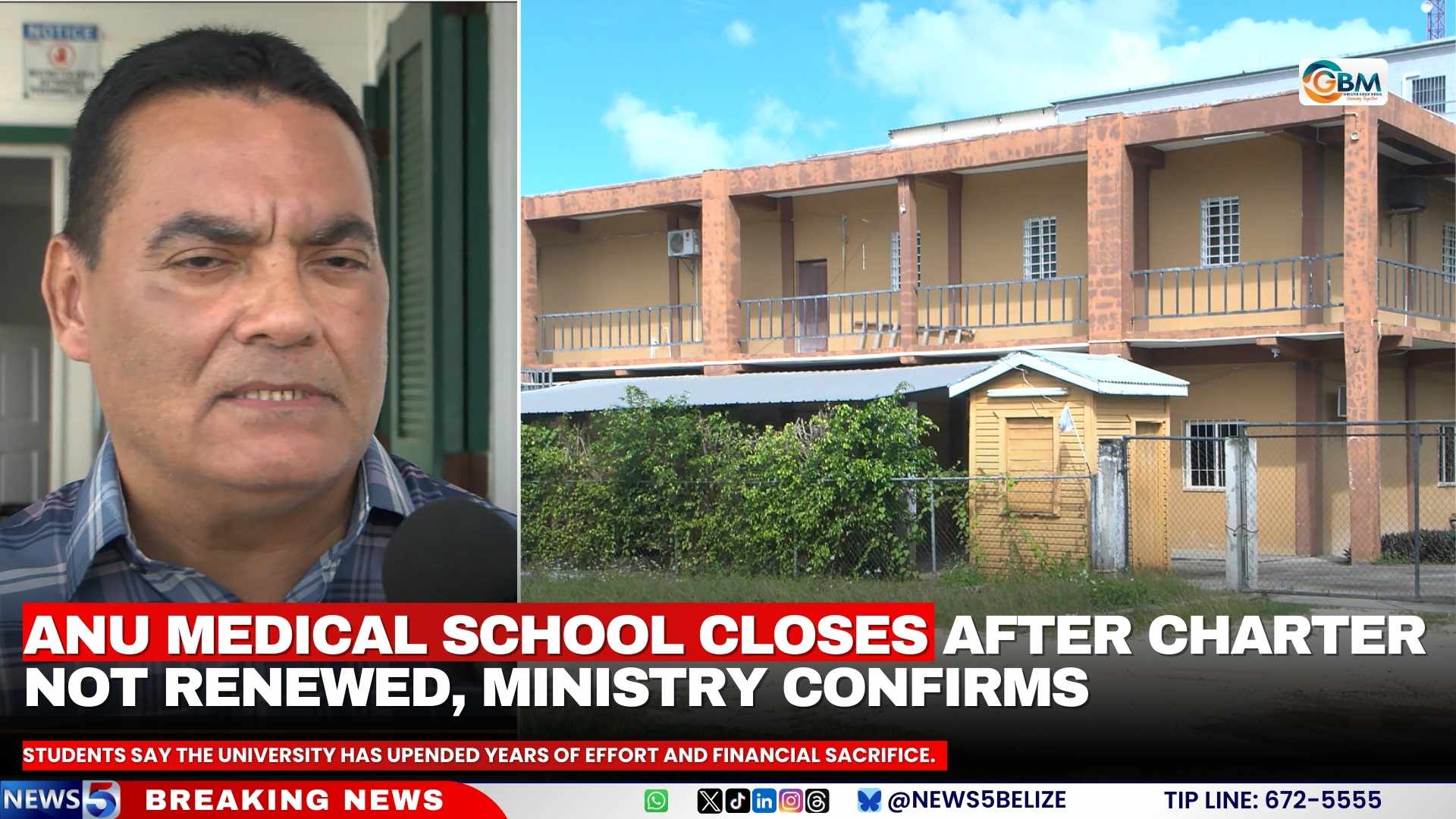
    The Ministry of Education, Culture, Science and Technology (MoECST) has officially confirmed the termination of American Northwest University School of Medicine’s operational charter, which expired in June 2024 without renewal. This administrative decision effectively forces the closure of the institution, leaving approximately 25 Belizean students in academic limbo after years of financial investment and dedicated study.

    Affected students express profound frustration over the abrupt disruption to their medical education, with many describing complete financial backing from families covering both tuition and living expenses throughout their enrollment. The lack of transparent communication regarding the institution’s status and accountability mechanisms has compounded their distress, with one student noting: ‘I’m being instructed to completely restart my education without a coherent explanation of what transpired or who bears responsibility.’

    Education Minister Francis Fonseca clarified that the charter non-renewal followed extended consultations with the university administration, stating: ‘The institution’s charter lapsed in June 2024 and has remained unrenewed since that time.’ The Ministry is currently facilitating transition discussions with the recently established University of Belize medical school to potentially absorb displaced students.

    In contrast, ANU leadership has vigorously defended its operational legitimacy through group communications, asserting possession of documentation demonstrating legal compliance and ongoing dialogue with educational authorities. The institution has cautioned against allegations of unlawful operation, emphasizing that unsubstantiated claims could constitute defamation under applicable laws.

  • SEA launched: Islandwide overhaul of social services begins

    SEA launched: Islandwide overhaul of social services begins

    In a landmark move to overhaul its social welfare system, the Barbadian government officially inaugurated the Social Empowerment Agency (SEA) on Wednesday. This consolidated entity merges the island’s disparate social services into a unified framework designed to fundamentally reshape assistance delivery to citizens. The inaugural SEA client center commenced operations at Six Roads, St Philip, marking the first phase of a nationwide rollout intended to supersede a previously fragmented and widely criticized model with an integrated, dignified approach to care.

    Government officials, social workers, and disability advocates gathered for the launch ceremony, which was characterized as a philosophical shift in the state’s relationship with vulnerable citizens. Minister of People Empowerment and Elder Affairs, Kirk Humphrey, articulated the transformation’s core principle: moving from a disjointed multi-agency structure to a singular, holistic service provider. “Social problems are complex,” Humphrey stated, “and the previous system offered a fragmented approach where one individual with complex needs might have to navigate four different agencies. We have reversed that.”

    The strategic rebranding to ‘Social Empowerment Agency’ reflects a deeper ideological commitment to dignity and humanized care. Minister Humphrey emphasized that the restructuring aims to ensure citizens “feel dignified and to feel as if they’re human and to be treated in that way. People are not cases.” The transition also prioritized workforce stability, with approximately 99.5% of eligible staff transferring voluntarily following extensive consultations with unions. No employees were disadvantaged in the process, and working conditions were improved for those joining the new agency.

    Complementing the St Philip facility, additional centers are planned for Bentham (St Lucy), Sunset Crest (St James), and Southern Plaza, ensuring comprehensive islandwide coverage. Member of Parliament Kay McConney welcomed the Six Roads reopening as addressing a critical gap that had imposed undue strain on vulnerable residents. While applauding the one-stop-shop model and improved accessibility features, McConney cautioned that the ultimate measure of success would be the quality of service delivered within the new framework.

    Prime Minister Mia Mottley hailed the SEA’s establishment as one of the proudest achievements of her administration, framing it not merely as infrastructural development but as a profound evolution in societal values and support mechanisms for those in need.

  • Cattle Industry Could Overtake Sugar as Belize’s Top Export Earner

    Cattle Industry Could Overtake Sugar as Belize’s Top Export Earner

    Belize’s agricultural landscape is undergoing a significant transformation as its cattle industry demonstrates remarkable growth potential to overtake sugar as the nation’s primary export revenue source. According to Belarmino Esquivel, Principal Agriculture Officer and head of the livestock program at the Ministry of Agriculture, this shift reflects both the vulnerabilities of traditional crops and the emerging strength of livestock farming.

    Esquivel emphasized that Belize can no longer depend exclusively on its three traditional foreign exchange earners—citrus, bananas, and sugar—which face persistent threats from climate change, disease outbreaks, and declining productivity. The cattle sector has emerged as a resilient alternative, with Esquivel projecting it could surpass sugar in foreign exchange earnings as early as 2026.

    Statistical evidence reveals extraordinary expansion in Belize’s national cattle herd over the past decade. From approximately 77,000 head in 2014, the inventory has surged to 215,000 animals by 2015, maintaining a consistent upward trajectory. This growth is primarily fueled by robust demand from neighboring markets, particularly Guatemala and Mexico.

    In 2024 alone, Belize exported over 35,000 cattle to Guatemala, generating between BZ$50-60 million, with an additional 6,000 heads shipped to Mexican markets. Unlike other export commodities dominated by large agricultural estates, the cattle industry remains predominantly operated by small-scale farmers, with 70% maintaining herds between one and fifty animals.

    Esquivel highlighted improved access to affordable financing through programs such as CRESAP, Sembrando Vida, and SAIB, which offer favorable loan terms and matching grants. The 60/40 matching grant system specifically enables farmers to pursue climate-smart investments with reduced initial capital requirements. With domestic consumption steady at approximately 10,000 cattle annually and exports continuing their upward trend, livestock farming appears positioned to become Belize’s foremost agricultural income generator.

  • COMMENTARY: CBI is Dead. Long Live CBI – Premier Mark Brantley of Nevis

    COMMENTARY: CBI is Dead. Long Live CBI – Premier Mark Brantley of Nevis

    In a comprehensive policy statement, Premier Mark Brantley of Nevis has declared the Citizenship by Investment Program (CBI) effectively defunct while outlining an ambitious eleven-point strategy to fundamentally reshape the economy of St. Kitts and Nevis. The Premier’s vision calls for urgent economic diversification to reduce dependency on volatile sectors and build resilience against external economic shocks.

    The cornerstone of Brantley’s proposal involves accelerating renewable energy development, particularly geothermal resources, positioning the federation to become “the Norway of the Caribbean.” This energy transformation would support new industries requiring substantial cheap power, including artificial intelligence centers, while generating employment and reducing energy costs for residents and businesses.

    Agricultural security features prominently in the plan, with initiatives to establish a broiler industry and achieve self-sufficiency in eggs, poultry, and specific crops. The Premier emphasized that “food security is national security,” highlighting how domestic production would buffer against international market fluctuations.

    The proposal further advocates for full cannabis legalization across research, medicinal, and recreational applications, coupled with comprehensive public education programs. Additionally, Brantley calls for maximizing returns from the cruise industry by harmonizing head taxes across the Organization of Eastern Caribbean States to match higher regional standards.

    Creative economy investments would expand through established events like MusicFest and SugarMas, while special economic zones would target technology, AI, hospitality, education, and healthcare sectors. The plan also includes incentives for diaspora investment, small business development, comprehensive tax reform to stimulate local consumption, and growth of offshore education programs to attract international students.

    A particularly critical component addresses demographic challenges, with strategies to increase the national population through targeted migration and diaspora repatriation programs. Brantley noted the impossibility of serious national development with a working population below 30,000 people.

    The Premier concluded that with CBI programs declining and tourism remaining unpredictable, the federation stands at a crossroads requiring collective effort to establish a new sustainable economic paradigm.

  • PM Briceño Agrees to Drop 13th Amendment After Union Talks

    PM Briceño Agrees to Drop 13th Amendment After Union Talks

    In a significant policy reversal, the Belizean government under Prime Minister John Briceño has formally agreed to withdraw the proposed 13th Constitutional Amendment following intensive negotiations with the National Trade Union Congress of Belize (NTUCB). The breakthrough commitment was secured during a high-level meeting convened on December 15, 2025, marking a victory for organized labor and legal professionals who had vigorously opposed the constitutional changes when they were initially proposed for public consultation last year.

    NTUCB President Ella Waight confirmed the government’s commitment to pursue alternative legislative pathways rather than constitutional modification. “The proposed measures will now be implemented through revisions to the criminal code,” Waight stated, emphasizing that this approach “will require states of emergency to receive approval through the National Security Council—a more progressive and inclusive mechanism that properly addresses the matter.”

    The dialogue between government and union representatives extended beyond constitutional matters to address comprehensive campaign finance reform. Waight articulated concerns that unregulated political funding mechanisms perpetuate systemic corruption and undermine the state’s capacity to address workers’ legitimate demands. “The current system allows businesses and wealthy entities to sponsor political parties during elections, creating obligations that must later be repaid through preferential treatment—directly diverting resources that should fund essential worker benefits, including fair salary adjustments,” she explained.

    Additional critical agenda items included electoral redistricting procedures, occupational safety legislation, public sector modernization, and resolving pension payment delays. According to Waight, Prime Minister Briceño committed to completing the redistricting process by December 2026 and established a framework for quarterly meetings with labor representatives to ensure ongoing collaboration.

    The NTUCB characterized this sustained engagement as fundamental to safeguarding worker rights and enhancing accountable governance structures throughout Belize, signaling a new chapter in government-union relations aimed at transparent and equitable policymaking.

  • FLASH : End of TPS, Judge Reyes skeptical and unconvinced…

    FLASH : End of TPS, Judge Reyes skeptical and unconvinced…

    In a significant legal development, Federal Judge Ana C. Reyes has expressed substantial skepticism toward the Trump Administration’s decision to terminate Temporary Protected Status (TPS) for Haitian nationals. During the second day of hearings on January 7, 2026, Judge Reyes ordered the government to produce additional documentation to determine whether the administration’s controversial move was “predetermined” rather than based on thorough policy analysis.

    The court proceedings revealed sharp judicial criticism of the administration’s selective use of a United Nations report to justify ending protections while simultaneously ignoring the same document’s detailed security concerns regarding Haiti’s stability. “You can’t rely on one article for one thing and not for another,” Judge Reyes emphatically stated during the hearing.

    Judge Reyes directly questioned whether Homeland Security Secretary Kristi Noem had conducted a comprehensive analysis of conditions in Haiti and fulfilled her statutory obligation to assess whether circumstances had sufficiently improved to warrant termination of protected status. The administration’s argument rested heavily on a brief email from a State Department official claiming “no foreign policy concerns” about ending TPS—a response sent merely 53 minutes after the initial request on a Friday afternoon.

    The judge noted this unusually rapid response indicated insufficient consultation with subject matter experts or proper review procedures. During an extensive 30-minute exchange, government attorney Dhruman Sampat contended that the term “foreign policy” could reasonably encompass ground conditions in Haiti, but Judge Reyes remained unconvinced, stating the response failed to demonstrate whether Haitian TPS holders could safely return to their home country.

    While no final ruling has been issued, Judge Reyes indicated she would deliver her decision on suspending the TPS termination by February 2, 2026—just one day before protections for Haitian nationals are scheduled to expire. Legal observers suggest that if Judge Reyes suspends the revocation, the government will likely appeal, potentially setting the stage for Supreme Court consideration of this immigration policy matter.

    Background: Judge Ana C. Reyes, nominated by President Biden and confirmed by the Senate in February 2023, made history as the first Latin American woman and first openly LGBTQ+ person to serve as a district judge in Washington, D.C. She brought over two decades of experience from Williams & Connolly LLP, with extensive expertise in international law and representation of asylum seekers.

  • Hanisha Jairam nieuwe Surinaamse ambassadeur in New Delhi

    Hanisha Jairam nieuwe Surinaamse ambassadeur in New Delhi

    The Republic of Suriname has designated Hanisha Jairam as its next extraordinary and plenipotentiary ambassador to New Delhi, India. The Ministry of Foreign Affairs, International Business, and International Cooperation has formally submitted the necessary documentation to Indian authorities to initiate the agrément process—a mandatory diplomatic procedure required before the appointment can be finalized.

    Jairam, a member of the National Democratic Party (NDP), will succeed current ambassador Arun Hardien in representing Surinamese interests in India. She brings substantial administrative and policy expertise from her extensive career in government and educational sectors. Currently serving as district administrator at the Ministry of Regional Development, Jairam has previously held roles as an educator and board member within various organizations.

    Her academic qualifications include a Master’s degree in Business Administration with a finance specialization, complemented by additional training in policy development, leadership, and governance. Jairam also previously served as president-commissioner at Canawaima, further demonstrating her executive capabilities.

    Upon successful completion of the agrément process with Indian authorities, Jairam will be officially sworn in and commence her diplomatic duties as Suriname’s chief representative in India, strengthening bilateral relations between the two nations.