博客

  • Abinader leads second diversion of Guayubín River at Boca de los Ríos Dam

    Abinader leads second diversion of Guayubín River at Boca de los Ríos Dam

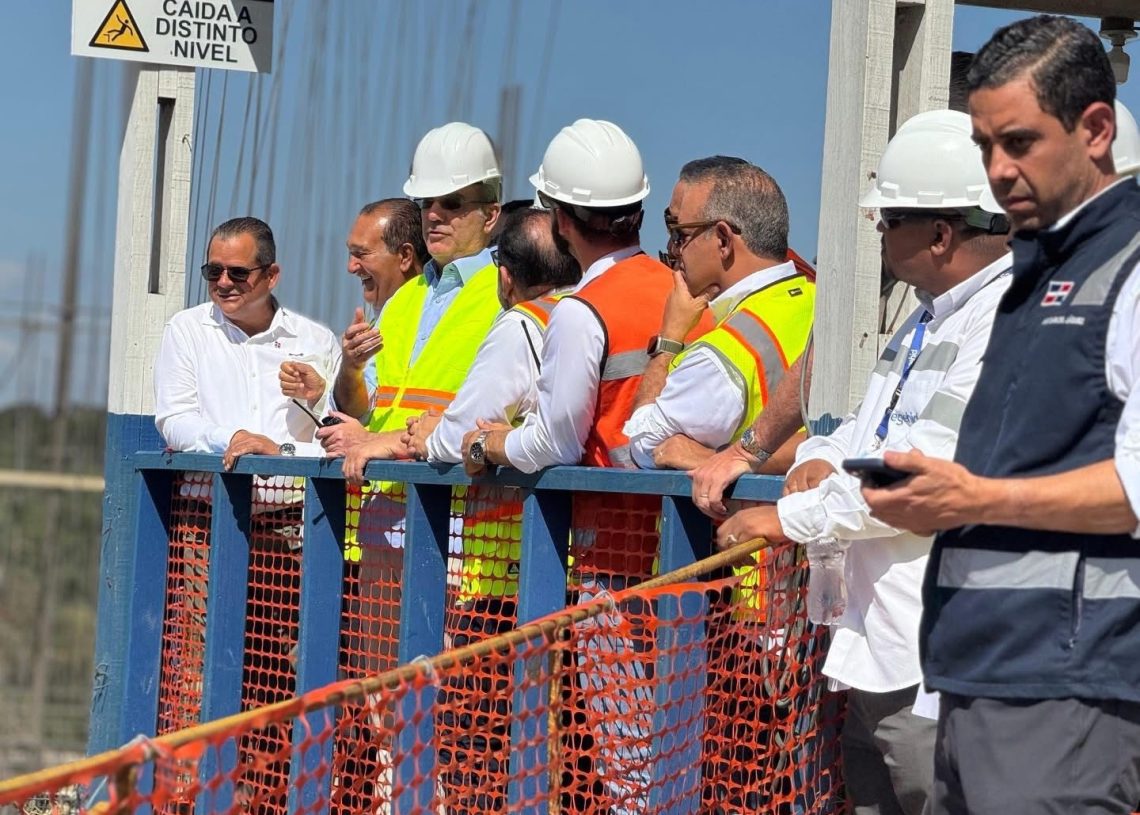
    SANTIAGO RODRÍGUEZ – In a significant development for national infrastructure, Dominican President Luis Abinader presided over a pivotal ceremony for the Boca de los Ríos Dam project. The event centered on the second strategic diversion of the Guayubín River, signaling the final construction phase of this major hydroelectric initiative managed by the Dominican Hydroelectric Generation Company (Egehid).

    At the project site, President Abinader initiated the removal of a temporary cofferdam. This action authorized heavy machinery to carve a new channel, redirecting the river’s flow into specially constructed diversion galleries. This engineered pathway will guide water toward the emerging dam structure for the remainder of the construction period.

    José Augusto Caputo, the Project Director, emphasized the operation’s critical nature, stating, ‘This second river diversion represents a fundamental milestone for the project’s advancement and denotes a crucial transition within the construction sequence.’

    Egehid’s General Manager, Rafael Salazar, provided technical context, noting that an initial diversion in March 2023 enabled construction crews to build the dam’s primary structure on dry land. He clarified that this latest maneuver will temporarily restore the river to its natural course, channeled through the concrete diversion galleries. Upon project completion, these galleries will be permanently sealed, initiating the reservoir filling process.

    Concurrently, this phase enables construction to commence on a lower segment of the closure dam adjoining the main wall. The project also progresses with the arrival of the first three massive radial spillway gates. Each gate, an engineering feat in itself, measures 12 meters in width, 14 meters in height, and weighs roughly 110 tons, with installation preparations now underway.
  • A date that marked the maturity and crystallization point of the project conceived by Martí

    A date that marked the maturity and crystallization point of the project conceived by Martí

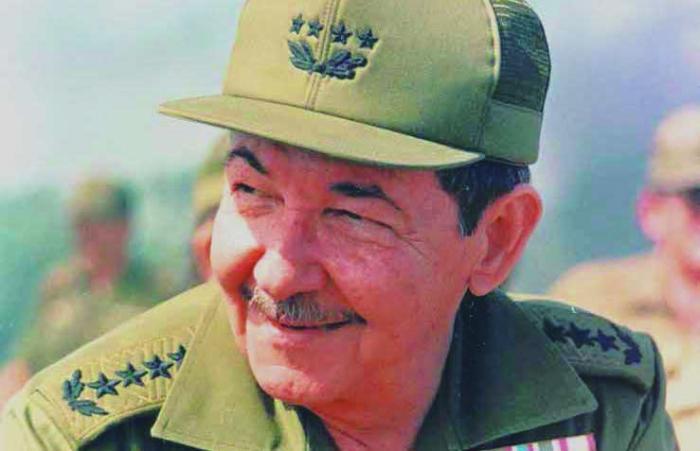
    Granma, Cuba’s official newspaper, has republished significant excerpts from Army General Raúl Castro Ruz’s historic addresses delivered on February 24th across pivotal moments in the nation’s development. These speeches reveal the ideological continuity and constitutional evolution of the Cuban Revolution.

    The compilation begins with Castro’s 1976 address at Havana’s Karl Marx Theater, marking the proclamation of Cuba’s first socialist Constitution—the first in the Americas. He recalled Fidel Castro’s description of the document as embodying José Martí’s aspiration for “the full dignity of humankind,” approved by 95.7% of eligible voters aged sixteen and over.

    In his 2008 parliamentary address, Castro assumed leadership responsibilities while emphasizing Fidel’s irreplaceable role as Commander-in-Chief. He affirmed the Communist Party as “the sure guarantee of the unity of the Cuban nation” and heir to the people’s trust, referencing Article 5 of the Constitution approved by 97.7% of voters. He connected historical struggles against U.S. intervention to contemporary challenges, invoking Martí’s principle of choosing “the hard path of duty.

    The 2013 speech featured Castro’s unequivocal declaration: “I was not elected president to restore capitalism in Cuba, nor to surrender the Revolution. I was elected to defend, maintain, and continue perfecting socialism.” He reiterated Fidel’s standard for revolutionary cadres: never coveting positions but earning them through merits, work, virtues, and patriotism.

    The most recent excerpt from 2018 honored the 123rd anniversary of Cuba’s War of Independence resurgence. Castro highlighted José Martí’s strategic brilliance in founding the Cuban Revolutionary Party and achieving national unity. He quoted Fidel’s historical assessment: “We would have been like them then, and they would be like us today!” affirming the enduring commitment to revolutionary ideals across generations.

  • Leftist groups march in National District calling for national sovereignty

    Leftist groups march in National District calling for national sovereignty

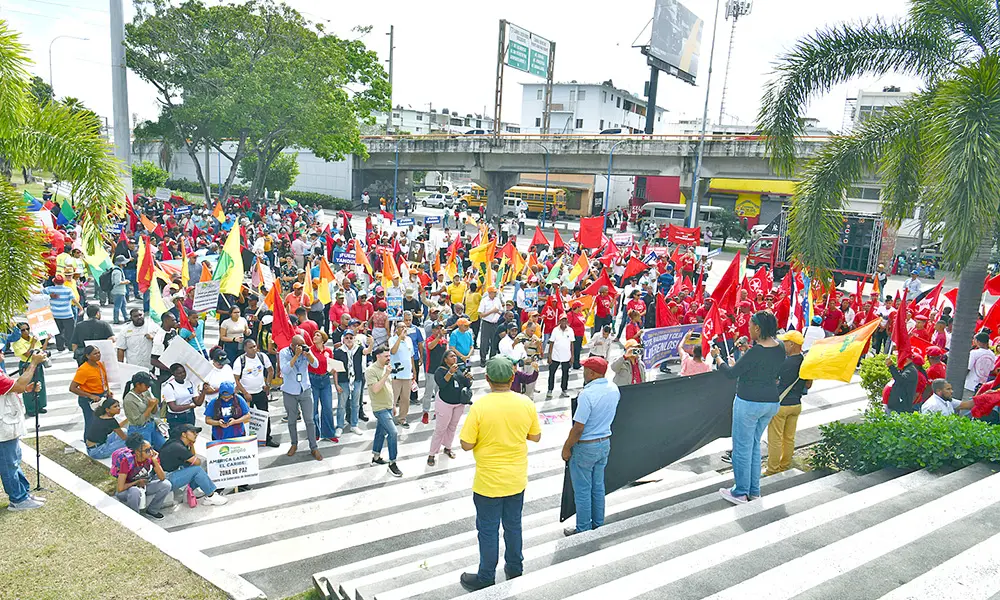
    Hundreds of activists converged at Plaza La Trinitaria in Santo Domingo’s National District early Thursday morning, launching a significant demonstration organized by a coalition of leftist political organizations. The protest saw participants marching through key thoroughfares including Josefa Brea, Francisco Henríquez y Carvajal, Jacinto de la Concha, and José Reyes streets, culminating at the statue of revolutionary leader Francisco Alberto Caamaño on El Conde.

    The diverse coalition included the Communist Party of Labor, Dominican Popular Movement, Caamañista Movement, Force of the Revolution, Homeland for All Party, and Dominican Leftist Front, with additional support from the United Left Movement, Broad Front, and People for Political and Social Change.

    Protesters voiced strong opposition to foreign intervention, specifically demanding the immediate withdrawal of U.S. military personnel and aircraft from Dominican airports. The demonstration also featured international solidarity appeals, with participants calling for the release of Venezuelan President Nicolás Maduro and his wife Cilia Flores. Chants of ‘Yankees out of the country and the Caribbean’ and ‘Freedom for Maduro and Cilia’ echoed through the streets, alongside calls for regional peace and opposition to Canadian mining company Barrick Gold’s operations.

    The event concluded with the reading of a joint proclamation by organizers and a poetic recitation by Ernesto Vantroi, emphasizing cultural resistance and national sovereignty protections.

  • FLASH : 19 new games on the «Quiz.HaitiLibre» platform

    FLASH : 19 new games on the «Quiz.HaitiLibre» platform

    HaitiLibre’s innovative gaming platform, Quiz.HaitiLibre, has significantly expanded its offerings with the addition of 19 new interactive quizzes less than a month after its initial launch. The platform continues to provide completely free access without requiring user registration, maintaining its dual-language support in both French and English.

    Contrary to what the platform’s name might suggest, the quiz content extends far beyond Haitian-specific topics. The developers have created a comprehensive knowledge-building experience with three distinct thematic categories: ‘Haiti’ for exploring the nation’s rich cultural heritage, ‘World’ for global diversity education, and ‘Expert’ for players seeking more challenging intellectual stimulation.

    Each quiz has been meticulously designed to provide an immersive educational experience. Every question includes detailed explanatory notes, transforming gameplay into genuine learning opportunities. The platform caters to diverse knowledge levels by offering three difficulty settings, ensuring accessibility for both casual players and serious trivia enthusiasts.

    The development team has committed to a monthly expansion schedule, promising continuous addition of new quizzes to maintain user engagement. Player feedback has played a crucial role in the platform’s development, with positive comments and suggestions driving ongoing improvements. The creators encourage users to share their gaming experiences and invite friends to join the educational platform.

    Available at https://quiz.haitilibre.com/en, Quiz.HaitiLibre represents a growing resource for combining entertainment with knowledge acquisition through its regularly updated content library.

  • Plan International presents results of “Down To Zero” child protection project

    Plan International presents results of “Down To Zero” child protection project

    After more than ten years of dedicated intervention, Plan International’s groundbreaking Down To Zero initiative has concluded its operations in the Dominican Republic, establishing a robust child-protection framework across 14 high-risk communities in the nation’s southern region. The comprehensive program specifically targeted areas severely impacted by tourism development and heightened social mobility, which have historically contributed to increased vulnerabilities.

    The project achieved remarkable reach, directly impacting over 650 individuals across the provinces of Azua, Elías Piña, San Juan, Pedernales, and Barahona. Its prevention strategy centered on community empowerment, training 100 adolescents as prevention promoters and equipping 153 local leaders with skills to activate reporting and response mechanisms. Institutional capabilities were significantly enhanced through the engagement of 90 public and private sector representatives who collaborated on developing standardized case management protocols.

    A cornerstone of the initiative involved confronting the cultural normalization of sexual exploitation through 24 distinct educational interventions. These included community film screenings and structured dialogues designed to break longstanding silences surrounding exploitation while building sustainable local capacity.

    Project coordinator Luis Toledo emphasized the transformative outcomes, stating, ‘Today we witness more conscious communities, youth spearheading prevention initiatives, and local systems significantly better prepared to address cases effectively.’ He identified the establishment of self-sustaining protective ecosystems as the program’s most profound accomplishment.

    Plan International, with over 35 years of operational presence in the Dominican Republic and outreach across 120 communities, has reaffirmed its institutional commitment to fostering secure and equitable environments for the nation’s children and adolescents. The concluding ceremonies, held February 17 in Barahona and February 19 in San Juan de la Maguana, marked the formal transition of protection responsibilities to strengthened local institutions.

  • Environment : 553 Earthquakes Recorded in Haiti in 2025

    Environment : 553 Earthquakes Recorded in Haiti in 2025

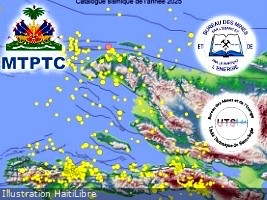
    Haiti’s seismic landscape experienced significant activity throughout 2025, with national monitoring agencies documenting 553 distinct earthquakes across the Caribbean nation. According to the comprehensive report jointly released by the Ministry of the Environment, the Bureau of Mines and Energy, and the Technical Unit of Seismology, this figure represents a 12% decrease from the 628 tremors recorded in the previous year.

    The seismic data, compiled from both local monitoring networks (Ayiti-séismes and UTS) and regional systems across Cuba, Jamaica, and the Dominican Republic, reveals intriguing patterns in earthquake distribution and intensity. The monthly average reached 46 earthquakes, with May and August emerging as the most seismically active months—each recording 60 distinct events.

    Magnitude readings spanned from 0.2 to 4.2 on the Richter scale, with the overwhelming majority (90.9% or 503 earthquakes) registering at magnitude 3.0 or below—categorized as very minor tremors. Approximately 9% (50 earthquakes) measured between 3.1 and 4.2, falling into the minor to slight classification. The most powerful event, a magnitude 4.2 earthquake, occurred on August 23 off the coast of Jean Rabel in the Northwest region.

    Geographical analysis uncovered uneven distribution across Haiti’s ten departments. The West department experienced the highest concentration with 138 quakes (24.9%), followed by Nippes with 115 (20.7%), and Northwest with 102 (18.4%). Collectively, these three regions accounted for 64% of the nation’s total seismic activity. Conversely, the Center, North, and Northeast departments recorded minimal activity with just 31 combined earthquakes, representing merely 5.6% of the annual total.

    Notably, 206 earthquakes (37.25%) occurred offshore, particularly concentrated around the Northwest Peninsula. Depth measurements revealed that 263 events (47.5%) were shallow-focus earthquakes occurring at depths of 10 kilometers or less, making them more perceptible at the surface despite their typically lower magnitudes.

  • Nuria Piera urges review of unverified autism therapies

    Nuria Piera urges review of unverified autism therapies

    SANTO DOMINGO – Prominent journalist Nuria Piera has launched a public critique against Ernesto Fadul, a practitioner claiming to cure autism through scientifically unvalidated treatments. The controversy centers on medical ethics, evidence-based practice, and the potential exploitation of vulnerable families.

    Piera clarified that the core issue transcends personal disputes, focusing instead on the absence of peer-reviewed research supporting Fadul’s methods. She highlighted that his treatment protocol—reportedly involving vitamin B complexes and amino acids—lacks clinical validation, noting that professional credentials cannot substitute for rigorous scientific trials.

    Concerns have been amplified by testimonies from U.S. specialists who observed a rising trend of families seeking Fadul’s services. Piera revealed that supplements provided under his care, identified as common vitamin compounds, are being sold for $500 to $2,000—far exceeding pharmacy prices—while allegedly lacking proper labeling or health registrations.

    The program featured an emotional account from Adriano Suárez, an Arizona father who traveled to Santiago with his 9-year-old autistic daughter. He described a brief evaluation in substandard clinical conditions and paid $525 for a three-month treatment. Contrary to promises, his daughter experienced developmental regression. Suárez criticized the uniform medication approach for all patients and urged the Ministry of Public Health to investigate.

    Piera concluded by urging health authorities to mandate scientific review of these claims, emphasizing that unproven treatments risk wasting critical developmental windows. Despite Fadul’s defense of his altruistic intentions, public debate intensifies over regulatory oversight and patient safety.

  • National District Carnival 2026 fills the Malecón with color, music, and tradition

    National District Carnival 2026 fills the Malecón with color, music, and tradition

    The iconic Malecón waterfront of Santo Domingo transformed into a spectacular canvas of cultural expression during the National District Carnival 2026, where an estimated crowd of thousands gathered for a celebration marked by vibrant displays and impeccable organization. Under the meticulous coordination of the Mayor’s Office of the National District, the event unfolded as a testament to both tradition and community spirit.

    A procession of more than seventy elaborately costumed dance troupes captivated attendees as they paraded along the capital’s coastline. Their performances, rich in creativity and rhythmic precision, served as a dynamic exhibition of local identity. The afternoon festivities, commencing at approximately 3:30 p.m., were safeguarded by a comprehensive inter-agency security and logistics operation, ensuring a secure and orderly environment for all families and visitors.

    Mayor Carolina Mejía articulated the profound significance of the carnival, framing it not merely as a festive occasion but as an essential manifestation of the city’s collective heritage and social fabric. This year’s edition carried a special dedication to José Guillermo ‘Pepe’ Mieses, a revered physician, athlete, and folklorist recognized for founding the legendary troupe Los Leones del Diablo and for his pivotal role in institutionalizing the carnival’s framework.

    The ceremonial opening was led by the newly crowned King and Queen of Carnival, Francisco Taveras Benítez and Santa Valdez, both honored for their lifelong dedication to the tradition. The parade featured diverse participants, including the National District Fire Department Band and the renowned Los Guloyas de Propagas, with competitive categories spanning Grand Troupe, Best Floats, and various traditional character groups.

    The event drew a distinguished audience of municipal authorities, council members, and prominent figures from the cultural and artistic sectors, who universally praised the event’s superior organization and artistic merit. As daylight faded, the celebration reached its crescendo at Eugenio María de Hostos Park with a powerful concert. Headlining artists Toño Rosario, Omega, Sexappeal, Jandy Ventura, and Steffany Constanza delivered an electrifying musical finale that energized the massive crowd.

    Through this highly successful execution, the Mayor’s Office has powerfully reaffirmed its commitment to preserving cultural legacy, fostering safe public spaces for family entertainment, and cementing the National District Carnival’s status as a premier, anticipated event in Santo Domingo’s cultural calendar.

  • “Don’t take it personal,” Prime Minister tells suppliers as Antigua upgrades major event production

    “Don’t take it personal,” Prime Minister tells suppliers as Antigua upgrades major event production

    In a firm declaration of national development policy, Prime Minister Gaston Browne has announced his administration’s refusal to permit exclusive supplier arrangements that could compromise the nation’s capacity to host world-class events. Speaking on the Browne and Browne Show broadcast via Pointe FM, the Prime Minister articulated a strategic vision for upgrading the country’s event infrastructure to achieve regional and international competitiveness.

    Browne emphasized that Antigua and Barbuda must develop autonomous capabilities to execute high-level conferences, international festivals, and premium performances without dependence on singular providers. “We are leveling up,” stated Browne, underscoring the government’s position against allowing any entity to hold the nation hostage through restrictive production arrangements.

    The Prime Minister outlined specific requirements for the country’s advancement, including the development of large-scale staging facilities, premium sound systems, and professional production standards. He highlighted that attracting high-profile artists and major international events necessitates sophisticated technical infrastructure that meets global expectations.

    Beyond physical infrastructure, Browne addressed the need for human resource development, calling for enhanced professionalism within the events sector. He advocated for specialized training and certification programs in critical areas such as sound engineering to elevate service standards and diminish reliance on foreign technicians.

    This initiative forms part of a comprehensive modernization strategy for Antigua and Barbuda’s tourism and conference offerings. The government aims to position the dual-island nation as a premier destination for global meetings and cultural events by delivering consistently exceptional international experiences that align with national development objectives.

  • Mexicaanse kartelbaas ‘El Mencho’ gedood bij militaire inval

    Mexicaanse kartelbaas ‘El Mencho’ gedood bij militaire inval

    Mexican security forces have confirmed the death of notorious drug cartel leader Nemesio Oseguera Cervantes, widely known as ‘El Mencho,’ during a military operation in western Jalisco state. The high-profile raid marks a significant victory for Mexico’s ongoing battle against powerful drug trafficking organizations.

    According to Mexico’s Defense Ministry, Oseguera sustained critical injuries during an intense firefight with government troops and subsequently died while being airlifted to Mexico City for medical treatment. The operation, which benefited from intelligence cooperation with United States authorities, represents the culmination of increased pressure from the Trump administration on Mexican President Claudia Sheinbaum to intensify anti-narcotics efforts.

    The death of the Jalisco New Generation Cartel (CJNG) leader has triggered immediate retaliatory violence across multiple Mexican states. Criminal elements have responded with coordinated attacks involving burning vehicles and armed highway blockades, creating widespread disruption in more than half a dozen regions. Social media footage shows plumes of black smoke rising from incendiary roadblocks throughout Jalisco and neighboring areas.

    Oseguera, a former police officer, had transformed the CJNG from a regional organization into one of Mexico’s most powerful international criminal enterprises within a remarkably short timeframe. The cartel had been competing with the Sinaloa Cartel, formerly led by imprisoned kingpin Joaquín ‘El Chapo’ Guzmán, for dominance in drug trafficking operations.

    United States Deputy Secretary of State Christopher Landau characterized Oseguera’s demise as a “major development” for both nations and the broader Latin American region. However, security experts warn that the power vacuum created by his death could unleash prolonged violence as competing factions struggle for control.

    In response to the security crisis, Jalisco Governor Pablo Lemus Navarro has urged residents to remain indoors while authorities work to restore order. The U.S. Embassy has issued similar precautions for American citizens, and multiple airlines including Air Canada, United Airlines, and American Airlines have suspended or canceled flights to popular tourist destinations Puerto Vallarta and Guadalajara.