博客

  • Caribbean countries react to US-Israel war against Iran

    Caribbean countries react to US-Israel war against Iran

    BRIDGETOWN, Barbados — Multiple Caribbean Community (Caricom) member states have voiced profound concern regarding the dangerous escalation of military hostilities in the Middle East, following coordinated strikes by the United States and Israel against Iran. The attacks, which reportedly resulted in significant casualties according to Iranian state media, have prompted calls for restraint and a return to diplomatic channels from several Caribbean governments.

    The initial military action was justified by Washington and Tel Aviv as a necessary response to perceived threats from Iran. In retaliation, Iranian forces launched missile volleys toward both Israel and several Gulf states housing U.S. military installations. Iranian Foreign Minister Abbas Araghchi condemned the U.S.-Israeli operation as an ‘unprovoked, illegal and absolutely illegitimate’ act of aggression.

    Regional responses from the Caribbean have emphasized the critical importance of international law and peaceful conflict resolution. The government of Antigua and Barbuda, through Prime Minister Gaston Browne, expressed deep concern about the rapid deterioration of stability, stating that attacks on nations not directly involved in a conflict represent a serious breach of international law. Browne emphasized unwavering support for national sovereignty and called for maximum restraint from all parties.

    Guyana’s Ministry of Foreign Affairs and International Cooperation issued a statement condemning what it described as Iran’s ‘unprovoked attack’ on Bahrain, United Arab Emirates, Qatar, and Kuwait, characterizing these actions as unjustified and in violation of international law. The Guyanese government called for immediate de-escalation to preserve regional peace and stability.

    Trinidad and Tobago’s government initially posted a statement on its Caricom and Foreign Affairs ministry website expressing support for U.S. and Israeli actions aimed at preventing ‘oppressive regimes’ from acquiring nuclear capabilities. However, the statement was subsequently withdrawn, creating ambiguity about the country’s official position.

    Jamaica has taken practical measures by issuing a travel advisory urging its citizens to avoid the Middle East and advising those already in the region to exercise extreme vigilance and shelter in place as conditions require.

    The collective Caribbean response aligns with calls from United Nations Secretary-General for renewed diplomatic engagement to prevent further deterioration of the situation and uphold the rule of law in international relations.

  • 4.6 magnitude earthquake felt in sections of Jamaica

    4.6 magnitude earthquake felt in sections of Jamaica

    A moderate seismic event registering 4.6 magnitude rattled sections of Jamaica on Sunday morning, causing brief alarm among residents. The tremor occurred at approximately 8:34 a.m. local time, according to official reports from the Earthquake Unit at the University of the West Indies.

    The quake’s epicenter was precisely located approximately 10 kilometers northeast of Stony Hill, St Andrew, placing it in close proximity to the nation’s capital and most densely populated region. Seismologists reported the event originated at a focal depth of 16 kilometers, classifying it as a shallow crustal earthquake.

    While preliminary assessments indicate no immediate reports of significant damage or injuries, the tremor served as a stark reminder of Jamaica’s position within an active seismic zone. The earthquake unit continues to monitor aftershock potential and has urged citizens to maintain earthquake preparedness protocols. The event triggered brief emergency response evaluations across affected parishes, with infrastructure assessments underway in urban centers.

  • Main Event rises to Lost In Time’s challenge

    Main Event rises to Lost In Time’s challenge

    Jamaica’s entertainment landscape witnessed an unprecedented audio revolution during the dual-stage Lost In Time festival, where reggae luminary Protoje granted his emphatic approval to Main Event Entertainment Group’s cutting-edge sound engineering. The pre-festival soundcheck at Hope Gardens became a testament to audio excellence as Protoje rigorously tested the system through a 30-minute medley of his greatest hits.

    In an industry where auditory precision is paramount, Protoje emphasized that ‘sound quality remains the most crucial element of any performance—audiences demand both visual spectacle and acoustic perfection.’ This philosophy drove Main Event to deploy what project manager Rayon Stephenson describes as ‘firsts and onlys’ in Caribbean audio technology.

    The festival’s innovative twin-stage configuration featured Martin Audio loudspeakers—a system exclusively possessed by Main Event in the Caribbean region. Founded in 1971, Martin Audio represents the vanguard of professional touring sound, specializing in optimizing audience experience through technological innovation.

    Stephenson revealed the quantum leap in audio engineering: ‘Martin Audio stands unparalleled in Jamaica’s entertainment ecosystem. Our Digico consoles—Quantum 338, SD 12, and SD 21—represent equipment that international artists specifically stipulate in performance contracts.’ The technological marvel left Protoje visibly impressed, with the artist spontaneously requesting a particular mix be incorporated into one of his performances after exclaiming ‘Yea, fi real’ during post-soundcheck feedback.

    The production excellence extended to satisfying discerning professionals like production manager Martin Lewis and performing artists including Tanya Stephens, Chronixx, Grammy-nominated Lila Iké, and Jesse Royal. This event not only set new technical standards but demonstrated Jamaica’s growing capacity to rival global entertainment production quality.

  • Jam-Brit composer Shirley J Thompson premières ‘Heroines of Opera’ masterwork

    Jam-Brit composer Shirley J Thompson premières ‘Heroines of Opera’ masterwork

    Renowned composer Shirley Thompson, a cultural pioneer of Jamaican and English descent, will present the world premiere of her latest operatic masterpiece “Seventh Sense: Incidents in the Life of Queen Amanirenas” in March 2026. The groundbreaking work for orchestra and dance will debut at Wentz Hall in Naperville, Illinois on March 6, followed by a second performance at Chicago’s Harris Theatre on March 7.

    Thompson, recognized as the first composer of African heritage to receive an OBE and to create music for a British royal coronation (King Charles III’s 2023 ceremony), continues her transformative impact on classical music through culturally significant narratives. The Chicago Sinfonietta commissioned this electrifying production for their International Women’s Day 2026 ‘Still I Rise’ celebration.

    The work dramatizes the extraordinary legacy of Queen Amanirenas of Kush, the warrior monarch who successfully defended her kingdom against Roman invasion through military prowess and diplomatic acumen. Thompson’s composition merges orchestral grandeur with contemporary dance, featuring the Chicago Sinfonietta under conductor Mei-Ann Chen alongside the celebrated Deeply Rooted Dance Theatre.

    “Seventh Sense” represents the latest installment in Thompson’s revolutionary Heroines of Opera series, which resurrects forgotten histories of women of African ancestry through large-scale stage productions. Previous works in the series include “Sacred Mountain: Incidents of the Life of Queen Nanny of the Maroons,” “Dido Elizabeth Belle,” “Women of the Windrush,” and “The Woman Who Refused to Dance.”

    Thompson describes the project as an exploration of pre-colonial African civilizations, highlighting an era when the continent flourished as a global epicenter of artistic, scientific, and cultural advancement. The production promises to deliver both historical revelation and contemporary artistic innovation.

  • Drew Da Levite to release EP Surrender in April

    Drew Da Levite to release EP Surrender in April

    Jamaican gospel musician Drew Da Levite is poised to unveil his inaugural extended play record, ‘Surrender,’ this coming April. This musical project represents a profound personal testament, chronicling his spiritual journey and the numerous challenges he has overcome throughout his life.

    Despite maintaining a lifelong involvement with music, the artist—born Andrew Francis—commenced his professional recording career in 2023 with a divine purpose: to dedicate his artistic gifts to religious service. This vocational decision emerged following a powerful moment of spiritual conviction experienced during an album launch event.

    Having embraced born-again Christianity at age 14, Drew Da Levite was deeply immersed in church culture from his youth. His unwavering passion for music naturally evolved into a ministerial calling. The artist credits his perseverance through adversity—including upbringing in a volatile neighborhood and humble beginnings—to divine grace and a strong sense of spiritual identity.

    A native of Spanish Town, St. Catherine, the academically accomplished musician is currently completing his final year at The Mico University College, specializing in guidance and counseling. His forthcoming EP features collaborative production with renowned creators including Skyylark, Mattsonicc, Daley Beatz, Jamario Morgan, and Isaac Graham, with five of the projected six tracks already finalized.

    Drew Da Levite describes his musical style as dynamically introspective, combining intellectually resonant lyrics with emotionally sobering compositions that evoke reflection, conviction, and gratitude. His authentic approach to gospel music stems from personal conviction, ensuring his artistic expressions remain genuine manifestations of his faith journey.

  • Trump says Iran’s supreme leader dead after Israel, US attack

    Trump says Iran’s supreme leader dead after Israel, US attack

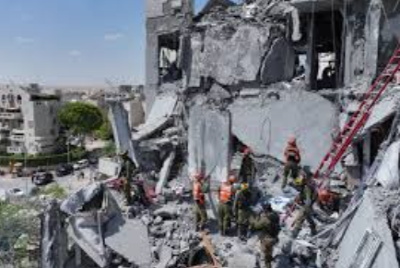
    In an unprecedented military escalation, joint forces from the United States and Israel launched large-scale strikes against Iran on Saturday, targeting the heart of the Islamic Republic’s leadership. The operation, described as the most extensive aerial assault in Israeli military history, prompted immediate retaliation across the Middle East and triggered conflicting reports regarding the status of Iran’s Supreme Leader Ayatollah Ali Khamenei.

    US President Donald Trump declared the death of Khamenei through his Truth Social platform, labeling the Iranian leader ‘one of the most evil people in history.’ Israeli Prime Minister Benjamin Netanyahu echoed similar claims, stating there were ‘many signs that this tyrant is no longer alive’ and directly addressing the Iranian people to encourage regime overthrow.

    The assault triggered immediate regional consequences as Tehran launched missile barrages across multiple Middle Eastern nations. Explosions rocked showcase cities in Gulf Arab monarchies, with the United Arab Emirates reporting civilian casualties and significant damage in Dubai and Abu Dhabi. Blasts from both Iranian retaliatory strikes and intercepted missiles were reported across Israel, Saudi Arabia, Bahrain, Qatar, Jordan, and Kuwait.

    Iranian authorities provided conflicting information regarding Khamenei’s status. Foreign Minister Abbas Araghchi initially stated the leader was alive ‘as far as I know,’ while Foreign Ministry spokesman Esmail Baqaei declined to confirm anything definitively. The Iranian Red Crescent Society reported at least 201 fatalities and over 700 injuries from the strikes, with one attack on a southern school allegedly claiming 108 lives, though independent verification remained impossible due to access restrictions.

    The strategic Strait of Hormuz was reportedly shut by Iran’s Revolutionary Guards, according to European Union naval monitoring and Iranian media. Communications and internet access experienced widespread disruptions across Tehran and other affected regions as security forces flooded streets and civilians sought shelter.

    This military action represents the first large-scale US operation explicitly aimed at regime change since the 2003 invasion of Iraq, marking a significant escalation in longstanding tensions over Iran’s nuclear and missile programs.

  • Black River heritage tour operator keeping town’s story alive

    Black River heritage tour operator keeping town’s story alive

    In the aftermath of Hurricane Melissa’s catastrophic passage through Jamaica’s historic town of Black River, heritage tour operator Allison Morris is championing a narrative of resilience rather than ruin. Despite the severe damage inflicted upon numerous landmark structures in October 2025, Morris contends that the town’s rich legacy remains intact—merely transformed by a new chapter of adversity and recovery.

    Black River, established near its namesake river and designed by England’s Leyden brothers, evolved into a thriving 18th and 19th-century seaport. It prospered through logwood exports, rum, pimento, and cattle hides, becoming Jamaica’s first electrified town. Its historic corridor once featured architectural gems like Magdala House, the Invercauld Hotel, Waterloo Guest House, and St John’s Anglican Parish Church—many now heavily damaged.

    Morris, a retired educator and lifelong resident, launched her heritage tours part-time in 2011, transitioning to full-time operation in 2024. Driven by a desire to preserve the stories she grew up with, her tours have attracted global visitors from Europe, North America, and across the Caribbean.

    Though temporarily halted by the Category Five hurricane, interest in her tours has rebounded strongly since their February relaunch. Morris has adapted her format from walking tours to driving excursions due to ongoing repairs, tracing the town’s history along High Street while acknowledging—but not fixating on—the storm’s impact.

    She emphasizes that Black River’s identity isn’t dependent on physical structures alone. The town has survived numerous disasters throughout history, including devastating fires and previous hurricanes. Morris advocates for a thoughtful rebuilding approach that preserves surviving architectural elements while improving amenities, warning against erasing the town’s unique character through uniform modernization.

    Her perspective challenges conventional disaster narratives, framing Hurricane Melissa not as an eraser of history but as a transformative layer in Black River’s ongoing story—one that underscores the community’s enduring spirit and adaptive capacity.

  • Seretse’s back on stage

    Seretse’s back on stage

    In a landmark return to live performance after twenty years, Jamaican guitar maestro Seretse Small took the stage at Herbie Miller Presents Jazz Night on February 26th. The event, held at the Jamaica Pegasus hotel, marked not merely a comeback but the strategic launch of an ambitious artistic campaign to position Jamaican jazz on the global awards landscape.

    During his absence from performing, Small dedicated himself to educational pursuits, notably founding the Avant Academy of Music and Griot Music. A Hall of Fame inductee (2012) and a revered figure in music education for four decades, Small has long been celebrated for synthesizing Caribbean musical traditions with North American jazz.

    The concert served as the debut of his innovative ‘Afro-Jamaican Jazz’ sound—a centerpiece of his forthcoming album, ‘By the Rivers.’ This project is a deliberate effort to transcend Jamaica’s iconic reggae identity and establish a distinct presence in international jazz categories, including the Grammys.

    Drawing inspiration from the mid-20th century fusion that created Afro-Cuban jazz, Small is methodically blending Jamaica’s African-rooted rhythms—from reggae’s ‘one drop’ to traditional folk patterns—with jazz’s improvisational vocabulary. His goal is to create a new, recognized dialect within jazz, much as Cuban pioneers did decades ago.

    A graduate of the Jamaica School of Music and Berklee College of Music, and a former touring musician for Grammy-winner Sean Paul, Small now shifts focus from mentorship and institution-building to defining his artistic legacy: securing a respected space for Jamaican innovation in the global jazz conversation.

  • Black River Hospital restoration at 40 per cent

    Black River Hospital restoration at 40 per cent

    ST ELIZABETH, Jamaica – Significant reconstruction progress is being made at Black River Hospital, which suffered extensive damage when Category Five Hurricane Melissa devastated sections of Jamaica 124 days ago. Chief Executive Officer Diana Brown Miller reports that restoration work is approximately 40% complete, expressing cautious optimism that medical staff could return to permanent facilities before the June onset of the next hurricane season.

    The October 28, 2025 hurricane caused catastrophic damage to Jamaica’s infrastructure and resulted in at least 45 fatalities. At Black River Hospital, the immediate recovery strategy focused on restoring two primary ward blocks (male, female, and pediatric units) along with the operating theater. While the theater—which had recently undergone renovation—is expected to be operational by March, the broader ward reconstruction has exceeded initial 100-day projections due to upgraded roofing specifications.

    Brown Miller indicated that despite Health Minister Dr. Christopher Tufton’s March 31 target, practical assessments suggest a more realistic completion timeline of late April to May. Work continues on connecting corridors to the accident and emergency department, while the hospital lab nears completion pending computer installations.

    Critical infrastructure including the maternity ward, outpatient clinic, and dietary department remain in early or pre-construction phases. Currently operating at just one-third capacity (40-50 beds of 150), the hospital continues to treat patients in temporary tent facilities donated by Samaritan’s Purse, with emergent cases referred to Mandeville Regional Hospital.

    The CEO acknowledged substantial operational challenges, including damaged electrical wiring, internet outages, and storage limitations. With the hurricane season approaching, concerns mount about the safety of tent-based medical services during severe weather. Brown Miller emphasized that staff would not remain in temporary structures during peak hurricane conditions if permanent facilities become available.

    Notably, approximately half of the hospital staff experienced personal property damage or roof loss during the hurricane, yet continued to report for duty. The hospital provided temporary housing and psychosocial support for affected employees. Brown Miller expressed profound gratitude to Jamaica’s Ministry of Health and Wellness, international aid organizations, diaspora supporters, and the dedicated hospital staff for their resilience throughout the recovery process.

  • Is family land really yours?

    Is family land really yours?

    Across Jamaica, a widespread legal predicament threatens countless families who inhabit properties under informal arrangements known as ‘family land.’ These residents typically operate under the conviction that oral promises from ancestors, prolonged residence, or financial investments in properties automatically confer legal ownership. However, this deeply ingrained belief contradicts the nation’s formal land registration requirements, creating a legal vulnerability that surfaces during property transactions, inheritance transfers, or competing claims.

    The fundamental principle of Jamaican property law establishes that legal ownership derives exclusively from registration with the National Land Agency, not through verbal agreements or long-term occupancy. This critical distinction affects not only family land arrangements but also situations where purchasers have paid for properties without completing formal transfers. Despite possessing receipts or witness testimonies, these individuals lack registered interests, leaving them exposed to potential loss of their investments and properties.

    Formalizing land gifts requires meticulous legal procedures, including preparation of transfer documents, payment of government duties (typically 2% transfer tax based on market value plus registration fees and stamp duty), and official registration. When these steps are omitted due to cost or oversight, occupants face complex legal challenges if the original owner dies, migrates, or becomes unwilling to cooperate. Courts demand substantial evidence of both intent to gift and detrimental reliance on such promises, creating a high evidentiary threshold that many claimants cannot meet.

    Another common pitfall occurs when beneficiaries attempt to sell inherited property without first obtaining proper estate administration documents. Whether through probate grants for testate cases or letters of administration for intestate situations, these legal processes are mandatory before any legitimate transfer can occur. Purchasers who transact with improperly authorized sellers risk financial loss and legal complications.

    The misconception regarding squatters’ rights further complicates Jamaica’s property landscape. Contrary to popular belief, extended occupation doesn’t automatically establish ownership through adverse possession, which requires exclusive, unauthorized use with intention to exclude the true owner—conditions rarely met in family permission scenarios.

    The consequences of unregularized land ownership extend beyond individual cases, potentially triggering family disputes, unauthorized sales, and the inability to leverage property as financial collateral. While regularization involves significant costs, the long-term risks of inaction—including complete property loss and fractured family relationships—far outweigh the initial expenses. Legal professionals emphasize that clarity in land ownership provides not only peace of mind but also the foundation for secure intergenerational wealth transfer.