博客

  • Social media dangers for minors

    Social media dangers for minors

    In an era dominated by digital technology where tablets and smartphones have become commonplace parenting tools, Archbishop Jason Gordon has ignited crucial discussions about implementing legislative controls on minors’ social media access. The prominent religious leader contends that certain online platforms demonstrate higher addictive potential than alcohol, advocating for regulatory measures similar to existing prohibitions on underage alcohol sales.

    The archbishop’s comments emerge alongside governmental considerations to raise legal ages for alcohol, cannabis consumption, and gambling in Trinidad and Tobago. Gordon specifically referenced Australia’s groundbreaking legislation that prohibits children under 16 from accessing major social media services including Facebook, Instagram, TikTok, Snapchat, Threads, X, YouTube, Reddit, Kick, and Twitch.

    This Australian model, currently being monitored by numerous countries, completely deactivates existing profiles and prevents new account creation for minors. Meanwhile, these platforms remain freely accessible in Trinidad and Tobago to any individual with digital devices and internet connectivity.

    The UN Convention on the Rights of the Child, which Trinidad and Tobago has adopted, guarantees children protections from harmful influences while ensuring their rights to development, health, education, and recreation. Archbishop Gordon argues that unfiltered social media content often exposes young minds to uncensored information that can promote detrimental behavior and unrealistic expectations.

    While constitutional protections safeguard freedom of speech, religious authorities emphasize the necessity to balance these rights with protecting children from offensive and addictive content. The government’s proposed age restriction changes for substances and gambling aim to prevent early addiction and restore social discipline, initiatives that Archbishop Gordon believes should extend to digital protections through comprehensive societal cooperation and innovative enforcement strategies.


  • US interest in Trinidad and Tobago: Energy, strategy, occupation risk

    US interest in Trinidad and Tobago: Energy, strategy, occupation risk

    Recent geopolitical developments have thrust Trinidad and Tobago into an unexpected position of strategic importance, drawing parallels to the controversial US interest in Greenland. The Caribbean nation finds itself at the center of American economic and security calculations, primarily driven by two critical factors: energy infrastructure and geographic positioning.

    Energy economics form the core of this emerging dynamic. Venezuela possesses among the world’s largest natural gas reserves but lacks sufficient processing capabilities. Trinidad’s Atlantic LNG facility represents the nearest large-scale liquefaction infrastructure, creating an inevitable interdependency. This energy symbiosis grants Trinidad significant leverage while simultaneously exposing it to external pressure.

    The United States’ prioritization of energy security and strategic control points further complicates this relationship. Washington previously demonstrated reservations about Trinidad’s Dragon agreement with Venezuela, particularly during periods of shifting US policy toward Caracas. This suggests American interest in maintaining influence over regional energy corridors.

    Geopolitical positioning amplifies Trinidad’s significance. The nation guards the southern Caribbean gateway, serving as a critical juncture between South America and the island chain. US authorities already monitor these waters as primary transit routes for narcotics trafficking from Venezuela and Colombia. This existing surveillance framework could potentially justify expanded American presence under counter-narcotics and border security rationales.

    Historical context reveals Caribbean nations have consistently prioritized national interests over regional solidarity, as demonstrated during Venezuela’s Petrocaribe initiative which reduced purchases from Trinidad. This precedent undermines contemporary calls for unified regional resistance to external influence.

    Trinidad now faces a complex sovereignty dilemma: pursue pragmatic accommodation with a global power or reinforce independent diplomatic and commercial relationships. This decision carries profound implications for the nation’s future autonomy and economic prosperity.

    The fundamental question remains whether Trinidad will safeguard its sovereign integrity or exchange elements of self-determination for perceived security and economic benefits—a calculation many smaller nations must confront when larger powers manifest strategic interest in their territories.

  • Reigning open champs San Juan South start volleyball season in style

    Reigning open champs San Juan South start volleyball season in style

    San Juan South Secondary launched a formidable defense of their boys’ open volleyball title with a commanding performance on January 18, securing three consecutive victories during the opening matches of the 2026 Secondary Schools Volleyball League (SSVL) at Aranguez North Secondary School.

    The reigning champions capitalized immediately when opponents Fatima College arrived late from Mucurapo, resulting in an automatic first-set forfeit. San Juan then demonstrated their technical superiority by capturing the second set 25-15 to claim their opening match.

    Their second encounter against Presentation College Chaguanas showcased San Juan’s competitive dominance as they secured a decisive straight-sets victory. After winning the first set 25-17, the champions accelerated their performance with a convincing 25-10 second-set triumph.

    The day’s most anticipated match saw San Juan confront Naparima College, who had themselves recorded impressive victories against both Fatima and Presentation. San Juan asserted their championship credentials with a dominant 25-11 first-set performance before overcoming a more determined Naparima challenge to claim the second set 25-19.

    Naparima College demonstrated significant promise throughout the competition, beginning with a straight-sets victory against Presentation (25-10, 25-18) followed by a dramatic three-set thriller against Fatima. After splitting the first two sets (25-18, 17-25), Naparima displayed remarkable composure to edge the decisive third set 15-14.

    Fatima College salvaged their tournament performance with a straight-sets victory against Presentation, overcoming determined resistance to secure the match 25-18, 25-23.

    The SSVL competition continues at the Eastern Regional Indoor Sport Arena in Tacarigua with girls’ under-15 category matches, where International School of Port of Spain will begin their title defense.

  • Bess Motors Ltd invest $175k into U15 Interzone tourney

    Bess Motors Ltd invest $175k into U15 Interzone tourney

    In a significant boost for Caribbean cricket development, Bess Motors Ltd has pledged a substantial $175,000 sponsorship to Trinidad and Tobago Cricket Board’s (TTCB) Under-15 Youth Development Interzone Tournament. The partnership was formally established on January 21 when managing director Krystal Maharaj presented the sponsorship cheque to TTCB president Azim Bassarath at the National Cricket Centre in Couva.

    The upcoming tournament, scheduled to commence on January 28, will showcase emerging talent from eight zonal teams across Trinidad and Tobago: North, North East, Central, South, South West, South East, East, and Tobago. These teams will compete in two groups, with the event serving as a crucial talent identification platform ahead of Cricket West Indies’ Rising Stars Under-15 championship later this year.

    TTCB general secretary Henry Chase emphasized the tournament’s comprehensive reach, noting that it guarantees young athletes from every region of Trinidad and Tobago equal opportunity for recognition and development. “This interzone competition acts as a primary evaluation mechanism for national team selection,” Chase stated, “providing a clear pathway for players to advance to regional representation, including the prestigious West Indies Under-15 tournament.”

    Bassarath hailed the corporate partnership as a transformative moment for youth cricket development, praising Bess Motors for their strategic investment at this critical developmental stage. The TTCB president highlighted the tournament’s historical significance as a launching pad for numerous Trinidadian cricket legends, including former West Indies captain Denesh Ramdin, T20 phenomenon Nicholas Pooran, and current Red Force head coach Rayad Emrit.

    Beyond competitive matches, the 2026 tournament features comprehensive off-field development initiatives including specialized coaching education and umpire training programs. The event is specifically designed to foster character development, instill discipline, enhance communication skills, and promote personal growth among participants from all seven TTCB zonal councils, including Tobago.

    The sponsorship represents a long-term commitment to structured youth development, with Chase describing the initiative as “a deliberate investment in the future of Trinidad and Tobago cricket.” The partnership was facilitated through the efforts of Adrian Ali, captain of Marchin Sports Club and Chaguanas Borough Corporation councillor, who helped bridge the collaboration between TTCB and Bess Motors Ltd.

  • MV Blue Wave Harmony arrives Jan 22

    MV Blue Wave Harmony arrives Jan 22

    In a significant development for Trinidad and Tobago’s infrastructure and economic landscape, Works and Infrastructure Minister Jearlean John announced the imminent arrival of the MV Blue Wave Harmony. The new passenger and cargo vessel, set to dock at 8 am on January 22, will serve as a replacement for the Cabo Star on the critical seabridge connection.

    The announcement came during the Amcham economic forum at Port of Spain’s Hyatt Regency on January 21, where Minister John revealed extensive redevelopment plans as part of the government’s broader revitalization initiative. The comprehensive strategy encompasses 129 projects targeting key areas nationwide, with particular focus on transformative developments at Invaders Bay and Port of Spain.

    Invaders Bay, comprising 50 acres of prime reclaimed real estate accumulated over two administrations, is poised for dramatic transformation. Minister John outlined ambitious proposals including hotel complexes, marina facilities, and residential housing. The foreshore development alone anticipates 300 premium apartments and 400 marina docks, capitalizing on Trinidad’s advantageous position outside the hurricane belt for dry docking services.

    The Port of Spain revitalization involves repurposing over 400 acres of land, potentially freeing 150 acres of premium real estate for tourism-oriented development including convention centers and entertainment venues. Additionally, Sea Lots is designated for conversion into a specialized “health city” district.

    The scale of construction requirements underscores the project’s magnitude: 3,000 tonnes of structural steel, 23,000 tonnes of cement, 5,000 tonnes of rebar, and substantial additional materials. At peak development, the initiatives are projected to generate over 70,000 jobs, providing significant economic stimulation through construction activity.

    Minister John confirmed the extension of expression of interest submissions for the Invaders Bay project until February 5, responding to numerous requests for additional time. The developments will receive international validation through an upcoming visit by Abu Dhabi’s foreign affairs minister on January 23, who will assess project sites firsthand.

  • Judge rules PM’s ‘administrative silence’ breached permanent secretary’s rights

    Judge rules PM’s ‘administrative silence’ breached permanent secretary’s rights

    In a landmark constitutional judgment, High Court Justice Westmin James has delivered a scathing rebuke of a sitting Prime Minister’s administrative conduct, ruling that prolonged silence on appointment recommendations constituted an unconstitutional violation of a senior public officer’s rights.

    The court upheld the constitutional claim brought by retired public service director John Edwards against the Attorney General, finding that the Prime Minister’s repeated failure to respond to Public Service Commission (PSC) consultations effectively created an illegal “de facto veto” that blocked Edwards’ career advancement unjustly.

    Evidence presented to the court revealed that between 2010 and 2013, Edwards received multiple recommendations from the PSC to act as Deputy Permanent Secretary. However, the Prime Minister failed to respond to three separate consultation requests in 2012 while approving other officers’ appointments within normal timeframes. This selective administrative silence continued until August 2013, when approval finally came—coinciding exactly with Edwards’ commencement of pre-retirement leave, rendering the authorization practically useless.

    Justice James determined that this conduct violated Sections 4(b) and 4(d) of the Constitution, pertaining to protection of the law and equality of treatment by public authorities. The ruling emphasized that while Section 121 grants the Prime Minister appointment veto power, this authority must be exercised rationally, independently, and without unreasonable delay.

    The court awarded Edwards $250,000 in damages—$100,000 as compensatory damages for distress and inconvenience, and $150,000 as vindicatory damages to underscore the seriousness of the constitutional breaches and deter future similar conduct by public authorities.

    Significantly, the judge rejected the State’s arguments regarding delay in filing the claim, accepting Edwards’ explanation that he only discovered the true reason for his non-appointment through Freedom of Information Act disclosures in 2022. The court recognized the case’s broader implications for constitutional governance and accountability, noting that permitting such administrative silence would enable executives to circumvent legal requirements and undermine independent constitutional bodies like the PSC.

    The judgment establishes crucial precedent regarding ministerial accountability and the limits of executive power, asserting that administrative silence cannot serve as an indirect veto mechanism without transparency or justification.

  • Penny: Soon, population will say ‘enough is enough’

    Penny: Soon, population will say ‘enough is enough’

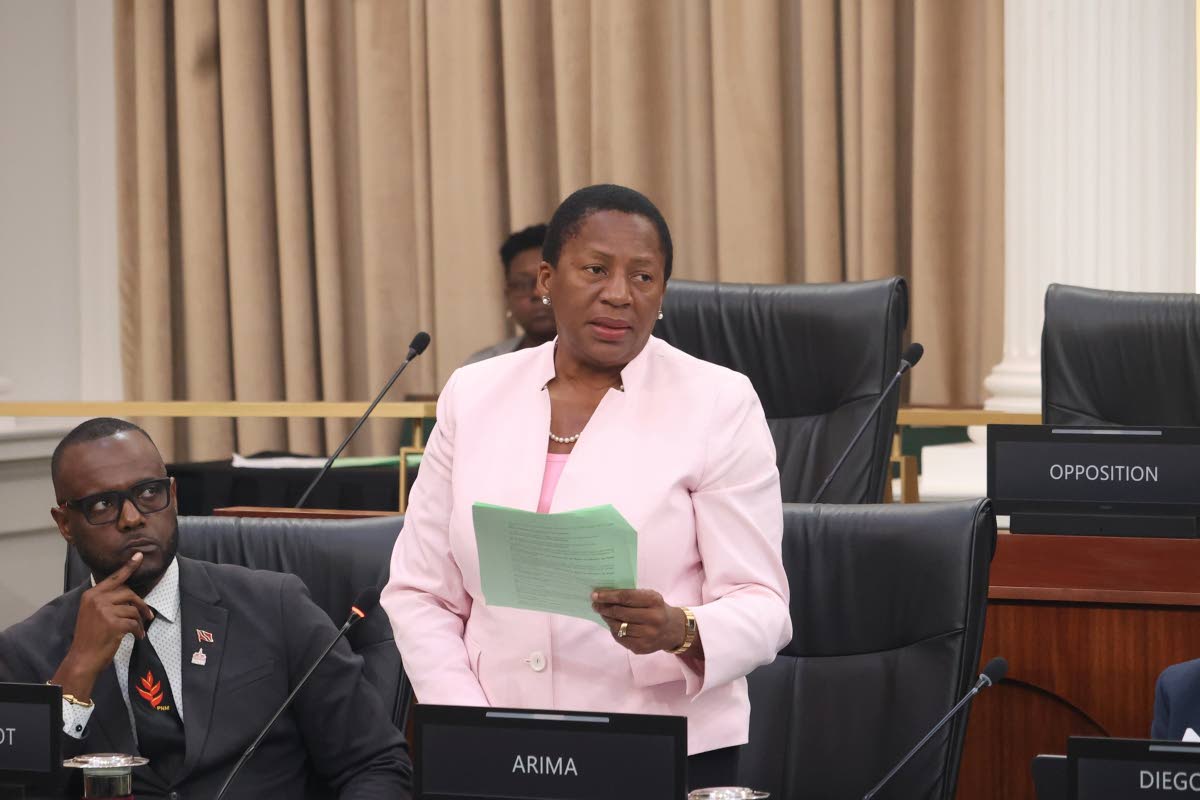
    In a forceful parliamentary address on January 16, Opposition Leader Pennelope Beckles issued a stark warning to Trinidad and Tobago’s ruling United National Congress (UNC) government, asserting that citizens are approaching a breaking point over unfulfilled election commitments. The Arima Member of Parliament delivered her critique alongside Opposition Chief Whip Marvin Gonzales during a press conference that highlighted growing discontent with the administration.

    Beckles directed pointed remarks toward Prime Minister Kamla Persad-Bissessar, challenging the government’s assumption that its 26-seat majority in the House of Representatives grants unlimited authority. “Don’t feel because you have 26 seats that you can do to the people as you feel!” she declared, emphasizing that electoral strength does not equate to unchecked power.

    The opposition leader accused the UNC of systematically misleading voters during the April 28 general election through empty promises that remain undelivered. She specifically cited assurances about job security for CEPEP and URP workers that allegedly vanished post-election, characterizing the government as fundamentally unconcerned with citizen welfare.

    Economic indicators reveal troubling trends, according to Beckles. She referenced reports from major fast-food chains like KFC noting decreased consumer spending, alongside numerous business closures contradicting government claims of presenting “the best budget ever.” Notable casualties include MovieTowne Tobago, Nutrien, Proman, D Bocas, Woodside, and RIK on Queen Street, Port of Spain, plus numerous small bars forced to shut down after liquor license fees skyrocketed from $1,500 to $9,000—a move Beckles described as “absolute wickedness.”

    The opposition leader questioned the government’s highly publicized national recruitment drive, demanding transparency about actual employment numbers generated. She further highlighted a 70% increase in natural gas prices and general inflation as evidence of deteriorating economic conditions.

    Beckles condemned the government’s tendency to blame the previous People’s National Movement (PNM) administration when facing difficulties, noting that even salary and pension delays are attributed to the opposition. She concluded by promising that a future PNM government would immediately review what she termed “foolish measures” implemented by the current administration.

  • Gov’t to chart course on access to information reform

    Gov’t to chart course on access to information reform

    KINGSTON, Jamaica — The Jamaican government has initiated a comprehensive review process for modernizing its two-decade-old Access to Information (ATI) Act, with Cabinet-level decisions pending on the reform approach. Senator Marlon Morgan, Parliamentary Secretary in the Ministry of Education, Skills, Youth and Information, revealed the development during a public forum titled ‘Enhancing Transparency: Examining the Access to Information Act and Its Reform’ hosted by Jamaicans for Justice (JFJ).

    The reform initiative gains significance as previous recommendations from a 2011 Joint Select Committee of Parliament require substantial updating due to evolving global standards and technological advancements. Senator Morgan emphasized that the ministry has reached a critical juncture in its evaluation of various position papers and stakeholder submissions, including substantial input from civil society organizations.

    Key drivers for the legislative refresh include Jamaica’s recent implementation of the Data Protection Act (2020), which became fully operational in 2023, creating new considerations for information governance. The convergence of data protection requirements with freedom of information principles necessitates legislative alignment to ensure both transparency and privacy protections.

    Concurrently, the Access to Information Unit is pursuing operational enhancements scheduled for implementation during fiscal year 2026/27. These improvements include comprehensive training programs for ATI officers focused on reducing processing backlogs, enhancing proactive disclosures, and implementing technological solutions to streamline information requests. The training curriculum will incorporate best practices from the requester’s perspective to improve service delivery.

    Senator Morgan outlined several public engagement initiatives, including a new ATI website launch in 2026, the creation of an online stakeholder engagement platform by March, and development of an institutional report card system to measure performance metrics. Additionally, the ATI Unit will finalize draft framework for an Advisory Committee during early 2026 for submission to Portfolio Minister Senator Dana Morris Dixon.

    The government’s dual approach combines legislative reform with operational improvements, reflecting commitment to strengthening transparency mechanisms, enhancing governmental accountability, and facilitating greater public participation in national decision-making processes.

  • ‘Mother Moon’ love song by Fyah George generating major buzz

    ‘Mother Moon’ love song by Fyah George generating major buzz

    Veteran reggae artist Fyah George has captivated audiences with his latest single ‘Mother Moon,’ a soulful exploration of long-distance love through celestial metaphor. Released on January 1, 2026, through the newly launched Trowers Zamar Records, the track has quickly gained momentum across Jamaican radio stations and international streaming platforms.

    The song’s poetic lyrics were crafted by Paulette Trowers, founder of Trowers Zamar Records and noted literacy advocate through her CHEETAH Toys initiative. Trowers revealed the dual inspiration behind the composition: ‘First, it addresses the emotional landscape of separated lovers, where physical connection is replaced by spiritual belief—not just in divine power, but in the moon’s tangible influence on human affairs. If it can move oceans, why not carry messages between hearts?’

    She further elaborated that the symbolism extends beyond romantic relationships to encompass familial bonds and any connection strained by distance. The ‘mother’ archetype represents protection and constancy, a concept born from Trowers’ personal fascination with astronomy and her nightly observations from her New Kingston residence.

    Fyah George, renowned for his conscious reggae anthems like ‘Kingston, Kingston’ and ‘No More War,’ delivers a vocal performance that balances restraint with emotional depth. The artist expressed immediate connection to the material, stating, ‘The song resonated with me profoundly, and I’m grateful for the opportunity to give it voice.’

    Technically, the production boasts exceptional pedigree. Two-time Grammy-winning engineer Nigel Burrell handled composition and mixing, while mastering was overseen by Chris Dailey, currently regarded among Jamaica’s premier audio engineers. Recording sessions took place at Kingston’s historic Mixing Lab Recording Studio, adding to the track’s authentic Jamaican soundscape.

    Early indicators suggest strong audience reception, with frequent airplay on Irie FM and designation as January’s ‘Song of the Month’ on GT Reggae Radio, which broadcasts to over 120 countries worldwide. The song’s success marks a significant debut for Trowers Zamar Records while demonstrating the enduring appeal of spiritually conscious reggae music.

  • Sagicor Foundation says 2023 Sigma Run funds used to purchase CT scanner for UHWI

    Sagicor Foundation says 2023 Sigma Run funds used to purchase CT scanner for UHWI

    KINGSTON, Jamaica — The Sagicor Foundation has issued a detailed clarification regarding the allocation of funds from its 2023 Sigma Corporate Run, following allegations of financial misdirection raised by opposition health officials. The philanthropic organization confirmed that proceeds designated for the University Hospital of the West Indies (UHWI) were exclusively utilized to procure a computed tomography (CT) scanner for the institution’s pediatric department.

    Official records indicate the 2023 charity event generated J$91,852,500 (approximately US$580,000), with designated beneficiaries being both the Edna Manley College of the Visual and Performing Arts and UHWI’s Pediatric Unit. According to the foundation’s Wednesday statement, a disbursement of US$495,000 (roughly J$79.2 million) was transferred to an authorized Philips medical equipment distributor in 2024 to secure the diagnostic imaging technology.

    The foundation’s response comes after Dr. Alfred Dawes, health spokesman for the opposition People’s National Party, publicly demanded accountability regarding approximately J$75 million raised specifically for pediatric care. Dr. Dawes characterized alleged discrepancies in fund allocation as ‘deeply concerning,’ emphasizing that donations collected for critically ill children must be applied exclusively to their promised purposes.

    Medical procurement timelines reveal the CT scanning equipment was shipped in early December 2025, with anticipated delivery to Jamaica scheduled for February 2026. The Sagicor Foundation emphasized its commitment to operational transparency, stating all financial distributions strictly adhere to its governance framework and are fully accounted for through official channels.

    The developing situation highlights increasing public scrutiny over charitable fund management in Jamaica’s healthcare sector, particularly regarding corporate-sponsored initiatives targeting vulnerable patient populations.