博客

  • Rotary Club of Dominica hands over refurbished chicken coop to Grand Bay Primary’s 4H Club

    Rotary Club of Dominica hands over refurbished chicken coop to Grand Bay Primary’s 4H Club

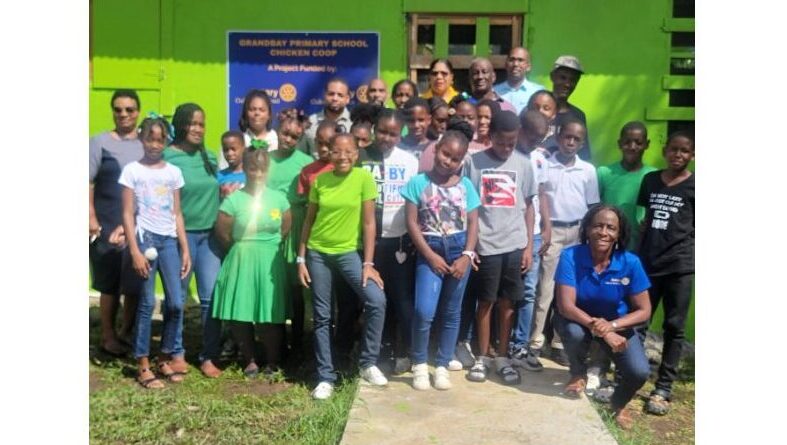
    In a landmark initiative blending international cooperation with youth development, the Rotary Club of Dominica has officially transferred a fully renovated poultry housing facility to the 4-H Club at Grand Bay Primary School. The ceremonial handover occurred on January 16, 2026, representing a strategic investment in practical education and food security.

    Funded through a collaborative financial injection of EC $27,000 from the Rotary Club of Gateshead (England) and District 1030 (UK), the project transcends mere infrastructure. The revitalized coop arrives operational, stocked with an initial flock of 50 broilers and 50 layers, ensuring immediate project viability and hands-on learning opportunities.

    Dr. Jermaine Jewel Jean-Pierre, President of the Rotary Club of Dominica, articulated the project’s deeper purpose during the ceremony. He emphasized that the facility serves as a dynamic classroom for cultivating essential life competencies. “This chicken coop is more than a structure; it is an investment in the future of our children,” he stated. The initiative is designed to equip students with tangible skills in animal husbandry, entrepreneurship, teamwork, and livestock management, while simultaneously fostering an appreciation for agriculture’s role in sustainable development.

    The project’s design incorporates a self-sustaining economic model. Principal Evans James expressed profound gratitude to the international Rotary partners, highlighting the project’s dual impact on education and community nourishment. Revenue generated from selling eggs to local residents will be channeled directly back into funding the school’s feeding program and covering ongoing operational costs for the coop, such as feed and supplies.

    The event, attended by students, educators, and Rotary representatives, stood as a testament to the power of global partnerships in driving local community advancement. This poultry project is a component of the Rotary Club of Dominica’s broader commitment to executing impactful, sustainable projects across the island in collaboration with both local and international allies.
  • EZOTI en bedrijfsleven slaan handen ineen voor sterker ondernemersklimaat

    EZOTI en bedrijfsleven slaan handen ineen voor sterker ondernemersklimaat

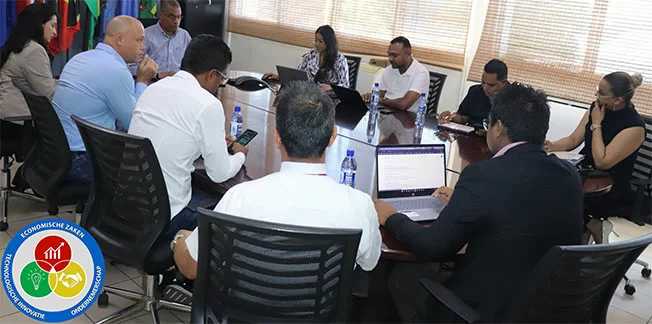
    The Ministry of Economic Affairs, Entrepreneurship and Technological Innovation (EZOTI) has concluded strategic discussions with the Suriname Trade and Industry Association (VSB) regarding a multi-year development initiative in partnership with the United Nations Industrial Development Organization (UNIDO). The Programme for Country Partnership (PCP), scheduled for implementation from 2026 through 2031, formed the central focus of these high-level consultations.

    During the comprehensive dialogue, both parties examined the pivotal role of the private sector within this ambitious framework. Key discussion points included industrial capacity enhancement, promotion of local content in production and services, generation of sustainable employment opportunities, and overall improvement of the business environment. Representatives from EZOTI and VSB unanimously emphasized that robust collaboration between government and industry is fundamental to achieving broader economic diversification and resilience.

    The negotiations also addressed persistent operational challenges faced by Surinamese enterprises, particularly regarding bureaucratic efficiency. Participants identified critical areas for improvement, including the modernization and simplification of government services, resolving labor market constraints, and implementing measures to boost innovation, productivity, and corporate competitiveness.

    In a significant procedural development, both institutions agreed to institutionalize their consultations through more frequent and structured meetings. This systematic approach aims to ensure closer alignment between policy formulation and practical implementation.

    The ministry and business association have committed to active collaboration in further refining and executing the PCP program. The ultimate objective remains strengthening Suriname’s industrial base and creating more favorable conditions for entrepreneurial growth throughout the nation.

  • Pensioners land lots sold out as locals snap up beachfront property

    Pensioners land lots sold out as locals snap up beachfront property

    A remarkable surge in demand for coastal real estate has resulted in the complete sell-out of pensioner-allocated beachfront land lots, with local buyers driving an unprecedented purchasing frenzy. The phenomenon reflects growing market dynamics where retirees’ property investments are being rapidly acquired by domestic purchasers seeking prime waterfront locations.

    Market analysts attribute this explosive sales activity to multiple converging factors: rising appreciation potential for coastal properties, post-pandemic reevaluation of lifestyle priorities, and strategic investment moves anticipating long-term value growth. The transaction velocity exceeded all projections, with available parcels being acquired within remarkably short timeframes.

    Real estate professionals report exceptional competition for these properties, highlighting their unique combination of scenic positioning, development potential, and investment security. The sell-out pattern demonstrates shifting property ownership trends where traditional retirement holdings are being absorbed by broader market participants.

    The market movement carries significant implications for regional development planning, housing affordability, and retirement asset management. Local authorities are now examining the broader consequences of this rapid property transfer and its impact on community composition and economic development.

  • Community drainage work underway in Urlings, Senator says

    Community drainage work underway in Urlings, Senator says

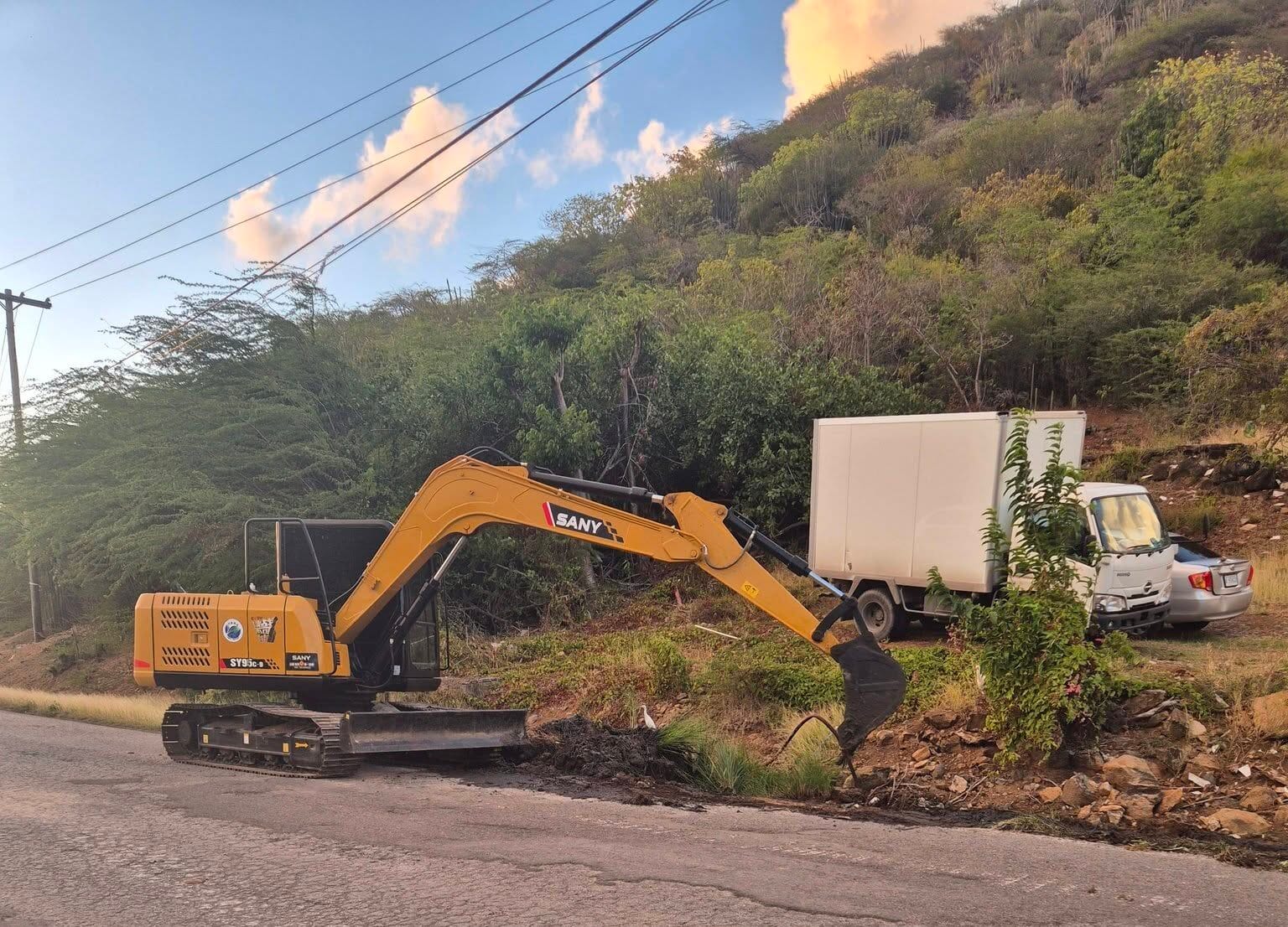
    Senator Dwayne George has demonstrated his commitment to grassroots political engagement by personally participating in drainage cleanup operations in the community of Urlings. The hands-on initiative, aimed at mitigating flood risks, saw the senator actively clearing gutters and waterways to improve drainage infrastructure ahead of anticipated heavy rainfall.

    In an official statement released Thursday, Senator George emphasized that direct community service constitutes a fundamental aspect of his representation philosophy. “We continue to serve the constituency with dedication and purpose, taking action where it matters most,” he stated, characterizing his approach as “hands-on representation” that involves working directly alongside constituents.

    The drainage maintenance forms part of a broader environmental preparedness strategy focused on maintaining clean waterways and enhancing community resilience against water-related challenges. Senator George highlighted the dual objectives of protecting residential areas while preserving environmental cleanliness through proactive measures.

    This intervention addresses persistent flooding concerns that plague multiple communities during peak rainfall seasons, where obstructed drainage systems frequently contribute to localized flooding incidents. The senator’s participatory approach underscores a political methodology that prioritizes visible, practical action alongside policy-level solutions to constituent concerns.

  • COMMENTARY: Should A Political Party Drink Bush Tea For A Person’s Fever

    COMMENTARY: Should A Political Party Drink Bush Tea For A Person’s Fever

    In a compelling examination of political praxis, the fundamental question arises: should a political party intervene to address the suffering of its constituents, even when they remain silent? The unequivocal answer is yes. This analysis argues that a party’s refusal to ‘drink bush tea for a person’s fever’—a metaphor for addressing societal ailments—constitutes a profound failure in its core mission to mobilize, empathize with, and galvanize the masses into political action.

    True political leadership demands sound judgment, deep empathy, and an authentic connection to the lived realities of ordinary citizens. For any party, particularly an opposition group aspiring to govern, to withhold advocacy because people do not vocalize their grievances is not only unwise and counterproductive but fundamentally irrational. This stance ignores the complex socio-political dynamics at play, especially within small societies like Antigua and Barbuda, where government tentacles reach deeply as the largest employer. Here, fears of retaliation, social pressure, and job insecurity understandably silence many, making it the party’s duty to become the voice for the vulnerable rather than scolding their silence.

    The responsibility falls upon political organizations to canvass, engage, and mobilize the amorphous masses for democratic advancement, advocating for reforms and acting on behalf of the people regardless of their awareness of their own dilemmas. History consistently demonstrates that parties gain substantial support when leaders exhibit genuine understanding, empathy, and initiate actions to address public problems.

    Drawing from Leninist theory, the concept of the Vanguard Party provides a powerful framework. As developed in Lenin’s 1902 pamphlet, this centralized group of disciplined revolutionaries was designed to provide practical and political leadership on behalf of the entire working class, engaging them in revolutionary politics to ultimately secure power. Crucially, the Vanguard Party would never dismiss ordinary workers for failing to speak out against capitalism or demonstrate against their problems; rather, its raison d’être was to educate, motivate, and galvanize them into action.

    This concept remains broadly applicable today: any political party worthy of the name should operate as a vanguard, focusing on the interests of all people, particularly the vulnerable, poor, powerless, and voiceless. Finally, addressing recent commentary referencing biblical scripture to argue against political advocacy, the analysis concludes with a powerful counterpoint: the ultimate act of drinking bush tea for everyone’s fever was exemplified through sacrifice for the greater good, reinforcing the moral imperative for political parties to champion their constituents’ causes unconditionally.

  • Belize City Councillors Want a Stipend Increase

    Belize City Councillors Want a Stipend Increase

    Belize City Council’s push for increased stipends and pension benefits for its members has encountered a measured response from the national government, with officials emphasizing that such enhancements must not compromise essential public services.

    Oscar Requena, Minister of Rural Transformation and Local Government, confirmed that his ministry is reviewing compensation requests from multiple municipal councils across Belize. However, he clarified that no formal proposal has been officially submitted by Belize City Council leadership despite ongoing discussions.

    “I am cognizant of their appeal but haven’t received documented particulars,” Minister Requena stated. “While we will thoroughly examine this matter, any financial considerations must align with broader fiscal responsibilities.”

    The movement for improved compensation gained momentum during an August 2024 council session where Deputy Mayor Allan Pollard advocated for structural reforms. Pollard contended that contemporary municipal governance has evolved into a full-time commitment requiring professional expertise, thereby justifying enhanced remuneration packages.

    Pollard specifically proposed implementing pension benefits for council members completing two or more terms, arguing that such incentives would attract and retain qualified individuals in local government positions. Alternatively, he suggested significant stipend increases could serve as a compensatory measure if pension provisions proved unfeasible.

    Minister Requena emphasized the variable nature of municipal compensation across Belize’s jurisdictions, noting that “remuneration structures differ substantially between municipalities, primarily determined by their respective financial capacities and revenue generation.”

    The minister reiterated that any potential salary adjustments for elected municipal officials would only receive consideration after local governments demonstrably fulfill their primary service obligations to residents, establishing a clear hierarchy of governmental priorities.

  • PM Says Rural Residents Forgotten for Too Long

    PM Says Rural Residents Forgotten for Too Long

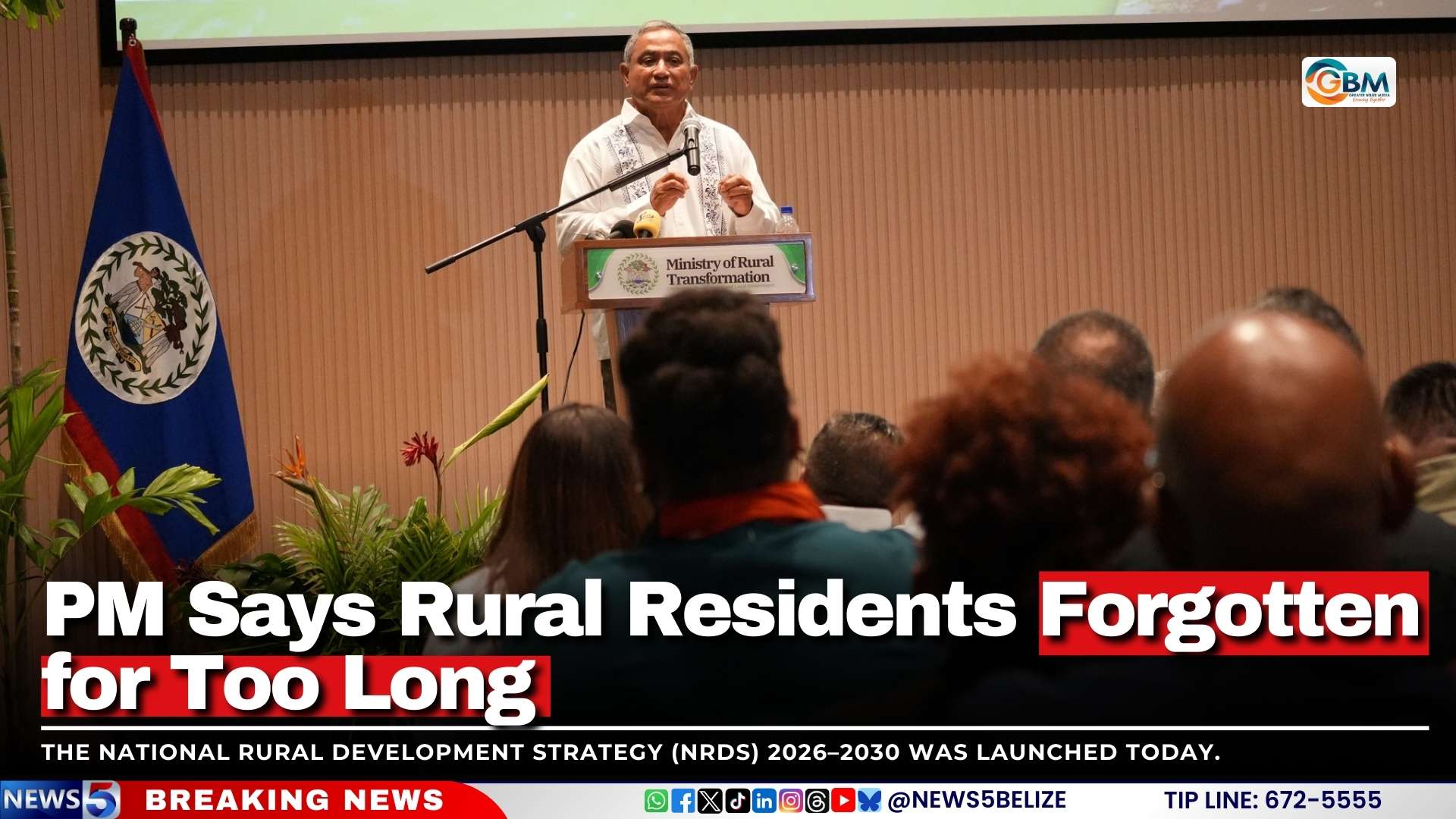
    In a landmark announcement on January 21, 2026, Belizean Prime Minister John Briceño unveiled the National Rural Development Strategy (NRDS) 2026–2030, declaring an end to decades of neglect toward rural populations. The comprehensive five-year blueprint represents a paradigm shift in national development priorities, targeting systemic poverty reduction through enhanced economic opportunities and infrastructure modernization.

    Prime Minister Briceño delivered a powerful critique of historical development disparities, stating, ‘For generations, we have failed to allocate proper attention and resources to our rural citizens.’ He emphasized that despite housing over half of Belize’s population, these regions continue to experience severe infrastructure deficits, including unreliable electricity access, inadequate water systems, and underdeveloped road networks.

    The Prime Minister drew stark contrasts between urban and rural living conditions: ‘In urban centers, residents enjoy immediate access to basic utilities—switches deliver instant electricity, faucets provide running water. Meanwhile, rural communities face the complete opposite reality.’

    Briceño reframed the national conversation by identifying rural Belize as the nation’s economic backbone, highlighting its concentration of agricultural production, tourism assets, food security capabilities, and natural reserves. ‘The very elements that define Belize’s unique character and generate national wealth originate in our rural territories,’ he asserted.

    The NRDS establishes a coordinated framework for governmental investment, prioritizing strategic infrastructure development including farm-to-market road networks, land accessibility programs, affordable credit systems, reliable electrification projects, and educational support mechanisms designed to interrupt intergenerational poverty cycles.

    This initiative marks the most significant rural development commitment in Belize’s recent history, signaling a fundamental reorientation of national policy toward inclusive, equitable growth across all geographical regions.

  • Hydro Belize Share Sale Oversubscribed by 500,000 Shares

    Hydro Belize Share Sale Oversubscribed by 500,000 Shares

    The Belizean government’s landmark public offering of Hydro Belize Limited shares has concluded with exceptional investor enthusiasm, recording oversubscription by approximately 500,000 shares. Preliminary data indicates applications reached roughly 4.5 million shares, significantly surpassing the four million shares initially available to investors at BZ$29 per share, translating to over $130 million in total application value.

    The offering represented 50% of the company’s total issued shares, with the government confirming it will fulfill all excess demand by allocating additional shares from its retained 50% stake. The investment initiative attracted nearly 2,000 individual investors alongside more than 60 corporate entities, including major institutional participants such as the Belize Social Security Board, multiple credit unions, and private sector pension funds.

    Successful applicants have until February 4, 2026, to finalize payments, with share transfers and certificate issuance scheduled following the payment closure period. In a parallel development, the government announced Hydro Belize Limited’s forthcoming bond issuance program designed to repurchase and cancel the state’s remaining shares. This strategic maneuver enables full government cost recovery while creating new debt investment opportunities, with complete divestment targeted by February 28, 2026.

    Post-divestment, Hydro Belize Limited will transition to full private sector ownership with approximately 2,000 public shareholders. The company, previously operating as Fortis Belize Limited, maintains ownership and operational control over three hydroelectric facilities along the Macal River in the Cayo District. These installations collectively generate 51.2 megawatts of rated capacity, currently supplying 30-35% of Belize’s national electricity requirements.

  • Police probe fatal shooting in Christ Church

    Police probe fatal shooting in Christ Church

    A brazen daylight shooting in Christ Church has culminated in a homicide investigation after a man was fatally gunned down on Wednesday afternoon. The Barbados police force has launched a full-scale operation following the violent incident along Pegwell Boggs, which occurred at approximately 1:35 p.m.

    Preliminary reports from the Oistins Station indicate the attack was premeditated and targeted. According to official accounts, a group of individuals had congregated in the area when a vehicle abruptly approached the location. An armed assailant emerged from the automobile and unleashed a volley of gunshots toward the assembled group before making a swift escape in the waiting vehicle.

    The victim, struck by multiple rounds, managed to flee a short distance before collapsing outside a private residence. Emergency medical services were promptly dispatched to the scene; however, a attending physician confirmed the man succumbed to his injuries shortly after the assault. The scene has been cordoned off for forensic analysis as detectives work to reconstruct the sequence of events.

    Law enforcement authorities have issued a public appeal for information, urging potential witnesses to come forward with any details that might aid the investigation. The police have emphasized the absolute confidentiality of all tip submissions, directing information to Crime Stoppers at 1-800-8477, the Police Emergency hotline at 211, or the Oistins Police Station at 418-2612/2608. This shooting marks another episode in the region’s ongoing struggle with gun violence, raising concerns about public safety in residential communities.

  • GOB Takes Early Action Ahead of Sargassum Season

    GOB Takes Early Action Ahead of Sargassum Season

    The Government of Belize has initiated proactive measures to address the escalating sargassum threat across the Caribbean region through its specialized National Sargassum Task Force (STF). This coordinated national response comes as satellite monitoring indicates increased sargassum activity heading toward Belizean coastal waters for the 2026 season.

    Co-led by the Ministry of Tourism, Youth, Sports and Diaspora Relations and the Ministry of Blue Economy and Marine Conservation, the STF has identified five priority zones for intervention: San Pedro, Caye Caulker, Seine Bight, Hopkins, and Placencia. The comprehensive preparedness strategy involves both technological and infrastructural enhancements to mitigate the environmental and economic impact of the seaweed influx.

    Strategic acquisitions include specialized shoreline maintenance equipment such as a Barber Beach Rake and replacement components for existing machinery in Placencia. Concurrently, infrastructure assessments are progressing in San Pedro and Caye Caulker to evaluate disposal site suitability and logistical requirements.

    The task force is employing the sophisticated Sargassum Monitoring (SAMTool) platform, which utilizes satellite detection and drift prediction technology to forecast landfall patterns. This advanced monitoring system enables authorities to anticipate accumulation hotspots and optimize cleanup coordination.

    Additional resources deployed include a purpose-built workboat designed for sargassum removal in shallow marine environments and a continuous collection floating unit for near-shore operations. Current operations remain in limited pilot phases, with full-scale deployment across all five locations scheduled progressively as equipment and support systems become operational.