博客

  • Jamaica Broilers secures full $24-b local refinancing

    Jamaica Broilers secures full $24-b local refinancing

    Jamaica Broilers Group has successfully concluded a comprehensive $24 billion (JMD) refinancing arrangement, a strategic move that fully addresses its local debt obligations and restructures its financial framework. The completed financing package, which surpasses the previously disclosed $15 billion figure, was finalized with a consortium of three major Jamaican financial institutions: National Commercial Bank (NCB) Group, CIBC Caribbean, and Bank of Nova Scotia Jamaica Limited.

    The necessity for this extensive refinancing emerged after the company encountered breaches on multiple loan covenants during the 2024/25 financial year. These breaches were primarily triggered by delays in finalizing audited accounts, which consequently prevented the company from obtaining essential year-end waivers from its lenders. Ian Parsard, Group Senior Vice-President for Finance and Corporate Planning, clarified the situation during the company’s recent Annual General Meeting, emphasizing that despite the covenant issues, all Jamaican lenders demonstrated significant cooperation throughout the process.

    This new financing structure represents a fundamental shift from the company’s previous debt management approach. It replaces a series of individual loan agreements with five different lenders with a unified inter-creditor agreement. This consolidated framework establishes a common set of covenants for all participating banks and, most critically, fully resets all past covenant breaches. Furthermore, the refinancing transitions the company’s borrowing from unsecured to secured facilities, backed by recently updated asset valuations.

    A pivotal outcome of this arrangement is the dramatic improvement in the company’s liquidity and debt maturity profile. The $24 billion facility has enabled Jamaica Broilers to reclassify this entire amount from short-term to long-term liabilities. This maneuver effectively resolves the previous imbalance where current liabilities significantly exceeded current assets. The package also facilitated the early retirement of bonds that were not scheduled to mature until 2027.

    The financing is priced at prevailing market rates. The NCB component, comprising a $6.4 billion loan and $8.7 billion in multi-tranche bonds, carries interest rates linked to the weighted average Treasury bill yield, currently translating to approximately 10%. The bonds specifically carry rates between 10.75% and 11%. CIBC Caribbean and Scotiabank largely maintained their existing rates, with CIBC applying a modest one-percentage-point adjustment.

    Parsard assured shareholders that the debt servicing costs, while substantial, are not an impediment to future dividend distributions. The company’s dividend policy, which targets payouts equivalent to 20% of after-tax profits, will continue to be guided by profitability rather than the size of the debt package.

    The refinancing was bolstered by a major asset revaluation conducted in the first half of the 2025/26 financial year. This revaluation, which focused on the group’s land and buildings, added over $50 billion to its asset values. This appreciation propelled stockholders’ equity to approximately $32 billion as of November 1, 2025, a remarkable recovery from a deficit position at the end of the prior fiscal year.

    While the Jamaican refinancing is complete, negotiations with the company’s US banking syndicate are still ongoing. Parsard noted that the total group debt is roughly evenly split between Jamaica and the United States, with the newly secured $24 billion JMD facility (approx. US$150 million) refinancing the Jamaican portion, while US debt stands at approximately US$120 million. He characterized the relationship with US lenders as “uncommonly very, very supportive,” despite the absence of a final written agreement.

    The company’s operational performance for the six months ending November 1, 2025, showed resilience with group revenue reaching $50.3 billion and a net profit of $1.2 billion, even after absorbing a $379 million net loss in the second quarter. The Jamaican operations were a strong contributor with a segment result of $3.6 billion, while the US segment continued to navigate significant cost and pricing pressures.


  • Woodcats launches first IPO under Junior Market’s new $750-m cap

    Woodcats launches first IPO under Junior Market’s new $750-m cap

    WOODCATS International Ltd is poised to make financial history by launching a landmark $750 million share offering, marking the first significant test of the Jamaica Stock Exchange’s recently expanded capital-raising threshold for its Junior Market. This strategic move will see the established pallet manufacturer secure funds for industrial enhancements while facilitating a partial divestment by its majority owner, Derrimon Trading Co.

    According to the company’s prospectus, the 27-year-old entity will issue up to 833.3 million ordinary shares priced at 90 cents each through a combined initial public offering and offer for sale. The transaction is structured as a fifty-fifty split, with half representing newly issued shares by Woodcats and the remainder comprising existing shares sold by Derrimon, which initially acquired the business in 2018. NCB Capital Markets Ltd. is steering the offering as the lead broker and arranger.

    Derrimon’s sale of 416.7 million shares is projected to yield approximately $375 million in gross proceeds. After accounting for equally shared transaction costs, the selling shareholder anticipates net proceeds of around $353 million. Despite this substantial sell-down, Derrimon will maintain its position as the dominant shareholder with a 49.4 percent stake post-listing, reduced from its previous holding of over 81 percent.

    This pioneering offering follows regulatory amendments that elevated the Junior Market’s fundraising cap from $500 million to $750 million. This policy revision aims to enable more mature, asset-intensive companies to continue benefiting from Junior Market incentives rather than transitioning prematurely to the Main Market. Woodcats’ utilization of the full enhanced limit serves as a crucial practical examination of whether investor appetite, market liquidity, and governance frameworks can accommodate larger-scale transactions.

    The capital raised by Woodcats—estimated at $375 million before expenses—will be primarily allocated to capital expenditure and working capital requirements rather than acquisition-driven expansion. Targeted investments include advanced resaws, pallet-nailing machines, shredders, crushers, dust-collection systems, and forklifts. This machinery-focused strategy underscores the operational dynamics of pallet manufacturing, where profitability hinges more on production efficiency, equipment reliability, and cost management than pricing power. Consequently, the IPO functions primarily as a balance-sheet optimization move rather than a growth-oriented market play.

    Operating from two Kingston facilities, Woodcats annually produces or services over 300,000 pallets for logistics operators, food distributors, and export clients. While pallets represent a low-profile product category, demand correlates strongly with warehousing, cold storage, and export volumes, effectively positioning the company as a barometer for Jamaica’s logistics and distribution economy. This economic linkage may lead institutional investors to perceive the business as structurally defensive despite its industrial nature.

    Financial performance reveals substantial improvement under Derrimon’s ownership, with operating profit surging more than fivefold from $31.9 million in 2020 to $179.3 million in 2024. This transformation reflects strategic capital investments, operational process enhancements, and a shift toward higher-margin services including certified heat treatment for export-market pallets. The current offering timing aligns with these cyclical earnings peaks, amplified by Junior Market tax concessions that enhance post-listing profitability.

    The offering structure reserves approximately two-thirds of shares for strategic investors, key partners, and employees, leaving only about 34 percent available for public subscription. This limited retail allocation mitigates execution risk for a transaction at the upper extreme of the Junior Market’s new size spectrum and indicates anticipated institutional anchoring rather than speculation-driven retail participation that has characterized smaller listings.

    The subscription period is scheduled from February 2 to February 20, subject to early closure if fully subscribed. Final listing remains contingent upon raising a minimum of $400 million and satisfying exchange admission requirements. While Junior Market companies enjoy full corporate income tax remission for their first five years followed by reduced rates, the prospectus explicitly warns that compliance failures could trigger tax clawbacks—a risk that grows proportionally with deal size and profitability.

    The offering document further highlights vulnerability to climate and supply-chain disruptions, specifically referencing Hurricanes Beryl (2024) and Melissa (2025) as events that disrupted Jamaican economic activity. While such events can generate short-term demand spikes in specific sectors, they simultaneously depress overall economic throughput and strain logistics networks. Additional risk emerges from inventory management, with inventories constituting over 21 percent of total assets by end-2024, thereby tying up significant capital and creating exposure to valuation fluctuations and obsolescence.

    Although Woodcats currently enjoys limited local competition in wooden pallet manufacturing, the prospectus acknowledges potential margin erosion from new market entrants or large customers internalizing pallet production. This competitive threat reinforces the company’s focus on achieving scale and efficiency through current capital raising before market pressures intensify.

    A successful listing would represent an evolutionary milestone for the Junior Market, demonstrating whether the expanded fundraising capacity can effectively support larger, cash-generative industrial enterprises beyond the smaller, early-stage companies that traditionally dominated the platform. More broadly, this transaction will indicate whether policy reforms aimed at deepening Jamaica’s capital markets can successfully attract offerings with substantial economic weight.

  • Sagicor Bank plans Apple Pay introduction

    Sagicor Bank plans Apple Pay introduction

    Jamaica’s financial sector is undergoing a significant digital transformation with Sagicor Bank Jamaica Limited (SBJ) announcing its impending integration of Apple Pay, marking the second major Jamaican financial institution to embrace the global payment platform. This strategic move positions Sagicor as a forward-thinking competitor in Jamaica’s evolving digital payment landscape, where approximately 36% of mobile users operate on iOS systems.

    The development follows Bank of Nova Scotia Jamaica Limited’s (BNSJ) September 2024 declaration of intent to implement both Apple Pay and Samsung Pay services. While Apple Pay currently operates in neighboring Caribbean nations including the Dominican Republic and The Bahamas, its expansion into Jamaica represents a substantial leap in the region’s financial technology adoption.

    Sagicor’s digital wallet initiative forms part of a comprehensive technological overhaul that will also support transactions involving Jamaica’s central bank digital currency (CBDC), Jam-Dex. This dual approach addresses both international payment convenience and domestic digital currency integration, creating a robust framework for modernized financial transactions.

    Despite growing momentum, digital payment adoption faces challenges from merchant security concerns regarding transaction settlements. However, industry analysts anticipate that increased institutional endorsement will gradually mitigate resistance, particularly as transaction volumes demonstrate strong growth patterns. Recent data from the Bank of Jamaica indicates substantial payment activity, with JMD $1.14 trillion and USD $553.21 million processed through point-of-sale terminals in 2024, showing respective increases of 10% and 15% in the first five months of 2025.

    The Jamaican payment infrastructure continues to expand with 33,311 active POS terminals recorded by May 2025, serving over 3.8 million JMD debit cards and approximately 437,382 JMD credit cards in circulation. This infrastructure development creates a fertile environment for digital payment solutions to thrive.

    Concurrently, the Bank of Jamaica is vigorously promoting Jam-Dex adoption to reduce the nation’s cash dependency, with Governor Richard Byles emphasizing the urgency of transitioning away from physical currency. Currently, only $260.05 million Jam-Dex circulates within the economy, accessible through just two digital wallets: NCB’s Lynk app and JN Bank’s JN Pay, with 2,379 registered merchants accepting the digital currency.

    Sagicor, designated as the third wallet provider in 2023, has yet to publicly launch its digital wallet solution but has incorporated digital wallet account sections into its online banking platform. The central bank continues collaborating with financial institutions to enable Jam-Dex acceptance at POS terminals, anticipating additional wallet providers to join the ecosystem by early next year, significantly expanding Jamaica’s digital payment capabilities.

  • New Bill seeks to tighten rules on gated communities

    New Bill seeks to tighten rules on gated communities

    Jamaica’s Parliament has ushered in a new regulatory era for gated communities with the introduction of the transformative Shared Communities Act 2026. Tabled in the House of Representatives, this comprehensive legislation establishes a rigorous legal framework to govern the nation’s rapidly expanding private residential developments.

    The Act mandates the creation of legally recognized Community Corporations for all registered shared communities. These corporations, governed by elected executive committees of property owners, will bear significant responsibilities. Their duties encompass maintaining detailed proprietor registries, ensuring common property upkeep, implementing long-term maintenance strategies, and managing community funds for administrative and insurance purposes.

    A pivotal aspect of the legislation empowers the Real Estate Board as the primary regulatory authority. The Board will process community registrations, issue operational certificates, maintain official records, and facilitate dispute resolution between proprietors and community corporations. Its extensive powers include ordering the removal of non-compliant animals from properties and invalidating improperly passed corporation resolutions.

    To address chronic issues of fee delinquency, the law establishes formidable enforcement mechanisms. Community corporations can now pursue property seizure and sale against owners with outstanding maintenance fees, following strict notification procedures supervised by the Real Estate Board. Prior to sale, corporations may obtain court orders for property possession, enabling them to rent out delinquent units and apply rental income toward owed contributions.

    Financial penalties reach unprecedented levels, with courts authorized to impose fines up to $1 million Jamaican dollars for by-law violations. The legislation additionally allows for interest accrual on unpaid contributions and enables parish courts to adjudicate collection cases without monetary limits.

    Recognizing that many proprietors reside abroad, the law requires non-resident owners to appoint local agents to fulfill their obligations. Although introduced by Prime Minister Andrew Holness’s administration, the bill was presented by Minister Robert Montague. Opposition Parliamentarian Julian Robinson has called for further legislative scrutiny through a joint select committee, highlighting the bill’s profound implications for property rights and community governance.

  • Selector Richie D enlists Sanchez, Wayne Wonder for Valentine’s Day concert

    Selector Richie D enlists Sanchez, Wayne Wonder for Valentine’s Day concert

    Renowned music producer and DJ Richard “Richie D” Martin is expanding his creative portfolio by venturing into concert promotion with the inaugural Love and Reggae event scheduled for Valentine’s Day. The concert will transform the picturesque lawns of Devon House in St. Andrew into a romantic musical haven featuring two of reggae’s most celebrated voices.

    Sanchez and Wayne Wonder, both iconic figures in the romantic reggae genre, will headline the event marking their first shared stage performance in over a decade. The concert will showcase Akeem Fennell, the 2024 Digicel Rising Star winner, as the opening act, providing a platform for emerging talent alongside established legends.

    Martin revealed to the Jamaica Observer that the concept was originally developed for December 2023 but was strategically repositioned to align with Valentine’s Day. “With two legendary artistes whose music celebrate love and romance, Valentine’s Day became the perfect and most natural choice to bring this vision to life,” Martin explained.

    The producer emphasized the significance of the artist selection, noting both his personal relationships with the performers and the historical gap since their last joint appearance. “Both artistes are timeless favourites, especially among female fans, and their catalogues are filled with love anthems. There truly couldn’t be a better pairing to headline a Valentine’s Day celebration,” Martin added.

    The event will feature live performances with both artists’ full bands, complemented by DJ Master ROGJ’s selections and hosting by Bambino and Jade. Martin, whose production credits include Lady Saw’s chart-topping single ‘I’ve Got Your Man’ and the influential ‘Faith’ rhythm, aims to create an immersive experience that allows attendees to “escape, reconnect, and fall in love with reggae all over again.”

    In a philanthropic gesture, portion of the proceeds will be directed toward Hurricane Melissa relief efforts, adding a charitable dimension to the romantic musical evening.

  • ‘That hurts my heart’

    ‘That hurts my heart’

    Jamaica Public Service Company (JPS) CEO Hugh Grant has confirmed to parliamentary officials that an arrest has been made in connection with extortion attempts targeting customers awaiting power restoration after Hurricane Melissa. The disclosure came during Tuesday’s session of the Public Administration and Appropriations Committee (PAAC) where legislators grilled utility executives about allegations that residents were being solicited for illegal payments to expedite electricity reconnection.

    Grant expressed profound disappointment regarding these exploitative practices, stating: ‘When you say that workmen request to be paid, that hurts my heart during this unprecedented time of hardship.’ He emphasized the company’s zero-tolerance stance toward such activities and revealed that swift action had been taken upon discovering the scheme.

    The JPS president outlined comprehensive countermeasures implemented since the hurricane devastated Jamaica’s power infrastructure last October. These include enhanced monitoring systems, public awareness campaigns through town criers and text messages, and deployment of security personnel to affected areas. ‘We have done town criers, we have done texts, we have also sent out our security forces in many operations,’ Grant detailed during the committee hearing.

    Importantly, Grant clarified that the apprehended individual was not employed by JPS, though the company continues to collaborate closely with law enforcement agencies to identify and prosecute additional offenders. The arrest comes amid widespread public frustration over prolonged outages that left tens of thousands of customers without electricity for extended periods across multiple parishes following Hurricane Melissa’s destructive path.

    The utility executive urged affected communities to report any solicitation attempts immediately, promising robust response measures: ‘Give me a lead and I guarantee you we will have our security forces out there and we will ensure that we do right by the law.’

  • Nationwide underground grid too costly, says JPS

    Nationwide underground grid too costly, says JPS

    Jamaica’s national electricity provider has declared a comprehensive underground power grid financially unfeasible despite growing political pressure for storm-resistant infrastructure. The Jamaica Public Service Company (JPS) presented this assessment during a parliamentary committee hearing that examined grid resilience strategies following recent devastating hurricanes.

    JPS President and CEO Hugh Grant, drawing from his experience with New York’s extensive underground network, informed Parliament’s Public Administration and Appropriations Committee that subterranean systems typically cost ‘north of 15 times’ more than overhead lines. While acknowledging the superior reliability of underground infrastructure, Grant emphasized that burying Jamaica’s entire electrical network would impose an overwhelming financial burden on the nation.

    The debate emerged amid heightened concerns about climate resilience after Hurricane Melissa’s October 2025 devastation, which caused extended blackouts across multiple parishes. Lawmakers specifically questioned whether Jamaica’s overhead grid could withstand increasingly severe weather events and seismic activity, with St Mary Central MP Omar Newell querying earthquake preparedness and underground alternatives.

    Instead of nationwide conversion, JPS is advancing a strategy of ‘selective undergrounding’ that prioritizes critical infrastructure. This targeted approach would focus protection on essential facilities like hospitals, tourism corridors, and other high-priority zones rather than attempting complete grid overhaul. Grant confirmed the company has obtained preliminary pricing for such targeted projects, noting they remain ‘extremely expensive’ but offer more achievable resilience benefits.

    The discussion reflects Jamaica’s broader ‘build back better’ initiative following repeated storm seasons that have exposed vulnerabilities in overhead transmission systems, particularly in rural and coastal communities most susceptible to weather-related damage.

  • ‘Legal light, and it feels good’

    ‘Legal light, and it feels good’

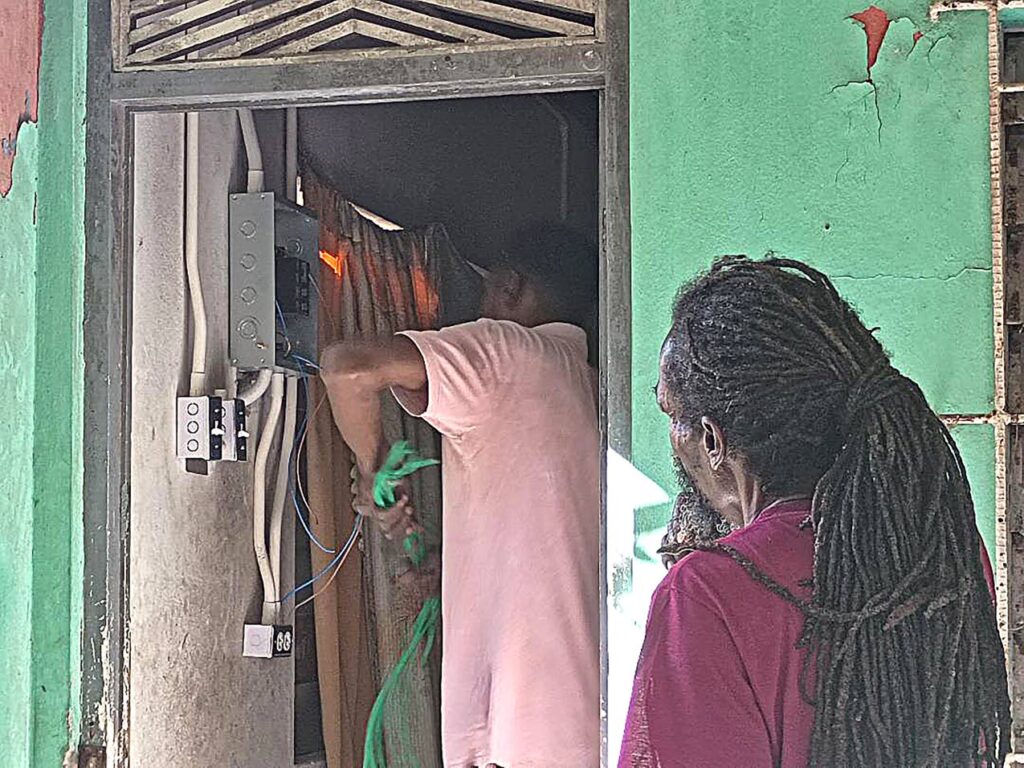
    ANNATTO BAY, St. Mary — A transformative initiative is bringing legal electricity and renewed dignity to residents of rural Jamaica through the government’s Rural Electrification Programme (REP). The program, implemented through a partnership between the Ministry of Science, Energy, Telecommunications and Transport and the Jamaica Social Investment Fund (JSIF), is regularizing previously unauthorized connections while installing proper electrical infrastructure.

    Sixty-year-old Kerron Buchanan, once disconnected from the Jamaica Public Service Company (JPS) grid due to unaffordable accumulating bills, now watches with anticipation as certified electricians install a new breaker box at his Cargill Lane residence. “I maintained monthly payments, but the carried-over balances became insurmountable,” Buchanan recounted, describing the financial strain that led to his disconnection.

    Buchanan is among more than 70 Annatto Bay residents who received complete household rewiring on January 21, marking a significant step in normalizing their electrical access. The emotional impact was palpable as Buchanan shared his immediate plans: “The first thing I will do is play some music and clean up the place.”

    Local cosmetologist Malika Murray expressed profound relief at transitioning from an illegal connection to authorized service. She described the constant anxiety of living with unauthorized electricity: “When you see a JPS vehicle, your heart leaps because you don’t know if they’re coming with police to your house.” Murray praised the utility’s initiative and committed to maintaining regular payments, encouraging fellow community members to embrace legal connections. “No more hide and seek. Legal light, and it feels good,” she beamed.

    The current initiative continues work that began in 2023 under former Member of Parliament Dr. Norman Dunn, with Annatto Bay representing the first phase in St. Mary South Eastern where over 100 households were previously regularized. REP liaison officer Omar Love confirmed the program’s expansion across the constituency, with more than 300 residents slated for regularization.

    Established with a mandate to extend electricity access to rural regions, REP supports the government’s broader objective of island-wide power availability to stimulate economic development. The institutional framework was strengthened in 2006 when JSIF signed a memorandum of understanding with REP and JPS to facilitate household regularization across 12 inner-city communities. The program encompasses complete household wiring and certification of contractor-performed electrical work.

  • Goat thieves hit Sydney Pagon STEM Academy

    Goat thieves hit Sydney Pagon STEM Academy

    The Sydney Pagon STEM Academy in Elim, St Elizabeth, has been struck by criminals for the third time in recent years, with armed thieves stealing seven valuable goats worth approximately $500,000 Jamaican dollars. The incident occurred Monday night as the agricultural institution continues to recover from extensive damage caused by Category 5 Hurricane Melissa three months ago.

    According to Principal Milbert Miller, the thieves fired two shots to intimidate security personnel during the brazen operation. The stolen livestock included five bucks and two does, with one pair having been recently donated by Jamaica’s Ministry of Agriculture to improve the school’s breeding stock. The loss represents a significant setback to both the educational program and nutritional initiatives that benefit students.

    The academy, situated on over 200 acres just miles from Santa Cruz, specializes in agricultural education alongside STEM subjects. The goats, sheep, and rabbits maintained on the property serve dual purposes: providing hands-on learning opportunities for students who often apply these skills at home, and supplying protein for the school’s nutritional program.

    Principal Miller expressed particular concern about the theft of their ‘service buck,’ which will severely impact their breeding capabilities. The school has suffered approximately $1.5 million in total losses from repeated thefts in recent years. Miller cited the lack of electricity in the area as enabling criminals to operate under cover of darkness and appealed for enhanced security measures including armed personnel and surveillance cameras to protect the vulnerable institution.

  • Cybercrime crackdown

    Cybercrime crackdown

    In a decisive move to confront the escalating challenges of the digital age, the Jamaican government has introduced comprehensive amendments to its Cybercrimes Act. Minister Andrew Wheatley, spearheading the legislative reform, emphasized that the existing legal framework had become inadequate against sophisticated modern threats including AI-facilitated crimes and cross-border online fraud.

    The proposed legislation specifically criminalizes the non-consensual distribution of intimate images, including those generated or manipulated through artificial intelligence. This landmark provision acknowledges that digital harm now extends beyond authentic imagery to include fabricated content designed to damage reputations.

    A significant aspect of the reform involves enhanced protection for minors, with courts authorized to impose severe penalties of up to 20 years imprisonment for offenses involving children. The amendments also target the infrastructure enabling cybercrime, addressing the possession and distribution of hacking tools and malicious software that have become commodified in online markets.

    The legislative overhaul strengthens provisions against phishing, impersonation, and social engineering tactics while updating legal definitions to encompass contemporary digital elements including electronic keys, authentication tools, and encrypted data. Law enforcement capabilities receive substantial boosts through expanded authority to seize digital devices, preserve electronic evidence, and pursue both principal offenders and those facilitating cybercrimes.

    Minister Wheatley articulated the philosophy behind the amendments: ‘This Bill is not anti-technology. It is pro-trust. Digital transformation only works when citizens believe the digital space is not a lawless space.’

    The opposition has expressed broad support for the reforms, with spokesman Christopher Brown describing them as ‘necessary and overdue.’ Brown additionally advocated for Jamaica’s accession to the Budapest Convention on Cybercrime to enhance international cooperation in pursuing offenders operating beyond national borders.