博客

  • 20-year sentence for US deputy who killed Black woman in her home

    20-year sentence for US deputy who killed Black woman in her home

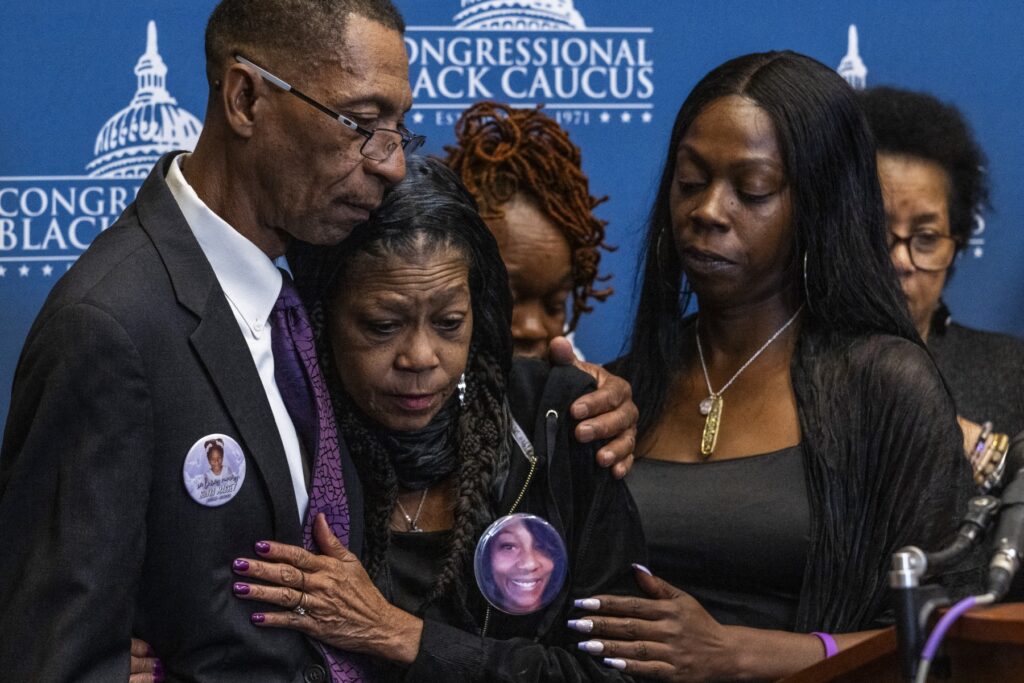
    In a landmark case that has reignited national conversations about police accountability, former Sangamon County sheriff’s deputy Sean Grayson received a 20-year prison sentence for the fatal shooting of Sonya Massey, a 36-year-old Black mother of two. The sentencing on Thursday marked the culmination of a case that drew widespread attention to issues of racial justice and law enforcement conduct.

    Grayson, 31, who is white, was convicted in October of second-degree murder following a jury deliberation that lasted two days. The original first-degree murder charge, which carried a potential life sentence, was reduced to the lesser charge despite evidence presented during the week-long trial.

    The July 2024 incident began when Massey, who had previously received treatment for mental health concerns, contacted emergency services to report a possible intruder at her residence. Body camera footage from the responding officers showed Massey cooperating with deputies before the situation escalated dramatically.

    Video evidence revealed that after Grayson instructed Massey to check on a pot of boiling water, she responded with a religious reference, stating, ‘I rebuke you in the name of Jesus.’ This prompted the deputy to draw his weapon and issue profanity-laden threats before firing three shots as Massey crouched behind a counter. One bullet struck her in the face, resulting in her death.

    During testimony, Grayson claimed he felt threatened by the pot of boiling water Massey was holding. The sentencing hearing was attended by members of Massey’s family, including her children, as Judge Ryan Cadigan imposed the maximum penalty allowable for the second-degree murder conviction.

    The case echoes earlier national movements for police reform, particularly the 2020 protests following the murder of George Floyd. Last year, Sangamon County Board approved a $10 million settlement with Massey’s estate, though the financial resolution does little to alleviate the ongoing concerns about racial disparities in police interactions.
  • ROOFS handover begins Friday under $10b Shelter Recovery Programme

    ROOFS handover begins Friday under $10b Shelter Recovery Programme

    KINGSTON, Jamaica — The Jamaican government is initiating a major phase in its post-hurricane reconstruction efforts with the formal commencement of the Shelter Recovery Programme (SRP) this Friday. The official handover ceremony, taking place at the St Elizabeth parish office in Santa Cruz, signifies the transition from damage assessment to active implementation of housing assistance for communities devastated by Hurricane Melissa.

    Prime Minister Dr. Andrew Holness and Minister of Labour and Social Security Pearnel Charles Jr will preside over the ceremony that launches the Restoration of Owner or Occupant Family Shelters (ROOFS) initiative. This critical component provides grant-based support to households whose residences suffered damage during the hurricane, with allocations determined by rigorous damage verification processes.

    Minister Charles Jr emphasized the program’s foundation in accountability and evidence-based need assessment. “The Government of Jamaica is committed to a disciplined, people-centred approach to post-disaster recovery,” he stated. “We’ve established a data-driven recovery system guided by the principle of ‘one household, one coordinated recovery pathway’ where support is determined by verified need rather than discretion.”

    The comprehensive SRP framework represents a nationally coordinated effort to restore safe living conditions while eliminating duplication across recovery initiatives. Managed by the Ministry of Labour and Social Security, the program integrates multiple approaches including cash-based recovery, government-directed repairs, partner-led reconstruction, relocation solutions, and pathways to long-term housing support.

    Financial assistance under ROOFS is tiered according to damage severity: $75,000 for minor damage, $200,000 for major damage, and $500,000 for severely affected properties. With a substantial $10 billion allocation, the program prioritizes vulnerable groups including seniors, persons with disabilities, and households that endured the most severe impacts.

    Minister Charles Jr characterized the handover as a pivotal moment in the government’s recovery operations, noting that “households begin to visibly receive assistance following months of assessments and close coordination with Members of Parliament, municipal corporations, and our implementing partners.”

  • ECC reports significant recovery in early childhood sector after Hurricane Melissa

    ECC reports significant recovery in early childhood sector after Hurricane Melissa

    KINGSTON, Jamaica — Jamaica’s early childhood development sector has demonstrated remarkable resilience in the aftermath of Hurricane Melissa, with approximately 99.1% of institutions resuming operations despite significant hurricane-related damage, according to the Early Childhood Commission (ECC).

    Official assessments reveal that 466 out of Jamaica’s 2,420 early childhood facilities suffered various degrees of impact from the natural disaster. The damage spectrum included 175 institutions with minor impairments, 159 with moderate destruction, and 132 experiencing severe devastation. Among the affected were 55 certified facilities, while 28 locations became temporarily inaccessible due to flooding, debris accumulation, or critical infrastructure damage.

    The hurricane’s impact extended to an estimated 24,058 infants and 2,305 early childhood professionals, with regions three, four, and five experiencing the most substantial disruptions to services.

    ECC Executive Director Dr. Karlene DeGrasse-Deslandes emphasized that the hurricane fundamentally tested the sector’s resilience while simultaneously highlighting the strength of existing systems and the extraordinary dedication of practitioners. “Our unwavering priority remains ensuring every child returns to a safe, nurturing, and emotionally supportive environment while we deliberately rebuild and strengthen services across affected communities,” DeGrasse-Deslandes stated.

    Dr. Kasan Troupe, Permanent Secretary at the Ministry of Education, Skills, Youth and Information, articulated that the recovery initiative transcends physical infrastructure restoration. “This recovery process encompasses safeguarding continuity of care, learning, and emotional wellbeing for our youngest and most vulnerable learners,” Troupe explained.

    The comprehensive recovery strategy has implemented phased clean-up operations, enhanced safety monitoring protocols, and provided extensive guidance to ensure all reopened facilities comply with national health and safety standards. Psychosocial support sessions reached over 1,616 stakeholders through collaborations with Early Starters International, UNICEF Jamaica, and ministry technical officers.

    Resource distribution included 32 play kits funded by the ECC and CHASE Fund, alongside 26 UNICEF Jamaica “School-in-a-Box” kits allocated to severely affected parishes. Damage assessment reports have been circulated among partners including the National Education Trust and private sector stakeholders.

    The Ministry of Education is currently processing approximately $29.8 million in clean-up grants designated for the early childhood sector, with disbursement managed through the ECC. Recovery efforts proceed concurrently with the implementation of the Jamaica Brain Builder Programme, the national zero-to-three strategy aligned with the Nurturing Care Model, currently serving 3,230 children across 138 centers staffed by 588 trained professionals.

    Numerous centers have maintained operations through temporary safety arrangements and modified routines despite ongoing repairs. The ECC reaffirmed its commitment to supporting institutions in meeting operational standards while enhancing sector-wide resilience against future challenges.

  • Kintyre Holdings takes full ownership of Kulcha Rum

    Kintyre Holdings takes full ownership of Kulcha Rum

    KINGSTON, Jamaica – Jamaican investment firm Kintyre Holdings (JA) Limited announced Tuesday its complete acquisition of Kulcha Rum, obtaining the remaining shares to secure full ownership of the domestic spirits producer. The financial details of the transaction, including the purchase value and prior stake, remain undisclosed.

    With 100% control, Kintyre aims to streamline management and accelerate the brand’s expansion in both local and international markets. The company is currently negotiating with a distribution partner to enhance retail availability and on-premise presence within Jamaica while exploring export opportunities. A selective rebranding initiative and market-sensitisation campaign are also underway in preparation for a wider product rollout.

    In parallel, Kintyre Holdings is engaging in discussions with potential strategic investors from Jamaica and abroad to secure additional capital and market access, though no formal agreements have been finalized. Operational changes include the strengthening of Kulcha Rum’s management team and the appointment of a new President and CEO, scheduled to assume the role on March 1, 2026. A board of directors with industry expertise is also being formed.

    Adding a cultural dimension to the commercial strategy, the company has provisionally secured a commitment from a prominent Jamaican dancehall artist to serve as brand ambassador, pending final contractual agreements.

    Tyrone Wilson, Chairman, President, and CEO of Kintyre Holdings, emphasized the cultural significance of the venture: “Rum is more than a product in Jamaica—it’s culture, history, celebration, and identity.”

    Kintyre Holdings (JA) Limited is an investment holding company focused on acquiring and developing businesses in selected sectors.

  • Remaining FNM candidates to be ratified before Valentine’s Day, says Pintard

    Remaining FNM candidates to be ratified before Valentine’s Day, says Pintard

    The Free National Movement (FNM), Bahamas’ primary opposition party, is intensifying its electoral preparations with an accelerated candidate ratification schedule. Party leader Michael Pintard confirmed the imminent completion of their selection process, indicating one ratification round will occur before Valentine’s Day followed by up to three additional approval cycles.

    With 13 prospective candidates still under review, the FNM anticipates resolving most pending approvals in the upcoming ratification session. This strategic acceleration positions the party to finalize its electoral roster efficiently amidst growing political competition.

    The opposition has already officially endorsed 28 candidates through previous ratification rounds, creating a balanced slate combining experienced legislators from the former Minnis administration with fresh political talent. Notable ratified candidates include Party Chairman Dr. Duane Sands (Bamboo Town), Kwasi Thompson (East Grand Bahama), Michael Foulkes (Golden Gates), Marvin Dames (Mount Moriah), and Carlton Bowleg (North Andros and Berry Islands).

    The political landscape grows increasingly competitive as the ruling Progressive Liberal Party (PLP) simultaneously advances its own candidate preparations. The PLP recently confirmed 15 additional candidates, bringing their total ratified representatives to 28. Their selections include 12 incumbent parliamentarians and three newcomers, among them Darron Pickstock who secured the Golden Isles seat in a November 2025 by-election following the passing of Vaughn Miller.

    Political activity intensifies across the islands with PLP hopefuls in Grand Bahama constituencies actively mobilizing support at party headquarters, signaling heightened engagement as both major parties approach the upcoming electoral period with strategic urgency.

  • Tourism records “unprecedented” 12.5 million visitors for 2025

    Tourism records “unprecedented” 12.5 million visitors for 2025

    The Bahamas has achieved unprecedented tourism success in 2025, with Deputy Prime Minister Chester Cooper announcing a record-breaking 12.5 million visitor arrivals—the highest in the nation’s history. This represents an 11.4% year-over-year increase, significantly surpassing both 2024 numbers and pre-pandemic levels by more than 72%. The remarkable growth was driven primarily by sea arrivals, which exceeded 10.6 million visitors, marking a 14% annual increase and nearly double 2019 figures.

    Minister Cooper, who oversees Tourism and Investments, credited this achievement to strategic relationship-building, enhanced port operations, and substantial infrastructure developments. He emphasized that these numbers translate directly into economic benefits: “They represent jobs and salaries, shifts being filled, inventory purchased, tours booked, taxis running, and restaurants with busy marinas.”

    While foreign air arrivals experienced a slight decline of 1.6% to 1.7 million visitors due to global aviation disruptions and weather challenges, stopover visitor numbers remained strong at 1.8 million—still above pre-pandemic benchmarks.

    Grand Bahama emerged as a standout success story, recording over 1.1 million arrivals—the first time exceeding one million visitors in 22 years. The island saw air arrivals surge by 20% compared to 2024 and more than 30% above pre-pandemic levels. The opening of Celebration Cay contributed significantly to a 90% year-over-year increase in sea arrivals, more than doubling 2019 numbers.

    Abaco also celebrated record-breaking performance with nearly 520,000 visitors, driven by both air and sea arrivals. The destination achieved a 5.2% increase in air arrivals, ranking as the nation’s second-fastest growing destination by air traffic.

    Despite these achievements, opposition leader Michael Pintard of the Free National Movement questioned whether these tourism gains are benefiting ordinary citizens. He argued that many Bahamians “don’t feel” the economic impact despite government claims of record growth.

    In response, Cooper expressed disappointment that some political figures appear to be “rooting for the failure” of the country’s tourism sector for political gain. He maintained that the tourism success reflects “sustained global demand, a strong brand, and a tourism strategy that’s delivering economic impact across the country.”

  • Storm shock reveals Jamaica’s narrow and fragile tax base

    Storm shock reveals Jamaica’s narrow and fragile tax base

    KINGSTON, Jamaica – A devastating hurricane has laid bare fundamental structural weaknesses within Jamaica’s taxation framework, compelling severe downward revisions to fiscal revenue projections despite years of superficially strong tax performance. According to a comprehensive assessment by the Independent Fiscal Commission (IFC), Hurricane Melissa has triggered a dramatic reassessment of the nation’s fiscal stability.

    The Jamaican government has been forced to slash its tax revenue forecast for the 2025/26 fiscal year by a substantial $80.5 billion. This adjustment signals a notable decline in the tax-to-GDP ratio, which is now anticipated to drop to 24.9 percent, effectively erasing previous fiscal gains.

    Prior to the hurricane’s impact in October, tax collections demonstrated steady expansion, recording a 6.9 percent year-on-year growth during the first half of the fiscal year. This performance was primarily fueled by vigorous domestic economic activity and robust tourism-related revenue streams.

    However, the IFC’s analysis reveals that this apparent strength was both highly concentrated and cyclical in nature, creating significant vulnerability to sudden economic disruptions. The commission identified that pre-hurricane revenue outperformance was driven predominantly by volatile sources including contractors’ levies and stamp duties—both closely tied to construction and property market fluctuations.

    Conversely, more structurally stable revenue sources consistently underperformed expectations. Taxes derived from bauxite mining operations, dividend income, and self-employed individuals all fell substantially below projections, highlighting the system’s inherent instability.

    When Hurricane Melissa severely disrupted Jamaica’s crucial tourism sector, construction industry, and general business operations, these underlying weaknesses were abruptly exposed. The immediate consequence was markedly reduced tax collections, compelling the government to undertake a comprehensive reassessment of its revenue outlook.

    The IFC further highlighted complications arising from Jamaica’s significant dependence on one-off and non-tax revenue inflows. These include proceeds from airport securitization arrangements and various disaster-related financial payouts. While providing temporary fiscal support, such sources cannot replace the need for a genuinely diversified and resilient taxation base, the commission emphasized.

    “Revenue performance prior to the hurricane effectively masked deep-seated concentration risks,” the IFC stated, particularly noting that economic shocks affecting tourism and construction disproportionately impact fiscal outcomes.

    The hurricane inflicted an estimated US$8.8 billion in damages, equivalent to approximately 41 percent of Jamaica’s GDP. This catastrophic event has simultaneously intensified spending pressures related to nationwide reconstruction efforts and essential social support programs.

    The IFC cautioned that rebuilding activities will likely stimulate import growth, thereby straining the country’s external balance. This dynamic suggests that revenue recovery may substantially lag behind expenditure requirements throughout the medium term, creating additional challenges for effective fiscal management.

    Jamaica’s experience serves as a stark reminder of the unique challenges confronting small, open economies, where periods of strong economic growth can generate revenue increases that prove unsustainable when economic conditions inevitably deteriorate.

  • Spotlight on Jimmy Cliff, Cat Coore for Reggae Month in South Florida

    Spotlight on Jimmy Cliff, Cat Coore for Reggae Month in South Florida

    South Florida is set to launch its annual Reggae Month celebration on February 7th, dedicating this year’s festivities to commemorating the monumental legacies of two recently departed icons: Jimmy Cliff and Cat Coore. The month of events will officially commence with the Reggae Genealogy Outdoor Music Festival in Plantation, establishing a tone of reverence and musical tribute.

    Ian Lewis, a key organizer for the festivities and member of the renowned band Inner Circle, has issued a public appeal to all media outlets, urging them to honor the legends by featuring their music extensively throughout February. “We will be honoring Jimmy Cliff and Cat Coore, two legends of reggae music gone too soon. We will be asking all local radio stations to play their music in recognition of their immense contributions,” Lewis stated in an interview.

    The tribute will extend beyond airwaves, with performing artists at major events like the Reggae Genealogy Festival and Rastafari Day on February 15th scheduled to deliver live renditions of the classics popularized by Cliff and Coore. The connection is profoundly personal for Lewis; his band, Inner Circle, shared deep historical ties with both musicians.

    Jimmy Cliff, who achieved global stardom through his starring role in the seminal 1972 film ‘The Harder They Come,’ passed away last November at 81. Celebrated for timeless hits like ‘Many Rivers to Cross’ and ‘Wonderful World, Beautiful People,’ Cliff was actively recording his final album at Circle House, Inner Circle’s studio in North Florida, at the time of his passing.

    Cat Coore, the acclaimed guitarist and founding member of the legendary band Third World, died in January at 69. His musical journey was deeply intertwined with Inner Circle, as he was an original member of the band formed by Ian and Roger Lewis in 1968. Coore later co-founded Third World in 1973 with keyboardist Ibo Cooper, creating a catalog of iconic tracks including ’96 Degrees In The Shade,’ ‘Now That We Found Love,’ and ‘Try Jah Love.’

    The Reggae Month calendar is packed with significant events, including Rhythms By The River in Fort Lauderdale on February 22nd and the Praise On The Green Gospel Extravaganza in Miramar on February 27th. Inner Circle, themselves Grammy Award winners for Best Reggae Album in 1994 and globally recognized for anthems like ‘Bad Boys’ and ‘Sweat,’ will help guide a month that promises to be both a celebration of reggae’s vibrant culture and a heartfelt memorial to its lost giants.

  • Creative Resilience Fund issues first round of Melissa relief grants to creative entrepreneurs

    Creative Resilience Fund issues first round of Melissa relief grants to creative entrepreneurs

    Kingston Creative, a prominent Jamaican arts non-profit organization, has announced the inaugural distribution of its Creative Resilience Fund (CRF) grants to support cultural practitioners devastated by Hurricane Melissa. The emergency relief program has provided its first 38 beneficiaries with monthly stipends of J$30,000 (approximately US$200) to assist in their recovery efforts.

    The Creative Resilience Fund, established in 2025 through partnerships with The Miami Foundation, American Friends of Jamaica (AFJ), and numerous individual donors, specifically targets creative professionals whose livelihoods suffered substantial damage from the catastrophic weather event. The financial assistance enables affected entrepreneurs to replenish inventory, replace destroyed equipment, and compensate for income lost through canceled performances, studio damages, and production interruptions.

    During the application period from December 1-31, 2025, the initiative received an overwhelming 516 requests for assistance from creative professionals across western Jamaican parishes. Selection of recipients was conducted by an independent panel from the Creative and Cultural Industries Alliance of Jamaica (CCIAJ), ensuring impartial allocation of resources.

    The initial cohort of grant recipients encompasses a diverse range of cultural practitioners, including musicians, fashion designers, and filmmakers, with artisans and craft producers constituting the majority of beneficiaries.

    Andrea Dempster Chung, Executive Director of Kingston Creative, emphasized the long-term nature of the recovery process: “We will continue issuing monthly grants for as long as funding remains available. The rebuilding process for creative businesses requires sustained support. We are profoundly grateful for our international partners’ generosity and hope to expand this collaborative effort.”

    Dempster Chung further revealed ambitions to establish a regional resilience fund to better prepare Caribbean creative sectors for future climate-related disasters and geopolitical disruptions that disproportionately affect cultural industries.

    The organization has issued a public appeal for additional support from private donors, corporate sponsors, philanthropic institutions, and members of the global Jamaican diaspora. Contributions can be made directly through Kingston Creative’s official website (www.kingstoncreative.org/donate) or via the secure American Friends of Jamaica portal dedicated to the initiative.

  • ‘GB Power deal a political stunt’

    ‘GB Power deal a political stunt’

    The Bahamian government is confronting severe criticism following Prime Minister Philip Davis KC’s announcement of a memorandum of understanding with Canadian energy giant Emera regarding the potential acquisition of Grand Bahama Power Company. The disclosure has sparked accusations of political theater and creating false hope among residents.

    Darren Cooper, a prominent Grand Bahama business owner and radio personality, characterized the government’s actions as treating citizens like ‘puppets’ by announcing preliminary discussions as a finalized deal. Cooper drew parallels to last year’s Grand Lucayan agreement, which remains uncompleted, suggesting a pattern of premature announcements without substantive details.

    The controversy intensified when Dave McGregor, Emera’s Caribbean chief operating officer, revealed in a staff communication that both local and Bahamian management were completely blindsided by the Prime Minister’s announcement. McGregor explicitly stated that while discussions about a possible government acquisition option were ongoing, ‘no final agreement’ had been reached, directly contradicting the government’s presentation.

    Energy sector analysts note that the proposed acquisition faces significant challenges, particularly given Emera’s status as a publicly-traded company subject to Canadian and US securities regulations. The Prime Minister’s announcement timing—suggesting a 60-90 day closing window—appears particularly optimistic without Emera’s formal agreement.

    Grand Bahama residents expressed widespread skepticism, citing the government’s troubled track record with Bahamas Power & Light (BPL). Environmental advocate Joe Darville voiced concerns about reliability guarantees, noting that while GB Power has faced recent service challenges, residents have grown accustomed to relatively consistent power compared to other islands.

    Opposition Leader Michael Pintard questioned the government’s capacity to improve energy services, stating: ‘The government has a record of failure around BPL in multiple places in The Bahamas, which does not give us confidence that they will do a better job.’ The announcement has raised fundamental questions about acquisition costs, potential partners, and how the government intends to address Grand Bahama’s specific energy challenges beyond political pronouncements.