博客

  • ‘Iedereen hier is corrupt’: Wat voedt het separatistische geweld in Balochistan?

    ‘Iedereen hier is corrupt’: Wat voedt het separatistische geweld in Balochistan?

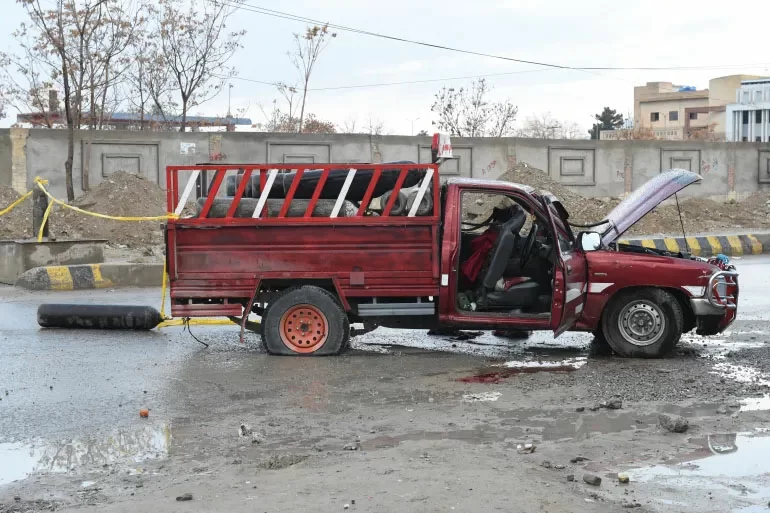
    A devastating escalation of violence in Pakistan’s Balochistan province has left nearly 200 dead, including 31 civilians, 17 security personnel, and 145 militants from the banned Balochistan Liberation Army (BLA). The coordinated attacks across more than a dozen locations in the mountainous Sulaiman and Kirthar ranges represent one of the most brutal separatist offensives in decades of conflict.

    The Pakistani military described the 40-hour firefight as a ‘desperate’ wave of attacks, though officials dismissed BLA claims of killing 84 security force members. Information Minister Attaullah Tarar characterized the assaults as ‘the last convulsions of a cornered enemy,’ maintaining the official narrative of unwavering control.

    Behind government assurances lies a more complex reality. The conflict stems from long-ignored grievances including political marginalization, economic injustice, and widespread corruption. Despite Balochistan’s immense mineral wealth, residents remain among Pakistan’s poorest, with development projects like the $46 billion China-Pakistan Economic Corridor (CPEC) largely benefiting central authorities rather than local communities.

    Islamabad’s standard response attributes separatist violence to ‘foreign interference’—primarily from historical rival India. This framing positions the military as defender of territorial integrity rather than participant in an internal conflict. The case of Kulbhushan Jadhav, an Indian citizen sentenced to death for espionage in 2016, serves as Islamabad’s prime evidence of external meddling.

    Yet ground realities tell a different story. Security sources acknowledge that while armies can neutralize militants, they cannot neutralize grievances. The rebellion draws oxygen from persistent complaints about resource exploitation, inadequate public services, and security operations that often place civilian families in the crossfire.

    Balochistan’s strategic significance extends beyond Pakistan’s borders. The province—larger than Germany—plays a crucial role in regional power dynamics involving Chinese economic ambitions, Iranian sectarian politics, U.S. containment strategies, and Indian counter-balancing efforts. Its porous borders with Afghanistan and Iran provide militants with strategic depth.

    The human cost of the conflict is etched into the region’s collective memory, from the 2013 Hazara attack that left wounded scattered indiscriminately, to the 2016 Quetta police academy massacre where cadets questioned why they were left unarmed. These incidents represent both security failures and a crumbling social contract.

    True stability in Balochistan will require moving beyond body counts and kinetic responses. It demands recognizing that separatism springs from genuine discontent, that development must mean inclusion rather than exploitation, and that political dialogue is not reconciliation but necessity. Whether recent violence represents a turning point toward sustainable peace or merely an intermission before the next storm depends on who gets to write the next chapter.


  • Petroleum product prices reduced

    Petroleum product prices reduced

    Consumers nationwide received welcome financial relief as substantial price reductions for major fuel categories took effect at midnight on February 1st. The comprehensive price adjustment brings considerable savings across gasoline, diesel, kerosene, and liquefied petroleum gas (LPG) products.

    Gasoline prices have been reduced by 11 cents, bringing the new retail price to $3.77 per litre. Diesel consumers will benefit from an even more significant decrease of 16 cents, establishing a new price point of $3.25 per litre. Kerosene prices have been moderated by five cents, now retailing at $1.43 per litre.

    The pricing structure for liquefied petroleum gas has been similarly adjusted across various container sizes. A standard 100 lb cylinder will now cost $161.47, while smaller containers have been proportionately reduced: 25 lb cylinders are priced at $45.47, 22 lb cylinders at $40.18, and 20 lb cylinders at $36.52.

    This coordinated price reduction represents one of the most substantial fuel cost decreases in recent months, potentially easing transportation expenses for both individual consumers and commercial enterprises. The next scheduled review and potential adjustment of fuel pricing is set to occur on March 1st, according to official communications from relevant authorities.

  • LISTEN: Derelict Social Security Building On High Street Set for Demolition Next Week, Minister Says

    LISTEN: Derelict Social Security Building On High Street Set for Demolition Next Week, Minister Says

    The government of St. John’s has announced a decisive urban renewal initiative, targeting the demolition of multiple derelict, state-owned structures throughout the capital. The move is a core component of a broader strategy to combat urban decay, enhance public safety, and revitalize the city’s aesthetic appeal.

    Rawdon Turner, a government official, detailed the plan during a recent appearance on the Browne and Browne programme on Pointe FM. He confirmed that directives have been issued to relevant government agencies to commence clearing out all affected properties in preparation for subsequent demolition activities. This state-led action is being intensified in parallel with ongoing efforts to ensure private-sector compliance with urban maintenance standards.

    The initiative is not an isolated effort but a calculated response to longstanding issues of urban blight. By systematically removing hazardous and unsightly buildings, the administration aims to foster a safer and more visually appealing environment for residents and visitors alike. This project signifies a proactive governmental approach to urban management, signaling a renewed commitment to the capital’s development and the well-being of its community. The demolitions represent the physical start of a comprehensive plan to rejuvenate key areas of St. John’s, with further phases of the renewal strategy expected to unfold.

  • White House Says Nicki Minaj’s ‘Trump Gold Card’ Is Just A Souvenir

    White House Says Nicki Minaj’s ‘Trump Gold Card’ Is Just A Souvenir

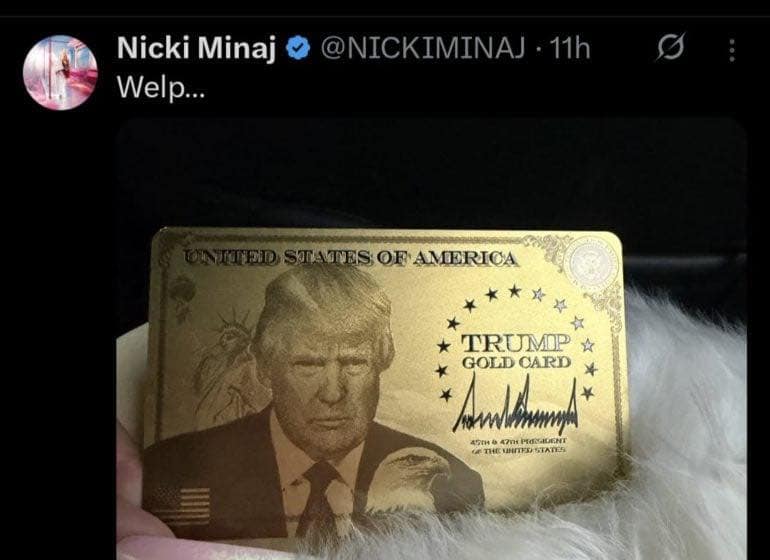
    Trinidadian-born rapper Nicki Minaj, who has resided in the United States as a lawful permanent resident for approximately twenty years, recently ignited social media speculation by sharing images of a gold-colored card featuring former President Donald Trump’s likeness. This card has been promoted by Trump’s organization as a premium pathway to U.S. citizenship for individuals making substantial financial contributions—specifically $1 million to the U.S. Treasury plus a $15,000 nonrefundable processing fee. Minaj notably claimed in an online post that she received this item “free of charge.”

    However, a White House official, speaking anonymously to The New York Times, clarified that the card was merely a novelty souvenir with no legal value. The official emphasized that Minaj, already a long-term legal resident actively pursuing standard citizenship procedures, had no need for expedited immigration channels. The card, according to the source, holds sentimental value only and “serves little value” in any official capacity.

    The controversy emerged following Minaj’s appearance at a White House event promoting children’s investment accounts established under a Trump-endorsed spending initiative. During the event, Trump lavished praise on the artist, hailing her as “the greatest” and “the most successful female rapper in history.” He also acknowledged her financial backing for the program, stating, “Nicki makes a lot of money, and she’s generously stepping up. She’s investing hundreds of thousands of dollars in Trump accounts to support the children.”

    Minaj, who made history in 2024 as the first female rapper to achieve Diamond certification for two songs from the Recording Industry Association of America, has increasingly publicly aligned with Trump and the MAGA movement. Trump described her as “a big Trump supporter and a Trump fan” who has endured criticism but remains “an unbelievable supporter.”

    Appearing alongside Trump in a distinctive white fur-trimmed coat, Minaj declared herself the president’s “No. 1 fan” and asserted that criticism only strengthens her support. “The hate or what people have to say, it does not affect me at all. It actually motivates me to support him more,” she told the audience. She further expressed belief that “God is protecting” the president and condemned what she characterized as “bullying” and “smear campaigns.”

    While Minaj’s political alignment has drawn scrutiny from fans, LGBTQ advocates, and civil rights organizations, the White House has definitively stated that the discussed gold card is purely symbolic and not a functional immigration document.

  • Prime Minister Browne Attends World Governments Summit 2026 in Dubai

    Prime Minister Browne Attends World Governments Summit 2026 in Dubai

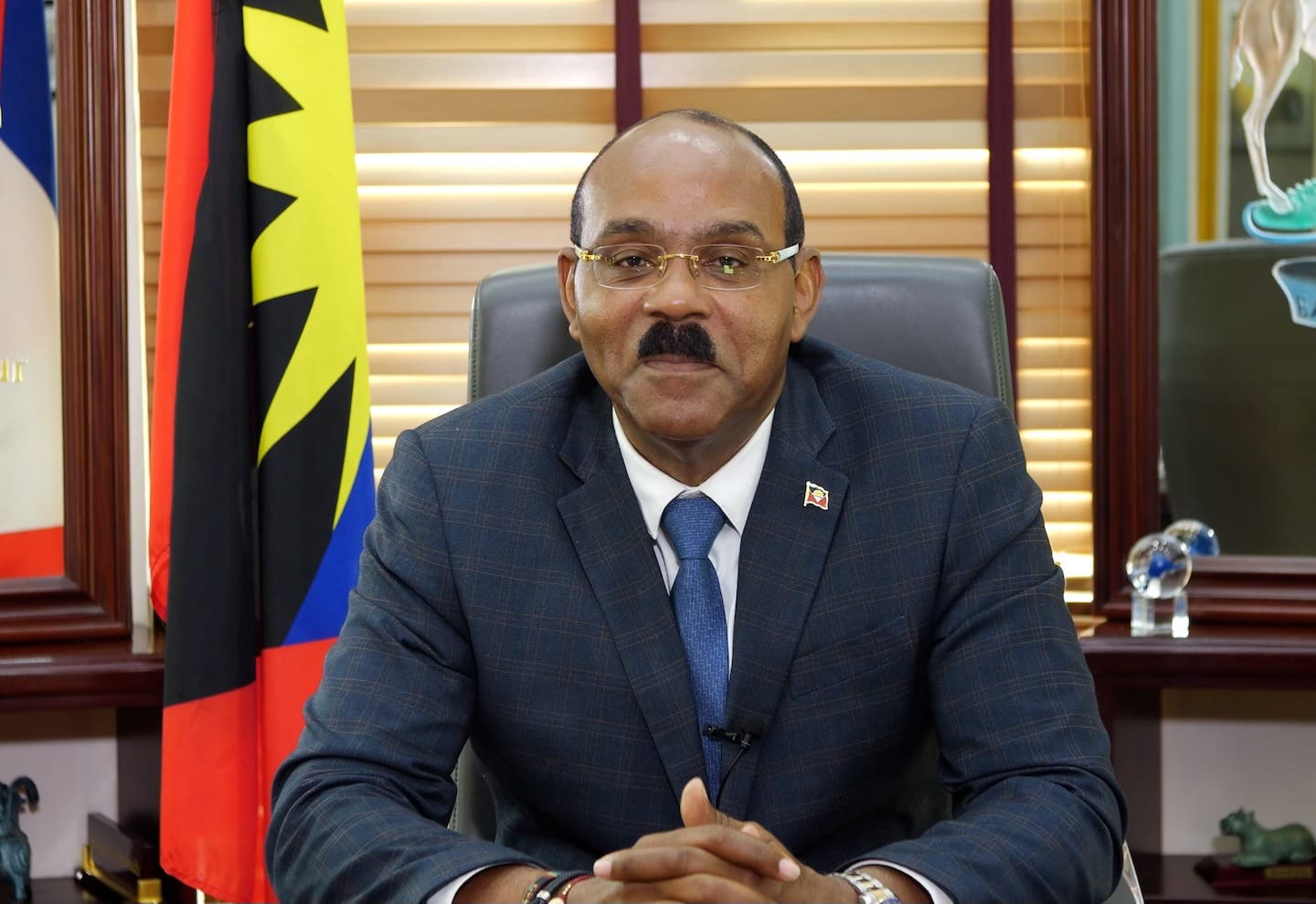
    Prime Minister Gaston Browne of Antigua and Barbuda has arrived in Dubai to participate in the prestigious World Governments Summit (WGS) 2026, running from February 3-5. The high-level gathering convenes global leaders, including heads of state, senior government officials, corporate executives, and international organization representatives to address critical governance challenges and sustainable development strategies.

    During the summit, Prime Minister Browne will actively represent his nation’s interests across multiple platforms, including main sessions, high-level panels, and strategic engagements. His participation will particularly focus on tourism-driven economic development, investment attraction, creative industries, and sustainability initiatives – areas where Antigua and Barbuda has established global recognition among small island developing states.

    In pre-departure remarks, Prime Minister Browne emphasized the strategic importance of the summit for smaller nations: ‘The World Governments Summit offers an indispensable platform for states like Antigua and Barbuda to shape global policy dialogues, secure strategic investments, and exchange practical solutions grounded in resilience, innovation, and sustainable development principles.’

    The Prime Minister’s agenda includes participation in the Future of Tourism Roundtable, where he will showcase Antigua and Barbuda’s successful model of utilizing tourism as an economic cornerstone while implementing resilience-focused planning and sustainability measures. Additionally, he will contribute to expert discussions on the experience economy, examining how luxury services, creative sectors, cultural heritage, and tourism collectively shape national identity and enhance global soft power influence.

    Beyond formal sessions, Prime Minister Browne will conduct bilateral meetings, including a scheduled discussion with Zimbabwe’s Minister of Foreign Affairs and Trade, Professor Dr. Amon Murwira. Their talks will address strengthened bilateral relations and Zimbabwe’s bid for United Nations Security Council membership for the 2027-2028 term.

    The comprehensive itinerary also includes engagements with international media representatives and specialized visits to innovation-focused institutions organized by summit hosts, designed to foster cooperation in technology adoption, sustainable practices, and future-oriented governance models.

    Prime Minister Browne is expected to return to Antigua and Barbuda following the summit’s conclusion on February 5, 2026.

  • Ministry Of Health Concludes Cervical Cancer Awareness Month With Church Service And Call To Empower Survivors

    Ministry Of Health Concludes Cervical Cancer Awareness Month With Church Service And Call To Empower Survivors

    The Ministry of Health, Wellness, Environment, and Civil Service Affairs has formally concluded Cervical Cancer Awareness Month with a spiritually significant ceremony at All Saints Pentecostal Kingdom Life Centre on February 1st. The event symbolized a unified national pledge toward enhancing prevention mechanisms, promoting early detection protocols, and fundamentally empowering those who have overcome the disease.

    Distinguished attendees included prominent faith leaders, healthcare experts, cervical cancer survivors, and key partners. The gathering featured Minister Sir Molwyn Joseph, Permanent Secretary Stacey Gregg-Paige, Chief Medical Officer Dr. Kamaria DeCastro, Deputy Chief Medical Officer Dr. Teri-Ann Joseph, and Dr. Cherrie Tulloch, who leads the Cervical Cancer Elimination Task Force alongside her specialized team and additional senior technical personnel.

    In his keynote address, Minister Joseph expounded on the month’s thematic focus—”Empower the Survivors”—stressing that true empowerment must evolve from mere awareness into tangible national responsibility and decisive action. “Our assembly in this sacred space marks not just the conclusion of an awareness month, but a reaffirmation of our collective dedication to dignity, prevention, compassion, and the preservation of life,” he declared.

    Minister Joseph drew parallels to a biblical account from the Gospel of John, citing the transformation of the woman of Samaria following her encounter with Jesus. He emphasized how she transitioned from personal survival to public service, illustrating a powerful metaphor for patient advocacy. “Rather than retreating into silence, she returned to her community with a message of hope. This embodies the transformation from survival to purposeful service, from personal experience to influential leadership.”

    The Minister articulated that this narrative aligns with the Ministry’s public health strategy, positioning survivors as essential collaborators in prevention, education, and systemic transformation. “Survivors are not passive recipients of care; they are active partners whose voices diminish stigma, whose narratives enhance awareness, whose visibility promotes screening, and whose leadership safeguards future generations,” he affirmed.

    He further elaborated that empowering survivors constitutes a strategic imperative that reinforces prevention infrastructures, facilitates early detection, and cultivates trust in healthcare services. The Ministry recommitted to expanding access to HPV vaccination, enhancing screening and diagnostic capabilities, ensuring equitable treatment options, delivering comprehensive survivor support, and upholding dignity throughout healthcare experiences.

    “No woman should endure a preventable disease, no family should suffer loss due to delayed detection, and no survivor should navigate post-treatment life without adequate support,” Minister Joseph asserted.

    In closing, he issued a compelling appeal for collaborative engagement across religious institutions, communities, and the nation to eliminate cervical cancer as a public health threat and to recognize survivors as indispensable partners in forging a healthier future. The Ministry continues to urge women and girls to utilize screening services and HPV vaccinations available at public health clinics nationwide, reinforcing the national strategy toward cervical cancer elimination.

  • Nine calypsonians advance to 2026 grand finals

    Nine calypsonians advance to 2026 grand finals

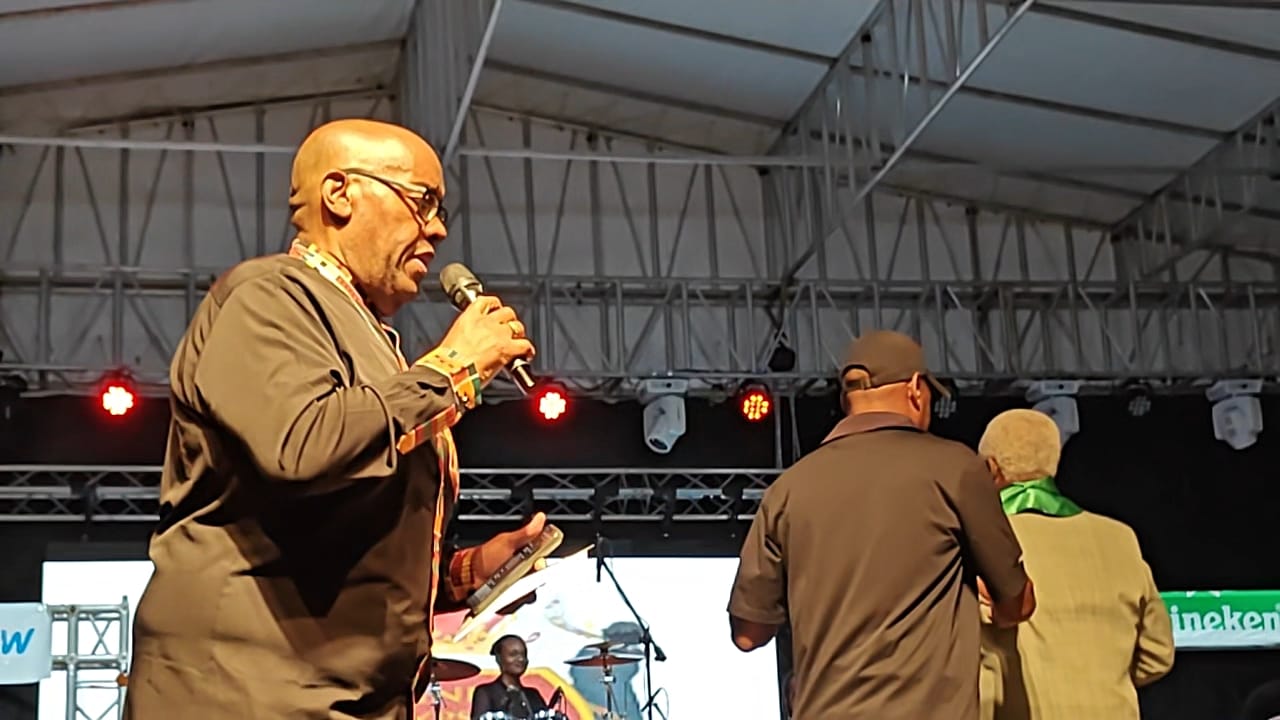
    A dynamic ensemble of nine calypsonians has officially clinched their positions in the highly anticipated Calypso Finals, setting the scene for a spectacular musical confrontation on February 14th at Windsor Park Sports Stadium. The selection process culminated during intense quarterfinal bouts held on Saturday, January 31st at the same venue, where performers competed for judicial approval and a coveted spot in the championship round.

    The elite roster of artists advancing to compete for the monarch title includes Abiyah, Nacheal, Karessa, Jaydee, Daddy Chess, Tasha P, Redz, The Bobb, and Checker. This diverse group of musical talents will face the formidable challenge of dethroning the reigning calypso sovereign, Joy Stoute, in what promises to be a memorable Valentine’s Day extravaganza.

    Adding strategic depth to the competition framework, event organizers have designated three reserve performers: De Web, Calpha P, and Observer. These designated substitutes stand ready to seamlessly enter the competition should any primary finalist encounter unforeseen circumstances preventing their participation.

    The upcoming finals represent not merely a competition but a celebration of cultural expression through calypso music, combining artistic excellence with competitive spirit. This event continues the rich tradition of calypso championships that serve as both entertainment and social commentary within the community.

  • LETTER: Treatment of my mother—an older woman with medical conditions—at the St. John’s Police Station

    LETTER: Treatment of my mother—an older woman with medical conditions—at the St. John’s Police Station

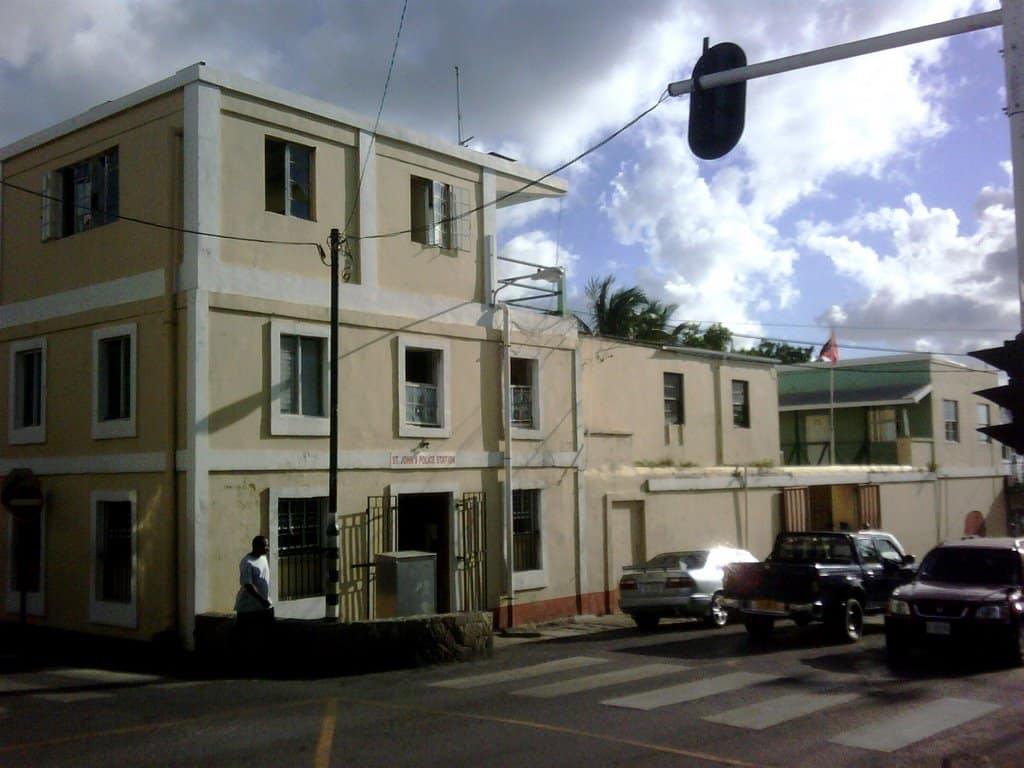
    A disturbing account of alleged police misconduct and medical neglect has emerged from St. John’s, Antigua, where an elderly woman with chronic health conditions was reportedly detained without explanation or access to vital medication. The incident, described by her daughter in a public statement, raises urgent questions about police accountability and human rights protections.

    The situation began when the daughter received an abrupt call from Officer Quinland stating her mother was ‘locked up’ and would remain detained until Monday without specification of charges. When questioned about the legal grounds for detention, the officer reportedly refused to provide any explanation while offering limited visiting hours later that afternoon.

    Upon arriving at St. John’s Police Station seeking clarification, the daughter encountered further hostility. After explaining she couldn’t speak loudly due to a recent tooth extraction, an officer responded with aggression, accusing her of attempting to intimidate staff and outright refusing assistance.

    According to the victim’s testimony, she was approached in town by a plainclothes officer who instructed her to come to the station. When she questioned why she was being held without committing any offense, an officer declared her ‘out of order’ and threatened remand. The situation escalated when another officer allegedly shouted ‘Lock them up!’ after the woman suggested he shouldn’t let power go to his head.

    The detainee reported particularly aggressive behavior from a female Dominican officer, potentially motivated by a previous dispute with the victim’s friend. Most critically, the medically vulnerable woman was held for hours in unsanitary conditions without access to daily essential medication, potentially endangering her health.

    Despite eventually being released, no officer including the arresting personnel could provide a legal justification for the detention. One officer admitted to ‘only following instructions’ without knowledge of any alleged offense. When family members expressed concerns about medical risks, officers responded dismissively that ‘she shouldn’t do things to get locked up.’

    This case highlights concerning patterns of authority abuse within law enforcement and underscores the urgent need for systemic reform, transparency mechanisms, and accountability measures to prevent such incidents from recurring.

  • U.S. announces tariffs against countries supplying oil to Cuba, island’s gov’t responds

    U.S. announces tariffs against countries supplying oil to Cuba, island’s gov’t responds

    In a significant escalation of bilateral tensions, U.S. President Donald Trump issued an executive order on January 29, 2026, declaring a national emergency and identifying Cuba as an “unusual and extraordinary threat” to American national security. The presidential directive accused Havana of aligning with hostile nations and terrorist organizations including Russia, China, Iran, Hamas, and Hezbollah, alleging actions detrimental to U.S. interests.

    The declaration serves as legal foundation for implementing trade tariffs effective January 30, 2026, targeting any foreign government supplying petroleum products to Cuba either directly or indirectly. President Trump asserted that “the tariff system is necessary and appropriate to address the national emergency declared in this order.”

    Cuba’s Revolutionary Government responded with forceful condemnation, characterizing the measures as an unjustified aggression designed to impose a total fuel blockade. Official statements denounced the executive order as violating international law and undermining regional stability, particularly the Proclamation of Latin America and the Caribbean as a Zone of Peace.

    Havana dismissed U.S. security concerns as fabricated narratives, stating: “The President himself and his government are aware that no one, or very few, can believe such mendacious arguments.” Cuban authorities framed the action as continuation of six-decade efforts to undermine Cuba’s sovereign political process, emphasizing their commitment to peaceful international relations.

    The Caribbean nation affirmed its resilience against economic coercion, stating imperialist actions would not break the people’s determination. The government concluded its response with a defiant declaration: “We will face this new attack with firmness, equanimity, and the certainty that reason is absolutely on our side. The decision is one: Homeland or Death, We Shall Overcome!”

  • Paus Leo dringt aan op oprechte dialoog tussen VS en Cuba

    Paus Leo dringt aan op oprechte dialoog tussen VS en Cuba

    Pope Leo XIV has expressed profound concern regarding the deteriorating relations between the United States and Cuba, calling for genuine diplomatic engagement to prevent further humanitarian consequences. The pontiff’s remarks came during his weekly Angelus prayer at St. Peter’s Square, where he endorsed the Cuban bishops’ appeal for constructive dialogue between the nations.

    The Vatican’s intervention follows President Donald Trump’s recent announcement of impending import tariffs on countries supplying oil to Cuba. This economic measure represents Washington’s latest effort to intensify pressure on the Cuban regime, particularly following the January ousting of Venezuelan President Nicolás Maduro, Cuba’s principal regional ally.

    President Trump justified the tariff threat as essential to “protect U.S. national security and foreign policy interests against the malicious actions and policies of the Cuban regime.” The president previously predicted Cuba’s imminent collapse, noting that Venezuela—historically the island’s primary oil supplier—had ceased both petroleum exports and financial support to Havana.

    Cuban Foreign Minister Bruno Rodríguez characterized the U.S. measures as constituting an “international emergency,” describing them as an “unusual and extraordinary threat” to Cuba’s stability. Meanwhile, aboard Air Force One en route to Florida, President Trump reiterated his call for negotiations with Cuba, asserting that “it doesn’t have to be a humanitarian crisis.”

    The geopolitical tension marks a significant reversal from the brief period of détente experienced during the Obama administration, returning to the historically strained relations that have characterized most of the six-decade-long standoff between the two nations.