博客

  • White House removes racist Trump post, claims staff error

    White House removes racist Trump post, claims staff error

    WASHINGTON — The White House issued a formal statement on Friday acknowledging that a racially inflammatory video shared on President Donald Trump’s official social media account originated from an internal error. The controversial content depicted former President Barack Obama and First Lady Michelle Obama using dehumanizing imagery.

    A senior administration official confirmed to AFP that a staff member was responsible for the erroneous post, which has since been deleted from the platform. The video, which circulated briefly before removal, employed simian imagery to portray the Obamas, widely condemned as overtly racist symbolism.

    The incident triggered immediate backlash across political circles and civil rights organizations. Despite the swift removal, critics questioned the administration’s content review protocols and cultural sensitivity standards. Meanwhile, the President’s press secretary dismissed the subsequent criticism as ‘manufactured outrage,’ asserting that the post didn’t reflect the President’s views.

    This event occurs amid ongoing discussions about racial discourse in political communications and raises questions about social media governance within governmental institutions. The White House has not disclosed whether disciplinary measures will be taken against the staff member involved.

  • Ryan Forbes enters North Abaco race as independent candidate

    Ryan Forbes enters North Abaco race as independent candidate

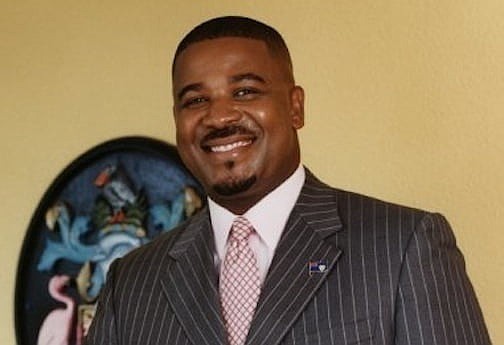
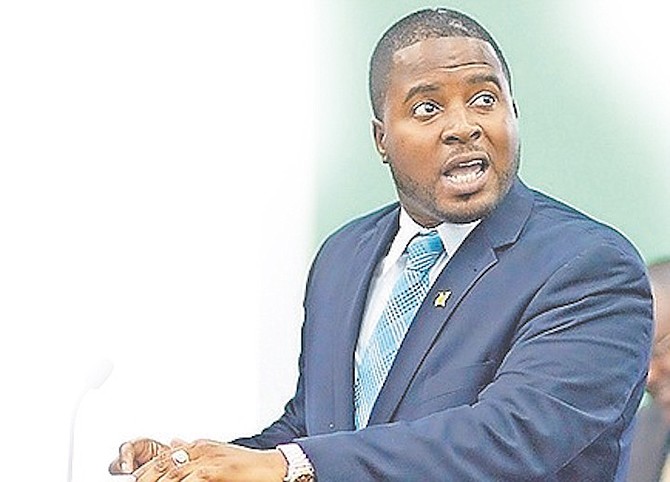
    In a significant development for Bahamian politics, businessman Ryan Forbes has announced his independent candidacy for North Abaco’s parliamentary seat after being denied the Free National Movement’s nomination. This move introduces a fresh dynamic to the electoral landscape traditionally dominated by major political parties.

    Forbes, who confirmed his campaign plans to The Tribune, is scheduled to officially launch his bid today, operating outside conventional party structures. His entry follows the FNM’s ratification of Terrece Bootle-Laing as their candidate, while incumbent Kirk Cornish seeks re-election representing the Progressive Liberal Party. The race further diversifies with social media figure Cay Mills running under the Coalition of Independents banner.

    Political analysts interpret Forbes’ independent run as indicative of underlying discontent among constituents regarding party candidate selection processes. This perception strengthened after several community members publicly questioned the FNM’s decision to bypass Forbes, who has maintained a consistent presence in the constituency through extensive community work.

    The former pastor and community consultant has established substantial grassroots credibility through residency in Dundas Town and Murphy Town, where his active involvement in local affairs has cultivated significant community support.

    Forbes attributes his decision to run to mounting frustrations over systemic challenges facing Abaco, citing inadequate infrastructure, healthcare limitations, restricted access to higher education, unresolved illegal migration issues, and stagnated economic development as primary concerns.

    In his statement, Forbes articulated his vision: “I look forward to the development of Abaco, translating my vision to reality in my constituency, advocating for the development needs of our people, and ensuring laws and policies serve the best interests of The Bahamas, its industries, and citizens.”

    With campaign activities commencing, Forbes has issued urgent calls for voter registration among constituents. Recent electoral boundary adjustments have redefined the constituency’s demographics, with the Boundaries Commission report indicating North Abaco currently maintains 4,097 registered voters following the redistribution of several polling divisions to Central and South Abaco.

  • Mayaguana parents protest ‘failing’ school system

    Mayaguana parents protest ‘failing’ school system

    A growing educational crisis is unfolding on the remote island of Mayaguana, where frustrated parents have staged protests against a severe and persistent teacher shortage at the island’s sole comprehensive school. For years, this deficiency has forced students to rely heavily on virtual learning—a solution severely compromised by frequent power outages, unstable internet connectivity, and systemic technical failures.

    The situation has had tangible academic consequences. Cheryl Farrington, a single mother of four, reported that after returning to Mayaguana, her daughters’ grades plummeted dramatically, with their GPAs falling by nearly a full point. This decline is emblematic of a broader pattern affecting the school’s roughly 30 students across primary and secondary levels.

    Education Director Dominique McCartney-Russell has acknowledged the grievances, confirming that the ministry is negotiating with utility providers to enhance services. Furthermore, recruitment efforts are underway, with at least two local candidates identified for teaching positions. Parents were asked to allow a two-week period for administrative processing.

    However, parental trust is at a breaking point. Pristore Cartwright and other parents revealed that promises of additional instructors have been made—and broken—for years. Virtual learning, initially a pandemic stopgap, has remained in place for four years, leading to half-days of instruction and inconsistent education delivery. In some instances, teachers have sent threatening emails regarding overdue assignments, despite students lacking proper instruction.

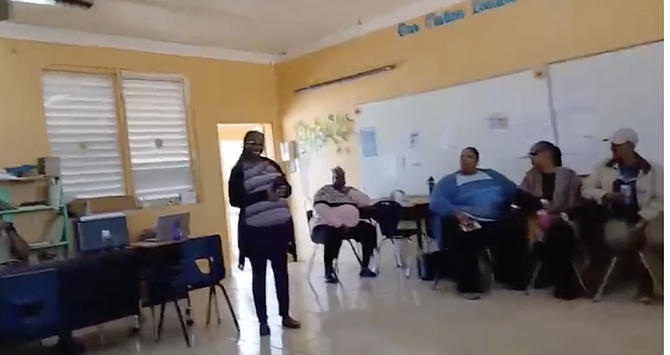
    The frustration culminated in a peaceful protest where parents occupied classrooms and recorded videos detailing their concerns. These clips, sent to local media, feature accounts of children failing classes and returning home distressed. A subsequent meeting with education officials was held to address the emergency.

    With multiple graduating classes reportedly failing and students missing diplomas, some families are considering leaving the island to secure viable educational opportunities for their children. Vanessa Moss, another parent, noted that her daughters feel increasingly discouraged, questioning the value of attending school under such conditions. While teachers encourage maintaining hope, the community’s patience has worn thin, signaling an urgent need for tangible resolution.

  • Liberty Caribbean: ‘Translate connectivity into prosperity’

    Liberty Caribbean: ‘Translate connectivity into prosperity’

    At the CANTO Connect 2026 conference, Liberty Caribbean CEO Inge Smidts delivered a powerful address challenging Caribbean leaders to harness the region’s digital infrastructure for measurable economic advancement. Speaking as head of the telecommunications giant operating Flow, Liberty Business and BTC services, Smidts presented a strategic framework for converting connectivity into concrete opportunities.

    With the conference theme ‘Elevate the Caribbean — From Connectivity to Global Competitiveness’ as backdrop, Smidts outlined three critical priorities: embedding technology within Caribbean cultural identity, constructing people-centered intelligent networks, and accelerating telecom companies’ evolution into technology platforms that generate local opportunities.

    “Our foundation of connectivity is established,” Smidts declared. “The pressing question now is what we will build upon it. Combining Caribbean creativity with reliable connectivity and intelligent policy unlocks jobs, services, and businesses capable of competing internationally.”

    The CEO emphasized Liberty Caribbean’s commitment to leading this transformation through investments in human capital, strategic partnerships, and technological platforms. She called for enhanced public-private collaboration models extending beyond financing to include co-regulation, regulatory sandboxes, and shared governance structures.

    “Public-private partnership serves as the engine for progress acceleration,” Smidts explained. “Governments provide vision and legitimacy, industry contributes scale and technical capability, while universities and civil society offer scrutiny and social purpose. Aligned incentives produce tangible impact.”

    Liberty Caribbean demonstrated its commitment through concrete offers to connect investors with developers, align government programs with cloud infrastructure, and expand apprenticeship pipelines to empower Caribbean entrepreneurs and technologists.

    Smidts highlighted the company’s practical initiatives including the JUMP inclusion program, which provides subsidized access, devices, training, and entrepreneurial support to households and microentrepreneurs. She stressed that intelligent connectivity must address authentic local needs while engineered for resilience in a disaster-prone region.

    “In hurricane zones, active fault lines, and volcanic regions, connectivity becomes lifesaving rather than optional,” Smidts noted. “Our emergency response work proves that industry collaboration with satellite providers and governments can restore critical communications within hours instead of days.”

    The address specifically acknowledged Trinidad and Tobago’s progress driven by policy initiatives including the Blueprint Revitalisation Plan, successful investor engagement, and a $1 billion bond roadshow. National digital projects such as the ANANSI digital assistant, UNESCO/UNDP AI assessment collaboration, OpenAI partnerships for education transformation, and the Developers’ Hub for SME-government co-creation received particular emphasis as examples of the nation’s ambitious digital transformation.


  • Anya Schnoor retiring from Scotia Group board

    Anya Schnoor retiring from Scotia Group board

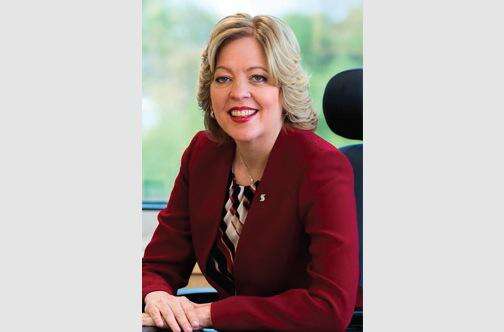
    Scotia Group Jamaica Limited (SGJ) is undergoing significant leadership changes as board chair Anya Schnoor announces her retirement to dedicate her expertise exclusively to expanding Scotiabank’s global insurance strategy. Schnoor will conclude her five-year tenure as director by not seeking re-election at the upcoming annual general meeting scheduled for March 4th.

    This transition marks the end of a groundbreaking chapter for Jamaican corporate leadership, as Schnoor made history in December 2022 by becoming the first Jamaican woman to chair Scotia Group’s board. Her banking career with Scotiabank Jamaica began in May 2006, culminating in her November 2024 appointment as Executive Vice-President of global insurance.

    Vernon Douglas, current chair of The Bank of Nova Scotia Jamaica Limited, will assume the SGJ chairman role following Schnoor’s departure. This promotion triggers subsequent leadership adjustments, with Audrey Richards—currently chairing both Scotia Investments Jamaica Limited and Scotia Jamaica Life Insurance Company Limited—prepared to succeed Douglas at Scotiabank Jamaica.

    The corporate reshuffling occurs as Scotia Group Jamaica prepares to host its annual meeting at Montego Bay’s Iberostar Selection Rose Hall, notably shifting from its traditional Kingston venue. This geographical change reflects the financial conglomerate’s commitment to supporting western Jamaica’s recovery efforts following the devastating impact of Hurricane Melissa.

    In her departure statement, Schnoor reflected on her career origins: “I started my career with Scotiabank here in Jamaica and have been proud that the first home for Scotiabank outside of North America continues to set the bar for financial performance and good corporate governance in the local market.” She expressed full confidence in the institution’s continued excellence for decades to come.

  • Former Turks and Caicos premier found guilty over bribery charges

    Former Turks and Caicos premier found guilty over bribery charges

    In a landmark ruling that concludes one of the most significant legal proceedings in the modern history of the Turks and Caicos Islands, the territory’s former Premier Michael Misick, his brother Thomas Chalmers “Chal” Misick, and former Lands Minister McAllister “Piper” Hanchell were found guilty on multiple corruption charges Wednesday.

    The verdict, delivered by Justice Rajendra Narine following a four-hour public hearing in Providenciales, marks the culmination of a ten-year judicial process that exposed systemic corruption at the highest levels of government. The case centered on a sophisticated scheme where senior officials allegedly received substantial bribes and illicit benefits in exchange for granting developers preferential access to government-owned land at significantly reduced prices during a period of intensive resort development.

    According to court findings, the corruption network involved tens of millions of dollars in financial transactions, luxury real estate, and other perks connected to controversial land deals across multiple islands. Justice Narine determined that the defendants engaged in bribery, conspiracy to defraud both the Crown and the Turks and Caicos government, and violated the Proceeds of Crime Ordinance.

    Evidence presented during the trial revealed that former Premier Misick knowingly accepted inducements including a multimillion-dollar loan, a luxury villa, and exclusive credit card access that financed millions in personal spending. In return, he provided favorable concessions and Crown land to developers. The judge concluded that these benefits were intentionally accepted as compensation for corrupt official acts.

    Former Minister Hanchell was convicted of accepting bribes connected to land transactions on Salt Cay and West Caicos, while Chal Misick was found guilty on multiple counts of money laundering related to covering scheme-associated debts and expenses. The court rejected defense arguments that Hanchell’s personal wealth made corruption implausible.

    This verdict follows a broader investigation that previously led Britain to suspend self-governance in the territory from 2009 to 2012 after a commission of inquiry discovered widespread abuse of power. The prosecution successfully argued that the corruption was intrinsically linked to resort developments, particularly on Salt Cay, where extensive Crown lands were transferred or leased at discounted rates to developers who received concessions reserved for local inhabitants despite not qualifying for such status.

    All three convicted individuals remain on bail with increased amounts and are prohibited from leaving the country pending sentencing scheduled for May 4. Prosecutors announced intentions to seek confiscation of tens of millions of dollars in assets connected to the corruption scheme.

  • Minnis calls for bipartisan end to ‘free’ healthcare

    Minnis calls for bipartisan end to ‘free’ healthcare

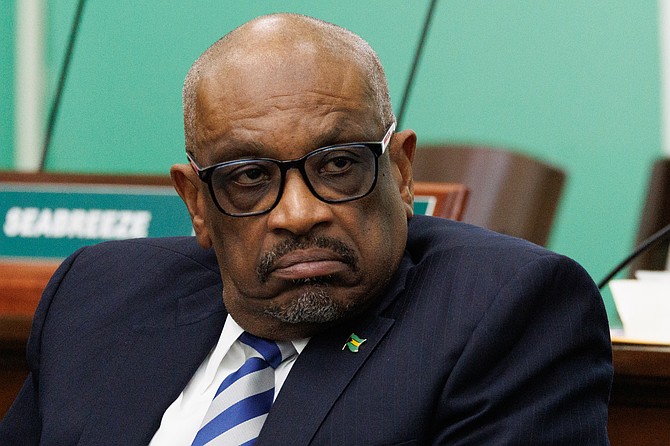
    A critical debate over the sustainability of Bahamas’ public healthcare system has emerged in the House of Assembly, with former Prime Minister Hubert Minnis delivering a stark warning about the financial viability of free medical services. The prominent political figure asserted that the current minimal cost structure for Bahamian healthcare is fundamentally unsustainable, identifying partisan politics as the primary obstacle to meaningful reform.

    Dr. Minnis’s address followed Health Minister Michael Darville’s endorsement of concerning assessments from medical professionals. Minister Darville had previously acknowledged Consultant Physicians Staff Association president Charelle Lockhart’s warnings about escalating demand overwhelming the publicly funded system. “Reality is health care is an expensive business,” Darville conceded, emphasizing that citizens must eventually recognize that comprehensive medical services cannot remain entirely free of charge.

    The former Prime Minister seized this admission to highlight a persistent pattern in Bahamian politics, noting that reform initiatives consistently collapse when opposing parties disown policies they privately acknowledge as necessary. “Minister, you made a very important statement,” Minnis responded. “You know it cannot be free. I know it cannot be free, right? But if we make it political, when you say people have to pay, and then I’m in opposition, oh no, no, no, people do not need to pay, the healthcare system cannot advance.”

    Dr. Minnis proposed a bipartisan approach to healthcare financing, insisting that critical services including health, education, and security must transcend political divisions. However, he established clear conditions for public financial contributions, demanding robust accountability mechanisms before asking citizens to pay. “Don’t ask me to pay when my money go through a safe and disappear,” he cautioned, emphasizing the need for transparent financial management and allocation of resources toward systemic improvement rather than administrative overhead.

    This exchange revives a longstanding discussion that previously surfaced during Dr. Minnis’s administration, when officials including former Health Minister Dr. Duane Sands acknowledged the impossibility of sustaining quality healthcare without greater patient contributions. Historical data from 2018-2019 indicated approximately 87 percent of public hospital patients were not contributing through fees, creating significant financial pressure on government resources. Previous proposals to increase collection of legally mandated fees while protecting destitute patients ultimately stalled without implementation.

  • Long Island FNM rift over candidate

    Long Island FNM rift over candidate

    A significant political schism has emerged within the Free National Movement (FNM) on Long Island, where senior constituency association members are openly advocating for sitting MP Adrian Gibson to run as an independent candidate. This development follows the party leadership’s controversial decision to deny Gibson ratification in favor of Dr. Andre Rollins as their official candidate for the upcoming general election.

    Maurice Minnis, a council representative for the Long Island Constituency Association, revealed that local supporters are actively encouraging Gibson to contest the election outside the party structure. They argue the leadership’s decision disregarded both their unanimous endorsement of Gibson and established party protocols that allow constituency groups to submit preferred candidates.

    The constituency association had formally endorsed Gibson months earlier through a letter signed by numerous senior officers and prominent party figures, including former Director of Education Iris Pinder and former MPs Lawrence Cartwright and Sylvia Scriven. The signatories cited Gibson’s record of advocacy and representation as justification for their support.

    Ms. Pinder, who served as Gibson’s campaign manager in two previous elections, characterized the ratification process as fundamentally flawed and potentially predetermined. She noted that during candidate presentations, Rollins failed to specifically mention Long Island in his remarks, while other prospective candidates presented detailed plans for the constituency.

    The controversy is further complicated by Gibson’s ongoing legal situation. He has faced criminal charges since 2022, with the case remaining unresolved in the courts. While party leadership appears to view this as an electoral liability, Gibson’s supporters maintain the principle of ‘innocent until proven guilty’ should prevail, especially given the four-year duration without resolution.

    Contrasting perspectives emerged regarding local support. While Minnis claimed overwhelming backing for Gibson at public meetings, Long Island Chief Councillor Ian Knowles suggested many residents actually support Dr. Rollins. Knowles acknowledged Gibson’s past performance but emphasized the unresolved court case presents a significant obstacle to his candidacy.

    The deepening rift threatens to split the FNM vote on Long Island, potentially altering the electoral dynamics in the constituency. Both factions appear entrenched in their positions, setting the stage for a potentially divisive political battle that could have implications beyond this single constituency.

  • Trump sparks fury with video depicting Obamas as monkeys

    Trump sparks fury with video depicting Obamas as monkeys

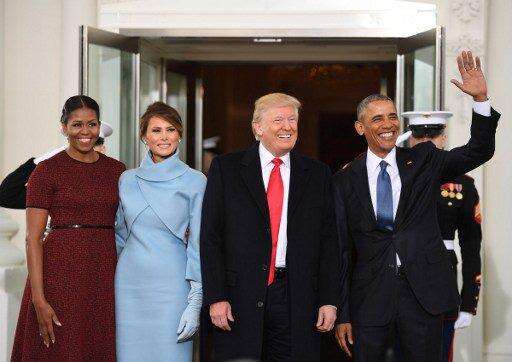
    WASHINGTON — A social media post by former President Donald Trump featuring manipulated imagery of Barack and Michelle Obama portrayed as monkeys has ignited widespread condemnation from Democratic leaders and civil rights advocates. The controversial video, shared on Trump’s Truth Social platform late Thursday, incorporates a one-second clip of the Obamas with their faces superimposed on primate bodies within a longer segment promoting debunked election conspiracy theories.

    The White House press team defended the post as an innocuous internet meme depicting Trump as the ‘King of the Jungle’ with Democratic figures as characters from The Lion King, dismissing criticism as ‘fake outrage.’ This characterization was immediately rejected by prominent Democrats including California Governor Gavin Newsom, whose office demanded universal Republican condemnation of what they termed ‘disgusting behavior.’

    The incident revives scrutiny of Trump’s historical engagement with racially charged rhetoric, notably his promotion of the ‘birther’ conspiracy theory questioning Obama’s citizenship during the previous administration. Since returning to office, Trump has intensified his use of AI-generated visual content to mock political opponents, including previous fabricated videos showing Obama in prison attire and racially stereotypical depictions of Black congressional leader Hakeem Jeffries.

    Analysts note this episode aligns with the administration’s systematic dismantling of Diversity, Equity, and Inclusion (DEI) initiatives across federal agencies and military institutions. The current administration has terminated numerous civil rights-era programs designed to address historical discrimination, while military academies have removed educational materials examining America’s legacy of racial inequality.

    The video quickly garnered thousands of engagements on Trump’s platform, demonstrating the continued potency of provocative content within his political base despite widespread condemnation from historians and former administration officials who predict this incident will further cement Trump’s legacy as a divisive figure in American racial politics.

  • Market downturn hits Mayberry Jamaican Equities in 2025

    Market downturn hits Mayberry Jamaican Equities in 2025

    KINGSTON, Jamaica — Mayberry Jamaican Equities Limited experienced a dramatic financial reversal in 2025 as widespread declines on the Jamaica Stock Exchange triggered substantial unrealized losses within its investment portfolio. The market downturn effectively erased previous gains and significantly diminished the company’s net asset value.

    The investment firm reported unaudited results showing a total comprehensive loss of $5.7 billion for the twelve-month period ending December 31, 2025—a stark contrast to the $584 million gain recorded in 2024. Net losses reached $4.9 billion, with loss per share expanding dramatically to $4.10 from just 12 cents the previous year.

    Notably, the losses stemmed not from operational deficiencies but from depreciating market valuations. Operating expenses actually decreased throughout the year, while dividend income from portfolio companies increased. The comprehensive loss primarily reflected declining equity prices across the local exchange, reversing valuation gains achieved in 2024.

    The company’s asset value contracted by 22.4% to $18.3 billion as share prices fell. Shareholders’ equity declined by approximately one-third to $12.2 billion, reducing net asset value per share to $10.12 from $14.89 at the close of 2024.

    Mayberry’s share price mirrored this downward trajectory, closing the year at $8.75—a 26.2% year-on-year decrease. The stock currently trades below its reported underlying value, indicating persistent investor caution toward the sector.

    Portfolio concentration emerged as a critical vulnerability during the market downturn. More than half of Mayberry’s investment value remains concentrated in a single holding, Supreme Ventures Limited, with the remainder distributed across 24 other Jamaica Stock Exchange-listed companies. This concentration strategy, while potentially rewarding during bull markets, amplified losses during the downturn, with declines in a limited number of large holdings—including investments classified as associates—accounting for most of the portfolio’s value reduction.

    The market weakness occurred despite improving macroeconomic conditions. Jamaica’s economy expanded in 2025 following hurricane-related disruptions the previous year, supported by growth in both services and goods-producing industries. However, this recovery failed to translate into equity market gains, with both the Main and Junior Market indices closing lower due to valuation adjustments, elevated inflation in the latter half of the year, and ongoing uncertainty regarding extreme weather risks.

    Additional market pressures included modest weakening of the Jamaican dollar against the US dollar, prompting repeated foreign-exchange interventions by the Bank of Jamaica to stabilize market conditions.

    Despite the substantial losses, Mayberry Jamaican Equities concluded the year with financial stability intact, maintaining positive shareholders’ equity and manageable debt levels without immediate signs of financial distress. However, the erosion of asset values has diminished the company’s capacity to withstand further market volatility in 2026. Future performance will likely depend less on cost control—which remained effective throughout 2025—and more on the recovery of equity prices, particularly among its largest holdings.