博客

  • How Will a Telecommunications Monopoly Affect Students?

    How Will a Telecommunications Monopoly Affect Students?

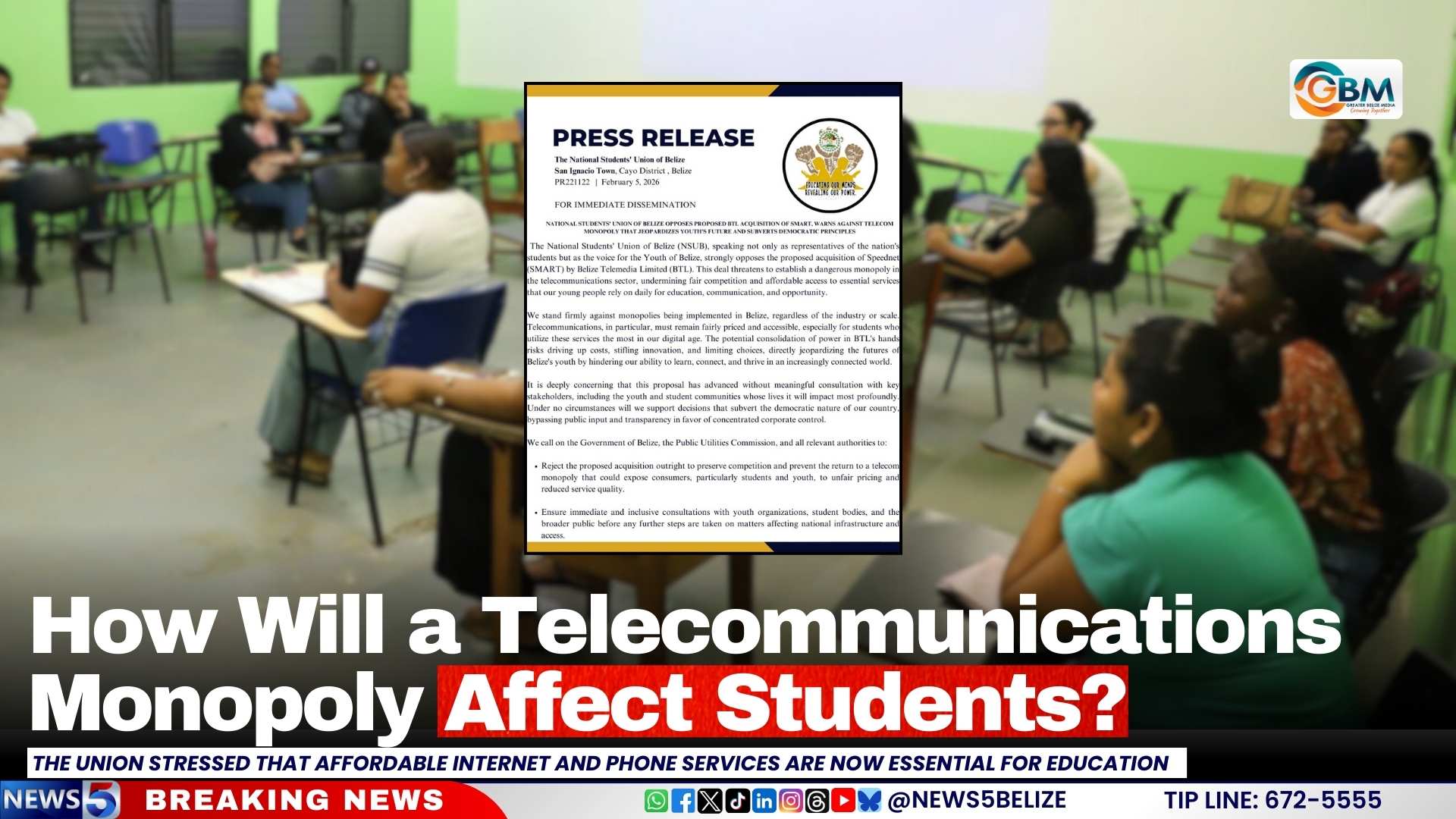
    The National Students’ Union of Belize (NSUB) has launched a vigorous campaign against Belize Telemedia Limited’s proposed acquisition of Speednet/SMART, characterizing the potential merger as a threat to educational equity and youth development. The student organization issued an official declaration on February 6, 2026, asserting that the consolidation would establish a telecommunications monopoly with detrimental consequences for Belize’s younger generation.

    The union’s position paper outlines multiple areas of concern, emphasizing that the proposed market consolidation would likely result in increased service costs, diminished innovation incentives, and reduced consumer options. The statement particularly highlights how these market changes would adversely affect educational accessibility, noting that reliable and affordable internet connectivity has become indispensable for academic research, digital learning platforms, and career development opportunities.

    Beyond economic considerations, the NSUB criticized the decision-making process itself, noting the conspicuous absence of youth representation during consultation phases. The union characterized this oversight as particularly troubling given that young people constitute one of the most affected demographics. Their declaration emphasized: ‘It is deeply concerning that this proposal has advanced without meaningful consultation with key stakeholders, including the youth and student communities whose lives it will impact most profoundly.’

    The student body has formally petitioned the Government of Belize, the Public Utilities Commission, and relevant regulatory authorities to outright reject the acquisition proposal. They demand robust protection of market competition and insist on comprehensive public consultations, specifically including youth representation, before any regulatory decisions are finalized. The NSUB’s statement concluded with a firm commitment to oppose any proceedings that ‘subvert the democratic nature of our country, bypassing public input and transparency in favour of concentrated corporate control.’

  • U.S. issues statement condemning participation in Cuban medical mission program across the board

    U.S. issues statement condemning participation in Cuban medical mission program across the board

    The United States has escalated its diplomatic offensive against Cuba’s international medical mission programs, issuing a formal condemnation of foreign governments that participate in these initiatives. In a strongly worded statement, U.S. officials characterized these medical deployments as systematic human rights violations, accusing partner nations of becoming accomplices in what they described as exploitative labor practices.

    The American position maintains that Cuba’s medical system operates through coercive mechanisms that violate fundamental worker rights, and that countries engaging with these programs directly enable the Cuban government’s alleged exploitation of medical professionals. The statement emphasized that financial arrangements between Cuba and participating nations effectively subsidize these questionable practices while undermining ethical international labor standards.

    U.S. officials presented alternative pathways for Caribbean nations seeking medical personnel, suggesting ethical recruitment channels exist that don’t involve partnering with Cuba’s controversial program. The statement specifically urged the international community to reject what it termed ‘forced labor schemes’ and demand greater accountability from the Cuban government regarding its treatment of medical workers.

    The declaration concluded with a call for collective action, emphasizing that genuine progress in human rights protection requires unified international adherence to ethical standards. The U.S. government reaffirmed its commitment to holding accountable those entities and nations that facilitate or participate in forced labor practices, positioning this stance as part of broader human rights advocacy.

  • Three European countries present credentials to CARICOM this week

    Three European countries present credentials to CARICOM this week

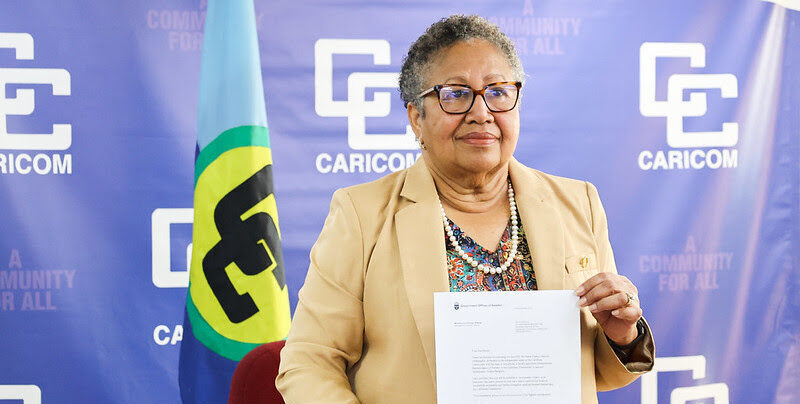
    The Caribbean Community (CARICOM) has significantly enhanced its international diplomatic network through the formal accreditation of three new European ambassadors this week. Secretary-General Dr. Carla Barnett presided over ceremonies welcoming senior diplomats from Sweden, Norway, and Austria to the regional organization.

    On February 3rd, Dr. Barnett accepted the Letters of Credence from Swedish Ambassador Her Excellency Maria Velasco, followed the next day by the accreditation of Norwegian Ambassador His Excellency John Petter Opdahl and Austrian Ambassador His Excellency Gerold Vollmer.

    During the ceremonies, Dr. Barnett emphasized the strategic importance of these partnerships, noting Sweden’s critical role in climate action and energy infrastructure development. ‘Our collaboration spans bilateral, regional, and multilateral dimensions,’ she stated, highlighting joint initiatives in ocean governance, water resource management, and climate adaptation strategies.

    The Secretary-General particularly acknowledged Norway’s longstanding support, recalling its instrumental role in establishing CARICOM’s Secretariat Office in Haiti in the early 2000s. She praised Norway’s continued commitment to regional security through support of the Gang Suppression Force under UN mandates.

    Regarding Austria’s engagement, Dr. Barnett highlighted financial contributions to the Caribbean Centre for Renewable Energy and Energy Efficiency (CCREEE) and professional development programs for Caribbean diplomats. All three ambassadors were urged to prioritize Haiti’s stabilization efforts given the nation’s ongoing political transition.

    In response, the European ambassadors emphasized shared global perspectives. Ambassador Velasco noted that CARICOM and EU nations collectively represent 41 countries with aligned positions on international issues. Ambassador Opdahl reaffirmed Norway’s dedication to addressing challenges faced by small island states, while Ambassador Vollmer outlined three key collaboration areas including potential establishment of a CARICOM office in Vienna.

  • Miss Teen Dominica to be crowned this  weekend

    Miss Teen Dominica to be crowned this weekend

    The Windsor Park Sports Stadium will transform into a vibrant showcase of emerging talent this Sunday as the Waitukubuli Dance Theatre Company presents the 47th Miss Teen Dominica Pageant. Five distinguished contestants from across the island nation will compete for the coveted 2026 title in an evening celebrating youth excellence and cultural heritage.

    This year’s competition features an impressive roster of academically accomplished young women: Jeffrine Joseph (Castle Bruce Secondary School), Joyette Carbon (Portsmouth Secondary School), Janice Williams (Goodwill Secondary School), Marina Jno Baptiste (Operation Youth Quake), and Ladira Dyer (Isaiah Thomas Secondary School). Each contestant arrives with substantial community backing, featuring sponsorship support from prominent national institutions including the National Cooperative Credit Union, Springfield Trading, and Archipelago Trading.

    The pageant will employ a comprehensive judging system across five distinct performance categories: Promotional Speech, Talent Showcase, Creative Costume presentation, Evening Wear evaluation, and a critical Question & Answer segment. Beyond the competitive proceedings, attendees will be treated to special performances by reigning Calypso Monarch Joy, Janae Jackson, alongside finalists Nachel and Redz. The entertainment lineup further includes appearances by the Junior Calypso Monarch, Junior Bouyon Monarch, and cultural presentations by the Waitukubuli Dancers, Bwa Bwa, and the Mahaut Sensay troupe.

    Organizers have positioned the event as a centerpiece of Dominica’s Carnival celebrations, promising an immersive experience that blends traditional pageantry with contemporary entertainment. For those unable to attend physically, a pay-per-view streaming option will be available through the Kairi FM and DBS Facebook platforms. Tickets remain available for purchase at Depex and Bulls Eye Pharmacy locations throughout the island.

    With primary sponsorship provided by A.C. Shillingford & Co. Ltd., the 2026 edition continues the pageant’s nearly five-decade tradition of highlighting the intellectual, artistic, and cultural achievements of Dominica’s youth population.

  • BCCI: BTL Meeting Fails to Address Key Concerns on Speednet Acquisition

    BCCI: BTL Meeting Fails to Address Key Concerns on Speednet Acquisition

    The Belize Chamber of Commerce and Industry (BCCI) has declared its fundamental concerns remain unresolved following recent discussions with Belize Telemedia Limited (BTL) regarding its proposed acquisition of telecommunications competitor Speednet/SMART.

    This development creates a significant divergence in business community perspectives, as the Belize Business Bureau (BBB) separately endorsed the merger earlier this week, controversially asserting that ‘competition destroys profits.’

    In a detailed statement released Thursday, the BCCI acknowledged the meeting with BTL was constructive but insufficient. The chamber raised multiple substantive objections centered on regulatory compliance, financial transparency, and consumer protection.

    Key concerns include whether the acquisition violates Section 42(4) of Belize’s Telecommunications Act, the methodology used to determine the purchase price, and potential conflicts of interest in the valuation process. The chamber specifically called for independent scrutiny of the proposed return on investment calculations by a firm with no Belizean affiliations.

    The BCCI highlighted particular anxiety regarding the exposure of the Social Security Board (SSB) as a shareholder and uncertainties about rate-setting mechanisms under a potential monopoly. The statement emphasized that reduced competition would likely diminish tailored solutions, flexible contracts, and competitive pricing while increasing vulnerability to service outages and system failures.

    Citing the need for rigorous oversight, the chamber insisted the Public Utilities Commission must enforce robust consumer protection rules. The BCCI formally demanded full transaction disclosure, independent valuation, public consultation proceedings, and updated consumer protection legislation before any acquisition proceeds.

    The chamber’s statement concluded with a pointed emphasis on political neutrality, stating ‘The public must be confident there is no political interference’ in the regulatory process.

  • Brazilië opent deur voor gedeeltelijk handelsakkoord tussen Mercosur en China

    Brazilië opent deur voor gedeeltelijk handelsakkoord tussen Mercosur en China

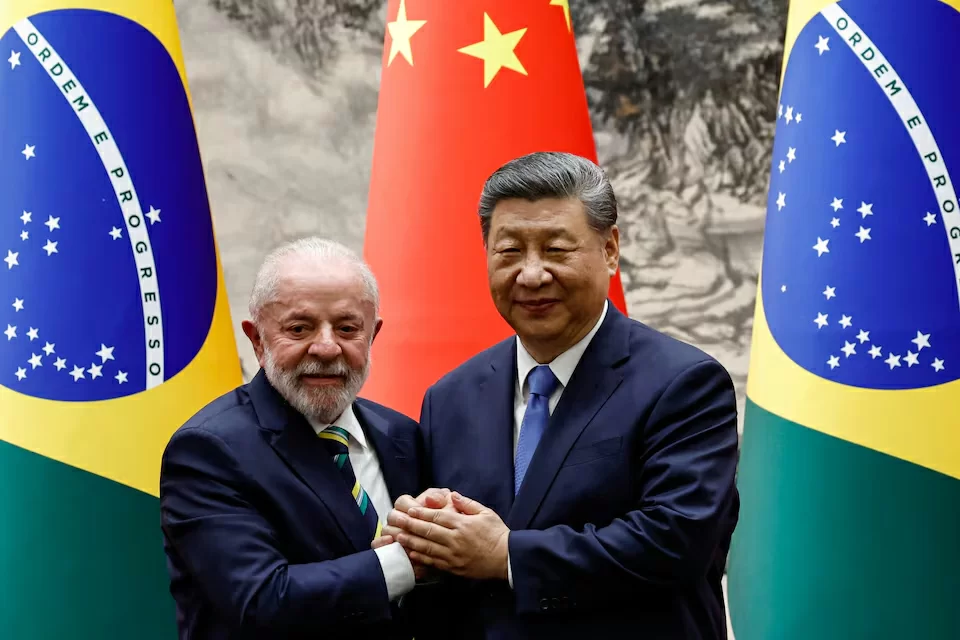
    In a significant policy reversal, Brazil is now contemplating support for a partial trade agreement between the Mercosur bloc and China, according to senior Brazilian government officials. This strategic pivot marks a substantial departure for Latin America’s largest economy, which had previously blocked formal negotiations with Beijing to shield domestic industries from potential surges in Chinese imports.

    The development emerges amid Uruguayan President Yamandu Orsi’s recent visit to Beijing, where both parties expressed optimism about expediting free trade talks between China and the Mercosur alliance—comprising Brazil, Argentina, Paraguay, Uruguay, and soon-to-join Bolivia.

    While a comprehensive trade pact remains distant, Brazilian officials view a partial agreement as a viable long-term option. This reconsideration is partly driven by U.S. import tariffs that are disrupting global trade flows and reshaping international alliances. A limited-scope agreement could focus on non-tariff barriers such as import quotas, customs procedures, and health and safety regulations, potentially unlocking meaningful market access in China.

    Insiders note that Brazil’s shift reflects a ‘new global scenario’ where diversifying trade partners has gained urgency. China offers the advantage of allowing negotiations to commence with selected tariff lines rather than requiring full-scale commitments.

    However, significant obstacles persist. Mercosur requires unanimous consent among members, complicated by political divergences. Paraguay maintains official diplomatic relations with Taiwan, complicating negotiations with China—though Paraguay hasn’t ruled out an agreement provided its Taiwan relationship remains respected.

    Argentina, Latin America’s third-largest economy, presents another challenge. Under President Javier Milei, who seeks closer U.S. ties, Buenos Aires remains hesitant to support China-led trade discussions within Mercosur, particularly if they might strain relations with Washington.

    Trade experts emphasize that this new dynamic is partly driven by former President Trump’s trade policies, which pressured Latin American nations to limit Chinese ties. This has prompted China to strengthen regional trade relationships, positioning Mercosur as a potential key partner.

    The ultimate form of any Mercosur-China trade agreement remains uncertain, but Brazil’s recent signals indicate growing willingness to reconsider traditional positions and explore new commercial opportunities in an evolving global landscape.

  • UDP Boycotts House Sitting

    UDP Boycotts House Sitting

    In a dramatic political standoff, Belize’s United Democratic Party (UDP) parliamentary caucus has initiated a comprehensive boycott of the House of Representatives session today. This protest action, which the party has designated as “Round 3” in their ongoing demonstrations, targets the proposed acquisition of Speednet/SMART by Belize Telemedia Limited (BTL), a transaction the opposition condemns as profoundly corrupt and financially reckless.

    The UDP caucus issued a scathing statement characterizing the acquisition as “one of the most blatantly corrupt and reckless deals ever foisted upon the Belizean people.” The party explicitly refused to participate in what they described as a parliamentary “rubber stamp” process, asserting that their boycott represents “an act of conscience and common sense” rather than political theater.

    Central to the opposition’s concerns are multiple procedural deficiencies in the proposed transaction. The UDP highlighted the absence of an independent valuation of SMART, non-disclosure of liabilities, lack of audited financial statements, and insufficient regulatory safeguards. Additionally, the party raised serious questions regarding whether severance payments owed to former employees would be honored prior to any acquisition completion.

    Financial implications form a core component of the opposition’s critique, with the UDP estimating that Belizeans would inherit over $80 million in debt, plus associated interest and closing costs. The statement employed strong rhetoric, declaring: “This is not governance. This is not development. This is daylight robbery dressed up as national policy.”

    The UDP’s communication further accused Prime Minister Briceño and Markhelm Lizaraga of continuously altering the narrative while “attempting to ram this bitter pill down our throats.” The party concluded its declaration with the emphatic statement: “Enough is enough,” signaling their intent to maintain resistance against the telecommunications acquisition.

  • St Thomas Outpatient Clinic reopens after COVID-19 closure

    St Thomas Outpatient Clinic reopens after COVID-19 closure

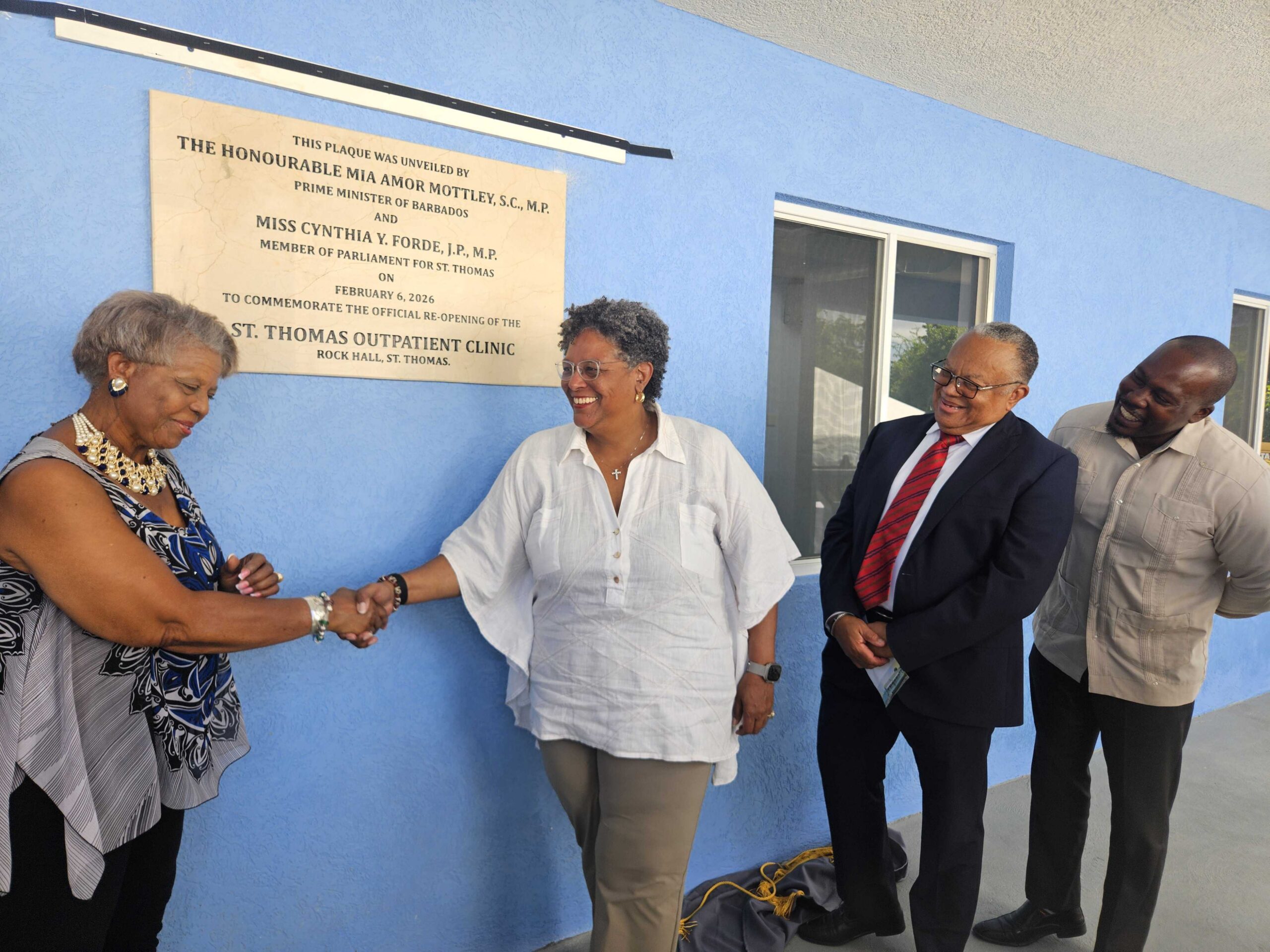
    Barbados has taken a significant step toward decentralizing its healthcare system with the official reopening of the St Thomas Outpatient Clinic following extensive pandemic-related closures. The $3 million refurbishment project represents a strategic government initiative to alleviate strain on the national Queen Elizabeth Hospital while enhancing local access to medical services.

    Former Health Minister Jerome Walcott emphasized the clinic’s role in combating Barbados’s growing non-communicable disease epidemic, revealing that operations will commence on a two-day weekly schedule with planned expansion to five days as resources and patient demand increase. The facility’s revival forms part of a comprehensive healthcare restructuring plan that prioritizes community-based treatment options.

    Local MP Cynthia Forde confirmed the clinic’s reopening aligns with broader constituency health objectives, disclosing parallel plans to repurpose the shuttered Gordon Cummins Hospital into a specialized hospice providing long-term and palliative care services. Prime Minister Mia Mottley characterized these developments as fundamental to the administration’s vision of enabling Barbadians to receive critical medical attention within their communities rather than depending exclusively on centralized hospital care.

    The revitalized clinic is projected to substantially reduce patient burdens at tertiary healthcare facilities while improving preventive care outcomes through enhanced geographical accessibility and tailored community health interventions.

  • OECS Secretariat assists St Vincent and the Grenadines in advancing digital innovation

    OECS Secretariat assists St Vincent and the Grenadines in advancing digital innovation

    The Organization of Eastern Caribbean States (OECS) Commission has reinforced its commitment to accelerating digital transformation across member nations, recognizing its pivotal role in modernizing governance structures and stimulating economic advancement. This strategic focus has materialized through a collaborative initiative with the government of Saint Vincent and the Grenadines (SVG), where digital evolution constitutes a fundamental pillar of national development policy.

    A comprehensive two-day workshop convened in SVG brought together critical stakeholders from multiple governmental sectors including National Security, Immigration, Customs, Civil Registry, Electoral processes, and Health services. The session, supported by the European Union through the 11th EDF Regional Integration Through Growth, Harmonization, and Technology (RIGHT) project, focused on evaluating and strengthening the legal, policy, and governance frameworks essential for implementing advanced Civil Registration and Unique Identification (UID) systems.

    Dr. Didacus Jules, OECS Director General, articulated the profound implications of digital transformation, stating: “This transition represents far more than technological enhancement—it signifies a fundamental restructuring of government-citizen interaction and service delivery mechanisms.” He emphasized that modernized registration systems establish the foundation for transparent, agile, and inclusive governance structures.

    The workshop facilitated detailed consultations and expert-led discussions on emerging digital identification trends and optimal practices. Participants conducted thorough assessments of existing legislative frameworks while identifying areas requiring policy harmonization and modernization.

    Concurrently, specialized equipment was formally transferred to SVG authorities to support the decentralization and efficient management of civil registration operations across both urban and rural communities. Winston George, Coordinator of the Caribbean Digital Transformation Project (CARDTP), highlighted the UID system’s strategic significance as “a cornerstone of Digital Public Infrastructure” that enables streamlined government operations and robust Know Your Customer processes across sectors.

    Ms. Shernell Hadaway, representing the Attorney General’s office, emphasized the necessity of broad-based understanding and acceptance across government, civil society, and private sectors for successful system implementation.

    This integrated approach—combining policy refinement, technological investment, and capacity building—marks a significant advancement in SVG’s digital transformation journey. The OECS Commission continues to collaborate with SVG and other member states to develop secure, interoperable systems that improve service accessibility, stimulate economic activity, and position Eastern Caribbean nations as digital governance innovators.

  • Mottley urges Barbadians to seize training opportunities

    Mottley urges Barbadians to seize training opportunities

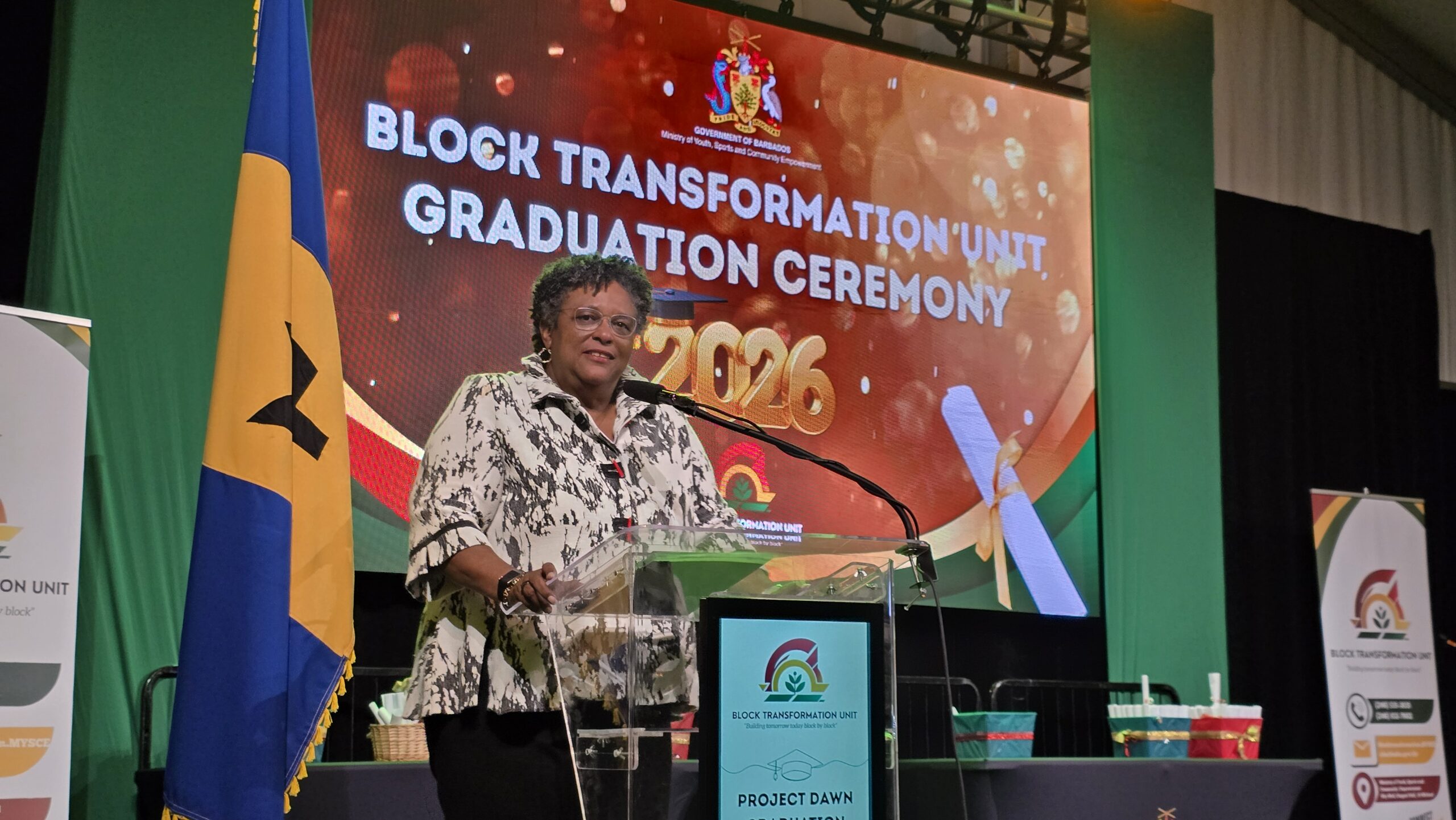
    A major workforce development initiative in Barbados is demonstrating significant success, having equipped over 1,500 citizens with new skills and catalyzed the creation of dozens of enterprises. Prime Minister Mia Mottley, addressing graduates at the Block Transformation Unit (BTU) Project Dawn ceremony at Illaro Court, championed the program as a pivotal mechanism for providing second-chance opportunities and fostering economic empowerment.

    The ceremony, which celebrated over 380 graduates, served as a platform to underscore the government’s expansive investment in nationwide upskilling. Mottley detailed the extensive ecosystem of training avenues now accessible to Barbadians, spanning institutions like the Samuel Jackman Prescod Institute (SJPI), Barbados Community College (BCC), Barbados Vocational Training Board (BVTB), and the National Transformation Initiative (NTI). Emphasizing inclusivity, the Prime Minister highlighted the NTI’s digital platform, which offers over 15,000 free online courses, ensuring learning is available to all, regardless of schedule or learning preference.

    Mottley passionately advocated for the tangible value of education, stating, ‘Knowledge is power, knowledge is money. Knowledge can never be taken from you.’ She directly encouraged attendees to leverage these opportunities, a call to action extended to the friends and family of the graduates present.

    The program’s impact extends beyond individual education. Since its 2024 inception, the BTU has directly led to the formal registration of 45 new small businesses with the Corporate Affairs and Intellectual Property Office (CAIPO). This entrepreneurial wave includes 10 registered groups of small farmers coordinated with the Barbados Agricultural Development and Marketing Corporation (BADMC). Furthermore, the initiative has successfully integrated participants into other national programs like the Barbados Youth Advance Corps, creating pathways to sustained employment.

    Looking forward, the government plans to scale the program’s reach. Mottley announced intentions to fully utilize newly completed dormitories to facilitate expanded residential training, aiming for four annual cohorts undergoing intensive eight-week sessions. Financial support for new entrepreneurs is also set to increase. Through the Trust Loans Programme, participants can currently access collateral-free loans up to $5,000. Mottley signaled a potential post-election expansion of this ceiling to $20,000 for those who demonstrate repayment reliability, with an intermediate step up to $10,000 available.

    Concluding her address, the Prime Minister advised employed graduates to seek union membership for workplace solidarity and urged those still seeking positions to register with the Ministry of Labour’s Jobs Registry, a tool designed to efficiently connect skilled Barbadians with prospective employers.