博客

  • Politic : Transfer of power and speech by Laurent Saint-Cyr (video)

    Politic : Transfer of power and speech by Laurent Saint-Cyr (video)

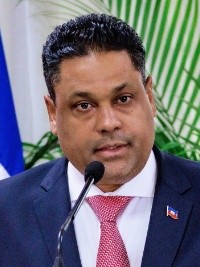
    Port-au-Prince, Haiti witnessed a significant political transition on February 7, 2026, as the Presidential Transitional Council (CPT) formally concluded its mandate in a ceremony at the Villa d’Accueil. Outgoing President and Council Coordinator Laurent Saint-Cyr officially transferred authority to Prime Minister Alix Didier Fils-Aimé, adhering to the constitutional provisions outlined in the CPT-establishing decree while emphasizing the importance of governmental continuity.

    The transfer ceremony was attended by high-ranking officials including government ministers, the Director General of Police, the Commander-in-Chief of the Armed Forces, representatives from the Anti-Gang Force, and members of the diplomatic corps, underscoring the event’s significance in Haiti’s political landscape.

    In his farewell address, Saint-Cyr characterized February 7th as a day of reflection and learning, acknowledging that Haiti’s ongoing governance crisis stems from multiple complex factors. He described the CPT’s mandate as an exceptionally challenging undertaking, noting that promised resources and support essential for fulfilling their mission failed to materialize. Despite these challenges, Saint-Cyr clarified that Haiti would not experience an institutional void following the CPT’s dissolution, as stipulated by the April 3rd Agreement. He confirmed that Prime Minister Fils-Aimé and the Council of Ministers would continue their work to stabilize the nation, with Marie Élisabeth Régine Joseph Haddadla, Secretary General of the Presidency, assuming responsibility for safeguarding the institution’s integrity.

    In response, Prime Minister Fils-Aimé expressed gratitude to the departing CPT members and announced his immediate plans to address the nation that evening. He further revealed intentions to convene an extraordinary cabinet meeting promptly to initiate governmental operations without delay, signaling a commitment to maintaining administrative momentum during this transitional phase.

  • U-17 World Cup Qatar 2026 Qualifier : Haiti defeats Antigua and Barbuda [4-0]

    U-17 World Cup Qatar 2026 Qualifier : Haiti defeats Antigua and Barbuda [4-0]

    In a commanding display of youth football prowess, Haiti’s U-17 national team secured a decisive 4-0 victory against Antigua and Barbuda during their CONCACAF World Cup qualifying match on February 7, 2026. The match, held at Guatemala City’s Cementos Prograso Stadium, showcased the growing talent within Haiti’s youth development program despite some tactical inconsistencies throughout the game.

    Under the guidance of Coach Kowsky Sainvil, who made only one strategic change to the starting lineup that previously defeated Grenada 5-1, the young Grenadiers demonstrated offensive efficiency. The scoring commenced early when Rolf Casillas K. Julien found the net in the 10th minute with a precise right-footed strike from the center of the box, expertly assisted by Jhon-Widy Belton.

    The Haitian advantage doubled merely six minutes later through an unfortunate own goal from Antigua and Barbuda defender Cody Richardson. While the first half concluded without additional scoring despite several missed opportunities, the Benna Boys mounted stronger defensive resistance after the interval.

    The breakthrough eventually came in the 76th minute when substitute Macenat Prophète, who had entered the match at halftime, extended Haiti’s lead with another clinical finish from the box’s center. Emerson Laïssé completed the scoring spectacle in the 90th minute, capitalizing on a well-executed corner kick to secure the comprehensive victory.

    Despite the impressive win, Haiti currently occupies second position in Group C behind Guatemala due to goal differential. Both teams maintain identical records of two victories, nine goals scored, and six points, but Guatemala’s flawless defensive record (zero goals conceded) compared to Haiti’s single conceded goal places them marginally ahead. The upcoming direct confrontation between Haiti and Guatemala on February 10, 2026, will determine group supremacy and qualification progression, with Haiti requiring victory to claim the top spot.

  • Man found unresponsive with apparent gunshot wound

    Man found unresponsive with apparent gunshot wound

    Law enforcement authorities in St. Vincent and the Grenadines are investigating a fatal shooting in the Diamond/Brighton community, marking the nation’s fifth homicide within the first weeks of the year. Police were dispatched following reports of an unresponsive male victim presenting apparent gunshot wounds, though official identification remains pending pending family notifications.

    The incident occurred merely 24 hours after the country recorded its fourth homicide, creating a disturbing pattern of violent deaths. This recent violence follows the fatal shooting of Mesopotamia resident Kevin Richards, locally known as Masicka, who was killed on Friday evening. Richards’ death represented the third homicide recorded within a consecutive three-week period, signaling a concerning escalation in violent crime across the island nation.

    Local communities have expressed growing apprehension as the homicide count rapidly approaches numbers typically recorded over entire calendar years. Law enforcement officials have intensified patrols and investigative efforts while urging community cooperation to address the surge in violence. The consecutive nature of these incidents has prompted discussions about underlying social factors and potential organized crime elements contributing to the spike in deadly altercations.

    Authorities have characterized this as an ongoing investigation with multiple active leads. iWitness News continues to monitor developments and will provide updates as official information becomes available through proper channels. The Royal St. Vincent and the Grenadines Police Force has appealed to the public for any relevant information that might assist their investigations into these connected violent incidents.

  • COE maintains four provinces on green alert due to cold front

    COE maintains four provinces on green alert due to cold front

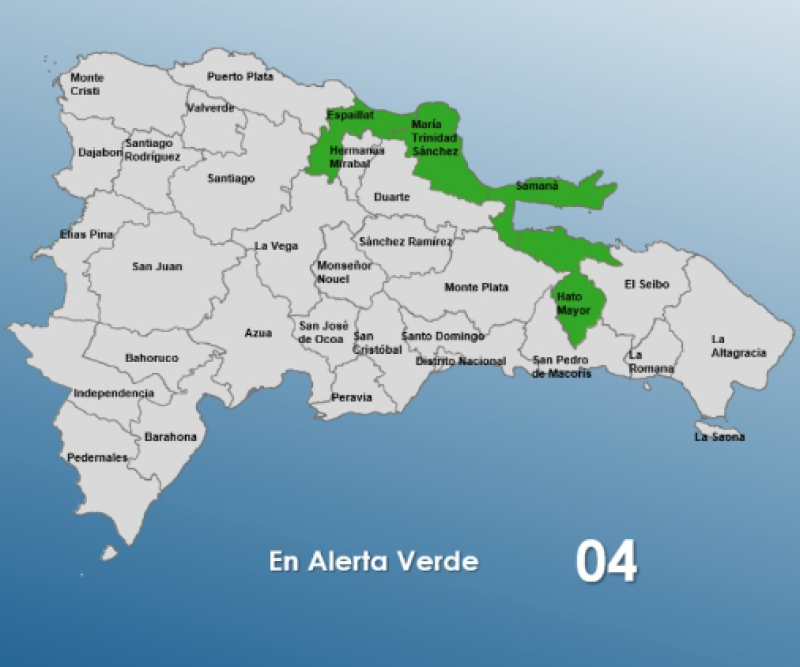
    The Dominican Republic’s Emergency Operations Center (COE) has escalated its national alert system in response to an advancing cold front affecting multiple regions. Four provinces—Espaillat, María Trinidad Sánchez, Samaná, and Hato Mayor—have been placed under official green alert status due to anticipated hazardous weather conditions.

    According to COE protocols, a green alert signifies that meteorological characteristics predict a potentially dangerous event for the population, whether partial or comprehensive in scope. This precautionary measure comes as the Dominican Institute of Meteorology (Indomet) forecasts continued scattered showers throughout the day across seventeen provinces, including Puerto Plata, Hermanas Mirabal, Monte Plata, and Greater Santo Domingo.

    Indomet has issued specific warnings to maritime operators, advising fragile and small-to-medium-sized vessels to exercise extreme caution along coastal perimeters. The agency strongly recommends against sea ventures due to prevailing strong winds and abnormal wave patterns. The meteorological institute emphasizes that these conditions pose significant risks to coastal navigation and marine activities.

    The coordinated response between emergency management and meteorological agencies highlights the government’s proactive approach to weather-related threats. The alert system activation enables local authorities to implement preventive measures and mobilize resources in vulnerable areas, potentially mitigating the impact of the ongoing weather phenomenon on communities and economic activities.

  • Government responds to Inter-American Commission on Human Rights: “No State can be forced to assume the protection of another”

    Government responds to Inter-American Commission on Human Rights: “No State can be forced to assume the protection of another”

    The Dominican Republic has issued a formal rebuttal to the Inter-American Commission on Human Rights (IACHR) regarding concerns about its migration policies, asserting its sovereign right to regulate border control while maintaining human rights protections. The government’s response, dated February 2026, addresses what it characterizes as disproportionate criticism from the regional body.

    In its comprehensive statement, the Dominican government emphasized its dual commitment to upholding human rights principles while enforcing national immigration laws. Authorities framed the nation’s migration challenges within the context of Haiti’s prolonged political and humanitarian crisis, which has created sustained migratory pressure on the Dominican Republic for decades.

    The Caribbean nation defended its immigration measures as necessary responses to extraordinary circumstances, stating that no sovereign state can be compelled to provide protection or services to another country’s population during governmental collapse. The government specifically rejected the IACHR’s recommendation to broadly apply the principle of non-refoulement to migrants in irregular status, arguing this would effectively force the Dominican State to accept unlimited Haitian immigration.

    Regarding healthcare access, officials clarified that emergency medical services are never denied based on immigration status, with special protocols implemented for vulnerable groups including pregnant women, children, and patients with special needs. The statement also highlighted infrastructure improvements at immigration processing centers and a zero-tolerance policy toward inhumane treatment.

    The Dominican government expressed concern that the IACHR appeared to prioritize unverified allegations over official data, while simultaneously reaffirming its commitment to technical cooperation with the Commission based on mutual respect and good faith. Authorities emphasized that balanced solutions must incorporate verifiable information and recognize the regional context of the migration crisis.

  • Malik Ferrol of Paix Bouche Primary is Junior Calypso Monarch 2026, St Luke’s Primary Diaminti Warrington is Bouyon Junior Monarch

    Malik Ferrol of Paix Bouche Primary is Junior Calypso Monarch 2026, St Luke’s Primary Diaminti Warrington is Bouyon Junior Monarch

    Dominica’s cultural future shines brightly as two extraordinary nine-year-old talents claimed top honors in the island’s prestigious 2026 junior music competitions. Malik Ferrol, performing under the stage persona “De Reverend” from Paix Bouche Primary School, captured the Junior Calypso Monarch title with his dynamic performance of “Right Up,” demonstrating remarkable stage presence and lyrical prowess beyond his years.

    The calypso competition saw fierce talent with Bijou Nicholas, known as “Mighty Jewel” from Convent High School, earning first runner-up status, while Faith St. Ville of Dominica Grammar School secured second runner-up position. Notably, St. Ville, who performs as “Queen Melody,” defended her 2025 crown with another strong showing.

    Simultaneously, the Junior Bouyon Monarch competition crowned Diamanti Warrington, another nine-year-old sensation from St. Luke’s Primary School. Performing as “Rinser Pop,” Warrington mesmerized judges and audience alike with his infectious single “Free Up,” showcasing the evolving bouyon genre that continues to dominate Dominica’s musical landscape.

    The bouyon category featured impressive contenders including first runner-up Kirlisa Prince (“Kim Possible” from Convent High School) and second runner-up Josiah Fagan (“King Ziah” from Goodwill Secondary School). These victories mark a significant passing of the torch from 2025 champion Shervez “Moxie Shervey” Seaman.

    These competitions, organized by DBS Radio, highlight Dominica’s commitment to preserving and evolving its unique musical heritage through youth engagement. The event demonstrates how traditional Caribbean genres like calypso and bouyon continue to thrive through fresh, young interpretations that honor cultural roots while injecting contemporary energy.

  • Reyme: perceptie van klassejustitie ondermijnt rechtsstaat

    Reyme: perceptie van klassejustitie ondermijnt rechtsstaat

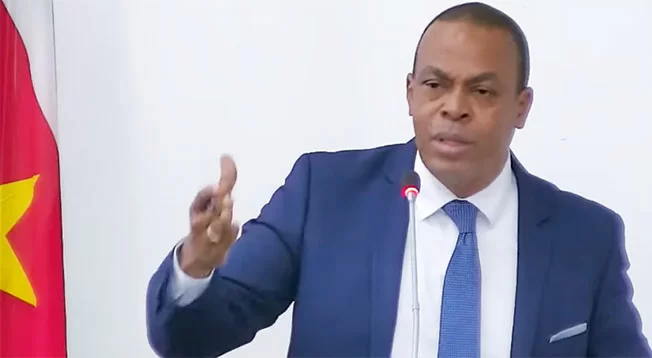
    In a comprehensive address to the National Assembly on Friday, Assembly member Steven Reyme (A20) articulated the critical necessity for immediate judicial reform in Suriname. As a co-initiator of the legislative package, Reyme emphasized that the proposed reforms target the fundamental structure of the nation’s judicial system rather than individual personalities or power dynamics.

    Reyme presented five compelling arguments for urgent judicial modernization. First, he highlighted the essential restoration of public trust, noting widespread perceptions of ‘class justice’ among citizens. “Without independent judges and equal rules for all, confidence will not return,” he asserted. Second, he stressed the economic imperative of legal certainty, particularly as Suriname develops its oil, gas, and tourism sectors, where predictable jurisprudence is prerequisite for foreign investment.

    Third, Reyme addressed the critical need for protection against political influence—both actual and perceived—stating that even the appearance of interference undermines judicial integrity. Fourth, he pointed to institutional professionalization and capacity building within a judiciary struggling with resource shortages, outdated structures, and limited career advancement opportunities. Finally, he emphasized future-proof legal development through cassation and consistent legal interpretation.

    The proposed reforms include constitutional amendments granting indigenous recognition as Suriname’s original inhabitants—a correction Reyme described as addressing historical omission rather than symbolic gesture. Other measures include appointing the Attorney General for life upon judicial advice, reducing the mandatory retirement age from 70 to 65 to encourage rejuvenation, and implementing fixed 30-day deadlines for judicial appointment recommendations to prevent delays.

    Regarding the introduction of cassation and a supreme court, Reyme expressed personal preference for a domestic High Council while remaining open to regional alternatives if they enhance legal quality and accessibility. He concluded by emphasizing the package’s institutional focus: “This legislation requires trust not in persons, but in institutions. We bear responsibility to leave a judiciary stronger than ourselves.”

  • OP-ED: As glaciers melt, the world’s hidden water banks are at risk

    OP-ED: As glaciers melt, the world’s hidden water banks are at risk

    The world’s glaciers, often described as nature’s frozen water banks, serve as critical lifelines for nearly two billion people globally. These immense ice formations sustain some of Earth’s most vital river systems—including the Indus, Nile, Ganges, and Colorado—which provide essential irrigation for agriculture, drinking water for communities, and power for electricity generation. However, accelerating climate change is triggering an unprecedented glacial retreat that threatens water, food, and livelihood security on a planetary scale.

    Scientific observations reveal that five of the past six years have witnessed the most rapid glacier melting ever recorded. Mountainous regions, which cover over a quarter of the world’s land surface and host 1.2 billion inhabitants, are warming at rates exceeding the global average. This thermal increase is producing immediate environmental hazards including flash floods, glacial lake outbursts, avalanches, and landslides. More concerning still is the long-term prospect of permanent glacial disappearance, which would fundamentally alter hydrological cycles that have persisted for millennia.

    The phenomenon of ‘peak water’—the point at which glacial meltwater reaches maximum output before declining—is already occurring or expected within coming decades for many glaciers. From the Andes to the Himalayas, communities report shortened snow seasons, erratic water flows, and diminished agricultural yields. In Peru, shrinking glaciers have directly reduced crop production, while Pakistan faces disruptions to traditional planting cycles due to unreliable snowmelt.

    Beyond practical survival concerns, glacial loss carries profound cultural implications. For Indigenous communities across Asia, Latin America, Africa, and the Pacific, glaciers represent sacred elements of their heritage. Their disappearance erodes centuries-old traditions, rituals, and cultural identities tied to mountain landscapes.

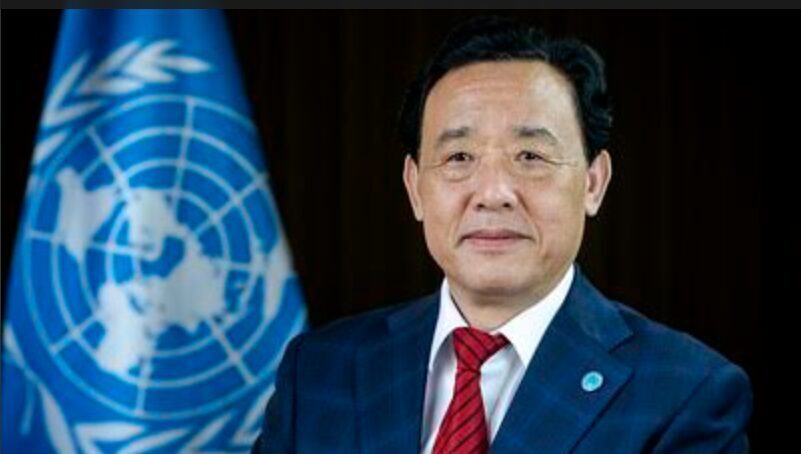
    In response to this crisis, the United Nations has designated 2025 as the International Year of Glaciers’ Preservation. The Food and Agriculture Organization (FAO), mandated to lead related observances, emphasizes that effective solutions require integrated approaches combining emission reduction, improved water management, and adaptive agricultural practices. Traditional techniques such as terrace farming, agroecology, and crop diversification—perfected by mountain communities over generations—offer valuable models for sustainable adaptation.

    Innovative preservation initiatives are already demonstrating promise. In Kyrgyzstan, FAO-supported projects construct artificial glaciers that store over 1.5 million cubic meters of ice for summer irrigation. India’s Ladakh region employs automated ice reservoirs to capture and preserve winter water, while Peruvian communities implement natural filtration systems to address water quality issues caused by mineral exposure from retreating glaciers.

    Despite these efforts, experts warn that current global responses remain fragmented and insufficient. Addressing the glacier-water-agriculture nexus demands coordinated policy alignment, increased climate financing, cross-border cooperation, and enhanced monitoring systems. As population growth escalates water demand while glacial supplies diminish, the preservation of these frozen ecosystems becomes increasingly synonymous with safeguarding humanity’s future.

  • More Than 2,300 Refugees Now Living in Belize

    More Than 2,300 Refugees Now Living in Belize

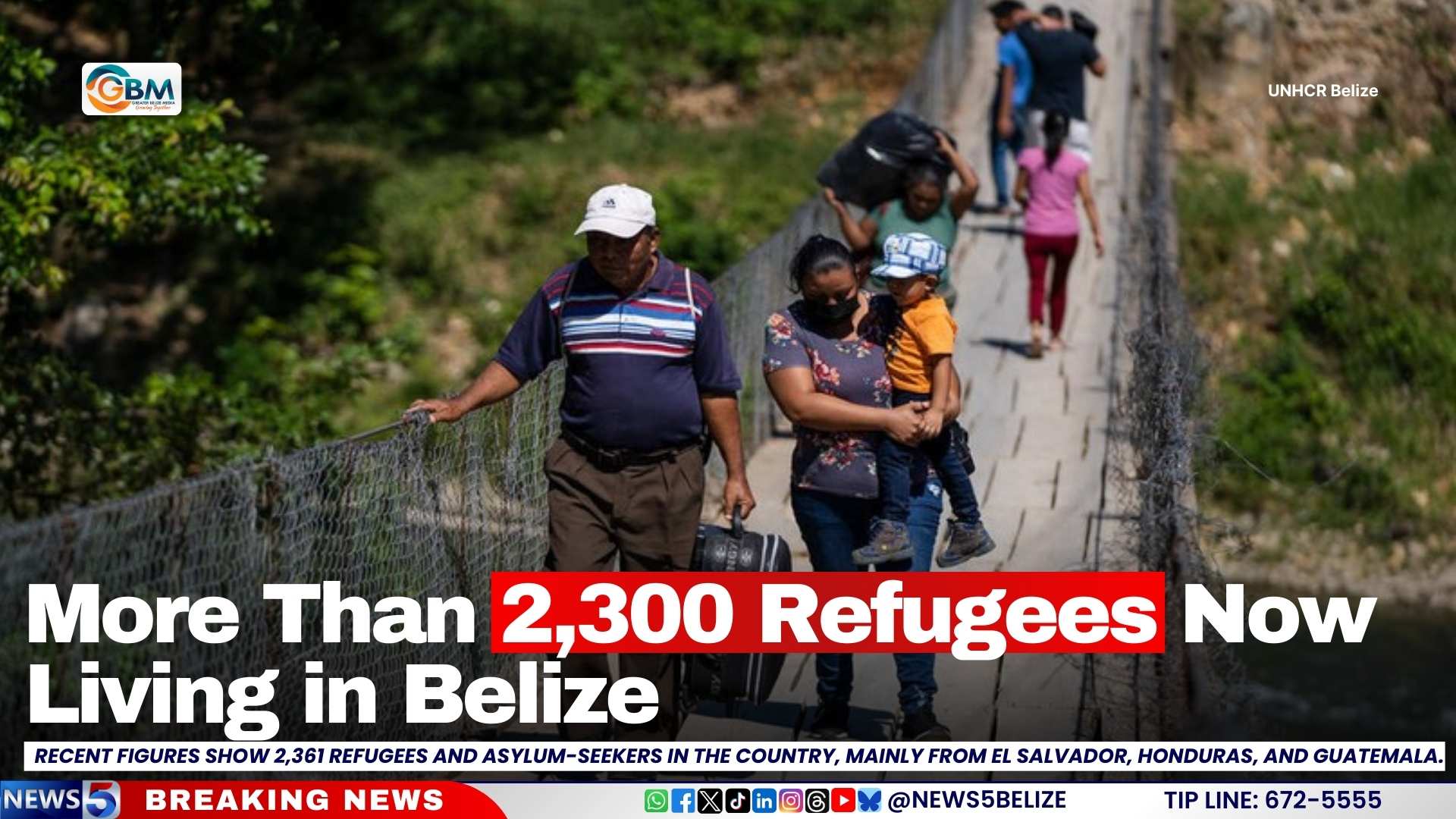
    Belize has emerged as a critical humanitarian sanctuary in Central America, currently providing refuge to 2,361 individuals fleeing violence and instability across the region. Official statistics reveal that the majority of these refugees and asylum-seekers originate from neighboring nations including El Salvador, Honduras, and Guatemala.

    The most recent quarterly data from October to December 2025 indicates a steady flow of displaced persons, with the national Refugees Department processing 45 new asylum applications during this period. Concurrently, 58 individuals received essential legal assistance and counseling services through the collaborative efforts of the United Nations High Commissioner for Refugees (UNHCR).

    Belize’s commitment to international protection standards stems from its longstanding adherence to the 1951 Refugee Convention. The nation’s humanitarian framework is formally established through its national Refugees Act, which provides the legal foundation for refugee rights and protections.

    UNHCR maintains an active partnership with the Belizean government, focusing on three key areas: strengthening the country’s asylum processing system, enhancing access to fundamental rights, and facilitating social integration programs. This cooperation includes direct funding for technical assistance and specialized training for personnel within both the Refugees Department and the Refugee Eligibility Committee.

    Beyond immediate protection concerns, the international agency advocates for legislative reforms to address potential statelessness issues. UNHCR additionally collaborates with various government ministries to ensure refugee populations can access essential national services including healthcare, education, and social welfare programs.

  • Alfred opens 2026 with 60m world lead

    Alfred opens 2026 with 60m world lead

    Saint Lucian sprint sensation Julien Alfred made a spectacular return to competition by posting the fastest indoor women’s 60m time globally this season. The 24-year-old Olympic champion dominated Heat 1 at the Woo Pig Classic in Fayetteville, Arkansas, clocking an impressive 7.04 seconds at the Randal Tyson Track Center on Saturday.

    The University of Texas alumna chose to launch her 2026 campaign in Arkansas rather than at the previously announced Millrose Games, marking her first competitive appearance since securing 100m bronze at last September’s Tokyo World Championships. This return to the track ends a 146-day competitive hiatus and represents her first 60m race since claiming gold at the 2024 World Indoor Championships in Glasgow 707 days ago.

    Alfred, currently ranked as the second-fastest woman in history over the indoor 60m distance, has declared ambitious dual objectives for the season. The sprint star aims to defend her title at next month’s World Indoor Championships in Kujawy Pomorze, Poland, while simultaneously targeting the longstanding world record of 6.92 seconds set by Russia’s Irina Privalova.

    Her season-opening performance surpassed the previous indoor season best of 7.05 seconds set by Czech athlete Karolína Maňasová nearly three weeks prior. Notably, Alfred’s time also outperformed Jamaican sprinter Tia Clayton’s 7.02-second mark achieved at GC Foster College, which was recorded outdoors with wind assistance and therefore not eligible for indoor rankings.