博客

  • 100 beds, medical dome for ailing Cornwall Regional

    100 beds, medical dome for ailing Cornwall Regional

    FREEPORT, St James — A significant healthcare reinforcement is underway for Jamaica’s storm-battered Cornwall Regional Hospital (CRH) through a major philanthropic initiative. Health and Wellness Minister Dr. Christopher Tufton has officially accepted the donation of a 10,000-square-foot ballistic-rated medical dome and 100 critical care hospital beds, describing the contribution as “profoundly timely and essential.”

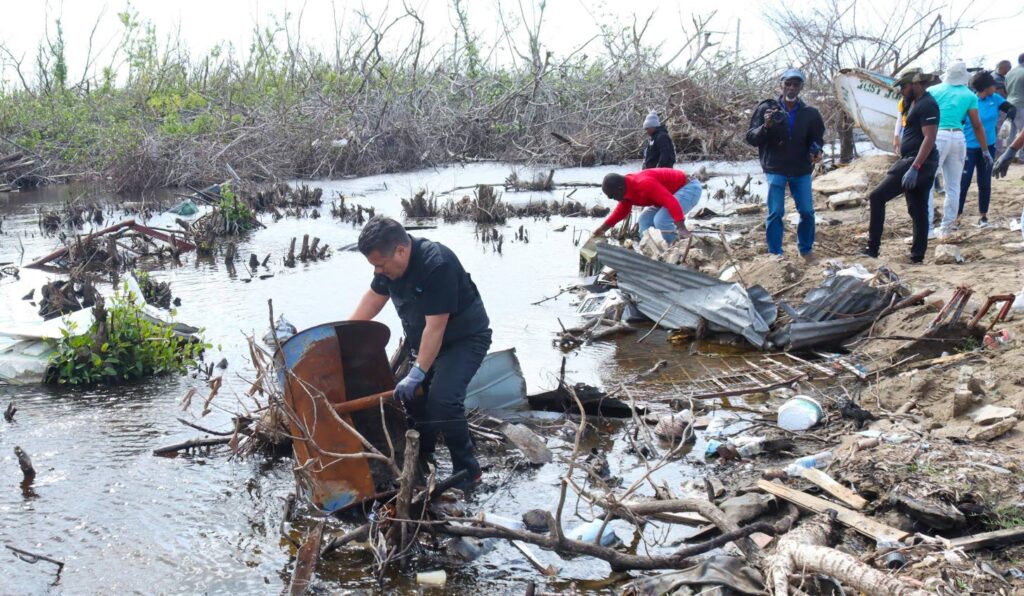
    The infusion of resources arrives as the hospital battles the aftermath of Hurricane Melissa, a Category 5 storm that struck last October and obliterated approximately 157 beds—nearly half of the facility’s total capacity. This catastrophic loss triggered severe overcrowding and extended wait times within the Accident and Emergency (A&E) Department, stretching the hospital’s operational limits.

    Minister Tufton, addressing the media at the Western Regional Health Authority Technical Office, reported substantial recent progress. Over the past fortnight, 75 beds have been restored, elevating the hospital’s operational capacity to 259 beds, or 75% of its pre-hurricane level. Consequently, the burden on the A&E Department has already been reduced by an estimated 50%.

    The new medical dome, to be situated adjacent to the A&E Department, is designed to facilitate a more efficient patient flow into ward areas. Foundation work is already in progress on the hospital grounds. “Once operational, this structure will provide doctors and nurses with enhanced surface area and significantly improved workflow, mitigating current operational inconveniences,” Tufton stated. He emphasized that the ultimate beneficiaries will be the patients, who will experience a major alleviation of existing challenges.

    Spearheading the relief effort is the United Mission Coalition. Christie Hutterson, CEO of Kennedy International Logistics and Services, explained that the initiative evolved from short-term hurricane relief into a sustained commitment after assessing the extensive damage. The donation package extends beyond the dome and beds to include X-ray systems, autoclaves, vital medications, clinical supplies, and interior design expertise provided by the University of Miami. All equipment will remain as permanent assets for the Jamaican people.

    To ensure rapid deployment, the dome will be airlifted to the island by the end of February via Judah 1, the world’s first Christian non-profit airline, as confirmed by its CEO, Everett Aaron. Further bolstering the effort, the National Health Fund (NHF) has committed $30 million to site preparation and dome equipping. NHF CEO Everton Anderson noted that while recovery aid is being provided to several hurricane-affected institutions, CRH requires particular focus due to its concurrent construction projects and critical space deficit.

  • Disaster support caution

    Disaster support caution

    Opposition Senator Kisha Anderson has issued a stark warning to the Jamaican Government, asserting that the nation cannot presume continued financial support from international organizations following future natural disasters. Her remarks came during last Friday’s Senate debate concerning amendments to the Financial Administration and Audit (FAA) Act.

    Anderson emphasized that the increasing frequency of catastrophic events across the Caribbean region means Jamaica will not remain the sole small island nation dependent on global generosity. This caution follows the devastating impact of Hurricane Melissa, which inflicted an estimated US$8.8 billion in physical damage to the island.

    The approved legislative amendments eliminate the maximum cap on allocations to the National Natural Disaster Reserve Fund (NNDRF) and remove requirements for annual transfers from the Consolidated Fund once the NNDRF balance reaches $10 billion. Notably, the provision mandating a $200 million annual transfer to the NNDRF, established during the 2023/2024 financial year, has been abolished.

    Opposition parliamentarians in both legislative chambers have challenged the government’s rationale for discontinuing the guaranteed funding mechanism. They contend that the resources available from the NNDRF after Hurricane Melissa represented merely “a drop in the bucket” compared to the actual reconstruction needs.

    Government Senate Leader Kamina Johnson Smith defended the policy changes, highlighting the administration’s development of a sophisticated multi-layered disaster risk financing framework. This innovative approach includes Jamaica’s groundbreaking catastrophe bond initiative, which established the nation as the first small state to sponsor its own catastrophe bond—a financial instrument that gained significant global recognition following Hurricane Melissa.

    While acknowledging the maturity demonstrated through Jamaica’s layered disaster management strategy, Senator Anderson questioned the decision to retreat from established funding mechanisms. She further emphasized the critical importance of governance and accountability, suggesting that enhanced oversight provisions within the FAA Act could serve as remedies for poor governance practices.

    The debate occurs against the backdrop of Prime Minister Andrew Holness’s announcement of a historic US$6.7 billion financing package from multilateral institutions, including the IMF and World Bank, to support Jamaica’s three-year recovery and resilience building efforts following the hurricane.

  • Pregnant, jobless and fearful after Melissa

    Pregnant, jobless and fearful after Melissa

    In the bustling courtyard of Hertford New Testament Church of God, Westmoreland, Terry-Ann Elliot stood apart from the crowds seeking assistance during the GRACE Relief Mission from January 25-30, 2026. While hundreds affected by Hurricane Melissa’s October 2025 devastation lined up for medical care, supplies, and counseling, the heavily pregnant woman observed quietly with her toddler, representing the invisible struggles that persist months after the Category 5 storm.

    The church’s comprehensive outreach provided dental services, legal aid, food packages, and construction support to communities still reeling from the disaster. Yet Elliot’s concerns extended beyond immediate relief—she carried the compounded burdens of pregnancy, unemployment, and hurricane damage to her home.

    “We’re living in constant uncertainty since Melissa,” explained Elliot, whose husband lost his tourism industry job. “Our savings and plans disappeared with the storm, just as we were recovering from 2024’s Hurricane Beryl.”

    The expectant mother described adapting to life without electricity or running water, baking when possible to stretch limited resources. Despite fears of gestational diabetes, she relies on herbal teas when balanced meals become unaffordable. “I must stay healthy for both my children,” she stated, highlighting the difficult choices facing vulnerable populations.

    Although government assessments documented damage in her community, Elliot remains uncertain about official assistance timelines. The church’s periodic distributions currently offer her family’s only semblance of stability.

    Her anxieties extend to healthcare accessibility, particularly regarding Savanna-la-Mar Public General Hospital’s post-hurricane conditions. “They lack ultrasound equipment, and I worry about overcrowding in damaged sections,” shared Elliot, who will experience hospital childbirth for the first time.

    Despite these challenges, the resilient mother maintains perspective: “I take everything one step at a time, finding patience through the discomfort.” Her story exemplifies the layered crises facing hurricane survivors—where immediate relief efforts meet long-term recovery needs—as Jamaica’s western parishes continue rebuilding.

  • ‘Him let me down’

    ‘Him let me down’

    The shocking admission of guilt by former Member of Parliament Jolyan Silvera in the manslaughter of his wife has created seismic waves throughout St Mary Western, revealing deep fractures within a community that once overwhelmingly supported his political career. Silvera, who previously maintained his innocence for over two years, unexpectedly pleaded guilty to manslaughter and using a firearm to commit manslaughter last Monday, relating to the November 2023 death of his spouse.

    In Oracabessa—a traditional People’s National Party stronghold where Silvera secured a decisive electoral victory in 2011—residents expressed complex and conflicting emotions regarding their former representative. While many acknowledged their past political allegiance to Silvera, community members displayed sharp divisions regarding appropriate sentencing ahead of his March 6 court appearance.

    Longtime supporter Tarry expressed profound disappointment, stating: “He’s my real good friend—I campaigned for him—so I initially believed he was being framed. Witnessing his guilty plea left me utterly astonished and ashamed, particularly after learning that ballistic evidence confirmed his firearm was used.”

    Other residents recalled Silvera’s previously positive community presence. One anonymous PNP supporter described him as “an intelligent and nice guy” who frequently socialized with constituents, expressing bewilderment at how someone perceived as emotionally stable could commit such an act. Several community members, including resident Harrol Brown, appealed for judicial leniency, suggesting Silvera might have acted outside his character and deserved redemption opportunities.

    However, these calls for mercy were countered by vigorous demands for stringent punishment. Female vendors in particular expressed outrage, with one emphasizing: “If you can kill a woman innocently, you’re robbing a whole family—a mother of her daughter, children of their mother. He deliberately attempted to conceal evidence, which demonstrates clear premeditation.”

    Another female vendor who previously supported Silvera’s political campaigns called him “wicked” and demanded maximum sentencing, asserting: “As a woman, he needs to face whatever the court gives him. He should have handled marital conflicts better.”

    Male community members also condemned violence against women, with one vendor stating: “Women are a blessing; you cannot just take a woman’s life. Politicians must stop acting above the law.” Another resident emphasized that Silvera’s former status as an MP and community leader warranted stricter accountability, declaring he should be “punished at the highest extent of the law” for betraying public trust.

    The case has transcended political affiliations, evolving into a broader societal conversation about domestic violence, political accountability, and equal justice under Jamaican law.

  • Portugal stemt in eerste presidentiële eindronde in 40 jaar; Japan start telling

    Portugal stemt in eerste presidentiële eindronde in 40 jaar; Japan start telling

    Portugal witnessed a historic presidential runoff election on Sunday, marking the country’s first such electoral showdown in four decades. Approximately 11 million eligible voters faced a decisive choice between socialist candidate Antonio Jose Seguro and right-wing nationalist Andre Ventura, leader of the Chega party.

    The electoral process unfolded against the backdrop of devastating storms that have battered Portugal with severe flooding, causing billions of euros in damage. Despite official requests for postponement due to the extreme weather conditions, authorities urged citizens to fulfill their democratic duty and cast their ballots. Results are anticipated later in the evening.

    While the Portuguese presidency is primarily ceremonial, political analysts are closely monitoring the performance of Ventura, whose rising influence represents a significant shift in the nation’s political landscape. His potential strong showing could signal growing support for nationalist policies in Portugal.

    Simultaneously, Japan concluded its parliamentary elections Sunday evening as polling stations closed and vote counting commenced. Prime Minister Sanae Takaichi, Japan’s first female premier, is projected to secure a substantial victory according to exit polls and preliminary results.

    The election occurred during unusually heavy snowfall across many regions, potentially affecting voter turnout patterns. Takaichi’s conservative coalition appears poised to maintain a strong majority in the Lower House, enabling the continuation of her policy agenda featuring tax reductions and enhanced defense capabilities. Final results are expected overnight into Monday morning.

  • Linden businesswoman, driver arrested for guns-in-ganja seizure- police

    Linden businesswoman, driver arrested for guns-in-ganja seizure- police

    In a significant law enforcement operation in Central Amelia’s Ward, Linden, authorities have apprehended a 42-year-old local businesswoman and a 36-year-old driver from Bamia, Soesdyke-Linden Highway. The Guyana Police Force announced the arrests on Sunday, February 8, 2026, following the discovery of an illegal arsenal and substantial narcotics cache.

    The operation unfolded in the early hours of Sunday morning at approximately 1:30 AM when police, acting on intelligence, conducted a search of a motor lorry parked at the businesswoman’s residence. During their inspection, law enforcement officials uncovered 4.536 kilograms of marijuana concealed in a haversack behind the driver’s seat.

    Further investigation revealed an even more concerning discovery: three 9mm pistols and nine .32 caliber rounds of ammunition strategically hidden within the vehicle alongside the suspected cannabis. The weapons and ammunition were allegedly concealed in compartments designed to avoid detection.

    The simultaneous seizure of both firearms and narcotics suggests potential connections to broader criminal networks operating in the region. Police have launched a comprehensive investigation to determine the intended destination and purpose of these illegal items, as well as possible connections to other criminal activities.

    Both suspects remain in custody as authorities continue their investigation into what appears to be a sophisticated operation involving multiple illegal commodities. The case highlights ongoing concerns about weapon and drug trafficking in the region and represents a significant achievement for local law enforcement efforts.

  • Gold miner, cook arrested for chopping death of gold miner

    Gold miner, cook arrested for chopping death of gold miner

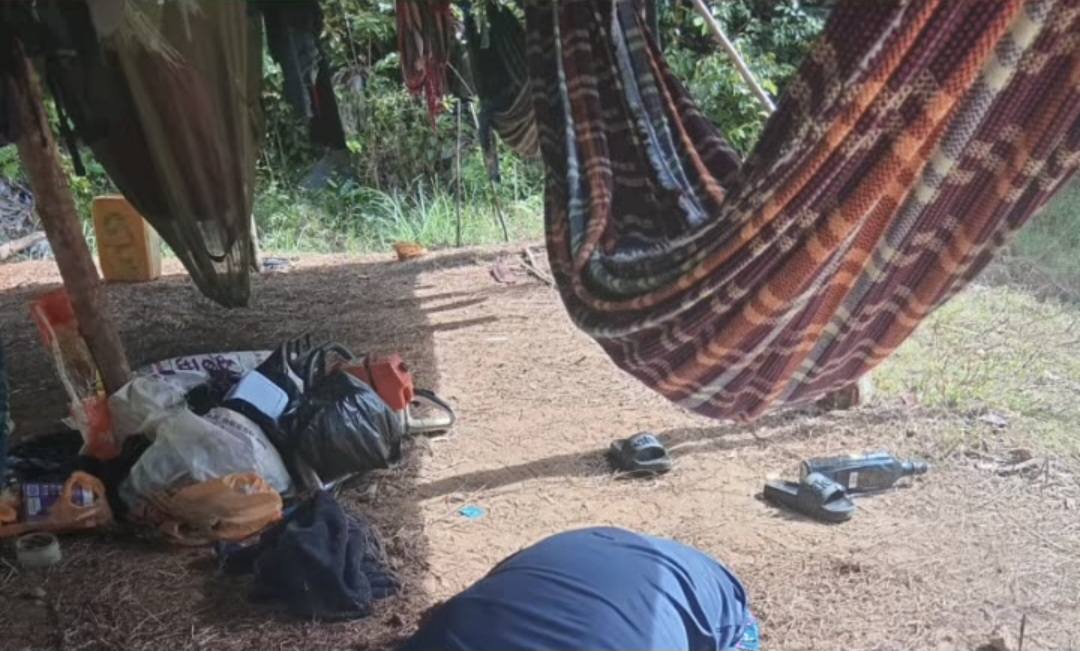
    In a violent incident that has shocked Guyana’s mining community, 55-year-old gold miner John José Marciano was brutally murdered at a remote mining camp in the Middle Mazaruni River region. The attack occurred during the early hours of Saturday morning at the 14 Miles, Issano mining location, approximately 36 hours before authorities made two arrests in connection with the case.

    Law enforcement officials have confirmed the apprehension of two suspects: a 35-year-old female cook from Ann’s Grove, East Coast Demerara, and a 19-year-old gold miner from Tapakuma, Essequibo Coast. The younger suspect was captured in Anna Regina, Region Two (Pomeroon-Supenaam) at approximately 7:45 AM on Sunday, following an intensive manhunt operation.

    According to police reports, the grim discovery was made when Marciano was found slumped on the ground within his mining camp compound, bearing multiple chop wounds across his body. Investigators recovered a cutlass—believed to be the murder weapon—in close proximity to the victim’s remains. The Guyana Police Force has not yet disclosed potential motives or the exact circumstances that precipitated the violent altercation, stating only that ‘an incident reportedly occurred during the early morning hours.’

    The remote location of the crime scene at 14 Miles, Issano presents significant challenges for forensic investigation and evidence collection. This violent episode highlights the ongoing security concerns within Guyana’s gold mining regions, where isolated camps and valuable mineral resources sometimes create volatile environments. The case continues to undergo active investigation as authorities work to reconstruct the events leading to this tragic outcome.

  • 77 Cuban suspected human trafficking victims screened

    77 Cuban suspected human trafficking victims screened

    In a coordinated early morning operation on Sunday, February 8, 2026, Guyanese authorities discovered 77 Cuban nationals at a residential property in Georgetown who may be victims of human trafficking. The joint task force, comprising specialists from the Trafficking in Persons Unit, Criminal Investigation Department, and personnel from the Ministries of Home Affairs and Human Services and Social Security, executed the operation at approximately 12:03 AM at a building situated at the intersection of Charlotte and Albert Streets.

    The investigation was triggered by allegations that the individuals’ travel documents were being unlawfully withheld pending payment of outstanding debts. According to official statements from the Guyana Police Force, the Cubans reported entering Guyana through credit arrangements, after which their passports were allegedly confiscated until they settled financial obligations.

    Following thorough screening procedures conducted at the scene, all 77 individuals were transferred to the custody of the Ministry of Human Services and Social Security for comprehensive assessment and potential victim support services. Despite extensive searches of the premises, law enforcement officials reported no discovery of illegal items and made no arrests during the operation.

    The case represents a significant development in Guyana’s ongoing efforts to combat human trafficking, demonstrating interagency cooperation in addressing potential TIP violations. Authorities emphasize that the investigation remains active as they work to verify the credibility of the claims and determine appropriate legal actions.

  • Can Courts Help People Change Instead of Just Locking Them Up?

    Can Courts Help People Change Instead of Just Locking Them Up?

    BELIZE CITY – In a landmark judicial reform initiative, Belize is spearheading a transformative approach to criminal justice that prioritizes rehabilitation over traditional incarceration. This week, senior justice officials, including judges, prosecutors, and prison administrators, convened with international experts from Brazil and Trinidad and Tobago to operationalize the country’s groundbreaking Adult Alternative Sentencing Act of 2024.

    The high-level symposium, orchestrated by the United Nations Development Programme (UNDP) with financial backing from the European Union, examined practical implementation strategies for supervised community programs, probation systems, and other corrective alternatives to imprisonment. This paradigm shift promises to reduce prison overcrowding, enhance community-based rehabilitation infrastructure, and offer judicial discretion for non-violent offenses.

    At the heart of this judicial transformation lies the newly established Adult Probation Unit, created through the EU-funded PACE Justice Project. This institution will enforce rigorous supervision protocols and accountability measures to ensure public safety while facilitating offender rehabilitation.

    UNDP Belize representative Amilin Méndez emphasized the human-centric philosophy driving these changes: ‘This reform fundamentally reimagines justice as a vehicle for accountability with dignity rather than mere punishment.’

    Echoing this perspective, Adele Catzim-Sanchez, CEO of the Ministry of Human Development, articulated the government’s vision: ‘We’re transitioning from punitive approaches to purpose-driven rehabilitation. Evidence consistently demonstrates that structured support systems effectively address root causes of criminal behavior and promote sustainable societal reintegration.’

    Justice officials underscored that these alternatives represent neither leniency nor reduced commitment to public safety. Rather, they constitute an evidence-based methodology that simultaneously strengthens community protection mechanisms while tackling the underlying drivers of criminal activity.

  • Businessman Proposes Short-Term Work Permits to Address Skills Gaps

    Businessman Proposes Short-Term Work Permits to Address Skills Gaps

    A contentious proposal to introduce short-term work permits for foreign professionals has ignited a robust national debate in Antigua and Barbuda, exposing a critical divide between immediate economic needs and long-term workforce development strategies. The discussion unfolded on the prominent ‘Browne and Browne’ television show, featuring a direct exchange between private sector representation and government leadership.

    Robeerto ‘Robbie’ Falangola, proprietor of Antigua Slipway, presented the case for limited-duration permits targeting specialized sectors experiencing significant skills shortages. He specifically highlighted the acute need during the six-to-eight-month tourism season, suggesting structured programs allowing international experts to fill critical roles temporarily while committing to knowledge transfer initiatives.

    Prime Minister Gaston Browne responded with substantial skepticism, voicing profound concerns about potential displacement of local workers. He challenged the fundamental premise, questioning why permits should be granted if foreign labor might marginalize skilled Antiguans and Barbudans already possessing relevant qualifications. The Prime Minister emphasized the government’s unwavering commitment to protecting domestic employment opportunities.

    Education Minister Daryll Matthew presented the administration’s alternative vision, advocating for significantly expanded vocational training and educational programs as the sustainable long-term solution. His intervention shifted focus toward systemic workforce development rather than temporary foreign supplementation.

    The comprehensive dialogue extended beyond immediate labor concerns to encompass broader themes of tourism sector diversification, economic resilience, and strategic human resource planning. While no policy decisions were announced, the televised exchange revealed growing tension between addressing urgent market needs and preserving opportunities for local workforce development.