博客

  • Family and Volunteers Rally in Search for Missing Zakeem Nicholas

    Family and Volunteers Rally in Search for Missing Zakeem Nicholas

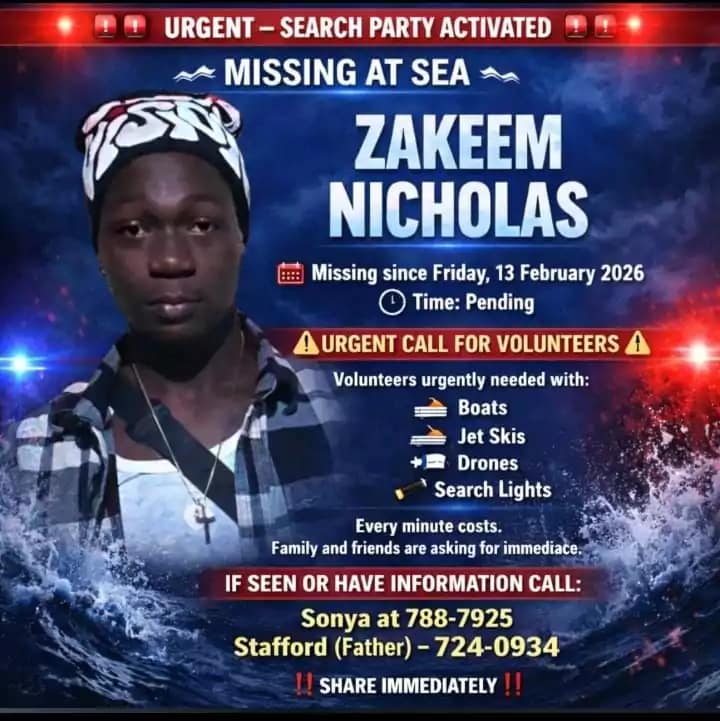
    A massive community-led search operation is intensifying along coastal waters as concerns mount for Zakeem Nicholas, who vanished under unclear circumstances on Friday, February 13, 2026. With official details remaining scarce, relatives and local volunteers have taken initiative to coordinate a comprehensive rescue mission, emphasizing the critical nature of time in the ongoing efforts.

    Nicholas was last seen on the day of his disappearance, though specific events leading to the incident have not been disclosed by authorities. In the absence of new official updates, his family has issued a public plea for assistance, calling on individuals with maritime equipment—including boats, personal watercraft, drones, and high-powered searchlights—to aid in scouring the area.

    A circulated emergency notice highlighted the pressing urgency, stating that ‘every minute costs’ in the race to locate Nicholas. The family has provided direct contact numbers for his father, Stafford Nicholas, at 724-0934, and another relative, Sonya, at 788-7925, urging anyone with relevant information to come forward immediately.

    As the search continues around the clock, the collective effort underscores a powerful community response to a potentially tragic event, reflecting both the gravity of the situation and the solidarity among locals determined to bring Nicholas home safely.

  • LVV start trainingstraject om lokale kipproductie fors te vergroten

    LVV start trainingstraject om lokale kipproductie fors te vergroten

    The Ministry of Agriculture, Livestock, and Fisheries (LVV) of Suriname will initiate a comprehensive nationwide training program in March, targeting young and aspiring entrepreneurs interested in entering the poultry sector. This strategic move aims to significantly increase domestic chicken production and reduce the country’s heavy reliance on imported poultry products.

    Currently, Suriname imports approximately 65% of its consumed chicken, with only 35% originating from local production—a balance the government is determined to change. “Increased domestic production directly translates to reduced imports. This is our focused objective,” stated Minister Mike Noersalim, emphasizing the ministry’s ongoing dialogue with industry stakeholders.

    The training program will commence in the Saramacca district, with plans for gradual expansion across all districts nationwide. While no participant cap has been established, applicants will undergo a screening process to ensure commitment. “We must avoid training individuals who may not utilize the acquired knowledge,” Minister Noersalim emphasized.

    The ministry identifies poultry farming as a low-barrier entry point for young entrepreneurs, requiring comparatively lower investment than sectors like cattle ranching. “Many already have coops or previous experience. Our responsibility is to provide proper knowledge and guidance, which are crucial for success,” Noersalim added.

    Beyond training, LVV is enhancing access to financing through the National Agribusiness Development Fund (NOFA) and a specialized youth fund at the National Development Bank (NOB). Simultaneously, the ministry encourages optimal land utilization, noting that many available terrains remain underutilized.

    This production expansion supports broader agro-projects, including a planned passion fruit processing facility at the Milk Center complex, requiring substantial fruit supply. LVV has engaged with large-scale passion fruit growers in Saramacca and residents capable of backyard cultivation. This initiative receives support from the Inter-American Development Bank (IDB).

    Additionally, the ministry has established partnerships with Granman Aboikoni of the Saramaccaners for two collaborative projects: raising local chickens (oso fowru) and cultivating highland rice, a staple crop in the Upper Suriname region.

    Minister Noersalim confirms this approach aligns with a broader district-specific strategy that leverages unique regional strengths. “We are systematically building a more productive agricultural sector and enhancing food security for Suriname,” he concluded.

  • Six major cruise ships simultaneously dock at Port Zante – WIC News

    Six major cruise ships simultaneously dock at Port Zante – WIC News

    Port Zante in Basseterre witnessed an unprecedented maritime spectacle on Thursday as six cruise vessels simultaneously converged on St. Kitts and Nevis, creating one of the most bustling tourism days of the season. According to official reports from the Tourism Authority, this massive influx delivered 5,659 passengers to the Federation’s capital in a single day.

    The docking configuration saw larger vessels including Grand Princess, Norwegian Sky, and Silver Ray secured at Port Zante’s primary berthing facilities, while the elegant Le Bougainville, five-deck Sea Cloud II, and sailing yacht Wind Star maintained offshore positions near the coastline.

    Visitors embarked on extensive explorations of Basseterre’s historical landmarks, with significant foot traffic recorded at UNESCO World Heritage Site Brimstone Hill Fortress. Adventurous travelers ventured to Mount Liamuiga, the highest peak across both the island and the British Leeward Islands chain. Key attractions including Berkley Memorial at the Circus, St. George’s Anglican Church, the Immaculate Conception Co-Cathedral, Independence Square, the War Memorial, and Palms Court emerged as predominant visitor destinations.

    The substantial passenger volume generated exceptional economic activity for local enterprises, with taxi operators, tour guides, and restaurants experiencing heightened demand. Retail sectors benefited from robust sales of locally crafted items, souvenirs, fragrances, and jewelry. Many visitors opted for organized excursions utilizing taxis or the historic St. Kitts Scenic Railway, while others chose aquatic activities including snorkeling, zip-lining, and golf experiences on neighboring Nevis.

    This remarkable event brought the week’s cumulative cruise arrivals to 17 vessels with 24,076 passengers, complemented by continued private yacht arrivals including three vessels anchored in Basseterre Roadstead on the same day.

  • Merz waarschuwt: ‘De regels van de wereldorde bestaan niet meer’

    Merz waarschuwt: ‘De regels van de wereldorde bestaan niet meer’

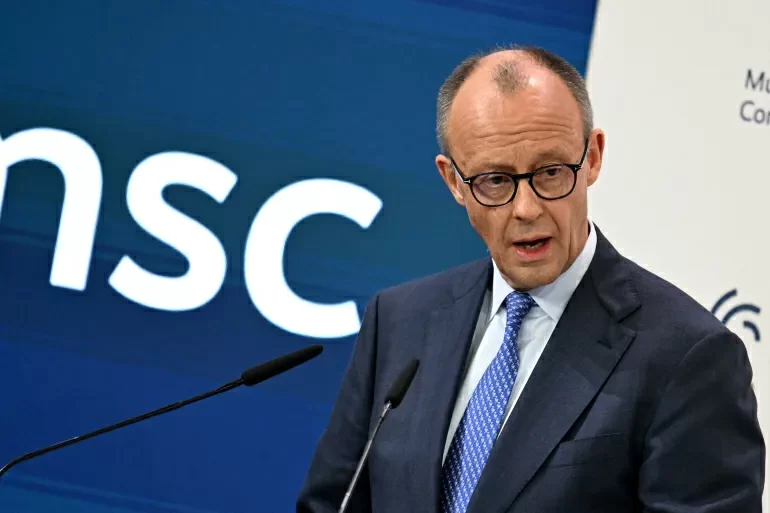
    German Chancellor Friedrich Merz delivered a stark assessment of the international order during his address at the 62nd Munich Security Conference, declaring that the rules-based global system that has underpinned international cooperation since the Cold War “no longer exists in its previous form.”

    Speaking before approximately fifty world leaders, Merz highlighted the “profound divide” emerging between Europe and the United States, emphasizing that European freedoms cannot be taken for granted in this new era of great power politics. “We must be prepared to make sacrifices,” the Chancellor stated during his keynote speech.

    The conference convened amidst escalating tensions within the trans-Atlantic alliance, particularly following controversial statements by President Donald Trump regarding the potential annexation of Greenland, a territory of the Kingdom of Denmark. Trump’s assertion that “Greenland wants us… We’re currently negotiating for Greenland” has significantly strained diplomatic relations between European nations and their traditional American allies.

    Further complicating matters, the United States has imposed new tariffs on European countries, which Merz characterized as fundamentally incompatible with Europe’s commitment to free trade principles. The Chancellor noted that the cultural conflict inherent in the “Make America Great Again” movement contradicts core European values regarding freedom of expression and human rights.

    Despite these mounting challenges, Merz advocated for rebuilding trans-Atlantic trust while revealing ongoing confidential discussions with French President Emmanuel Macron about developing a joint European nuclear deterrent. This proposal marks a potential seismic shift in European defense policy, which has historically relied on American nuclear protection through NATO frameworks.

    President Macron reinforced this strategic pivot by urging Europe to transform into a genuine geopolitical power. He called for accelerated military development and enhanced continental cooperation, particularly in response to the Ukraine conflict, which he described as an “existential challenge” for Europe.

    U.S. Secretary of State Marco Rubio addressed the conference by acknowledging a “new era in geopolitics” characterized by rapid global transformation. Rubio confirmed that the United States is prepared to reassess its role and relationships with European partners.

    The ongoing tensions between the U.S. and Denmark intensified following Trump’s unsubstantiated claims about Russian and Chinese military presence around Greenland. Danish Prime Minister Mette Frederiksen indicated her intention to discuss the American “threat” regarding Greenland, a fellow NATO member, with Secretary Rubio.

    This year’s Munich Security Conference focused primarily on European defense capabilities, trans-Atlantic relations, and the geopolitical ramifications of conflicts in Ukraine and rising West-China tensions. These developments collectively signal a fundamental restructuring of global power dynamics and the urgent need to redefine international cooperation within an increasingly fragmented geopolitical landscape.

  • DEA office supervisor arrested in Dominican Republic

    DEA office supervisor arrested in Dominican Republic

    In a significant development in U.S. anti-narcotics operations, federal authorities have arrested a DEA supervisor stationed in the Dominican Republic as part of an investigation into alleged misuse of confidential informant visa programs. The arrest coincides with the abrupt closure of the U.S. anti-narcotics office in Santo Domingo, a move described by the Trump administration as addressing a “disgusting and dishonorable breach of public trust.”

    Melitón Cordero, a supervisory agent at the Drug Enforcement Administration’s Caribbean office, was taken into custody Thursday following an investigation led by the U.S. Department of Homeland Security. The arrest was confirmed by multiple sources speaking anonymously to The Associated Press due to the ongoing nature of the investigation.

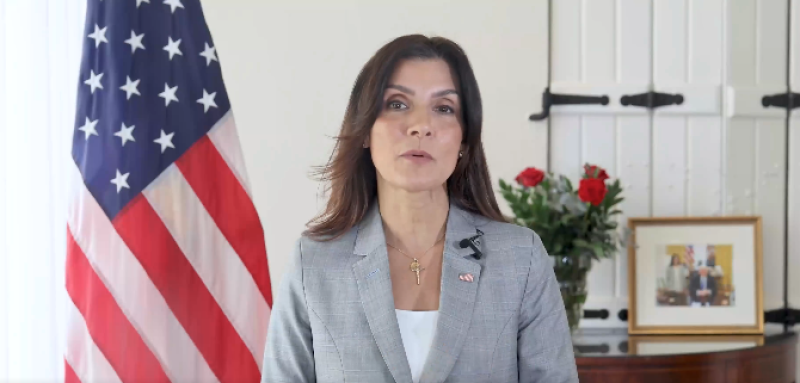
    The closure of the DEA office and subsequent arrest stem from concerns about potential corruption within the program. U.S. Ambassador to the Dominican Republic Leah Campos emphasized that the temporary shutdown would facilitate an internal embassy investigation, stating unequivocally that she “will not tolerate corruption” among officials who might exploit their positions for personal gain.

    Despite the office closure, U.S. officials maintain that bilateral cooperation against drug trafficking remains unaffected. The embassy issued a statement affirming that the Dominican Republic continues to be a “key partner” in regional counter-narcotics efforts, with operations continuing “at the same robust pace” during the investigation.

    Dominican officials have sought to distance themselves from the controversy. Foreign Minister Roberto Álvarez confirmed after speaking with Ambassador Campos that the investigation was strictly an internal U.S. matter with “no relation whatsoever to the Dominican government or official.”

    The case has been referred to the United States Attorney’s Office for the District of Columbia in Washington, which now holds primary jurisdiction over the investigation. Public Diplomacy Counselor Chelsia Hetrick of the U.S. Embassy indicated that no further details would be released beyond the ambassador’s initial statements, directing all inquiries to the Washington-based prosecutors.

    As of Thursday evening, neither DHS nor DEA officials had responded to formal requests for comment, and attempts to reach Cordero on his personal cell phone were unsuccessful. The development represents one of the most significant integrity challenges to U.S. narcotics enforcement operations in the Caribbean region in recent years.

  • January ended with a 47% increase in cases of severe acute respiratory infections

    January ended with a 47% increase in cases of severe acute respiratory infections

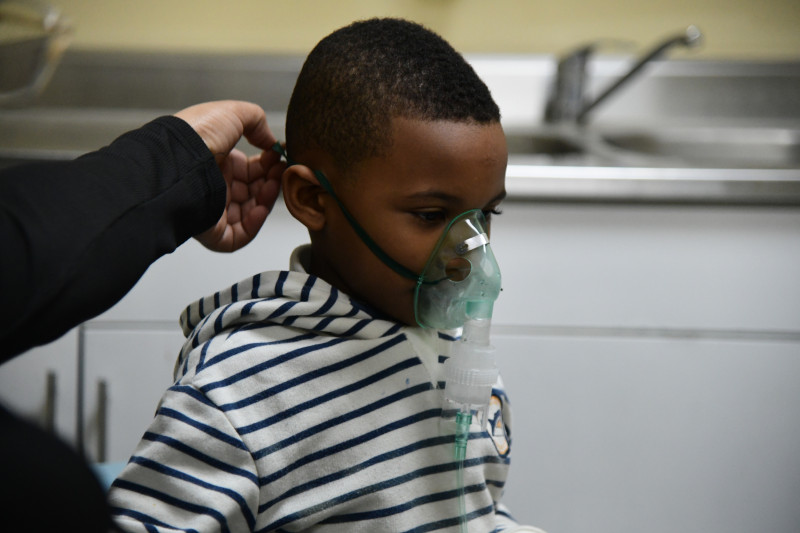
    The Dominican Republic’s Ministry of Public Health has documented a significant escalation in severe acute respiratory infections (SARI) during January 2026, reporting a 47% increase compared to the same period in 2025. Epidemiological data reveals 69 suspected cases this year versus 47 previously, with children under four years old and adults over sixty constituting the most vulnerable demographics.

    Geographical analysis identifies Azua and Santo Domingo provinces as the primary hotspots, recording 31 and 13 cases respectively. The National District and San Cristóbal followed with 5 cases each. Health officials attribute this distribution pattern to regions with higher population density, increased mobility, and greater hospital service demand.

    Notably, the epidemiological report confirms zero fatalities from SARI in January 2026, maintaining a 0% lethality rate—a substantial improvement from the 6.4% mortality rate (3 deaths) documented during the same period in 2025. This positive development suggests enhanced early detection capabilities, improved patient referral systems, and more effective clinical management of severe cases.

    Virological surveillance indicates persistent circulation of respiratory syncytial virus and influenza, though authorities report a progressive decrease in viral activity early in 2026. Crucially, no instances of influenza A (H3N2) subclade K have been detected, though health officials emphasize continued vigilance against emerging variants.

    The Ministry has implemented strengthened surveillance measures including expanded sampling protocols, immediate case notification, and daily monitoring of hospital bed occupancy. Additional measures include rapid referral pathways for pediatric cases, guaranteed availability of critical medical supplies, and promoted influenza vaccination among high-risk populations.

    Despite these efforts, structural challenges persist, particularly regarding limited availability of neonatal intensive care units (NICU) and intensive care units (ICU), alongside territorial access disparities. Health authorities acknowledge these limitations necessitate sustained, multi-sectoral strategies to manage morbidity during an increasingly active and prolonged respiratory season.

  • Regering verlaagt royalty goudsector voor 6 maanden naar 3,5% voor grip sector

    Regering verlaagt royalty goudsector voor 6 maanden naar 3,5% voor grip sector

    In a strategic move to formalize its gold sector and strengthen foreign exchange reserves, Suriname’s government has announced a temporary reduction in royalty rates for small-scale gold mining operations. The Ministry of Finance and Planning, in coordination with the Central Bank of Suriname (CBvS), revealed that the royalty rate will be decreased from 4.5% to 3.5% for a six-month trial period.

    The policy intervention specifically targets small-scale gold miners and construction material operators, aiming to incentivize proper registration and official declaration of production outputs. This measure forms part of a broader governmental initiative to enhance transparency, regulatory oversight, and documentation within the precious metals industry.

    Official data from 2020-2024 indicates significant discrepancies in gold production reporting. While an estimated 27.7 tons of gold were produced in 2024, only 26.9 tons were officially registered for export, leaving approximately 0.8 tons unaccounted for. This gap represents substantial royalty revenue losses for the state.

    Given that gold constitutes nearly two-thirds of Suriname’s total export value, every unregistered gram directly impacts the nation’s foreign exchange earnings. Approximately one-third of the country’s total gold production originates from small-scale mining operations, where documentation remains particularly weak and illegal trading persists.

    The government’s temporary royalty reduction seeks to achieve multiple objectives:
    – Encourage greater participation in formal gold trading channels
    – Reduce illegal and unregistered gold exports
    – Increase royalty collections through improved compliance
    – Strengthen the Central Bank’s international reserves
    – Stabilize the Surinamese dollar (SRD) and improve macroeconomic balance

    Additionally, the initiative addresses socioeconomic challenges in interior regions where thousands work in gold mining under difficult conditions. Many miners lack access to formal banking services, credit facilities, and insurance products. Improved integration into the formal economy could potentially enhance their economic standing while increasing sector transparency.

    The six-month experimental period will conclude with a comprehensive policy evaluation to determine the measure’s effectiveness and potential extension.

  • February shakes the country: the cases that have shocked in just 15 days

    February shakes the country: the cases that have shocked in just 15 days

    The Dominican Republic is confronting an unprecedented crisis of violence and social tragedy during the first half of February 2026, with a devastating series of events that have left the nation in a state of collective mourning and profound shock. Over a mere 13-day period, the country has witnessed a harrowing convergence of criminal violence, fatal accidents, and commercial disasters that have fundamentally challenged perceptions of public safety and social order.

    Gender-based violence has emerged as a particularly distressing theme, highlighted by the murder of young Noemí Suárez in the National District. The victim was fatally attacked by her former boyfriend, reigniting national outrage over the persistent issue of femicide in Dominican society. This tragedy was compounded by the shooting death of teenager Yokairy Núñez Bueno in Sánchez, Samaná, allegedly at the hands of a cousin, which has left the local community in stunned silence.

    Simultaneously, the Cibao region remains gripped by uncertainty following the disappearance of Brianna Genao González in Puerto Plata. Although the minor vanished in late January, February has brought intensified investigation efforts, including involvement from the FBI, as religious and civil leaders amplify demands for justice and the restoration of safety in Dominican communities.

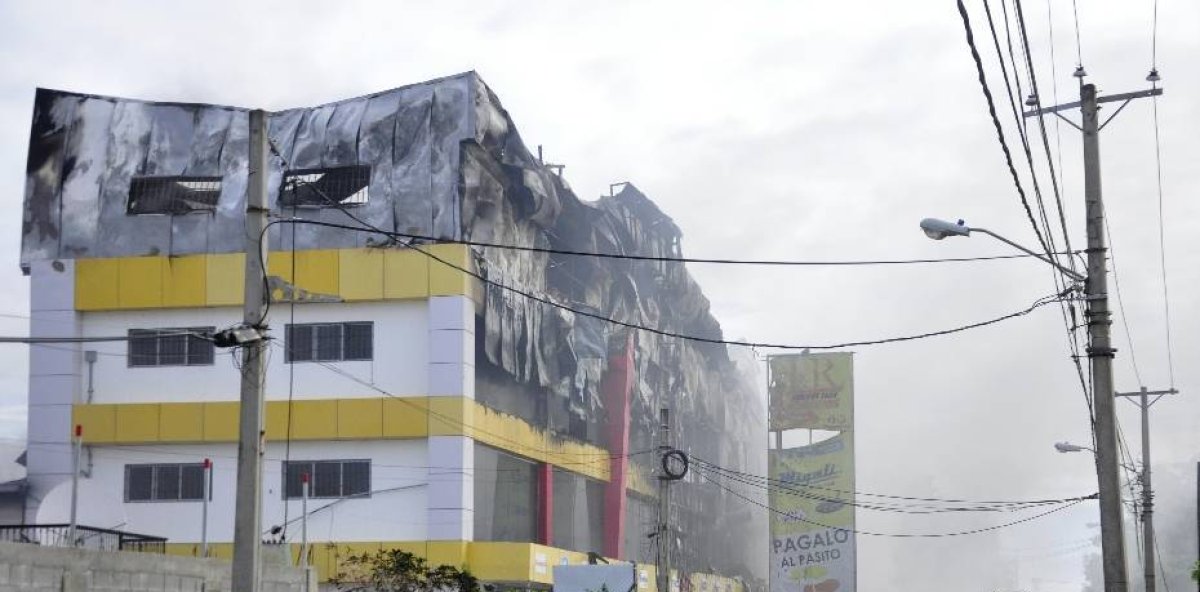
    The nation’s trauma has been further exacerbated by two additional high-impact incidents: a desperate search operation for a motorcyclist who plunged into the Isabela River following a traffic accident on the Jacinto Peynado bridge in Villa Mella, and a destructive fire that ravaged the L and R electromuebles store in the same municipality. These events, combined with the recent passing of prominent political leader Ramón Alburquerque, have created a multifaceted national crisis that sociologists and authorities describe as a severe breakdown in social cohesion.

  • Politie kampt met groot personeelstekort; boetegelden ingezet voor herstel voertuigen

    Politie kampt met groot personeelstekort; boetegelden ingezet voor herstel voertuigen

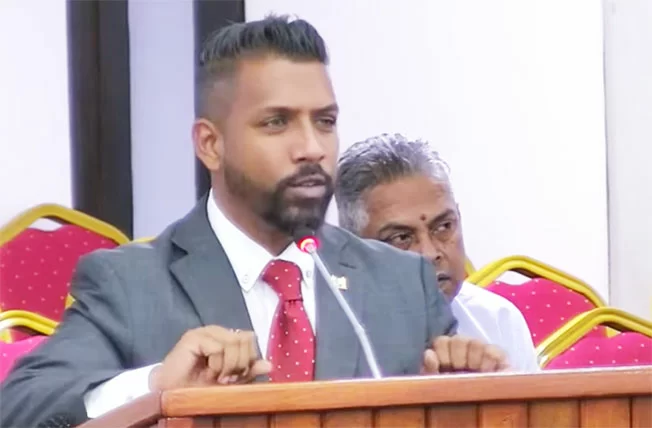
    Suriname’s law enforcement capabilities are being severely hampered by systemic shortages in both personnel and operational resources, according to Justice and Police Minister Harish Monorath. During a parliamentary session in the National Assembly, the minister disclosed that the executive police apparatus currently operates with fewer than 2,800 officers—significantly below the recommended strength of approximately 5,000 personnel required for adequate task execution.

    The staffing crisis is compounded by critical equipment deficiencies, particularly in the vehicle fleet. Despite recent acquisitions of new vehicles, a substantial portion rapidly became inoperable due to technical malfunctions. In December alone, 14 vehicles required repairs costing SRD 300,000, funded through fine revenue collections—an emergency measure deemed necessary to maintain operational readiness.

    Minister Monorath highlighted another pressing issue: approximately 400 police personnel are allocated outside regular operational duties. These officers provide personal protection for government officials, judiciary members, National Assembly representatives, and other high-risk individuals. Additional officers are seconded to various intelligence and support services, including the Directorate of National Security, LVV, and Public Works departments.

    While acknowledging these assignments strain available operational capacity, Monorath emphasized they fall within the state’s broader national security responsibilities. The minister confirmed ongoing institutional strengthening efforts through specialized training programs and modernization initiatives at the police academy. A consultant has been engaged to elevate training standards to international benchmarks, mirroring previous military academy reforms.

    These enhancement measures are incorporated in the 2026 budget, with some already in preparation or implementation despite the state’s broader fiscal challenges. Monorath reiterated that police capacity deployment must consistently align with legal frameworks governing general and special police duties as established in the Constitution and Police Charter.

  • UK intermediate education agency refunding Guyana money for troubled scholarships

    UK intermediate education agency refunding Guyana money for troubled scholarships

    The Guyana government has begun recovering US$1.5 million from UK-based intermediary International Skill Development Corporation (ISDC) following the collapse of a scholarship program with the University of Staffordshire. Public Service Minister Zulfikar Ally confirmed the reimbursement process during parliamentary questioning on Friday, February 13, 2026.

    The troubled scholarships, administered through the Guyana Online Academy for Learning (GOAL), involved more than 1,000 students. Minister Ally stated that partial payments have already been received, with the full amount expected to be refunded by the following week. The minister acknowledged he maintained “constant engagement” with relevant parties to ensure complete restitution.

    Parliamentary proceedings revealed additional complications within the GOAL program. Minister Ally admitted that numerous students pursuing degrees through Indira Gandhi University had completed three years of study without receiving degree status updates. The ministry has sought intervention from the Indian High Commission to resolve these credentialing issues.

    Regarding student attrition, Ally revealed that less than five percent of scholarship recipients had taken leaves of absence with intention to resume studies. The minister clarified refund policies, noting that universities only return payments if students withdraw before invoice issuance; otherwise, funds are credited toward alternative students.

    The GOAL secretariat continues monitoring program graduates to track employment outcomes and program effectiveness. Despite these challenges, the Public Service Ministry has allocated GY$5.7 billion for the scholarship initiative in the 2026 national budget.