博客

  • KSAMC moves to enforcement phase following close of signage regularisation campaign

    KSAMC moves to enforcement phase following close of signage regularisation campaign

    KINGSTON, Jamaica — After closing its three-month signage regularisation initiative on March 31, the Kingston and St Andrew Municipal Corporation (KSAMC) has officially moved into the aggressive enforcement stage of its plan to crack down on unauthorised public signage across the region.

    Launched in January 2026, the amnesty-style campaign was crafted to give every individual, business and organisation that maintains publicly visible signage a clear, grace-period window to bring their approvals up to date and resolve any unpaid outstanding fees. Before the corporation ramped up enforcement, stakeholders were given full advance notice and multiple opportunities to come into compliance voluntarily, avoiding potential penalties and removal actions.

    Now that the grace period has expired, the KSAMC is gearing up to target all illegally erected and non-compliant signage distributed throughout Kingston and St Andrew. Robert Hill, chief executive officer of the municipal corporation, confirmed that all necessary personnel, logistics and equipment have already been mobilised to support widespread, organised enforcement operations.

    “Starting immediately, we will begin removing illegally placed and non-compliant signs across both Kingston and St Andrew,” Hill confirmed in a recent statement.

    Over the past three months throughout the regularisation campaign, Hill explained that KSAMC’s dedicated compliance teams have been proactively reaching out to local businesses, conducting on-the-ground assessments, and compiling detailed location data to map out the scope of unregulated signage. This groundwork will allow the corporation to carry out focused, efficient enforcement rather than random sweeps.

    “We are currently waiting on finalised data from our compliance teams, which will direct our targeted enforcement operations and guide the removal of signage from all non-compliant entities,” Hill added.

    To carry out the removal work safely and efficiently, the KSAMC has deployed heavy-duty trucks and specialised removal equipment purpose-built to extract unauthorised signage from both public and private locations without unnecessary damage to surrounding property.

    In a public briefing, the municipal corporation stressed that signage regulation is a binding legal requirement that applies universally to all publicly visible signage. This mandate holds regardless of whether a sign is located on public or private land, and regardless of the type of entity that owns it—covering commercial operations, non-profit groups, and public institutions equally.

    The KSAMC repeated that the three-month regularisation campaign was structured to deliver a fair, transparent path to compliance for all stakeholders. Beyond public outreach and one-on-one engagement with business owners, the campaign also included a temporary fee concession for entities settling long-outstanding signage approval fees.

    For entities that failed to take advantage of the amnesty campaign, the KSAMC is issuing a final warning to contact the corporation immediately to resolve their status before enforcement teams begin on-the-ground removal work. Hill confirmed that all enforcement actions will proceed strictly in line with local signage laws.

    This enforcement push forms a core part of the KSAMC’s broader urban improvement initiative, which aims to boost public safety by eliminating hazards that block pedestrian and driver sightlines, cut down on visual pollution across the city, and maintain a cleaner, more organised urban environment for residents and visitors alike.

  • Leon Bailey and Bobby Reid return to Reggae Boyz team for game vs DR Congo

    Leon Bailey and Bobby Reid return to Reggae Boyz team for game vs DR Congo

    GUADALAJARA, Mexico — With a historic spot at the 2026 FIFA World Cup on the line, Jamaica’s senior men’s national football team, the Reggae Boyz, have shaken up their starting eleven for Tuesday’s winner-takes-all inter-confederation play-off final against the Democratic Republic of Congo at Estadio Akron. Three key adjustments were confirmed by the coaching staff, bringing in three in-form players who impressed off the bench in the team’s opening play-off win to get one step closer to a long-awaited World Cup return.

    In-form winger Leon Bailey and forward Bobby DeCordova-Reid, who both came off the substitutes’ bench to contribute to Jamaica’s narrow 1-0 victory over New Caledonia last Thursday, have been promoted to the starting lineup. They are joined by creative midfielder Kasey Palmer, who also earns a starting spot for the decider. The trio replace Karoy Anderson, Andre Brooks and Ephron Mason-Clarke, who have been moved to the substitutes’ bench for the crucial fixture.

    The revised starting lineup also keeps Bailey-Tye Cadamarteri, who scored the only goal in the win over New Caledonia, in the starting eleven alongside striker Ronaldo Webster. The full confirmed starting lineup for Jamaica is: goalkeeper Andre Blake; defenders Ethan Pinnock, Richard King, Joel Latibaeudiere; midfielders Isaac Hayden, Tyreece Campbell, Kasey Palmer; and forwards Leon Bailey, Bobby DeCordova-Reid, Bailey-Tye Cadamarteri, Ronaldo Webster.

    For the Reggae Boyz, this match represents the final and only chance to end a 28-year World Cup drought. Jamaica last qualified for the global men’s football tournament in 1998, hosted by France. The team failed to secure direct qualification out of the CONCACAF final round, finishing second in their group behind Curacao, leaving the inter-confederation play-off path as their last shot at booking a ticket to the World Cup. A win on Tuesday will see the Caribbean nation return to football’s biggest stage for just the second time in its history, while a defeat sends DRC through and sends Jamaica home empty-handed.

    Reporting by Paul A Reid

  • Gov’t launches SAWP scholarship to support children of Jamaican farm workers

    Gov’t launches SAWP scholarship to support children of Jamaican farm workers

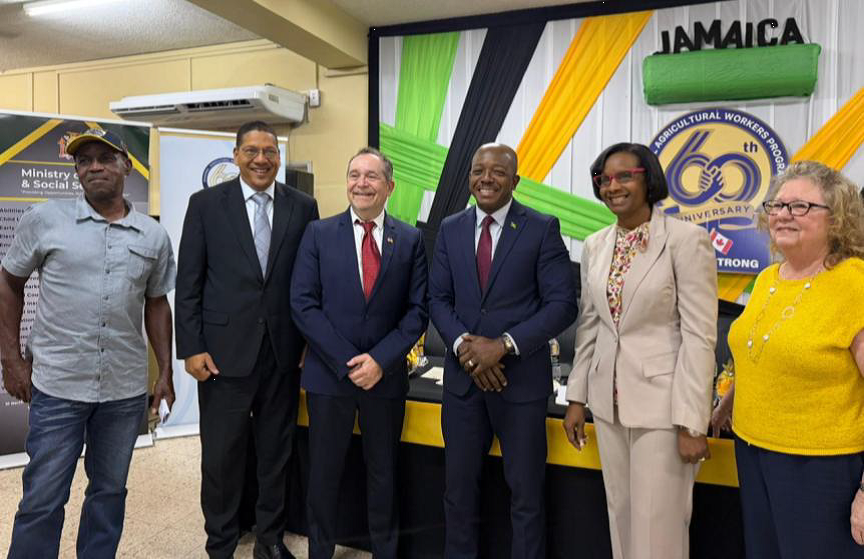
    KINGSTON, Jamaica — On a historic Tuesday morning marking six decades of bilateral collaboration between Jamaica and Canada, Jamaican Minister of Labour and Social Security Pearnel Charles Jr officially introduced the GOJ/Seasonal Agricultural Workers Programme (SAWP) Scholarship at the ministry’s East Street headquarters. This new initiative is designed to open doors to higher education for the children of Jamaican seasonal agricultural workers who take part in the long-standing labour program in Canada.

    Six decades after the SAWP partnership was first established, this scholarship represents a meaningful recognition of the outsized contribution Jamaican migrant workers have made to both Canadian agriculture and Jamaica’s domestic economy over the years. “This scholarship is a public acknowledgment of everything our workers have given, and a clear promise from this government that their children’s futures are a priority,” Charles Jr stated during the launch ceremony. “We are building a tangible bridge that connects migrant work, educational opportunity, and long-term national growth for Jamaica.”

    For the 2026 academic year, 60 full scholarships will be distributed to eligible students. To qualify, applicants must be children of SAWP workers who have completed at least five consecutive years of participation in the program and remain actively employed under SAWP. The funding supports learners across both secondary and post-secondary education levels, including students in sixth form, undergraduate programs at universities, vocational courses at community colleges, and skills training programs offered through Jamaica’s HEART/NSTA Trust.

    Award amounts are structured to meet the specific costs of different education levels: sixth form students will receive JMD $75,000, while tertiary-level students will be granted JMD $200,000. The funds can be used to cover tuition fees, textbooks, classroom supplies, and other mandatory education-related expenses. To align with Jamaica’s national policy goals for boosting domestic food security and building a skilled competitive workforce, extra preference will be given to applicants pursuing degrees or training in agriculture, agribusiness, agro-processing, and other technical vocational fields.

    Charles emphasized that the new scholarship is far more than a one-off financial aid program: it reflects a deliberate national policy shift to turn temporary labour mobility into sustained domestic capacity building. “Our workers have spent decades gaining hands-on experience in cutting-edge Canadian agricultural systems,” he explained. “This scholarship ensures that the benefits of that global exposure don’t just stay with the individual worker — they pass down to the next generation, creating ripple effects that will strengthen Jamaica for years to come. We are investing in the skills that will grow our domestic productive capacity and drive inclusive long-term growth.”

    Over its 60-year history, the SAWP has created mutual benefits for both nations. Jamaican seasonal workers have filled critical labour gaps in Canada’s agricultural sector, while the workers have supported their families back home through regular remittances and stimulated local economic activity across Jamaican communities. The new scholarship builds on this existing legacy by creating new pathways for intergenerational upward mobility through education.

    The application window for the 2026 scholarship will open on April 15, 2026, and close at the end of June 30, 2026. Successful applicants will receive their awards in time to register for the September 2026 start of the new academic year. Application forms will be accessible to eligible candidates both digitally via the Ministry of Labour and Social Security’s official website and in-person at designated ministry locations across the country. All applicants will need to meet set academic and eligibility requirements and submit required supporting documentation as part of the selection process.

    The Ministry of Labour and Social Security will oversee the entire application and selection process, using a structured multi-step review framework designed to guarantee fairness, full transparency, and alignment with the program’s core objectives.

    The launch of the GOJ/SAWP Scholarship reaffirms the Jamaican government’s commitment to tying overseas employment opportunities directly to national development, ensuring the advantages of the decades-old SAWP partnership extend beyond individual workers to their families and the nation’s future generations.

    For additional information about eligibility or the application process, interested parties can contact the MLSS Family Services Unit located at 1 F North Street, Kingston, Jamaica, via telephone at 876 676 5557 or 876 676 5659. SAWP workers currently based in Canada can reach the Jamaican Liaison Service directly at 416 733 4358-9.

  • Integrity Commission probing procurement practices at UHWI

    Integrity Commission probing procurement practices at UHWI

    KINGSTON, Jamaica — Jamaica’s top anti-corruption oversight body, the Integrity Commission (IC), has launched a formal investigation into questionable practices at the University Hospital of the West Indies (UHWI), the island nation’s only teaching hospital. The investigation was triggered by a damning audit report compiled by Auditor General Pamela Munroe Ellis, which detailed serious procurement irregularities at the facility.

    The most damaging finding from Ellis’ audit centers on a long-running scheme that saw UHWI repeatedly grant private companies access to its government-granted tax-exempt status for importing goods into Jamaica. This unauthorized misuse of the hospital’s privileged tax position has left Jamaican public coffers short more than 20 million Jamaican dollars in lost revenue, according to the audit.

    The existence of the active IC probe was revealed publicly by Eric Hosin, the acting chief executive officer of UHWI, during a Tuesday sitting of Parliament’s Public Accounts Committee (PAC), the legislative body tasked with overseeing government spending and accountability.

    During his testimony before the committee, Hosin confirmed that IC investigators had already completed an on-site visit to the UHWI campus. As part of their evidence-gathering process, the anti-corruption team has officially seized and isolated two sets of critical documents: records tied to the unauthorized misuse of the hospital’s tax-exempt import status, and procurement files related to civil construction projects carried out at the facility.

    Hosin also named the four private entities that improperly benefited from the scheme: Supreme Laundry Services, Willman Sales, Scientific Medical Services, and JACDEN Limited. As the investigation unfolds, public officials are facing mounting pressure to address gaps in oversight at the public teaching hospital and recover the millions in lost tax revenue.

  • Tourism in schools thrives with support of Sandals Resorts

    Tourism in schools thrives with support of Sandals Resorts

    Against the backdrop of Jamaica’s robust tourism sector, a landmark education initiative from Sandals Resorts is bridging the gap between academic learning and real-world professional experience for hundreds of secondary school students across the island. The company’s two properties, Sandals Dunn’s River and Sandals Royal Plantation, recently opened their doors to student groups from seven Jamaican high schools, giving young learners an exclusive behind-the-scenes look at how large-scale luxury resorts operate every day.

    The immersive tours are the core of the brand’s long-running Tourism in Schools programme, an initiative designed specifically to introduce secondary students to the breadth of career paths available in hospitality while supporting them to complete their required School-Based Assessment (SBA) capstone projects. Unlike traditional classroom learning, the on-site visits put students directly in contact with working departments and frontline resort teams, turning textbook concepts into tangible, practical knowledge.

    During their visits, students traveled through every core division of the resorts, from housekeeping and guest room operations to food and beverage service. A key focus of the tour was the companies’ industry-leading sustainability work, which gave students a first-hand look at how modern tourism balances guest experience with environmental stewardship. They got an up-close view of the resorts’ recycled water treatment systems, energy-saving conservation practices, and learned about the rigorous process of earning and maintaining EarthCheck certification — the global gold standard for scientific verification of sustainable travel and tourism operations.

    Kevin Clarke, General Manager of Sandals Dunn’s River, emphasized that the program fills a critical gap in tourism education for Jamaican youth. “Most students have only ever learned about hospitality through textbooks and lectures,” Clarke explained. “Seeing daily operations unfold in person, talking directly to our team members who work in these roles every day, that’s what gives them real insight into how dynamic and rewarding a career in this industry can be.” He added that the excitement and curiosity the students bring to the visits reinforces his confidence in the future of Jamaica’s tourism sector. “Their energy reminds us every time that the future of Jamaican tourism is in excellent hands,” he said.

    Roxanne Brown, the property’s Learning and Development Manager, noted that the program is structured to connect academic curricula directly to on-the-ground professional realities. “A lot of students don’t realize just how many different roles make a resort run,” Brown explained. “From entry-level housekeeping and culinary positions to senior management and specialized sustainability roles, there is a career path for every interest and skill set here. Beyond that, these visits help students understand just how central tourism is to Jamaica’s national economy, and how much opportunity the growing sector holds for them.”

    Seven schools from across the country have participated in the program in the most recent cycle: Clarendon College, Foga Road High School, Central High School, Jamaica College, Iona High School, Muschett High School and Cornwall College. Participating teachers have praised the initiative for shifting students’ perspectives on the hospitality industry, saying the on-site experience cements classroom lessons in a way that lectures never can.

    Student feedback has been overwhelmingly positive, with young learners staying engaged throughout the tours and asking thoughtful questions about career pathways, daily operational challenges, and the core skills needed to build a successful career in tourism. Many students shared that seeing their textbook lessons come to life in a working resort was deeply inspiring, and the chance to gather on-the-ground data and experience for their SBA projects in an authentic setting is an opportunity they could not get in the classroom alone.

    Today, the Tourism in Schools programme continues to grow in popularity and impact, leaving participating students more informed, motivated, and excited about the wide range of professional opportunities waiting for them in Jamaica’s ever-expanding tourism industry.

  • New Medellin to MoBay route to further increase Jamaica’s Latin American arrivals, says Bartlett

    New Medellin to MoBay route to further increase Jamaica’s Latin American arrivals, says Bartlett

    KINGSTON, Jamaica – Jamaica’s tourism sector is marking a major milestone in its regional expansion strategy, with senior officials announcing a groundbreaking new nonstop air link between Colombia’s Medellín and Jamaica’s popular tourist hub Montego Bay, set to launch in 2026.

    Operated by Colombian low-cost carrier Wingo Airlines, the new service is scheduled to commence operations on June 23, 2026, a move that tourism leaders say will cement Jamaica’s position as a top vacation choice for Colombian leisure travelers and open the door to increased visitor flow from across the Latin American region.

    Edmund Bartlett, Jamaica’s Minister of Tourism, emphasized that the new route represents a critical leap forward for the country’s long-term tourism development goals. “Today we are seeing a concrete outcome of our targeted strategy to deepen our connections with Latin American markets,” Bartlett stated during the announcement. “This new route does more than add a new destination to regional flight networks; it directly answers the rising demand from Colombian travelers eager to visit Jamaica’s shores, and it underscores our unwavering commitment to making Jamaica more accessible to visitors from across Latin America.”

    The service will operate on a consistent weekly schedule, with three flights departing every week on Tuesdays, Thursdays, and Saturdays. This regular timetable is designed to accommodate both leisure travelers planning getaways and travel industry professionals arranging itineraries for clients, offering unmatched flexibility and convenience for travel between the two cities.

    To kick off the new route, Wingo has introduced introductory one-way base fares starting at just $159 USD, a price that already includes all applicable taxes and fees. Tickets are already open for booking through the airline’s official digital and in-person booking channels. Looking ahead, Wingo projects that the route will offer close to 32,000 seats per year for travelers, and the carrier will be the only airline offering a nonstop connection between the two cities, giving it exclusive access to this growing travel market.

    Donovan White, director of Jamaica’s tourism agency, framed the new route as a collective win for the country and its regional travel partners. “This is the result of years of collaborative work to open up new air routes across Latin America, a push that will help us diversify our visitor base and expand our overall tourism market share,” White explained. “This is a victory for Jamaica and for all of our longstanding partners who have invested time and effort to make this new connection a reality.”

    The upcoming Medellín route builds on the already strong momentum of Jamaica’s expanding partnership with Wingo. Just this week, the airline launched its first nonstop service between Bogotá and Montego Bay, which launched with two weekly flights. Due to unexpectedly high consumer demand, that route is already scheduled to increase frequency to three weekly flights as early as this coming June.

    Philip Rose, deputy director of the Jamaica Tourist Board, noted that the consecutive route launches send a clear signal about the growing appeal of Jamaica in the Colombian market and across Latin America. “The launch of the Bogotá service, paired with our announcement of the upcoming Medellín route, makes it impossible to miss that demand for Jamaica travel is rising rapidly across Colombia and the broader region,” Rose said. “Investing in stronger air connectivity is the foundation for unlocking new, high-potential tourism markets and driving consistent, sustainable growth in visitor arrivals over the long term.”

    Jorge Jiménez, vice-president of commercial and network planning at Wingo, expressed the carrier’s enthusiasm for the expansion into the Jamaican tourism market. “We are thrilled to grow our footprint in Jamaica with this exciting new route,” Jiménez said. “This connection creates mutually beneficial opportunities: it gives Colombians easier access to Jamaica’s world-famous beaches and culture, while also opening up the chance for Jamaican travelers to explore everything Colombia has to offer. Medellín and the surrounding regions offer a vibrant, one-of-a-kind travel experience that we’re excited to connect to Jamaica.”

  • Three Colombians charged after $1.65 billion in cocaine seized off St Elizabeth

    Three Colombians charged after $1.65 billion in cocaine seized off St Elizabeth

    In a landmark bust that marks the largest single drug seizure in Jamaica’s documented history, three Colombian nationals are now facing a raft of serious drug and immigration charges after law enforcement intercepted a cargo of cocaine worth more than $11 million USD (equivalent to J$1.65 billion). The high-stakes operation unfolded in the early hours of Saturday, March 21, off the Jamaican coast, according to official statements from Jamaican security agencies.

    The three defendants, all working fishermen from different regions of Colombia, have been identified as 39-year-old Lucio Henry from San Andres, 34-year-old Arith Lopez from Barranquilla, and 22-year-old Klein Sinclair from Providence. Each faces six separate charges: possession of cocaine, trafficking of cocaine, importation of cocaine, dealing in cocaine, conspiracy to traffic cocaine, and illegal entry into Jamaican territory.

    Authorities from the Jamaica Defence Force (JDF) first intercepted the unregistered fishing vessel roughly an hour before dawn on March 21, when the boat was operating off the coast of Alligator Pond in the parish of St Elizabeth. Search teams found all three Colombian men on board the vessel, alongside 99 tightly knitted fabric bags hiding the contraband. After the interception, the JDF Coast Guard escorted the vessel and its seized cargo to the service’s base in Port Royal, Kingston. Later that same day, the case and evidence were transferred to investigators from the Firearms and Narcotics Investigations Division (FNID) for further processing.

    When forensic teams unpacked the sealed bags, they uncovered more than 2,400 individual parcels of cocaine, with a total gross weight exceeding 6,000 pounds. This tonnage sets a new record for the largest single cocaine seizure ever recorded in Jamaica, according to law enforcement officials.

    FNID Director Superintendent of Police Patrae Rowe framed the historic bust as proof of the effectiveness of cross-agency collaboration in Jamaica’s war on illegal drug trafficking. “Our efforts are paying off, our strategies are working, our targeted approach in terms of our operational output and our stakeholder engagement has improved sufficiently that we are seeing the kind of results that we are seeing,” Rowe said in an official statement following the charges.

    The legal process moved forward steadily after the seizure: the accused men underwent formal questioning on March 24, with their legal representatives and a certified interpreter present. Formal charges were officially filed against all three on March 31. The trio is scheduled to make their first court appearance before the Kingston & St Andrew Parish Court on April 7. Jamaica has long been a key transshipment point for cocaine traffickers moving product from South America to North American and European markets, making large seizures like this a critical priority for disrupting regional criminal networks.

  • Companies that benefitted from UHWI tax exempt status named

    Companies that benefitted from UHWI tax exempt status named

    During a heated Tuesday sitting of Jamaica’s Parliament Public Accounts Committee (PAC), the full list of four private companies that illegally exploited the University Hospital of the West Indies (UHWI)’s tax-exempt status was finally made public. The revelation came after pressure from PAC members, ending weeks of partial public disclosure that only named one of the entities involved. The four entities at the center of the scandal are Supreme Laundry Services, Willman Sales, Scientific Medical Services, and JACDEN Limited. Until this week’s committee meeting, only JACDEN had been identified in public discourse; the company is led by Dennis Gordon, an opposition Member of Parliament representing the St Andrew East Central constituency. The acting chief executive officer of UHWI, Eric Hosin, confirmed the full slate of companies after repeated prodding from PAC chair Julian Robinson and committee member Christopher Brown. The entire case stems from a damning audit investigation published by the Auditor General’s Department, which documented that UHWI’s repeated practice of allowing private third-party companies to leverage its tax-exempt import status directly violates the nation’s Customs Act. This illegal arrangement has cost the Jamaican public more than J$20 million in unpaid import duties that the government never collected, according to the official audit findings. Addressing committee members on Tuesday, Hosin provided new details on the ongoing probe into JACDEN’s activities, confirming that Jamaica’s Customs Department has already wrapped up its investigation into the firm. Hosin read out key findings from the completed investigation, which confirmed that the dialysis machines at the center of JACDEN’s case were ordered, paid for, and are currently held by the private company, not the public hospital. Third-party auditors cross-checked payment records provided by JACDEN’s CEO to confirm the value of the imported equipment, and verified full ownership of the goods rests with the private firm. In a final confirmation that the arrangement violated customs law, the company itself acknowledged that UHWI handled the import process on JACDEN’s behalf to avoid paying legally required duties. The PAC hearing has opened new questions about regulatory oversight of public institutional tax exemptions, and committee members have signaled they will push for full recovery of the lost public funds and potential legal action against the companies involved.

  • Iran has ‘will’ to end war, but seeks guarantees, president says

    Iran has ‘will’ to end war, but seeks guarantees, president says

    ### Iran Signals Openness to Conflict Resolution After Intensified Airstrikes

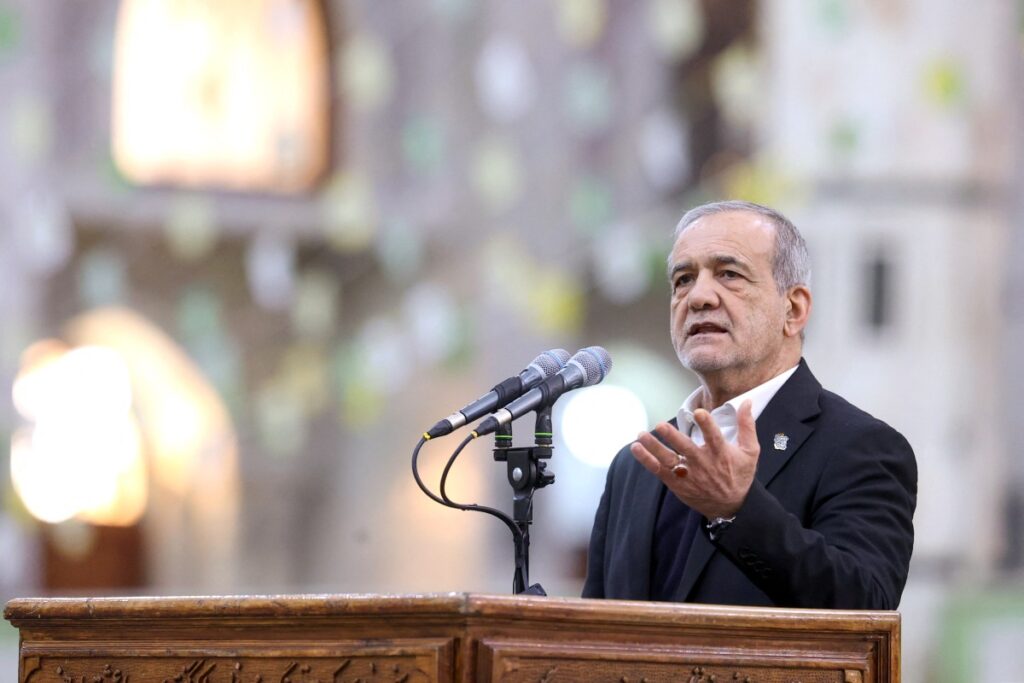
    In the wake of a new wave of heavy airstrikes across Iranian territory, Iranian President Masoud Pezeshkian announced Tuesday that Tehran holds the “necessary will” to bring the ongoing war with the United States and Israel to a close, but only with ironclad international guarantees that future aggression will not be repeated.

    Pezeshkian made the remarks during a phone conversation with the president of the European Council, marking the clearest signal yet of Iran’s negotiating position after weeks of open conflict that began when US and Israeli leadership launched a surprise offensive on February 28 that killed Iran’s long-time supreme leader Ayatollah Ali Khamenei. The Iranian leader’s death triggered sweeping retaliatory attacks across the Middle East that have drawn in regional armed groups and disrupted global energy markets.

    The Iranian president’s overture came amid rapidly shifting rhetoric from Washington, where US President Donald Trump has flip-flopped between threatening major escalation including the deployment of ground troops and pushing for a negotiated end to the conflict. In response to a 15-point US peace proposal released last week, Tehran submitted a counteroffer centered on establishing a formal verification mechanism to ensure neither the US nor Israel will resume hostilities after any ceasefire is signed.

    Even as diplomatic murmurings emerged, military pressure continued to ramp up across the region. On Tuesday, fresh airstrikes hit key locations including central Iran’s Isfahan and the capital Tehran, where AFP correspondents on the ground heard large explosions and confirmed Iranian air defense systems were activated. State media reports indicate damage to a Shia religious site in Zanjan, while the Iranian government claimed strikes hit a facility producing cancer medications and anesthetics—claims AFP has not been able to independently verify. For residents of Tehran, daily life hangs in a fragile balance between routine and the constant threat of violence. “When I make it to a cafe table, even for a few minutes, I can almost believe the world hasn’t ended,” 27-year-old dental assistant Fatemeh told AFP via encrypted messaging. “And then I go back home, back to the reality of living through war, with all its darkness and weight.”

    Iran’s powerful Islamic Revolutionary Guard Corps (IRGC) issued a stark new threat earlier this week, announcing that from Wednesday it will target leading US technology firms including Google, Meta, Apple, Intel, Tesla, and data analytics company Palantir in retaliation for any future targeted assassinations of Iranian leadership. The IRGC accused the 18 named companies of complicity in previous killings of Iranian officials, warning that “the destruction of their relevant units” will follow every assassination carried out on Iranian soil.

    Top US military leadership doubled down on threats of escalation Tuesday. Speaking after a tour of US troops deployed to the Middle East, Pentagon Chief Pete Hegseth claimed “the upcoming days will be decisive. Iran knows that, and there’s almost nothing they can militarily do about it.” Hegseth refused to rule out deploying ground troops, noting that “you can’t fight and win a war if you tell your adversary what you are willing to do, or what you are not willing to do, to include boots on the ground.” A day earlier, Trump issued an ultimatum: if Tehran rejected a US-led peace deal, American forces would “obliterate” all of Iran’s oil infrastructure, including its critical Kharg Island export terminal, as well as the country’s water desalination plants.

    ### Regional Spillover and Global Economic Disruption

    The conflict has already spilled across Iran’s borders, with Iran-aligned groups Hezbollah in Lebanon and the Houthi movement in Yemen joining the fight against the US and Israel. On Tuesday, explosions were reported in Dubai, while two people were injured near Riyadh, Saudi Arabia after air defense systems intercepted an incoming drone. Kuwait’s state oil company confirmed one of its tankers caught fire off the coast of Dubai following what it called a “direct and malicious Iranian attack.”

    Iran has maintained a full chokehold on the Strait of Hormuz, the strategic waterway through which roughly one-fifth of global oil supplies pass, sending energy prices soaring across the world. Average US retail gasoline prices have now jumped past $4 per gallon, hitting the highest level in nearly four years. Indonesia has implemented formal fuel rationing, while the European Union has urged member states to cut domestic fuel consumption to ease market pressure. “It is clear that the more you can do to save oil, especially diesel, especially jet fuel, the better we are off,” EU Energy Commissioner Dan Jorgensen told reporters in Brussels.

    Trump has lashed out at NATO allies and other global partners that have refused to commit military resources to secure the Strait of Hormuz for global shipping. In a post on his Truth Social platform Tuesday, the US president warned that Washington would no longer guarantee global energy security through the waterway. “The U.S.A. won’t be there to help you anymore, just like you weren’t there for us,” he wrote. “Iran has been, essentially, decimated. The hard part is done. Go get your own oil!”

    ### Frontlines in Lebanon Remain Volatile

    On the Lebanese front, Israeli military operations against Hezbollah have continued unabated, even as international attention focuses on talks to end the broader regional war. Israel is currently mourning the deaths of four soldiers killed in southern Lebanon, and Israeli Defense Minister Israel Katz announced Tuesday that Israeli forces will retain occupation of a large swathe of southern Lebanon even after a ceasefire agreement is reached. Katz also vowed that “all the houses in the villages adjacent to the border in Lebanon will be demolished.”

    Canadian Prime Minister Mark Carney condemned Israel’s troop deployment in Lebanon as an “illegal invasion.” According to Lebanese official data, more than 1,200 Lebanese people have been killed in Israeli attacks, and more than one million have been displaced from their homes. Around 1,000 displaced people are currently sheltering in Beirut’s largest sports stadium, including roughly 50 people with disabilities that limit their mobility. “If there’s a strike, the people around me could run away and leave me behind,” said 62-year-old Fatima Nazli, a wheelchair user sheltering at the stadium. “I can’t get up and move if no one helps me.”

    Pezehkian’s diplomatic overture sent an immediate positive shock through US financial markets, which rose sharply following news of the statement, as investors bet on a possible de-escalation of the conflict that has roiled global energy supplies.

  • Public Procurement Commission to roll out MSME Procurement Integration Project

    Public Procurement Commission to roll out MSME Procurement Integration Project

    KINGSTON, Jamaica — Micro, small and medium-sized enterprises (MSMEs) across Jamaica are set to gain expanded access to valuable government contracting opportunities, as the island’s Public Procurement Commission (PPC) has announced plans to launch its comprehensive MSME Procurement Integration Project nationwide in the first quarter of the 2026–2027 fiscal year, kicking off in April 2026.

    The rollout announcement was made official by PPC Executive Director Nadia Morris during a public meeting hosted jointly by the PPC and the Small Business Association of Jamaica (SBAJ) on March 26, 2026. Held at the Exim Bank on Hope Road and organized to mark World Sustainable Procurement Day, the gathering brought together over 150 MSME representatives in person, plus additional virtual attendees, under the event theme “Get Ready for Public Procurement Opportunities!”. The initiative was backed by key supporting stakeholders including the Ministry of Finance and the Public Service, the Ministry of Industry, Investment and Commerce, and the Development Bank of Jamaica (DBJ).

    Morris explained that the new project is designed to operationalize the 2019 Public Procurement (Set-Asides) Order, a regulatory policy that reserves 20% of all public sector procurement contracts exclusively for MSMEs. For many small business owners across the country, accessing these reserved opportunities has remained out of reach due to complicated registration processes, limited awareness, and gaps in capacity building — gaps the new initiative aims to close.

    Core components of the MSME Procurement Integration Project include streamlining the end-to-end supplier registration process for small businesses, building a centralized, verified national database of qualified MSME suppliers, delivering targeted skills training and community outreach, and reinforcing monitoring and compliance protocols across all government ministries, departments, and agencies (MDAs). To ensure MSMEs in every region of Jamaica understand the policy and how to leverage it, the PPC will launch a series of island-wide roadshows coinciding with the project’s Q1 2026 rollout.

    Beyond the upcoming project, Morris noted that the PPC has already advanced additional reforms to modernize Jamaica’s overall Supplier Registration System (SRS). Concept proposals for these reforms have been submitted to Cabinet and already secured formal approval from the Ministry of Finance, with the initiative now moving forward to develop required legislative updates.

    Even in the wake of recent disruption from Hurricane Melissa, which impacted small businesses across sections of western Jamaica, demand for PPC registration among MSMEs has stayed robust. Official data shows the number of new applications for PPC Registration Certificates rose from 880 in the 2023–2024 fiscal year to 959 in 2024–2025, with current projections pointing to applications topping 1,000 by the end of the 2025–2026 fiscal year. This growing interest underscores the strong demand for government contracting opportunities among Jamaica’s small business community, which makes up 97.6% of all registered, tax-paying businesses in the country.

    SBAJ President Garnet Reid praised the new initiative, framing the public meeting as a critical milestone to help MSMEs navigate public procurement processes, identify existing capacity gaps, and position themselves to compete for reserved contracts. The event also featured keynote addresses from Minister of Finance and the Public Service Fayval Williams, alongside formal remarks from Minister of Industry, Investment and Commerce Senator Aubyn Hill. Technical presentations were delivered by key industry leaders including Captain Richard Campbell, Senior Director of the Suppliers Registration Branch at the PPC; David Thomas, Director of Advisory and Engagement in the Office of Public Procurement Policy at the Ministry of Finance and the Public Service; and Travell Mullings, Acting Manager of Intermediary Relationships at the Development Bank of Jamaica.