博客

  • Zetina Criticizes Location of New San Pedro Artisan Market

    Zetina Criticizes Location of New San Pedro Artisan Market

    A contentious dispute has emerged in San Pedro, Belize, regarding the recently inaugurated Artisan Market, pitting political figures against each other in a debate over tourism infrastructure planning and local livelihoods.

    Gabriel Zetina, UDP Caretaker for Belize Rural South, has launched sharp criticism against the market’s new location, asserting that the facility remains largely vacant just two weeks after its grand opening. Zetina contends that the government relocated the market to an area that receives minimal tourist traffic, fundamentally undermining the economic viability of the artisans who depend on visitor spending.

    According to Zetina, local artisans invested years establishing their reputation and customer base at their previous location. “There is no incentive for tourists to come here at the back,” Zetina stated, characterizing government assurances as “propaganda and messaging.” He emphasized that beyond having an aesthetically pleasing building, the critical issues of rental costs, marketing strategy, and actual foot traffic determine whether artisans can sustain their businesses and support their families.

    In response, Tourism Minister Anthony Mahler defended the relocation as part of broader infrastructure improvements necessary for San Pedro’s development as a premier destination. Mahler acknowledged that development might cause temporary inconvenience but argued that San Pedro cannot maintain its status as Belize’s tourism mecca while tolerating “eyesores around the town.”

    The Minister revealed that phase one of the project includes dock facilities to improve water access to the area. He emphasized the deteriorating condition of the previous location and the necessity of major investments to elevate the island’s infrastructure to world-class standards, particularly given its proximity to a World Heritage site reef.

    The clash highlights the tension between immediate economic concerns of local artisans and long-term tourism development strategies, with both parties presenting contrasting visions for San Pedro’s economic future.

  • Zetina Raises Alarm Over Large-Scale Dredging on Ambergris Caye

    Zetina Raises Alarm Over Large-Scale Dredging on Ambergris Caye

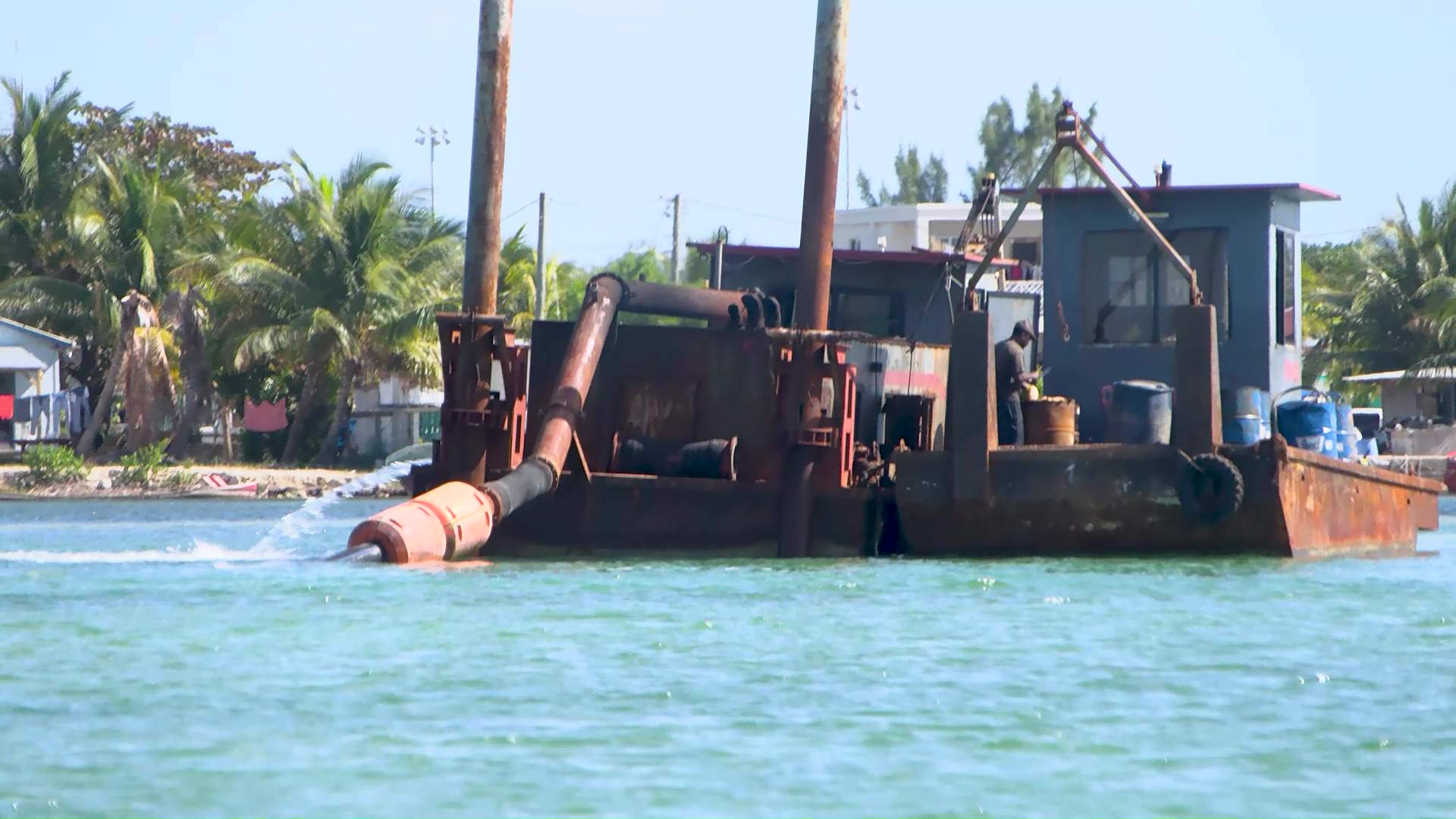
    A prominent political figure in Belize has raised serious environmental concerns regarding extensive dredging activities occurring throughout Ambergris Caye. Senator Gabriel Zetina, the United Democratic Party’s Caretaker for Belize Rural South, has issued a formal warning about these operations, highlighting their devastating impact on both the tourism sector and local fisheries.

    According to Senator Zetina, these large-scale dredging projects are causing irreversible damage to the island’s delicate ecosystem. He questions whether these activities have received proper authorization and challenges municipal authorities to prioritize residents’ interests over commercial development. The senator specifically emphasizes that these operations appear to exceed reasonable limits, suggesting they may now be conducted for resource extraction rather than necessary land development.

    The environmental consequences are particularly severe for marine life habitats. Zetina notes that traditional fly fishing flats and critical nursery areas for various fish species, including tarpon and lobster populations, have been destroyed. These shallow mangrove environments serve as essential growth areas for juvenile fish before they migrate to deeper reef waters. The destruction of these habitats directly impacts local fishermen and tour operators who depend on these resources.

    In a related urban development concern, Senator Zetina also addressed San Pedro Town’s chronic traffic congestion. He proposed canceling inactive golf cart permits, asserting that many permits have been granted to individuals who don’t actually possess vehicles on the island. He called on Mayor Wally Nunez to implement stricter permit regulations to alleviate the worsening traffic situation.

  • Two Students Diagnosed With Tuberculosis

    Two Students Diagnosed With Tuberculosis

    The Ministry of Health and Wellness in Belize has officially confirmed the diagnosis of tuberculosis in two students from Belize City educational institutions. Health authorities reported that a 16-year-old female student attending Edward P. Yorke High School received a positive TB test result on Thursday of last week. Medical officials confirm the adolescent has commenced anti-tuberculosis medication and is demonstrating positive response to therapeutic interventions.

    In a related development, a 10-year-old student from Ephesus Primary School, identified as a family member of the first case, has also tested positive for the bacterial infection. The younger patient presented with non-specific symptoms before diagnosis and has similarly initiated appropriate medical treatment protocols.

    Health Ministry representatives have implemented comprehensive response measures, including formal notification of both educational institutions and the activation of systematic contact tracing procedures. Epidemiological teams are currently working to identify and assess all individuals who may have experienced close contact with the infected students.

    Tuberculosis remains a significant public health concern, characterized as an airborne bacterial infection that primarily targets pulmonary tissue. Transmission occurs through respiratory droplets when infected individuals cough, sneeze, or speak. Health authorities emphasize that persistent or concerning respiratory symptoms warrant immediate medical evaluation. The Ministry confirms that complete TB screening, diagnostic services, and treatment regimens remain available without cost at all public healthcare facilities throughout the nation.

  • Two Belizeans Test Positive for Malaria Following Guatemala Trip

    Two Belizeans Test Positive for Malaria Following Guatemala Trip

    Health authorities in Belize have confirmed two imported malaria cases detected in Crique Sarco Village, Toledo District, marking a significant public health development. According to Dr. Melissa Diaz-Musa, Director of Public Health and Wellness, both patients had recently traveled to Guatemala and developed symptoms in mid-January before being formally diagnosed.

    The Ministry of Health and Wellness has intensified surveillance measures to prevent local transmission while maintaining Belize’s malaria-free status. Healthcare teams are conducting enhanced monitoring in affected and surrounding villages, testing residents for fever, joint pains, and other malaria symptoms. The national health system maintains capacity to test for multiple vector-borne illnesses including dengue, chikungunya, and Zika, which present similar symptoms.

    In a separate development, Belize experienced a January spike in influenza cases coinciding with an unusual cold front. The H3N2 influenza subtype mirrored outbreaks reported in the United States and Canada. While cases have since stabilized, health officials continue urging vaccination, with both flu and pneumococcal vaccines available at public and private health facilities.

    Dr. Diaz-Musa also addressed the planned demolition of Port Loyola Polyclinic in Belize City, which was condemned due to mold contamination. Services have been relocated to the Welcome Resource Center, which now provides comprehensive care including psychiatric services, counseling, and basic necessities. Demolition is expected within the next month, with new construction anticipated to commence within a year.

    The ministry reported significant recovery in vaccination rates post-COVID, particularly noting HPV vaccination coverage improving from 38% to 76% in 2025, advancing cervical cancer elimination goals.

  • Trinidad and Tobago proposes CARICOM energy ministers forum

    Trinidad and Tobago proposes CARICOM energy ministers forum

    In a landmark move to foster regional energy collaboration, Trinidad and Tobago’s Energy Minister Dr. Roodal Moonilal has formally proposed establishing a dedicated forum for CARICOM natural resources and energy ministers. The initiative, unveiled during the ‘Regional Energy Security’ panel at the 2026 Guyana Energy Conference, aims to synchronize policies among the Caribbean’s major hydrocarbon producers.

    Dr. Moonilal expressed astonishment that such a collaborative mechanism didn’t previously exist, emphasizing that regular ministerial engagement would prevent duplicated efforts and enhance investment coordination. ‘We need to work together on investment policies and strategies to ensure we’re aware of each other’s activities across the Caribbean,’ he stated during the conference opening.

    The proposal comes amid significant shifts in the region’s energy landscape. Trinidad, historically the Caribbean’s sole major oil producer for nearly a century, now shares the stage with Guyana—currently producing approximately one million barrels of crude daily—and emerging producer Suriname, which anticipates output of 220,000 barrels from its offshore Gran Morgu project by 2028.

    Critical developments are accelerating regional cooperation: Trinidad is advancing toward large-scale gas production following OFAC licensing approvals, while Guyana and Suriname are finalizing a memorandum of understanding for joint gas production within the coming month. Notably, substantial gas reserves have been identified in maritime territory spanning both nations.

    Suriname’s Minister of Oil, Gas and Environment Patrick Loys Brunings endorsed the forum concept, highlighting its potential to support the region’s transition from fossil fuels to renewables. ‘Gas will play a crucial role in powering electricity and transportation during this transition,’ Brunings told Demerara Waves Online News, suggesting Trinidad and Suriname could lead regional sustainability efforts.

    Guyana’s Minister of Natural Resources Vickram Bharrat immediately backed the initiative, characterizing regular energy ministerial meetings as ‘critical and important’ for achieving scaled collaborative projects. He advocated expanding participation beyond the three primary producers to include wider CARICOM representation, signaling broad regional commitment to energy integration.

  • Several Detained After Shooting in Belize City

    Several Detained After Shooting in Belize City

    Authorities in Belize City have taken multiple individuals into custody following a shooting event that transpired on Tuesday evening. The incident unfolded on South Street, where three men were engaged in social activities. According to police reports, an unidentified male approached the group and discharged several rounds in their direction. Miraculously, no injuries were reported from the gunfire.

    Law enforcement officials observed one of the men fleeing the scene while carrying a suspicious object, which he subsequently discarded in a neighboring property. Police immediately apprehended the individual and returned him to the original location of the shooting. A subsequent search of the area led to the recovery of a firearm equipped with a magazine containing fourteen live rounds of ammunition.

    The Belize Police Department continues to investigate the circumstances surrounding the shooting, including possible motives and the relationship between those involved. This incident marks another episode in the ongoing efforts by local authorities to address gun-related violence in urban areas. The swift response and successful recovery of weapons demonstrate improved police effectiveness in responding to such critical situations.

  • Farmers in Cayo Report Gunfire and Intimidation in Land Dispute

    Farmers in Cayo Report Gunfire and Intimidation in Land Dispute

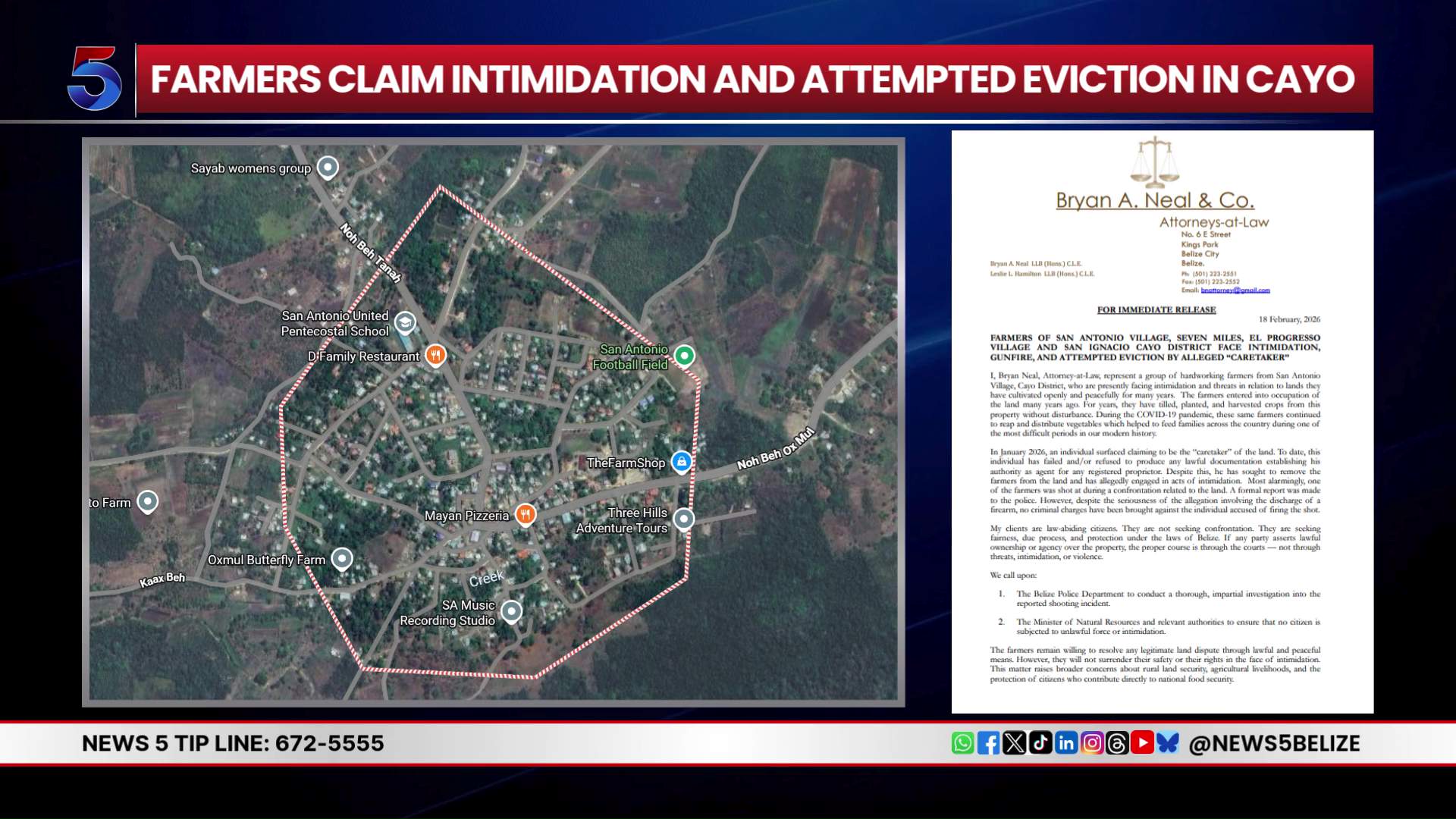
    A severe land rights confrontation has erupted in Belize’s Cayo District, where local agriculturalists report escalating threats, gun violence, and forced eviction attempts from properties they have traditionally cultivated. Legal representative Bryan Neal has confirmed he is providing counsel to multiple farmers from San Antonio Village and adjacent communities such as Seven Miles, El Progreso, and San Ignacio.

    These agricultural workers assert generations-long peaceful occupation and farming of the disputed territories. The situation deteriorated markedly in January when an individual emerged, professing to be the designated caretaker of the land. According to Neal, this claimant has not produced verifiable legal documentation establishing his authority or ownership rights, yet has initiated aggressive measures to displace the farmers.

    The conflict turned violent when one farmer was reportedly targeted by gunfire during a recent confrontation. Although the Belize Police Department has been notified of the incident, no formal charges have been filed to date.

    Neal is urgently demanding comprehensive law enforcement investigation into the shooting allegation and is appealing to the Ministry of Natural Resources to intervene. He seeks official protection for the farmers against what he characterizes as systematic unlawful intimidation and coercive tactics aimed at dispossessing them of their agricultural livelihoods. The legal advocate emphasizes that these communities face persistent fear and instability due to the unresolved territorial dispute.

  • PSU Disappointed Following Cancelled Meeting with Belize Tax Service

    PSU Disappointed Following Cancelled Meeting with Belize Tax Service

    BELIZE CITY – February 18, 2026 – Tensions between Belize’s Public Service Union (PSU) and government authorities escalated today when a crucial negotiation meeting regarding the proposed semi-autonomous revenue authority was unexpectedly canceled. Union representatives left the Eleanor Hall visibly disappointed after arriving for what they believed would be a mediated follow-up session to address ongoing concerns about the departmental transition.

    PSU President Dean Flowers expressed profound frustration regarding the breakdown in communications. “We had a scheduled meeting with the Ministry of Finance that should have been chaired by the labor department,” Flowers stated. “This was intended as a continuation of the December 3rd mediation session that brought together multiple government entities to address our trade dispute.”

    The contentious transformation of the Belize Tax Service into a semi-autonomous body has been a point of significant conflict since November, when the union formally declared a trade dispute. The proposed restructuring has raised concerns among public service employees about job security, working conditions, and administrative changes.

    Flowers highlighted the particular disappointment of finding only minimal representation from the Project Execution Unit upon arrival, rather than the expected mediation team from the Ministry of Labor. “The absence of proper mediation representatives raises serious red flags about the government’s commitment to resolving this impasse,” Flowers noted. “Our members deserve transparent negotiations regarding this significant structural change.”

    The union leader called upon media outlets to investigate the Labor Commissioner’s and Labor Minister’s absence from the scheduled dialogue. The PSU, supported by the National Trade Union Congress of Belize, continues to seek meaningful engagement to protect the interests of tax service employees and the broader public service workforce affected by the proposed governmental restructuring.

  • BCWU Claps Back at BCWJ

    BCWU Claps Back at BCWJ

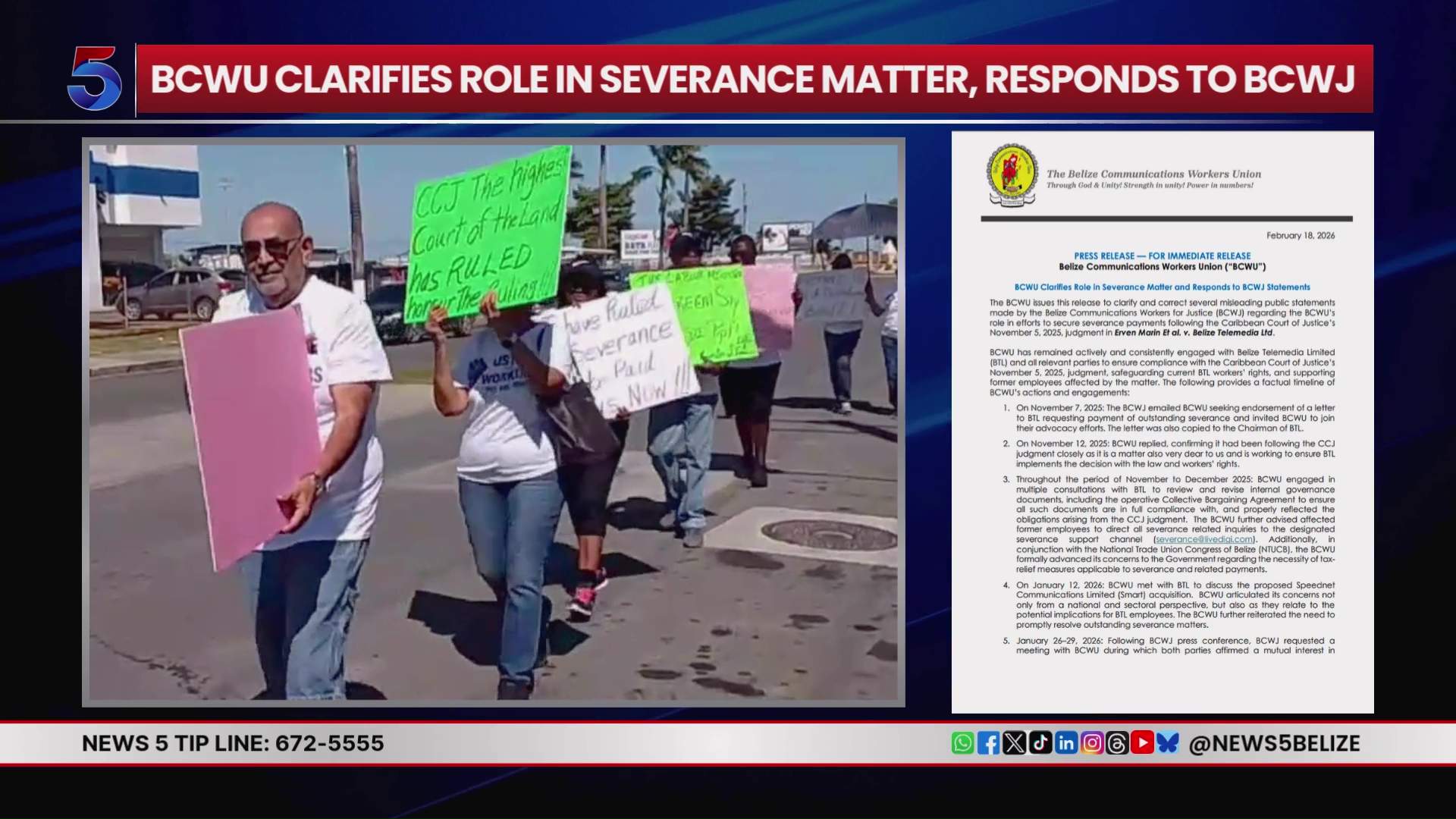
    In a significant development for Belize’s labor landscape, the Belize Communications Workers Union (BCWU) has successfully negotiated the settlement of outstanding severance payments from Belize Telemedia Limited (BTL) following a landmark Caribbean Court of Justice ruling. The breakthrough comes after months of strategic negotiations and contrasts sharply with the approach taken by a splinter labor group.

    The dispute resolution process began in earnest after the November 5, 2025 CCJ decision that unequivocally affirmed Telemedia’s obligation to provide severance payments to affected workers. Contrary to claims made by the breakaway Belize Communications Workers for Justice (BCWJ), the BCWU maintained continuous engagement with both the company and broader labor institutions throughout the negotiation period.

    Between November and December 2025, the union conducted intensive consultations with BTL management to align internal agreements with the judicial mandate. Simultaneously, the BCWU collaborated with the National Trade Union Congress of Belize to address concerning tax implications that could have diminished the value of severance packages for workers.

    Following BCWJ’s January press conference criticizing the pace of implementation, the established union extended an olive branch, inviting the rival group to join formal negotiations. BCWJ reportedly declined this collaborative approach in favor of independent protest actions. After convening an emergency membership meeting, BCWU members democratically determined not to endorse the protests officially, though individuals retained the right to show personal support outside working hours.

    The persistent diplomatic engagement yielded concrete results on February 17, 2026, when BTL formally committed to settling all outstanding severance obligations. The BCWU characterizes this outcome as a testament to constructive dialogue and respect for established labor relations processes, contrasting it with more confrontational approaches that risked destabilizing negotiations.

  • Canoe Association Opposes La Ruta Maya Finish Line Change

    Canoe Association Opposes La Ruta Maya Finish Line Change

    A proposed alteration to the final leg of Belize’s iconic La Ruta Maya canoe race has ignited significant controversy among participants and sporting officials. The race committee is considering moving the traditional finish line from the BelCan Bridge to the Grand Resort near Haulover Creek Bridge, a change that has not been formally finalized but has already generated substantial online discussion and athlete opposition.

    Carlos Linares, a veteran paddler with thirteen consecutive race participations, expressed strong objections to the potential change. He emphasized the importance of tradition, noting that the sudden proposal lacked consultation with competitors. Linares highlighted that the alteration would diminish the race’s historical significance and spectator experience, particularly criticizing new policies that charge admission for family members to watch the event—a departure from previous years’ practices.

    Elvin Penner, Vice President of the Belize Canoe Association, provided technical analysis of the proposed change’s competitive implications. He explained that the current channel approach to the BelCan Bridge creates a dramatic climax to the race due to the dense water conditions that typically determine the ultimate winner. Penner estimated the route change would eliminate approximately thirty minutes of this critical racing segment, potentially altering the fundamental character of the competition while possibly shortening the overall duration—a mixed benefit for exhausted participants.

    The controversy reflects broader tensions between event modernization and preservation of sporting heritage, with athletes questioning whether organizational decisions adequately consider competitor perspectives and tradition maintenance.