博客

  • Cotton Tree Resident, Akeem Jones, Says Police Shot Him

    Cotton Tree Resident, Akeem Jones, Says Police Shot Him

    A Cotton Tree resident is demanding justice after alleging he was the victim of an unjustified police shooting followed by an attempted cover-up. Akeem Jones, 32, claims he was shot in the arm by an officer from behind while simply standing outside with his younger brother on March 3, 2026.

    Jones maintains he had no prior encounters with law enforcement and was not the intended target of any police operation. According to his account, officers were pursuing his brother when the incident occurred. The shooting resulted in an exit wound through his arm, with medical professionals advising a two-month recovery period that will prevent him from working.

    Most disturbingly, Jones alleges the officer immediately attempted to suppress the incident. He claims the shooter, identified only as ‘Chavez,’ begged him not to press charges and offered to dismiss pending cases against Jones’ brother in exchange for his silence—an offer Jones characterizes as blatant blackmail.

    ‘I would want court action,’ Jones stated in a recorded interview, expressing frustration about his inability to work and support himself. ‘I am a good citizen. I am not no criminal. Look up my file breda, you nuh wah find anything on me there.’

    The incident has raised serious concerns about police conduct and accountability in the community. Jones’ testimony reflects a growing distrust toward law enforcement, with him stating plainly: ‘We fraid fih police now. We cant run to them.’

    The Belize Police Department has not yet issued an official statement regarding these allegations. The case highlights ongoing tensions between citizens and police authorities in the region, with calls for transparent investigation into the shooting and the alleged attempted cover-up.

  • Ten Thousand Officers Deployed in Mexico’s Cartel Crackdown

    Ten Thousand Officers Deployed in Mexico’s Cartel Crackdown

    In response to escalating cartel violence reaching Chetumal in Mexico’s Quintana Roo state, Belize has significantly heightened its border security measures. Mexican authorities have deployed approximately ten thousand military and police personnel to combat criminal organizations operating near the border region.

    Belizean Police Minister Oscar Mira, who holds additional jurisdiction over the nation’s free trade zone, confirmed increased patrol operations along the border perimeter. While acknowledging that the situation has temporarily stabilized due to Mexico’s substantial security deployment, Belizean officials maintain vigilant monitoring of riverine and border areas to prevent infiltration attempts.

    Prime Minister John Briceño emphasized the critical need for international support during discussions with U.S. officials, specifically naming Secretary Rubio. The Prime Minister articulated three essential requirements for Belize’s security apparatus: advanced equipment, intelligence sharing, and specialized training. Briceño warned that without immediate and decisive action, Belize could face dramatically different security circumstances within the next decade.

    The Belizean government acknowledges its limited resources to counter well-funded cartel operations independently. National leadership continues to advocate for strengthened international cooperation, particularly with United States agencies possessing the technical capabilities and expertise necessary for effective border security and organized crime prevention.

  • Senator Denisson Under Scrutiny For $183K Invoice

    Senator Denisson Under Scrutiny For $183K Invoice

    Belizean politics has been rocked by controversy surrounding Union Senator Glenfield Dennison, who finds himself at the center of a contentious $183,000 invoice dispute with Belize Telecommunications Limited (BTL). The emerging scandal reveals complex layers of political and legal entanglement, raising questions about ethical boundaries in public service.

    The controversy originated when BTL rejected a substantial invoice from Senator Dennison for legal services provided during negotiations between the telecommunications giant and the Belize Communication Workers for Justice (BCWJ). The six-figure sum, totaling $183,000, was attributed to legal work conducted during BTL-BCWJ negotiations concerning severance payments for former employees.

    What makes this situation particularly noteworthy is Senator Dennison’s dual role at the time of providing legal counsel—he was simultaneously serving as a Crown Counsel while advising the workers’ union. This overlapping of responsibilities has sparked serious questions about potential conflicts of interest and the proper separation between governmental duties and private legal practice.

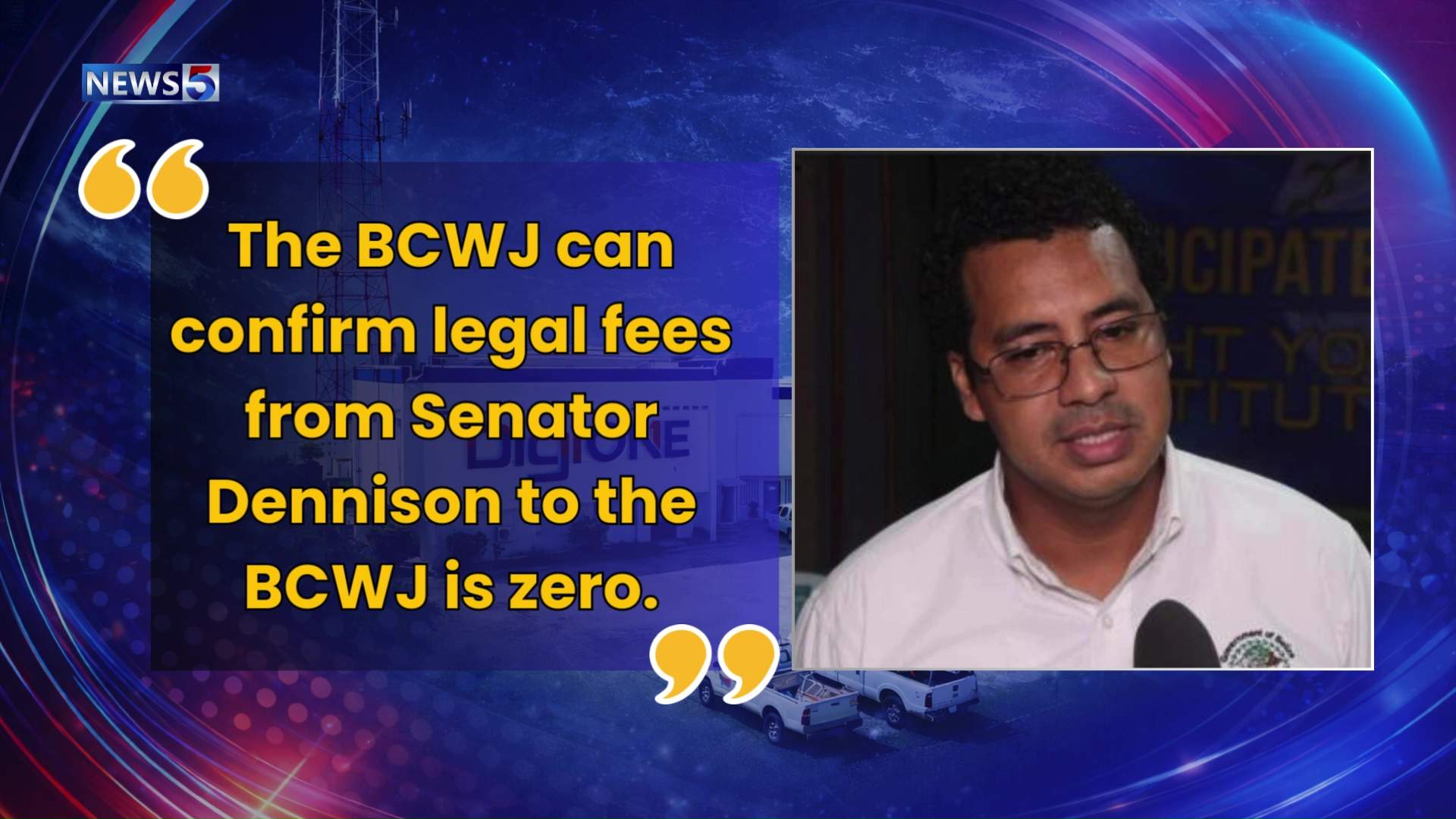
    The BCWJ has vigorously defended Senator Dennison, with organizer Emily Turner asserting that the public narrative has been fundamentally misrepresented. According to Turner, Dennison made a firm commitment from the outset not to charge any former BTL worker represented through BCWJ, a promise that allegedly remains unbroken. The union claims the question of legal fees never arose internally because their attorney voluntarily supported workers without seeking compensation.

    Turner revealed that the fee discussion was initiated not by the workers’ group but by BTL itself, which raised questions about the value of the workers’ legal representation. The union organizer pointedly noted the irony of BTL scrutinizing representation costs for former workers while allegedly spending approximately $20 million in legal fees pursuing litigation to the Caribbean Court of Justice.

    The BCWJ emphasized the financial burden that alternative legal arrangements would have imposed on workers, disclosing that prior consultation with other attorneys yielded proposals including a $100,000 retainer plus ten percent of the total settlement, or alternatively twenty percent of the total settlement. Such arrangements would have translated into millions of dollars in legal fees being borne by workers simply to pursue what the law already provides.

    The case highlights broader issues of workers’ rights and corporate accountability in Belize, with the central question emerging: if a corporation can spend tens of millions on legal defense, why does resistance persist in paying former employees their legally mandated severance with the court-approved six percent interest?

  • Chamber of Deputies approves National Alert System bill

    Chamber of Deputies approves National Alert System bill

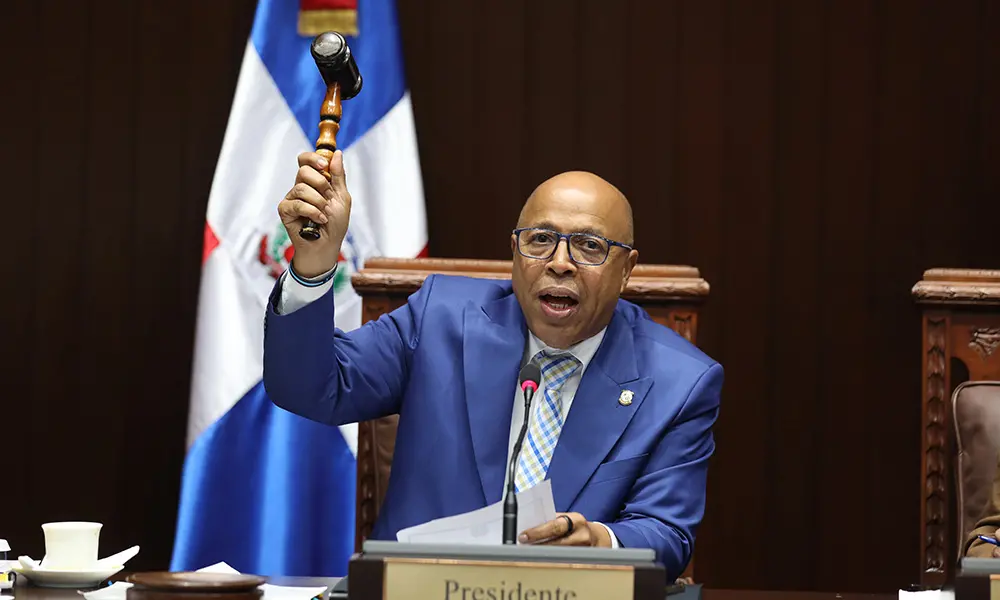
    SANTO DOMINGO – In a significant move to enhance public safety, the Dominican Republic’s Chamber of Deputies has granted initial approval to legislation establishing a comprehensive legal framework for the prevention of disappearances and the management of imminent danger scenarios. The cornerstone of this initiative is the creation of a National Alert System, designated as ‘Alerta RD’.

    Spearheaded by legislators Liz Mieses and Carmen Ligia Barceló, the proposed bill is designed to facilitate the instantaneous and mass dissemination of information concerning missing individuals. This system is structured to mobilize a coordinated response across state agencies, media networks, and civil society organizations, significantly amplifying efforts in search, location, recovery, and protection operations. A primary focus of the framework is to extend heightened protection to vulnerable demographics.

    The scope of the legislation extends beyond individual missing persons cases. It meticulously outlines standardized protocols for the detection, communication, and management of alerts stemming from a wide array of crises. This includes natural disasters, public health emergencies, critical public safety threats, and major environmental incidents. The overarching objective is to institutionalize a cohesive and effective response mechanism among authorities, thereby mitigating the adverse effects of emergencies and safeguarding the lives and well-being of citizens through a reinforced early-warning and response infrastructure.

  • No More Blame Game: MIDH Plans Road Handover to City Council

    No More Blame Game: MIDH Plans Road Handover to City Council

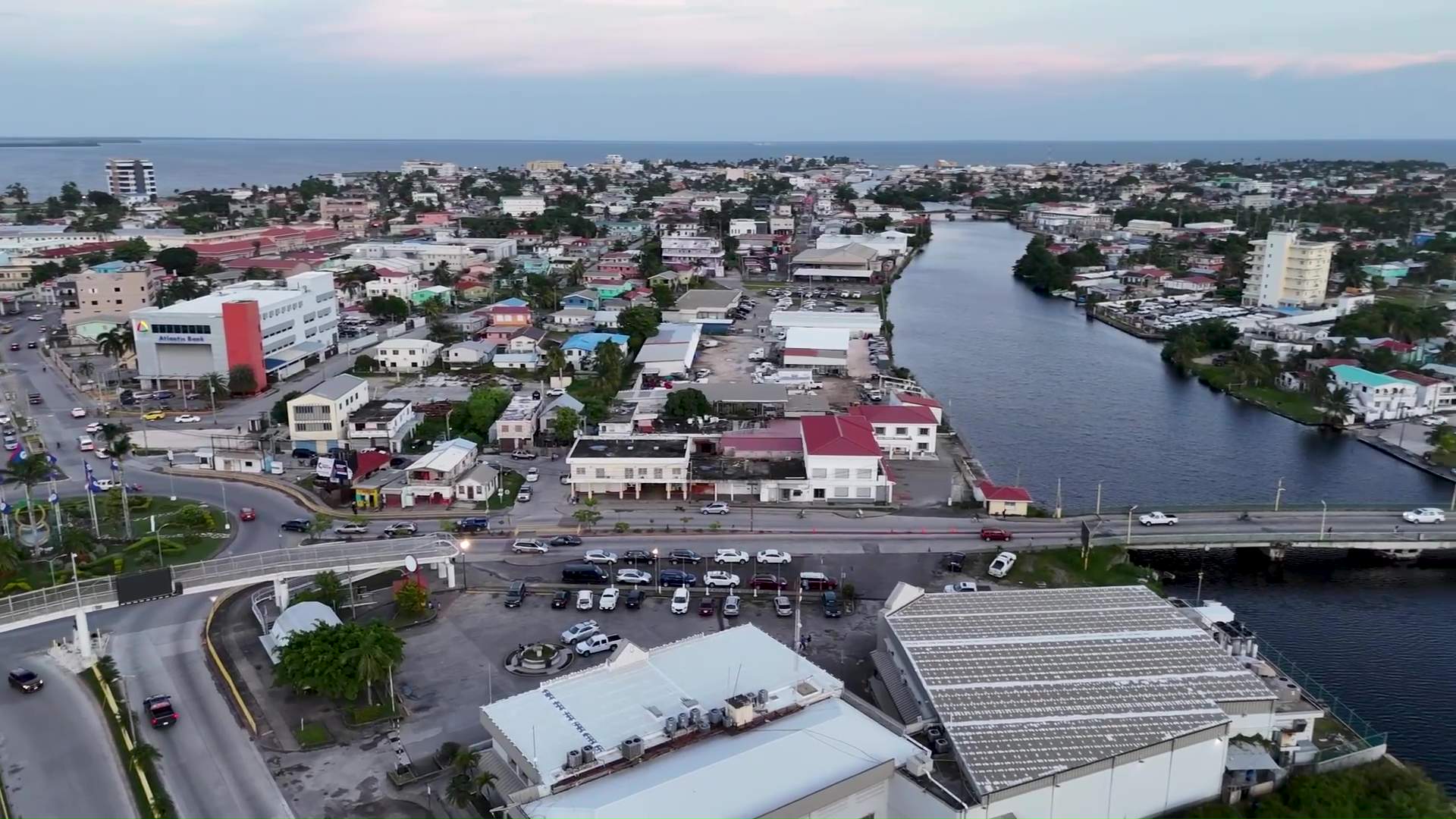
    Belize City is poised to resolve a longstanding administrative impasse that has plagued its urban infrastructure management for decades. The Ministry of Infrastructure Development and Housing (MIDH) has initiated formal proceedings to transfer jurisdictional control of several critical roadway segments to the Belize City Council, marking a significant breakthrough in intergovernmental cooperation.

    The breakthrough comes amid the most substantial infrastructure overhaul the city has witnessed in generations, featuring landmark projects including the Swing Bridge replacement, construction of the new BelCan Bridge, and comprehensive upgrades along major highway corridors. This infrastructural renaissance has created an opportune moment for clarifying administrative responsibilities that have long confused residents and officials alike.

    Chief Engineer Evondale Moody confirmed that MIDH has formally proposed transferring authority over key sections including areas adjacent to Faber’s Road and Chetumal Street. The City Council has conditionally accepted responsibility, contingent upon MIDH completing scheduled enhancement works within the projected three-year timeline.

    Moody elaborated on the current jurisdictional landscape: ‘As chief engineer, my authority encompasses all highways traversing the city, including Central American Boulevard. The highway network technically terminates at the Save-U Roundabout intersection with Phillip Goldson Highway and the leaf roundabout connecting to George Price Highway.’

    The transfer agreement, expected to be formalized through a memorandum of understanding upon project completion, will redefine MIDH’s operational scope to focus primarily on lake I Boulevard and Chetumal Street connections to major highways.

    Concurrent with these administrative developments, MIDH is implementing strategic reinforcements along alternative routes anticipated to bear increased traffic loads during construction phases. Engineering teams are addressing specific failure points along Chetumal Street near Westrac, where concrete pavement has deteriorated, despite these areas technically falling outside MIDH’s immediate jurisdiction.

    The ministry is adopting a phased approach to infrastructure improvements, prioritizing flexible pavement solutions that accommodate ongoing ground consolidation while ensuring adequate traffic flow during the extensive construction period. This measured strategy balances immediate practical needs with long-term structural integrity considerations, demonstrating sophisticated urban planning coordination between central and municipal government entities.

  • La Ruta Maya Shifts Course, but the Cruz Legacy Keeps Moving

    La Ruta Maya Shifts Course, but the Cruz Legacy Keeps Moving

    ESPERANZA VILLAGE, BELIZE – As the La Ruta Maya Belize River Challenge undergoes its most significant course alteration in nearly three decades, the Cruz family of Esperanza Village demonstrates how legacy transcends changing currents. The iconic four-day canoe race, now in its 29th year, has shifted its traditional finish line from the BelCan Bridge to the Grand Resort, eliminating the challenging Haulover Creek segment that many competitors considered decisive.

    The Cruz dynasty, with approximately a dozen family members consistently competing, has become synonymous with the event that weaves through their family history. Daniel Cruz Sr., a veteran with 24 years of paddling experience, now competes alongside his sister and son Daniel Cruz Jr., last year’s professional category champion. Their multi-generational participation embodies the event’s cultural significance beyond mere competition.

    This year’s competition sees the Cruz family partnered with The Nature Conservancy Belize and San Ignacio Hotel, highlighting the critical relationship between sponsors and athletes. Lumen Cayetano Enriquez, Lands Manager for The Nature Conservancy Belize, emphasized the partnership’s dual purpose: “It builds awareness and affords us a platform around freshwater protection and conservation. It signifies the importance we place on fresh water protection.”

    The course modification has generated substantial controversy among competitors. Many paddlers, including the Cruz family, express disappointment that organizers implemented changes without adequate consultation. Francisca Cruz Pfaender noted the practical concerns: “Usually you don’t know how the water and the weather is going to look. Sometimes the weather is pretty big where it will lift the boat and slam it.”

    Despite the alterations, the Cruz family’s commitment remains unwavering. Daniel Cruz Jr., reflecting on strategy, explained how the removed segment previously determined outcomes: “The channel is very hard. If you enter there first, you can open gap or they can catch you there.” The family now adapts their tactics to the revised course while maintaining their deep connection to the river that serves as their childhood playground, training ground, and keeper of family history.

  • Yoga Grandmaster Champions Holistic Health in Belize

    Yoga Grandmaster Champions Holistic Health in Belize

    In the heart of Belize, a remarkable fusion of ancient tradition and contemporary healthcare is unfolding under the guidance of Dr. Orlando Pelayo, the nation’s sole certified yoga grandmaster. With over six decades of dedicated practice, Dr. Pelayo represents a living bridge between Eastern spiritual disciplines and Western medical science, operating both an orthopedic clinic and the Himalayan Institute of Yoga.

    The 86-year-old master, who introduced yoga to Belize in 1957, demonstrates extraordinary physical capabilities—including maintaining the challenging Himalaya Mantis pose for up to fifteen hours. His qualifications extend beyond yoga mastery to include military special forces training, three internationally recognized black belts, and advanced academic degrees, creating a unique credentialing combination that distinguishes him as a grandmaster.

    Dr. Pelayo’s philosophy centers on what he terms ‘true self-love’—a concept extending beyond superficial affirmations to encompass comprehensive physical health, mental clarity, and spiritual development. ‘Loving yourself is to be healthy, to be educated, to be viable, to be a good person, to love humanity and love all races,’ he explains, challenging conventional understandings of self-care.

    The yoga pioneer emphasizes the importance of proper preparation before beginning practice, advising potential students to assess their health status and lifestyle choices. He cautions against substance use and poor nutrition while encouraging spiritual development as foundational elements for successful yoga practice.

    As yoga gains popularity in Belize, Dr. Pelayo warns students to verify instructor credentials carefully, noting that ‘you cannot learn from a fool’ and emphasizing the importance of learning from properly qualified teachers to avoid ‘water under the bridge’ outcomes.

    Despite initial skepticism when he first introduced yoga decades ago, Dr. Pelayo remains committed to his mission of promoting holistic wellness, concluding with his personal mantra: ‘My purpose is to stay on the planet, stand up and fight, don’t give up. Namaste.’

  • Trinidadian Businessman Defends Name After Scam Accusations

    Trinidadian Businessman Defends Name After Scam Accusations

    A contentious dispute has erupted in San Ignacio between local vendors and Trinidadian entrepreneur Irwin Denis following the abrupt postponement of a promised Food and Soca Tour event. Approximately sixty small business owners who paid between fifty and one hundred dollars per booth for participation now allege financial misconduct, while Denis maintains the cancellation resulted from unforeseen business complications rather than fraudulent intent.

    The controversy originated in December when Denis, formerly affiliated with the Island Run Delivery app franchise, initiated planning for a multi-day festival designed to promote local commerce through digital platform integration. Vendors were guaranteed exposure through a system where attendees would purchase goods exclusively via the application. However, the event encountered severe turbulence when Denis indefinitely postponed the festival without providing alternative dates or immediate refunds.

    Howard Keaton, proprietor of Mecha’s and listed as an official sponsor, expressed profound confusion regarding the event’s collapse. “The absence of rescheduled dates immediately raised red flags,” Keaton stated, emphasizing the lack of transparency surrounding the cancellation. Further investigations revealed that neither Falcon Field nor Victor Galvez Stadium—initially proposed venues—had received formal booking requests, deepening suspicions among participating vendors.

    Denis attributes the cancellation to financial constraints exacerbated by his severed relationship with Island Run Delivery. According to his account, the parent company terminated his franchise access due to outstanding fees, demanding six months’ advance payment for service restoration. This development, Denis claims, undermined the event’s core objective of promoting the very platform that withdrew support.

    In response to mounting pressure, Denis has committed to reimbursing all vendors by month’s end and developing an independent application to bypass third-party platform fees. He further announced intentions to host rescheduled events with waived participation fees for affected vendors, though skepticism prevails among the business community.

    Flora Choc of Flora’s Kitchen and Catering Service revealed that vendors have consulted legal authorities, receiving recommendations to pursue civil litigation if refunds remain unresolved. This collective grievance has catalyzed the organization of an alternative vendor-led event, the “Bounce Back Bazaar,” demonstrating diminished confidence in Denis’s proposals.

    Keaton advises enhanced due diligence for businesses engaging with unfamiliar promoters, stressing verification of business registration, physical addresses, and banking credentials before financial commitments. Meanwhile, Denis has issued public apologies, characterizing the incident as an unintended consequence of corporate disputes rather than deliberate deception.

  • New Town Boundaries Will Shape 2027 Municipal Vote

    New Town Boundaries Will Shape 2027 Municipal Vote

    Belize’s electoral landscape is undergoing a significant transformation as the Elections and Boundaries Department initiates comprehensive preparations for the 2027 municipal elections. This electoral cycle marks a historic departure as citizens will, for the first time, cast ballots under newly established town boundaries that reconfigure municipal jurisdictions across the nation.

    Chief Elections Officer Josephine Tamai has mobilized departmental officers to conduct extensive field operations in the western municipalities of San Ignacio, Santa Elena, and Benque Viejo del Carmen. These teams are currently executing precise mapping exercises to delineate the adjusted territorial limits approved through statutory instruments effective since April 1, 2025.

    The boundary modifications, while strategically targeted, produce substantive administrative implications. Certain urban neighborhoods have been formally excluded from town limits, while adjacent villages have been incorporated into municipal jurisdictions. This territorial recalibration necessitates meticulous voter reclassification to ensure electoral integrity.

    Tamai emphasized the critical nature of these preparatory measures: ‘Our fundamental responsibility is guaranteeing every citizen is correctly assigned to their respective municipality. These groundwork operations enable us to develop precise electoral maps and ultimately produce an accurate voters’ registry for the 2027 elections.’

    The technical process involves electoral officers conducting physical verification of new boundary markers, documenting jurisdictional changes, and initiating voter education campaigns. This methodological approach aims to prevent electoral confusion and ensure seamless implementation of the new municipal framework when citizens approach polling stations in 2027.

    While the geographical adjustments are characterized as minimal in scope, their administrative significance is substantial. The Elections and Boundaries Department anticipates completing all boundary verification and voter reclassification exercises well ahead of the electoral period to facilitate an orderly transition to the new municipal governance structure.

  • Susana Vanzie Named Interim CEO of National Bus Company

    Susana Vanzie Named Interim CEO of National Bus Company

    The Belizean government has officially launched the National Bus Company, marking a significant transformation of the country’s public transportation system. Susana Vanzie, renowned co-founder of the modern Floralia bus service, has been appointed as interim Chief Executive Officer for an initial three-month probationary period. Her performance during this trial phase will determine whether she assumes the role permanently.

    The newly established seven-member board of directors represents a blend of governmental oversight and industry expertise. Chaired by Ministry of Transportation director Anna Loague, the board includes fellow ministry director Jeaneane Neil, Senator Elena Smith, educator Miriam Paz from the Ministry of Education, and three prominent operators: Jamie Williams from James, Sergio Chuc from West Line, and Mr. Codd representing northern smaller operators.

    Transport Minister Dr. Louis Zabaneh addressed several critical aspects of the transition. Regarding employment security for terminal staff, he acknowledged initial communication failures that caused anxiety among public service workers. The minister clarified that employees have a six-month transition period to decide between remaining in government service or applying for positions with the new company, with appropriate training provided for those who transition.

    Private operators who opted not to join the national system raised concerns about competitive disadvantages, specifically requesting equivalent duty breaks and fuel tax relief granted to the National Bus Company. Minister Zabaneh emphasized that these incentives were exclusively available to participants in the consolidated national system, and non-participating operators must comply strictly with existing service permit regulations.

    The ministry also announced forthcoming stricter enforcement against overcrowded buses with standees, identifying this as both a safety hazard and a systemic issue rooted in cash collection practices. The new approach will involve better route management and bus allocation to eliminate dangerous overcrowding while maintaining service efficiency.

    The National Bus Company represents Belize’s most ambitious public transportation reform, aiming to create a unified, modernized system that balances operational efficiency, passenger safety, and fair labor practices.