博客

  • Nieuwe Raad van Commissarissen Canawaima wordt vandaag benoemd na ophef

    Nieuwe Raad van Commissarissen Canawaima wordt vandaag benoemd na ophef

    On April 23, the Ministry of Transport, Communication and Tourism of Suriname announced that a new Supervisory Board (Raad van Commissarissen, RvC) will be officially installed at the Canawaima Management Company (CMC) on the same day, according to Minister Raymond Landveld.

    CMC operates the critical ferry connection between Suriname’s South Drain and neighboring Guyana, a key transit link for cross-border travel and trade between the two South American nations. The major leadership reshuffle comes on the heels of public, serious allegations of conflict of interest that rocked the outgoing supervisory body.

    Per local media outlet Starnieuws’ verified sources, the new board will be led by Naraindeth Seopershad as president-commissioner, with Prakash Raghoebiren and Fandi Bogor joining as sitting members. The three members of the previous board – chair Richenel Vrieze, Abdul Madhar, and Edgar van Genderen – have been notified of the change, though their formal resignation process has not yet been fully completed.

    The decision to replace the entire supervisory board was reached following closed consultations between Minister Landveld and Suriname’s President Jennifer Simons. The process accelerated dramatically after the CMC workers’ union, headed by Dayanand Dwarka, formally withdrew its confidence in the old board’s leadership.

    The union had initially planned to launch industrial action to push for leadership changes, but ultimately called off the protests after reaching an agreement with Minister Landveld. The union made the concession to avoid disrupting ferry services, which would have harmed passengers relying on the cross-border connection. In return, Landveld committed to rapid intervention to address the union’s concerns – a promise that has now resulted in the full replacement of the supervisory board.

    As of the announcement, outgoing board members have not yet received a formal hearing from the Ministry of Transport, Communication and Tourism (TCT) or the President’s Cabinet, nor have they been placed on administrative leave pending the finalization of the transition.

  • Hurricane Power Athletics Club announces record turnout for 5th Annual 10K/5K Run & Walk and 2K Kids Competition

    Hurricane Power Athletics Club announces record turnout for 5th Annual 10K/5K Run & Walk and 2K Kids Competition

    Organizers based in St. John’s, Antigua have announced an unprecedented milestone for one of the island’s most anticipated community fitness events: the Hurricane Power Athletics Club confirms that pre-registrations for its 5th Annual 10K/5K Run & Walk alongside the 2K Kids competition have already hit a record high, months ahead of the event’s scheduled date of Sunday, 26 April 2026.

    The event will kick off bright and early at 6:30 a.m. local time, with all races starting and ending at the popular YASCO Grounds venue. The marked race route follows a clearly defined loop for participants: competitors will travel up Old Parham Road before turning right onto Sir Sibley Wallen Highway, then take a left onto Factory Road, before completing their race by reversing back along the same path to the finish line at YASCO Grounds.

    To make the event accessible to athletes of all ages, the organizing committee has structured tiered registration pricing that accommodates different age groups. Participants aged 16 and older will pay a $30 registration fee, while runners between 13 and 16 years old will pay a reduced rate of $20. Children aged 12 and under, competing in the 2K Kids event, will only pay $15 to take part.

    Unlike elite-only races, this annual event is intentionally designed to be inclusive for a wide range of attendees beyond competitive runners. It welcomes professional distance runners seeking a competitive challenge, recreational runners looking to test their fitness, hiking and local sporting clubs, school groups, local business teams, general fitness enthusiasts, families looking for a fun weekend activity, and casual walkers of all ability levels.

    Beyond the satisfaction of crossing the finish line, a range of prizes will be awarded to top performers across multiple categories. In addition to awards for the overall 10K and 5K winners, recognition will be given to top finishers across a wide range of age groups. Special additional prizes are also reserved for the largest participating group, as well as the top-performing club, school, and business entries.

    Anyone interested in registering a team or individual spot, or seeking additional information about race logistics, can contact the organizing committee directly by phone at 773-2089 or 725-8011.

  • Employers Must Allow Paid Time Off for Voting on Polling Day

    Employers Must Allow Paid Time Off for Voting on Polling Day

    As preparations get underway for the 2026 general elections in Antigua and Barbuda, the nation’s independent Electoral Commission has issued a formal public advisory reinforcing critical legal requirements for employers across the country, centered on protecting workers’ right to participate in democratic governance.

    The official reminder draws its authority from Section 34(1) of the Representation of the People (Amendment) Act, a piece of legislation first enacted in 2001 that enshrines voting access protections for employed voters. Per the statute, every employer operating in Antigua and Barbuda holds a non-negotiable legal duty to grant every eligible voter who is on their payroll a minimum of four consecutive hours of leave on polling day to travel to their polling location and cast their ballot.

    The legislation does not stop at mandating time off: it also explicitly prohibits employers from any form of retaliatory action against workers exercising this right. This includes a complete ban on wage deductions, reduced hours penalties, demotions, or any other adverse employment consequence imposed specifically because an employee takes their legally entitled time to vote.

    According to election officials, this long-standing regulatory provision was crafted to remove one of the most common barriers to electoral participation for working people. For employees with rigid shift schedules, non-flexible work hours, or jobs that pay hourly wages, taking unpaid time off to vote can create significant financial hardship that pushes many to skip casting a ballot entirely. By guaranteeing paid, uninterrupted time to vote, the regulation aims to level the playing field and ensure that every eligible citizen, regardless of their employment circumstances, has an equal and unimpeded opportunity to shape the future of their country through the ballot box.

  • Consumer Raises Concern After Finding Foreign Substance in Apple Juice

    Consumer Raises Concern After Finding Foreign Substance in Apple Juice

    A consumer has ignited widespread discussion about packaged food safety after uncovering an unidentifiable foreign contaminant in a container of Pinehill brand apple juice, leaving the public questioning existing quality control and distribution monitoring standards for retail food products.

    The affected buyer first shared their experience in a regional consumer service online forum, detailing that the unusual substance was settled at the base of a 1-litre sealed carton of the product. According to the information provided by the consumer, the affected juice has a printed expiry date of August 1, 2026, and carries a batch identification code of EY 22:41:21, meaning it is still far from its intended shelf life expiration.

    Visual materials attached to the original forum post clearly show a thick, abnormally discolored solid mass resting inside the already opened juice carton, confirming the consumer’s account of the unexpected contamination. As of the time this report is being published, neither the manufacturing company behind the Pinehill brand nor any of its authorized local distributors have issued an official statement addressing the complaint, nor have they released any preliminary investigation findings related to the incident.

    Industry experts note that food safety incidents involving contamination in pre-packaged beverages can stem from a range of sources. Common causes include unsanitary processing conditions during production, improper temperature or storage handling throughout the distribution chain, or unforeseen premature spoilage that does not align with the printed expiry date. When a formal complaint is lodged with authorities, such cases are routinely taken up for full investigation by local public health agencies or consumer protection departments, which are tasked with determining the root cause and holding responsible parties accountable.

    For consumers who encounter similar situations where they suspect a purchased food or beverage product is contaminated, public health officials routinely issue guidance recommending that individuals immediately preserve the original product packaging, retain all identifying batch and expiration information, and file a formal report with local health or consumer standards agencies to launch an official inquiry.

  • Column: Voeg de daad bij het woord: Kraka Green Guardians baka!

    Column: Voeg de daad bij het woord: Kraka Green Guardians baka!

    A recent 1-0 defeat for NAC Breda at the hands of Go Ahead Eagles has sparked widespread upheaval across Dutch football, with what began as an isolated relegation-battle eligibility dispute quickly escalating into a systemic crisis touching dozens of players, two national football associations and club immigration policies.

    The controversy centers on the eligibility of players representing Suriname’s senior men’s national team, the Green Guardians. What started as a challenge over one reportedly ineligible player in NAC Breda’s squad expanded dramatically, with multiple Suriname international players plying their trade in the Dutch club system facing severe disciplinary action from their employers. For some players, the situation has escalated beyond internal club discipline, requiring them to apply for new work permits just to retain access to club facilities and their playing contracts, creating profound uncertainty over their professional and immigration status in the Netherlands.

    For the players caught in the crossfire, the past weeks have been fraught with confusion and frustration. Many in the Dutch football ecosystem have rushed to judgment without examining the core facts of the case, including one glaring question that has yet to be answered: why is this eligibility issue being raised more than six years after the players first represented Suriname?

    The response from key stakeholders has only deepened the chaos. The Royal Dutch Football Association (KNVB) has adopted a hands-off approach, declining to issue formal sanctions or guidance on the dispute. In contrast, Dutch clubs holding contracts with Suriname internationals have implemented harsh, immediate measures. Several players returning from international duty with Suriname were barred from club training and facilities upon their arrival back in the Netherlands. In the most extreme cases, players were referred to the Immigratie en Naturalisatie Dienst (IND), the Dutch immigration service, with their right to reside and work in the Netherlands called into question – even for players who previously held Dutch nationality.

    Most notably, the Surinaamse Voetbal Bond (SVB), the national governing body of Suriname football that has been hardest hit by this controversy, has remained completely silent on the issue more than two weeks after the dispute first erupted. The SVB’s failure to issue a clear public stance has only amplified uncertainty for all involved. Recent observations that Suriname fielded only locally based players for a recent women’s international match has fueled widespread speculation that the SVB may abandon its longstanding policy of calling up Suriname-born professional players based in European leagues, including the Netherlands, moving forward.

    For Dutch clubs, the outcome so far has delivered an unintended win: the dispute has effectively halted the SVB’s practice of calling up players based in the Netherlands, a policy that had frustrated clubs for years due to the long-haul travel required for international fixtures, which left players fatigued and unavailable for club commitments.

    If the SVB continues to refrain from addressing the crisis publicly, the future of its “New Style National Team” project – built around integrating Europe-based Suriname-origin players – will be left hanging by a thread. While thorough investigation of the dispute takes time, a two-week silence rooted in the hope that the controversy will simply fade away is not a viable strategy. No stakeholder benefits from prolonged uncertainty, and even after this crisis resolves, professional players of Suriname origin will almost certainly think twice before agreeing to represent the Green Guardians going forward.

    The SVB does not just owe a public stance to the football community: it has a responsibility to support the players caught in this difficult situation and deliver clear, accurate information to fans and stakeholders. The association needs to match its slogan “w’e kraka Green Guardians baka” with action, rather than hiding from scrutiny. Instead of delivering unchallenged monologues to select media outlets, the SVB must organize a public press conference to provide much-needed clarity on an issue that has divided football communities across the Netherlands and Suriname for weeks.

  • Abinader and Carolina Mejía inaugurate Santo Domingo Sports Boardwalk

    Abinader and Carolina Mejía inaugurate Santo Domingo Sports Boardwalk

    Santo Domingo, Dominican Republic – Top government and municipal leaders have officially opened the capital’s first ever Sports Boardwalk, a landmark coastal redevelopment project that is set to reshape a long-overlooked stretch of shoreline into a world-class public recreational and athletic hub.

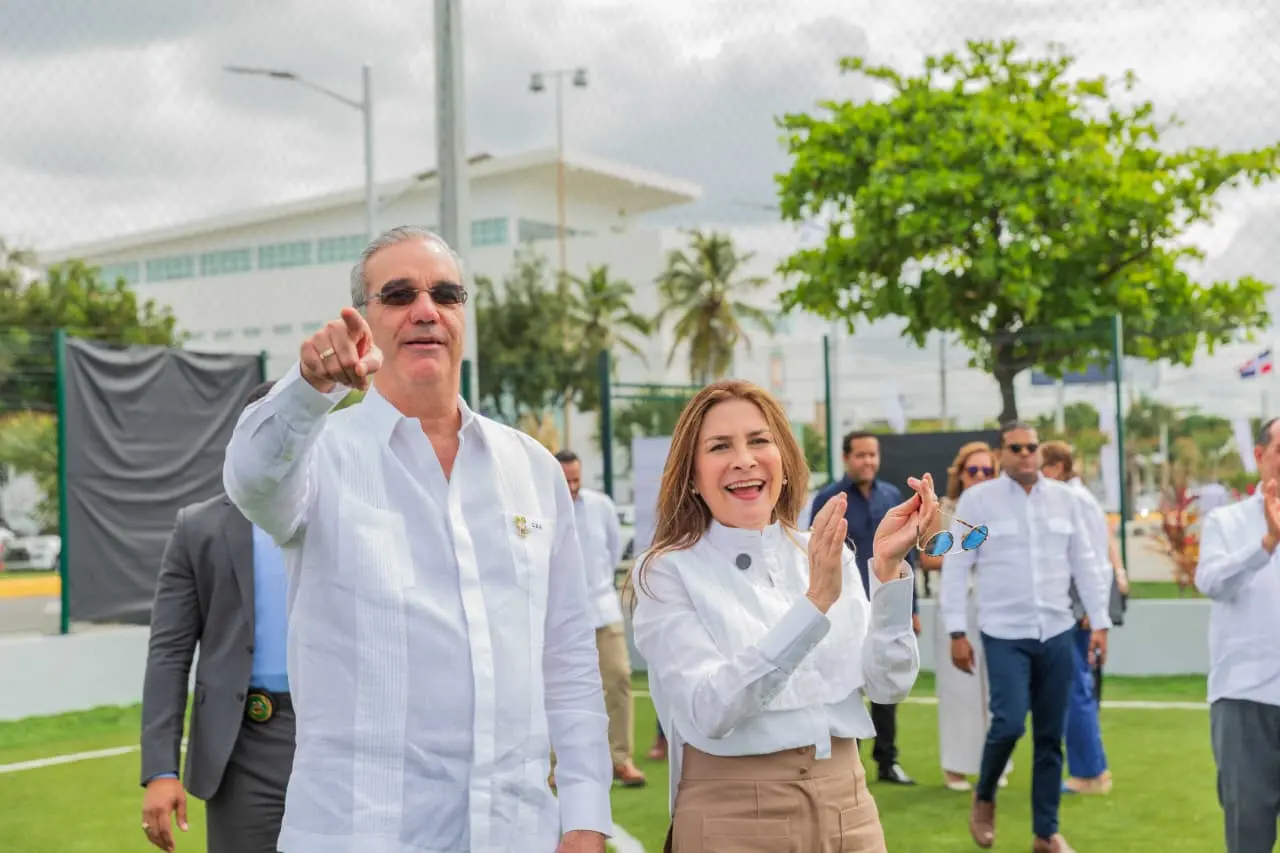
    Led by Dominican President Luis Abinader and National District Mayor Carolina Mejía, the opening ceremony marked the completion of the nearly two-kilometer Malecón Deportivo, a sprawling development that spans roughly 90,000 square meters along the city’s southern waterfront. The project forms a core component of the broader Integrated Plan of Santo Domingo, a city-wide urban initiative centered on advancing sustainable development, upgrading mobility infrastructure, and driving modernization across the capital.

    Crafted by prominent local architect Luis Alejandro Pérez and delivered with a total investment of 333 million Dominican pesos, the new waterfront corridor integrates continuous, connected spaces for athletics, leisure, commerce, and green landscaping, all linked by dedicated pedestrian paths and routes designed for alternative, low-carbon mobility. Unlike the disconnected, underused stretch of coast that previously occupied the site, the new boardwalk creates a unified public space intended to serve as a central gathering spot for residents and visitors to engage in physical activity, enjoy coastal leisure time, and build community connections.

    Mayor Mejía emphasized that the project delivers far more than new recreational amenities: it advances ongoing urban revitalization efforts, expands social inclusion by opening coastal access to all community members, boosts public safety in the previously neglected area, and reestablishes a bond between Santo Domingo’s residents and their natural waterfront.

    The Sports Boardwalk is organized into four distinct functional zones, packed with a diverse range of facilities to serve athletes, families, and casual visitors of all ages. Amenities include an internationally certified skate park, professional-standard beach volleyball courts, 3×3 basketball courts, a seven-a-side football pitch, a fully equipped outdoor fitness gym, paddle tennis courts, age-appropriate children’s play areas, dedicated food and beverage zones, and off-street parking for up to 130 vehicles.

    Officials also noted that the development is a key piece of infrastructure being upgraded and prepared ahead of the 2026 Central American and Caribbean Games, which Santo Domingo is set to host. The new boardwalk will not only serve as a competition venue for multiple events during the games but will also leave a lasting public legacy for the city’s residents long after the closing ceremony.

  • Leisure : Did you know ? #18

    Leisure : Did you know ? #18

    One of the most extraordinary artifacts ever uncovered by archaeology, the Antikythera Mechanism, continues to upend long-held assumptions about the technical capabilities of ancient civilizations, as shared in the 18th installment of the popular ‘Did You Know’ trivia series from Haiti-based media outlet HaitiLibre.

    Dated to the 2nd century BC, this intricate bronze artifact houses a sophisticated network of over 30 interlocking toothed gears. High-resolution X-ray analysis conducted in modern decades has unlocked the device’s true purpose: it served as a remarkably precise analog astronomical computer, capable of predicting the orbital positions of the Sun and Moon, forecasting solar and lunar eclipses, and even tracking the four-year competition cycle of the ancient Olympic Games. What makes this creation even more remarkable is that mechanical technology of comparable complexity did not reemerge across Europe until the 14th century — more than 1,500 years after the Mechanism was crafted.

    Before the discovery and analysis of this artifact, scholars widely believed that ancient Greek engineers had never developed such advanced mechanical expertise. The Mechanism’s existence has forced a complete reevaluation of ancient scientific knowledge, but it has also left researchers with enduring questions: where did the Greeks acquire the foundational knowledge to build this device, and how did this groundbreaking technology disappear from recorded use for more than a millennium? To this day, the Antikythera Mechanism remains one of the most puzzling and captivating objects in global archaeology.

    This fascinating fact appears as a featured answer on Quiz-HaïtiLibre, HaitiLibre’s free, no-registration general knowledge quiz platform. Designed for audiences of all ages and skill levels, the platform offers dozens of quiz games across three difficulty tiers — easy, intermediate, and difficult — with full support for both French and English languages. New content is added to the platform every month, with a recent April 8 update introducing 28 brand-new quiz games to challenge visitors.

    Quiz-HaïtiLibre invites users to test their knowledge across a wide range of topics, from Haitian current affairs and culture to global history, science, and specialized expert-level trivia. Curious readers can explore the full collection of quizzes and the entire ‘Did You Know’ trivia series at the platform’s official website: https://quiz.haitilibre.com/en.

  • John Cena spotted filming new movie in Puerto Plata

    John Cena spotted filming new movie in Puerto Plata

    A wave of excitement has swept through the northern Dominican coastal region of Puerto Plata, after viral social media content confirmed that Hollywood actor and former WWE wrestling star John Cena is currently on location for the production of the upcoming feature film *One Attempt Remaining*.

    Unofficial local reports indicate that most of the project’s Puerto Plata shoot will take place at El Pueblito beach, a top-rated tourist hotspot that draws thousands of visitors annually to its white sands and clear Caribbean waters. User-generated photos and clips shared across platforms like Instagram and TikTok show Cena greeting local fans, posing for photos, and coordinating with crew members on site. This viral content has sparked intense local interest, with both tourism workers and film enthusiasts flocking to the area to catch a glimpse of the production.

    Rumors have also begun to circulate that fellow A-list star Jennifer Garner will join the cast for the Dominican shoot, though neither production studio representatives nor local film officials have issued official confirmation of Garner’s involvement. This unconfirmed news has only deepened public curiosity about the project’s full cast and plot details.

    Beyond celebrity hype, the arrival of *One Attempt Remaining* underscores the Dominican Republic’s rapidly growing reputation as a leading international filming destination. Puerto Plata, in particular, has become a magnet for global entertainment projects thanks to its postcard-perfect coastal scenery, well-developed tourism infrastructure, and rising demand among production studios for unique Caribbean shooting locations.

    For the Dominican Republic’s broader economy, the influx of Hollywood and international film productions delivers far-reaching benefits. Beyond direct investment in local services and crew hiring, the exposure generated by high-profile movie shoots boosts the country’s profile as a top travel destination, driving long-term growth in tourism, one of the nation’s core economic sectors.

  • Minister Soeropawiro belooft doorbraak in slepende grondkwestie Mariënburg

    Minister Soeropawiro belooft doorbraak in slepende grondkwestie Mariënburg

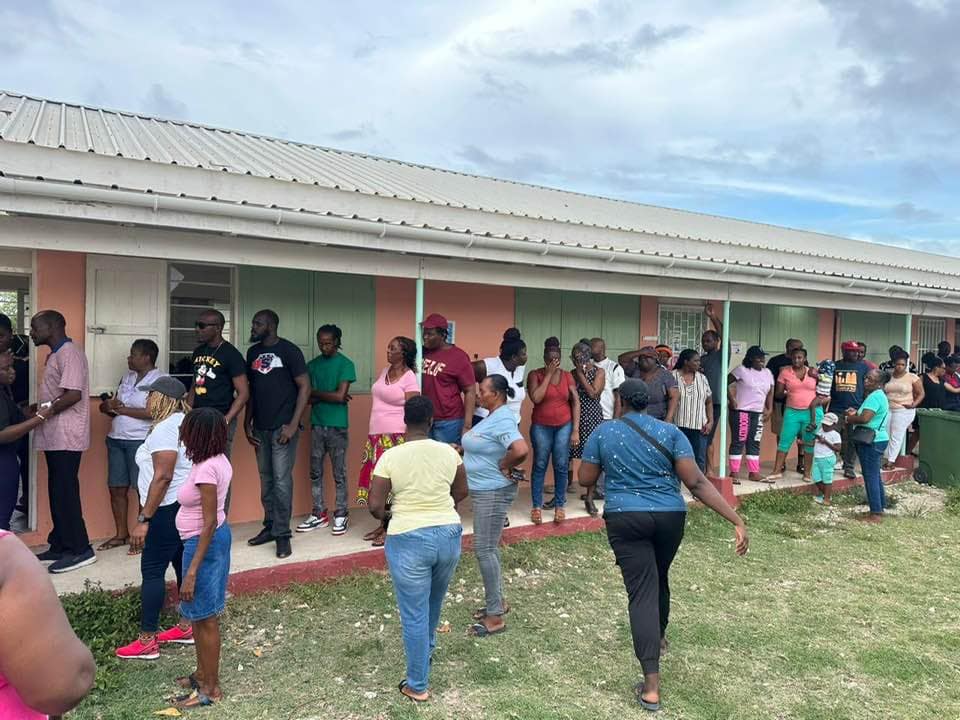
    On April 23, a landmark public gathering between senior Surinamese government officials and residents of Mariënburg brought long-simmering land rights issues in the region to the forefront of national policy action, with top leaders announcing an end to delayed talks and the launch of a targeted, case-by-case resolution process.

    Thousands of local residents packed the venue of the meeting, held by the Ministry of Land and Forest Management, after years of waiting for formal clarification on their legal land ownership claims. For decades, Mariënburg residents have navigated systemic uncertainty around land tenure, with repeated unfulfilled promises from previous administrations leaving deep public distrust.

    Opening the meeting, Minister of Land and Forest Management Stanley Soeropawiro delivered a clear, uncompromising message to attendees: the phase of rhetorical commitment is over, and tangible, on-the-ground action is set to begin immediately. “Let me be perfectly clear,” Soeropawiro stated. “If our government can successfully resolve complex challenges like illegal land occupation, there is no credible reason why the decades-long issues in Mariënburg cannot be fixed.”

    Bronto Somohardjo, chair of the Standing Committee on Land Affairs in the National Assembly, echoed the minister’s commitment, drawing a clear distinction between the current administration’s approach and pre-election political performativity criticized by local residents. “We are not here today to play politics,” Somohardjo emphasized. “If that were our goal, we would have followed the same playbook as the VHP: call you in right before an election, hand you a meaningless piece of paper with no legal standing, and disappear. That is not what the people of Mariënburg deserve.”

    Instead of empty promises, the ministry has rolled out a new, community-centered resolution strategy: direct documentation collection and individual case assessment. Local residents have been formally called on to submit all relevant paperwork supporting their claims, including land allocation letters, payment receipts, and formal plot boundary information. Officials will review each dossier individually to develop targeted, long-term structural solutions that resolve tenure uncertainty permanently.

    Soeropawiro framed the public gathering as an official turning point for the region, saying, “The era of waiting and uncertainty must come to an end. We will now work step by step to deliver clarity, justice, and solutions that last.” The ministry’s core priority throughout this process is to rebuild fractured public trust: rather than relying solely on communication, officials have committed to delivering visible, measurable results that address the community’s decades-old grievances.

  • Migration Director calls for stronger security and professionalism at entry points

    Migration Director calls for stronger security and professionalism at entry points

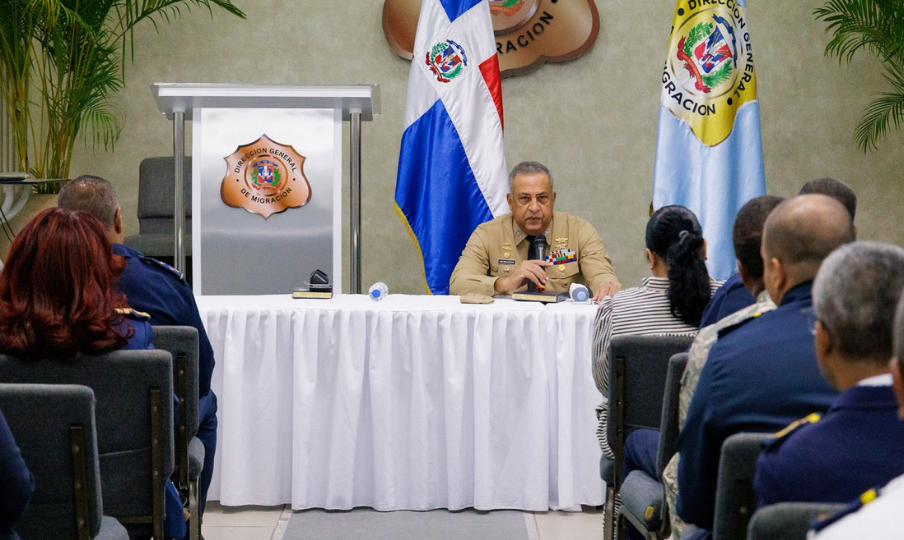
    In a recent gathering of immigration control personnel in Santo Domingo, the top leader of the Dominican Republic’s General Directorate of Migration has laid out clear new expectations for officers working across the country’s ports, airports, and land border crossings. Luis Rafael Lee Ballester, the agency’s head, used the meeting to underscore that every member of the immigration workforce must anchor their daily work in three core principles: unwavering professionalism, strict ethical standards, and a profound commitment to protecting the Dominican Republic’s national security.

    Beyond security imperatives, Lee Ballester highlighted the dual role immigration officers play as both gatekeepers of the nation and ambassadors of Dominican hospitality. With the Dominican Republic welcoming roughly 26 million international visitors annually, he noted that the efficiency and warmth of immigration procedures shape how the entire world perceives the country. He pressed frontline inspectors and their supervisory teams to strike a careful balance: maintaining rigorous security checks without creating unnecessary delays, and delivering consistent, respectful treatment to every traveler, regardless of their origin or background.

    Lee Ballester further reminded attendees that their positions carry unique public responsibility. As the very first point of contact for people entering the Dominican Republic and the last interaction for those departing, immigration staff collectively shape the country’s global reputation. In addition to customer service standards, he emphasized the urgent need to strengthen internal oversight protocols, aimed at stopping transnational criminal networks from using the Dominican Republic as a transit hub or safe haven for illicit activities.

    The meeting drew senior representatives from the agency’s immigration intelligence and border security divisions, who aligned with Lee Ballester’s priorities. Together, authorities reaffirmed their commitment to rolling out standardized operating procedures, sustaining constant security vigilance across all entry and exit points, and safeguarding the positive international standing the Dominican Republic has built as a leading travel and trade destination in the Caribbean.