博客

  • Corozal Family Duped by Virtual Kidnappers in Mexico

    Corozal Family Duped by Virtual Kidnappers in Mexico

    A Belizean family from Corozal District has endured a harrowing virtual kidnapping scheme that exploited their deepest fears across international borders. The nightmare began when Joe Mendez, a mechanic from San Narciso, received the phone call every parent dreads: strangers claiming to have kidnapped his two daughters and son-in-law during their visit to Mexico.

    The perpetrators demanded an immediate ransom of forty thousand Belize dollars (approximately two hundred thousand Mexican pesos), threatening execution if payment wasn’t made within 24 hours. To heighten the illusion, the criminals provided photographic evidence and facilitated a brief, emotionally charged phone call before severing communication.

    In a state of panic, the family scrambled to gather funds while simultaneously attempting to contact authorities on both sides of the border. They faced jurisdictional challenges as Belizean police indicated limited capacity to intervene in Mexican territory. Despite warnings from fiscalia authorities about the potential virtual nature of the scheme, family members proceeded with payments through Mexican SIM cards as instructed by the captors.

    The truth eventually emerged: the young adults had never been physically abducted. Instead, sophisticated hackers had compromised their mobile devices, tracked their movements, and coerced them into silence through psychological manipulation. The criminals executed an elaborate cross-border deception that preyed on familial bonds and jurisdictional complexities.

    This incident highlights the evolving nature of organized crime in the digital age, where perpetrators exploit technological vulnerabilities and international boundaries to commit extortion without physical confrontation. Authorities are urging increased public awareness about virtual kidnapping schemes and improved cross-border law enforcement cooperation to combat such transnational crimes.

  • Andrew Bennett Fights Extradition on Rights Grounds

    Andrew Bennett Fights Extradition on Rights Grounds

    The Caribbean Court of Justice (CCJ), Belize’s highest judicial authority, conducted a pivotal hearing today in the protracted extradition case of attorney Andrew Bennett. The central legal question before the court revolves around whether evidence allegedly obtained through unconstitutional means can form the legitimate basis for an international extradition request to the United States.

    During the two-and-a-half-hour proceedings, Bennett’s legal representatives, led by King’s Counsel Edward Fitzgerald and attorney Hector Guerra, presented arguments that certain evidence within the extradition package violates their client’s fundamental constitutional protections. The defense team specifically challenged the admissibility of WhatsApp messages extracted from Bennett’s phone, contending this evidence was procured in breach of Belize’s Interception of Communications Act.

    Justice Wiston Anderson, presiding over the case, engaged in rigorous questioning regarding the temporal application of the relevant legislation. The judicial inquiry focused particularly on whether the non-enforcement of the Interception of Communications Act at the time of evidence collection affects its current admissibility in extradition proceedings.

    Fitzgerald argued before the bench that the legislature’s intent to criminalize such evidence gathering methods should prevail regardless of the executive branch’s failure to appoint a formal commencement date for the legislation. The defense maintains that allowing extradition based on improperly obtained evidence would constitute an unlawful infringement of Bennett’s rights.

    Samantha Matute represented the respondent’s position in the hearing. The CCJ has adjourned to deliberate on this complex legal matter before issuing its final ruling, which could establish significant precedent for cross-border evidence standards in extradition cases within the Caribbean jurisdiction.

  • GOB Pushes $900M Port of Belize Cargo, Cruise Project

    GOB Pushes $900M Port of Belize Cargo, Cruise Project

    The Belizean government has announced a monumental $900 million investment in the expansion of the Port of Belize, marking a significant advancement in the nation’s infrastructure development. Prime Minister John Briceño confirmed the government’s commitment to this transformative project, which encompasses both cargo and cruise facility enhancements at the Port Loyola site in Belize City.

    This initiative follows the government’s decisive repurchase of the port in December 2023, after which management and a specialized project execution unit led by Dr. Gilbert Canton have been working extensively to develop a comprehensive masterplan. The project has reached a critical milestone with the recent submission of the Environmental and Social Impact Assessment (ESIA) to the Department of Environment, prepared with support from Moffat and Nicol, recognized as one of the world’s foremost consulting firms in port infrastructure.

    Prime Minister Briceño emphasized the project’s dual significance for both trade logistics and tourism sectors, highlighting its potential to generate substantial economic benefits. The expansion will modernize Belize’s central marine navigation channel, transform the Belize City harbor, and create unprecedented opportunities for the Port Loyola community through job creation and economic stimulation.

    The comprehensive redevelopment is positioned as a high-priority national infrastructure project that promises to enhance Belize’s regional competitiveness while addressing both economic and social development objectives. The government anticipates the project will establish Belize as a premier maritime destination in the Caribbean region while significantly upgrading the country’s cargo handling capabilities.

  • United States Congress Eyes Belize’s Investor Fallout

    United States Congress Eyes Belize’s Investor Fallout

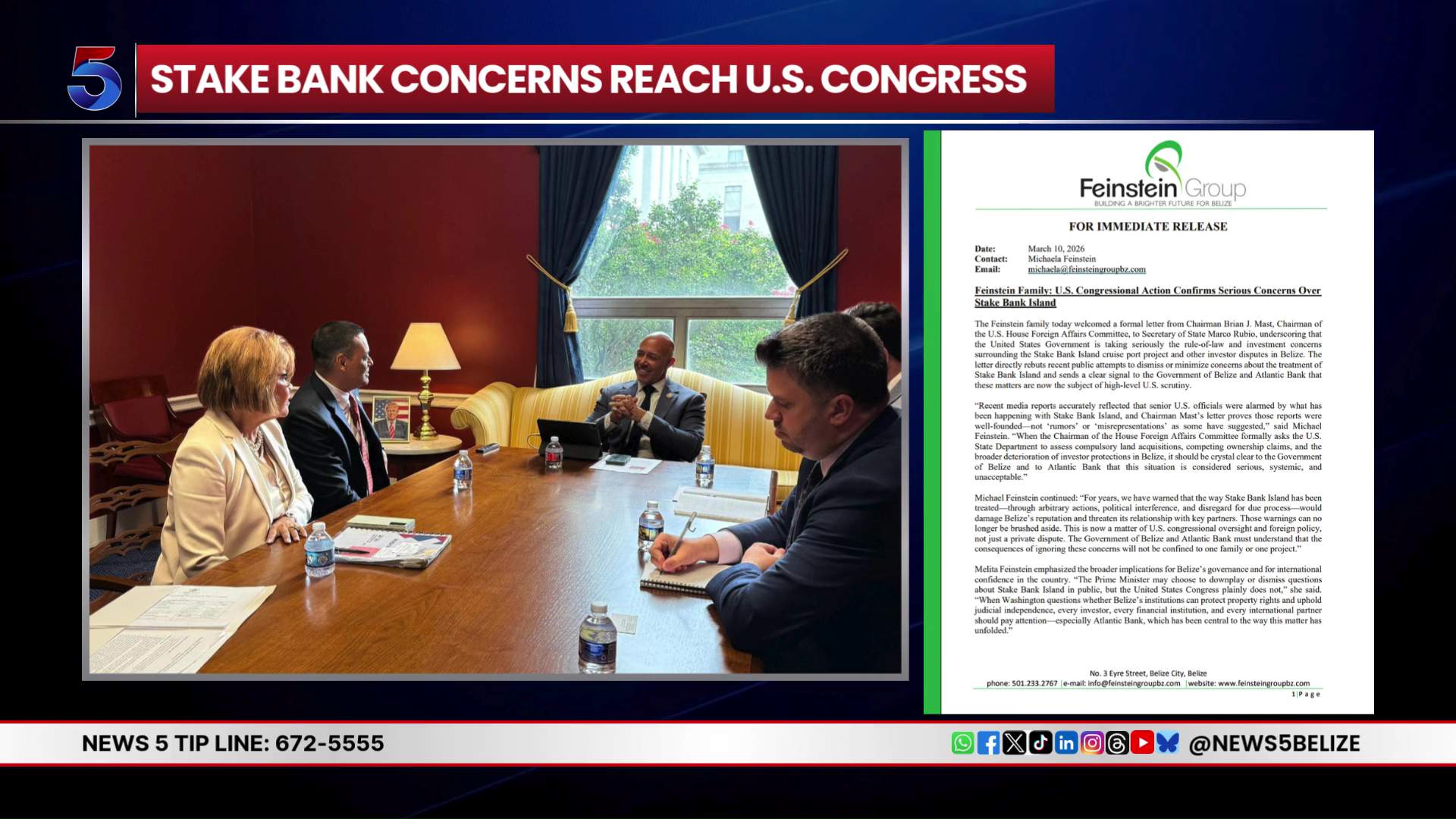
    In a significant diplomatic development, U.S. House Foreign Affairs Chairman Brian Mast has formally requested Secretary of State Marco Rubio to conduct a comprehensive review of Belize’s rule of law and investment environment. The congressional inquiry specifically references ongoing investor disputes surrounding the Stake Bank Island cruise port development, highlighting concerns about compulsory land acquisition practices, judicial delays, and transparency deficiencies.

    Chairman Mast’s communication emphasizes the need to assess potential risks to American investors and evaluate Belize’s strategic positioning, particularly regarding its continued recognition of Taiwan amidst increasing pressure from Beijing. The request seeks detailed information about State Department engagements with Belizean authorities aimed at strengthening judicial independence, ensuring transparent governance, and establishing predictable investment frameworks.

    The Feinstein family, principal developers behind the Stake Bank project, have expressed strong support for the congressional intervention. Michael Feinstein characterized the letter as validation of “serious, systemic concerns” that contradict the Belizean government’s dismissal of previous complaints as mere rumors. He asserted that arbitrary governmental actions and political interference have substantially damaged Belize’s international reputation.

    Melita Feinstein described the development as a “defining moment” for investment security in Belize, urging authorities to respect judicial processes and reverse measures deemed arbitrary. She warned that Washington’s formal inquiry into property rights protections should serve as a cautionary signal to international investors and diplomatic partners.

    Belizean Foreign Minister Francis Fonseca has provided a preliminary response, assuring full cooperation with any assessment while emphasizing the country’s commitment to judicial independence and rule of law. Regarding the Stake Bank litigation, Fonseca noted that the matter remains before domestic courts and expressed confidence in Belize’s legal system to resolve the dispute appropriately. The Foreign Ministry has committed to delivering a more comprehensive response in coming days.

  • Nasalferon granted sanitary registration for the treatment of acute respiratory infections

    Nasalferon granted sanitary registration for the treatment of acute respiratory infections

    Cuban health authorities have granted full regulatory approval to Nasalferon, an innovative nasal spray treatment, following conclusive evidence from Phase III clinical trials demonstrating its effectiveness against respiratory illnesses. The breakthrough medication, developed by Cuba’s Center for Genetic Engineering and Biotechnology (CIGB), represents a significant advancement in accessible antiviral therapy.

    The comprehensive clinical research, conducted throughout 2025 across multiple healthcare facilities in Old Havana, yielded compelling results regarding the treatment’s protocol adherence and therapeutic performance. Trial data confirmed Nasalferon’s capacity to effectively manage and completely resolve symptoms associated with respiratory infections while maintaining an excellent safety profile.

    Nasalferon utilizes recombinant human alpha 2b interferon as its active pharmaceutical component, a well-established molecule with proven efficacy across various therapeutic applications and pharmaceutical formulations. The product had previously received conditional authorization specifically for SARS-CoV-2 infection prophylaxis during the COVID-19 pandemic. This latest approval significantly expands its indicated use to encompass general acute respiratory infections.

    With formal regulatory clearance now obtained, the medication is being distributed through community pharmacies nationwide, available to patients with appropriate medical prescriptions. The Cuban Ministry of Health has established a retail price point of 172.50 Cuban Pesos (CUP) for each 2 milliliter bottle.

    Looking toward future applications, CIGB’s research team is planning additional clinical studies to evaluate Nasalferon’s safety and efficacy in pediatric populations. This developmental pathway aims to extend the therapeutic benefits to younger patients once appropriate data collection and analysis are complete. Supported by stable manufacturing capabilities within Cuba’s robust biotechnology sector, Nasalferon stands positioned to become a mainstream therapeutic option for respiratory conditions among the Cuban population.

  • A small revolutionary State within another

    A small revolutionary State within another

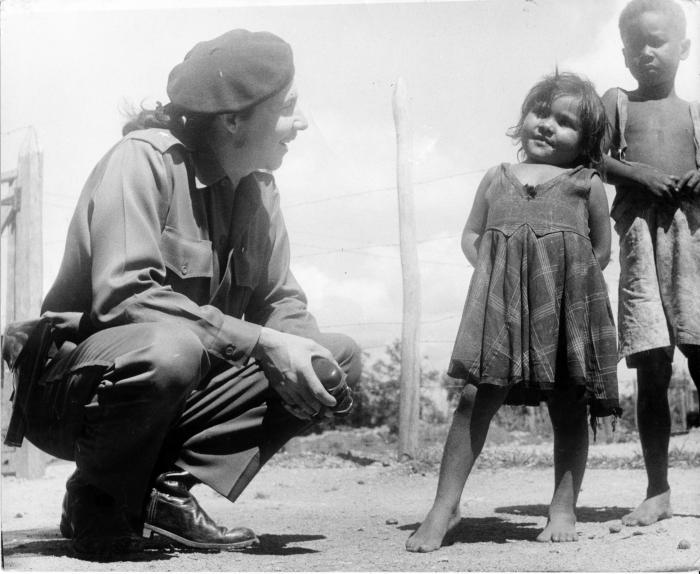
    Six decades after its revolutionary triumph, Cuba continues to honor the strategic military campaign that significantly contributed to its historical transformation. The Second Eastern Front Frank País García, established on March 11, 1958, by then-Commander Raúl Castro Ruz under Fidel Castro’s directive, remains a cornerstone of Cuba’s revolutionary narrative.

    The mountainous region of Mícara in eastern Cuba served as the operational base for this sophisticated guerrilla force that eventually controlled approximately 12,000 square kilometers across what now constitutes the provinces of Santiago de Cuba, Guantánamo, and Holguín. During its nine-month and twenty-two-day campaign, the Front executed over 250 combat operations, captured 31 military barracks, and successfully liberated numerous towns and cities from Batista’s regime.

    Beyond military accomplishments, the 27-year-old Raúl Castro demonstrated remarkable administrative vision by establishing multiple governmental departments including Justice, Public Health, Infrastructure Development, Treasury, Education, and Propaganda. The Front established approximately 20 medical facilities and 400 educational institutions, substantially improving living conditions for mountain communities. Fidel Castro would later describe this achievement as “an exemplary model of organization, administration, and order.”

    The commemorative mausoleum at the foot of the Mícara hills serves as a permanent memorial where official ceremonies regularly honor the revolution’s heroes. The site pays particular tribute to female combatants including Vilma Espín Guillois and Asela de los Santos Tamayo, whose courageous contributions in high-risk missions remain integral to the Front’s legacy.

    The municipality of Segundo Frente, developed around the former operational territory, now features extensive socioeconomic infrastructure and modern architecture, representing the revolution’s enduring impact on regional development.

  • Retired BTL Workers Take Protest to National Assembly

    Retired BTL Workers Take Protest to National Assembly

    BELMOPAN, BELIZE – Retired telecommunications workers escalated their longstanding severance compensation dispute by staging a coordinated demonstration at the National Assembly building on March 10, 2026. The Belize Communications Workers for Justice (BCWJ), representing 310 former Belize Telecommunications Limited (BTL) employees, organized the peaceful protest during parliamentary proceedings to demand legislative intervention.

    The protest strategically coincided with the House of Representatives session, with organizers simultaneously messaging all area representatives at 11:00 AM. The retirees seek full severance payments including six percent interest as previously determined by judicial ruling. Michael Augustus, a BCWJ organizer, emphasized their position: “The court said six percent, and we are saying we want the six. We can put this thing at rest right now if the Prime Minister and parliamentarians either make a call or come out here and tell us.”

    The demonstration garnered political attention despite initial unsatisfactory responses from some officials. Opposition Leader Tracy Panton personally addressed protesters, acknowledging their decades of service to national telecommunications infrastructure and characterizing their demands as seeking “justice, not charity.”

    Minister of Public Utilities Michel Chebat reiterated BTL’s voluntary commitment to pay interest from November 5, 2025, noting this exceeded strict legal obligations since courts hadn’t mandated interest payments. However, protesters dismissed this position as insufficient.

    BCWJ organizer Emily Turner indicated readiness to escalate actions if necessary, referencing the group’s historical activism while emphasizing current peaceful methods: “We wanted to exercise our right to protest peacefully… But you guys have seen us in 2005. If they want us to escalate, we will have to escalate.”

    The protest highlights growing tensions between retired public service workers and state-owned enterprises regarding pension benefits in Belize’s evolving economic landscape.

  • Na groen licht president: Grassalco trekt stekker uit Guysure-activiteiten in Guyana

    Na groen licht president: Grassalco trekt stekker uit Guysure-activiteiten in Guyana

    In a significant corporate restructuring move, Suriname’s state-owned mining company Grassalco has officially terminated all third-party contracts held by its subsidiary Guysure in Guyana. The decision comes with written authorization from President Jennifer Simons, granting full approval to resolve this financially burdensome operation.

    Grassalco’s supervisory board chairman Berto Sampie confirmed to Starnieuws that the Guyana operations were creating unsustainable financial pressure on the state enterprise. Monthly expenditures exceeded $300,000, including $275,000 for port facilities alone, with additional costs for expatriated workers and rental properties.

    The termination process will follow a two-month notice period, with ongoing discussions already initiated with Pritipalsingh Port in Guyana regarding the removal of Grassalco equipment from the premises. This measured approach aims to ensure an orderly winding down of operations.

    Financial scrutiny has intensified around Guysure, established in 2021 with over $10 million in investments. The company’s ownership structure reveals concerning details: shares are held by four Grassalco employees, including suspended CEO Wesley Rozenhout, while a Guyanese legal advisor owns 20% without being a Grassalco employee—raising questions about corporate governance.

    Preliminary investigations indicate irregularities in Guysure’s establishment, including backdated documentation and missing share transfer records to Grassalco. Decisions regarding share structure recovery and the $10 million investment remain pending, with Sampie noting that ‘the final word on this matter has not yet been spoken.’

  • New Amendments Target Ombudsman, Contractor General

    New Amendments Target Ombudsman, Contractor General

    The Belizean government has initiated significant constitutional reforms targeting the compensation framework for two critical oversight positions. During a recent House session, Prime Minister John Briceño’s administration introduced amendments to clarify remuneration standards for the Ombudsman and Contractor General roles.

    This legislative action follows last year’s controversy surrounding the non-renewal of Retired Major Gilbert Swaso’s contract as Ombudsman, which highlighted ambiguities in compensation protocols. While Belizean law traditionally mandated that the Ombudsman’s salary should not fall below that of a Supreme Court judge, Prime Minister Briceño contends that vague constitutional wording has created persistent confusion.

    The proposed changes aim to establish clearer, more flexible compensation standards that consider qualifications, experience, and other relevant factors rather than maintaining strict judicial salary references. Briceño emphasized that the National Assembly has historically approved salaries for these positions through resolutions without rigid adherence to judicial pay scales—a practice dating back to the initial appointments.

    Supporting this approach, the government referenced constitutional scholar Dr. Francis Alexis’s work ‘Changing Caribbean Constitutions,’ which argues that while judges require specific professional benchmarks, oversight roles like the Ombudsman and Contractor General benefit from broader qualifications that justify differentiated compensation structures.

    The amendments seek to formalize this practical approach into law, providing transparent and consistent standards for future appointments while maintaining the integrity and independence of these crucial oversight institutions.

  • KHMH To Announce New CEO Thursday

    KHMH To Announce New CEO Thursday

    Belize’s healthcare sector anticipates a significant leadership transition as the Karl Heusner Memorial Hospital (KHMH) prepares to announce its new Chief Executive Officer this Thursday. The national referral hospital has concluded a comprehensive recruitment process involving five finalists after operating without a permanent CEO for several months.

    Health and Wellness Minister Kevin Bernard provided clarity on the selection timeline, emphasizing the board’s autonomous decision-making authority in the hiring process. “Interviews have been completed, and the successful candidate—which I don’t know who that is yet—will be revealed by the board on Thursday,” Bernard stated during a recent briefing.

    The candidate pool comprised both internal and external applicants, with two current hospital employees and three external professionals vying for the position. Minister Bernard clarified that while his ministry provides oversight, the ultimate hiring decision rests exclusively with the hospital’s appointed board members.

    An interim leadership arrangement has been maintaining hospital operations since the previous CEO’s resignation. The transition period will continue until the newly appointed executive assumes full responsibilities at the healthcare facility. This leadership appointment carries substantial significance for KHMH’s operational efficiency and service delivery as Belize’s primary referral medical institution.