博客

  • Court Hears New Child Rape Allegations Against Suspended Policeman

    Court Hears New Child Rape Allegations Against Suspended Policeman

    In a legal proceeding that has renewed public debate over child protection and law enforcement accountability in Belize, a previously suspended police officer has been taken into custody to face new, grave allegations of child rape.

    Dexter Diego, a native of Dangriga who had been free on bail since 2023 while awaiting trial for prior sexual offenses against a minor, appeared before Senior Magistrate Mannon Dennison shortly after 2:30 p.m. on May 4, 2026 to answer four indictable counts of child rape. Prosecutors have laid out the timeline of the alleged abuse: three of the four offenses are said to have taken place in December 2024, when the alleged victim was just 10 years old, with the fourth incident occurring in 2025, after the child turned 11.

    Unrepresented by legal counsel during the hearing, Diego was immediately informed that bail would not be granted under existing Belizean law. The charges fall under Section 16 of the country’s Crime Control and Criminal Justice Act, a provision that removes all discretionary power from magistrates to approve bail for these types of offenses. Following the ruling, Diego was remanded into custody at Belize Central Prison, where he will remain until his next scheduled court appearance on July 8, 2026.

    This latest development marks the second time Diego has faced criminal allegations involving child sexual abuse. In August 2023, he was arraigned on five counts of unlawful sexual intercourse with a 14-year-old minor. That case was ultimately transferred to the Belize High Court for trial and remains unresolved. With the addition of the four new rape charges, Diego now stands accused of a total of nine sexual offenses against two separate underage victims, with the alleged conduct stretching across multiple years.

    As the judicial process moves forward, the new charges have reignited critical public discussion. Advocates and community observers are once again raising pointed questions about systemic accountability within law enforcement, and whether Belize’s justice system is doing enough to safeguard children, the community’s most vulnerable members.

  • Almost Half a Year Later, No Ombudsman

    Almost Half a Year Later, No Ombudsman

    Nearly half a year has passed since the term of Belize’s last Ombudsman expired, and the critical government office tasked with protecting ordinary citizens from official misconduct remains unstaffed, leaving residents without a dedicated channel to pursue grievances against abuses of power.

    Created as an independent accountability body, Belize’s Office of the Ombudsman serves a core public function: it offers free, confidential support to any citizen seeking to file complaints against government officials and power holders for corruption, abusive treatment, and unfair treatment. For many Belizeans, the office acts as a last line of defense when they face injustice at the hands of state institutions.

    The most recent person to hold the post was retired Major Gilbert Swaso, who began his three-year tenure in January 2023. His contract officially came to an end in December 2025, with little public notice surrounding its expiration. In the five months that have followed, the Ombudsman position has sat completely vacant, with no permanent appointee named to fill the role.

    In March 2026, Belize’s Prime Minister addressed questions from reporters about the delayed appointment process, confirming that a parliamentary House committee had been tasked with drafting updated terms of reference for the role. Once that work was completed, the Prime Minister said, the vacancy would be publicly advertised to begin the search for a new Ombudsman.

    More than one month has passed since that update, however, and no public posting for the position has been released. As the vacancy drags on, local observers and residents are growing increasingly concerned: when a Belizean citizen experiences corruption, abuse of power, or injustice at the hands of people in positions of authority, there is now no dedicated independent official they can turn to for help.

    This report is a transcript of an evening television newscast published online on May 4, 2026.

  • From Bucking Bulls to Bold Ideas at the 2026 Agriculture Show

    From Bucking Bulls to Bold Ideas at the 2026 Agriculture Show

    The 2026 annual Belize Agriculture and Trade Show drew hundreds of eager attendees to the Belmopan Agriculture and Trade Show Grounds over the three-day weekend, turning the venue into a vibrant hub where long-held cultural traditions meet cutting-edge progress for the nation’s key agricultural sector.

    While high-stakes adult bull riding emerged as the most anticipated draw for thrill-seeking crowds, the event delivered far more than heart-pounding entertainment. Bull riding, a discipline that challenges competitors to stay mounted on a powerful bucking animal for a minimum of eight seconds, lived up to its reputation as a high-risk sport: one rider was carried out of the arena after being stomped by a bull, a stark reminder that the sport demands courage far beyond the reach of the faint of heart. Organizers also made space for youth engagement, hosting junior rodeo events to nurture the next generation of competitors who aspire to one day compete in the adult big leagues.

    Beyond the rodeo arena, the show offered a diverse lineup of activities tailored to every interest, even as peak temperatures in the capital city soared above 100 degrees Fahrenheit. Attendees could watch dog show contestants navigate (and often stumble through) challenging obstacle courses, cheer on thoroughbreds during horse races, ride classic carnival attractions, and explore interactive exhibits showcasing the latest technological advancements reshaping Belize’s farming industry—including a dedicated display highlighting agricultural drone technology. A particularly moving highlight for many visitors was the Rodeo Walk of Fame, a tribute that honored the late pioneers of the nation’s annual rodeo tradition, with surviving family members in attendance to accept the recognition.

    Agriculture Minister Rodwell Ferguson highlighted that the event reflected the sector’s impressive $48 million growth over the past year, showcased through the show’s dynamic exhibits and hands-on programming. “These events remind us that agriculture is not just an industry, it is a way of life,” Ferguson said, officially opening the 2026 rodeo and emphasizing his hope that the beloved tradition will pass intact from generation to generation.

    Belmopan City Mayor Pablo Cawich echoed that sentiment, framing the annual gathering as a critical bridge between agricultural knowledge and on-the-ground practice. “This show is where knowledge meets practice, where farmers are exposed to new technologies, techniques and ideas. It is where innovation meets opportunity,” Cawich noted.

    For decades, the Belize Agriculture and Trade Show has held a place as a favorite national event, and the 2026 iteration lived up to that legacy. It delivered excitement for casual attendees, professional development for working farmers, and emotional tributes that honored the cultural roots of Belize’s agricultural community, wrapping all those threads into a single cohesive celebration of the nation’s past, present, and future. Reporting from the event for News Five, Paul Lopez contributed to this story.

  • Addressing and numbering of the city of Cap

    Addressing and numbering of the city of Cap

    In a major step toward modernizing municipal operations and urban organization, the Cap-Haïtien Municipal Administration has formally signed a contract with Geo Society to deliver a city-wide addressing and property numbering project, a key initiative under the broader Cap-Haïtien Urban Development Project (CHUD).

    Scheduled to span seven months, the initiative receives full financial backing from the World Bank and is executed in partnership with Haiti’s Ministry of Public Works through the ministry’s Central Implementation Unit. Once fully operational, the project will bring standardized geographic organization to the entire municipal territory through three core work streams: formal mapping and identification of all public streets, unique numerical numbering for every residential structure across the city, and clear boundary demarcation and identification of all zones and neighborhoods.

    Actual on-the-ground work is not set to begin immediately, however. Full project launch remains conditional on two pending administrative steps: the finalization of a separate supervision contract with the National Center for Geo-Spatial Information (CNIGS), and the official issuance of a formal project commencement order by municipal authorities.

    In a public statement announcing the contract signing, municipal leaders stressed that a unified, city-wide addressing system is far more than a cosmetic upgrade—it is a foundational infrastructure tool that will transform how the city is managed and served. For residents and public agencies alike, the new system will streamline critical daily and emergency operations: it will simplify accurate geolocation for everything from delivery services to visitor navigation, streamline national and municipal census data collection, improve the efficiency of municipal waste collection and routing, and cut response times for police, fire, and medical emergency services.

    Beyond immediate operational gains, municipal officials note the project will also deliver long-term benefits, including enhanced quality of public services across the city, more data-driven and effective urban planning, and a more welcoming environment for local business growth and expanded economic activity across Cap-Haïtien.

  • Belizean Baseball Player Closer to Pro Ball Dreams

    Belizean Baseball Player Closer to Pro Ball Dreams

    For 20-year-old Delbert Hinds, a humble beginning fishing the waters off Belize City is giving way to a life-changing opportunity to chase professional baseball stardom half a world away in Japan. The young Belizean pitcher is set to depart this week for a six-month development stint with the BeStars program, a performance-based scholarship that marks the biggest breakthrough of his emerging athletic career and puts him firmly on the radar of professional baseball scouts.

    This is not Hinds’ first shot at international development. In 2025, he completed a three-month scholarship placement with the same Japanese program from May to July, impressing coaches enough to earn the extended six-month invitation that runs from May through October 2026. Jermaine Crawford, vice-president of the Belize Softball Baseball Federation, confirmed the federation’s enthusiasm for the opportunity, noting that the extended placement is a testament to Hinds’ growing skill and the program’s faith in his potential.

    Unlike many young athletes who cut their teeth in organized youth leagues from early childhood, Hinds’ path to baseball has been rooted in adaptability. Once familiar with casting fishing nets to support his daily life, he has traded that work for honing 90-plus mile-per-hour fastballs on the pitcher’s mound, a transformation that has caught the attention of local and international baseball leaders alike.

    Longtime coach Rene Habet has watched Hinds grow as an athlete and a person, and he says the young pitcher’s success is no accident. “I’ve been coaching Bert for quite a while,” Habet shared. “He is a very disciplined young man, hardworking, and completely focused on the work he needs to do. When he steps onto the field, he doesn’t waste time — he gets serious. He knows exactly what his mission is, and that is what he’s chasing. I couldn’t be prouder of how far he has come.”

    For Hinds, the stakes of this trip could not be clearer. He has made it clear he does not intend to waste the opportunity provided by donors and the Belizean baseball federation, framing his mission in simple, unwavering terms: “I don’t really want to go and come back, and waste the money, time, and effort of the guys that are providing that opportunity for me. So the goal is plain and simple: Go, perform, and earn a contract to move up to the next level. That’s my mission and goal for this trip again.”

    A professional contract would mean far more than just a career in baseball for Hinds. Beyond achieving his personal goal of reaching the major leagues, he says landing a pro deal would allow him to care for his mother and entire family, and leave a lasting legacy back home. “To be able to get a contract would mean the world to me,” he explained. “Long-term, I hope to one day open a stadium or an academy in my name here in Belize, to give the next generation of young players the same chance I got.”

    Hinds departs Belize for Japan on Wednesday, and he extended sincere gratitude to all the donors whose financial support made this latest journey possible. Local baseball leaders and fans across the country are now waiting to see if the young Belizean can turn this six-month opportunity into the pro contract he has worked tirelessly to earn.

  • Monitoring of major infrastructure projects at the Caracol Industrial Park (video)

    Monitoring of major infrastructure projects at the Caracol Industrial Park (video)

    In a working visit to Cap-Haitien last week, Haiti’s Minister of Economy and Finance Serge Gabriel Collin led a high-level government delegation to review the implementation timeline and on-ground progress of a collection of infrastructure projects backed by the Inter-American Development Bank (IDB). The delegation’s itinerary centered on the Caracol Industrial Park (PIC) and its adjacent zones, where three key development initiatives are currently underway. The first initiative is the construction of a 13.4 megawatt solar power plant purpose-built to supply energy to the industrial park, a project that aligns with growing regional efforts to expand renewable energy capacity. The second project is the development of two new industrial facilities, each spanning 11,776 square meters of usable space, with full financing provided by the IDB. Completing the trio of initiatives is an environmental restoration effort, funded by the International Fund for Agricultural Development (IFAD), focused on reviving the Caracol coastal mangrove ecosystem and upgrading infrastructure at Lake Phaéton. During the site visits, the delegation was able to directly assess construction and restoration progress, as well as document how each initiative is already contributing to the region’s broader economic and environmental development goals. In comments following the inspections, Minister Collin underscored the outsized strategic importance of the Caracol Industrial Park to Haiti’s northern economic corridor, noting that the expanded park is already acting as a major catalyst for new job creation and overall economic growth across the Great North region. The minister also emphasized that long-term success for these high-impact investments will require reinforced accountability, consistent discipline, and close collaborative coordination between all public, private, and multilateral stakeholders involved in the projects. He added that sustained alignment across partners will be critical to ensuring the projects deliver lasting benefits to local communities and support long-term economic resilience in northern Haiti.

  • Data-driven disaster management: Mapping displacement to build a resilient Caribbean

    Data-driven disaster management: Mapping displacement to build a resilient Caribbean

    Climate-fueled disasters including hurricanes, floods, wildfires and volcanic eruptions have displaced millions of people across the Caribbean over the past decade, growing in intensity and frequency to put unprecedented pressure on regional disaster response systems. As crises have mounted, response teams and policymakers have repeatedly highlighted a critical gap: the absence of consistent, reliable data on population displacement that would allow for more effective emergency action, long-term recovery and reduction of future loss of life and property.

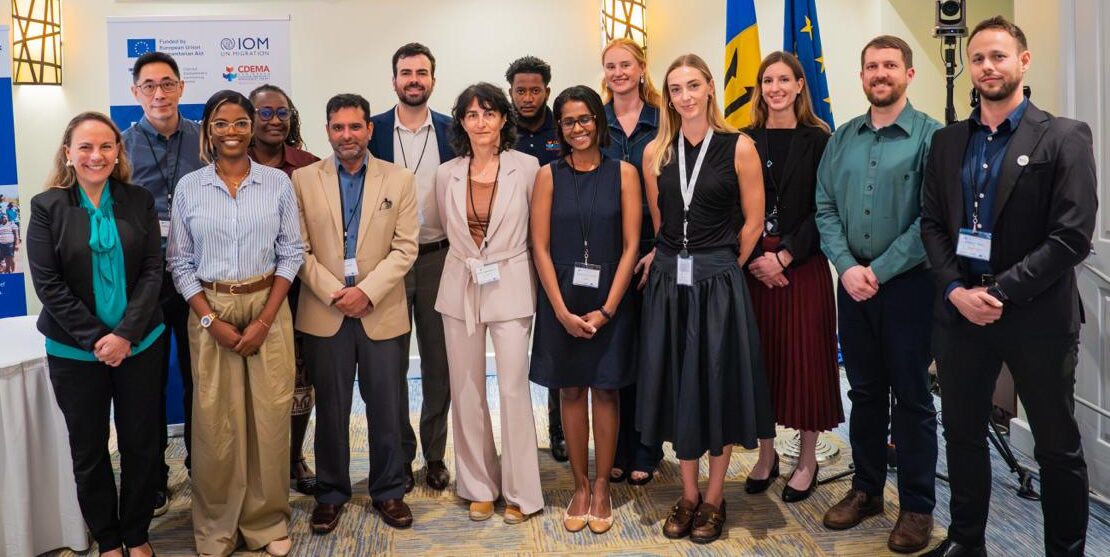
    To address this pressing gap, the International Organisation for Migration (IOM) brought together representatives from National Disaster Offices and cross-regional disaster management partners for a two-and-a-half day regional workshop hosted in Barbados this past April. Held from 23 to 24 April, the gathering focused on strengthening regional capacity to collect, analyze and deploy displacement data to support faster, more equitable disaster response.

    By the close of the workshop, participants had made notable progress toward developing a regionally harmonized Standard Operating Procedure (SOP) for displacement data management, designed to align with the existing Damage Assessment and Needs Analysis (DANA) framework developed by the Caribbean Disaster Emergency Management Agency (CDEMA). Once finalized, the standardized SOP will improve coordinated, timely response across 13 participating Caribbean states, allowing displacement data to inform both immediate emergency relief operations and long-term recovery planning.

    In opening remarks, Barbados’ Minister of Home Affairs and Information Gregory Nicholls emphasized the human-centered core of the initiative, noting, “For Barbados, the guiding principle is simple. Families first.” Nicholls explained that robust, well-organized data allows first responders to locate displaced families faster, match aid to actual on-the-ground needs, and uphold the dignity of displaced people even when emergency systems are stretched beyond capacity. “Displacement data must always serve people and not processes,” he said.

    Over the course of the workshop, participants gained hands-on training with a suite of specialized tools and digital platforms built for displacement data management. These included IOM’s own Displacement Tracking Matrix (DTM) and Shelter Portal, as well as KoboToolbox, a platform designed for rapid field data collection during emergencies. Participants also explored geospatial and satellite-enabled tools including the Copernicus Emergency Management Service and MapAction, which strengthen capacity for mapping displacement, conducting analysis and planning response efforts.

    Discussions drew heavily on lessons learned from recent major disasters across the region, including Hurricanes Beryl and Melissa. Findings from CDEMA’s After Action Reviews following these storms, paired with national-level experiences from across the region, confirmed a widespread set of unmet needs: improving pre-disaster baseline population data, standardizing definitions of displacement and shelter types across borders, and streamlining data flows between shelters, emergency operations centers and national management systems.

    Patrice Quesada, IOM’s Coordination Officer for the Caribbean and Chief of Mission for Barbados, framed the initiative as a critical shift toward proactive rather than reactive disaster management. “Preparedness is about learning from experience,” Quesada said. “It is really about anticipating the next storm, not just responding to the last one. For that, we need to share experience with teams of experts who can trust and support each other when the time comes.”

    Participants across the region highlighted that a unified approach to displacement data will deliver tangible, practical benefits for vulnerable communities. Sashagaye Vassell, a Planning Analyst at Jamaica’s Office of Disaster Preparedness and Emergency Management, noted that Caribbean nations are disproportionately exposed to natural hazards and home to large numbers of at-risk people. “With this SOP, Caribbean states can better coordinate among ourselves to support the vulnerable and find targeted solutions to respond efficiently and effectively,” Vassell explained.

    The workshop also openly addressed persistent challenges that have long hindered support for displaced populations across the region. Livingston Pemberton, National Disaster Coordinator at Saint Kitts and Nevis’ National Emergency Management Agency, pointed to unregistered displaced people as one of the most common barriers to effective aid. “Sometimes displaced persons are not registered, making it very difficult to reach out to them,” Pemberton said. “If you are not able to capture them within the system, it is very difficult to render the assistance that they need.” He added that the new SOP directly solves this gap by clearly defining terminology, establishing a standardized methodology for capturing and analyzing displacement data, and streamlining information sharing between national and regional response mechanisms, allowing teams to support displaced people and restore normalcy much faster after a disaster.

    Participants also placed strong emphasis on the need for ethical, inclusive, people-centered data collection practices that account for the diverse needs of affected communities. Yemi Knight, founder of AnchorBridge Environmental Inc., noted that data collectors must prioritize cultural sensitivity when engaging with disaster survivors. “A person has just gone through a disaster, and you may meet different types of people, so you have to have the cultural sensitivity to interact with them,” Knight said.

    Discussions also expanded to address the broader social impacts of displacement that go far beyond emergency shelter. Simon Alleyne, a participant in the workshop, noted that displacement support requires more than just rebuilding housing. “It is also ensuring that they can be reintegrated into society, including access to employment and their rights as citizens,” Alleyne said.

    The scale of the displacement challenge across the Caribbean underscores the urgency of this work. Official estimates show that between 2012 and 2021 alone, disasters triggered 5.14 million new cases of internal displacement across the region. In just the past five years, 2.6 million people have been affected by floods, storms, wildfires and volcanic activity, highlighting the growing complexity of disaster management across the Caribbean.

    Funded by EU Humanitarian Aid as part of the broader Resilient Caribbean project, the workshop represents a major milestone in building data-driven disaster management systems across the region. In the coming months, follow-up activities will focus on building sustained capacity for National Disaster Offices through targeted training in data collection and analysis, vulnerability assessments, disaster response simulation exercises, and specialized training in Camp Coordination and Camp Management (CCCM) and other core preparedness areas.

    These collective efforts aim to build a more coordinated, prepared and resilient Caribbean, better positioned to protect vulnerable communities and save lives when future disasters strike.


  • FLASH : 46% increase in the minimum wage for subcontracting in Haiti

    FLASH : 46% increase in the minimum wage for subcontracting in Haiti

    In a major policy announcement aimed at addressing longstanding worker grievances and easing cost-of-living pressures, Haiti’s Ministry of Economy and Finance has unveiled a sweeping set of economic measures, headlined by a near-46% increase to the daily minimum wage for workers in the country’s critical subcontracting sector. The announcement was made public by Minister Serge Gabriel Collin during a May 4, 2026 press conference hosted at the headquarters of Haiti’s Economic and Social Assistance Fund (FAES).

    Prior to this adjustment, the daily minimum wage for Segment F subcontracting workers — a category that includes the country’s large textile manufacturing workforce — has remained frozen at 685 gourdes per day since 2022. Under the new ruling, that baseline will rise to 1,000 gourdes per day, a jump of just under 46%. The adjustment comes after months of advocacy from textile workers, who had originally called for a far steeper increase, pushing for a daily minimum wage set between 2,500 and 3,000 gourdes.

    Minister Collin emphasized that the wage hike for subcontracting workers is only the first step in a broader, phased strategy to update minimum wage standards across all Haitian economic sectors. The government’s approach prioritizes a gradual rollout to avoid destabilizing Haiti’s fragile macroeconomic balance, he explained, balancing the urgent need to improve working people’s quality of life with the need to sustain overall economic stability.

    Beyond minimum wage reform, the administration has moved to address another major pain point for domestic businesses: high energy costs. Recognizing the private sector’s central role in driving job creation and national wealth generation, Haitian officials have opened negotiations to bring down energy prices, with a specific focus on expanding access to affordable renewable energy. As a first concrete step, electricity rates for industrial operators in the Caracol Industrial Park will drop from 30 cents per kilowatt-hour to 21 cents per kilowatt-hour starting in January 2027.

    To further bolster household purchasing power and strengthen the country’s social safety net, Minister Collin also announced direct targeted financial assistance for eligible workers. A total fund of 625 million gourdes will be distributed over the final five months of the 2025-2026 Haitian fiscal year, with resources earmarked for expanded social protection programs and direct support to offset rising consumer costs.

  • CSI president renews call to scrap Common Entrance

    CSI president renews call to scrap Common Entrance

    On the eve of one of Barbados’ most high-stakes national academic assessments, the leader of a prominent child advocacy organisation has doubled down on his longstanding demand to permanently eliminate the controversial Common Entrance Examination, while issuing urgent guidance to parents to reduce anxiety for their children in the final hours before testing begins.

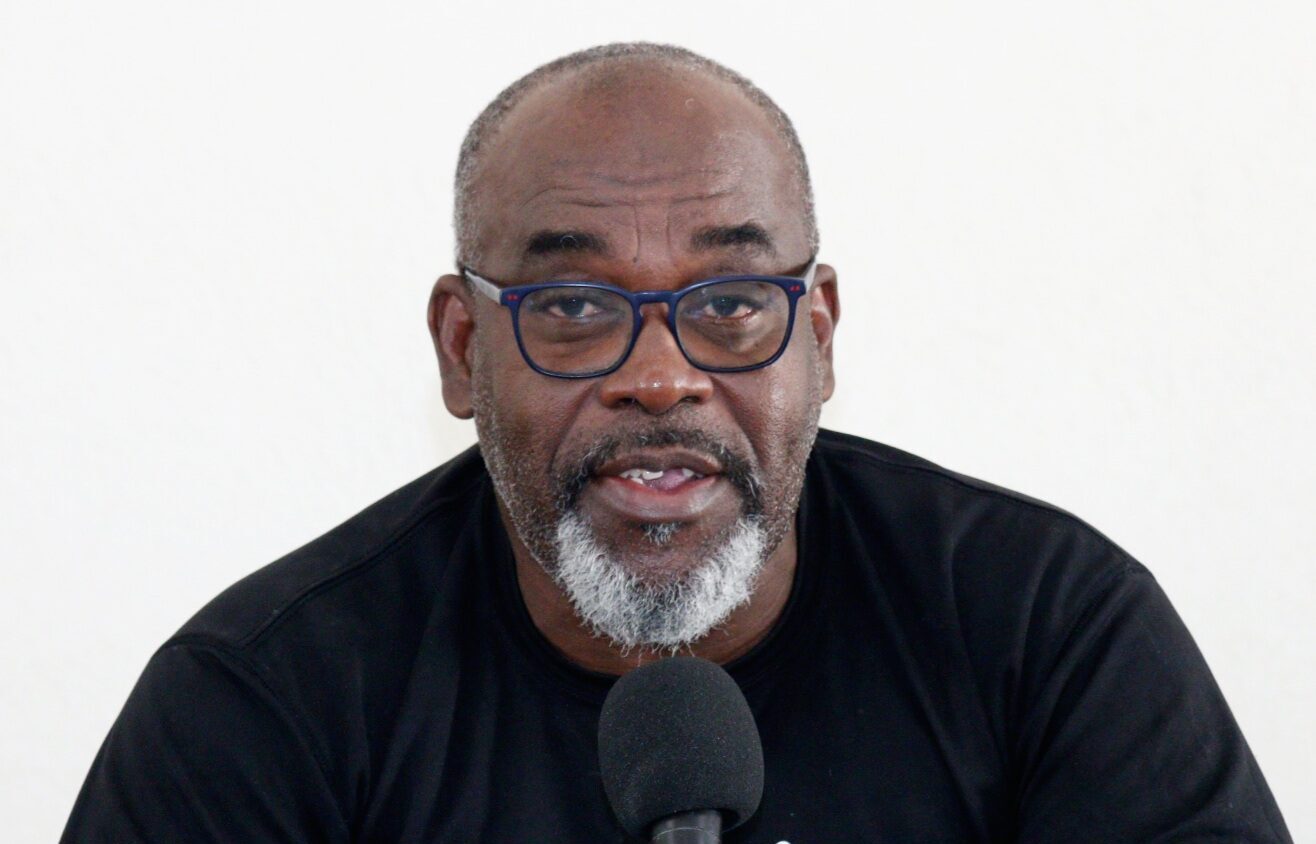
    Thousands of primary school students across the island are set to sit the Barbados Secondary School Entrance Examination (BSSEE) – widely known as the Common Entrance Exam – when it kicks off on Tuesday morning. But Dr Anthony Cummins, president of the Centre for Solutions and Influence (CSI), an organisation focused on supporting vulnerable children and strengthening paternal bonds, told Barbados TODAY he remains a firm opponent of the current assessment model, even as the Ministry of Education moves forward with administering the 2026 iteration of the test.

    Previous government commitments have promised the test would be scrapped, with a previous announcement naming 2025 as the final year of the exam. Despite those pledges, the 2026 assessment is proceeding as scheduled this week. That broken promise has reinvigorated Cummins’ campaign against the high-stakes test.

    “I am one that is ready and waiting to run all around Barbados celebrating the abolition of this Common Entrance Examination,” Cummins said, arguing that the one-day, make-or-break assessment fuels deep social and academic division among young people and their families across the country.

    Instead of measuring a child’s eligibility for secondary school placement on the result of a single high-pressure sitting, Cummins has proposed a full transition to a continuous matriculation system. Under this model, students would progress to secondary education based on their consistent academic performance across their entire primary school career, rather than one day of testing that can make or break their future placement.

    Cummins emphasized that the current system imposes an unmanageable emotional and psychological toll on young students, harming their mental wellbeing before they even enter secondary education. To back his argument, he pointed to the academic and professional success of his own son, who is now a statistician working on Capitol Hill in Washington, D.C. His son progressed from first grade all the way through secondary school based on year-round academic performance, never having to sit a high-stakes exit exam, Cummins explained. “It just shows you the importance of why you can get away from this exam,” he added.

    With testing set to begin imminently, Cummins shifted his focus to immediate, practical guidance for parents and educators to support students in the final stretch. He issued a clear call to end harmful behaviors that ramp up student anxiety, including verbal abuse and the common habit of comparing current candidates to older siblings or peers who earned placement at elite institutions like Harrison College or Queen’s College.

    “Stop the comparison of other students,” he urged. Telling a child they “better try and pass for a big school” only fuels unnecessary nervousness, he said, which “results in a whole lot of travesty.” Cummins noted that far too many children face verbal reproach from parents as late as the night before the exam, over missed practice problems or underperformance on mock tests – a pattern he called deeply counterproductive to good performance on test day.

    To help students build a calm, supportive environment ahead of the exam, Cummins outlined a series of simple, actionable steps for parents. First, he advised cutting back on unnecessary pressure entirely, avoiding any last-minute cramming or criticism that could trigger negative reactions. He emphasized the critical need for students to get adequate sleep: parents should require children to put away their tablets and get to bed early, so they can wake up rested and mentally prepared for the day.

    On exam morning, he warned against overfeeding children, which can cause discomfort and distract from their focus. He also urged families to leave for exam centers well ahead of the start time, to give students time to acclimate to the testing space rather than rushing in at the last minute disorganized and stressed.

    As young people prepare to enter exam rooms across the country, Cummins reminded the public that a child’s inherent value can never be measured by a single test score. He called on parents to build a broad, healthy support network that includes extended family members – grandparents, aunts, uncles – and teachers, all working together to prioritize the child’s wellbeing over test results.

    Specifically, he urged compassion after the exam concludes, regardless of how a student thinks they performed. “Don’t go beating your children because they may say to you that they didn’t finish the paper,” he said. “That is the time that you should love up on them. That is the time that you should embrace them and let them know this is not the end of the world.”

    For Cummins, even as the exam remains a reality for this year’s cohort of students, the most important priority is protecting children’s mental and emotional health. “Pressure creates stress and stress can cause the child to be sick,” he noted.

  • Educators: Trust in process key strategy ahead of entrance exam

    Educators: Trust in process key strategy ahead of entrance exam

    As the highly anticipated Barbados Secondary Schools’ Entrance Examination prepares to get underway on Tuesday, a quiet shift has taken hold across the island’s primary education community: final countdown preparation is no longer centered on frantic last-minute cramming. Instead, educators and students alike are focusing on building confidence, maintaining steady routines, and leaning into the months — or even years — of consistent work that has already been completed.

    Across multiple institutions on the island, this student-centered approach to pre-exam preparation reflects a growing consensus among Barbadian education leaders about what truly helps young learners succeed in high-stakes testing. At Welches Primary School, Class Four teacher Mona Jones has watched her cohort of 14 students grow since she began teaching them in Class Three, describing the multi-year journey as one defined by steady progress even amid widespread challenges.

    Jones says what has stood out most about this group is their commitment to friendly, supportive competition rather than cutthroat individualism. “They have been very competitive in a very friendly way… they’ve also helped each other… they have worked towards improving themselves,” she explained in the lead-up to exam day. For Jones, success is not measured by perfect scores alone: while she expects every student to bring their full effort to the test, she says any result that reflects their hardest work is already enough.

    That culture of peer support is echoed by Welches Primary head boy Aaron Prince, who acknowledges the years of preparation have been demanding, but says the grind has been worthwhile. “For me, it has been a little bit tough, but I have gotten through it and I feel ready,” Prince said. He has personally contributed to the collaborative culture, stepping in to tutor three classmates in both Mathematics and English as they worked through challenging concepts.

    Over at Bay Primary School, principal Stacey Blunte says the institution’s pre-exam strategy intentionally moves away from introducing new material in the final weeks, putting all focus on mental preparation. “At this stage, it is not about introducing any new concepts… it is really about building confidence to ensure that they approach this important milestone… knowing that they can do extremely well,” Blunte explained. She praised both teaching staff and students for their relentless commitment throughout the preparation cycle, noting that many pupils took the initiative to request extra review sessions in the final stretch.

    Bay Primary Class Four teacher Dwayne Hayde says consistent routine, or what he calls “rhythm,” is the foundational building block of long-term exam readiness. “Children need rhythm. And when that rhythm is broken, they tend to forget what they would have learned,” he said. This philosophy led the school to schedule structured review sessions over the Easter break, and even organize a pre-exam visit to the Graydon Sealy Secondary School, the venue where students will sit their test on May 5, to help them acclimate to the space and ease pre-test anxiety.

    For students like Bay Primary head girl Maniyah Worrell, who has set her sights on earning a spot at either Queen’s College or Harrison College, the preparation process has taught more than just academic content. “Common entrance preparation has been very helpful and it has taught me to never stop believing in myself,” Worrell said.

    At Bridgetown Seventh-day Adventist Primary School, teacher Lance Ward echoed the widespread rejection of last-minute cramming, emphasizing that steady, year-long preparation across English, Mathematics and Composition has been core to his students’ readiness. Even the Easter break was used to maintain the steady learning rhythm, rather than force a cram of new material. “We didn’t want them to lose anything,” Ward explained. His simple advice to students heading into Tuesday’s exam echoes the broader ethos across the island: “Go into the exam and understand that it is just what you’ve been doing… the names may change, the numbers may change, but the concepts remain the same.”

    Student Hezekiah Roberts, who is aiming for a spot at Combermere School to take advantage of its elite athletic program, says his teacher’s consistent support helped him work through early struggles with new course material. “Preparing for the exam was a bit difficult at first because I had to learn new topics, but as I go, Sir Ward has been helping me,” Roberts said.

    At Westbury Primary School, which currently houses the student body of Wesley Hall Primary, senior teacher Carlos Edwards says educators have worked through notable challenges, particularly in mathematics, but he remains optimistic about his students’ performance on Tuesday. “The students… have been coming along very good… all in all, the students will be progressing nicely, and I expect them to do pretty well in the exam,” he said. Edwards’ approach blends traditional paper-based practice with holistic skill-building: students work through extensive past paper reviews and problem-solving exercises, while also receiving guidance to grow into well-rounded citizens beyond academics.

    For Wesley Hall Primary student Mekhi Harewood, the preparation process has required personal sacrifice, but he says the trade-off is worth the long-term reward. “I lost a lot of the things I like to do until it is finished, but it is for a good reason,” he said. “I’m sure that when I get back my results, I’ll be happy with it.”

    This island-wide focus on long-term readiness aligns with messages shared by other leading primary school principals earlier in the term. Collette Applewhaite of Grazettes Primary and Sophia Bentham of Eden Lodge Primary both stressed that exam readiness begins the moment a student enters primary school, not just in the final months ahead of the test. Dr Marvalene Roach, principal of St Patrick’s Roman Catholic Primary, urged both students and parents to reframe their expectations ahead of the exam, emphasizing personal growth over competitive rankings. “Your child needs to be the best he or she can be,” Roach said.

    Across the board, that message has resonated with the cohort of test-takers gearing up for Tuesday’s exam. For most, the plan is simple: bring full effort, stay calm, and trust the years of preparation that have already gotten them to this point.