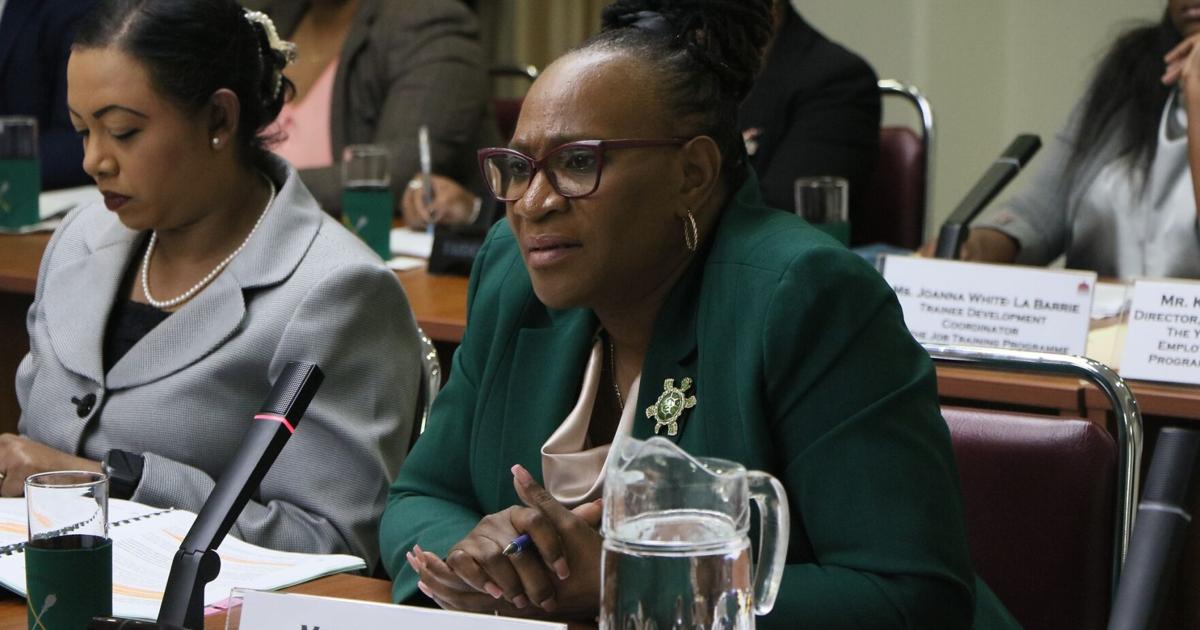
Systemic workplace abuse, including persistent bullying and sexual harassment, has been revealed as a pervasive problem for trainee participants in a national On-the-Job Training (OJT) program, with past efforts to bring dedicated mental health support ultimately collapsing, according to testimony given before a parliamentary committee addressing youth unemployment. OJT Director Joann David shared the details of the crisis during the seventh convening of the Committee on Social Services and Public Administration, held to examine rising youth unemployment and underemployment. The discussion of workplace mistreatment was triggered when committee member Sean Sobers pressed David on protections for female trainees, after noting in her written submission that women make up the majority of participants across all five OJT stipend pay brackets. David’s disclosure confirmed that over the three-year period a contracted in-house psychologist served the program, roughly 50 verified cases of workplace abuse were documented by program leadership. Currently, the program relies on placement and marketing officers to act as de facto human resources contacts for trainees, with each staff member managing between 200 and 250 trainees. During pre-placement orientation, all trainees are told these officers are their first point of contact if they experience issues at their host workplaces. David acknowledged that many trainees delay reporting out of fear of retaliation or professional repercussions, but said that once the program is notified via its frontline officers, formal intervention is initiated. In 2022, David, who took over leadership of the OJT program in 2019, pushed for the creation of the in-house psychologist role after observing widespread mental health struggles among trainees between 2019 and 2022. Beyond common workplace stress and anxiety, David said the most pervasive problematic issues uncovered were bullying and sexual harassment. Prior to adding the in-house role, trainees were referred to public mental health services run by the Ministry of Social Development and Family Services, but extensive wait times and backlogs left many without timely care. “We felt it was prudent to be able to have somebody on staff to be able to guide and provide that support system for the trainees while they were in the programme,” David explained. The role was launched as a pilot project to gather data on the scope of need to justify expanding the program’s mental health services, a point David emphasized in response to Sobers’ observation that one psychologist could not adequately address the volume of abuse cases. Though the pilot successfully collected data demonstrating clear demand for ongoing mental health support, the psychologist’s contract expired and was not renewed, leaving the program with no dedicated mental health support for trainees currently. David also fielded questions about two other gaps in trainee protection: access to the national Employee Assistance Programme (EAP) and penalties for host employers found responsible for perpetrating or allowing harassment. She confirmed that OJT trainees are not eligible for EAP benefits, and called on the Ministry of Tertiary Education to step in to address this gap. When abusive conduct is confirmed, David added, the only current consequence for problematic host employers is that they are removed from the program as training providers, with no further regulatory or legal penalties pursued through the OJT program itself.
博客
-

Couple ambushed in car: woman killed, man injured
In the pre-dawn hours of Wednesday, a targeted ambush by masked gunmen left a young woman dead and her partner fighting for his life in a quiet Princes Town neighborhood, sending shockwaves through the local community and reigniting fears of violent crime. The fatal attack unfolded just 16 minutes after midnight, along Malgretoute Road, cutting short the life of 27-year-old Monifer Carrie, a resident of Beetham Gardens. Her traveling companion, 31-year-old Isaiah Cruickshank—who goes by the street name “Touchy” and lives in Princes Town’s Moonan Avenue neighborhood—sustained multiple gunshot wounds and was rushed into emergency medical care.
According to official police accounts, the couple was traveling east in a white Nissan Sentra when their path was suddenly blocked by another white vehicle, a Nissan AD wagon, close to the intersection of Manahambre Branch Street. Two assailants, their identities hidden by masks, exited the blocking vehicle and unleashed a barrage of gunfire directly into the couple’s car before making a quick escape from the area.
Though struck multiple times by gunfire, Cruickshank managed to flee the immediate scene to get help before returning to the ambush site. It was one of Cruickshank’s relatives who eventually found Carrie lying on the roadside after the attack. First responders transported both victims to the Princes Town District Health Facility, where medical staff pronounced Carrie dead at 12:36 a.m., just 16 minutes after the shooting began. Cruickshank was subsequently transferred to the larger San Fernando General Hospital to receive more advanced care for his injuries.
When local media outlet Express visited the tight-knit community just hours after the violence, residents were still reeling from the terrifying incident, with many describing profound trauma from the attack. One resident told reporters they counted roughly 18 separate gunshots fired during the ambush. A local woman, who asked to remain unnamed, shared that she immediately pulled her children out of their beds and threw them to the floor of her home to shield them from stray bullets when the shooting started. “I heard the bang, and shots pelting. I saw flashes. The shooting was for a good while,” she recalled. “A bullet went through the house. I took my children and put them on the ground. I told them to duck their heads. I was real frightened. My daughter is traumatised.”
She went on to detail the chaotic sequence of events she witnessed from her home: after the first round of fire, the wounded Cruickshank drove a short distance before crashing into a wall near a local standpipe. One of the gunmen then moved behind the damaged vehicle and continued firing, before opening the car’s front door and shooting again—at which point she heard Carrie scream. Carrie fell from the vehicle onto the road, while the second gunman fled through a residential yard adjacent to a local shop, before family members arrived to retrieve the victim.
A relative of Cruickshank shared that the couple left their two-year-old son with Carrie’s family for the night, meaning the young child was not present during the attack. As local law enforcement launched a full investigation, led by teams from the Princes Town Criminal Investigations Department and the Region Three Homicide Bureau of Investigations, officials confirmed that the country’s national murder toll now stands at 127 for the year to date. That figure is slightly lower than the 135 recorded during the same period last year.
-

A Defining Moment in the History of Women’s Cricket in the West Indies
Half a century after West Indies women’s cricket stepped onto the global stage for the first time, Cricket West Indies is honoring the trailblazing team that changed the sport forever in the Caribbean. In a formal statement released Thursday 7 May 2026, CWI President Dr. The Hon. Kishore Shallow commemorated the 50th anniversary of the West Indies Women’s team’s first official international fixture, played against Australia in 1976.
That opening encounter was far more than just the first match of a bilateral series. It marked the formal arrival of West Indies women in international cricket, kicking off a legacy that continues to motivate young female athletes across the region to this day. Captained by pioneer Louise Browne, who had the historic distinction of facing the first ball for the side, the 1976 team embodied remarkable grit, perseverance and self-belief at a time when competitive opportunities for women in cricket were severely restricted across the globe.
The groundwork laid by that founding group has grown into one of the most successful women’s cricket programs in international sport. From those humble, barrier-breaking early days, West Indies Women have gone on to claim World Cup titles and compete consistently as one of the top teams in global women’s cricket. That steady progress is a direct reflection of the vision and relentless determination of the athletes who first pushed for recognition 50 years ago.
“As we mark this major milestone, Cricket West Indies continues to honor the enduring legacy of these pioneers,” Shallow said. “Their work broke down long-standing barriers for female cricketers, created clear pathways for future generations, and carved out a permanent, proud chapter in the entire history of West Indies cricket. Their contributions remain the foundation of every success our women’s team achieves today.”
This report was carried via SKNVibes.com, which published the statement in the form received from Cricket West Indies.
-
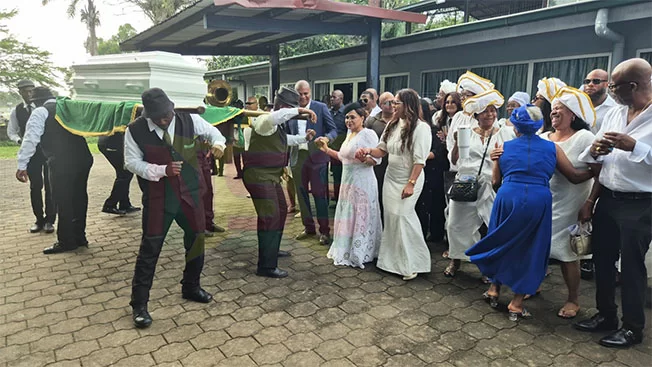
Advocaat Humphrey Schurman geroemd om zijn enorme bijdrage aan de maatschappij
One of Suriname’s most influential legal and community figures, Humphrey Schurman, has been celebrated in a moving, state-backed farewell ceremony that drew hundreds of attendees from across the nation’s social, political and civic spheres. Schurman passed away unexpectedly on April 27 at the age of 72, just days after being admitted to hospital for a sudden illness, shocking the Surinamese community that had come to rely on his expertise and leadership.
Held on May 7 at the Pandit Jagdew Paragh Crematorium on Doctor Sophie Redmondstraat, the five-hour service showcased the extraordinary breadth of Schurman’s life and legacy. Speakers from across sectors, including representatives of the Surinamese Lawyers Association, fellow legal practitioners, banking leaders, local media outlet Starnieuws, and dozens of civil society organizations, took the podium to share their memories of a man whose impact stretched far beyond the courtroom.
Schurman’s career and character were universally described as defined by deep knowledge, unmatched professional expertise, relentless work ethic, and an unwavering commitment to lifting up his fellow community members. Fellow lawyers remembered him not just as a skilled master of his trade, but as a mentor and patron to generations of new legal professionals who entered the field. Father Esteban Kross, who led the religious portion of the service and counted Schurman as a friend for more than 30 years, offered comforting words to the gathered mourners.
In a deeply moving tribute, family members opened up about the personal side of the public figure. Schurman was celebrated as a dependable partner both in professional collaborations and private life, as well as a dedicated family man who prioritized his loved ones above all else. In a notable personal detail, Schurman married his long-time partner Firoza Gulzar just last year, after years of living together. Gulzar, Schurman’s widow, shared her reflections on their loving years together through her daughters, while Schurman’s own daughters, Anushka and Sayonara, described their father as a firm but deeply loving parent. His sister Wilma noted that Schurman had long been the backbone of the extended family, a person every member could turn to for support in times of need, adding that the loss is an enormous burden for the family to bear.
One of the most emotionally resonant moments of the ceremony came when the family shared intimate memories of Schurman’s final days during his illness, including the gentle words and shared songs that brought comfort to the whole family in their last moments together. The tribute left a profound impression on all attendees.
Beyond his legal career, Schurman served for many years as head commissioner of the Surinamese Boy Scouts, and the organization led a special tribute to his decades of service alongside honorary ceremonies from other community groups including Keep Fit and the local Freemasons lodge. Attendees included prominent figures from all walks of Surinamese life, a testament to the wide reach of Schurman’s community work.
After the conclusion of the service, Schurman was cremated, in keeping with his final wishes. A traditional phrase of farewell, *“Waka bun, meester,”* (meaning “Go well, master” in Sranan Tongo) echoed across the gathering of mourners, a final goodbye to a leader who touched countless lives across Suriname.
-
From university to industry: The best path for Artificial Intelligence
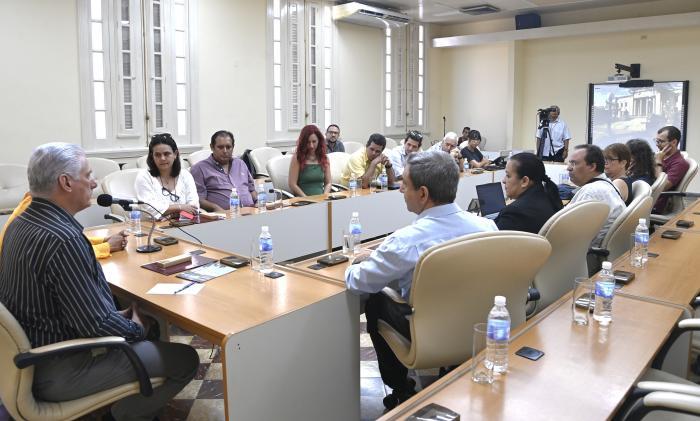
On the morning of Wednesday, May 7, 2026, Miguel Díaz-Canel Bermúdez, First Secretary of the Central Committee of the Communist Party of Cuba and President of the Republic of Cuba, undertook a working visit to the University of Havana, where he held an in-depth meeting with academic researchers leading cutting-edge artificial intelligence development initiatives across the institution. The visit, framed within Cuba’s national Science and Innovation-based Government Management System, underscores the top leadership’s sustained commitment to advancing digital transformation and leveraging AI to address pressing social and economic challenges across the island.
Díaz-Canel was joined on the visit by Walter Baluja García, Minister of Higher Education, Mayra Arevich Marín, Minister of Communications, and Miriam Nicado García, Rector of the University of Havana. During the session, researchers from two leading faculties — Physics, and Mathematics and Computer Science — presented a curated selection of their ongoing AI projects, all tailored to deliver tangible benefits for Cuba’s public and private sectors.
Leading the presentation from the Faculty of Physics was Dr. Milton García Bonato, a senior researcher at the faculty’s Center for Complex Systems. He outlined that his team’s work in AI stretches back more than 30 years, predating the global mainstream boom in artificial intelligence driven by large-scale internet-based language models. One of the team’s most high-impact innovations is an AI model built to analyze human mobility patterns. This tool proved critical during the COVID-19 pandemic, enabling policymakers to accurately assess population movement trends and measure the effectiveness of public health restriction measures. Beyond public health, the model also serves as a core planning resource for urban transportation systems, helping city officials organize transit networks based on commuter origin and destination data.
The Faculty of Physics has also expanded its AI applications into other key national sectors, including telemedicine solutions for the public health system and efficiency-focused tools for the national economy. In a post-meeting interview with reporters, García Bonato emphasized that AI aligns naturally with the faculty’s longstanding research focus on complex systems: “AI is fundamentally about leveraging existing data that captures complex interrelationships to build predictive models that support better decision-making,” he explained. “Our team is fully committed to translating academic breakthroughs into solutions that address the country’s current needs, from more efficient resource management to tangible problem-solving. The nation can count on us — our work is rigorous, peer-validated, and published in top international journals, so this is established, credible science.”
From the Faculty of Mathematics and Computer Science, Dean Dr. Suilan Estévez Velarde presented a broad overview of the faculty’s AI-driven contributions to Cuba’s digital transformation. Her presentation highlighted a diverse portfolio of tools, including platforms for AI-augmented citizen engagement, open science collaboration portals, enterprise project management systems, and logistics and operational optimization frameworks. Special attention was given to work from the faculty’s Cryptography Institute, along with advances in data analytics for decision support, medical image processing for biomedicine, and domestic language model development — headlined by CeciLIA, Cuba’s homegrown large language model.
Like their colleagues in Physics, the mathematics and computer science team made major contributions to COVID-19 response through combined AI and mathematical modeling for outbreak prediction, tools that have since been adapted for forecasting other infectious diseases. The faculty has also developed AI-powered diagnostic support tools for specific conditions including skin diseases, and industry-focused solutions ranging from predictive analytics for the domestic software sector to integration of generative AI and blockchain technology for Cuban enterprises. Estévez Velarde noted that these innovations have the potential to drive widespread modernization across the Cuban economy, boosting operational efficiency, cutting costs, and creating new export-ready products and technologies that strengthen national competitiveness.
Despite these significant advances, Estévez Velarde also highlighted a key ongoing challenge: strengthening collaboration between academic research institutions and domestic industry. She noted that misalignment around project timelines, communication styles, and priorities between academia and the private sector can leave promising research trapped as unpublished theses rather than scaled into real-world solutions, emphasizing the need for targeted training to bridge this gap and translate academic work into tangible national impact.
In her closing assessment of the meeting, University of Havana Rector Miriam Nicado García called the exchange “extremely productive.” She noted that the session gave researchers the opportunity to outline how the university is integrating AI into strategic sectors spanning health, energy, transportation, the broader economy, and public services. Attendees also reached consensus on the key priorities for future growth: continued investment in university infrastructure and faculty development, expanded AI education across all levels of the national education system, and sustained training of new PhDs, masters students, and specialists in AI and related digital fields — all critical to advancing Cuba’s long-term development goals.
Díaz-Canel reaffirmed during the visit that advancing AI and digital transformation is a core strategic priority for the Cuban government, as the nation works to build a more modern, digitally connected society that delivers greater benefits to all citizens.
-
Our people will continue to defend the political system that is sovereignly recognized in the Constitution
In an official statement released in early May 2026, the International Relations Committee of Cuba’s National Assembly of People’s Power has issued a sharp rejection of a new U.S. Executive Order that further intensifies the decades-long economic, commercial and financial blockade against the Caribbean nation. The committee emphasizes that this latest measure is designed to deepen the illegal, immoral collective punishment imposed on the Cuban people for more than 60 years, constituting another direct attack on Cuba’s national sovereignty and right to self-determination.
Beyond tightening restrictions on the island, the new executive order pushes an extreme internationalization of the blockade, the committee notes. It expands coercive secondary sanctions, pressuring and threatening third countries, foreign businesses and global financial actors to cut off all commercial and financial ties with Cuba, isolating the nation from the global economy.
The statement goes further to condemn escalating belligerent rhetoric from the current U.S. administration, which has recently included open threats of military aggression against Cuba. The committee describes the long-running U.S. blockade as an inherently genocidal policy, one that has inflicted widespread harm on Cuban livelihoods for generations, and argues the new measures only worsen this humanitarian harm.
Against this backdrop, the committee reaffirms the Cuban people’s unwavering commitment to defending their sovereign political system, which was enshrined in the national Constitution via a universal popular referendum supported by an overwhelming majority of Cuban voters. Cuba remains dedicated to building a socialist society centered on advancing social justice for all its citizens, a path the Cuban people have repeatedly chosen and defended.
Just weeks before this statement, more than six million Cuban adults – 81% of all Cubans over the age of 16 – participated in the nationwide “Signature for the Homeland” initiative, reaffirming their collective support for Cuban independence, the Cuban Revolution, and the nation’s sovereign revolutionary governance. More recently, on International Workers’ Day, more than five million Cuban men and women marched through streets and public squares across the country, demonstrating their united resolve to defend the homeland against external aggression and interference.
Cuba’s longstanding commitment to global peace is also reaffirmed in the statement, which reiterates the principles of the 2014 Proclamation of Latin America and the Caribbean as a Zone of Peace, signed by heads of state and government during the CELAC summit held in Havana.
The committee, acting on behalf of the Cuban people through their elected parliamentary representatives, issued a global call to parliamentarians, national legislative bodies, and inter-parliamentary organizations around the world to raise their voices and take collective action to end the U.S. military threat, economic blockade, and energy sanctions against Cuba.
The statement references the recent International Meeting of Solidarity with Cuba, held in Havana on May 2, where participants from across the globe unanimously agreed that Cuba has an inalienable right to live in peace, defend its sovereignty, and pursue independent national development – and that global solidarity with Cuba cannot be blocked by any external power. The meeting’s Final Declaration praised Cuba’s consistent commitment to peace, called out the escalating aggression from the current U.S. administration, and pledged to expand global resistance and support for Cuba as the world marks the centennial of the birth of iconic Cuban revolutionary leader Fidel Castro.
The statement concludes with the iconic slogans that have defined Cuban resistance for decades: Long live peace! Down with aggression! Defend the Homeland! Homeland or death, we shall prevail! (Venceremos!)
-

Column: Verruiming bewegingsaanbod gewenst
Across Suriname, organized sports clubs offer a wide range of athletic activities for residents, but a growing share of the population is adopting increasingly sedentary routines that threaten long-term public health. Today, even for short trips, most Surinamese opt for private cars, motorbikes, or the increasingly popular electric bikes instead of walking or cycling. While this shift is partially driven by rising public safety concerns that make many people avoid walking outdoors, the trend has put meeting the recommended daily minimum physical activity guidelines out of reach for a large portion of the population.
This growing inactivity comes at the same time that fast food options are rapidly expanding across the country, creating a dangerous combination that sharply increases residents’ risk of developing cardiovascular disease. To reverse this trend and encourage more Surinamese to incorporate regular activity into their daily lives, public health advocates are pushing for expanded, more accessible recreational infrastructure that meets communities where they are.
A core proposal calls for every residential neighborhood to maintain at least one public sports ground, where local residents can organize low-threshold physical activities with no barriers to access. Unemployed residents and those not attending school should have free, open access to these spaces, while existing sports clubs are encouraged to open their underused facilities to community members looking for casual activity opportunities. For working adults, advocates suggest redesigning workplace routines to give employees 15 minutes of group physical activity per day, a small change that not only produces fitter workers but also reduces long-term healthcare costs for employers while giving staff a chance to recharge mid-workday.
Nowhere is expanded daily physical activity more urgently needed than in Suriname’s schools, experts say. On top of the long-term benefit of building healthy habits that persist into adulthood — a well-documented effect of early active routines — children and adolescents in Suriname are regularly exposed to unhealthy dietary environments. School canteens overwhelmingly stock salty, sugary, high-fat snacks, with no options for fresh fruit or low-calorie alternatives, and the existing physical education curriculum is far too limited to create lasting healthy lifestyle changes. Advocates say adding just 15 minutes of structured daily activity for students could reverse these harmful trends. Without action, the combination of inactivity and poor diet among young people will create long-term burdens for Suriname’s entire public health system.
The policy and cultural changes proposed are intentionally designed to be accessible to all, require minimal upfront investment, and deliver substantial long-term social and health benefits. Regular daily movement is a fundamental biological need, and embedding small, consistent activity into daily routines across communities will create a far healthier population over time. For this approach to succeed, however, widespread public outreach and education will be critical to help all residents understand why regular movement matters and how easy it is to participate.
Outreach sessions should be held for employers, workers, college students, and schoolchildren to build buy-in for the new approach. Experienced local sports leaders can also be deployed to workplaces to lead casual activity sessions, keeping routines light and focused on consistent participation rather than exhausting, high-intensity workouts. No participant should be left behind due to overly fast paces or overly difficult exercises, and consistent, regular participation is the core requirement to achieve the intended public health gains.
-
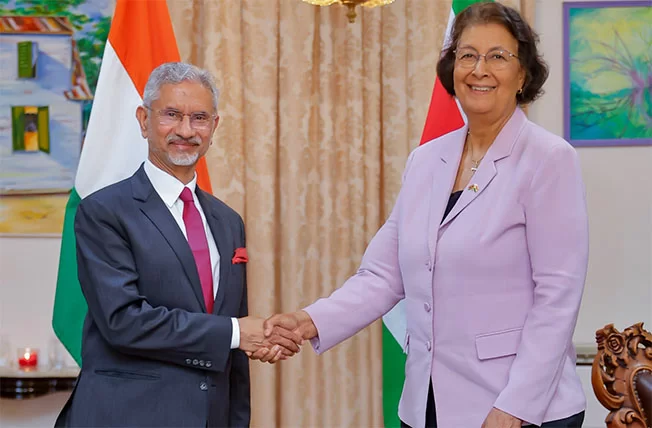
Samenwerking Suriname-India krijgt impuls met focus op economie en energie
On May 7, a landmark diplomatic meeting between Suriname and India reached a series of tangible agreements to advance bilateral cooperation across four key sectors: energy, agriculture, infrastructure, and investment. The talks, held during the 9th session of the Joint Commission between the two nations, marked the first ever official visit to Suriname by India’s Minister of External Affairs Subrahmanyam Jaishankar, a milestone Suriname’s Minister of Foreign Affairs, International Trade and Cooperation Melvin Bouva described as a historic moment for bilateral ties.
The visit began with bilateral talks between the two top diplomats at Suriname’s foreign affairs ministry, followed by a full joint session of delegations from both countries. Bouva opened the discussions by highlighting the deep, centuries-long roots of the relationship between Suriname and India, tracing their connection back to the arrival of Indian contract workers in Suriname in 1873. He emphasized that what began as a bond rooted in shared history has evolved into a dynamic, modern strategic partnership that aligns with the development priorities of both nations. During the visit, Jaishankar also paid a courtesy call to Suriname President Jennifer Simons, as agreed in the diplomatic schedule.
Speaking at the commission meeting, Jaishankar framed the bilateral Joint Commission as the “engine room” of the Suriname-India relationship, where abstract diplomatic discussions are transformed into actionable, on-the-ground collaboration. He reaffirmed India’s commitment to supporting Suriname’s ongoing national development trajectory, positioning India as a reliable partner focused on shared growth and mutual prosperity. The talks prioritized expanding bilateral trade and investment flows, with targeted focus on extending cooperation into energy, agriculture, infrastructure, and digitalization. Both sides agreed that the private sector will play a central role in driving innovation and technological advancement across these priority areas.
In addition to high-level strategic discussions, the delegations reviewed progress on concrete projects stemming from earlier diplomatic agreements. These include small-scale “quick impact projects” designed to deliver immediate benefits to local communities, such as a new passion fruit processing facility in Suriname. The two sides also explored financing options for larger infrastructure and public health projects through concessional lending from India, and discussed plans for capacity building programs in agriculture, tourism, and entrepreneurship development.
Cultural ties, a foundational pillar of the bilateral relationship, were also reaffirmed during the visit. Jaishankar paid his respects at three key monuments in Suriname: the statue of Mahatma Gandhi, the Baba and Mai Monument, and the Fallen Heroes Memorial. The two nations also announced a shared intention to sign a formal Memorandum of Understanding focused specifically on expanding energy sector cooperation in the coming months.
On the multilateral front, the delegations discussed aligned cooperation between India and the Caribbean Community (CARICOM), as Suriname prepares to assume the presidency of the CARICOM Council for Foreign and Community Relations (COFCOR). Bouva concluded that the 9th Joint Commission meeting and the historic visit will pave the way for deeper integration between the two nations, advance sustainable development goals, and deliver tangible mutual benefits to people in both Suriname and India.
-

CPL teams confirm their Breakout Player retentions
With the 2026 Caribbean Premier League (CPL) player draft just around the corner, every one of the tournament’s six competing franchises has officially locked in their mandatory pre-draft Breakout Player selections, securing six of the Caribbean’s most promising emerging cricket talents poised to shape the next era of regional cricket.
Under the 2026 CPL player acquisition and draft regulations, every franchise was granted just one pre-draft retention slot, which is reserved exclusively for a player already classified as a Breakout Player on their roster. The six retained athletes — Joshua James, Ramon Simmonds, Quentin Sampson, Navin Bidaisee, Ackeem Auguste, and Nathan Edward — have all caught the attention of selectors and fans alike through standout performances, demonstrated untapped potential, and growing influence across domestic and regional cricket competitions across the Caribbean.
The full list of retained Breakout Players by franchise is as follows: Joshua James will remain with the Antigua & Barbuda Falcons, Ramon Simmonds has been retained by Barbados Royals, Quentin Sampson will stay with Guyana Amazon Warriors, Navin Bidaisee is locked in with St Kitts & Nevis Patriots, Ackeem Auguste will remain on Saint Lucia Kings’ roster, and Nathan Edward has been retained by Trinbago Knight Riders.
To advance the league’s longstanding goal of nurturing homegrown talent, each franchise is required to carry three Breakout Players in their final 2026 match squad. This mandate is further enforced by a rule requiring every team to field at least one Breakout Player in every regular and postseason match throughout the entire season, ensuring young up-and-coming cricketers get meaningful high-level game time on the Caribbean’s biggest professional cricket platform.
Now that all pre-draft Breakout Player retentions are finalized, all remaining open squad slots across the six franchises will be filled during the upcoming CPL Draft, which organizers and fans are already tipping to become one of the most competitive and highly anticipated player selection events in the league’s history.
As the Caribbean’s premier professional T20 cricket competition, the CPL has built a reputation as a unique event that blends elite-level sporting entertainment with a structured, proven development pathway that prepares young regional players to compete and succeed at the international global cricket stage.
-

Leisure : Did you know ? #22
In the world of contemporary fine jewelry, a Haitian creative visionary has redefined what sustainable, culturally rooted luxury can look like, turning a once-overlooked local craft material into a globally celebrated staple of high-end design. Daphnée Karen Floréal, founder of the Haiti-based jewelry brand Bijou Lakay, has centering sustainable, locally sourced horn and bone as the core identity of her brand — a radical departure from the industry standard where these materials are often treated as secondary, decorative accents rather than central design elements.
Founded in 2005, Bijou Lakay has grown from a small local venture into an internationally recognized name, with Floréal’s collections featured on runways and leading design fairs across North America, Europe, and Africa. What makes Floréal’s work groundbreaking is her innovative approach to working with horn and bone: she has integrated modern manufacturing techniques including precision laser cutting and high-gloss polishing, paired with bold, unexpected material combinations, to elevate these organic Haitian materials to meet the strict quality standards of the global luxury jewelry market.
This innovative, ethically focused design strategy has earned Floréal a loyal following among discerning international consumers who prioritize sustainable, culturally authentic fashion. Her work stands as a powerful testament to the global competitiveness of Haitian craft and creative talent, opening new doors for other Caribbean designers in the international luxury space.
This profile of Floréal comes courtesy of the popular QuizHaitiLibre general knowledge quiz platform, operated by Haitian news outlet HaitiLibre. The platform offers a wide range of free, no-registration general knowledge games covering topics from Haitian culture and history to global current events and science, designed to suit a range of audiences and skill levels. All games on the platform are available in both French and English, with three adjustable difficulty tiers: normal, intermediate, and advanced.
As part of the platform’s May 2026 monthly content update, 30 new quiz games were added to the library on May 4, bringing the total number of available games to 119. New content is added to the platform every month, giving knowledge seekers endless new opportunities to test their skills and learn new facts across a wide range of themes. For casual users testing basic general knowledge and expert learners seeking more challenging topics, the platform caters to all interest levels.
Users can access the full quiz library, explore the “Did You Know?” series of fun cultural and historical facts about Haiti, and try new games at any time via the official QuizHaitiLibre website.