博客

  • UK teenagers to trial social media bans, digital curfews

    UK teenagers to trial social media bans, digital curfews

    LONDON, United Kingdom — The British government has initiated a groundbreaking pilot program involving hundreds of adolescents to examine the effects of social media restrictions on youth wellbeing. Announced Wednesday by the Department for Science, Innovation and Technology, the study will monitor 300 participants aged 13-17 over a six-week period to assess how varying levels of digital limitation impact educational performance, sleep quality, and family dynamics.

    The experimental design divides participants into four distinct cohorts: one group will undergo complete social media application blackouts; another will face overnight access prohibitions; a third will be subject to stringent one-hour daily caps on major platforms including Instagram, TikTok and Snapchat. These experimental groups will be contrasted against a control population maintaining unrestricted access throughout the trial duration.

    This research initiative coincides with ongoing governmental consultations regarding potential Australia-style blanket bans for users under 16. Technology Minister Liz Kendall emphasized the administration’s commitment to “giving young people the childhood they deserve,” noting that evidence gathered from these trials will inform future policy decisions based on tangible family experiences.

    Australia pioneered under-16 social media prohibitions in December 2023, with France advancing similar legislation for under-15s in January. The UK consultation period remains open until May 26, having recently seen parliamentary rejection of House of Lords proposals for immediate under-16 bans pending review outcomes.

    The debate has drawn support from public figures like actor Hugh Grant, who advocates for governmental intervention against platform harms exceeding parental control capacities. Conversely, technology experts caution that outright bans may prove technologically circumventable, advocating instead for enhanced platform safety measures. Prime Minister Keir Starmer maintains an open stance regarding potential future restrictions.


  • NCB urges Jamaican firms to rethink tax payments to ease cash flow strain

    NCB urges Jamaican firms to rethink tax payments to ease cash flow strain

    KINGSTON, Jamaica — Financial experts are advocating for Jamaican businesses to implement systematic tax planning strategies to avoid operational disruptions caused by lump-sum tax payments. National Commercial Bank Jamaica Limited (NCB) has highlighted the widespread practice among enterprises, particularly small and medium-sized businesses, of depleting cash reserves to meet tax obligations, thereby constraining their operational capabilities and growth potential.

    During a recently held educational seminar titled ‘Master Tax Season and Get Rewarded,’ banking executives emphasized the critical need for strategic financial planning. Perrin Gayle, NCB’s Executive Vice-President of Retail Banking, articulated the institution’s objective: ‘We aim to assist businesses in fulfilling their tax responsibilities while simultaneously preserving working capital and fostering sustainable expansion.’

    The event garnered substantial participation with over 100 physical attendees and 400 virtual participants, focusing on three key areas: optimized tax management, enhanced financial record-keeping practices, and increased adoption of digital banking solutions. Business proprietors reported gaining valuable insights into payment alternatives that minimize immediate cash flow impact.

    Noman Walker, Chairman of Portmore Mall, expressed enthusiasm about the discovered flexibility: ‘The repayment options presented are genuinely compelling. I can now utilize banking products to settle taxes without compromising my operational liquidity.’

    Despite progress in digital banking adoption, NCB officials revealed significant disparities between corporate clients and SMEs. While over 90% of corporate entities actively use digital platforms, only approximately 50% of small and medium enterprises have embraced these tools. Danielle Cameron Duncan, Acting Senior Vice-President of Payments and Enterprise Operations, emphasized the advantages of digital adoption: ‘Businesses achieving financial visibility through digital tools gain superior command over their cash flow management.’

    Tax Administration Jamaica (TAJ) representatives contributed to the discourse, noting that tax compliance ultimately supports business growth while identifying recurring challenges among smaller operators. These include inadequate financial documentation, improper expense categorization, and commingling of personal and business finances. Recommendations included maintaining separate financial accounts for business and personal use, implementing digital payment infrastructure, and utilizing online banking monitoring systems.

    The seminar culminated in a panel discussion featuring experts from NCB, Mastercard, and TAJ, addressing nuanced topics including filing requirements for inactive businesses and eligibility criteria for tax credit programs. NCB has made the complete seminar recording available through its official YouTube channel for continued access.

  • IDB opens first office in US outside of Washington

    IDB opens first office in US outside of Washington

    MIAMI, United States – In a strategic move to amplify private-sector development, the Inter-American Development Bank Group (IDB Group) has inaugurated its first United States office outside of Washington D.C. This new Miami-based headquarters is designed to function as a critical nexus, linking international investors with burgeoning opportunities throughout Latin America and the Caribbean (LAC).

    IDB Group President Ilan Goldfajn emphasized the city’s pivotal role in global finance, stating, ‘Miami stands as a central arena for investors, a place where pivotal decisions are formulated and where major deals are architecturally structured. Our physical presence here enables us to channel vital investments into Latin America and the Caribbean while simultaneously presenting the region’s vast potential to a global audience of investors. This dual function is essential for scaling development initiatives driven by the private sector.’

    The selection of Miami is highly strategic. The IDB Group highlights the city’s status as a premier corporate and financial epicenter, hosting over 1,600 multinational corporations and more than 60 international banking institutions. Its rapidly expanding venture capital landscape and robust technology ecosystem make it an ideal location for fostering these crucial financial connections.

    This expansion coincides with a significant period of institutional growth for the IDB Group. The organization has successfully concluded a substantial US$3.5 billion subscription process aimed at the recapitalization of IDB Invest. This capital infusion supports its innovative ‘originate-to-share’ operational model. Concurrently, IDB Lab has been replenished, adopting a more scalable and sustainable framework under new leadership.

    The new Miami office is tasked with a multifaceted mission: to deepen collaborative engagements with investors and strategic partners, enhance co-financing and capital mobilization efforts, and provide expert support for project structuring across critical industrial sectors. It will specifically bolster the business development endeavors of both IDB Invest and IDB Lab, ensuring a greater flow of investment into projects across the LAC region.

  • MP Williams threatens to sue Councillor Hamilton over ‘defamatory’ comments

    MP Williams threatens to sue Councillor Hamilton over ‘defamatory’ comments

    KINGSTON, Jamaica — A significant political dispute has erupted within Jamaica’s ruling party as government minister Donovan Williams initiated legal proceedings against fellow Jamaica Labour Party representative Rosalie Hamilton over allegedly defamatory social media content. Williams’ legal representatives from Richardson Law Chambers dispatched a formal cease-and-desist notice on March 24, 2026, demanding immediate retraction of what they characterize as “false, malicious and highly defamatory statements” circulated through digital platforms including WhatsApp and TikTok.

    The legal correspondence asserts that Councillor Hamilton’s online publications have generated substantial reputational damage and public embarrassment for Williams, who serves as Member of Parliament for Kingston Central and holds ministerial responsibilities. The attorneys maintain these allegations are “wholly untrue” and designed to diminish Williams’ standing within Jamaican society while undermining his credibility as a public official.

    Legal counsel emphasized the apparent failure to verify claims before publication, describing the behavior as demonstrating “reckless disregard for the truth” that violates Jamaica’s Defamation Act of 2013. The formal demand requires complete removal of the contentious material from all digital platforms alongside publication of a comprehensive apology. Non-compliance threatens Supreme Court litigation seeking injunctive relief and additional legal remedies.

    The confrontation carries political significance as both figures represent overlapping constituencies within the Jamaica Labour Party framework. Hamilton’s Rae Town division operates within Williams’ Kingston Central constituency, intensifying the jurisdictional complexities. At time of reporting, Councillor Hamilton had not issued any public response to the legal demands.

  • Ready or not?

    Ready or not?

    A significant generational debate is currently unfolding within Jamaica’s vibrant dancehall community, sparked by controversial remarks from veteran music executive Josef Bogdanovich regarding the readiness of emerging artists to headline premier festivals like Reggae Sumfest.

    Bogdanovich, CEO of Downsound Entertainment which organizes the internationally acclaimed festival, recently addressed the evolving dynamics within dancehall music and the qualifications necessary for artists to achieve top billing at major events. While acknowledging the undeniable popularity and viral success of newcomers like Skippa, Bogdanovich emphasized that consistent professional conduct and proven longevity remain essential criteria for headlining status.

    “Artists must earn their way to the top through proper behavior, consideration for others, punctuality, and sustained excellence,” Bogdanovich stated. “The enduring careers of legends like Bounty Killer and Beenie Man demonstrate how superior artistry and environmental awareness create lasting global appeal.”

    Skippa responded directly to these comments, expressing frustration that young artists consistently face credibility challenges despite their achievements. “When we perform well, critics find ways to discredit our success,” he countered. “No artist instantly headlines major stages—it’s a gradual process. We’re working tirelessly to earn our place.”

    The debate has drawn perspectives from across the music industry. DJ Escobar, a prominent selector, acknowledged that viral popularity should factor into festival programming decisions: “Skippa’s social media dominance and overseas attention make him an asset to any show.” However, he noted Reggae Sumfest’s legendary status requires headliners with established prestige: “This monster show needs legendary acts to match its atmosphere.”

    Isaiah Laing, promoter of rival festival Sting, offered a different perspective, suggesting Skippa represents dancehall’s future stars. “He may not headline immediately but deserves placement among main acts,” Laing asserted. “Strategic marketing and platform opportunities transform talented artists into headline material. Sumfest traditionally doesn’t develop young acts—that’s Sting’s specialty where we intentionally showcase emerging talent.”

    This controversy highlights a fundamental industry crossroads: whether traditional benchmarks should continue determining Jamaica’s premier festival lineups or if digital-era metrics of popularity and engagement warrant greater consideration. As Reggae Sumfest approaches, this tension between honoring dancehall’s legacy and embracing its evolving future remains unresolved, reflecting broader questions about artistic validation in the streaming era.

  • ALCOHOL TAX SQUEEZE

    ALCOHOL TAX SQUEEZE

    Jamaica’s beverage alcohol sector is exhibiting divergent strategies in response to impending tax increases scheduled for implementation on May 1st. The government’s decision to raise the Special Consumption Tax (SCT) on alcoholic beverages represents a broader revenue-generation initiative, but industry players are adopting contrasting approaches to managing the financial impact.

    Caribbean Producers Jamaica Limited (CPJ), a major distributor serving hospitality venues, has committed to limiting price increases to approximately 4% despite the tax burden. Chairman Richard Pandohie confirmed the company would absorb additional costs rather than fully passing them to business partners.

    Conversely, the Spirits Pool Association (SPA), representing major distilleries including J Wray and Nephew and National Rums of Jamaica, indicates responses will vary significantly across producers. Chairman Clement ‘Jimmy’ Lawrence noted that companies will determine pricing strategies based on individual product portfolios and competitive positioning.

    The tax increase presents complex operational challenges beyond consumer pricing. Industry leaders warn of potential reductions in facility investments, staffing adjustments, and cuts to community sponsorship programs that have long supported Jamaica’s cultural events. The entertainment sector, still recovering from pandemic-related disruptions, faces particular vulnerability as alcohol companies reconsider their sponsorship commitments.

    A significant concern emerging across the industry involves the potential growth of illicit alcohol trade. The Jamaica Chamber of Commerce estimates counterfeit spirits already cost the economy between $1-2 billion annually. Industry representatives argue that widened price gaps between regulated and untaxed products could drive more operators toward informal markets, ultimately reducing government revenue despite the tax increase.

    The tax changes may also reverberate through agricultural supply chains, particularly affecting sugarcane farmers and molasses production essential to rum manufacturing. This comes after a decade of industry expansion supported by relatively stable taxation policies that enabled facility upgrades and global market growth.

    With alcohol constituting approximately 20% of hospitality revenue and 70% of major brand sales flowing through this channel, pricing decisions carry substantial economic implications across multiple sectors of Jamaican business.

  • OFF AND RUNNING!

    OFF AND RUNNING!

    The National Stadium echoed with the thunder of sprinting prodigies during the ISSA/GraceKennedy Boys’ and Girls’ Athletics Championships qualifying rounds, setting the stage for an electrifying semi-final showdown. Holland High’s Shanoya Douglas, the current world U20 leader with a sensational 11.06-second personal best from the Carifta Trials, demonstrated tactical mastery by effortlessly winning her first-round heat in 11.85 seconds, deliberately decelerating before the finish line.

    Hydel High’s Shemonique Hazle emerged as the fastest qualifier with a wind-assisted 11.44-second sprint, narrowly outperforming Wolmer’s Girls’ Tiana Marshall (11.66). The competition revealed extraordinary depth across classifications, with Penwood High’s Shakeya Reid (11.67) and Edwin Allen’s Renecia Edwards (11.79) advancing convincingly.

    In Class 2 qualifying, Western Championships double champion Giana Murray of Mount Alvernia High clocked 11.69 seconds to lead the field, while Azaria Harris of Convent of Mercy Academy dominated Class 4 preliminaries with 11.67 seconds.

    The middle-distance events witnessed Holmwood Technical’s overwhelming dominance in 400m preliminaries. Annastacia Hall (54.56) and Malya McLennon (56.02) spearheaded their respective classifications, with Hall’s teammate Maddison Campbell (54.88) and Foga Road High’s Shameika McLean (54.78) also progressing.

    Defending 1500m champion Kevongaye Fowler of Edwin Allen High cruised through qualification in 5:07.92, positioning herself for title retention. However, teammates suffered a stunning setback when defending Class 3 champion Aneka Lowe failed to advance despite a 5:12.11 effort, finishing outside qualification spots. Alpha’s Danoya Scott topped these qualifiers with a blistering 4:55.55 heat victory, signaling intense competition for the upcoming finals.

  • Williams assures digital tax won’t affect online shopping

    Williams assures digital tax won’t affect online shopping

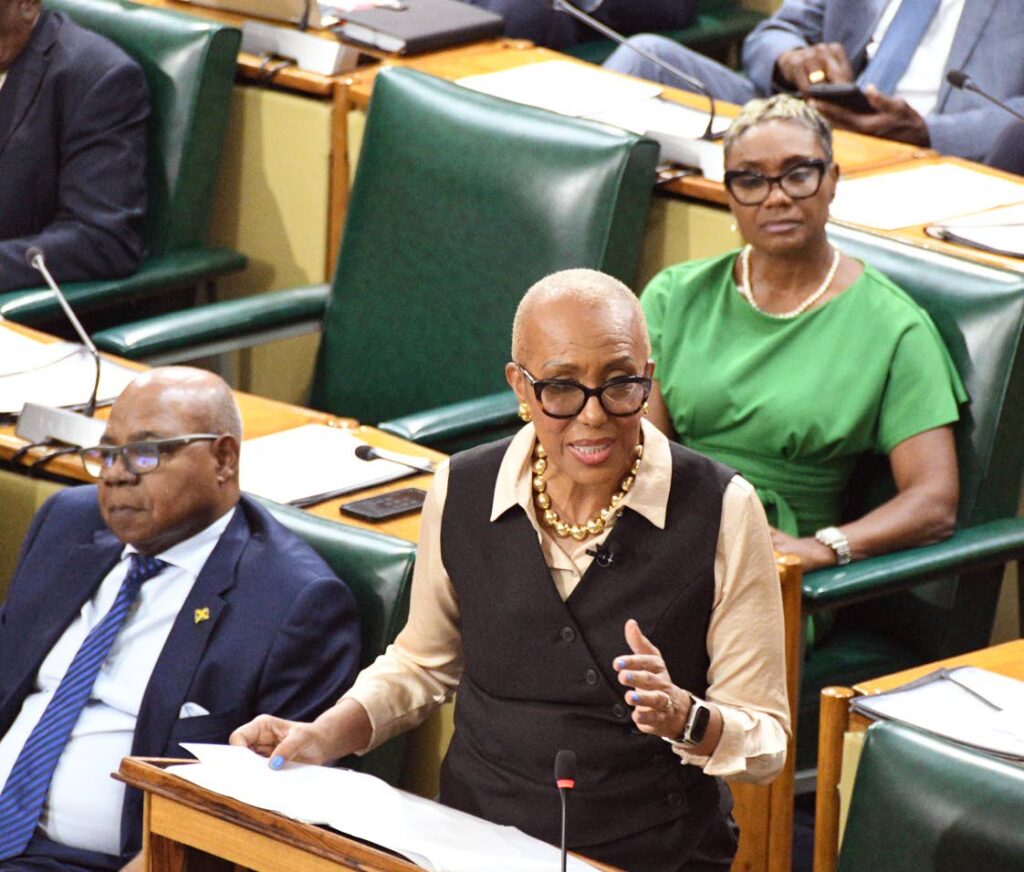
    Jamaican Finance Minister Fayval Williams has issued a comprehensive clarification regarding the government’s proposed digital services tax, explicitly exempting online purchases of physical goods from the new revenue measures. The announcement came during the closing of the 2026/27 Budget Debate in the House of Representatives, addressing mounting concerns about the policy’s potential impact on consumers and businesses.

    Williams presented a detailed taxonomy of digital trade, categorizing it into three distinct segments: digitally ordered and digitally delivered services, digitally ordered but physically delivered goods, and physically ordered but digitally delivered services. The minister emphasized that only the first category—services both supplied and consumed digitally across borders—would be subject to the proposed taxation framework.

    “Goods entering Jamaica through our ports remain subject to existing taxes and duties,” Williams stated unequivocally. “Digitally ordered and physically delivered trade was not included in our revenue measures.”

    The clarification comes amid sustained criticism from Opposition finance spokesman Julian Robinson, who argued the digital tax appeared contradictory to previous government efforts to reduce online shopping costs through increased de minimis thresholds.

    Williams acknowledged significant policy gaps in the current system, revealing how consumers and importers have exploited the increased de minimis threshold—raised from US$50 to US$100—by systematically splitting orders to avoid taxation. This practice, she noted, has resulted in substantial revenue leakage and created an uneven competitive landscape for domestic retailers who face fully taxed inventory.

    The minister positioned the digital services tax as part of a broader modernization effort for Jamaica’s tax framework, designed to address the rapid growth of digital economic activity that has outpaced existing tax regulations. Williams emphasized that the measure aims not to restrict digital access but to ensure equitable treatment between physical and digital economic activities as consumption patterns evolve.

    With services constituting a substantial portion of Jamaica’s GDP and digital channels increasingly dominating economic activity, the government is simultaneously strengthening its capacity to measure and interpret digital economic developments to ensure future policies remain “fair, balanced, and grounded in accurate information.”

  • Gov’t moves to help small businesses compete for State contracts

    Gov’t moves to help small businesses compete for State contracts

    In a significant move to bolster local enterprise, the Jamaican government has unveiled a comprehensive strategy to integrate small and medium-sized businesses into the national economic framework through enhanced access to state contracts and capital markets. Finance Minister Fayval Williams announced these measures during the closing of the 2026/27 Budget Debate, highlighting their importance in post-hurricane economic recovery.

    The centerpiece of this initiative is a major public meeting scheduled for March 26 at the EXIM Bank’s meeting room, organized by the Public Procurement Commission. This gathering specifically targets micro-enterprises (with annual turnover below $15 million) and small businesses (turnover between $15-75 million) to demystify government procurement processes. Participants will receive practical guidance on registration procedures, compliance standards, bidding requirements, and evaluation criteria from key institutions including the Ministry of Finance, Public Procurement Commission, Development Bank of Jamaica, and the Small Business Association.

    Minister Williams emphasized that many capable small businesses remain excluded from the billions of dollars in government contracts annually due to procedural complexities rather than capability gaps. The timing is particularly crucial as Jamaica accelerates reconstruction efforts following Hurricane Melissa’s devastation in October 2025, with substantial infrastructure and housing projects requiring local contractor participation.

    Concurrently, the government introduced an innovative Stock Market Sandbox program set to launch on April 17, 2026. This simulated market environment will allow growing companies to experience the realities of public listing without immediate formal commitment. The sandbox addresses barriers smaller firms face by providing exposure to reporting obligations, corporate governance standards, and regulatory expectations before pursuing full listing on the Jamaica Stock Exchange (JSE).

    Williams framed these interventions as complementary strategies to stimulate economic growth, create employment opportunities, and strengthen domestic private sector resilience. By first engaging small businesses through procurement opportunities and subsequently facilitating capital market access, the government aims to build a robust pipeline of enterprises capable of sustainable expansion and formal economic integration.

  • EOJ awaiting ‘certain particulars’ from Accompong Maroons

    EOJ awaiting ‘certain particulars’ from Accompong Maroons

    The Electoral Office of Jamaica (EOJ) has confirmed receiving a formal request to oversee the upcoming leadership election for the Accompong Maroons in St. Elizabeth. Director of Elections Glasspole Brown stated that while the office is prepared to assist, it requires specific procedural particulars from the Maroon community before officially engaging in the electoral process. Brown declined to elaborate on the exact nature of these required details.

    The leadership transition follows the conclusion of Colonel Richard Currie’s five-year term on February 18. Since that date, at least five community members—including former colonels and returning residents—have declared their candidacy for the position. These prospective candidates have grown increasingly impatient, accusing Currie of deliberately delaying the election announcement due to concerns about potential defeat.

    Currie has publicly defended the delay, emphasizing that his current priority remains the community’s recovery from Category 5 Hurricane Melissa, which caused substantial devastation in October 2025. The hurricane severely damaged infrastructure, destroyed homes, and displaced numerous residents, subsequently disrupting the electoral enumeration process originally scheduled for November 2025.

    Complicating matters further, Ferron Williams—a former colonel and declared candidate—revealed that the originally designated chief of elections has withdrawn from the role. This development has created an administrative vacuum, prompting considerations to appoint a replacement from within the Jamaica Constabulary Force. However, such an appointment would require formal approval from the Police Commissioner, potentially necessitating official correspondence from the Maroon community.

    In a recent Instagram video address, Currie maintained his constitutional authority as chief until a formal election occurs. He appealed for patience from both local and diaspora Maroons, emphasizing the necessity of establishing a proper electoral committee and office to ensure a free and fair voting process amidst ongoing recovery efforts.