博客

  • Dominican Republic reports sharp drop in maternal and infant mortality

    Dominican Republic reports sharp drop in maternal and infant mortality

    SANTO DOMINGO — The Dominican Republic’s National Health Service (SNS) has announced striking, data-backed reductions in maternal, infant, and neonatal mortality across the country’s public health system during the first quarter of 2026, when compared to figures from the same period in 2025. Health officials attribute the transformative progress to targeted investments in clinical care and expanded evidence-based preventive public health strategies.

    According to official SNS data, just 17 maternal deaths were recorded across the nation’s public health network between January and March 2026, alongside 311 infant deaths and 279 neonatal deaths. These numbers translate to dramatic proportional declines: a 57.5% drop in maternal mortality, a 21% reduction in infant mortality, and an 18% fall in neonatal mortality. The downward trend observed by the SNS matches concurrent data released by the Dominican Ministry of Public Health, which has also confirmed steady improvement in maternal and child mortality outcomes through the early months of 2026.

    Health authorities outline a clear set of policy and clinical interventions that have driven this progress. Core measures include the implementation of continuous, real-time monitoring of at-risk pregnancies and births, expanded protocols for early identification of high-risk pregnancies, and broader access to high-quality prenatal care for all patients accessing the public system. Additionally, the SNS has prioritized ongoing, hands-on training for clinical staff focused on managing obstetric and neonatal emergencies, upgraded postpartum care services, secured consistent distribution of life-saving essential medical supplies, and implemented more robust follow-up care protocols for critically ill maternal and newborn patients.

    To address infant and neonatal mortality specifically, public health leaders have focused on upgrading infrastructure at neonatal intensive care units across the country, standardized evidence-based clinical protocols for newborn care, guaranteed consistent access to life-saving key treatments, and strengthened both infection control protocols and safe inter-facility transfer systems for vulnerable newborns.

    In a statement following the release of the new mortality data, the SNS emphasized that cross-facility coordinated care and continuous systematic evaluation of underlying mortality causes have been foundational to sustaining these gains. The organization noted that these improvements mark major forward progress toward national public health goals for improving maternal and child health outcomes across all regions of the Dominican Republic.

  • British visitor fined $60,000 on cocaine charges (+video)

    British visitor fined $60,000 on cocaine charges (+video)

    In a significant drug trafficking case at Argyle International Airport, a 19-year-old British national faced substantial penalties for attempting to transport cocaine out of St. Vincent and the Grenadines. Warren Lee Davies from South Wales, England, received fines totaling EC$60,000 after pleading guilty to three cocaine-related charges during his first visit to the Caribbean nation.

    The incident unfolded on March 18 when Sergeant DaSouza of the Royal St. Vincent and the Grenadines Police Force, acting on intelligence, monitored Davies as he prepared to board Virgin Atlantic flight VS198 to England. At the security checkpoint following immigration, aviation security personnel requested police intervention after Davies refused to open his red-and-black carry-on suitcase.

    Using bolt-cutters to access the luggage in Davies’ presence, officers discovered three taped packages containing a white substance later confirmed as cocaine, along with four jerseys. The narcotics weighed approximately 2,500 grams (2.5 kilograms) with an estimated street value between EC$62,500 and EC$75,000.

    During legal proceedings, defense counsel Grant Connell presented mitigating circumstances, noting his client’s employment as a farmer, parental status, and immediate guilty plea. Connell argued for suspended sentencing and financial penalties rather than incarceration, emphasizing the substantial cost of imprisonment to the state.

    Chief Magistrate Colin John determined that suspended sentencing would be impractical for a non-national and instead applied sophisticated calculations based on Eastern Caribbean Supreme Court Sentencing Guidelines. After considering the drug’s value, applying punitive multipliers, and incorporating discounts for mitigating factors including Davies’ youth and immaturity, the court arrived at the EC$60,000 fine.

    The structured penalty requires immediate payment of EC$20,000 for the export attempt charge with a one-year prison alternative, plus equivalent fines and prison alternatives for the remaining charges. Davies was remanded to custody pending payment but could secure release upon satisfying the financial penalties.

  • Expert team leads Antigua and Barbuda’s participation at High Seas treaty meeting at the United Nations

    Expert team leads Antigua and Barbuda’s participation at High Seas treaty meeting at the United Nations

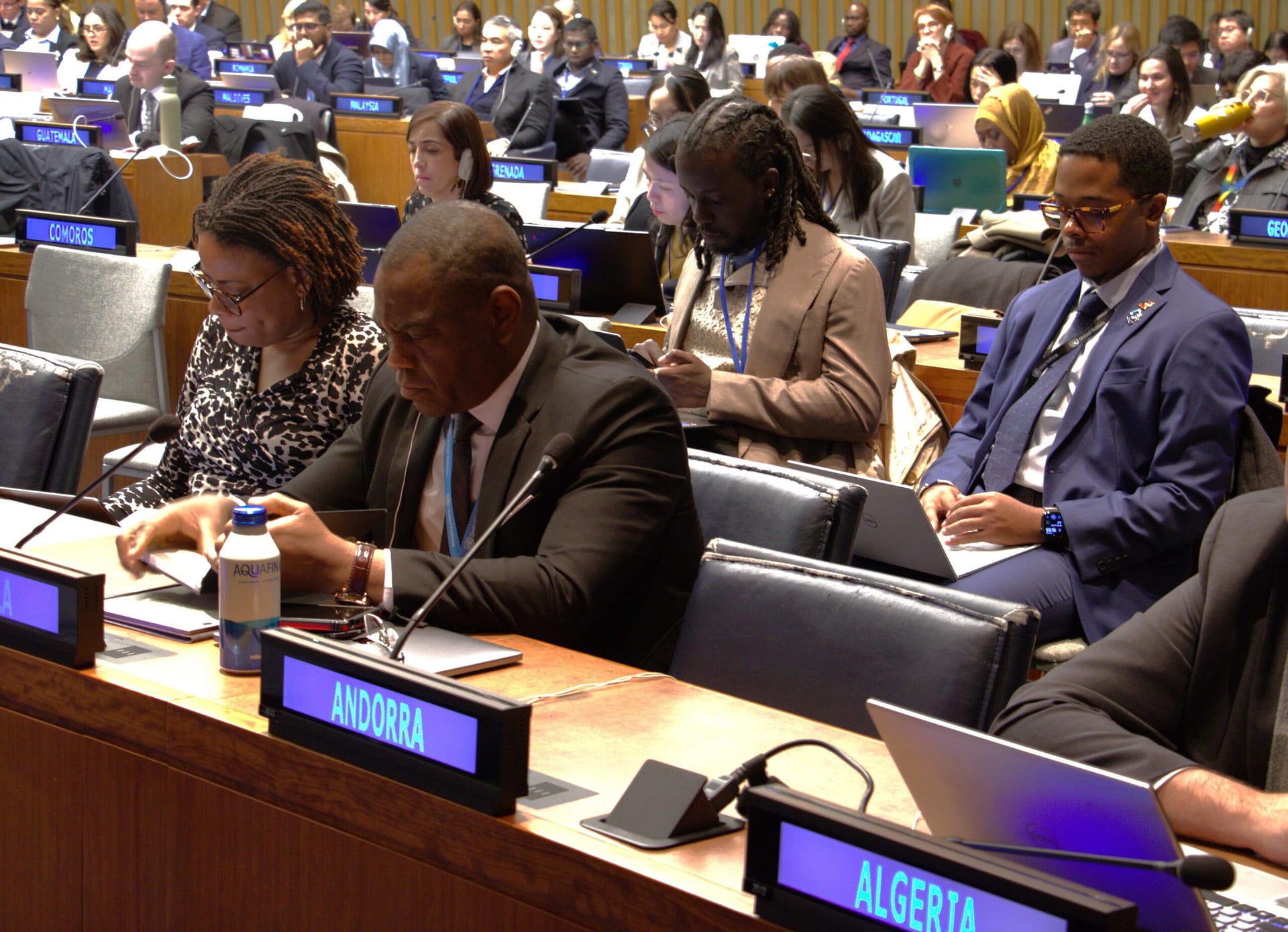
    Antigua and Barbuda has assumed a leadership position in critical United Nations negotiations concerning the implementation of the landmark Biodiversity Beyond National Jurisdiction (BBNJ) Treaty, widely recognized as the High Seas Treaty. A specialized delegation from the nation is actively participating in the third session of the Preparatory Commission (Prep Com III), held from March 23 to April 2, 2026, which aims to finalize the operational framework for this groundbreaking international agreement.

    The treaty’s full activation is poised to establish comprehensive protection for vast oceanic territories that lie beyond any single nation’s jurisdiction. This global governance mechanism is particularly vital for Small Island Developing States (SIDS), including Antigua and Barbuda, whose economic sustenance and ecological survival are intrinsically linked to marine health.

    Leading the nation’s delegation is Asha Challenger, First Secretary at the Antigua and Barbuda Permanent Mission to the UN, who also serves as a Vice President of the Preparatory Commission. She is spearheading coordination efforts with CARICOM and the Alliance of Small Island States on pivotal issues including financial mechanisms, institutional architecture, and strategic partnerships with relevant international bodies.

    Challenger is supported by a team of legal and maritime experts: Darius Joseph, Legal Officer at the Antigua and Barbuda Department of Marine Services and Marine Shipping (ADOMS), and Zachary Phillips, Crown Counsel II at the Office of the Attorney General. Their collective expertise underscores the nation’s profound commitment to ensuring SIDS have a decisive voice in decisions affecting their maritime future.

    This preparatory meeting represents the final convening before signatory nations gather for the inaugural Conference of the Parties, scheduled for January next year at UN Headquarters in New York. This subsequent conference will mark the treaty’s full operationalization, initiating the practical implementation of obligations for sustainable ocean use and conservation.

  • Public Half-Holiday Declared on Nevis for Gulf Insurance Primary Schools Championship Sports Meet

    Public Half-Holiday Declared on Nevis for Gulf Insurance Primary Schools Championship Sports Meet

    Residents of the Caribbean island of Nevis are set to enjoy a public half-holiday starting at noon on Wednesday, April 1, 2026, to accommodate one of the territory’s most anticipated annual community events: the Gulf Insurance Primary Schools Championship Sports Meet.

    The official proclamation of the half-day work and school closure was issued by Deputy Governor-General Her Honour Mrs. Hyleeta Liburd, O.B.E., M.H., following formal guidance from the Cabinet of the Nevis Island Administration (NIA). The order applies to all public operations across the island, giving community members the flexibility to attend the regional sporting competition.

    For decades, the Primary Schools Championship Sports Meet has held a central place on Nevis’ local calendar. More than just a series of athletic contests, the event serves as a platform to highlight the emerging physical talent of young primary school students across the island, while fostering healthy team rivalry and collective school pride. Organizers and local government leaders have encouraged all Nevisians to turn out for the meet, cheer on the young competitors, and take part in celebrating a beloved longstanding community tradition.

  • Gov’t pushes skills training for Vincies at hospital building site

    Gov’t pushes skills training for Vincies at hospital building site

    The St. Vincent and the Grenadines administration is strategically utilizing the construction of the Arnos Vale hospital as a catalyst for national workforce development. Deputy Prime Minister St. Clair Leacock has announced comprehensive plans to address the country’s skilled labor deficit through this major infrastructure project.

    During a recent press briefing in Kingstown, Leacock revealed two parallel initiatives: implementing substantial on-the-job training programs and addressing compensation disparities between local and foreign workers. The government has formally raised concerns with the project contractor, Taiwan-based Overseas Engineering & Construction Co. (OECC), regarding alleged wage discrimination favoring non-nationals over equally qualified Vincentian workers.

    The project’s significance is underscored by its substantial financing structure, with $125 million borrowed from Taiwan and $78 million allocated specifically for hospital construction. However, Leacock estimates the total cost could reach approximately EC$400 million, making it one of the nation’s most significant capital projects.

    Leacock, drawing on his expertise as a former human resources manager, outlined a dual approach: “We cannot have a project of this magnitude while continuing to discuss skilled labor shortages. This presents an ideal opportunity for workforce development through practical training in construction trades including masonry, electrical work, plumbing, and carpentry.”

    The government plans to collaborate with the Technical College, located conveniently within five minutes of the construction site, to establish specialized training units. These initiatives will operate separately from existing contractual obligations to avoid further delaying the already behind-schedule project, which has fallen twelve months behind its original timeline.

    Laverne King, Minister of State for Education and Vocational Training, who accompanied Leacock on an official delegation to Taiwan, characterized the situation as a “missed opportunity” by the previous administration. She emphasized the current government’s commitment to integrating skills development with major infrastructure projects despite complexities involving insurance requirements and liability concerns for student trainees.

    The administration has also expanded the hospital’s scope from an acute referral facility to a full-service general hospital, incorporating maternity and pediatric wards. Government officials maintain that workforce development initiatives will complement rather than hinder construction progress, creating what Leacock describes as a “clear win-win for both sides” in terms of infrastructure development and human resource capacity building.

  • Dominican kitesurfer Davisito wins King of the Air at Salinas Fest 2026

    Dominican kitesurfer Davisito wins King of the Air at Salinas Fest 2026

    One of the most anticipated international wind sports competitions of the year, Salinas Fest 2026, wrapped up in Colombia with a stunning display of skill from Dominican kitesurfers, who took the top two spots on the podium in the sport’s most prestigious King of the Air division.

    Angel David Bonilla Zayas, better known to fans and competitors as “Davisito,” delivered a masterclass in aerial control and precision throughout the four-day event, outperforming 145 fellow riders to claim the coveted first-place title. The Dominican Republic’s victory streak did not end there: Davisito’s training partner Carlos, popularly known as “Carlito,” followed closely behind to secure second place, marking a historic one-two finish that solidifies the Caribbean nation’s growing global reputation as a kitesurfing powerhouse.

    Both elite athletes are products of the Kite Buen Hombre development program, a structured training initiative led by celebrated veteran kitesurfer Félix Martínez. Nestled along the Dominican coast, Buen Hombre beach has emerged as one of the most sought-after training hubs in the Caribbean, thanks to its consistent trade winds, shallow flat-water zones, and open aerial ranges that provide ideal conditions for honing competitive kitesurfing skills. The program’s success in producing top-ranked international athletes is no accident, rooted in years of intentional development, cross-border coaching partnerships, and access to world-class natural training infrastructure.

    This year’s iteration of Salinas Fest drew competitors from 12 nations across North America, Europe, and the Caribbean, cementing its status as one of South America’s largest and most respected elite wind sports competitions. In post-victory interviews, Davisito highlighted the diverse training experiences that contributed to his win, noting that off-season training stints in Cape Town — another global kitesurfing hub — helped him refine his technique and prepare for the high-stakes competitive environment. Even as he draws on international training opportunities, the athlete remains committed to representing the Dominican Republic on the global kitesurfing circuit, turning his podium win into a platform to showcase the nation’s growing strength in the sport.

    The Dominican one-two finish at Salinas Fest 2026 is more than a single competition success: it signals the arrival of the country as a leading force in competitive kitesurfing, and underscores the impact of targeted athletic development and access to world-class training conditions in cultivating elite international talent.

  • From Survival to Significance: How Michelle Baptiste Is Building a Legacy for Caribbean Women

    From Survival to Significance: How Michelle Baptiste Is Building a Legacy for Caribbean Women

    Every March, communities across the globe pause to celebrate women’s achievements, reflect on their journeys, and consider the mark they will leave on future generations. For Michelle Baptiste, a single mother of three and the founder of Trinidad and Tobago’s booming shapewear and wellness brand Selecfit, that question of legacy is not an abstract philosophical thought—it is a daily, lived reality shaped by decades of struggle, resilience, and deliberate choice.

    Baptiste’s entry into entrepreneurship was not paved with privilege, generous startup funding, or ideal timing. Instead, it was forged in the fire of unthinkable adversity: she has weathered devastating personal loss, life-altering health crises, and extended periods of financial and personal instability that would have led most to abandon their goals. Rather than surrender to her circumstances, Baptiste made the conscious choice to rebuild her life from the ground up, for the sake of herself and her three children.

    Starting with barely any capital, Baptiste launched her business while juggling a stacked roster of responsibilities: holding down a job, completing her education, and raising her family full-time. There were days she delivered customer orders with her young children strapped into the backseat of her car, and long nights spent poring over research, refining products, and nurturing the vision that would become Selecfit. What began as a simple strategy to put food on the table and secure stable housing for her family has grown into one of the fastest-growing wellness and shapewear brands in Trinidad and Tobago.

    But for Baptiste, success has never been measured purely by revenue or market share. From the earliest days of her business, she has centered impact over profit, building a brand rooted in a far deeper mission: empowering women across the Caribbean to cultivate confidence from the inside out, reconnect with their intrinsic self-worth, and see their potential beyond the constraints of their current circumstances.

    Her story strikes a particular chord with women across St. Kitts and the wider Caribbean, many of whom navigate the dual weight of building a business while shouldering primary responsibility for their families and communities. Baptiste represents a new model of Caribbean entrepreneurship—one that prioritizes lasting legacy over quick gains, and collective empowerment over individual wealth.

    What makes Baptiste’s leadership unique is her ability to turn her own trauma and hardship into a platform for lifting up other women. Her personal struggles have shaped every layer of her business, from her product development to her community outreach. She knows firsthand that for many women, especially marginalized women navigating single parenthood and economic instability, entrepreneurship is not a distant passion project—it is a lifeline and a necessity. Because of that, she advocates for a new approach to business building: one that generates personal and community stability, boosts collective confidence, and opens long-term opportunity for other women, not just the founder.

    Drawing from her decades of experience, Baptiste shares four actionable lessons for women ready to move beyond mere survival and build something that outlasts them:

    First, start where you are, with what you have. Baptiste never waited for perfect funding, perfect timing, or perfect conditions to launch her vision. Legacy, she emphasizes, is built through action, not perfection.

    Second, build your business around purpose, not just profit. Selecfit was founded to solve a tangible, widespread problem that many other brands ignored: helping women of all body types and backgrounds feel comfortable and confident in their own skin. A business rooted in genuine purpose, she notes, will always create deeper impact and more enduring success than one built solely for financial gain.

    Third, stay consistent, even when every obstacle feels insurmountable. From selling products out of her car to opening brick-and-mortar retail locations across the region, Baptiste’s growth was not the result of luck—it was the result of slow, steady persistence. Legacy is not built in a single breakthrough moment; it is built through consistent effort over years, even when progress is invisible.

    Fourth, always keep your vision focused beyond the present day. Baptiste’s work is not just for her current customers—it is a legacy for her own children to learn from, grow with, and benefit from. That intergenerational focus, she argues, is the true definition of what a legacy is.

    For Caribbean women considering their own journeys, Baptiste’s story carries a clear, powerful message: legacy is not a gift reserved only for the wealthy, the famous, or the well-connected. It is built one small decision at a time, through daily discipline, and through the courage to keep moving forward even when the path is unclear.

    As women across St. Kitts and the wider Caribbean reflect on their own goals this Women’s History Month, Baptiste’s journey offers both inspiration and a clear road map: You can build something meaningful. You can create lasting change in other people’s lives. And you can leave a mark that outlives you. Because at the end of the day, legacy is not just about what you achieve for yourself—it is about how many lives you lift up along the way.

    This feature is based on a press release distributed by Carli Communications Trinidad and published by SKNVibes.com, which has not edited the content to reflect its own editorial views.


  • Meat, Bread and Beverages Drive Down Inflation in February

    Meat, Bread and Beverages Drive Down Inflation in February

    February’s economic landscape witnessed a notable easing of inflationary pressures, primarily driven by significant price reductions across essential grocery categories. According to the latest data released by the National Bureau of Statistics, the Consumer Price Index (CPI) registered a 0.8 percent decline over the 12-month period ending February 2026.

    The most substantial contributions to this deflationary trend came from the food sector. Meat and meat products experienced a pronounced 3.6 percent annual decrease, while bread and cereals saw prices drop by 1.3 percent. Non-alcoholic beverages demonstrated the most dramatic decline, falling 3.3 percent as soft drinks, mineral waters, and fruit juices became more affordable.

    The comprehensive food index reflected a 0.8 percent year-on-year reduction, with five out of nine major supermarket categories recording lower prices. Fruit led the downward trend with an impressive 11.8 percent price reduction, followed by vegetables which decreased by 3.8 percent.

    However, the report revealed contrasting movements within the food basket. While most categories declined, fish and seafood prices surged dramatically by 12.3 percent over the year. More modest increases were observed in dairy products, with milk, cheese and eggs edging up 0.5 percent.

    Monthly data showed the CPI increasing marginally by 0.2 percent in February, following a substantial 1.9 percent drop in January. The monthly food index remained stable overall, masking divergent movements within categories where decreases in meat and bread prices counterbalanced increases in vegetables and seafood.

    The latest statistics indicate that everyday grocery items continue to play a pivotal role in moderating inflation, despite persistent price increases in other economic sectors creating an uneven pricing environment across the economy.

  • Premier Brantley hosts Panama Ambassador to SKN on official Nevis visit

    Premier Brantley hosts Panama Ambassador to SKN on official Nevis visit

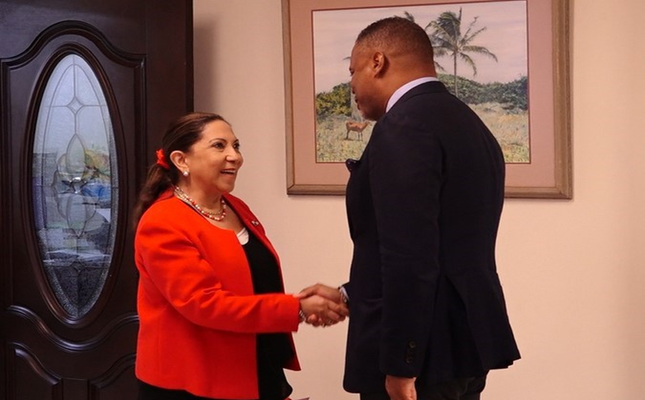
    In a significant diplomatic engagement, Premier Mark Brantley of Nevis welcomed Her Excellency Xiomara Perez, Panama’s Ambassador to Barbados and St. Kitts and Nevis, for an official courtesy call at his Pinneys Estate office on March 27, 2026. The meeting marked a pivotal moment in bilateral relations between the Federation of St. Kitts and Nevis and the Republic of Panama.

    Ambassador Perez, who recently presented her credentials to Governor-General Dame Marcella Liburd in St. Kitts, emphasized the need to bridge the people-to-people connection gap between the nations. “We don’t truly know each other,” she acknowledged, “and this visit serves to strengthen our bilateral relations through enhanced cooperation in commercial, tourism, logistics, and agricultural sectors.”

    Premier Brantley, who concurrently serves as Minister of Tourism, highlighted the historical ties dating back to the Panama Canal construction era. “Our forefathers contributed to building the Panama Canal, creating an enduring bond between our peoples,” he stated. “We anticipate developing, deepening, and strengthening our relations with Panama moving forward.”

    The diplomatic exchange featured the traditional swapping of gift packages symbolizing their respective territories. Both parties engaged in substantive discussions exploring potential collaborations in trade, connectivity, and other mutually beneficial areas. Ambassador Perez expressed particular interest in Nevis’s agricultural advancements, recognizing the island’s impressive progress in this sector.

  • COE raises weather alerts in multiple provinces

    COE raises weather alerts in multiple provinces

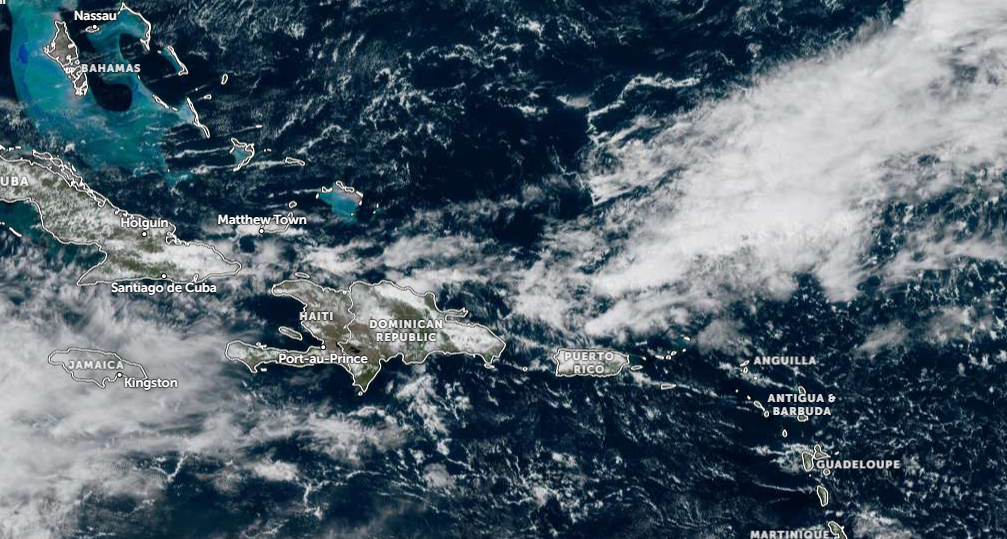
    The Dominican Republic’s Emergency Operations Center (COE) has intensified weather advisories across multiple regions in response to a deteriorating meteorological situation. A slow-moving trough positioned near the southern Bahamas continues to drive unstable conditions throughout the country, prompting officials to implement tiered alert systems based on regional vulnerability.

    Nine provinces including Santo Domingo, the National District, and eastern territories from Monte Plata to San Pedro de Macorís have been placed under yellow alert status, indicating heightened risk and preparedness requirements. Simultaneously, eight northern provinces spanning from Santiago to Monseñor Nouel maintain green alert levels, signaling continued vigilance despite relatively lower immediate threats.

    Meteorological assessments indicate the weather system is propagating northwestward while maintaining significant atmospheric moisture content. This configuration is generating recurrent episodes of intense precipitation, electrical storms, and powerful wind gusts, with peak activity anticipated during pre-dawn hours.

    Civil protection authorities have issued specific safety directives urging populations in affected areas to avoid river crossings, swollen streams, and flood-prone ravines. Recreational aquatic activities have been discouraged in alert zones due to hazardous conditions. Maritime operators along Atlantic coastlines received additional warnings regarding compromised visibility, electrical storm hazards, gusty winds, and turbulent sea states requiring navigational precautions.

    The COE continues monitoring system evolution through its national network, coordinating with regional emergency response teams to maintain readiness for potential escalation in weather-related incidents.