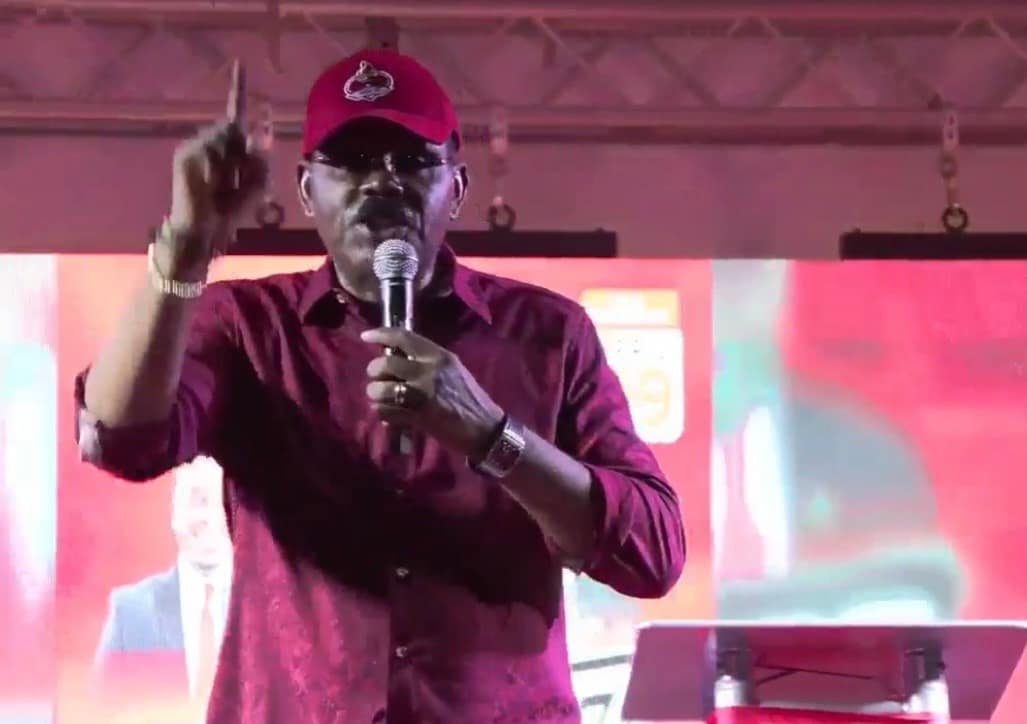
As Antigua and Barbuda gears up for a highly anticipated general election later this month, Prime Minister Gaston Browne has announced a major infrastructure overhaul for the Perry Bay district designed to free up underutilized land for much-needed residential development. Browne laid out the proposal during a political rally held in the St John’s Rural West constituency on Thursday evening, outlining that the centerpiece of the project is the relocation of the area’s existing primary roadway. The move is intended to reconfigure available land to create additional space zoned for new housing construction, addressing rising demand for residential property across the twin-island nation. This infrastructure adjustment forms one pillar of a wider government strategy aimed at expanding public access to buildable land and affordable housing, a growing priority as population and economic growth push demand for new residential units higher. Browne emphasized that the road reconfiguration will not only unlock more developable space but also enable more organized, long-term community planning for the Perry Bay region. The Perry Bay housing initiative was revealed alongside a slate of other campaign development priorities, with the prime minister framing infrastructure investment and expanded land access as core planks of his administration’s governing agenda. While the plan has been formally announced, Browne did not share a concrete implementation timeline, nor did he disclose detailed architectural or layout plans for the relocated roadway during the rally address. Officials expect the completed expansion will boost the government’s ongoing work to increase overall housing stock across the country and support sustained, inclusive community growth in Perry Bay and surrounding areas. With housing and economic development emerging as central talking points on the pre-election campaign trail, the proposal signals the administration’s focus on addressing key livelihood concerns ahead of the upcoming vote.
博客
-

LISTEN: Michael Joseph says he is ready from day one to transform Rural West, promises more frequent town halls
With election day just around the corner, Antigua and Barbuda Labour Party (ABLP) parliamentary candidate Michael Joseph has positioned himself as a community-rooted contender ready to hit the ground running for St. John’s Rural West if voters deliver him a victory on April 30.
Speaking to a gathering of enthusiastic supporters at a campaign rally held in the constituency Thursday night, Joseph emphasized that his deep connection to the area gives him unique insight into the daily struggles and unmet needs of local residents. As a lifelong member of the St. John’s Rural West community, he argued, he does not need to learn about the constituency’s challenges from outsiders—he encounters them firsthand.
“I walk these streets and I understand the challenges that we face in St. John’s Rural West. I understand what we need in Rural West,” Joseph told attendees. “Because I am you, and you are me.”
Far from waiting to take office to begin delivering for constituents, Joseph revealed he has already spent two years working directly within the community to advance priorities that matter most to local people. His on-the-ground efforts have centered on driving targeted development and expanding support for residents across the constituency, with a particular focus on the St. John’s Hill area. He stressed that his commitment to serving the community will not fade after votes are counted, a common critique of elected candidates who step back from grassroots engagement post-election.
If elected on April 30, Joseph said, his entire tenure will be centered on the evolving daily needs of the people he represents. “Come April 30th, when you make your decision, I will get up every day and the first thing I will look and say, ‘What does the people of Rural West need today?’ And I will get up, I will go, and I’ll fight for it,” he outlined.
A core pillar of Joseph’s governance plan is upending the traditional disconnect between representatives and constituents by institutionalizing regular, open town hall meetings across the constituency. These recurring public gatherings are designed to give every resident a direct voice in local decision-making, letting constituents set the policy and advocacy agenda for their representative to advance in parliament.
“I intend to make sure that we have regular town hall meetings in this constituency because you need to be a part of what happens,” Joseph explained. “You need to tell me, as your representative, what needs to be done and the decisions that we need to fight for.”
While Joseph openly acknowledged that transforming St. John’s Rural West will require heavy lifting and sustained effort to address longstanding challenges, he made clear he has both the preparation and willingness to take on the responsibility from his first day in office. All residents of the St. John’s Rural West constituency will head to polling stations on April 30 to cast their ballots for their next parliamentary representative.
-
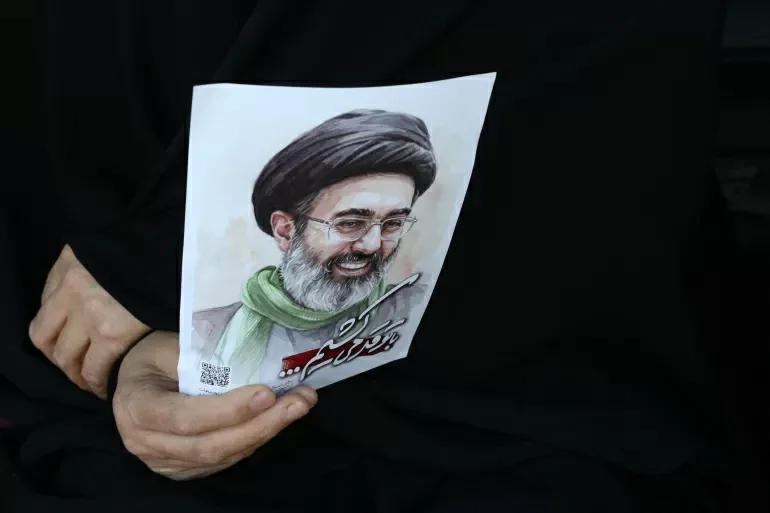
Khamenei: ‘Teheran heeft de wereld verbaasd’
On the 40th day of mourning for his predecessor and father, Ayatollah Ali Khamenei – who was killed in a joint US-Israeli strike on the opening day of the ongoing conflict – Iran’s new Supreme Leader Mojtaba Khamenei issued a landmark public address Thursday, marking his first public statement since the outbreak of hostilities. The 58-year-old leader, who had stayed out of the public eye since fighting began, used the televised address to declare that Iran has secured a “final victory” in its war against Israel and the United States.
Khamenei emphasized that Iran has never sought unnecessary conflict, but remains committed to defending its inalienable legitimate rights. He stressed that the criminal aggressors who launched unprovoked attacks on Iranian soil will not escape unpunished, adding that Tehran will demand full compensation for all infrastructure damage, and for the blood of all martyrs and injured citizens lost in the conflict.
When addressing the status of the Strait of Hormuz, a critical global chokepoint that Iran has effectively blocked since the war erupted on February 28 and a core point of contention in ongoing US-Iran peace talks, Khamenei only noted that the country would enter a “new phase” without offering additional details. The strait accounts for nearly a fifth of global oil trade, making its status a critical issue for the global economy.
The announcement comes one day after the United States and Iran reached a two-week ceasefire agreement brokered by Pakistan to allow for formal peace negotiations. The truce was reached after escalating attacks on Gulf states and the near-complete closure of the Strait of Hormuz triggered widespread international fears of a prolonged regional conflict with far-reaching global economic and security consequences. As part of the ceasefire deal, Iran agreed to allow commercial shipping to resume passage through the strategic waterway, with unconfirmed reports indicating Tehran plans to charge transit tolls for vessels using the strait to fund post-conflict reconstruction.
Despite the diplomatic breakthrough, Khamenei issued a clear warning that Iran stands fully prepared to respond immediately if enemy forces violate the terms of the truce. “Our fingers remain on the trigger,” he stated.
The fragile ceasefire already faces a major test just hours after it took effect. On Wednesday, Israel carried out a devastating airstrike in Lebanon that killed more than 300 people, putting the US-Iran agreement at severe risk. Dispute already exists over whether Lebanon is covered under the ceasefire terms: Iran and Pakistan maintain the truce applies to all allied fronts of the conflict, while the US and Israel reject this interpretation. Global leaders have already called for Lebanon to be included in the ceasefire framework and urged an immediate end to hostilities across the entire region.
Khamenei reaffirmed that Iran did not initiate the war, but will never surrender its legitimate rights under any circumstances. He explicitly referenced the “entire resistance front”, a statement widely interpreted as including Lebanese armed groups aligned with Tehran. Formal peace talks between US and Iranian delegations are scheduled to kick off this weekend in Pakistan, where negotiators will work toward a permanent end to the conflict.
-

Antigua Racing Cup Delivers a Blistering Opening Day
The highly anticipated Antigua Racing Cup launched its 2024 edition on Saturday, treating thousands of spectators gathered along the tropical Caribbean coastline to an opening day filled with nonstop drama, blistering speed, and unexpected upsets that lived up to every bit of the event’s growing reputation as one of the region’s premier sailing competitions.
Organizers had spent more than six months upgrading race infrastructure, expanding spectator viewing areas, and recruiting a stacked field of 42 teams from 11 countries, ranging from seasoned Olympic medal contenders to up-and-coming amateur sailing squads hungry to make their mark on the international stage. The opening day’s conditions could not have been more ideal for high-stakes racing: steady 15 to 20-knot trade winds blew across clear blue waters, with bright sunshine and moderate temperatures creating perfect conditions for both competitors and fans.
The first set of preliminary fleet races delivered immediate excitement, when a relative newcomer squad from Antigua’s own local youth sailing program pulled off a surprise victory over a heavily favored team from the United Kingdom that had entered the cup ranked second in the regional rankings. The local crew, led by 22-year-old skipper Mia Campbell, navigated the 12-nautical-mile course with precise tactical decisions, capitalizing on a shift in wind direction to overtake three leading boats in the final two miles of the race to claim the top spot. “This is what we’ve trained for, we wanted to show that local teams can compete with the best in the world, and today we did that,” Campbell told reporters after the finish.
Other standout performances on opening day came from the defending cup champions, a professional team from New Zealand, who won two of their three opening races to sit atop the overall leaderboard heading into day two of competition. The team’s skipper, Peter Thompson, noted that the conditions had tested every crew’s adaptability, calling the opening day one of the most competitive he had experienced in the cup’s history. “You can’t make a single mistake out here, every shift matters, every tactical call can change the result,” Thompson said.
Beyond the on-water action, opening day also featured a series of community events designed to introduce local young people to sailing, including free introductory clinics and a parade of participating boats through Antigua’s English Harbour. Event organizers reported that ticket sales for the 5-day competition are up 18% compared to the 2023 edition, with more than 12,000 visitors expected to attend over the course of the event, providing a major boost to Antigua and Barbuda’s tourism sector during the peak winter travel season. Racing is set to continue through Wednesday, with the final championship race scheduled for Sunday afternoon.
-

WATCH: Cultural Ambassador Masicka Says Love for His Mother and Education Helped Lift Him from the Ghetto
Jamaican dancehall icon Masicka, recently appointed as the island’s cultural ambassador, has opened up about the pivotal forces that drove him out of a challenging ghetto upbringing and onto the global stage: his unwavering love for his mother and his commitment to formal education.
In a newly released public interview, the artist shared intimate details of his early years growing up in a marginalized Jamaican community, where limited economic opportunity and systemic barriers often trap residents in cycles of intergenerational poverty. Unlike many peers who faced limited pathways to success, Masicka said his mother prioritized his education from childhood, instilling in him the belief that learning could open doors that his neighborhood circumstances could not close.
“My mother never let me think that where I was born was where I had to stay,” Masicka reflected in the conversation. “She pushed me to stay in school even when the streets were calling, even when it felt like the only way forward was to give up on books. That commitment to education gave me the foundation to build my career on my own terms.”
Since his appointment as cultural ambassador, Masicka has taken on the mission of amplifying Jamaican art and culture to global audiences, while also advocating for improved educational access and youth opportunity in marginalized communities across the country. He says his own journey is proof that investing in young people and supporting family-centered values can create life-changing outcomes, even for those born into the most challenging circumstances.
The video of his conversation has already gone viral on social media, with thousands of young Jamaicans sharing the clip and commenting that his story has inspired them to continue pursuing their own education and career goals despite systemic barriers.
-
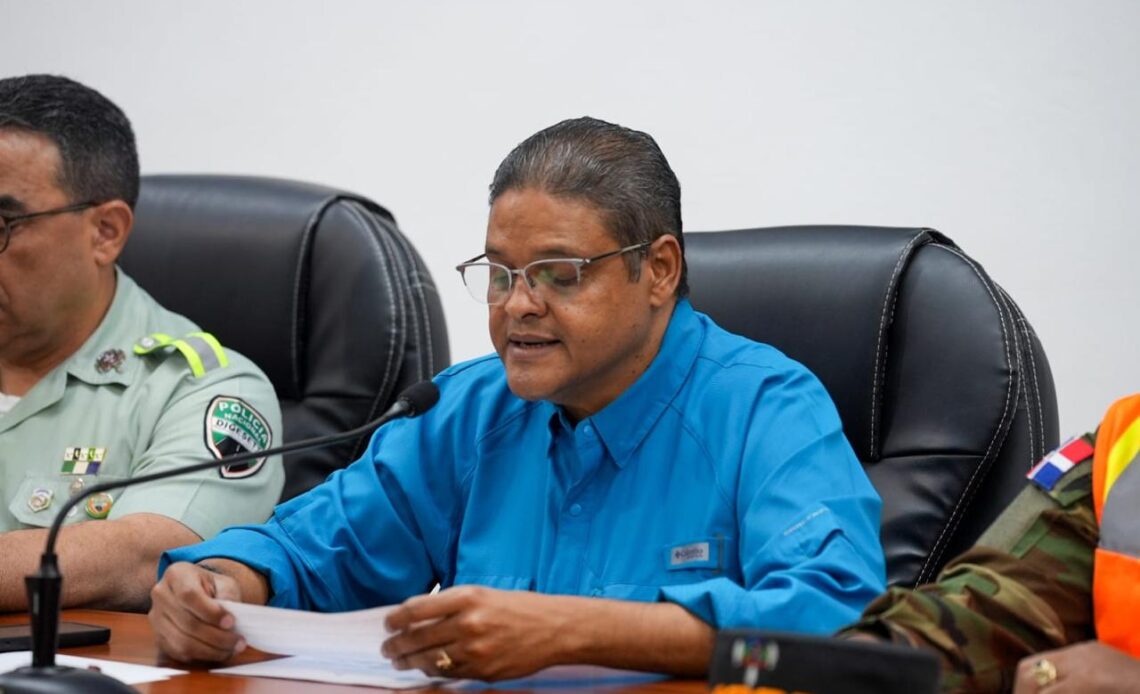
Authorities issue flood alert as heavy rains threaten Dominican Republic this weekend
In the Dominican capital of Santo Domingo, national emergency officials have issued an urgent call for residents to maintain the highest level of alert this weekend, as two converging weather systems are set to bring heavy downpours that raise major risks of urban flooding, overflowing rivers and ravines, and destructive landslides across the country.
This threat is amplified by pre-existing dangerous conditions: nearly two straight weeks of consistent rainfall have left the nation’s soil completely saturated, leaving no additional capacity to absorb new precipitation. That means even moderate rainfall could trigger the disasters warned about by officials.
Juan Manuel Méndez, director of the Dominican Republic’s Emergency Operations Center (known locally by its Spanish acronym COE), confirmed that the agency has convened a permanent round-the-clock session to coordinate response efforts. To prepare for the anticipated extreme weather, COE has already activated its full contingency response plan at the highest preparedness level, putting all emergency response teams and resources on standby ahead of the storm.
Official meteorological projections indicate total rainfall accumulations will range between 50 and 100 millimeters across most affected areas through the duration of the event. Weather systems are expected to bring scattered showers that alternate between light periods and intense torrential downpours starting this weekend, with unstable conditions forecast to linger into the early part of next week. Emergency officials have urged residents in low-lying and landslide-prone areas to stay updated on official alerts and follow evacuation instructions if issued.
-

PHOTO: Antigua Lions Club Donates $1,500 to Dyslexia Association During Ingrid Daniel Presentation
The Antigua Lions Club, a longstanding community service organization focused on supporting local public welfare initiatives, has contributed $1,500 to the Dyslexia Association, following an insightful educational presentation delivered by advocate Ingrid Daniel. Daniel’s presentation, which covered the daily challenges faced by people living with dyslexia, the latest support resources available, and the critical need for sustained community funding to expand outreach and programming, resonated deeply with Lions Club members. This monetary contribution will be allocated to the association’s core operations, including expanding accessibility to screening services, developing educational materials for affected individuals and their families, and running public awareness campaigns to reduce stigma around dyslexia. Representatives from both organizations highlighted the importance of cross-community collaboration to address often-overlooked learning differences, noting that this donation marks a meaningful step toward expanding the Dyslexia Association’s reach across Antigua. The Lions Club has a long history of investing in local health and education causes, and this gift aligns with its ongoing mission to lift up vulnerable community members through targeted, practical support.
-

National Bank Renews Its Partnership with Nevis Island Administration to Champion Youth Development
BASSETERRE, St. Kitts – April 10, 2026 – One of the Federation of St. Kitts and Nevis’ most prominent financial institutions has reaffirmed its dedication to nurturing the next generation by extending its longstanding collaborative partnership with the Nevis Island Administration’s Ministry of Education, Library Services, Information Technology, Youth and Sports.
St. Kitts-Nevis-Anguilla National Bank Ltd. (SKNANB) made the formal announcement of the renewed agreement in early April 2026, framing the continuation of this work as a core reflection of the bank’s institutional mission to invest in the long-term success of young people across the Federation.
For multiple years, this cross-sector partnership has delivered tangible opportunities for Nevisian youth, with SKNANB serving as the headline sponsor for a suite of popular athletic and academic programs that serve diverse student interests. On the sporting side, the bank’s backing has enabled the staging of beloved regional competitions, including the annual Primary Schools Football Tournament and the multi-discipline Nevis Inter-Primary Schools’ Championship, which brings together young competitors from across the island in both football and track and field events.
These annual competitions have grown far beyond casual recreational events, emerging as critical pipelines for emerging athletic talent while teaching young participants foundational life skills including collaborative teamwork, personal discipline, and respect for healthy competition. But the partnership’s impact extends well beyond the athletic field, reaching into academic and personal development programming designed to build critical skills for the next generation of leaders. SKNANB’s financial and logistical support has also enabled youth-focused initiatives including inter-school spelling bees, hands-on STEM activities, immersive youth camps, and public elocution competitions – all curated to encourage academic excellence, strengthen critical thinking abilities, and build confident, clear communication skills among young participants.
Looking ahead to the coming year of collaboration, SKNANB leadership expressed excitement to continue working alongside the Nevis Ministry of Education to advance their shared goal: empowering Nevis’ children and young people through a combination of accessible education and athletic opportunity.
As the leading premier financial institution in the Federation, SKNANB has long anchored its corporate identity in commitment to broad-based economic and social progress across the islands. The bank’s ongoing youth development partnership is just one core component of its broader institutional focus on community uplift, intentional corporate social responsibility, and cross-sector collaborations that deliver sustained, positive change for residents across the Federation.
Media inquiries about the partnership and SKNANB’s community programming can be directed to the bank’s Marketing Department via email at marketing@sknanb.com, by phone at (869) 465-2204, or through the institution’s official website www.sknanb.com.
-

Leaked letter outlines timeline and details of CARICOM SG reappointment vote
BASSETERRE, St. Kitts – A public controversy over the reappointment of Dr. Carla Barnett to a second term as Secretary-General of the Caribbean Community (CARICOM) has intensified in recent days, with Trinidad and Tobago voicing formal dissatisfaction over the outcome and calling into question the legitimacy of the process that led to the vote. Now, a leaked internal correspondence from CARICOM Chair Dr. Terrance Drew has pulled back the curtain on the timeline of deliberations, as regional leaders prepare for an emergency summit to resolve the growing rift.
Trinidad and Tobago officials have made their opposition to Barnett’s reappointment clear, anchoring their discontent in long-simmering unresolved grievances. The core complaint centers on the CARICOM Secretariat’s failure to respond to previous official communications regarding the 2010s arrest and deportation of a Trinidad and Tobago citizen by another member state, a matter Port-of-Spain says has been left unaddressed throughout Barnett’s first term.
In the leaked letter addressed to the Prime Minister of Trinidad and Tobago, Drew, who also serves as Prime Minister of St. Kitts and Nevis, pushed back against claims of an irregular or opaque process, laying out a step-by-step timeline of how the reappointment vote moved forward. Drew confirmed that the item was added to the CARICOM Heads of Government conference agenda weeks in advance, with formal notifications sent to every member state’s leadership well before the gathering kicked off in late February.
According to the timeline outlined in the letter, the Trinidad and Tobago Prime Minister chose to depart St. Kitts and Nevis on the evening of February 25 – the first day of the scheduled conference – one full day before the leaders-only retreat where the Secretary-General vote was scheduled to take place on February 26. Drew emphasized that regional organizers made deliberate accommodations to ensure Trinidad and Tobago still had representation at the critical closed-door session. CARICOM Affairs Minister Sean Sobers was formally invited to step in and attend the retreat in the Prime Minister’s place, but the offer was ultimately rejected.
The letter details that Sobers declined the invitation citing a specific, personal objection to the standard transit arranged for retreat attendees: a water taxi, the primary mode of transportation between the islands of St. Kitts and Nevis. The minister reportedly stated he declined to attend out of fear of experiencing seasickness during the crossing.
With no representative from Trinidad and Tobago present, the Heads of Government moved forward with deliberations, ultimately approving Barnett’s reappointment in a vote held in full compliance with Article 24 of the Revised Treaty of Chaguaramas – the foundational regional agreement that formally lays out the rules and procedures for selecting and reappointing the CARICOM Secretary-General. Drew added in the correspondence that multiple attempts were made to reach the Trinidad and Tobago Prime Minister after the vote to share the outcome, but all outreach went unanswered.
Drew is not the only regional leader to defend the outcome of the process. Guyana’s President Dr. Irfan Ali has publicly backed the reappointment, confirming in his own remarks that all procedural requirements laid out in regional governing documents were followed correctly at every stage of the decision.
To address the ongoing standoff, CARICOM has called a special emergency Heads of Government meeting scheduled for the afternoon of April 10, when the controversial reappointment will be revisited for full discussion. Regional observers and leadership hold out hope that the face-to-face talks will produce a mutually acceptable resolution to the concerns raised by Trinidad and Tobago, mending the divide before it creates deeper friction within the 15-nation bloc.
-

Foundation warns over 70% of Dominican workers face inadequate pensions
A leading Dominican social security advocacy organization is sounding the alarm over an impending retirement crisis that threatens the livelihood of the vast majority of the country’s working population. The Social Security for All Foundation warns that without immediate structural overhauls to the nation’s current pension framework, more than seven out of every 10 Dominican workers will enter retirement with benefits too low to sustain their pre-retirement quality of life.
In its latest data-driven analysis of the Dominican pension system, the foundation outlines the scope of the coming demographic shift. Between 2031 and 2033 alone, roughly 1.6 million currently active pension affiliates will reach the official retirement age. Yet systemic weaknesses have left the system deeply underfunded: only 30.3% of these affiliates currently make regular required contributions to their pension accounts. This ongoing irregular contribution pattern, the group emphasizes, will almost inevitably translate to meager retirement payouts for the majority of workers when they exit the workforce.
The potential ramifications of unaddressed pension shortfalls extend far beyond individual financial hardship, the organization cautions. Widespread inadequate retirement benefits could create widespread economic insecurity among senior citizens, which in turn may fuel social unrest and place unprecedented pressure on public institutions that are already tasked with supporting vulnerable populations. Left unaddressed, the issue could escalate into a full-scale social crisis within the next decade.
The foundation has pinpointed four core structural drivers behind the growing pension gap: chronically low individual and employer contribution rates, excessive commissions charged by Administradoras de Fondos de Pensiones (AFPs, the private pension fund administrators), the large share of workers engaged in informal labor that does not require pension contributions, and the lack of a contributory-subsidized regime designed specifically to accommodate self-employed workers, who make up a significant segment of the Dominican workforce.
To reverse this alarming trend, the organization has put forward a pair of targeted policy reforms that it says would meaningfully strengthen the system. The proposals include a gradual phase-in of increased pension contributions, ultimately raising the total contribution rate to 16.2%, alongside a cap on AFP commissions that would reduce the current fee levels to 0.50%. According to the foundation’s modeling, these two adjustments would significantly boost future pension payouts for workers and strengthen critical financial protections for low-income retirees, who are the most vulnerable to inadequate benefits.