博客

  • Migrants deported from US stranded, ‘scared’ in DR Congo

    Migrants deported from US stranded, ‘scared’ in DR Congo

    Fifteen Latin American migrants who sought asylum in the United States now find themselves trapped in a restricted airport-area compound in Kinshasa, the capital of the Democratic Republic of Congo, the latest group caught in a deeply controversial Trump-era immigration policy that deportes undocumented migrants to third-party nations thousands of kilometers from their home regions.

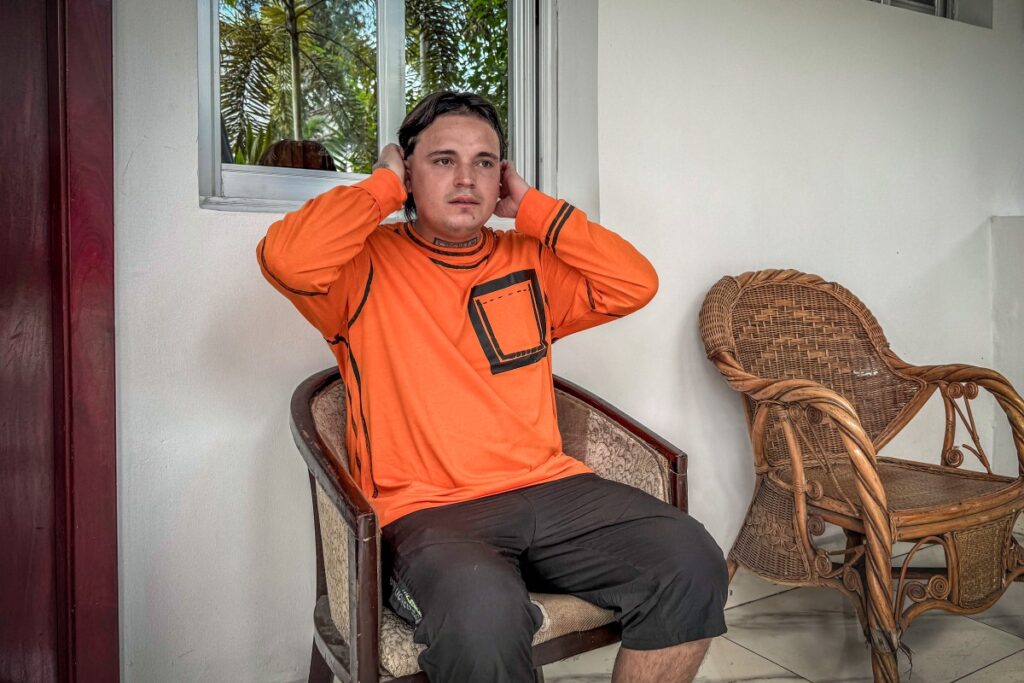
    What was supposed to be a path to safety in the US has turned into an ordeal of uncertainty and poor treatment for the group, who told AFP they endured a 27-hour transcontinental flight with their hands and feet bound in shackles before being deposited in the central African country. For 30-year-old Colombian migrant Gabriela, the situation has been nothing short of terrifying. She only learned her final destination one day before the deportation, and now struggles to navigate a country where she does not speak the official French language.

    “I didn’t want to go to Congo. I’m scared, I don’t know the language,” Gabriela explained, summing up the despair shared by the entire group.

    DR Congo is one of at least seven African nations that have agreed to accept deported migrants under the US scheme, which typically offers the host countries financial or logistical backing in exchange for taking in deportees. Other participating nations include Cameroon, Equatorial Guinea, Eswatini, Ghana, Rwanda and South Sudan. The first cohort of deportees arrived in Kinshasa last Friday, and to date, host country authorities have released almost no public information about what will happen to the migrants after their arrival.

    The International Organization for Migration (IOM), which manages the migrants once they are issued short-stay visas, says it only offers assisted voluntary return for migrants who formally request the service. Since their arrival, all 15 South American migrants have been confined to a gated compound near Kinshasa’s main airport, barred from leaving the premises even as they wait for their fate to be decided.

    The compound itself consists of rows of small, plain white-walled cabins where the group sleeps. Uniformed police and military vehicles are stationed outside the perimeter, and unidentified private military contractor personnel have also been spotted on site. Confined to the grounds, the migrants pass their days glued to their mobile phones, desperately trying to reach family members back home with no local language skills to help them navigate their new surroundings.

    The group says they have each received roughly $100 in aid from IOM officials, but are not allowed to receive outside visitors. Multiple migrants, including Gabriela, have already fallen ill with fevers, vomiting and severe stomach issues since arriving. While some have been given basic medication, Gabriela says no licensed healthcare worker has ever come to the compound to examine the sick migrants.

    Four of the migrants confirmed they have only been issued seven-day short-stay visas, which can be extended for a maximum of three months. Once the initial week-long visa period expires, however, the migrants say they have been told all official support will end, leaving them to survive on their own in one of the world’s poorest nations. The World Bank estimates nearly 75% of DR Congo’s 102 million population lives below the international poverty line, and Kinshasa, a megacity of 17 million, suffers from widespread lack of access to consistent running water and electricity, with dilapidated infrastructure across most residential areas.

    “They’ve got us cornered because they tell us: if you don’t accept the repatriation programme, you’ll be stuck in a mess here in Congo,” Gabriela said, visibly distressed. “That is inhumane and unfair.”

    For 25-year-old Colombian Hugo Palencia Ropero, who spent five months in US immigration detention before being deported, the situation in DR Congo is more frightening than the instability he left behind in his home country. Though he acknowledged the compound provides basic meals, room cleaning and security, he says the uncertainty of his future makes every day unbearable.

    “I’m more afraid of being here in Africa than in Colombia,” Ropero said. “If the seven days go by and we don’t receive any further assistance, things will get very difficult for us, especially since we don’t have work permits.” He added that he would accept any travel document offered to him just to leave DR Congo as soon as possible.

    The arrival of the Latin American deportees has already sparked fierce pushback from Congolese civil society and social media users, who question why their already resource-strapped nation should absorb migrants deported from the US. The scheme, first implemented under the Trump administration, continues to draw widespread criticism from human rights groups over its lack of transparency and disregard for migrant wellbeing.

  • Mideast war ‘starting to weaken Europe’, says Erdogan

    Mideast war ‘starting to weaken Europe’, says Erdogan

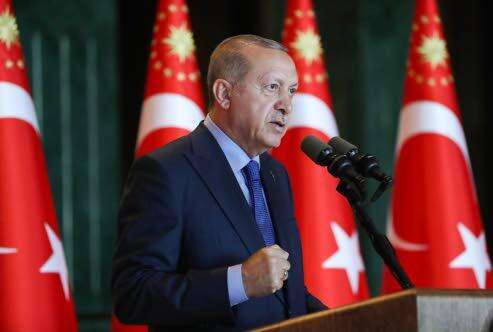
    ANKARA, Turkey – In a high-stakes diplomatic exchange on Wednesday, Turkish President Recep Tayyip Erdogan issued a stark warning to German President Frank-Walter Steinmeier: the ongoing US-Israeli military confrontation against Iran is already beginning to erode Europe’s economic and political stability. A formal statement released by Erdogan’s office detailed the pointed remarks delivered during the bilateral meeting, where the Turkish leader emphasized the urgent need for a peace-first approach to de-escalate tensions spreading across the Middle East. Erdogan stressed that the conflict, which is centered in the immediate region surrounding Turkey, is not contained to the Middle East — its ripple effects are already weakening European foundations. If global and regional leaders continue to prioritize confrontation over negotiated solutions, the eventual harm inflicted by the standoff will reach far beyond the Middle East, leaving Europe with irreversible damage that will take decades to repair, Erdogan told his German counterpart. The remarks mark one of the clearest warnings yet from a major NATO leader about the cross-continental spillover risks of escalating tensions between Iran and the US-Israeli bloc, highlighting growing divisions within the alliance over how to approach the volatile situation in the Middle East.

  • United Airlines hiking fares 15-20% on jet fuel spike

    United Airlines hiking fares 15-20% on jet fuel spike

    Leading U.S. air carrier United Airlines has announced sweeping fare increases ranging between 15% and 20%, a strategic move designed to counteract skyrocketing jet fuel costs triggered by the ongoing Middle East conflict while shielding its bottom line, company executives confirmed Wednesday. In addition to raising ticket prices, the airline has trimmed its planned 2026 flight capacity by 5%, with the explicit goal of fully recouping all extra expenses stemming from the post-conflict jump in fuel prices.

    United CEO Scott Kirby emphasized that global oil markets have entered a period of extreme volatility, noting that the company’s long-term operational planning is built around the projection that elevated fuel prices will persist for an extended period. As of the company’s latest update, United has not observed any measurable drop in passenger demand despite the steep fare increases. Even so, Kirby warned that if consumer demand for air travel softens in the coming years, the carrier could implement further flight schedule cuts for 2027.

    On Tuesday, United released its first-quarter financial results, which showed higher year-over-year profits. However, the company simultaneously downgraded its full-year 2024 profit guidance directly due to unanticipated fuel cost increases. The airline now projects an average fuel price of $4.30 per gallon for the second quarter, marking a 55% jump from the first quarter’s average fuel cost.

    United is not alone in taking these defensive measures. Other major air carriers across the industry have also rolled out fare increases and reduced planned flight capacity in response to the oil price rally that began after the U.S.-Israeli military operation against Iran launched on February 28. On April 17, International Air Transport Association leadership called on global regulatory bodies to develop coordinated contingency plans to prepare for potential jet fuel rationing if the conflict escalates.

    United CFO Michael Leskinen noted that concerns over jet fuel supply shortages are far more pronounced in Asian and European markets than in the United States. “In the U.S., we do not see fuel availability as a problem at all — it is purely a pricing issue,” Leskinen stated. He added that even for European and Asian markets, the current challenge remains elevated prices rather than a total lack of supply, though occasional temporary supply interruptions could occur across those regions if the Middle East conflict drags on.

  • New drugs raise hopes of pancreatic cancer breakthrough

    New drugs raise hopes of pancreatic cancer breakthrough

    For decades, pancreatic cancer has stood as one of the most formidable and unbeatable foes in modern oncology, a deadly diagnosis with almost no major treatment advances to offer patients and devastatingly low survival rates. But after 40 years of stagnant progress, a wave of cutting-edge new therapies from researchers across the globe have delivered unprecedented, promising results that are being hailed as a turning point in the fight against this aggressive disease.

    Pancreatic cancer has long had a grim reputation: global health data shows only around 10 percent of diagnosed patients survive beyond the five-year mark after their initial diagnosis. Worse, incidence rates have been climbing steadily across the world, with particularly sharp growth among younger adult populations. Projections indicate that within the next decade, pancreatic cancer will overtake all other cancers except lung cancer to become the second leading cause of cancer-related death in developed nations. Until recently, this growing public health crisis had seen almost no medical innovation, according to Patrick Mehlen, a senior researcher at France’s Leon Berard Cancer Centre. Mehlen told AFP that for nearly half a century, the field saw virtually no meaningful progress. Over the past decade, however, increased research funding and growing public attention have finally shifted the landscape, turning what was once a dead end into a space of rapid innovation.

    While a universal cure remains out of reach for most patients, these new therapies are already delivering tangible, life-extending benefits that were unthinkable just a generation ago. The most high-profile breakthrough came last week from American biopharmaceutical company Revolution Medicines, which released positive late-stage trial data for its experimental targeted therapy daraxonrasib. The drug works by targeting the KRAS protein, a genetic mutation long known to drive uncontrolled tumor growth in a large share of pancreatic cancer cases.

    In the company’s phase three trial, half of all patients receiving the daily pill survived more than 13 months after starting treatment — double the survival time of the control group that received standard chemotherapy. While doubling survival to 13 months may seem like a modest gain to outsiders, for a cancer that typically claims patients within months of diagnosis, this result is unprecedented.

    One high-profile patient, former U.S. Senator Ben Sasse of Nebraska, has shared his firsthand experience of the drug’s impact after being diagnosed with late-stage, metastatic pancreatic cancer in late 2023. Sasse, 54, told the New York Times that when he received his diagnosis, doctors gave him just three to four months of life. After starting treatment with daraxonrasib, he said he is far healthier and more active than he was just before Christmas last year. He did acknowledge the drug comes with harsh side effects, noting it is “a nasty drug” that caused severe skin reactions including peeling and bloody skin on his face. Revolution Medicines announced it plans to submit a formal application for U.S. regulatory approval in the near future, and full detailed trial results will be presented at the annual American Society of Clinical Oncology (ASCO) conference in Chicago next month.

    Daraxonrasib is not the only promising advance to emerge in recent weeks. Earlier this week, a separate research team led by Mehlen published early-stage trial results in the journal Nature for a novel therapy that takes a completely different approach to treating the disease. Unlike traditional treatments that aim to kill tumor cells directly, this new therapy targets the ability of cancer cells to develop resistance to existing treatments, including chemotherapy.

    The experimental drug, called the NP137 antibody, was tested in a phase 1b trial on 43 patients with locally advanced pancreatic cancer that had not yet spread to distant organs. All patients received the antibody alongside standard chemotherapy. Compared to historical survival rates for similar patients, study participants gained an average of several additional months of life. “We’re giving people an average of six months more — which is significant for this disease,” Mehlen explained of the results. His team plans to launch a larger, controlled follow-up trial later this year to confirm these early findings, and Mehlen said he eventually hopes the antibody will be able to boost the effectiveness of not just chemotherapy, but also new targeted therapies like daraxonrasib.

    The third major advance announced over the weekend brings mRNA technology, which gained global fame for its role in COVID-19 vaccines, into the fight against pancreatic cancer. The experimental therapeutic cancer vaccine was co-developed by pharmaceutical firms BioNTech and Genentech, and it uses mRNA to train the body’s immune system to recognize and attack pancreatic cancer cells.

    Early phase one trial results for the vaccine show that among 16 treated patients with pre-existing pancreatic cancer, the vaccine triggered a targeted immune response against cancer cells in eight participants. Seven of those eight patients who responded to the vaccine were still alive six years after receiving treatment. By comparison, just two of the eight patients whose immune systems did not respond to the vaccine survived for the same six-year period. Researchers note that phase one trials are primarily designed to test treatment safety rather than confirm effectiveness, so large-scale follow-up studies will be needed to verify these encouraging early results.

    Taken together, the string of positive trial announcements marks the most significant leap forward for pancreatic cancer treatment in decades, turning a once untreatable disease into a condition that researchers believe can be managed with more effective therapies in the coming years.

  • Supreme Ventures to celebrate World Vet Day

    Supreme Ventures to celebrate World Vet Day

    This Saturday, as the global community marks World Veterinary Day, Jamaica’s Supreme Ventures Racing & Entertainment Limited (SVREL) is preparing a full day of public celebration and education at the iconic Caymanas Park, the country’s only professional racetrack. The event is organized in close collaboration with two leading local industry bodies: the Jamaica Racing Commission (JRC) and the Jamaica Equine Veterinary Association (JEVA), and centers on the 2024 official World Veterinary Association (WVA) theme, “Veterinarians: Guardians of Food and Health.”

    In an official press statement issued this Wednesday, SVREL outlined that the gathering will bring together practicing veterinarians, horse racing industry stakeholders, and general visitors to shine a spotlight on the underrecognized critical work that veterinary professionals carry out. Beyond treating sick animals, these experts uphold three core pillars of the industry: protecting the welfare of equine athletes, safeguarding broader public health across Jamaica, and preserving the integrity and trustworthiness of the local horse racing sector.

    The day’s schedule is packed with accessible, engaging programming designed to educate the public on the interconnected work of veterinary medicine. Attendees can join informational educational talks, view curated video presentations, and take part in interactive public engagement activities that break down how veterinary care benefits both animal and human populations. Key focus areas for this year’s event include advancing public understanding of equine welfare standards, promoting responsible medication practices in racing, and reinforcing the importance of biosecurity protocols to prevent disease outbreaks.

    Aligned with the WVA’s global theme, organizers will also lead discussions on the One Health approach, a framework that emphasizes how the health of humans, animals, and surrounding ecosystems are inextricably linked. A special segment of the event will be dedicated to highlighting racehorse retirement programs, which underscore the JRC’s long-standing commitment to supporting the health and quality of life of former racehorses long after they leave the track.

    To pay tribute to the decades of contributions that veterinarians have made to Jamaica’s horse racing industry, several races on the day’s official card will be renamed in honor of distinguished local veterinary professionals. Three featured trophy races will anchor the day’s racing schedule: the Jamaica Equine Veterinary Association Trophy, the World Veterinary Day Trophy, and the Jamaica Racing Commission Trophy.

    The entire celebration is open to the general public, and expected attendees include veterinary practitioners from JEVA and the Jamaica Veterinary Medical Association (JVMA), senior JRC officials, and representatives from across Jamaica’s equine and racing sectors. Event organizers are encouraging all patrons to take part in the day’s educational activities to gain a new appreciation for the critical work that happens behind the scenes to keep every race safe, fair, and ethical.

  • Environmental advocates target waste from campaign signs

    Environmental advocates target waste from campaign signs

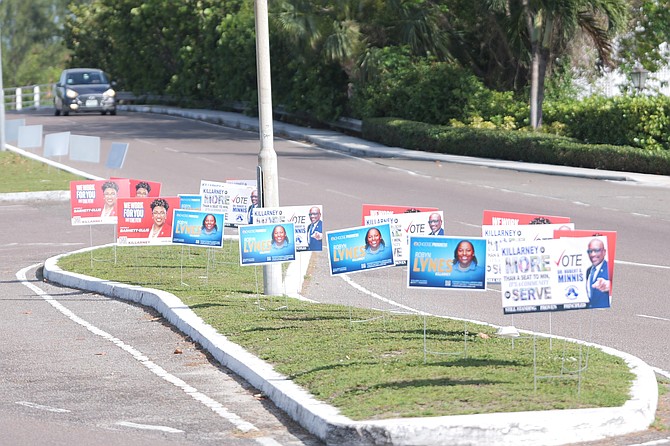
    As the Bahamas approaches its upcoming general election, the proliferation of plastic political campaign signs across public and private landscapes has spurred environmental advocates to call for urgent reform of long-standing campaign traditions, highlighting the lasting ecological damage caused by disposable election materials.

    Most modern campaign signage is constructed from durable synthetic materials, most commonly polypropylene, a petroleum-based plastic that never fully biodegrades when introduced to natural ecosystems. While the exact composition of signs used by local political parties in this election cycle has not been publicly disclosed, environmental researchers warn that the standard production and disposal practices for these materials carry steep, underdiscussed environmental costs that persist long after voting concludes.

    Dr. Ancilleno Davis, a prominent Bahamian environmental scientist, explained that importing large volumes of single-use materials for a temporary political campaign contributes to unnecessary fossil fuel consumption and generates persistent waste that contaminates local ecosystems. Abandoned signs and their metal support stakes are often left littering landscapes for months after election day, with many turning up in remote natural areas half a year after campaigns end. Even when signs are collected after voting, they are typically deposited in municipal landfills, where their non-biodegradable components leach toxic chemicals into groundwater reserves that supply local communities.

    “It’s a high price to pay for this type of campaigning,” Davis emphasized. Beyond the ecological harm, Davis also criticized the massive sums of campaign money diverted to printed signage, arguing that these funds could deliver far greater long-term benefit to Bahamian communities if redirected to public projects like community green spaces and urban gardens, rather than temporary materials destined for waste.

    To address the issue, Davis proposed a multi-pronged reform framework for political groups: cutting reliance on physical signage in favor of lower-waste outreach channels, including social media campaigns, radio advertising, and targeted community engagement. For campaigns that still choose to use physical signs, he urged strict limits on total signage volume, mandates for biodegradable or fully recyclable materials, and mandatory pre-election planning for post-campaign material disposal that accounts for long-term environmental impacts.

    Nikita Shiel-Rolle, founder and CEO of the Cat Island Conservation Institute, echoed Davis’s concerns, framing the problem of campaign signage waste as a entry point for a broader national conversation about sustainable political campaigning and intentional community engagement. Shiel-Rolle noted that the sheer volume of signs deployed during a typical campaign is often unnecessary, and suggested that formal new regulations could help curb overproduction—for example, rules mandating minimum spacing between individual signs to reduce overall quantity.

    She pointed out that current sign deployment practices lack intentional structure beyond basic name recognition: campaign workers are typically hired simply to put up as many signs as possible, with no planning for post-election removal or processing. For Shiel-Rolle, the most critical gap in current practice is the lack of a clear post-election plan for campaign materials.

    “I think as long as there is a plan as to what they’re going to do with the signs, I think that’s the most important thing,” she said. “I think that kind of goes back to even the bigger environmental conversations that we have.”

  • Bad-behaved students are from privileged homes too, says Morris Dixon

    Bad-behaved students are from privileged homes too, says Morris Dixon

    KINGSTON, Jamaica — In the wake of a string of high-profile violent incidents involving Jamaican secondary school students that have sparked widespread public outcry and social media debate, Education Minister Senator Dr Dana Morris Dixon is pushing back against a pervasive cultural stereotype that has dominated public conversation: the assumption that students caught engaging in dangerous, sometimes criminal misconduct are overwhelmingly products of broken or socioeconomically disadvantaged households.

    Speaking Wednesday at the regular weekly post-Cabinet press briefing held at Jamaica House, Morris Dixon directly challenged this widespread narrative, noting that many of the young people involved in the recent incidents that have dominated headlines actually come from stable, privileged family backgrounds.

    The minister’s comments come amid a sharp spike in public concern over youth violence in Jamaican schools and communities, following three separate serious incidents that have underscored the scale of the growing crisis. Most recently, a male student from Seaforth High was stabbed to death in Morant Bay this week, after a schoolyard dispute spilled off campus and escalated into fatal violence. Three suspects have been taken into custody in connection with the killing.

    Earlier in March, a 17-year-old student at Ocho Rios High School was charged with the murder of 16-year-old classmate Devonie Shearer. According to official police reports from the St Ann’s Bay division, the attack unfolded around 3 p.m. on March 4, when the accused used a metal chair to strike Shearer in the head. The injured teenager was rushed to a local hospital for emergency treatment, but succumbed to his wounds while receiving care. Witness testimony directly implicated the 17-year-old suspect, who turned himself in to authorities later that same day and was formally charged the following morning in the presence of a parent.

    Most recently, a graphic viral video circulated across social media platforms showing multiple students from Jamaica College, an elite all-boys institution in Kingston, brutally assaulting a fellow student they accused of stealing personal items from peers. Video footage shows the victim pinned by his collar while one attacker repeatedly punches him in the face, and another strikes him multiple times with a leather belt. All students involved in the incident are currently awaiting disciplinary action before the school’s disciplinary committee, and the school’s board has confirmed that the victim in the video admitted to taking items from other students prior to the attack.

    Against this backdrop of escalating violence, Morris Dixon emphasized that the Ministry of Education is prioritizing ongoing efforts to address the root causes of youth misconduct. She noted that schools across the island already invest significant resources into guidance counselling and psychosocial support for students grappling with mental and social challenges.

    Instead of blaming socioeconomic disadvantage, the minister argued that student violence is a reflection of broader cultural norms that permeate Jamaican society. “Our children are really products of the communities that they’re from, the homes that they’re from, and that we’re seeing in our schools a lot of the realities that we’re seeing in our communities,” she explained. “The schools are not distant from the communities within which they are delivering education services.”

    Morris Dixon stressed that harmful conflict resolution patterns visible in schools are directly learned from broader community dynamics, where violence has become a normalized response to disagreement. “This is a problem that is happening across our country and we have to deal with it,” she said. “It is a general problem where we have accepted violence as the way to deal with conflicts.”

    Moving forward, the minister confirmed the ministry will be increasing its focus on the psychosocial underpinnings of youth violence, expanding support systems in schools to help students develop non-violent conflict resolution skills and address underlying mental health challenges that contribute to aggressive behavior.

  • Oil prices rise on uncertain prospects for US-Iran ceasefire

    Oil prices rise on uncertain prospects for US-Iran ceasefire

    LONDON, UK – Global financial markets delivered a fragmented performance on Wednesday, as a last-minute announcement from US President Donald Trump extending a ceasefire with Iran left investors treading carefully while waiting for clarity on whether stalled peace negotiations will restart. Despite the ceasefire extension, the critical Strait of Hormuz – a key chokepoint for 20% of the world’s daily oil transit – remains blocked for Gulf energy shipments, keeping traders on high alert for a sudden resumption of armed hostilities. This uncertainty comes even as major US stock benchmarks have rebounded to hit record highs after erasing all losses triggered by the outbreak of the Middle East conflict in late February.

    Market analysts broadly note high market expectations that both the Trump administration and Iranian leadership are motivated to end the conflict, which has already sent global oil and natural gas prices soaring and put tangible downward pressure on projected worldwide economic growth. Beyond geopolitical tensions, two key factors have propped up investor confidence in recent weeks: stronger-than-expected quarterly earnings from major corporations, and unwavering market enthusiasm for artificial intelligence innovation. Dozens of leading blue-chip companies have outperformed analyst forecasts, while a spate of multi-billion dollar tech sector acquisitions has reinforced optimism that recent equity gains will be sustained.

    On Wall Street, stocks pushed upward, with large-cap technology shares leading gains that pushed the Nasdaq Composite to a new all-time closing high, while the S&P 500 advanced to within a fraction of a point of its own record peak. “Equity investors seem convinced that the war will soon be over, or that it will have little effect on the US economy, even if energy prices remain relatively elevated,” explained David Morrison, senior market analyst at Trade Nation.

    Performance across other major global equity benchmarks was far less upbeat. In Europe, Frankfurt and London stock indexes posted mild losses, while the Paris CAC 40 shed 1% on the day. Asian markets also ended the trading session with a split performance, mirroring the mixed risk sentiment across global trading floors.

    With Hormuz oil shipments still offline, major net energy importing nations in Asia and Europe that rely heavily on Middle East crude are grappling with fresh inflationary pressures stemming from higher energy costs, a shift that threatens to derail already fragile post-pandemic economic growth. “The ceasefire extension hasn’t done much to calm nerves given that worries remain about the impact of the energy squeeze on the global economy,” said Susannah Streeter, chief investment strategist at Wealth Club.

    Reflecting ongoing supply concerns, oil prices jumped sharply on Wednesday: Brent North Sea crude rose more than 3% to climb back above the $100 per barrel threshold, while West Texas Intermediate, the primary US oil benchmark, traded back above $90 per barrel.

    Complicating the fragile ceasefire dynamic, maritime security agencies confirmed that Iranian gunboats carried out an attack on at least one civilian container ship in the Strait of Hormuz on Wednesday, just hours after Trump announced the extension of the ceasefire to give additional time for peace negotiations mediated by Pakistan. Trump confirmed that the existing US naval blockade of Iranian ports will remain in place throughout the mediated dialogue process.

    “There is the inescapable view that, with the US and Iran not looking likely to start direct talks imminently, a resumption of hostilities is a distinct possibility,” said Chris Beauchamp, market analyst at online trading platform IG.

    Away from geopolitics and energy markets, investors are closely watching proceedings on Capitol Hill, where the Senate is holding confirmation hearings for Kevin Warsh, Trump’s nominee to replace outgoing Federal Reserve Chair Jerome Powell, whose term expires in May. Trump has repeatedly criticized Powell for declining to cut interest rates more aggressively, and told CNBC on Tuesday that he would be disappointed if Warsh does not move quickly to lower borrowing costs, despite ongoing above-target inflation. During his first confirmation hearing, Warsh pushed back against White House pressure, telling lawmakers he would maintain the Fed’s long-standing independence from political pressure and would not be controlled by the executive branch.

    In a fresh sign of the corporate world’s continued bullish outlook on AI, Elon Musk’s SpaceX announced Tuesday that it has formed a strategic partnership with AI coding startup Cursor, including an option to acquire the firm for $60 billion, marking one of the largest mega-deals centered on artificial intelligence in 2025.

  • Court confirms Neymar corruption acquittal over Barcelona transfer

    Court confirms Neymar corruption acquittal over Barcelona transfer

    In a long-running legal saga surrounding Brazilian soccer star Neymar’s 2013 high-profile transfer to FC Barcelona, Spain’s Supreme Court has issued a final ruling upholding the acquittal of all defendants, including the player himself and two of the Catalan club’s former presidents. The case originated back in 2015, when Brazilian sports investment group DIS launched legal action over the deal, arguing that it had suffered substantial financial harm due to its 40% stake in Neymar’s sporting rights during his early career at Brazil’s Santos FC.

    DIS claimed that key details of the transfer were deliberately hidden from the firm, most notably a 2011 exclusivity agreement between Neymar and Barcelona that was never disclosed to the rights holders. The high-profile first trial wrapped up in 2022, when a lower Spanish court cleared every named defendant of corruption and fraud charges. Alongside Neymar, former Barca presidents Josep Maria Bartomeu and Sandro Rosell, Neymar’s parents, Santos FC, the club’s ex-president Odilio Rodrigues Filho, and N&N — the career management company owned by the Neymar family — all received not guilty rulings.

    Unsatisfied with the 2022 outcome, DIS launched an appeal seeking to overturn the acquittal and recover 35 million euros in damages the firm claimed it was wrongfully denied. The Supreme Court’s Wednesday ruling rejected the appeal, concluding that the evidence presented in the case failed to back up the accuser’s claims. “The proven facts have revealed the inconsistency of the accusation,” the court explained in an official statement. “There was neither an offence of corruption in business dealings nor improper fraud, neither by the player, his representatives nor FC Barcelona.”

    The court further noted that the transfer timeline and structure stemmed simply from a strategic sporting decision by Barcelona, which moved to accelerate Neymar’s signing amid intense interest from multiple top rival clubs across Europe. At the time of the transfer, Barcelona publicly stated the total cost of the deal stood at 57.1 million euros, with 40 million euros paid to N&N and 17.1 million euros transferred to Santos. Of the sum paid to the Brazilian club, only 6.8 million euros was passed on to DIS, which formed the basis of its financial claim.

    Notably, prosecutors initially pursued harsh penalties for Neymar, calling for a two-year prison sentence and a 10 million euro fine against the attacker. In an unexpected shift late in the process, however, prosecutors chose to drop all corruption and fraud charges against every defendant in the case. This is not the only legal controversy tied to the 2013 transfer: Neymar also faced separate tax fraud allegations linked to the deal, which were resolved back in 2016 when Barcelona agreed to pay a 5.5 million euro fine to close the case with prosecutors. Now, 11 years after the transfer and nearly a decade after legal action first began, the final ruling from Spain’s highest court brings this high-stakes soccer legal battle to a close.

  • 72-y-o widower starts poultry farm with support from NCB Foundation

    72-y-o widower starts poultry farm with support from NCB Foundation

    KINGSTON, Jamaica — For most people reaching their seventh decade, retirement and slowing down are the expected next steps. But for 72-year-old Clinton Christie, a widower from St Catherine, Jamaica, life is only just beginning a new chapter. After decades of physically grueling work as a plumber to support his six children, age and fading health have forced him to step back from the trade that sustained his family for generations. Now, following the recent loss of his wife to cancer, he is building an entirely new future in poultry farming, driven by one clear, heartfelt goal: to help his youngest daughter finish her education and build her own career as a forensic accountant, and provide stable care for his two grandchildren.

    Christie, who has never shied away from hard work or new challenges, said when reflecting on his transition, “I am not afraid of trying something new.” The path forward was not easy to walk alone, however. To turn his small business dream into reality, he applied for support through the NCB Foundation’s 2025 Grant-a-Wish initiative, a program designed to lift up vulnerable Jamaicans by funding practical, community-focused personal projects. His proposal stood out among more than 45 submissions from across the island, earning him a $100,000 grant to construct a fowl coop and purchase chickens to raise for commercial sale.

    Perrin Gayle, chief executive officer of NCB Foundation, explained the decision to select Christie’s application in an official release shared Wednesday. “Mr Christie submitted a practical proposal with clear potential to support his family over time,” Gayle said. “This initiative is about meeting people where they are and giving them a real opportunity to move forward.”

    At a recent handover event attended by other program beneficiaries and NCB Foundation representatives, Christie shared his story of resilience, gratitude, and hope for what lies ahead. He noted that without the foundation’s support, launching this new venture would have been impossible. “I could not make a fresh start without the help of NCB Foundation,” he said. Today, Christie is hard at work building out his new poultry operation, working toward a sustainable income that will secure his family’s future and help his youngest daughter cross the graduation finish line. “As long as I can help my daughter to finish school, it would be a great improvement,” he shared, a quiet optimism underscoring his life-altering new beginning.