博客

  • Viral Domestic Violence Case Crumbles as Cop Walks Free

    Viral Domestic Violence Case Crumbles as Cop Walks Free

    A high-profile domestic violence case that sparked widespread public outrage after graphic footage circulated online has concluded with all charges against a serving police officer being dismissed, leaving community tensions simmering over the outcome.

    Thirty-nine-year-old Constable Phillip Garbutt, assigned to the local Traffic Support Unit, walked out of the magistrate’s court a free man on Monday morning, just hours after proceedings got underway. Garbutt had faced two separate criminal charges: one count of wounding against his 38-year-old common-law wife Deidra Jacobs, a caregiver by profession, and a second count of causing bodily harm to Jacobs’ 8-year-old son. Both charges were formally struck from the court record shortly after 10 a.m.

    The case collapsed entirely when Jacobs took the witness stand and informed the magistrate she no longer wished to pursue legal action. Speaking in regional Kriol, Jacobs stated directly, “I nuh wah no further court action.” Prosecutors launched an immediate inquiry into the possibility of outside influence, pressing Jacobs repeatedly on whether she had faced threats, coercion, or improper incentives to drop the proceedings. On each occasion, Jacobs denied any form of pressure.

    With the primary complainant unwilling to move forward with the prosecution, legal representatives had no choice but to present no evidence against Garbutt. The magistrate accordingly granted an order dismissing all charges. Garbutt, who appeared in court unrepresented by legal counsel, was immediately released and cleared to leave the courthouse.

    The case first captured national public attention in February, when raw smartphone footage filmed inside the couple’s Watermelon Street residence was uploaded to social media and quickly went viral. The footage, captured in the immediate aftermath of a February 17 domestic dispute, triggered such widespread public outcry that Garbutt was taken into police custody shortly after the video spread.

    Official police allegations outline that during the argument, Garbutt physically assaulted Jacobs by choking and punching her. When her 8-year-old son attempted to step in to protect his mother, Garbutt slapped the child, according to police reports. Subsequent medical examinations classified Jacobs’ injuries as wounding and the child’s injuries as harm, meeting the legal threshold for the charges laid.

    Despite the viral circulation of the incident footage and significant public backlash against the officer over the allegations, the criminal prosecution is now formally closed. What remains unresolved is whether the Jamaica Constabulary Force (or local law enforcement) will launch an internal disciplinary review into Garbutt’s conduct, with no official confirmation of pending administrative action as of Monday’s court ruling.

    This report is adapted from a televised evening news transcript, with regional Kriol dialogue preserved per standard regional transcription practices.


  • Scammers Beware: Belize Launches Instant Payment System

    Scammers Beware: Belize Launches Instant Payment System

    For months, small business owners and consumers across Belize have fallen victim to a pervasive and costly digital scam: fraudsters send convincing fake screenshots of completed bank transfers to secure goods or services, leveraging the multi-hour or even overnight delays in traditional payment processing to disappear before victims discover the funds never actually arrived. That loophole that scammers have exploited for years is about to be closed, after the Central Bank of Belize announced the full rollout of its new Instant Payments System (IPS), a 24/7 real-time transaction network designed to eliminate processing delays and cut off digital fraud at its source.

    Under Belize’s current banking framework, all digital payments are restricted to standard business operating hours and processed in segmented settlement windows. Payments initiated after the midday cutoff do not reach recipient accounts until the following business day, creating a gap between when a payment is marked as “sent” and when it is officially finalized in a user’s account. This gap has been the critical enabler for the screenshot scam, which has cost local merchants thousands of dollars in lost goods across the country.

    Central Bank of Belize Governor Kareem Michael explained that the new IPS system eliminates this gap entirely by enabling year-round, 24/7 payment processing that settles transactions in seconds. “What our target is that these transactions will be processed and settled typically in ten seconds or less. It is like sending a WhatsApp message,” Michael said. Unlike the current system that locks payments outside of banking hours, the IPS aligns transaction speed with the actual pace of economic activity, allowing funds to move whenever consumers and businesses need them to.

    Beyond cutting out delays to stop fraud, the new platform also addresses longstanding interoperability issues in Belize’s financial sector by connecting all domestic banks, credit unions, and digital wallet providers into a single unified network. This means users will be able to send instant transfers between different financial institutions seamlessly, no longer facing extra wait times or fees for cross-provider transactions. “IPS will connect banks, credit unions, and digital wallets into one shared payment system, allowing money to move easily and instantly between individuals, businesses, regardless of the provider,” Michael added.

    To deliver a system that meets global security and functionality standards, the Central Bank partnered with Montran Financial Services, an international payment infrastructure provider with decades of experience implementing real-time and instant payment systems for central banks across nearly 100 countries. Matt Walsh, Montran’s Global Sales Director, noted that the firm’s customizable solution is built to adapt to Belize’s unique financial ecosystem while adhering to the latest international technology standards. “All of our solutions are customizable, very flexible in terms of scaling them and implementing the exact requirements,” Walsh explained. “They’re all of course modern and built on the latest standards and technology. All of our solutions are multicurrency, multi-institutional and multilingual, so that could be accommodated and we have references all over the world.”

    For everyday consumers and small business owners, the changes brought by the IPS will be subtle but transformative. The system will support convenient quick payments via QR codes, and most importantly, it delivers immediate confirmation that funds have been successfully deposited to a recipient’s account. This removes the need for merchants to rely on a customer’s screenshot proof of payment, closing the key loophole scammers have relied on for years. When fully operational, the system will bring Belize’s domestic payment infrastructure in line with global modern banking standards, cutting fraud risk and streamlining everyday commercial activity for all users.

  • FAd’H, recruitment of 1,200 new soldiers in Haiti in the coming days

    FAd’H, recruitment of 1,200 new soldiers in Haiti in the coming days

    Against a backdrop of escalating security instability across Haiti, the Caribbean nation’s Armed Forces (FAd’H) have taken a major step toward expanding their operational capacity, with a new cohort of graduates entering service and plans for mass recruitment in the coming weeks. On April 21, 2026, a solemn patriotic ceremony was held at Vertières Military Base to mark the graduation of 339 new soldiers from the 36th intake, a class that honors legendary Haitian figure François Capois.

    In a charged atmosphere brimming with national pride, the newly minted service members took a formal oath of allegiance to Haiti. The new recruits pledged to uphold the country’s constitution and committed their service to protecting and defending the Haitian nation. Over four months of rigorous foundational training led by seasoned military instructors and mentors, the cohort not only mastered core combat and operational skills but also completed specialized coursework focused on human rights standards, gender equality, and civilian protection protocols. Of the 339 graduates, 200 will progress to advanced specialized training to reinforce the military’s existing operational task forces.

    Addressing attendees and graduates at the ceremony, Colonel Neoxles P. Arné, the FAd’H’s head of training, extended a formal welcome to the new soldiers. He urged the cohort to uphold strict discipline, demonstrate mature judgment, and cultivate a relentless sense of duty as they step into their new roles defending the country. Colonel Arné also expressed gratitude to all stakeholders who contributed to the successful training of the 36th class, and highlighted a growing trend of strong interest in military careers among Haiti’s youth, a development he called encouraging for the future of the armed forces.

    The graduation and upcoming recruitment push form part of a broader strategy by Haiti’s Ministry of Defense to shore up the military’s operational capabilities amid a rapidly deteriorating domestic security landscape. The ministry’s end-of-year target is to bring roughly 3,000 new trained soldiers into the FAd’H ranks. Already, 570 qualified applicants are scheduled to begin their four-month basic training at Vertières Base in the third week of May. Looking ahead, the ministry will launch a recruitment drive for an additional 1,200 new soldiers in the immediate coming days. To facilitate this effort, three new recruitment offices will open shortly at the Anacaona Military Base, Petit-Goâve, and Les Cayes.

    Infrastructure upgrades are also underway to support the expanded training pipeline. Once planned renovations to FAd’H training facilities are complete, the military will be able to train up to 900 new soldiers every four months: 500 candidates at the Vertières site and a further 400 at the Anacaona base, putting the force on track to meet its year-end expansion goals.

  • Laatste Rotterdamse 4 Leeuwenspeld uitgereikt aan Ram Ramlal

    Laatste Rotterdamse 4 Leeuwenspeld uitgereikt aan Ram Ramlal

    After more than three decades of honoring community-minded changemakers in Rotterdam, the final presentation of the iconic Rotterdam 4 Leeuwenspeld (4 Lions Pin) took place on Tuesday evening, bringing a longstanding local tradition to a dignified close. Organized by the Rotterdam-based community group Satya Dharma, the ceremony presented the last 4 Lions Pin to Ram Ramlal, a community leader recognized for decades of dedicated service to local and cross-cultural communities.

    Initiator Ramon Ramsodit, who co-founded the 4 Lions Pin award in 1993 alongside Oesha Bhikhie and Ram Rambartsingh, emphasized that the honor is far more than a symbolic gesture. He opened his remarks by celebrating Ramlal as “a great son of Suriname and his birth district of Nickerie,” underscoring the widespread public respect Ramlal has earned for his decades of contributions to public life.

    The 4 Lions Pin draws its name from the four lions that appear on Rotterdam’s official coat of arms, a imagery chosen to represent the core values of the award: strength, courage, and social solidarity. For 31 years, the award has recognized individuals who have made extraordinary contributions to community development, cultural preservation, and social connection across Rotterdam, building a legacy of elevating grassroots leaders that have shaped the region’s social fabric.

    Wednesday’s ceremony carried unique emotional weight, marking not only the recognition of a well-respected leader but also the end of an era. For many attendees, the event served as an opportunity to reflect on the hundreds of changemakers honored over the past three decades, and the impact the award has had in strengthening community bonds across the city.

    Koemar Khargi, chair of Satya Dharma, noted that the final ceremony was about more than just recognition: it was a moment of gratitude, collective memory, and intergenerational transmission of core cultural values. The 31-year tradition closed on a high note with the selection of Ramlal, a choice that organizers say aligned perfectly with the award’s original mission.

    Rather than ending the practice of honoring community leaders entirely, Satya Dharma has replaced the 4 Lions Pin with a new award: the SuRo Pin, short for the Suriname-Rotterdam Pin. The updated award retains the core mission of recognizing outstanding service to society, but narrows its focus to contributions that advance cultural exchange, knowledge development, community building, and stronger ties between Suriname and the Netherlands — with a particular focus on the Surinamese diaspora community in Rotterdam. Through the new SuRo Pin, Satya Dharma will carry forward the original 4 Lions Pin’s legacy of celebration and recognition, reoriented to prioritize the cross-border connection that has long been a core part of the organization’s work.

  • Minimum Purchase and Extra Charges for Using Your Credit Card

    Minimum Purchase and Extra Charges for Using Your Credit Card

    For countless consumers across Belize, running into arbitrary minimum purchase requirements or unexpected surcharges when paying with a credit or debit card has long been a persistent source of frustration. Now, the country’s top financial regulator is stepping up its long-running campaign to stamp out these controversial industry practices, framing them as harmful to consumers and counter to national goals for broader financial inclusion.

    Kareem Michael, Governor of the Central Bank of Belize, explained that the issue has plagued shoppers for years, and he has even encountered the unfair practices firsthand during his own regular transactions. In one recent example, Michael shared that he attempted to purchase roughly $9 worth of goods at a local grocery store, only to be turned away when he tried to pay with his debit card because the store enforced a $15 minimum card purchase requirement, forcing him to pay with cash. When he returned to the same outlet for another sub-$15 purchase later, the store had adjusted its policy — but not to the benefit of customers: it instead added a mandatory $1 surcharge for processing debit card payments for small transactions.

    Many merchants that impose these rules argue that minimum purchase thresholds and surcharges are necessary to offset the transaction processing fees they are required to pay to financial institutions. But regulators push back that these practices are fundamentally unfair to consumers and directly contradict the core mission of Belize’s financial system.

    The Central Bank is now collaborating closely with the Belize Bankers Association and local credit unions to develop a permanent solution to the problem. Michael noted that discussions between stakeholders have been productive, with proposals ranging from strict outright bans on the practices to more nuanced frameworks designed to balance the needs of both merchants and consumers. The regulator is aiming to finalize a resolution in the near future.

    Michael emphasized that the campaign against these unfair card practices is not an attempt to push Belize toward a fully cashless economy. Instead, it centers on protecting the most vulnerable members of society, who are disproportionately harmed by policies that disincentivize card use. When merchants impose extra costs or barriers to card payments, they push many people away from participating in the formal financial sector entirely, undermining years of work to expand access to affordable financial services across the country. Ending these abusive practices, Michael said, is a top priority for the regulator and its industry partners.

  • Banks Change Savings Accounts, Customers Now Face New Fees

    Banks Change Savings Accounts, Customers Now Face New Fees

    Scheduled publication date: April 21, 2026

    A quiet but significant shift in retail banking policy has left thousands of customers across Belize grappling with unexpected new costs, as the nation’s two largest commercial lenders—Belize Bank and Atlantic Bank—have restructured their basic savings account offerings into new “Full Access” and “Essential” tiers that bear a striking resemblance to traditional checking accounts.

    While the reclassification comes with one key customer benefit: looser withdrawal limits and more flexible ATM access, the trade-off has proven far more impactful for ordinary account holders. Under the new terms, all restructured savings accounts no longer generate any interest earnings, and new monthly maintenance fees and per-transaction charges are now applied to regular account activity.

    For the large share of Belizean households that live paycheque to paycheque, these incremental fees add up quickly at a time when the country is already facing rising cost of living. The banks have defended the change, arguing that it aligns account structures with how the majority of customers actually use their savings accounts day-to-day. But many consumers have pushed back against the framing, questioning whether “full access” is nothing more than a rebranding for increased revenue for the banks.

    When pressed for comment on the policy shift, Central Bank of Belize Governor Kareem Michael emphasized that the country’s top banking regulator played no role in approving or mandating the changes. “First thing I have to correct is that the Central Bank was not involved in that decision. There was no approval sought for Atlantic Bank or any other bank to have done that,” Michael stated in a press briefing.

    He went on to clarify the scope of the Central Bank’s regulatory authority over commercial banking in Belize, noting that the regulator only has power to set caps and floors for lending rates and minimum floors for savings deposit interest rates. Roughly 18 to 24 months ago, the Central Bank launched a collaborative review of fee-based income practices at Belize’s commercial banks, a process that took months of negotiation to reach a compromise that satisfied both regulators and financial institutions. Michael acknowledged, however, that public frustration over growing bank fees has mounted amid broader inflation, pointing out that consumers are now facing the double blow of lost interest earnings on savings alongside rising everyday expenses.

    Michael also confirmed that the move is not limited to one smaller institution, noting that the decision by Belize’s two largest banking players to restructure their accounts reveals key dynamics of the country’s domestic banking market. “Those two are the biggest banks,” he added, underscoring the widespread impact of the policy change across the nation’s consumer banking sector.

    As it stands, no regulatory reversal of the changes is currently on the table, leaving customers to adjust to a new normal where their savings generate no passive income, and regular account activity comes with recurring out-of-pocket costs.

  • Public Service Union: Transfer Freeze Welcome, But Not Enough

    Public Service Union: Transfer Freeze Welcome, But Not Enough

    In a newly announced government policy change for Belize’s public sector, the Public Service Union (PSU) has offered conditional support for a directive that freezes public officer transfers and extends current tour of duty terms. While the union frames the move as a welcome first step to address long-standing systemic flaws, it warns the order only delivers short-term relief and leaves deeper, costly problems unaddressed.

    Dean Flowers, president of the PSU, laid out the union’s position in a recent interview, confirming full backing for the 2026 transfer freeze while calling for urgent additional reform. Flowers noted that while narrow exceptions for emergency transfers may be necessary, all such exceptions must require formal public justification to prevent abuse.

    Flowers explained that the union has been advocating for an overhaul of the transfer system since 2021, in the aftermath of the global COVID-19 pandemic. He told reporters that in recent years, particularly following national election cycles, transfers have repeatedly been weaponized as a punitive tool rather than allocated based on operational efficiency or the well-being of public workers. Many transfers have forcibly separated public officers from their families, causing widespread unnecessary disruption to workers’ personal lives, according to Flowers.

    The union documented widespread claims of vindictive misuse of transfer policies as early as 2022, when it collected hundreds of worker complaints that demonstrated consistent abuse of the system. Beyond the human cost, Flowers also highlighted the massive financial burden that unregulated transfers place on Belize’s public coffers.

    According to the PSU’s analysis, the government of Belize spends more than $10 million annually on housing allowances alone for transferred public officers. That figure does not include the one-time transfer grants of $1,200 per officer, which add an estimated $200,000 in additional annual public spending. When extra hardship allowances for postings to high-cost, remote locations such as San Pedro, Caye Caulker, Placencia and Punta Gorda – which amount to $350 per officer – are factored in, total annual transfer-related spending reaches between $15 million and $20 million, a sum Flowers calls an unnecessary drain on public resources.

    The union has laid out two key additional demands alongside its support for the freeze. First, it requires that all eligible public officers retain full access to their applicable allowances without interruption during the extended tour of duty period. Second, it is calling on Belize’s Ministry of Public Service to implement strict, ongoing monitoring of the directive’s implementation to ensure compliance and prevent loopholes that would allow misuse of the transfer system to continue.

    This report is a transcript of an evening television broadcast, with all Kriol language speech transcribed using a standardized spelling system for publication.

  • “Hogwash”: PSU President Rejects Claims of Habitual Opposition

    “Hogwash”: PSU President Rejects Claims of Habitual Opposition

    For Belize’s Public Service Union (PSU), aligning with the sitting Briceño administration is a rare occurrence — so rare that when PSU leader Dean Flowers recently backed the government’s latest personnel transfer decision, critics quickly raised eyebrows. The core accusation leveled against Flowers and his union: that their long history of opposing government policy changes stems not from deeply held principle, but from a reflexive, habitual opposition to the status quo for its own sake. On April 21, 2026, Flowers pushed back hard against the claim, dismissing the criticism outright as baseless “hogwash” and laying out the intentional, principle-driven framework that guides the union’s positions.

    In a response shared during a televised broadcast, Flowers emphasized that every public stance the PSU has taken is rooted in specific concerns, not blind opposition. He pointed to the union’s long-running criticism of the government’s Suspicious Activity Reporting Act (SARA) as a clear example: from the start, the union’s objections have centered on demands for transparency and policy justification, rather than a blanket rejection of change.

    Flowers explained that the PSU has consistently asked Prime Minister Briceño, along with the country’s Director General and Financial Secretary, to provide concrete evidence and analysis to back the SARA policy. Specifically, the union wants the government to explain why the existing Tax Department cannot carry out the functions the government argues SARA is needed to deliver. He reaffirmed that the union only pushes back when policy lacks clear, justifiable reasoning, not for the sake of opposing.

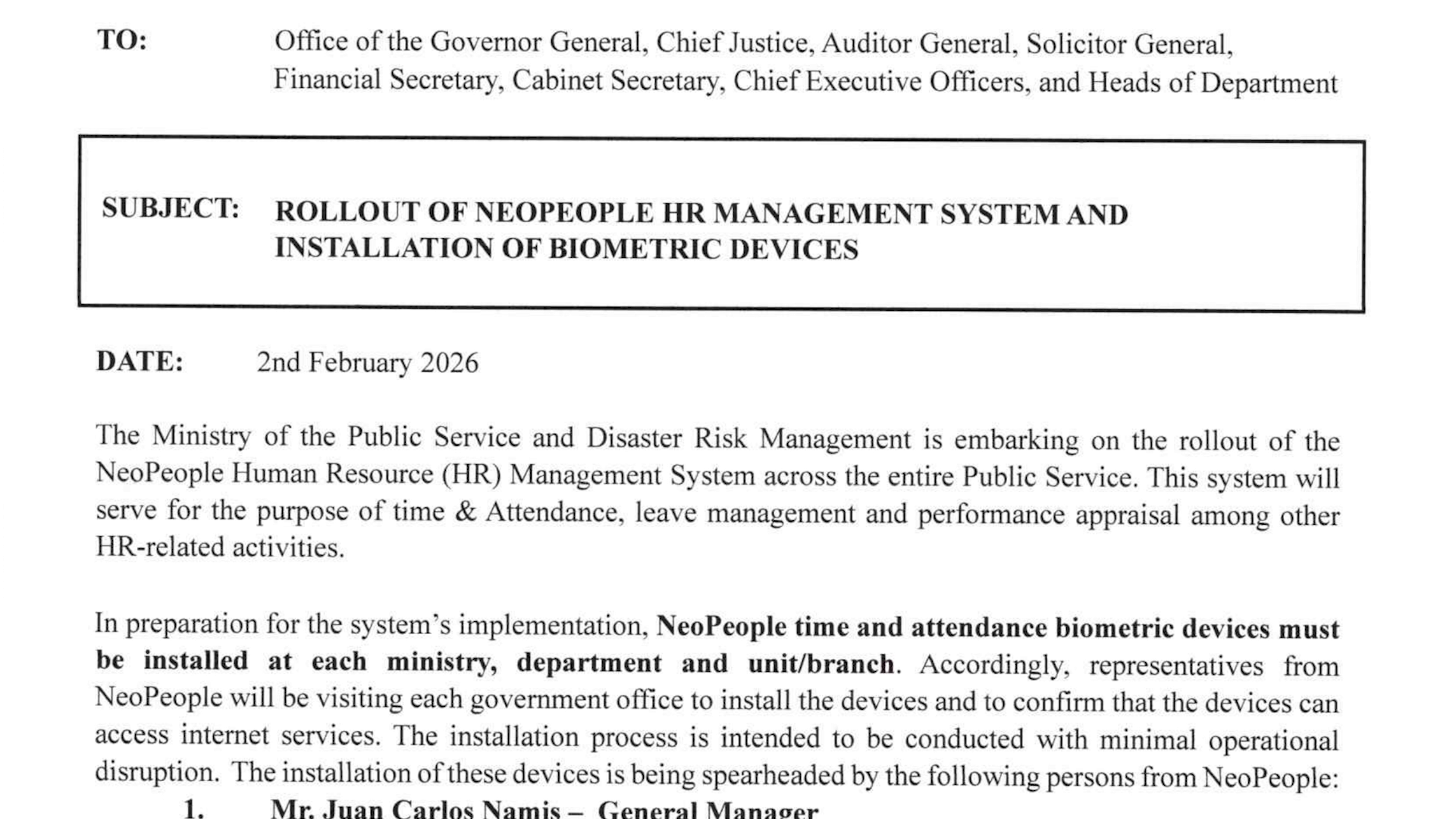
    Flowers also addressed the case of the NeoPeople initiative and the government’s plan to outsource public sector data management, including human resource records, to the third-party organization. He noted that experienced professionals who helped launch the Center for Information Technology and Organization (CITO) — using a grant from Taiwan to build the institution and earn it ISO certification — already have the in-house infrastructure, skills and capacity to manage all government data. From the PSU’s perspective, there is no justification for spending $3 million of taxpayer money annually to outsource a service the public sector can already provide effectively.

    This report is a full transcript of an evening television news broadcast, edited for clarity and context.

  • Belize’s Nurses Are Still Leaving, Despite New Retention Plan

    Belize’s Nurses Are Still Leaving, Despite New Retention Plan

    As of April 21, 2026, Belize’s public healthcare system is facing a sustained and deepening nursing workforce crisis, with qualified nurses continuing to leave the country for more competitive opportunities abroad even after the Belizean government rolled out a sweeping new retention package designed to stem the outflow.

    Global demand for skilled healthcare workers has created an intensely competitive landscape for small nations like Belize, where local compensation and benefits struggle to match offers from international recruiters. Senior nursing leaders and frontline workers warn that if the current trend holds – particularly if a large cohort of experienced Cuban nurses currently working in Belize are required to return to their home country – the entire national healthcare network will be pushed into a full-blown crisis.

    In response to the mass exodus of nurses that began in the wake of the COVID-19 pandemic, the Ministry of Health and Wellness has significantly expanded its retention strategy, rolling out a multi-phase financial incentive package aimed at making domestic positions more attractive than international offers. The new benefits include a 10% specialist allowance for advanced practice nurses, increased uniform stipends, hazard pay, additional compensation for night shifts and on-call duties, free graduate-level specialized training for nurses, and access to land plots for full-time public sector nurses. Nurses who accept the postgraduate training scholarship are required to complete a service bond with the government after finishing their education to repay the cost of the program.

    Andrew Baird, a veteran nurse and former nursing union president, explained that Belize has already been struggling to fill staffing gaps left by departing local nurses with recruits from regional and international sources, including Nicaragua, the Philippines, and other Caribbean nations. These recruitment efforts have repeatedly failed because Belize’s compensation packages cannot compete with offers extended to foreign nurses by other countries. When recruiters attempted to hire Filipino nurses, for example, candidates requested not only competitive salaries but also full housing coverage – a benefit that would add unmanageable costs to Belize’s public health budget. Even compared to neighboring Nicaragua, Baird noted, current nursing salaries in Nicaragua now match or exceed what Belize is able to offer, undermining efforts to recruit from that market.
    Baird added that the most pressing near-term risk stems from the possibility of a bilateral decision between the U.S. and Cuban governments that would require Cuban nurses currently working in Belize to return to Cuba. If that happens, he warned, existing staffing shortages will worsen dramatically, putting patients and the entire health system at severe risk.

    Lizette Bell, Chief Nursing Officer at Belize’s Ministry of Health and Wellness, framed the new retention plan as a comprehensive, multi-pronged strategy rather than a one-off incentive. She highlighted that beyond financial perks, the government is investing in long-term career growth for local nurses, including fully funded master’s-level specialization, paired with service bonds that ensure the government recoups its investment in training. Bell also credited the Belize Nurses Association for partnering with the Ministry of Natural Resources to streamline land title processing for nurses, a key quality-of-life benefit included in the broader retention framework.

    While officials have confirmed that nurses at the country’s main referral hospital, Karl Heusner Memorial Hospital (KHMH), have been approved to access the new retention benefits, both Bell and Baird note that final approval is still pending confirmation in the hospital’s Collective Bargaining Agreement, leaving the rollout for this large cohort of nurses uncertain for the moment.

  • Raúl congratulates the Eastern Army on its 65th Anniversary

    Raúl congratulates the Eastern Army on its 65th Anniversary

    On the 65th anniversary of the founding of Cuba’s iconic Eastern Army, Army General Raúl Castro Ruz, leader of the Cuban Revolution, has issued a heartfelt commemorative message celebrating the armed corps’ decades of service, revolutionary legacy, and ongoing commitment to defending the island’s socialist project.

    The Eastern Army was formally established on April 21, 1961 — just two days after Cuba’s landmark victory over foreign-backed incursion at the Bay of Pigs, a moment that marked the first major defeat of U.S. imperial ambitions in Latin America. In his greeting, Raúl Castro recalled the urgent, defining order issued by then-Commander-in-Chief Fidel Castro Ruz at the corps’ founding: “If we save the East, we save the Revolution!” The phrase underscores the Eastern region’s outsized historical and geographic strategic importance to Cuba’s revolutionary project, a priority that has shaped the army’s mission from its earliest days.

    Over its 65-year history, the Eastern Army — affectionately known by the nickname the “Lord Army” for its stature and reputation — has built its legacy far beyond traditional military operations. Raúl Castro emphasized that the corps’ standing stems not only from its military strength, but from its unwavering resistance to repeated enemy provocations and acts of aggression, as well as its long record of self-sacrifice in internationalist solidarity missions across the globe.

    A core contribution of the Eastern Army highlighted in the message is its role in advancing and implementing Cuba’s core strategic doctrine of the “War of all the People” — a framework that Raúl Castro noted remains particularly critical today, as the island faces persistent external threats to its socialist sovereignty.

    Beyond national defense, the Eastern Army has long been integrated into civilian support efforts across Cuba. Raúl Castro pointed to the still-raw public memory of the corps’ rapid deployment for search, rescue, and relief work in the wake of devastating Hurricane Melissa, followed by months of post-storm recovery work. This commitment to serving the Cuban people in times of crisis, he noted, is a core thread running through the entire history of the institution, and has earned the enduring gratitude of the Cuban public.

    In closing his message, Raúl Castro called for solemn tribute to the service members who have lost their lives in the line of duty, arguing that ongoing respect for fallen heroes reinforces the Eastern Army’s unshakable commitment to defeating any future act of enemy aggression. He extended formal congratulations to the corps’ founding members and all currently serving combatants for their service and achievements over 65 years, ending with a warm personal embrace to all members of the Eastern Army.