博客

  • Pendry Barbados marks milestone as luxury resort nears completion

    Pendry Barbados marks milestone as luxury resort nears completion

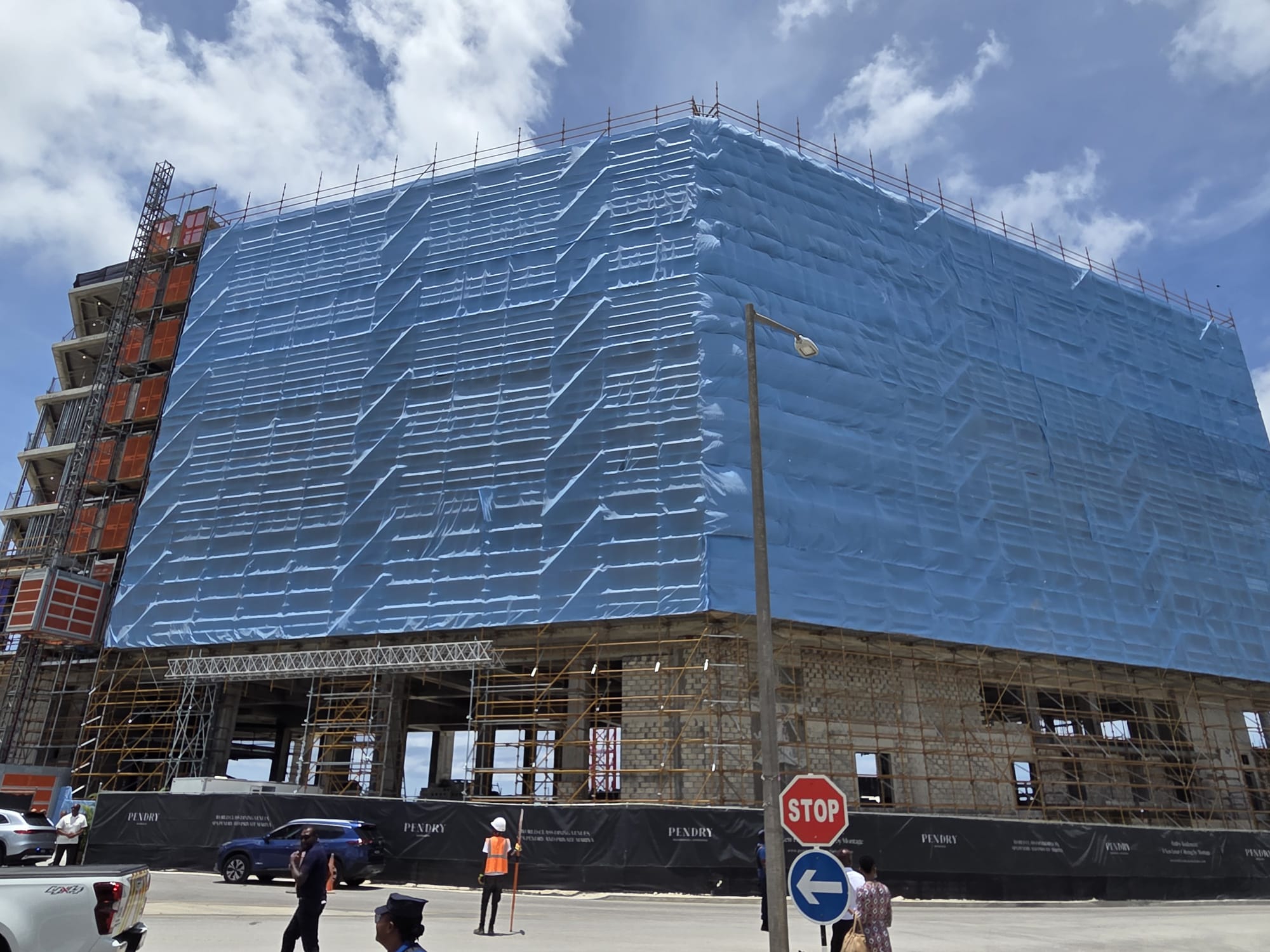
    On Wednesday, a major milestone was reached for luxury hospitality in the Caribbean: developers celebrated the structural topping-off of Pendry Hotels & Resorts’ first ever international project, bringing the California-based brand one step closer to launching the Caribbean’s first Pendry-branded resort on Barbados’ scenic northwest coast, with full completion scheduled for 2027. The construction of this landmark mixed hotel-and-residential development is being handled by Aecon Construction Group, Canada’s largest publicly traded contracting firm.

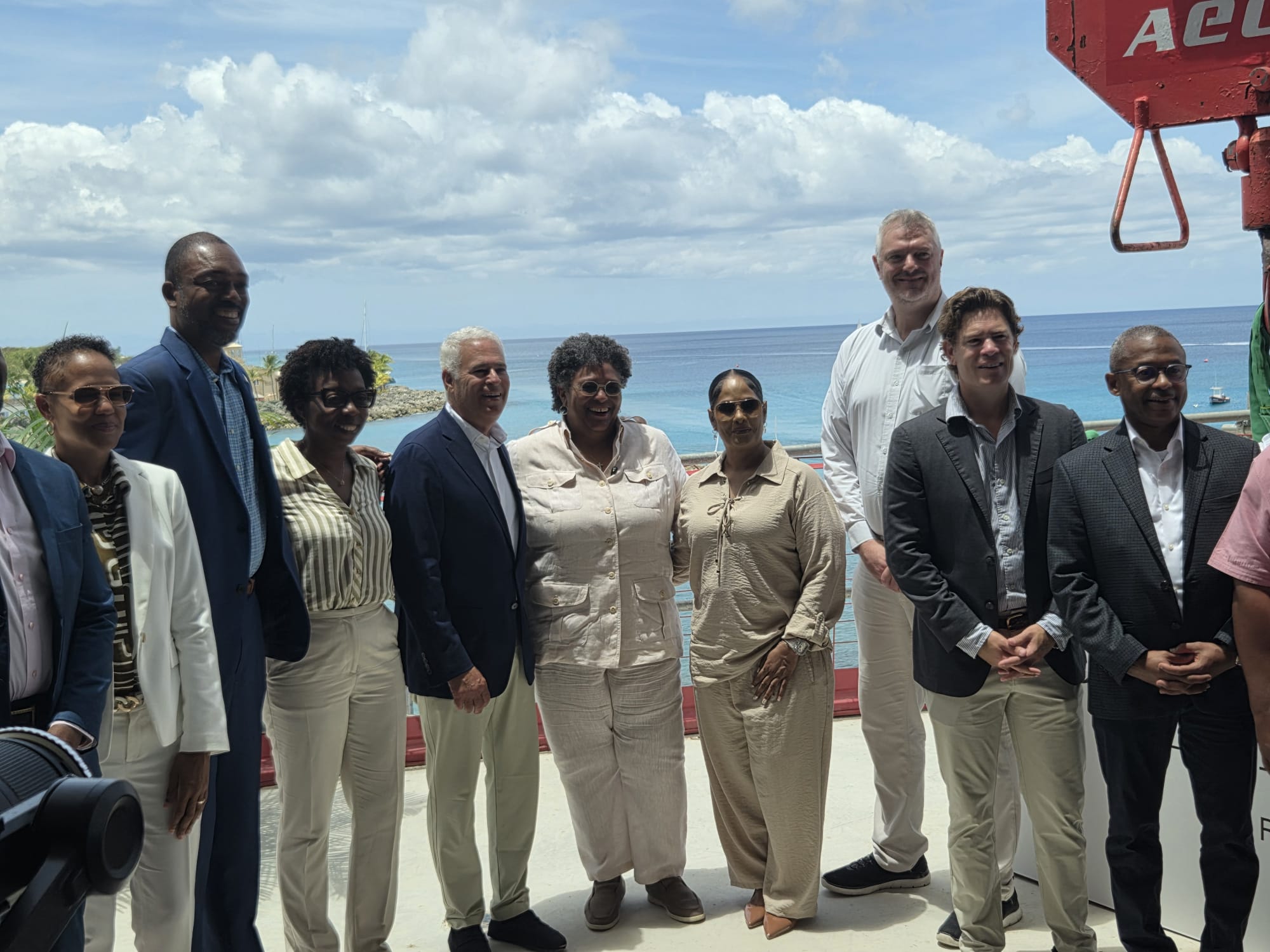
    The topping-off ceremony, which marked the end of the project’s core structural construction phase, drew high-profile attendance including Mia Mottley, Prime Minister of Barbados, alongside multiple senior government officials. The event doubled as an official formal introduction of the Pendry brand to the Caribbean region, positioning the upcoming resort as a signature global destination for the luxury hospitality group.

    For Pendry’s founding family, the Barbados project carries far more meaning than just a business expansion. Michael Fuerstman, co-founder of Pendry Hotels & Resorts, shared that the development has already garnered widespread global attention among industry circles. “I travel around the world meeting clients and partners, and everybody wants to know about Barbados,” Fuerstman explained. “This is the one destination that creates the most excitement. It’s aspirational, it’s exciting, and it’s a great lifestyle.”

    His father, Alan J. Fuerstman — founder, chairman and CEO of Montage International, the parent company of Pendry — recalled a personal trip to the island back in 1985, when his family visited to get a break from the stress of raising young children, including Michael. “To be standing here today, all these years later, is incredibly special for our family,” the senior Fuerstman said. He added that the entire resort was designed to blend seamlessly with Barbados’ natural coastal landscape, telling attendees: “Imagine just hearing the surf. You just open the windows and it’s so compelling. Our guests will hear that a little over a year from now.”

    Leading the construction work, Aecon’s team emphasized that luxury hospitality requires rigorous attention to detail from the very earliest stages of development. Marty Harris, executive lead and senior vice-president of Aecon, noted that exceptional quality in hidden structural work is what ultimately creates a standout guest experience. “Luxury begins long before a guest arrives,” Harris said. “It begins in the foundations, the structures, and the details that will never be seen but will always be felt.”

    Beyond construction, the project has also prioritized investment in local Barbadian communities. Aecon has already hired graduates from the Barbados Construction Gateway Training Initiative to work on the resort, and launched local outreach programs including the “From Our Home to Yours” community support initiative.

    When it opens its doors in 2027 as scheduled, Pendry Barbados will feature roughly 80 oceanfront guest rooms and 46 high-end luxury residential units. The sprawling development will also include a 110-berth marina, the exclusive Pendry Yacht Club, a branded Pendry spa, and multiple unique dining concepts catering to both guests and local residents.

    Michael Fuerstman noted that the project’s rare combination of amenities and setting makes it one-of-a-kind in the global luxury real estate and hospitality space. “I don’t know that there’s another hotel residential development like this in the world,” he said. “It’s very, very unique.”

    Pendry leadership extended explicit gratitude to the government of Barbados for its ongoing support throughout the development process, which turned the brand’s first international expansion from a vision to a reality. Closing out the topping-off ceremony, Alan Fuerstman framed the project as a long-term investment in the island, not just a construction project. “We are building far more than a resort. We’re building relationships, creating opportunity, and laying the foundation for a legacy of hospitality that will extend well beyond these shores,” he said.


  • Central Bank going fully paperless by year-end

    Central Bank going fully paperless by year-end

    The Central Bank of Barbados has announced an ambitious plan to transition into a completely paperless, fully digital institution by December 21, 2026, a shift that is projected to cut annual printing expenditures by more than $70,000. Central Bank Governor Dr. Kevin Greenidge revealed the milestone timeline during an address to the Barbados Association of Administrative Professionals conference held Wednesday at the Lloyd Erskine Sandiford Centre, expanding on the details of the initiative in an interview with local outlet Barbados Today.

    Dr. Greenidge outlined three core drivers behind the organizational shift: boosting operational efficiency, delivering significant long-term cost reductions, and modernizing the bank’s internal and external communication infrastructure. Beyond financial savings, he highlighted the environmental benefits of a paper-free workspace, noting that eliminating bulk paper storage creates a cleaner, more organized office environment. Early internal projections actually place annual printing cost savings closer to $75,000, a figure that does not include additional savings from reduced storage, handling, and logistics costs associated with physical documentation.

    The full transition is not a sudden pivot, but rather the next phase of a multi-year digital transformation effort initiated by previous Central Bank leadership, according to Dr. Greenidge. When he took office, the groundwork for digital modernization was already in place, and his administration has advanced the agenda to create an end-to-end paperless digital ecosystem, rather than incremental digital updates to existing paper-based workflows.

    To ensure a smooth transition for all staff, the bank has developed a full suite of custom digital tools to replace legacy paper processes, including cloud-based platforms for document uploading, collaborative editing, and real-time cross-team project work. Even core regulatory functions, such as bank supervision and application processing, have been moved entirely to digital systems. Currently, the initiative is roughly 70% complete, with progress accelerated by widespread staff buy-in and comprehensive upskilling programs. Every role at the institution — from entry-level support to senior leadership — has been equipped with digital tools tailored to their responsibilities, and all staff have completed targeted training to build proficiency with the new systems.

    Recognizing that full digitalization could create barriers for members of the public less familiar with online systems, the Central Bank has built explicit digital inclusion provisions into the rollout to avoid leaving any demographic behind. For members of the public accessing core services such as foreign exchange approval, which is now fully digital, the bank offers in-person guidance to help users set up accounts and navigate online processes, enabling self-service for future visits.

    As part of its broader commitment to digital literacy across Barbados, the institution has partnered with the Barbados Association of Retired Persons (BARP) to distribute more than 200 iPads to older adults, supporting ongoing community digital skills training. To address growing concerns around digital risk, the bank has also substantially upgraded its cybersecurity framework, launching a dedicated specialized unit that leverages artificial intelligence and other advanced technologies to monitor, detect, and mitigate emerging threats.

    Dr. Greenidge emphasized that while the new BIMPay digital system offers significantly stronger cybersecurity protections than legacy infrastructure, no system can eliminate digital risk entirely. As a result, the bank runs ongoing public education campaigns to help users recognize common scams and fraud, and requires mandatory cybersecurity training for all staff, including regular phishing simulation tests that require additional training for employees who fall for simulated attacks. Dr. Greenidge also reminded the public that the Central Bank will never request sensitive personal or financial information over the phone, urging consumers to remain vigilant and avoid sharing details with unknown callers.

    Widespread staff enthusiasm has emerged as a key catalyst for the rapid progress of the transition, with employees embracing the flexibility and efficiency of digital workflows. Staff can now access full documentation from any device — smartphones, tablets, or laptops — eliminating the need to carry large physical binders and notes, and cutting down the time required to locate and share critical information. What began as a top-down strategic initiative has now developed its own momentum, with staff taking ownership of the new systems and advocating for further digital improvements across the institution.

  • Felle brand verwoest pand in binnenstad

    Felle brand verwoest pand in binnenstad

    A large-scale, intense fire erupted at a building located on Heerenstraat in central Paramaribo, near the Happy Supermarket, at approximately 7:15 p.m. local time on April 22, local emergency services confirmed in initial reports. When first responder firefighters arrived at the incident scene, they encountered a fully out-of-control blaze that was already spreading rapidly across the structure. The intensity of the flames and the thick, heavy smoke generated by the fire prompted emergency officials to immediately escalate the response, calling in additional resources to tackle the emergency. As of the latest update, firefighting teams remain on site working continuously and aggressively to extinguish the fire, with a top priority of stopping the blaze from spreading to nearby neighboring buildings that sit adjacent to the affected structure. At this stage of the investigation, no official information has been released regarding the root cause of the fire. Local law enforcement has already cordoned off the entire affected area to preserve public safety, prevent unauthorized access, and keep civilian bystanders at a safe distance from the active hazard. No updates on civilian or first responder casualties have been released in the initial hours following the outbreak of the fire.

  • Woman Remanded After Allegedly Attacking KHMH Nurse

    Woman Remanded After Allegedly Attacking KHMH Nurse

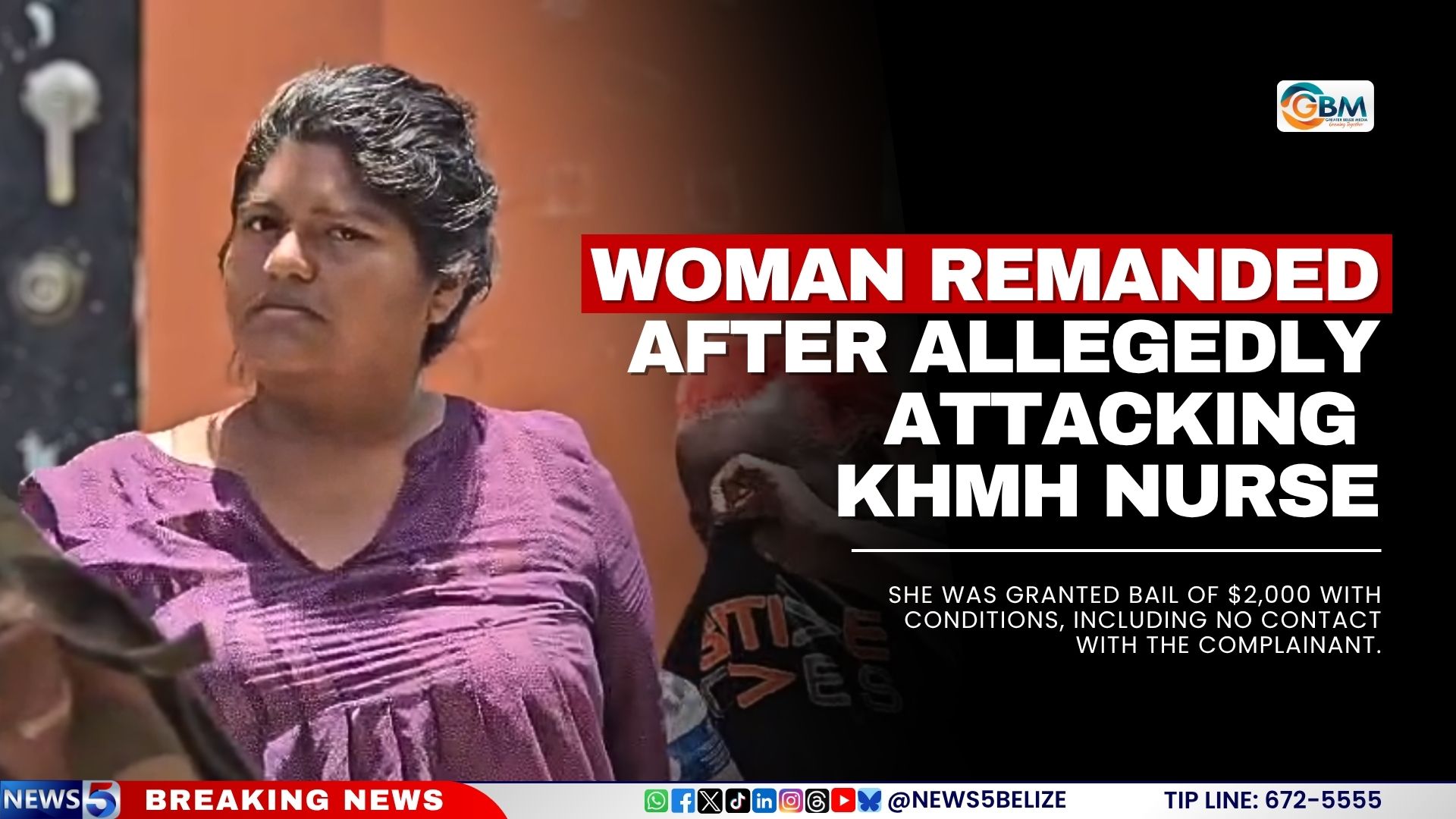
    A shocking incident of violence against healthcare workers has unfolded in Belize City, leading to a 39-year-old woman being placed in custody after she failed to post bail following accusations of a brutal assault on a registered nurse. The accused, Dulce Portillo, now awaits her next court date at Belize Central Prison, after being unable to meet the $2,000 bail set by the court.

    The altercation dates back to Monday night at Karl Heusner Memorial Hospital, the country’s leading public healthcare facility. According to official allegations, the conflict began when Nurse Viviana Lino was notified that a woman – later identified as Portillo – was physically striking a patient in the hospital’s surgical ward. When Lino stepped in to intervene and de-escalate the situation, Portillo turned her aggression onto the responding nurse.

    In a formal statement to local law enforcement, Lino detailed the sequence of the attack: Portillo first pushed her, forced her onto a nearby hospital bed, and attempted to climb on top of her before grabbing a heavy IV pole and attempting to strike the nurse. When Lino managed to flee the room, the violence escalated further, with Portillo chasing her through the ward while still wielding the IV pole. Hospital security was quickly alerted, and local police were called to the scene to take Portillo into custody.

    Portillo made her first court appearance on April 22, 2026, where she appeared without legal representation. When she attempted to address the court directly, Senior Magistrate Mannon Dennison intervened to stop her statement, in order to protect her from making self-incriminating remarks. The magistrate granted bail set at $2,000, with a standard condition that Portillo have no contact of any kind with Lino, the complainant in the case.

    Unable to come up with the funds to meet the bail requirement, Portillo was immediately remanded to Belize Central Prison. Her next court hearing is scheduled for June 10, 2026, when the case will be revisited and legal proceedings will move forward. The incident has renewed local conversations around the growing issue of violence against healthcare workers, who often face unprovoked aggression while carrying out their duties in hospital settings.

  • Church leaders call for harsher sentences for gun offenders

    Church leaders call for harsher sentences for gun offenders

    A wave of violent crime has pushed Barbados’ top Christian church leaders to table sweeping, controversial reforms to the country’s gun and sentencing laws, demanding stiff, fixed prison sentences for murderers and illegal gun owners that they say will break the cycle of violence plaguing the island nation.

    The call for reform comes just days after a brutal triple killing in the Thunder Bay neighborhood that left three young men dead, a tragedy that galvanized the National Network of Pastors & Combined Churches to call an urgent press conference Wednesday at Restoration Ministries International Sanctuary in Brittons Hill to lay out their proposals.

    At the core of the group’s plan is a push to replace Barbados’ existing death penalty for murder with a rigid 40-year sentence without the possibility of parole, a sentence Apostle David Durant, a leading voice in the movement, argues functions as a meaningful life sentence that will act as a far stronger deterrent than current weak penalties. He stressed that for the cold-blooded, pre-planned homicides that have shaken communities across the country—like the recent mass killing—current lenient sentencing has failed to stop violent offenders, noting that a 10-year prison term is far too short to give potential killers pause before they act. Durant also drew a clear distinction between premeditated murder and non-premeditated cases such as murders of passion or manslaughter, arguing the harsher 40-year mandate should apply specifically to the gang-related and organized killings driving the current violence crisis.

    For anyone convicted of unlawful possession of a firearm, the pastors are calling for a mandatory 10 to 15 year prison term with no exceptions. Durant insisted that immediate, lengthy custodial sentences will get repeat violent offenders off the streets immediately, breaking the criminal networks that have spread gun violence across the island. “We need stronger penalties. We cannot just give a slap on the wrist, we can’t do that any longer,” Durant stressed.

    Beyond sentencing reform, the pastors called out systemic failures and potential institutional corruption that they say are enabling the flow of illegal guns into Barbados. Durant claimed the illegal gun trade is a well-organized criminal syndicate with connections stretching from grassroots criminal networks to high levels of national leadership, pointing to unsolved questions around how guns are smuggled in through shipping containers, and suggesting security scanners at ports are often not operational when shipments carrying illegal weapons arrive. “It has to be well-organized from the grassroots to an unspecified level… They have to know,” Durant said. “If guns are found in a container, who brought in the container in the island? Containers come to no name? Scanners not working at convenient times… we got to get real.”

    While fellow church leader Apostle Timothy McClean endorsed the call for harsher post-conviction penalties, he warned that punishment alone cannot resolve Barbados’ deepening violence crisis. McClean emphasized that stric sentencing only addresses crime after it has already devastated communities, leaving behind broken families and children left without parents. He argued that national leaders and community groups must address the root causes that draw young men to violent gangs in the first place, saying “We need to work before the crime has occurred. What is causing men to commit these levels of crimes, to find gangs to be attractive? We need to get to that issue and we need to arrest that issue.”

    Beyond policy advocacy, the church network has organized a nationwide spiritual mobilization to confront the crisis, kicking off with a National Evening of Prayer and Worship scheduled for Thursday evening at Golden Square Freedom Park. The event, which is set to begin at 6:30 p.m., is intended to address the growing climate of fear and emotional numbing that has spread across the country as violence rises, while bringing together citizens for collective prayer and community action.

    Organizers say the gathering will not be just a routine worship service, but a targeted effort to pray for change, comfort for grieving families, guidance for national leaders, and an end to the wave of murder and violence. “We’re not going there just to have another service, but we really want God to do something… we want a visitation to this island,” Durant said. “We’ll be praying for the crime and the violence and the murders that are really bringing a lot of fear… and also… many families… that are grieving.”

    The prayer gathering is the centerpiece of a month-long national initiative, with April declared a national Month of Prayer. Churches across the country have been encouraged to open their doors daily, and citizens are invited to join collective prayer for an end to violence three times a day, at 6 a.m., noon, and 6 p.m.

  • Tourism strategy signals shift to ‘Tourism 3.0’ model

    Tourism strategy signals shift to ‘Tourism 3.0’ model

    Against the backdrop of lasting global upheaval from the COVID-19 pandemic, Barbados Prime Minister Mia Mottley has announced a bold, forward-thinking overhaul of the country’s signature tourism industry, labeling the new vision “Tourism 3.0”. Speaking at a ceremony marking progress on the Pendry Barbados Residences — a luxury villa development under construction in the parish of St Peter — Mottley framed the shift as a necessary evolution beyond outdated industry models, designed to build a more competitive, community-rooted and globally integrated tourism economy.

    Even as Barbados holds a global-leading track record for high repeat visitor rates, Mottley argued that incremental change is no longer enough to keep the island nation competitive in a transformed post-pandemic travel landscape. After six decades of growth under earlier tourism frameworks that have powered national development since independence, and five years since Barbados became a republic, the time has come for a strategic reset, she said.

    At its core, Tourism 3.0 is built on what Mottley called a “judicious blend” of two pillars: expanded local Barbadian ownership of tourism assets, and strategic partnerships with international branded hospitality developments. This balance, she explained, lets the nation tap into the global marketing reach of major international brands to drive higher visitor arrivals, while keeping economic benefits anchored in the local community. Mottley emphasized that this model will reinforce Barbados’ global reputation as an unrivaled travel destination, making it easier for travelers worldwide to discover everything the island has to offer.

    Mottley pointed to several large-scale hospitality projects already breaking ground across the island as tangible proof that the industry’s transformation is already underway. These include the ongoing Royalton and Hotel Indigo developments, as well as the upcoming Beaches Resort. She also expressed strong confidence that the Montage Group will finally revitalize the long-dilapidated former Four Seasons site — which she described as the “holy grail” of Barbadian tourism — putting an end to more than 20 years of underuse at the prime property.

    A key strategic priority of the Tourism 3.0 framework is diversifying the island’s source travel markets. Last year marked a milestone: arrivals from the United States surpassed those from the United Kingdom for the first time in Barbados’ tourism history. Building on this shift, Mottley issued a clear directive to the Ministry of Tourism: secure new direct airlift connections between Los Angeles and Bridgetown. She noted that a non-stop 7.5-hour flight from the U.S. West Coast matches the flight time from London, opening access to high-value travel markets in Silicon Valley, San Francisco, and the Pacific Northwest, unlocking new economic potential for the island.

    Addressing widespread shifts in the global labor market that have impacted hospitality sectors worldwide, Mottley reaffirmed her government’s commitment to a “New Deal” for Barbadian tourism workers. She stressed that frontline employees are the heart of the island’s tourism experience, and must be treated with dignity and fair compensation. Whenever the government offers tax and revenue concessions to tourism developers, she explained, a core condition is that employers guarantee wages and working conditions that support a decent living for local workers. Mottley tied this commitment directly to guest experience: stable, fairly treated workers deliver the high-quality hospitality that keeps visitors returning to Barbados.

    Mottley also highlighted the community-centered ethos of the new approach, praising the Pendry Residences developers for their “neighbour-centric” planning. As part of the project, developers have committed to building a brand-new community fish market for the Six Men’s area, a tangible investment that benefits local residents beyond the tourism development itself. She reiterated that large-scale tourism projects cannot deliver long-term success unless they lift up and include local communities every step of the way.

    Closing her address, Mottley called on all Barbadians to play their part in the new strategy, urging residents to maintain the island’s safety, cleanliness, and world-famous warm hospitality. Reminding the audience that long-term prosperity is not guaranteed, she said, “No one owes us a living. We must command the respect that will ensure we sustain our quality of life.”

  • Pastor urges mindset shift on ex-inmates rehab

    Pastor urges mindset shift on ex-inmates rehab

    Barbados is grappling with a sharp rise in violent crime this year, with 23 homicides already logged across the island, and a senior faith leader with decades of prison outreach experience is pointing to a largely overlooked culprit: widespread societal exclusion of formerly incarcerated people that perpetuates a vicious cycle of recidivism and violence. Pastor Timothy McClean made his urgent call for systemic change at a recent media event launching the upcoming National Evening of Prayer, a public gathering scheduled for Thursday at Bridgetown’s Freedom Park. Drawing on more than 30 years of prison ministry work, McClean pushed back against the dominant narrative that harsher policing and longer incarceration alone can curb violent crime, arguing that locking people up without addressing the underlying barriers to their successful reentry leaves the root causes of criminal behavior completely unaddressed. “For as long as I can remember, our church team has gone into prisons to teach, preach, and minister, working to bring meaningful heart change to incarcerated men through God’s grace,” McClean shared during the press briefing. “But arresting and locking someone up doesn’t fix the problem. Unless we help them transform their mindset and create pathways for them to rebuild their lives after release, we’ll keep seeing the same harmful outcomes.” McClean noted that Barbados already struggles with a disproportionately high recidivism rate, a trend he attributes to the lack of sustained, structured rehabilitation programming that continues both during incarceration and after a person re-enters society. He acknowledged that faith groups like his have long led reintegration efforts on the island, but stressed that fragmented, church-led work alone cannot close the gap. “It’s not that the church has abandoned this work,” he explained. “What we lack is continuous, well-supported programming inside correctional facilities that centers rehabilitation, followed by ongoing support once people return to their communities.” McClean detailed his own experience leading a targeted pre-release reintegration initiative, designed to support inmates in their final year of incarceration by equipping them with the skills and resources they need to build stable lives outside of prison. The program includes professional counseling, life skills training, and mentorship, but McClean said its impact has been severely undermined by widespread societal pushback against hiring and accepting former inmates. “The core of the problem is us – society itself,” he emphasized. “If we truly want to reduce crime, we have to change our collective mindset about people who have paid their debt to society.” McClean recounted repeated efforts to connect program graduates with entry-level work at local businesses, only to be turned away immediately. “I’ve walked freshly released inmates into business offices and asked owners to give them a second chance,” he said. “The answer has been an outright, unapologetic no every time.” Without access to legal employment or skills training, McClean warned, former inmates are left with almost no viable options to support themselves and their families after release. “When there are no jobs, where do they turn? That makes all of us complicit in the cycle of crime,” he argued. “Once someone is labeled a criminal, that stigma never goes away. When they get out of prison, there’s no way for them to get a foothold in mainstream society, so they end up going right back to the environments and behaviors that led to their incarceration in the first place, and the cycle of crime continues.” McClean closed his remarks by issuing a clear call to action to both the national government and the country’s private sector, urging both groups to step up and take an active role in expanding rehabilitation and reintegration efforts. “We need a widespread mindset shift: people coming home from prison deserve a chance to rebuild,” he said. “If we give them that opportunity to rejoin society as productive members, they won’t have to return to a life of crime.”

  • BREAKING: Kidnapped Guatemalan Girl Rescued in Belize

    BREAKING: Kidnapped Guatemalan Girl Rescued in Belize

    In a major cross-border law enforcement success announced Tuesday, a 14-year-old Guatemalan girl who endured more than 100 days of kidnapping captivity has been rescued in a coordinated police raid in southern Belize. The joint operation, carried out by regular Belizean police forces and the department’s special assignment tactical unit, targeted a remote farm in the Stann Creek District, just across the border from Guatemala.

    Assistant Superintendent of Police Stacy Smith, a senior staff officer with the Belize Police Department, confirmed that the early-morning mission, codenamed Operation Safe Return, was launched after investigators received credible intelligence pinpointing the missing teen’s location. Smith noted that the rugged, challenging terrain of the targeted area led law enforcement to deploy specialized tactical operators to ensure the mission’s success and minimize risk to the captive.

    The teenager was first reported missing in January 2026 from Guatemala’s northern Petén Department. When raiding the property, officers located the teen inside a private building on the farm behind San Roman Village, bringing her 100-day ordeal of unlawful confinement to an end. Smith confirmed that the teen was being held against her will, officially classifying the case as a kidnapping.

    Despite the successful rescue, the operation did not end with the main suspect in custody. Police identified the primary person of interest as Jose Gilberto Duarte, who managed to evade capture during the raid and remains at large. Law enforcement teams have launched an active manhunt across the region to locate and apprehend the escaped suspect, with cross-border coordination between Guatemalan and Belizean authorities ongoing.

    Full additional details on the case, including updates on the investigation and the teen’s current condition, will be released during the prime-time broadcast of News 5 Live at 6 p.m. local time the same day. The operation highlights the growing cooperation between Central American law enforcement agencies to combat cross-border crime and recover missing victims.

  • Peruaanse ministers stappen op na conflict met president over F-16-deal

    Peruaanse ministers stappen op na conflict met president over F-16-deal

    A deepening political rift over a multibillion-dollar plan to purchase F-16 fighter jets from the United States has rocked Peru’s interim government, leading to the abrupt resignation of the country’s defense and foreign affairs ministers on Wednesday. Defense Minister Carlos Diaz and Foreign Minister Hugo de Zela stepped down amid growing uncertainty and escalating political tensions surrounding the proposed $3.42 billion acquisition, triggering a crisis that carries major implications for both Peru’s military modernization and regional geopolitics.

    Interim President José Balcazar, who is set to leave office following presidential elections in July, has sought to downplay the severity of the split, clarifying that he did not oppose the jet deal itself. Instead, Balcazar explained that he favored delaying all payments related to the purchase until the next elected administration takes office, a position that put him at direct odds with his two senior cabinet members.

    In his official resignation letter, Diaz made clear the split was not a minor policy disagreement: “A strategic decision has been made that I fundamentally cannot agree with.” Speaking publicly in a televised address after the resignations, Balcazar claimed his earlier comments about delaying the purchase had been misinterpreted. He reaffirmed that the F-16 deal would proceed as planned, but that all financial obligations for the acquisition would be passed to the incoming government. “We remain committed to all agreements reached at the level of the armed forces, in this case the air force ministry, to continue the corresponding negotiations,” Balcazar stated.

    The planned purchase is a core part of Peru’s years-long effort to modernize its aging fighter fleet, which currently relies on 1980s and 1990s-vintage Mirage 2000 and MiG-29 aircraft. The country ultimately intends to acquire 24 new fighter jets, with an initial order of 12 aircraft planned for the first phase of modernization.

    U.S. defense giant Lockheed Martin is the leading candidate to supply the jets, with competing bids also on the table from defense contractors based in Sweden and France. Back in September, the U.S. State Department formally approved the potential sale of 12 F-16s alongside related support packages, valuing the total deal at roughly $3.42 billion. Lockheed Martin has partnered with General Electric Aerospace and RTX Corp. for the proposed contract.

    Tensions first boiled over last week, when Balcazar canceled a planned signing ceremony for the Lockheed Martin deal at the eleventh hour. The last-minute cancellation drew sharp criticism from Washington, with U.S. Ambassador to Peru Bernie Navarro warning on social media that the U.S. would deploy “all available tools” against any parties that negotiate in “bad faith.”

    The dispute over the jet deal unfolds against a backdrop of intensifying geopolitical competition in Latin America, as the United States has ramped up efforts in recent years to expand its influence in Peru. The South American nation is one of the world’s top copper producers, and has emerged as a key strategic economic partner for China, a development that has drawn growing attention from U.S. policymakers.

    Earlier this year in January, the White House designated Peru as a major non-NATO ally, a status designed to deepen defense cooperation between the two countries and expand Peru’s access to U.S. trade and security programs. The U.S. State Department has also approved a funding package to upgrade Peru’s Callao naval base near Lima, a further sign of Washington’s push to strengthen its military presence in the country.

    Analysts note that the outcome of the current political standoff over the F-16 deal will not only shape the future of Peru’s military capabilities, but also shift the balance of geopolitical influence in the Latin American region, as both the United States and China continue to compete for greater strategic and economic access across South America.

  • El Salvador Begins Mass Trial of 486 Alleged MS-13 Members

    El Salvador Begins Mass Trial of 486 Alleged MS-13 Members

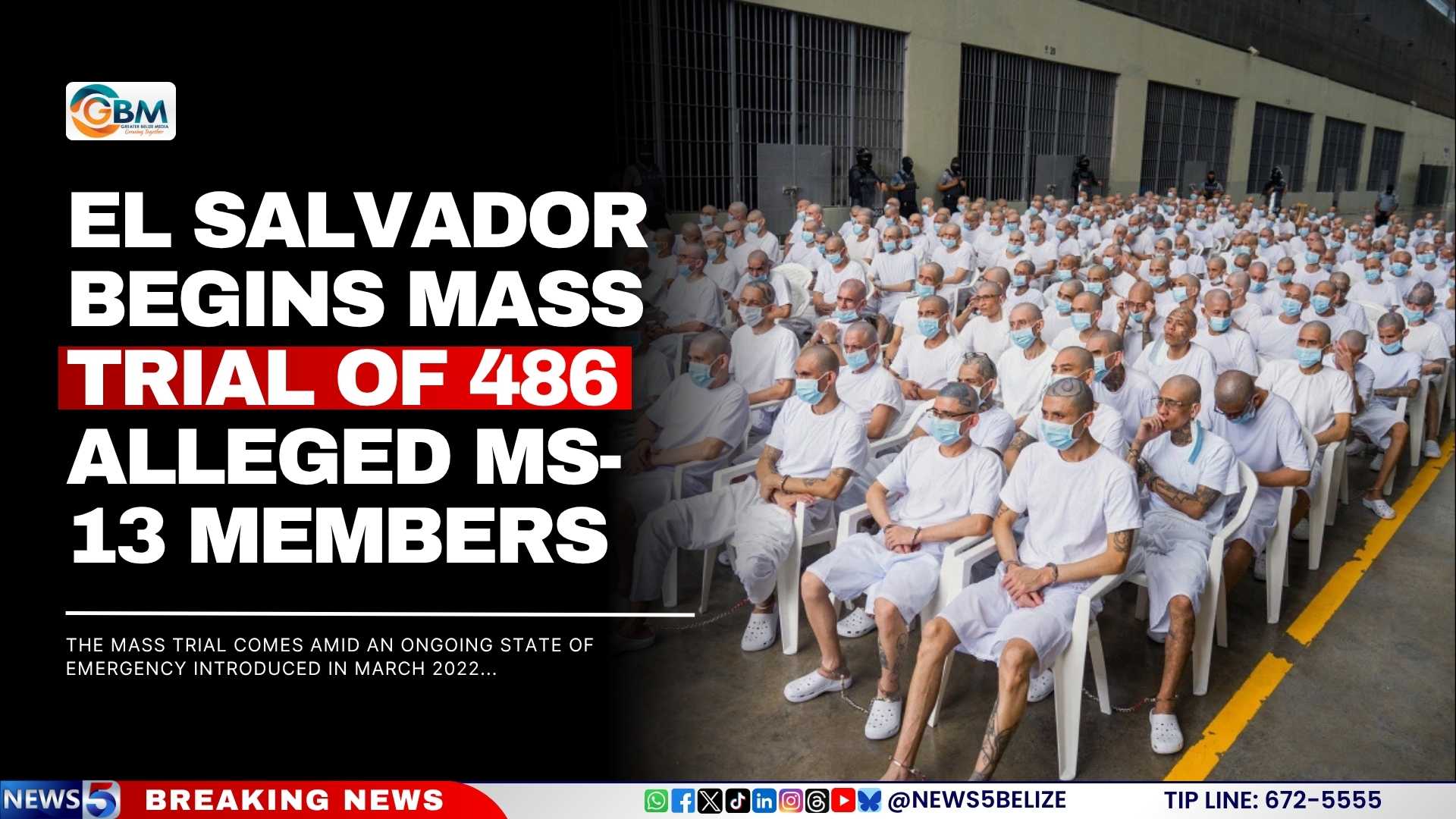
    In a landmark legal proceeding that marks one of the most ambitious anti-crime initiatives in El Salvador’s modern history, a mass trial for 486 suspected members of the transnational criminal organization MS-13 has officially commenced. The sprawling case brings charges linked to a staggering 10-year campaign of violence and illegal activity, placing intense global scrutiny on El Salvador’s aggressive approach to combating gang-related crime.

    According to El Salvador’s Attorney General’s Office, the 486 defendants stand accused of involvement in more than 47,000 separate criminal offenses between 2012 and 2022. The charges run the gamut of serious crimes, ranging from murder, extortion, and femicide to drug trafficking, arms smuggling, forced disappearances, and even rebellion. Prosecutors allege the gang built a pervasive network of territorial control across the country, effectively operating as an illicit parallel state that undermined official government authority.

    A key component of the case ties defendants to one of the worst outbreaks of violence that pushed the country into its current state of emergency: a deadly March 2022 weekend that left 87 people dead across El Salvador. That wave of killings prompted President Nayib Bukele to announce a sweeping nationwide “war on gangs” just days later, triggering the implementation of a continuous state of emergency that remains in place today.

    The emergency declaration has dramatically expanded the powers of police and security forces, while temporarily suspending several constitutional protections for citizens. Since the policy took effect, more than 40,000 suspected gang members have been taken into custody across the country. For this specific mass trial, 413 of the 486 accused are already being held in custody, while the remaining 73 are being tried in absentia, with active arrest warrants outstanding for their capture. As of the opening of the proceedings, officials have not released any public timeline for how long the trial process will take.

    The operation of this massive trial has not come without international pushback. Human rights observers and United Nations experts have raised sharp concerns about the potential erosion of due process in such a large-scale legal proceeding. They warn that trying hundreds of defendants at once risks violating core defendants’ rights, including the fundamental legal principle of presumption of innocence and the right to access adequate legal representation. The UN has emphasized that efforts to improve public security must not come at the cost of abandoning fair trial standards.

    Despite international criticism, Bukele’s harsh anti-gang strategy retains broad popular support within El Salvador. Supporters of the crackdown point to dramatic drops in the country’s historically high homicide rates, noting that the campaign has delivered vastly improved public safety for ordinary Salvadoran citizens after decades of gang-fueled violence and instability.

    To contextualize the trial, MS-13 originated far from El Salvador’s borders: the gang was first formed in Los Angeles in the 1980s by Salvadoran immigrants who had fled the country’s brutal civil war. Over the past four decades, it has grown into a powerful transnational criminal network with a heavy foothold across Central America. Last year, the United States formally designated MS-13 as a terrorist organization, underscoring the global scope of the group’s criminal activity.