博客

  • OPEC+ verhoogt olieproductie, maar impact blijft beperkt door conflict

    OPEC+ verhoogt olieproductie, maar impact blijft beperkt door conflict

    Global energy markets are facing unprecedented disruption after OPEC+ member states greenlit a modest third consecutive monthly oil production increase for June, with the move’s real-world impact largely muted by the ongoing closure of the strategic Strait of Hormuz amid the Iran conflict.

    During an online meeting held Sunday, seven OPEC+ nations — including Saudi Arabia, Iraq, Kuwait, Algeria, Kazakhstan, Russia, and Oman — agreed to lift their collective production quotas by 188,000 barrels per day. This matches the size of the quota increase implemented in May, and the calculation excludes the United Arab Emirates (UAE), which withdrew from the OPEC+ production agreement starting May 1.

    Industry analysts and OPEC+ insiders frame the decision as largely a symbolic signal of the bloc’s readiness to ramp up output once the regional conflict is resolved. Jorge Leon, a senior analyst at Rystad Energy and a former OPEC official, noted that the move delivers a dual message: the alliance remains stable despite the UAE’s departure, and it retains policy control even when physical production capacity is constrained.

    In practice, actual current production across many key member states already falls far below the newly adjusted quotas. For example, Saudi Arabia produced just 7.76 million barrels per day in March, while its new June quota is set at 10.291 million barrels per day.

    The root cause of this production gap is the ongoing closure of the Strait of Hormuz, which has been in place since the Iran conflict broke out on February 28. The waterway is a critical chokepoint for global oil trade, and its closure has severely restricted export capabilities for major OPEC+ producers including Saudi Arabia, Iraq, Kuwait, and even the non-bloc UAE, leaving almost no room to bring additional volumes of crude to international markets.

    Energy experts across the Gulf region and global oil trading community warn that even if the Strait of Hormuz reopens immediately, it will take anywhere from weeks to months for global oil supply chains to return to normal operations.

    The ongoing supply disruption has already driven benchmark crude oil prices to a four-year high above $125 per barrel. Analysts have issued urgent warnings that the market could face a jet fuel shortage within one to two months, and that sustained high energy prices will push global inflation even higher in coming months.

    Official OPEC data shows that total combined production across all OPEC+ members averaged just 35.06 million barrels per day in March, representing a drop of 7.7 million barrels per day compared to February levels. Iraq and Saudi Arabia recorded the largest production cuts, directly driven by export restrictions tied to the strait closure.

    The seven member states that participated in Sunday’s meeting have scheduled their next gathering for June 7, when they will re-evaluate the market and geopolitical situation and consider potential further policy adjustments.

  • Portsmouth’s Davonne George chosen for prestigious Poland Showcase tour

    Portsmouth’s Davonne George chosen for prestigious Poland Showcase tour

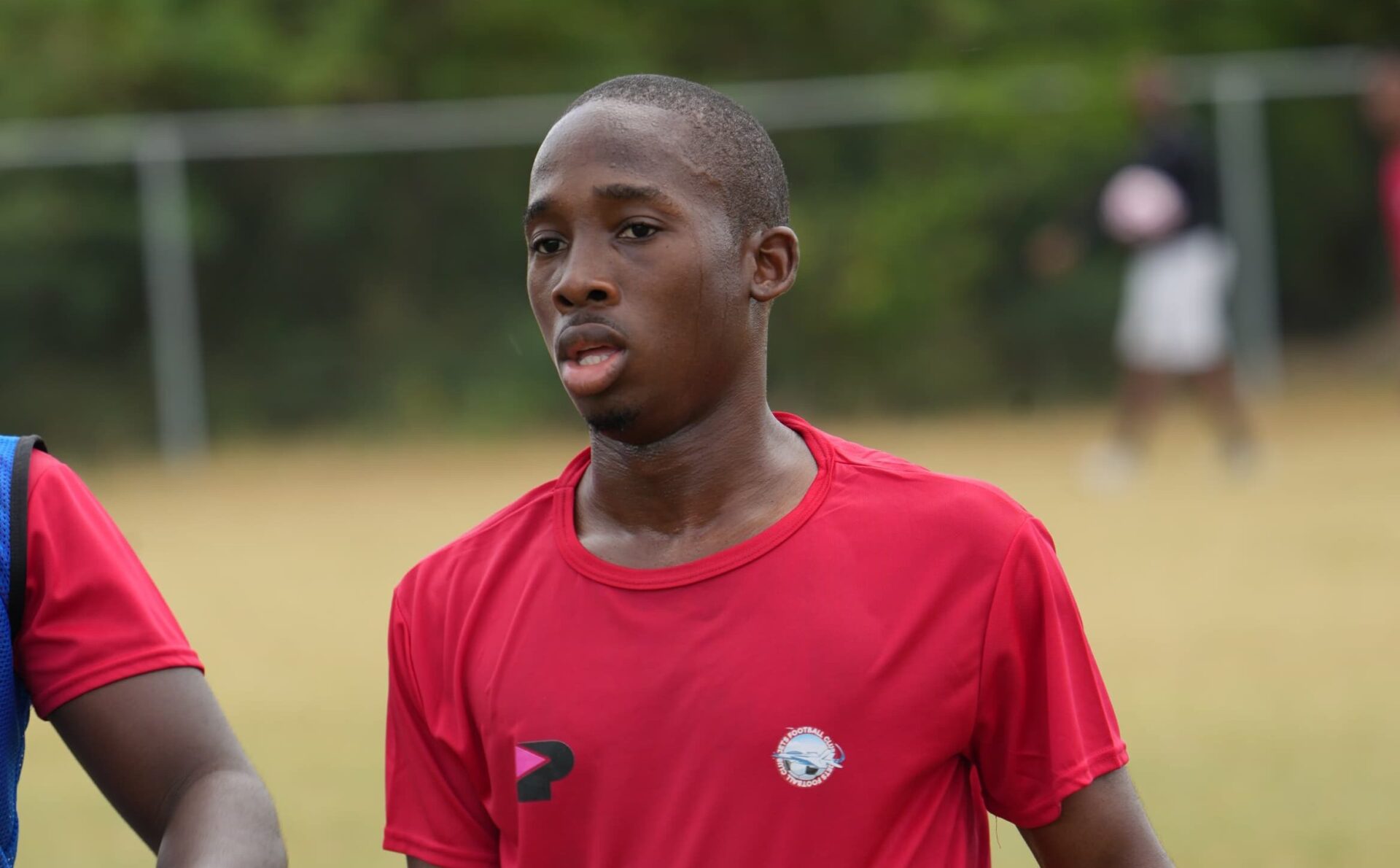
    Roosevelt Skerrit Portsmouth Bombers Football Club has made a landmark announcement for its growing youth development program: standout young talent Davonne George has been selected to join an elite European football showcase tour kicking off in Poland this July. The club’s official press release frames the selection as more than a personal win for George—it is a defining milestone for the organization, proving that its grassroots-to-international talent development pipeline is delivering tangible, life-changing results for local players.

    George secured his invitation to the exclusive tour after surviving a stringent multi-stage scouting process led by recruitment specialists from PitchPlay. The athlete’s consistent on-pitch performances, standout technical skills, and clear long-term potential set him apart from a large, highly competitive field of hopeful prospects across the region, earning him a coveted spot among the small group of athletes chosen for the opportunity.

    Spanning two weeks from July 13 to 26, the showcase tour will bring together emerging talent from across the globe for a packed schedule of competitive matches against professional and semi-professional sides based across Poland. Industry insiders expect top-tier scouts from leading European football clubs to attend these fixtures, creating a rare, high-stakes platform for young prospects to catch the eye of top clubs and advance their professional careers.

    The tour’s programming extends far beyond competitive match play. Participants will take part in structured training camps led by UEFA-licensed elite coaches, with customized high-performance preparation plans designed to help each athlete peak for every fixture. Throughout the 14-day program, George and other selected players will also receive ongoing personalized performance evaluations and targeted development support to help them grow both on and off the pitch.

    In its statement, Portsmouth Bombers FC emphasized that George’s selection is further proof of the club’s successful commitment to building a sustainable development pathway that lifts local talent from grassroots football to the international stage. The entire club community and football supporters across Portsmouth have rallied behind George as he prepares for his trip, with many framing his achievement as a source of collective regional pride. Summing up the historic moment for local football, the club noted: “From Possie to Poland—this is what opportunity looks like.”

  • DJ Ace Wins Inaugural AT&LU “De Labour Mix” Competition

    DJ Ace Wins Inaugural AT&LU “De Labour Mix” Competition

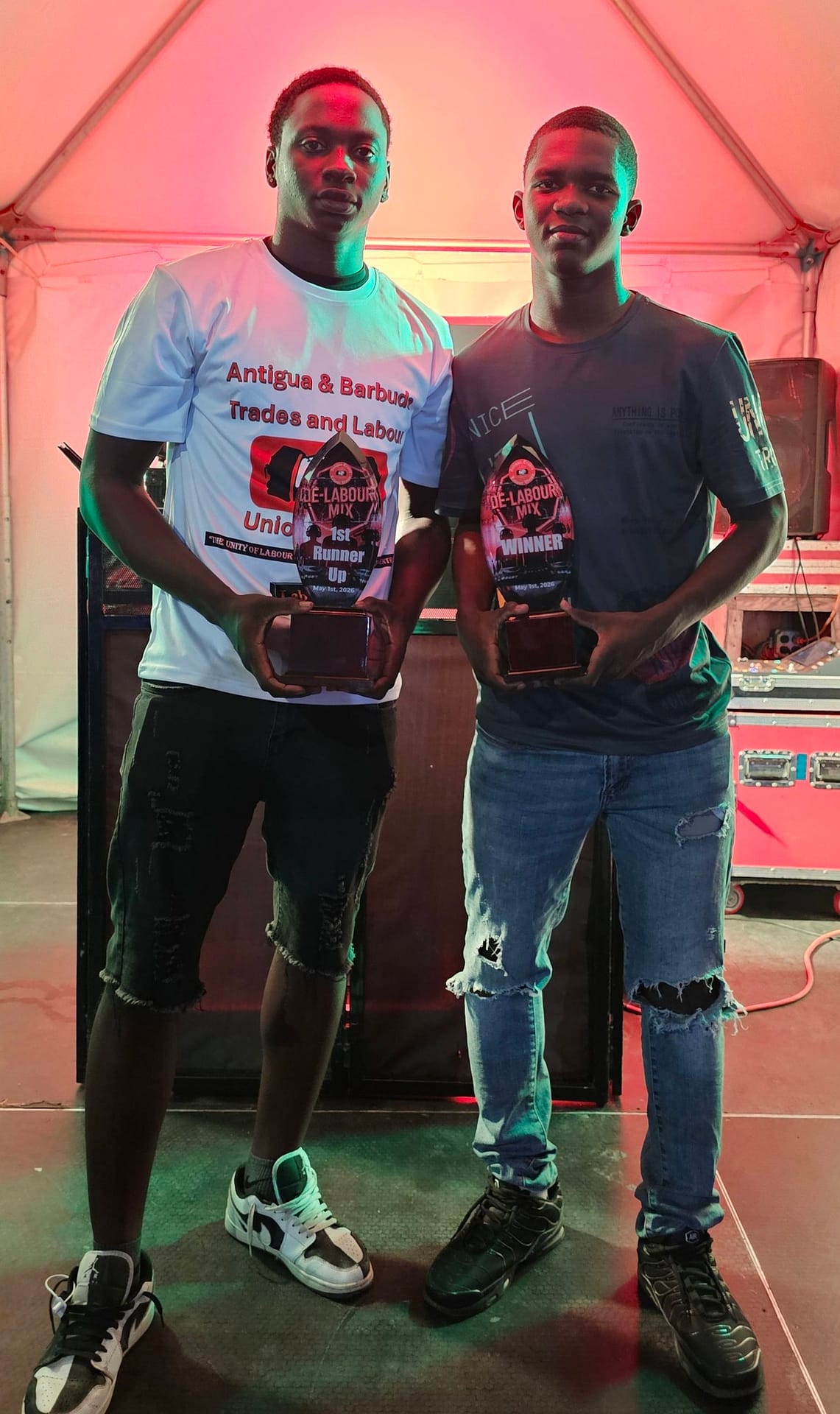
    The first-ever DJ competition hosted by the Antigua and Barbuda Trades and Labour Union (AT&LU) has found its winner, with DJ Ace taking the top honor at the event branded “De Labour Mix”. This groundbreaking competition was crafted as a core cultural component of the country’s 2026 Labour Day commemorations, which are designed to honor the hard work and impact of workers across the nation.

    Following the final round of assessments, DJ Spark claimed the first runner-up spot, while DJ Stranger finished the competition in third place as the second runner-up. The DJ competition is just one of the many cultural and recreational activities organized by the AT&LU as part of this year’s Labour Day calendar. These events were developed with a dual purpose: to draw widespread public participation and to shine a light on the invaluable contributions that working people make to Antigua and Barbuda’s social and economic development.

    As of the latest update, event organizers have not made further information public regarding the specific judging frameworks used to evaluate participants or detailed breakdowns of each competing DJ’s on-night performance.

  • 80% of Caribbean Journalists Are Burnt Out. Here’s Why That Should Worry You

    80% of Caribbean Journalists Are Burnt Out. Here’s Why That Should Worry You

    On World Press Freedom Day 2026, May 3, the Media Institute of the Caribbean (MIC) has issued a stark public warning about the cascading crises facing regional journalism, with four out of every five Caribbean journalists now reporting clinically significant professional burnout. The organization describes the current state of Caribbean media as a “perfect storm of overlapping negative challenges” that threatens not just newsrooms, but the foundation of democratic accountability across the region. One of the most damaging structural pressures is the massive outflow of digital advertising revenue from local media outlets to global tech giants Meta and Google. MIC data shows that between 15% and 25% of all digital advertising spending in the Caribbean now flows to the two U.S.-based platforms, rather than supporting local news organizations that produce context-specific, community-focused reporting. Beyond the revenue collapse, working conditions for journalists have deteriorated sharply. More than 80% of respondents to MIC’s research reported persistent burnout, with the vast majority lacking access to formal mental health support or workplace well-being resources. Many journalists also face ongoing targeted threats including personal harassment, legal intimidation designed to silence critical reporting, and growing state and private surveillance of their work and personal communications. The rise of generative artificial intelligence has added a new layer of systemic risk to the regional media ecosystem, building on pressures that date back years. A 2023 MIC analysis documented multiple harmful uses of AI across the Caribbean: AI-generated deepfakes deployed to disrupt regional electoral processes, coordinated disinformation campaigns that erode public trust in public health guidance, and synthetic content intentionally crafted to exploit and widen ethnic and religious divisions within local communities. MIC officials warn that this combination of financial instability, harmful working conditions, and disinformation threats has already weakened the ability of regional journalism to act as a core democratic watchdog, holding governments and powerful private actors accountable to the public. Against this backdrop, the organization emphasizes that media literacy is no longer a niche educational skill, but an essential piece of foundational democratic infrastructure that all communities need to navigate modern information environments. To address these interconnected crises, MIC has outlined a three-pronged policy call for regional stakeholders. The organization is urging Caribbean national governments to implement targeted taxation on digital advertising revenue earned by global tech giants, creating a potential revenue stream to support local public and private media. It is also calling on independent regulators to conduct mandatory audits of big tech algorithms to identify and correct bias that disadvantages local news content in user feeds. Finally, MIC is pushing for education systems across the region to embed media literacy training into formal curricula starting in primary school, building long-term public capacity to identify disinformation and evaluate news sources. In closing, MIC reaffirmed that sustainable, independent media, widespread public media literacy, and protected press freedom are non-negotiable prerequisites for building peaceful, equitable democratic futures across all Caribbean nations.

  • Speed Tries His Hand at Arm Wrestling Against North American Champion in Antigua

    Speed Tries His Hand at Arm Wrestling Against North American Champion in Antigua

    In a surprising exhibition event that captured the attention of onlookers at a sports festival in Antigua, the world’s fastest man Usain Bolt stepped outside his comfort zone of track and field to test his strength in an arm wrestling match against the reigning North American arm wrestling champion.

    The impromptu matchup was organized as a side attraction during the annual Antigua Sports and Tourism Expo, an event designed to draw international visitors to the Caribbean island’s vibrant recreational scene. Bolt, who has long had a home base in Antigua after retiring from professional sprinting in 2017, accepted the challenge on a whim after the champion issued a public call for a celebrity opponent earlier in the week.

    Witnesses described the match as lighthearted rather than a high-stakes competitive battle. The 8-time Olympic gold medalist, known for his towering 6-foot-5 frame and natural athleticism, held his own for the opening 10 seconds of the round before the seasoned arm wrestling champion eventually secured a pin. After the match, both competitors shared laughs and posed for photos with attendees, with Bolt joking that he would stick to sprinting in future athletic endeavors.

    The event drew thousands of social media views within hours of clips being posted by attendees, boosting the profile of Antigua’s annual expo and highlighting Bolt’s ongoing popularity years after he retired from elite track competition. Organizers of the event noted that the unexpected matchup exceeded all expectations for audience engagement, bringing new attention to the sport of arm wrestling in the Caribbean region.

  • Two Dead In Horrific Crash

    Two Dead In Horrific Crash

    A devastating traffic collision on the George Price Highway in Belize’s Belize District has claimed the lives of two local men and left multiple other people injured, emergency responders confirmed Sunday. The fatal crash unfolded at the 16-mile marker of the highway on the night of Saturday, May 2, 2026, with at least 10 people directly involved in the incident.

    The two victims, identified by local sources as Glenn Lamb Jr. and Nelson Hemsley, were pronounced dead at the scene of the collision. Photographic documentation from the crash site confirms that the incident involved a passenger vehicle and a motorcycle, though authorities have not yet released additional details on the exact sequence of events that led to the crash, or the condition of the injured parties.

    In the hours following confirmation of the deaths, grieving family members took to social media to share tributes to their lost loved ones, expressing raw, heartfelt pain over the sudden tragedy. A relative of Lamb wrote publicly, “I love you, God knows…My little brother, God, this hurts so much.”

    Hemsley’s family also remembered him as a man defined by kindness, describing him as “nothing but pure love.” Another relative of Hemsley shared their shock and grief in a social media post, writing, “Can’t believe this uncle we are broken man this hurts until RIP until we meet again.”

    As of Sunday morning, local authorities had not issued a formal update on further investigation into the cause of the crash, or the status of those who were transported for medical care.

  • Belize’s Key Exports are All Down; Farmers Feeling it First

    Belize’s Key Exports are All Down; Farmers Feeling it First

    New trade data released by Belize’s official statistics agency reveals a stark widening of the country’s trade imbalance in March 2026, with plummeting values of key traditional exports hitting agricultural producers and farming communities hardest across the nation.

    According to the latest External Trade Bulletin from the Statistical Institute of Belize, total merchandise imports climbed 38.7% year-over-year to hit $321.4 million in March 2026. The sharp jump in inbound goods was led by increased purchases of manufactured products, energy resources, and industrial infrastructure: the country imported far more diesel fuel, construction materials, and telecommunications equipment than it did in the same month a year prior, driving the overall import surge.

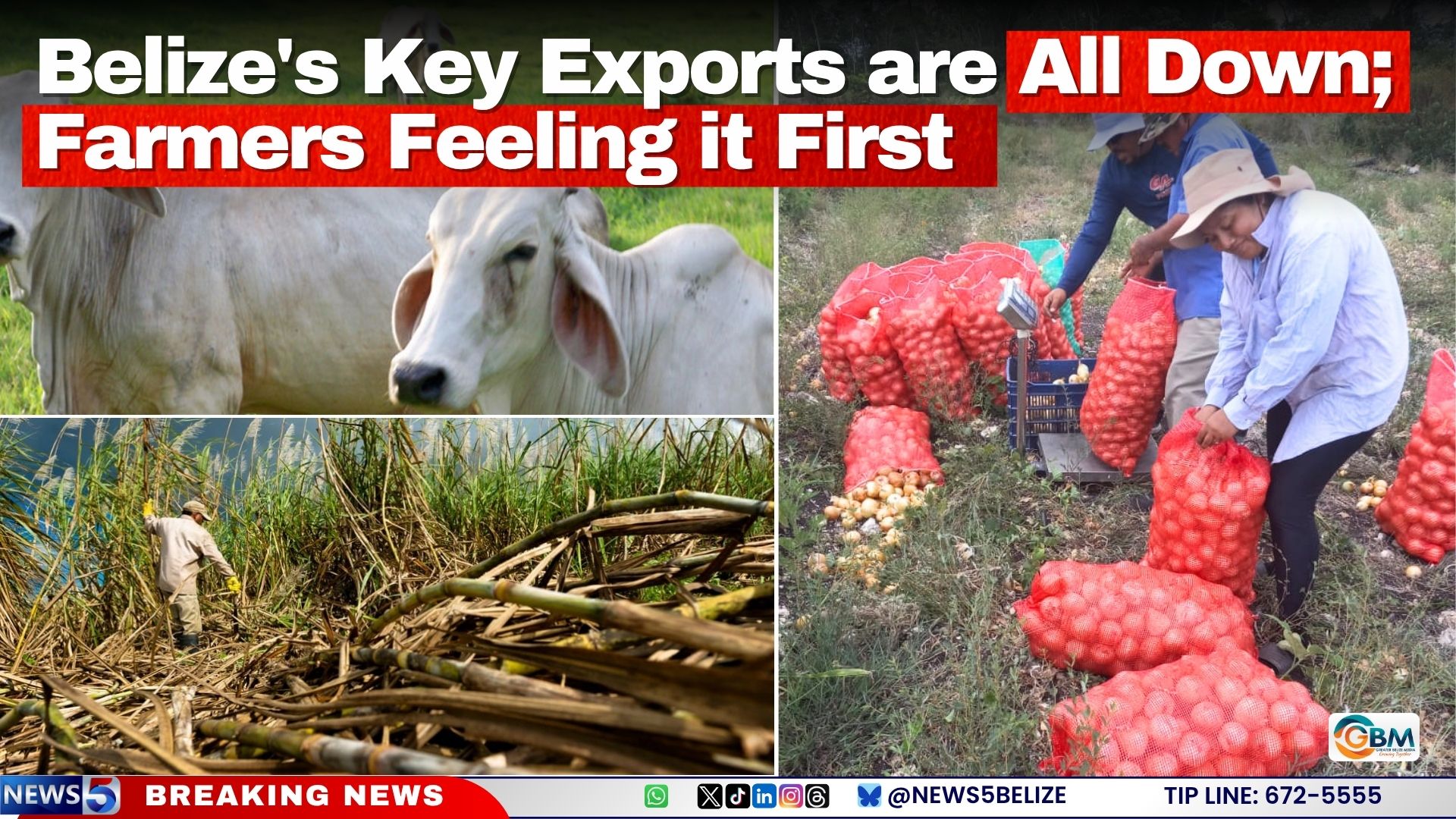
    On the export side, however, the performance paints a far grimmer picture for local producers. Total domestic exports fell 18.7% year-over-year, dropping from $30.9 million in March 2025 to just $25.1 million in March 2026. Nearly all of Belize’s highest-value agricultural export sectors recorded steep declines, with the biggest losses concentrated in commodities that rely heavily on small-scale farmer output.

    Red kidney bean export revenues fell by $2.1 million compared to last year, while citrus export earnings dropped by $1.8 million. Sugar exports declined by $0.8 million, pulled down by both lower shipment volumes and softening global market prices. Most alarmingly, formal cross-border cattle exports that hit $1.9 million in March 2025 fell all the way to zero in March 2026, with no cattle registered for export at all during the month.

    For Belize’s rural farming communities, these trade figures translate directly to tangible financial strain. Falling export revenues have cut household incomes, narrowed profit margins for producers and exporters, and forced difficult planning decisions for the coming growing and harvesting season.

    That said, the report did note a small handful of bright spots in the export sector. Banana export revenues saw a slight uptick to $8.5 million, while molasses exports surged dramatically from just $40,000 in March 2025 to $1.0 million this year. Exports of marine products, including commercial lobster and shrimp, also recorded a modest improvement over last year’s figures.

    Looking at the broader trend for the year to date, total exports across the first three months of 2026 reached just $65.4 million, marking a 9.1% decline compared to the same three-month period in 2025. The ongoing slump in core agricultural exports has raised questions about the resilience of Belize’s trade-dependent rural economy, as stakeholders begin assessing long-term adjustments to shifting global market conditions.

  • COMMENTARY: Once upon a time – Diplomacy in the image of our times [Shridath Ramphal Centre Trading Thoughts]

    COMMENTARY: Once upon a time – Diplomacy in the image of our times [Shridath Ramphal Centre Trading Thoughts]

    Over the past few months, cascading shifts in global political interaction have sparked urgent debate over whether core diplomatic practices are in terminal decline, or simply being reshaped to fit the norms of the digital age. This question resonates far beyond the corridors of foreign ministries, touching everyday citizens who feel the ripple effects of how global powers communicate and negotiate. For clarity, this analysis frames diplomacy as the formal practice of international dialogue and engagement between sovereign nation states.

    For centuries, diplomatic exchange relied on slow, deliberate methods: couriers traversed thousands of miles to carry encrypted written correspondence between capitals. Technological progress upended this system step by step: the telegraph, telephone, and fax machine cut communication time from weeks to minutes, making cross-border dialogue far more responsive. Today, the internet and social media have sparked the most dramatic shift yet, allowing sitting heads of state and government officials to communicate directly with global audiences and their foreign counterparts in real time, transforming both how diplomacy is conducted and the unwritten rules that govern it. This commentary examines the evolution of diplomatic norms, highlights troubling modern trends, and outlines actionable steps to restore professional standards to 21st century statecraft.

    The Golden Age of Traditional Diplomacy
    In its historic form, diplomacy was defined by intentional discretion and carefully guarded secrecy. Skilled diplomats relied on sharp intellectual acumen, refined social awareness, and tactical practical judgment to de-escalate tensions and broker agreements behind closed doors, far from the glare of public attention. Eloquence, mastery of nuanced language, and the ability to persuade through both written and oral rhetoric were non-negotiable core skills.

    As a scholar of diplomatic studies, the author recalls a famous lesson from her professor, attributed to former British Prime Minister Winston Churchill: that the mark of true tact is to tell someone they need to go to hell in such a way that they look forward to the journey. Equally important was the understanding that timing and setting matter: there is a time to speak publicly and a time to stay silent, even when tensions run high. While deviations from these norms have always occurred, today they have reached an unprecedented scale, even among the highest-ranking elected leaders.

    Digital Diplomacy in 2024: A Break from Historic Norms
    Digital diplomacy, the modern model of statecraft for the 21st century, leverages internet connectivity to enable real-time communication, streamlined information sharing, and more accessible knowledge management across borders. Beyond formal negotiations and official intergovernmental communication, many foreign ministries now use digital platforms to connect with citizens living abroad, project cultural influence, and shape public opinion in other nations. Since social media rose to global prominence, heads of state, embassy missions, and international non-governmental organizations have flocked to platforms ranging from X (formerly Twitter) to Facebook, Instagram, and LinkedIn to conduct public diplomacy, turning a 140-character post or a Reel into a tool of statecraft.

    But alongside these new efficiencies, worrying negative trends have taken root in digital diplomacy. Modern public diplomacy on social media is often the direct opposite of the discretion, eloquence, and professional standards that defined traditional diplomatic practice. Today’s social media feeds are flooded with a confrontational new style of statecraft, where sitting leaders use profanity and derogatory language to insult foreign leaders and entire nations. Two prominent examples include a provocative Easter message targeting the Iranian government posted to X, and the persistent name-calling that the Argentine president has used to refer to other regional leaders. Public disagreements on social media often devolve into back-and-forth shouting matches that resemble adolescent high school feuds more than professional diplomatic exchange.

    Major foreign policy announcements are now made off-the-cuff via social media posts, rather than through carefully crafted official statements shared via diplomatic channels. Regional and international disputes that have historically been resolved behind closed doors are now dragged into the public sphere, with tangible real-world consequences. These consequences go far beyond making diplomacy look unprofessional: the ongoing deadly conflict in the Middle East is often reduced to trivial memes and satirical viral videos on social media even as thousands of innocent civilians lose their lives. Trade policy and tariff decisions announced via public social media posts create immediate uncertainty that ripples through global markets, leaving businesses facing falling demand and consumers stuck with higher everyday prices.

    There is no question that diplomatic standards have shifted dramatically in the digital age. The way many current leaders wield digital diplomacy has eroded decades of careful trust-building between nations and shaped global public perceptions of statecraft in deeply negative ways. Sitting political leaders routinely post and share content that fuels division and animosity between populations, undermining progress toward cooperative, positive cross-border relations. What we are seeing today is a redefinition of diplomacy led not by career-trained diplomatic practitioners, but by populist leaders who are meant to serve as role models for current citizens and future generations. The author notes that an extraterrestrial observer visiting Earth today would likely struggle to tell the difference between a head of state and a controversial social media influencer, based on how modern leaders conduct themselves online.

    Reclaiming Professional Standards for Digital Diplomacy
    This shift raises an obvious question: what can be done to reverse these harmful trends? The author argues that ordinary citizens are not powerless to push for change. Global voters can demand that political leaders adhere to basic professional standards when engaging in international dialogue, and can use their vote during elections to reject candidates whose confrontational, unprofessional online behavior contributes to the erosion of diplomatic norms. At the international level, multilateral institutions such as the United Nations should develop clear binding codes of conduct that outline expected norms for digital diplomatic engagement for all member states. These are modest, reasonable demands that do not require overarching systemic change to implement.

    While the world currently faces many crises that are outside of human control, how leaders engage with one another and shape global public opinion is a choice that can be adjusted. A baseline level of diplomatic sophistication is required to foster open, smooth dialogue, cut down on unnecessary cross-border friction, and prevent the kinds of dangerous miscalculations that can escalate into open conflict. Formal diplomatic protocol and measured, thoughtful language will always have a place in international engagement, whether interactions happen in person at an embassy summit or in a public post on a social media platform.

    Ultimately, traditional diplomacy as the world once knew it is in clear decline, reshaped by the dynamics of the current era: respect for international law has dwindled, core multilateral systems and institutions are facing unprecedented upheaval, and the global order has reverted to a dynamic described more than two millennia ago by ancient historian Thucydides: the strong do whatever they are able to, and the weak must accept whatever suffering they must endure to survive.

    This analysis was originally published by the Shridath Rampal Centre on April 30, with author Vanessa Mason serving as Research Assistant at the Shridath Ramphal Centre for International Trade Law, Policy & Services at The University of the West Indies, Cave Hill.

  • Beurs-exposant benadrukt hoogwaardige kwaliteit Surinaamse producten

    Beurs-exposant benadrukt hoogwaardige kwaliteit Surinaamse producten

    As Suriname’s three-day national Agricultural Trade Show prepared to wrap up its 2026 edition on May 3, local producers, government officials and industry innovators gathered at the KKF venue to showcase the country’s growing push toward agricultural self-reliance and global competitiveness. Organized by the country’s Ministry of Agriculture, Livestock and Fisheries (LVV), this year’s event broke new ground by prioritizing technological innovation to rejuvenate an aging sector, drawing more than 200 participating exhibitors across agricultural, livestock and fishing value chains.

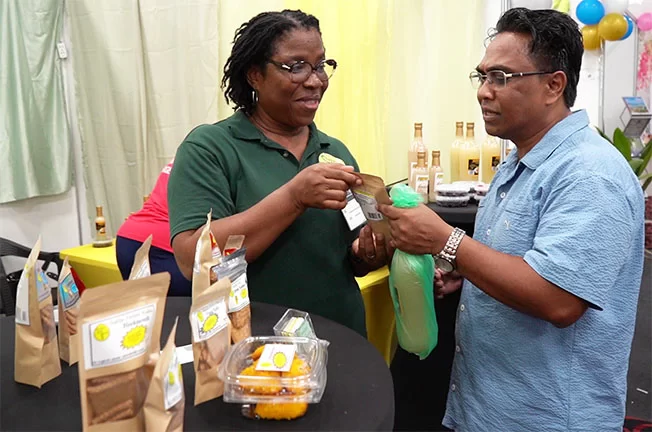
    For small local producers like Golden Honey Bee, the trade show offers a critical platform to highlight the quality of homegrown Surinamese goods. The family-owned beekeeping operation, led by beekeeper Shivangi Vermeijs-Mahabali, showcased its full line of artisanal, locally made products: raw honey with and without honeycomb, cold-pressed honey, cold-pressed coconut oil, and beeswax balm. This year, the brand expanded its portfolio with a new offering: 100% bean-to-bar single-origin Surinamese chocolate, which has already proven a hit with visitors. “Agriculture truly needs to become a core pillar of Suriname’s economy, so we don’t have to rely so heavily on imports,” Vermeijs-Mahabali explained during a tour of the booth attended by Agriculture Minister Mike Noersalim. “Our Surinamese products are top quality, and we’re proud to deliver a meaningful contribution to the sector.”

    What sets this year’s edition apart from previous trade shows is its intentional focus on attracting young people back to agriculture through cutting-edge tools and innovation, according to event coordinator Shantie Shiamrai. “We’ve noticed the sector is facing rapid aging, so we want to make agriculture more appealing by integrating new technologies that make work faster and more efficient,” she noted. To that end, the LVV has spotlighted several modern solutions that are accessible for Surinamese producers, including drone technology that can automate core farm tasks from fertilizing and seeding to irrigating and spraying crops.

    Shiamrai explained that drones cut down work time from days to just a few hours, and the innovation has already drawn intense interest from attendees across both crop and livestock operations. Also on display was vertical farming using modular tower systems, a sustainable innovation that cuts water use and allows year-round crop production in limited spaces. Beyond production technology, the trade show also highlights major progress in local food processing. Many participating companies have upgraded their packaging and labeling to meet international standards, with finished products that match the quality of imported goods, Shiamrai said. “Right now we still import far too much, but we need to capitalize on what we already produce here and start exporting more of our own goods,” she added.

    The country’s fishing sector, which already has a well-established export focus, used the event to showcase updates that help it meet increasingly strict requirements from key international markets including the European Union and the United States. Thomas Willems, research and statistics coordinator for the Directorate of Fisheries, explained that ongoing research and adoption of sustainable fishing practices are critical to keeping the sector competitive and compliant with global market standards. At his team’s booth, Willems showcased modified fishing gear designed to reduce bycatch of protected species, including Turtle Excluder Devices that prevent sea turtles from becoming trapped in nets, and Dolphin Pinger acoustic deterrents that keep dolphins away from fishing gear.

    Following the opening of the event last Friday, President Jennifer Simons toured dozens of exhibition stands to meet producers and innovators, underscoring the government’s commitment to growing the domestic agricultural sector. As the event closed on the evening of May 3, organizers said the 2026 edition marked a key milestone in Suriname’s transition toward greater food self-sufficiency, sustainable production and expanded global market access for local goods.

  • Ishowspeed gets a crash course in how to pronounce ANTIGUA

    Ishowspeed gets a crash course in how to pronounce ANTIGUA

    Popular internet personality and live streamer IShowSpeed recently went viral for an unexpected viral moment when he received a public, on-camera crash course in correctly pronouncing the Caribbean nation of Antigua.

    The incident unfolded during one of the young creator’s high-energy live broadcasts, when a topic related to the island nation came up in conversation. Known for his unfiltered, fast-paced on-camera style, IShowSpeed initially mispronounced the country’s name multiple times, drawing quick corrections from viewers and guests joining the stream. What started as a small misstep quickly turned into an impromptu pronunciation lesson, with multiple people walking the streamer through the proper syllable stress and phonetics of “Antigua” step by step.

    Clips of the lighthearted interaction spread rapidly across major social media platforms within hours, with many users sharing the clip for its relatable, unplanned humor. Fans and casual observers alike praised the moment for its casual authenticity, noting that even high-profile public figures regularly make small mistakes when pronouncing less familiar place names. The viral moment also sparked a small wave of new attention for Antigua and Barbuda, with many internet users saying the clip introduced them to the island nation for the first time.

    As of the latest counts, the original clip of the pronunciation crash course has accumulated tens of millions of views across TikTok, X (formerly Twitter), and Instagram Reels, with countless creators making their own reaction and commentary clips responding to the viral moment.