博客

  • Dominican Republic breaks record for arrivals with 6.6 million visitors through June

    Dominican Republic breaks record for arrivals with 6.6 million visitors through June

    The Dominican Republic’s tourism sector has hit an unprecedented milestone in the first half of 2026, marking its strongest semi-annual performance in history, according to official data released by Tourism Minister David Collado during a press briefing on industry performance. Between January and June, the Caribbean nation welcomed a total of 6,616,671 international visitors, representing a 7.7% year-over-year rise compared to the same period in 2025 and an 11% increase against 2024 figures. Breaking down the latest monthly numbers, Collado confirmed that June 2026 alone drew 975,012 tourists to the country, a 6% gain from June 2025 and a 5.5% uptick from June 2024.

    Collado detailed the split of visitor arrivals, noting that 4,963,542 travelers entered the country via air travel in the first six months of 2026, while another 1,653,129 arrived on cruise ships. “These combined arrivals bring us to a remarkable 6.6 million total visitors in the first half of the year, putting us firmly on track to hit 12 million total visitors by the end of 2026 – that would be a true all-time record for our sector,” the minister told reporters.

    Looking specifically at June’s air travel figures, the nation received 816,517 air arrivals last month, which outpaces June 2025 by 6%, June 2024 by 7.6%, June 2023 by 15.4%, and pre-pandemic June 2019 levels by a substantial 39.1%. Cruise arrivals in June reached 158,495 passengers, marking a 6.3% increase from the same month last year.

    Official data breaks down the top source markets for June 2026 visitors: the United States accounts for 53% of all tourist arrivals, followed by Colombia at 8%, Canada at 7%, Puerto Rico and Argentina at 5% each, the United Kingdom and Chile at 3% each, and Mexico at 2%. Flight origin data mirrors this trend, with 53% of all incoming flights originating in the U.S., followed by Panama at 7%, Colombia and Puerto Rico at 6% each, and Canada at 5%. Across the country’s airport network, Punta Cana International Airport – the primary gateway for Caribbean leisure travel – handled 53% of all incoming flights, with Las Américas International Airport in Santo Domingo processing 28%, Cibao International Airport taking 12%, and smaller terminals in Puerto Plata, El Higüero, La Romana, and Samaná handling the remaining share.

    Beyond raw arrival numbers, the sector is also posting strong performance metrics in hospitality and guest experience. Average hotel occupancy across the country hit 71% for the January-June period, while overall visitor satisfaction reached 4.4 out of a possible 5 points. The high satisfaction ratings have translated into strong word-of-mouth and repeat visit potential: 92% of surveyed visitors stated they would plan a return trip to the Dominican Republic, and 60% said they would actively recommend the destination to friends, family, or fellow travelers.

    Citing the consistent upward trend and strong first-half results, Collado reaffirmed that the Dominican tourism industry is currently operating at its strongest level in history, and maintained the official full-year projection of more than 12 million total visitor arrivals by the end of December 2026.

  • Tragedy in Guajimía What did the police say after Darlin Mercado’s death at the hands of one of their officers?

    Tragedy in Guajimía What did the police say after Darlin Mercado’s death at the hands of one of their officers?

    A fatal incident that claimed the life of a young man in western Santo Domingo has prompted official action from the Dominican Republic’s National Police, with the law enforcement agency moving swiftly to turn the involved officer over to public prosecution authorities and open an internal disciplinary investigation.

    The tragedy unfolded Friday afternoon in the La Cañada neighborhood of Guajimía, located within the municipality of Santo Domingo Oeste. In an official statement released following the incident, the General Directorate of the National Police confirmed that the police officer implicated in the young man’s death has been formally placed at the disposal of the Public Ministry, the Dominican Republic’s public prosecution body. The Public Ministry has taken lead on the criminal investigation into the incident, with a mandate to unpack all details of the case and assign any corresponding legal responsibilities to parties found at fault.

    The National Police issued an unreserved rejection of the officer’s conduct, calling the actions that led to the young man’s death unacceptable and directly contradictory to the core standards that govern policing in the country. In its statement, the agency emphasized that the officer’s actions violate the foundational principles, values, operating protocols, and expected code of conduct that all serving police personnel are required to uphold.

    Reaffirming its commitment to upholding lawful policing, the National Police reiterated that it will not tolerate any abuse of authority, including the illegitimate or excessive use of force that violates the fundamental human rights of Dominican citizens. Alongside the ongoing criminal investigation being led by the Public Prosecutor’s Office, the force’s Central Directorate of Internal Affairs has launched a parallel administrative review to identify any internal disciplinary responsibilities tied to the incident.

    The law enforcement institution extended its deepest and most sincere condolences to the family of the deceased young man, acknowledging the pain and loss the community is grappling with in the wake of the tragedy. It also reaffirmed its formal commitment to transparency, accountability, and strict adherence to the rule of law, pledging full and unwavering cooperation with prosecution authorities until every detail of the incident is fully clarified and all appropriate actions have been taken.

  • Guajimía   “Stop police abuse!”: Community Takes to the Streets to Protest Following the Death of Darlin Mercado

    Guajimía “Stop police abuse!”: Community Takes to the Streets to Protest Following the Death of Darlin Mercado

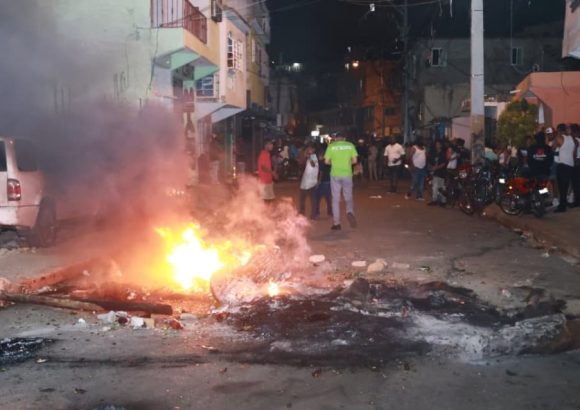
    On Friday night, widespread unrest erupted in the La Cañada de Guajimía neighborhood of Herrera, located in Santo Domingo Oeste, after the fatal shooting of 18-year-old Darlin Mercado during a police operation. Outraged local residents poured onto the streets to demonstrate against the teenager’s death, bringing key thoroughfares in the area to a standstill.

    Footage circulated widely across major social media platforms captured demonstrators igniting piles of trash and used tires along blocked roadways, a dramatic display of public anger that has reverberated through the tight-knit community. The incident has sent shockwaves through the neighborhood, with locals long voicing concerns over aggressive policing practices in the area.

    Beyond demanding immediate accountability for Mercado’s death, protesters articulated a broader set of grievances centered on repeated alleged police abuses that have impacted residents of the working-class neighborhood. Attendees at the demonstration called for transparent judicial proceedings to deliver justice for the 18-year-old, and emphasized that similar incidents of unnecessary violence must not be allowed to occur again.

    In a clear warning to local law enforcement and government officials, protest organizers stated that demonstrations and road blockages will continue indefinitely until authorities identify and apprehend all police personnel involved in the shooting.

  • “That’s why these things happen”   Journalist reports accidental shooting by police officer while covering protests in Herrera

    “That’s why these things happen” Journalist reports accidental shooting by police officer while covering protests in Herrera

    A Dominican reporter has spoken out about a frightening safety incident that unfolded while she was covering civil unrest in the greater Santo Domingo area, highlighting the growing risks frontline journalists face when reporting on public protests. Anny Toribio Reynoso was on assignment documenting demonstrations in the Herrera neighborhood of Santo Domingo Oeste. The protests had erupted after Darlin Mercado, a young local man, lost his life during an active police operation in the community.

    In a public social media post detailing her experience, Toribio Reynoso recounted the chaotic moments that put her and other fellow reporters in grave danger. After hours of unrest, the protest had finally been de-escalated: demonstrators had dispersed from the area, and public order had been largely restored by responding law enforcement officers. Believing the zone immediately surrounding police personnel had become the safest location to continue their on-site recording and reporting, Toribio Reynoso and the other journalists moved closer to the officers’ position.

    It was at this moment that one officer with the Dominican National Police discharged his service weapon, an incident the journalist described as accidental. According to her account, the shot was the result of improper handling of the firearm by the officer. The unexpected gunfire immediately sent waves of panic through the small group of press personnel and other bystanders remaining in the area. Toribio Reynoso emphasized that the accidental discharge put not only the officer himself at risk, but also every journalist working the scene, a reality that has left her deeply concerned about protocol for law enforcement engagement with media during public demonstrations. She has publicly called into question the training and weapon handling practices of the officer involved, raising broader questions about police accountability and journalist safety during coverage of civil unrest in the country.

  • High Temperatures   The heat shows no sign of letting up: Indomet forecasts temperatures of up to 39 °C in the Dominican Republic

    High Temperatures The heat shows no sign of letting up: Indomet forecasts temperatures of up to 39 °C in the Dominican Republic

    The Dominican Republic is bracing for an extended stretch of dangerous extreme heat that will blanket most of the nation through the coming days, national meteorological service Indomet has announced. The hardest-hit regions will be the country’s northwest, northern and southwest zones, where peak afternoon temperatures are projected to climb between 35°C and 39°C. Elevated humidity will push perceived heat even higher, increasing health risks for residents across these areas.

    Meteorologists have identified a combination of overlapping climate and weather factors driving this sustained heat event. First, the peak of summer brings naturally increased solar radiation that warms land and air masses across the Caribbean nation. Second, a stationary high-pressure system is drawing steady warm air flows from the east and southeast, trapping heat near the surface. Low to moderate levels of Saharan dust circulating over the country also contribute to warming conditions. Most notably, these factors are amplified by a currently moderate-strength El Niño phenomenon, which has established a regional pattern of suppressed rainfall and well-above-average temperatures across the entire Caribbean basin.

    Long-range climate projections from the U.S. National Oceanic and Atmospheric Administration’s (NOAA) Climate Prediction Center (CPC) indicate this hot, dry pattern will remain locked in place for at least the next two weeks. Climatological data also confirms that July and August are historically the hottest months of the year in the Dominican Republic, meaning the current heatwave could extend deep into the summer season.

    This heat event comes on the heels of a historic June that broke temperature records across the country. June 2026 saw unprecedented high temperatures in dozens of locations, including a new all-time station record of 39.9°C recorded on June 29 in Sabaneta, Santiago Rodríguez province. That reading toppled a 38.5°C record that had stood at the station since 1964, ending a 62-year-old benchmark. Other record-breaking readings were recorded across the nation: 38.4°C in Mao, Valverde Province; 38.2°C in Jimaní, Independencia Province; 37.1°C in Dajabón; 37.0°C in Altamira, Puerto Plata Province; and 36.4°C in the country’s second-largest city, Santiago.

    Even the capital region saw new temperature milestones set. On June 30, the Santo Domingo Este weather station hit 36.6°C, beating the previous 2019 record of 36.0°C. The nearby Las Américas station also notched a new record of 35.9°C, surpassing the 35.5°C record set just six years prior in 2020.

    In response to the ongoing public health risk, Indomet has issued a series of safety guidance for Dominican residents. The agency advises all people to maintain steady hydration throughout the day, wear loose-fitting, light-colored clothing that reflects sunlight, regularly apply broad-spectrum sunscreen, and avoid any unnecessary exposure to direct sunlight between the peak heat hours of 11:00 a.m. and 4:00 p.m. Special attention is urged for children, older adults, and people with preexisting chronic health conditions, as these groups face the highest risk of heat-related illness. Indomet says it will continue real-time monitoring of atmospheric conditions and will release regular updates through its official public bulletins and communication channels to keep communities informed.

  • 196 cases of leptospirosis have been reported so far this year

    196 cases of leptospirosis have been reported so far this year

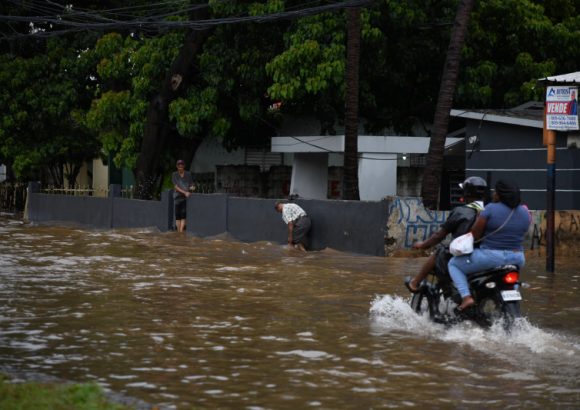
    As the Dominican Republic enters its annual rainy season, public health authorities are tracking upward trends in leptospirosis, a zoonotic disease closely tied to flood conditions, alongside shifting case counts for multiple other communicable diseases. Data released by the Ministry of Health’s National Epidemiological Surveillance System shows that between epidemiological week 24 and week 30, 30 new confirmed leptospirosis cases were detected across the country. By mid-2026, the cumulative national tally for the disease has reached 196 confirmed cases, with 15 recorded fatalities to date.

    Leptospirosis, which spreads to humans from animals, most commonly through contact with urine from infected rodent populations, sees its incidence spike consistently during periods of heavy rain and flooding, when contaminated water exposes more people to the bacteria. The highest concentration of recent cases has been recorded in three jurisdictions: Puerto Plata, San José de Ocoa, and the National District. Health officials have reminded the public to watch for key indicative symptoms, including sudden fever and chills, persistent headache, widespread muscle pain, and bouts of nausea and vomiting.

    Alongside leptospirosis, the surveillance update tracks progress on three other common mosquito-borne diseases found in the country. In epidemiological week 24 alone, one additional malaria case was confirmed, pushing the 2026 total to 98 confirmed infections. Most malaria cases are concentrated in the southern provinces of Azua and San Juan. Transmitted through the bite of infected mosquitoes, malaria typically presents with fever, chills, profuse sweating, and overall body malaise.

    For dengue, another mosquito-transmitted viral infection that can cause life-threatening severe complications, cumulative confirmed cases since the start of 2026 now stand at 138. During week 24, the most prevalent circulating subtypes were dengue serotype 2 (D2), which accounted for two new cases, and untyped dengue variants, which made up four additional cases. Most recent dengue infections are clustered in the towns of Baní and La Romana. Classic dengue symptoms include high fever, severe headache, pain behind the eyes, muscle and joint soreness, and skin rashes; severe cases may develop life-threatening bleeding and organ damage.

    The weekly surveillance report also included updated data on maternal and infant mortality. As of the latest count, the Ministry of Health has recorded 58 maternal deaths and 729 infant deaths nationwide in 2026. In the seven-day reporting period, 32 infant deaths and 27 newborn deaths were registered. Of the total maternal deaths recorded this year, 32 were of Dominican nationality and 25 were of Haitian nationality.

    Severe Acute Respiratory Infections (SARI) continue to circulate at stable levels across the country, per the latest update. In the past week, authorities confirmed two new cases of SARS-CoV-2, one case of adenovirus, and three cases of influenza A (H3N2). Health officials noted that overall influenza case counts remain lower than preliminary projections for this time of year. The Ministry of Health emphasized that the incidence of all circulating respiratory viruses this week held steady, with transmission patterns remaining controlled and aligned with expected seasonal trends.

  • Ministry of Education Announces Top 100 Students in 2026 Grade Six National Assessment

    Ministry of Education Announces Top 100 Students in 2026 Grade Six National Assessment

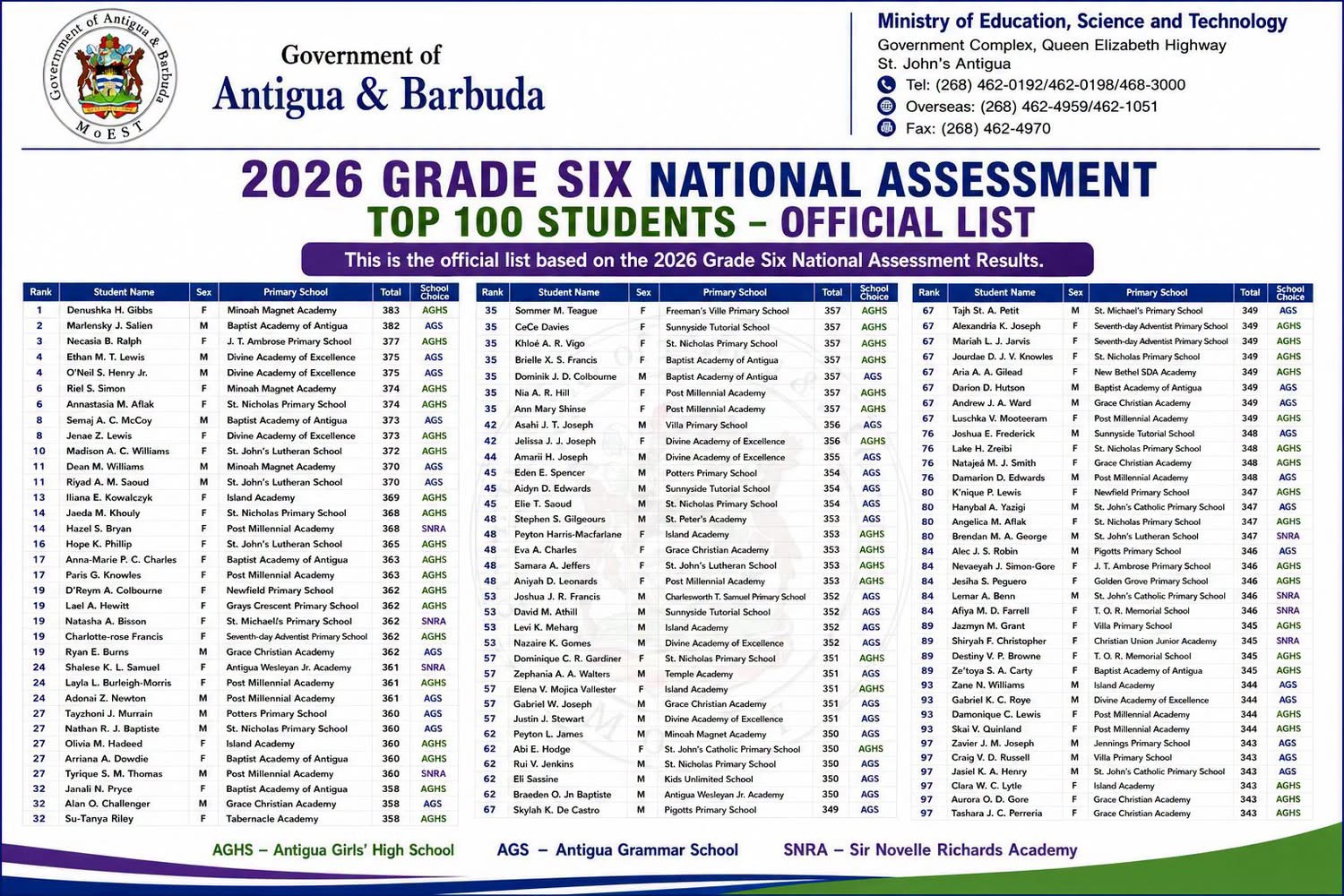
    The long-awaited results of the 2026 Grade Six National Assessment are finally official, with the Ministry of Education, Science and Technology unveiling the roster of the nation’s 100 highest-performing sixth-grade students this week. Leading the pack of standout learners is Denushka H. Gibbs, a student at Minoah Magnet Academy, who secured first place nationwide with an impressive total score of 383.

    Following closely behind Gibbs is Marlenky J. Salien from Antigua Baptist Academy, who earned second place overall with a score of 382, a performance that also earned Salien the title of the top-ranking male student across the country. Claiming the third position on the national leaderboard is Necasia B. Ralph of J.T. Ambrose Primary School, with a solid score of 377. Ralph’s third-place finish also marks her as the highest-scoring student from a public government-run primary institution in this year’s assessment.

    In his official remarks following the results release, Education Minister Daryll S. Matthew extended warm congratulations to all the ranked students, as well as the parents, teachers, principals and school communities that supported them throughout the preparation period. Minister Matthew framed the achievement of placing among the Top 100 as a defining milestone in each student’s academic journey, celebrating the hard work that brought each learner to this point.

    Beyond individual accomplishments, the minister also highlighted the institutional success of Post Millennial Academy, which outperformed all other schools in the country this year by placing 12 of its students on the national Top 100 list – the highest number of entries from any single school.

    In an official congratulatory statement published alongside the results, the Ministry of Education, Science and Technology reaffirmed its pride in the cohort, saying: “We congratulate the Top 100 Students in the 2026 Grade Six National Assessment. Keep aiming high and continue to excel!”

    Matthew also took the opportunity to encourage all participating students, not just those who earned a spot in the Top 100. He reminded learners that regardless of their final ranking, they should take pride in the effort they put into the assessment, and continue pursuing academic excellence as they transition into secondary school in the coming year.

    Alongside student rankings, the official results list also records each learner’s preferred secondary school for the next stage of their education. The vast majority of the Top 100 students selected either Antigua Grammar School or Antigua Girls’ High School as their first choice, with a smaller group opting to attend Sir Novelle Richards Academy.

  • The UWI announces fourth OneUWI postgraduate student conference

    The UWI announces fourth OneUWI postgraduate student conference

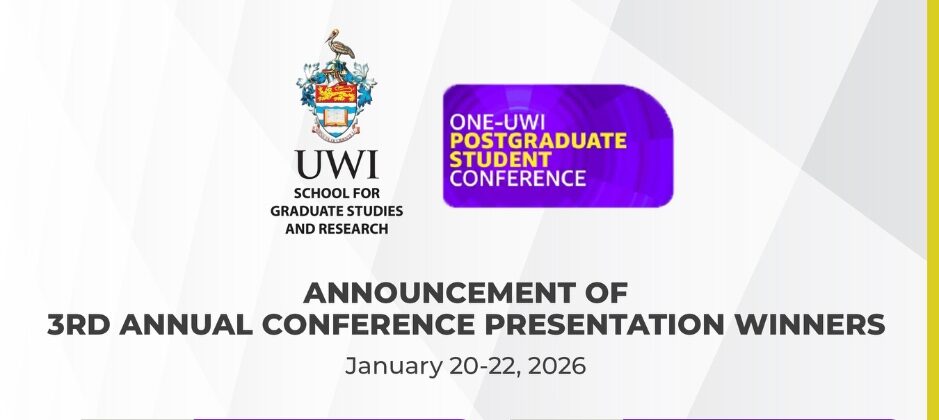
    As a leading higher education institution focused on addressing regional challenges through cutting-edge scholarship, The University of the West Indies (UWI) has announced plans to host its fourth annual OneUWI Postgraduate Student Conference from November 18 to 21, 2026. This long-running event is designed to showcase high-impact postgraduate research that targets the most pressing social, economic, environmental and public health issues facing the Caribbean region.

    The upcoming 2026 conference will carry the central theme “Advancing Knowledge, Shaping Futures: Research, Innovation, and Impact Across the Caribbean and Beyond.” The announcement of the fourth conference coincides with the university recognizing 14 outstanding postgraduate students whose research presentations were selected as the top entries from the event’s third iteration.

    The third annual conference faced scheduling delays, having originally been slated for November 2025 before being postponed to a virtual format held January 20 to 22, 2026. Despite the shift to an online setting, the event drew more than 600 registered participants from across the region and beyond, and featured 51 individual research presentations spanning a diverse array of topic areas critical to Caribbean development: public healthcare, climate change resilience, governance systems, educational access and improvement, and cross-sector sustainable development.

    The 14 award-winning presenters, selected based on their work’s originality, academic rigor, and direct alignment with the Caribbean’s core development priorities, recently received their awards, including electronic gift vouchers and other commemorative prizes. The honorees and their research topics span multiple UWI campuses and academic faculties, covering everything from clinical public health to economic policy, climate vulnerability, and cultural education:
    – Dr. Li-Shann Paul Mullings, Faculty of Medical Sciences, Mona Campus: *Prevalence and Clinical Characteristics of Infants with Urinary Tract Infections and Concomitant Cerebrospinal Fluid Pleocytosis: A Single-centre Retrospective Study*
    – Dr. Griffin Benjamin Jr., Faculty of Medical Sciences, Cave Hill Campus: *Primary Care Patients Awareness Toward Medicinal Cannabis in Barbados*
    – Rhonda Rattansingh, Faculty of Social Sciences, St. Augustine Campus: *The Impact of Uni Sensory and Multi Sensory Semantic Cue Congruence on Online Consumer Product Attitude*
    – Dr. Gabrielle Boyce, Faculty of Medical Sciences, Cave Hill Campus: *Sociodemographic and Health Characteristics of Elderly People Referred to Public Long Term Health Care Facilities in Barbados*
    – Shara Williams Lue, Faculty of Social Sciences, Mona Campus: *Workplace Support for Retirement in Jamaica: A Resource Based Dynamic Perspective*
    – Gopiechand Boodhan, Faculty of Social Sciences, St. Augustine Campus: *A Proximity Analysis of Communities at Risk from Landfill Air Pollutants – A Study of the Beetham, Forres Park and Guanapo Landfill Sites*
    – René Henry, Faculty of Social Sciences, Global Campus: *An Exploration of Perspectives on Programme Diversification in a Tertiary Institution in Anguilla, 2019–2023*
    – Dhanielle Smith, Faculty of Social Sciences, St. Augustine Campus: *A Living Wage for Trinidad and Tobago*
    – Dr. Deepak Ramsingh, Faculty of Medical Sciences, St. Augustine Campus: *The Role of Ki 67 in the Prognosis of Oral Squamous Cell Carcinoma: A Systematic Review*
    – Mrs. Cynanie Sawyers Haylett, Faculty of Social Sciences, Mona Campus: *An Investigation of the Learning Organisation and Psycho Socio Cultural Predictors of Institutional Effectiveness in Three Jamaican Higher Education Institutions*
    – Mrs. Meera Mahase Forgonie, Faculty of Food and Agriculture, St. Augustine Campus: *Household Dietary Diversity and Associated Socioeconomic Factors: The Case of Three Rural Communities in Southeast Trinidad During COVID 19*
    – Mr. Jody Brown, Faculty of Humanities and Education, Mona Campus: *Promoting Nutritional Wellbeing through Indigenous Food Systems in Caribbean Households (Home Economics Focus)*
    – Ms. Kendria Ferguson, Faculty of Social Sciences, Mona Campus: *Intersecting Vulnerabilities and Socio-Economic Drivers of Household Impact in Post Hurricane Dorian Bahamas*
    – Mr. Noor ud din Mohammed, Faculty of Humanities and Education, St. Augustine Campus: *Translanguaging for Creole Education: A Caribbean Centered Approach*

    The January 2026 virtual conference opened with formal remarks from UWI’s Professor Sir Hilary Beckles, and featured guest presentations from an international cohort of experts: Nadine Bushell of Lions Clubs International, Rodolpho Gonçalves da Silva of Brazil’s UNESP, and Indian sustainability entrepreneur Ishaan Sudan. Collectively, their talks centered on resilience, cross-border innovation, youth leadership, and community service as foundational pillars for tackling shared global and regional challenges.

    Reflecting on the exceptional quality of research showcased at the third conference, Professor Aldrie Henry-Lee, Pro Vice-Chancellor for Graduate Studies and Research (SGSR), emphasized that the presentations showcased the high caliber of postgraduate work across all UWI campuses, and highlighted the clear, direct applicability of this research to real-world regional challenges. “These presentations demonstrate the exceptional quality of postgraduate research across The UWI and direct application to real-world challenges. They reflect a strong commitment to producing knowledge that matters to the Caribbean,” she noted.

    Professor Henry-Lee also extended gratitude to the full network of contributors that made the third conference a success, saying: “SGSR extends sincere appreciation to the Session Chairs, Session Discussants, Directors of Graduate Studies and Research, Postgraduate Student Representatives, Guild representatives, presenters, attendees, and organising team whose collective efforts contributed to the success of the conference.”

    Beyond academic programming, the third conference included a hands-on community outreach component held January 23, 2026, in Hanover, Jamaica. Postgraduate students partnered with local organizations to deliver emergency relief assistance to more than 200 families impacted by Hurricane Melissa. Organized in collaboration with the Lions Clubs of Jamaica and the Kiwanis Club of New Kingston, the relief effort underscored UWI’s longstanding commitment to community engagement, and will serve as a pilot program for the proposed UWI Give Back Day, scheduled to coincide with the fourth conference in November 2026.

    As the OneUWI Postgraduate Student Conference enters its fourth year, university officials confirm the event has cemented its role as a leading regional platform for early-career researchers to share work with both regional and global audiences. Preparations for the November 2026 conference are already well underway, with organizers anticipating the event will further strengthen postgraduate scholarship and cross-institutional collaboration across all five UWI campuses and their global partner institutions.


  • STATEMENT: CARICOM people continue to meet adversity with courage, new Chair says on CARICOM Day 2026

    STATEMENT: CARICOM people continue to meet adversity with courage, new Chair says on CARICOM Day 2026

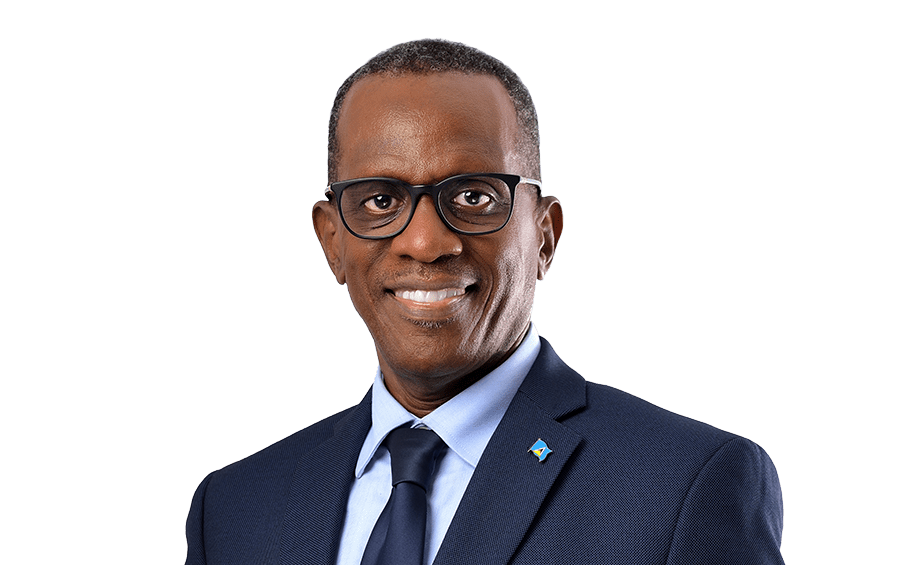
    On July 3, 2026, ahead of CARICOM Day celebrations marking the 53rd anniversary of the Caribbean Community, newly appointed Chairman Philip J. Pierre—who also serves as Prime Minister of Saint Lucia—addressed regional citizens from the CARICOM Secretariat headquarters in Turkeyen, Greater Georgetown, Guyana, laying out a bold vision for the bloc’s future amid a cascade of interconnected global challenges.

    The Caribbean region currently navigates an increasingly volatile global landscape defined by intensifying climate change impacts, persistent economic volatility, widespread food and energy security gaps, growing security threats, and a pressing demand to expand economic and social opportunities for youth. Despite these overlapping headwinds, Pierre emphasized that Caribbean people have repeatedly demonstrated extraordinary resilience, creativity, and courage in the face of adversity, traits that form the foundation of the community’s strength.

    Established 53 years ago, CARICOM has never been merely a bureaucratic intergovernmental institution, Pierre noted. Instead, it represents a core promise to the people of the region’s small island and coastal states: that collective action and shared purpose allow Caribbean nations to achieve far more than they could ever manage in isolation. When unified, the region’s people, distinct cultures, interconnected economies, and shared aspirations all grow stronger, he added.

    Against this backdrop, Pierre identified intentional, targeted renewal as the bloc’s top priority moving forward. The overarching goal of this renewal effort is to build a Caribbean Community that is stronger, more equitable, safer, and more prosperous—one that delivers tangible, tangible opportunities and measurable, meaningful progress to every community across the region.

    To deliver on this vision, Pierre outlined key priorities for the coming term: deepening ongoing regional integration efforts, upgrading regional transportation infrastructure and cross-border connectivity, shoring up long-term food and nutrition security, advancing implementation of the CARICOM Single Market and Economy to unlock greater trade and labor mobility, accelerating widespread digital transformation across the bloc, fostering a culture of local innovation, and ensuring that every regional citizen can experience the tangible benefits of CARICOM membership in their daily lives.

    In a special appeal to the next generation, Pierre called on Caribbean young people to step into roles as leaders, innovators, and builders of the community’s future. “Our future will be shaped by your ideas, your creativity, your energy, and your belief in what we can achieve together,” he told youth across the region.

    Closing his anniversary message, Pierre urged all Caribbean citizens to reaffirm their commitment to CARICOM’s founding ideals: cross-border cooperation, collective solidarity, shared sustainable development, and unwavering respect for the dignity of every Caribbean person. He closed by extending well wishes to all regional citizens, calling for continued collaborative work to build a unified, resilient, inclusive, and future-ready community that works for every one of its members.

  • Harrison College bids farewell to deputy head

    Harrison College bids farewell to deputy head

    After 48 years and 10 months of dedicated service to education in Barbados, Dr. Martin Alleyne, the long-serving Deputy Principal of Harrison College, was celebrated by the entire school community in a special farewell assembly, bringing together current students, faculty, non-teaching staff, and former colleagues to mark the close of his historic career.

    Colleagues across the school shared glowing tributes to Dr. Alleyne, framing him as a steady, dependable leader who guided Harrison College through some of its most turbulent modern challenges. Retired principal Juanita Wade’s citation, read aloud by current teacher Sophia Chase—who first met Dr. Alleyne as her first-form English instructor—highlighted the depth of his experience across every level of school leadership. From his early days in the classroom teaching canonical works like *David Copperfield* and *The Call of the Wild*, he rose through the ranks to become a senior teacher, department head, and finally Deputy Principal, building a reputation as a trusted advisor whose insight was rooted in decades of frontline education work.

    Wade emphasized that through crises ranging from seasonal hurricanes and the 2021 eruption of the La Soufrière volcano to the global COVID-19 pandemic, Dr. Alleyne remained an unwavering source of support for the entire school community. Never one to shrink from adapting to new demands, he voluntarily completed virtual professional development courses to master modern online teaching methodologies when the pandemic forced schools to shift to remote learning, keeping his skills sharp and his instruction aligned with cutting-edge educational practices. “He was a dependable and approachable Deputy Principal who consistently gave his very best,” Wade wrote in her citation, adding that his steady leadership made her own work as principal far easier.

    Current principal Kaylene Kellman-Holder echoed this praise, crediting Dr. Alleyne with ensuring a seamless leadership transition when she first took on her role at the school. Recalling her first day in office, Kellman-Holder noted that Dr. Alleyne’s behind-the-scenes coordination kept school operations running so smoothly that no one could tell it was her first day in the top leadership position. “Teacher man… has been the one directing, guiding… despite being very much behind the scenes,” she said of his quiet, effective leadership style.

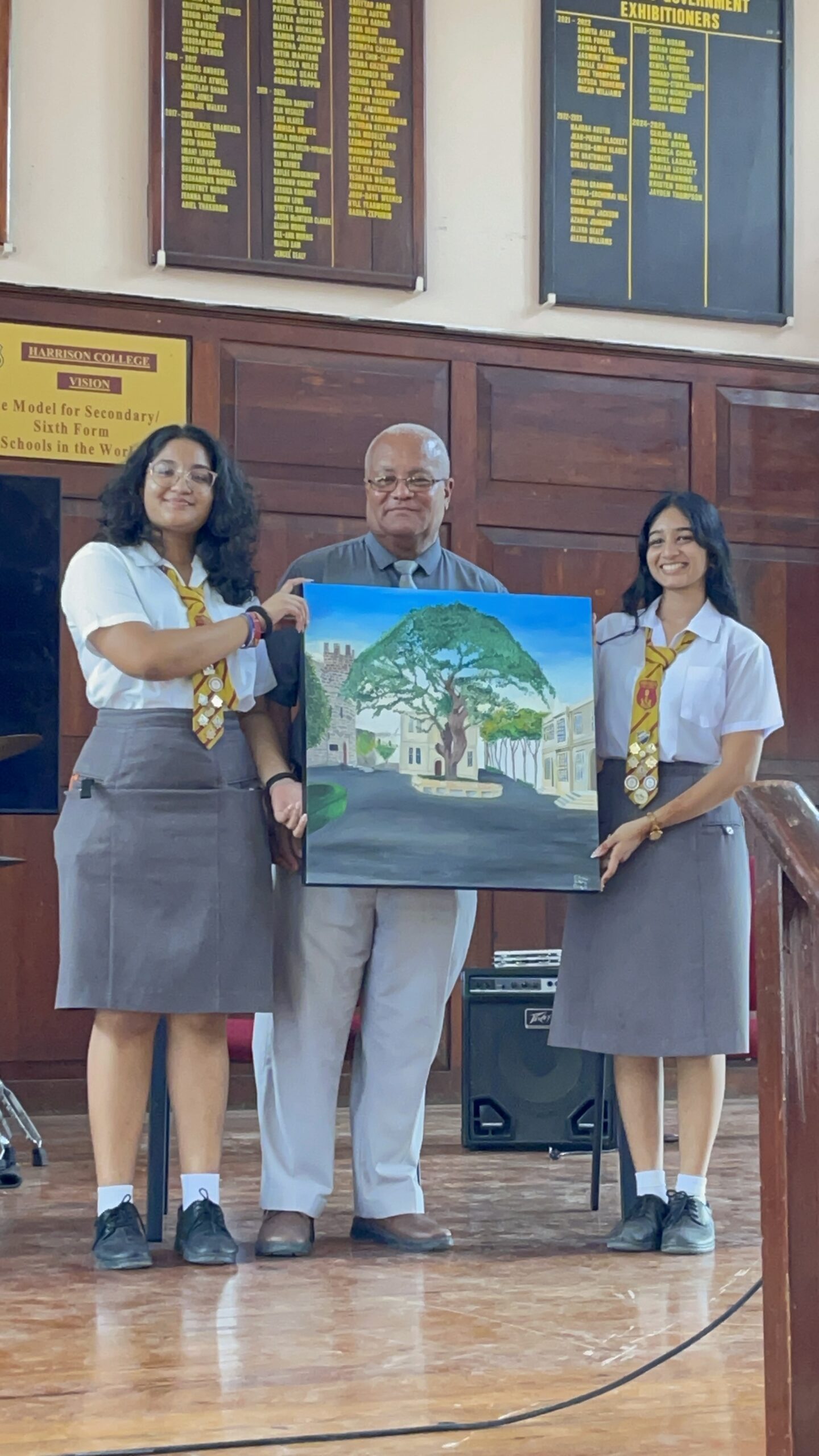
    The celebration was repeatedly interrupted by joyful student chants of “Big up a man like Dr Alleyne,” a clear reflection of the widespread affection and respect the school body holds for the retiring educator. The school community presented Dr. Alleyne with a range of gifts to mark the occasion: second-form students gifted a custom cake reading ‘Happy Retirement’ and a gift bag, the sixth form year group presented an original painting, and the school leadership presented a ceremonial gift basket.

    Longtime connections ran deep throughout the event. Marilyn Boyce-Singh, speaking on behalf of the school’s non-teaching staff, shared that she has known Dr. Alleyne for more than 40 years, after he taught her when she was a student at what is now Graydon Sealy Secondary School. “He is one of those persons that I can call at any time and ask a question and get an answer. He is so easy to work with,” she said, before wishing him a long, healthy retirement filled with blessing.

    In his own farewell remarks, Dr. Alleyne surprised many by sharing that education was never his original career path. After graduating from The Lodge School Upper Sixth in 1977, he only took a temporary five-week teaching post while planning to pursue a career in law. That short appointment grew into a nearly 50-year lifelong calling, and over the decades, he developed a deep abiding love for teaching, with a particular passion for English literature.

    Framing his career as the close of the first chapter of his life, Dr. Alleyne said: “This is the end of my first book. My second book will begin on the 24th of July.” The educator, who officially retires on July 23, shared that he is looking forward to enjoying long-postponed hobbies in retirement, including fishing, swimming, recreational reading, and returning to shooting and archery. He left students with one final piece of advice, encouraging them to embrace their journeys no matter where they lead: “You don’t know at your age where you will end up. But whatever you do… do it as unto the Lord.”