博客

  • Espat on Cabinet Turmoil After Mira and Marin Jr. Step Aside

    Espat on Cabinet Turmoil After Mira and Marin Jr. Step Aside

    In a significant political shakeup rocking Belize’s ruling administration dated July 8, 2026, two senior cabinet members—National Defense Minister Florencio Marin Jr. and Home Affairs head Oscar Mira—have stepped aside amid escalating fallout from a leaked internal document scandal originating from the Ministry of Defense. Following the departures, incumbent Infrastructure Development and Housing Minister Julius Espat has been appointed to hold the additional Home Affairs portfolio, expanding his responsibilities within the cabinet.

    The controversy, triggered by the unauthorized release of internal defense ministry files, has thrown the government into turmoil, forcing the reshuffle just weeks after the first allegations came to light. In an exclusive interview with journalist Shane Williams, Espat opened up about the mood among cabinet members following the two high-profile departures.

    When asked about the collective reaction to the latest resignation, Espat described the prevailing sentiment across the cabinet as one of sadness. “Sad. You would wish that nothing like this ever happens,” he stated, noting that the unfolding situation is now a matter for Prime Minister John Briceño to resolve, as he gathers full information and verifies the facts surrounding the leak.

    As a longstanding advocate for anti-corruption reforms within the current administration, Espat acknowledged that temptation for misconduct is a universal human challenge, and it falls to the government to put safeguards in place to minimize such risks. He expressed full confidence in the prime minister’s ability to reach a conclusion that will align with the expectations of all Belizean citizens. “We are all concerned. At the end of the day all of us are human beings and temptation exists. So it is the responsibility of the government to make sure that it is minimized. And that’s why we have a Prime Minister. That’s why we have a Cabinet and the people of Belize. And I know he will make a good decision. I believe in that,” Espat said.

    When pressed for details on his expectations for the ongoing official audit into the defense ministry’s activities, Espat declined to comment, stating that any formal updates should come directly from the prime minister. Prime Minister Briceño has previously confirmed that the independent audit will examine ministry records covering a full decade, from 2015 through 2025, to get to the bottom of the controversy.

    This report is a transcribed excerpt from an evening television newscast, with all Kriol-language remarks rendered using a standardized orthography system for accuracy.


  • New campaign warns: Harbouring criminals will cost you

    New campaign warns: Harbouring criminals will cost you

    Barbados’ government is taking a proactive, community-centered step to curb gang-related violence and organized crime, launching a nationwide public education campaign designed to deter citizens from harboring fugitive gang members and assisting criminal gang operations. The initiative comes directly on the heels of the recent passage of the landmark Criminal Gangs (Prevention and Control) Act, legislation that introduces harsh, mandatory penalties for a range of gang-connected offenses to disrupt criminal networks across the island.

    Under the new law, a broad set of gang-specific activities have been formalized as criminal offenses, with nearly all carrying mandatory minimum prison sentences ranging from 10 to 25 years. For particularly severe offenses – including targeted attacks on law enforcement personnel, and individuals holding leadership roles or providing critical organizational support to gangs – maximum sentences can stretch up to 35 years behind bars.

    The official launch of the campaign was hosted at the Office of the Attorney General, drawing attendance from newly appointed Commissioner of Police Sonia Boyce, senior ministry officials, and representatives from the Barbados Association of Principals of Public Secondary Schools, who accepted batches of campaign posters to distribute across secondary institutions nationwide. A photo from the event captured Lashley and Boyce unveiling the campaign’s central public awareness poster (Credit: Lourianne Graham/Barbados TODAY).

    Minister of Legal Affairs and Criminal Justice Michael Lashley outlined the structure of the multi-channel campaign, which forms a core component of the national government’s broader crime prevention strategy. At its center are two distinct public service announcements (PSAs): one that breaks down the specific provisions and penalties outlined in the new Criminal Gangs Act, and a second that delivers a general message about the legal risks of harboring wanted gang members. Lashley emphasized that the new legislation imposes “very stiff penalties” for anyone found hiding gang affiliates or facilitating recruitment of new members into criminal organizations.

    Beyond broadcast PSAs, the campaign will expand into communities across the country, deploying printed posters, in-person outreach to secondary schools, local community groups, and national service clubs. Lashley stressed that cross-sector collaboration is critical to the initiative’s success, noting that every stakeholder with a role in crime prevention must be brought into the effort. To maximize reach, particularly among younger audiences, the campaign will also leverage major social media platforms including WhatsApp, Instagram, and Facebook to spread its message.

    Notably, community members played a central role in developing the two PSAs, a deliberate choice that Lashley says marks the start of a broader community-centered engagement strategy. He encouraged all Barbadians to see the campaign not just as a formal warning about legal consequences, but as a collective call to action to join the national fight against organized crime.

    Lashley also expressed full confidence in newly appointed Police Commissioner Sonia Boyce’s leadership, while underlining that law enforcement action alone cannot solve Barbados’ gang crime crisis. “We cannot solve it by just enforcement,” he explained. “You have to solve it by reaching into communities and getting persons who are at the brink of touching the criminal justice system, and persons who are young. That we believe are vulnerable, who might not be part of the criminal justice system but might be vulnerable to gang leaders and drug dealers.”

    The outreach to secondary schools reflects this focus on prevention: by engaging young people early, the government hopes to cut off recruitment pipelines that gangs rely on to expand their membership and criminal operations across the island.

  • Major Jones Says B.D.F. Soldiers Are Treated Like an Afterthought

    Major Jones Says B.D.F. Soldiers Are Treated Like an Afterthought

    In comments dated July 8, 2026, retired Belize Defence Force (BDF) Major Lloyd Jones has launched sharp criticism of institutional mismanagement within the country’s defense apparatus, arguing that frontline service members are systematically undervalued amid growing allegations of ration supply chain corruption.

    Jones, a veteran former officer with decades of service in the BDF, did not limit his critique to reports of ongoing food shortages for active-duty soldiers. He raised serious claims that systemic leakages are occurring at multiple levels of the supply chain, starting from the highest echelons of the defense ministry. According to Jones, portions of allocated rations are siphoned off at every step of the distribution process, leaving barely enough for the service members who need the provisions most. “It starts at the top, which is the troubling part for me,” Jones explained. “By the time rations go through the ministry and every point along the chain, each step shrinks the amount that gets through. There’s a massive gap between what’s budgeted for soldier rations and what actually ends up on their plates.”

    Jones suggested that this pattern of diversion is normalized by unethical behavior at senior levels: if top officials are seen benefiting from misallocated supplies, lower-ranking actors along the chain feel entitled to take a share as well. What remains after this widespread diversion is too little for frontline troops, he added.

    Beyond the immediate ration scandal, Jones argued that the situation reflects a long-standing failure to properly recognize the value of the BDF as an institution. He noted that many skilled recruits have left the force out of sheer frustration, cutting short careers that would have benefited Belize’s national security. “We have never really appreciated the BDF the way we should,” Jones emphasized. “There is no real appreciation for what this kind of institution should do for Belize.”

    The ongoing scandal, Jones contends, has done irreparable damage to the credibility of the nation’s top defense leaders: Florencio Marin Jr. and Oscar Mira. The scandal has not only tarnished the government’s public image, he said, it has also destroyed the confidence of the rank-and-file service members that the two men are tasked with leading. For that reason, Jones argued, both officials are no longer fit to hold their leadership positions, and should step down. Both Marin and Mira are currently on administrative leave from their respective ministry posts amid the investigation.

    News Five reached out to Francis Usher, Chief Executive Officer of the Ministry of Defense, to ask whether he shared Jones’ view that Marin and Mira should resign. Usher, who credited Jones with providing critical guidance early in his own career during his transition to lead the BDF airwing (a unit that grew out of the maritime wing Jones once commanded), declined to go as far as calling for the pair’s departure. “Major Jones is a very experienced individual, he is more than capable of drawing his own conclusions,” Usher said. “I would not go as far as saying that, but I do understand his position, and he is free to make his opinion.”

    This report is adapted from a televised evening newscast transcript, with all speaker remarks retained and formatted for online publication.

  • High Prices Persist as CARICOM Pushes Regional Market Agenda

    High Prices Persist as CARICOM Pushes Regional Market Agenda

    The 51st Regular Meeting of CARICOM Heads of Government concluded its four-day negotiating session in St. Lucia on July 8, 2026, with the long-proposed Caribbean Single Market and Economy (CSME) remaining the top priority for regional integration efforts. However, the gap between policy progress and tangible relief for ordinary Caribbean households remains wide, as sky-high consumer prices and persistent import-driven inflation continue to squeeze household budgets across the bloc’s small island developing states.

    For decades, CARICOM has advanced the vision of a unified regional market to reduce economic vulnerability, boost cross-border trade, and lower costs for local consumers. While incremental progress has been made on harmonizing regional rules, the initiative has not yet delivered on its core promise: cutting the region’s heavy reliance on imported goods and insulating consumers from global inflationary pressures.

    Belize, a key member of CARICOM, sent Oscar Arnold, Chief Executive Officer of the nation’s Ministry of Foreign Affairs, to represent its interests at the gathering. In an interview on the sidelines of the meeting, Arnold outlined the core challenges standing in the way of a functional, cost-lowering single market, pointing to fragmented regulatory frameworks and inefficient logistics as major cost drivers.

    “CSME was discussed at length, with delegates debating actionable next steps and how to harmonize regulations across all CARICOM member states,” Arnold explained. “We have to work around existing national laws in different territories that impact everything from consumer protection to cross-border goods trade, and even the adoption of artificial intelligence and digital trade protocols. One of the most productive conversations centered on goods movement and logistics infrastructure.”

    Arnold highlighted the fundamental inefficiency of the region’s current supply chain that ultimately passes extra costs down to end consumers: at present, nearly all cargo moving between Caribbean nations must first be shipped north to major North American ports before being routed back south to regional destinations. This roundabout shipping process inflates logistics and transportation costs dramatically, adding to the final price tag for nearly all goods sold across the region.

    Delegates also centered the urgent need to curb imported inflation, a challenge that hits small Caribbean states disproportionately hard. Most member nations import the vast majority of consumer and industrial goods, meaning global price volatility for fuel and commodities translates directly to higher costs for households, Arnold noted. The pinch of elevated fuel costs, in particular, has been felt across every corner of the bloc, amplifying existing affordability struggles for low- and middle-income families.

    The 51st meeting was chaired by St. Lucia Prime Minister Phillip J Pierre, with delegates set to advance working group discussions on regulatory harmonization and regional logistics investment ahead of next year’s gathering. This report is a transcript of an evening television broadcast, edited for clarity, with all statements from speakers preserved in their original context.

  • No Gunfire, But No Full Answers in Kevaughn Gabriel Case

    No Gunfire, But No Full Answers in Kevaughn Gabriel Case

    On July 8, 2026, new developments in the death of 25-year-old Kevaughn Gabriel have resolved one critical question but left the broader case far from closed. A formal post-mortem examination has confirmed that Gabriel did not die from gunfire, contradicting earlier public speculation. Instead, his cause of death has been pinned on internal bleeding matching the injury profile of a blunt force traffic accident. According to official statements from Belize’s law enforcement agency, the incident unfolded when Gabriel and three responding police officers were struck by an unattended vehicle that rolled backward down a steep slope located at the junction of Fidel Castro Street and Intelco Hill. The officers had been on site responding to a routine domestic violence call when the unforeseen event occurred, with police already labeling it an unforeseen tragedy. Still, critical pieces of public information remain outstanding. The local news organization investigating the case has yet to receive the full official incident report, the public identification of the three officers involved in the response, or a clear, minute-by-minute timeline laying out exactly how events unfolded on the day of Gabriel’s death. Julius Espat, the country’s Minister of Home Affairs, called the incident “deeply unfortunate” during public comments on the case, confirming that a full formal investigation remains ongoing. “I’ve received a brief initial overview of the incident that took the life of this young man,” Espat told reporters. “I have not yet dug into the full details of what happened, but my understanding is that the investigation is moving forward. If any individual is found to be at fault for this outcome, we will ensure that accountability is properly carried out. No matter how you frame it, this is a devastating situation.” When pressed by reporter Shane Williams on whether the government is preparing for potential civil litigation over Gabriel’s death, Espat offered a straightforward response: “If a lawsuit comes, it comes.” Members of the press have attempted to secure comment from Kevaughn Gabriel’s family multiple times as new details emerge. Most recently, Gabriel’s mother stated that the family intends to keep all discussions of the case private as they process their loss. This report is a transcript of a televised evening newscast; any comments originally delivered in Kriol have been transcribed using a standardized spelling system for accessibility.

  • Woman Charged for Knocking Down Jehovah’s Witness

    Woman Charged for Knocking Down Jehovah’s Witness

    Nearly three days after a 55-year-old community volunteer was left with severe head injuries in a Belize hit-and-run collision, law enforcement officials have formally filed criminal charges against the driver accused of fleeing the scene. The case, which has drawn local attention over claims of preferential treatment for the defendant, moves forward as the victim’s family pushes for full accountability.

    The victim, Cheryl August, is a dedicated Jehovah’s Witness who has long been a familiar figure in the Hillview neighborhood of Santa Elena. Neighbors and congregants know her for her daily bicycle trips, which she uses to travel to worship services, check in on fellow members of her congregation, and care for elderly community members in need. On the evening of the incident, August took all appropriate safety precautions: she wore a high-visibility reflective vest, and her bicycle was fitted with additional reflective gear to make her visible to oncoming traffic. Despite these measures, she was struck by a passing vehicle on Friday night, and the driver, identified as Stephanie Young, left the scene immediately after the collision. August suffered life-altering serious head injuries in the crash.

    In the wake of the incident, August’s family has spoken out to raise concerns about how the case has been processed. Young was released on police bail just two days after the collision, on Sunday, and the family says the quick release has left them convinced Young is receiving favorable treatment that would not be extended to other defendants. As of the latest update, law enforcement has not yet released a full public incident report detailing the circumstances of the crash, including whether speed, alcohol, or distracted driving were contributing factors. Despite the lack of a public police report, Young has already been arraigned at the San Ignacio Magistrates Court, where she faces multiple criminal charges connected to the hit-and-run. For August’s family, the filing of formal charges marks a small but important step toward achieving justice for the injured community activist, though questions about the case’s processing remain unanswered.

    This report is adapted from a transcript of a televised evening news broadcast, with Kriol language portions transcribed using a standardized spelling system for accessibility.

  • McDonald Cyberbullying Case Heads to High Court

    McDonald Cyberbullying Case Heads to High Court

    In a significant development in a high-profile legal matter out of Belize, the cyberbullying case brought by Nichole McDonald against former Commissioner of Police Chester Williams has been officially transferred to the country’s High Court for further proceedings. As of July 8, 2026, the 38-year-old home care nurse and mother of five remains in custody at Belize Central Prison, after her bail was revoked last month.

    During a hearing held on Monday at the Belize City Magistrate’s Court, prosecutors confirmed that the Director of Public Prosecutions (DPP) has issued a directive that the case proceed by way of indictment, moving it out of the lower court’s summary trial jurisdiction. McDonald, who is currently representing herself after being unable to secure legal counsel, was provided with 30 pages of evidentiary disclosure from the prosecution, and the court scheduled two upcoming court dates: a preliminary inquiry set for July 27, with a subsequent hearing scheduled for August 3.

    Court observers noted that McDonald appeared visibly confused when the magistrate explained the procedural shift, which means her case will no longer be adjudicated in the lower magistrate’s court. Her placement in remand follows a bail revocation ruling last month, after new criminal allegations were filed involving a neighbor, multiple police officers, a doctor, and a nurse. Belizean courts had previously granted McDonald bail, with a condition that she avoid any additional arrests or criminal charges while released; the new allegations violated that condition, leading Supreme Court justices to revoke bail and order her to remain behind bars pending further proceedings.

    McDonald has formally entered a plea of not guilty to the earlier charges lodged against her. Addressing the court during the recent hearing, she stated that she feels targeted and victimized by the legal process. She also voiced deep concern for her five minor children, who are currently being cared for by her two oldest adult daughters in her absence.

    This report is adapted from a televised evening newscast originally published online, with transcription completed in line with the outlet’s editorial standards.

  • Fire Victims Struggle Months After Losing Everything

    Fire Victims Struggle Months After Losing Everything

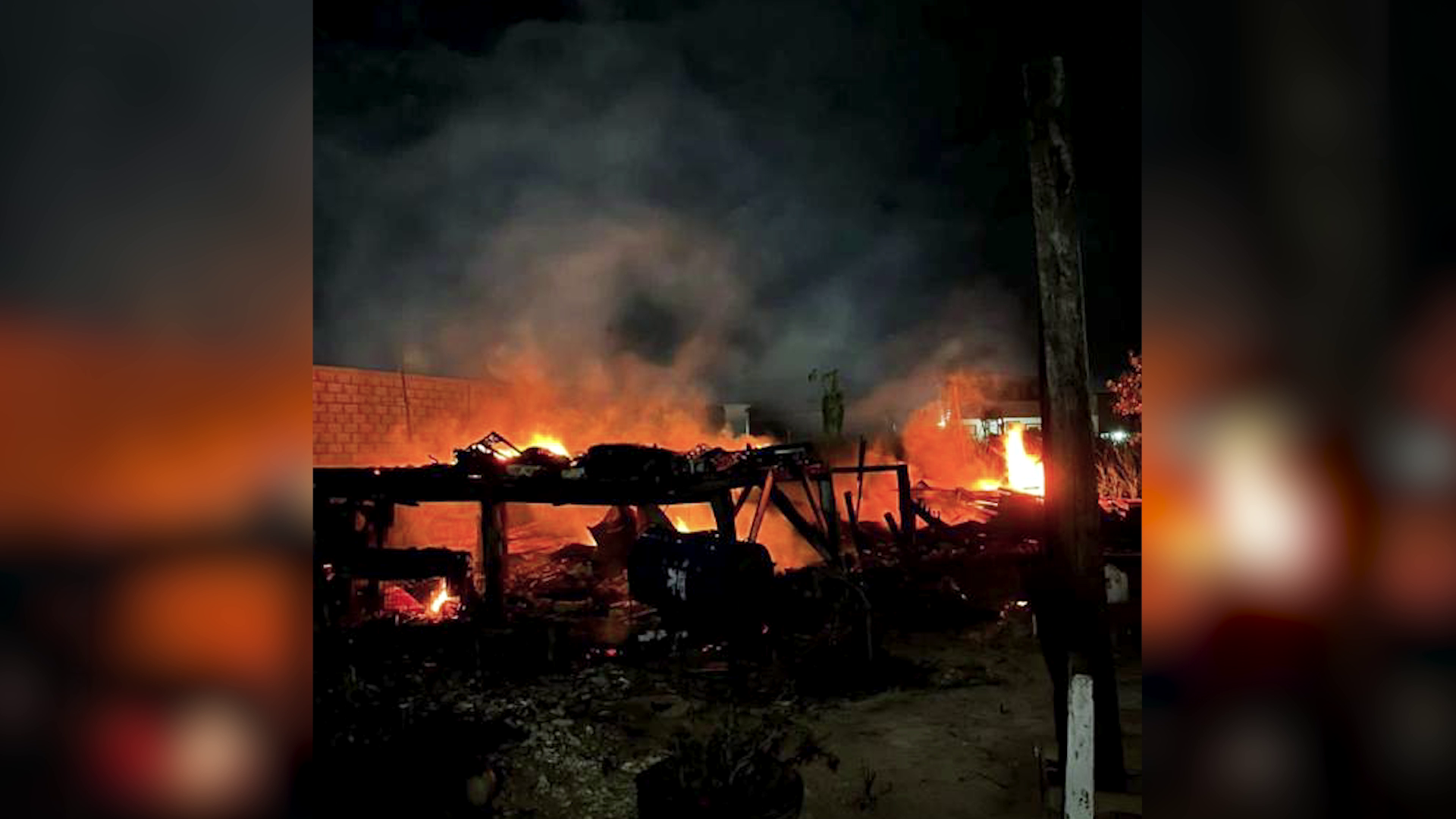
    It has been months since an unexpected early-morning blaze turned a family’s home into ash, and the survivors of the disaster are still fighting to reclaim any semblance of normal life after losing everything they owned. The fire broke out on Good Friday 2026, striking when most residents of the neighborhood were still asleep, and has left Ashanti Garnett, her 4-year-old daughter, and her husband grappling with the long aftermath of sudden homelessness.

  • New Police Minister Briefed on Current Crime Trends Across Belize

    New Police Minister Briefed on Current Crime Trends Across Belize

    Three months into his interim appointment as Belize’s Minister of Home Affairs, Julius Espat is wasting no time addressing the country’s long-running public safety challenges, combining data-driven crime analysis, targeted operational adjustments, and long-overdue infrastructure improvements for frontline police officers.

    Espat, who also holds the Infrastructure Development and Housing portfolio, kicked off his fact-finding mission on July 8, 2026, with a detailed briefing from the Belize Police Department’s (BPD) CompStat analytics team, followed by a closed-door review with western formation commanders on 2026’s first-half criminal activity and policing strategy performance. With a limited three-month window in the role, Espat’s immediate priority is to map out effective existing initiatives, flag underperforming programs, and identify areas where rapid changes can deliver tangible public safety gains.

    Calling the data-focused briefing an unprecedented informative exercise, Espat noted that early indicators from western Belize are encouraging. Official statistics show a drop in reported crime across the first two quarters of 2026 in the region. He plans to extend the same review process to Belize’s eastern division, which includes high-crime Belize City, next week, before rolling out the assessment to all policing zones across the country.

    Even before Espat completes his full review of eastern region crime data, BPD has already launched a targeted intervention for the area, which remains the country’s top crime pressure point. A new Violence Prevention and Enforcement Team, drawing specialized officers from the Eastern Division’s Special Patrol Unit and the island community of San Pedro, has been deployed to high-trouble locations. Headed by Assistant Superintendent Rodney Jones, the new unit will report directly to Senior Superintendent Christopher Noble. Espat characterized the operational shift as a small, experimental adjustment, noting he is still acclimating to the department’s personnel and operational systems. All changes will be reviewed weekly, he added, with further tweaks made if the new setup fails to deliver expected results.

    To build a robust, evidence-based crime-fighting strategy, Espat is leaning on decades of collective law enforcement experience across the department, both active and retired. He noted that he has called a meeting with all former BPD commissioners to solicit their unfiltered advice, a step he says leverages a vastly underused resource of institutional knowledge. “We have a vast wealth of knowledge out there. We just don’t seem to want to tap into it, so that’s what we’re trying to do,” Espat explained in an interview, adding that he is consulting with officers at every rank to collect diverse perspectives before finalizing policy adjustments that benefit all Belizeans.

    Beyond operational strategy, Espat is confronting a quieter crisis that has undermined police morale for years: dilapidated, poorly maintained police precinct infrastructure. During his ongoing tours of facilities across the country, he has seen firsthand how neglected working conditions have eroded officer morale. Thanks to his dual role leading the infrastructure ministry, he is uniquely positioned to deliver immediate fixes rather than just acknowledge the problem.

    So far, Espat has toured precincts in southern, western, and parts of eastern Belize, with more visits planned to cover all facilities in the coming weeks. Local infrastructure teams have already been dispatched to every district to conduct needs assessments, starting with basic repairs: yard cleaning, garbage removal, and full refurbishment planning. Espat is also partnering with the local business community to secure donated paint for the upgrades, with frontline officers agreeing to contribute labor to complete the projects.

    The temporary overlap of the two ministerial portfolios gives BPD a rare, time-limited opportunity to address years of deferred maintenance. Leaking roofs, broken restroom facilities, and aging building exteriors have plagued precincts across the country for years, and Espat is moving to deliver visible, quick wins during his short tenure. “That’s the formula. We have to work as one family. Everybody has to put in their pound of flesh to make where they work brought up to a level that’s acceptable,” Espat said. In exchange for upgrades, he has called on officers to uphold high disciplinary standards and deliver improved service to Belizean communities.

    When asked about the temporary nature of his three-month appointment, Espat emphasized he is approaching the role with full accountability for the duration of his term. “I told the CompStat team here I am permanently the minister for three months. We’ll take it one day at a time,” he said. At the end of his interim term, Espat will submit a full report of his findings, assessments, and recommended next steps to Prime Minister and the Cabinet, who will appoint a permanent minister once the ongoing Ministry of Defence audit is completed. The audit, originally scheduled to take three months, has had its scope expanded from 5 to 10 years of records, extending its timeline.

  • Belize Shifts Into High Gear with Regions First High-end EV Lab

    Belize Shifts Into High Gear with Regions First High-end EV Lab

    As electric vehicles slowly become a more common sight on Belize’s roadways, the small Central American nation has taken a landmark step to build a local skilled workforce ready to support the transition to cleaner transportation. On July 8, 2026, the country’s first dedicated Electric Vehicle Laboratory opened its doors at the Institute for Technical and Vocational Education and Training (ITVET) in Orange Walk, marking the completion of the final core component of a European Union-funded e-mobility pilot project overseen by the United Nations Development Programme (UNDP).

    This new facility is far more than a standard workshop: outfitted with $95,000 in cutting-edge diagnostic and training equipment, it is now the most advanced EV technician training hub in the entire Central America and Caribbean region. Unlike traditional automotive training spaces, the lab features purpose-built training tools including a fully functional deconstructed EV test bed that retains all core operating systems for hands-on practice, an EV powertrain simulator that bridges the gap between conventional internal combustion engine training and new EV technology, and a dedicated charging station maintenance trainer to build practical skills in servicing the full EV ecosystem.

    Prior to the lab’s opening, all EV maintenance and repair work in Belize was handled exclusively by a single private dealership, Caribbean Motors, leaving a critical gap in local capacity as the country expands its electric fleet. The pilot project, which already delivered 5 electric public transit buses for Belize City, installed public charging infrastructure, drafted updated EV regulatory legislation, launched a digital trip planning and payment system, has now addressed that gap with accessible local training. Following the lab’s launch, an initial cohort of 15 Belizean technicians completed a two-day intensive foundational training, and ITVET will integrate permanent EV maintenance courses into its official vocational curriculum starting in September 2026, opening the opportunity for any interested Belizean to upskill for the growing green economy.

    Stakeholders across government and development partners emphasize the opening of the lab comes at a critical moment for Belize’s clean transportation transition. Neil Hall, E-Transit Coordinator for the Belize City Council, noted that the facility solves one of the most common barriers to widespread EV adoption among consumers: consumer uncertainty about access to affordable, local repair services. “For most people considering buying an electric vehicle, the first question is who will fix it if something breaks,” Hall explained. “This lab removes that barrier entirely.” The training will also directly benefit the Belize City Council’s own municipal EV fleet, allowing in-house technicians to upgrade their skills and service the fleet locally rather than relying on external support.

    Technical Training Specialist Arnaud Delvaux, one of the 16 international and local trainers supporting the program, highlighted that the lab’s equipment brings region-leading capability to Belize. “Right here in Orange Walk, you have the most advanced state-of-the-art EV training system in the whole of Central America and the Caribbean,” Delvaux said, noting that the hands-on simulators and test beds allow trainees to build practical experience without the safety risks of working on live, high-voltage vehicle systems.

    UNDP Deputy Resident Representative Michael Lund explained that the lab’s opening brings the initial multi-year e-mobility pilot project to its final phase. The pilot has already delivered on all its core commitments: electric transit buses, public charging infrastructure, updated policy frameworks, digital mobility tools, and now local workforce training to sustain the transition. “As the pilot project winds down, we have laid the foundational infrastructure and capacity to grow e-mobility across the country,” Lund said. “Now we look to government and additional private and public partners to build on this foundation and push the transition forward.”