博客

  • Dear Pres. Abinader, The Market Is Waiting for the Dominican Renaissance:  A Data-Driven Case for a Digital Nomad Visa

    Dear Pres. Abinader, The Market Is Waiting for the Dominican Renaissance: A Data-Driven Case for a Digital Nomad Visa

    The global shift to cross-border remote work is no longer a passing trend — it is a permanent structural reallocation of talent, income and economic activity that is reshaping national development opportunities. In an open letter addressed to Dominican President Luis Abinader, Jonathan Joel Mentor, CEO of business intelligence firm Successment and founder of the Digital Nomad Summit, argues that the Dominican Republic is uniquely positioned to capture a share of the $400 billion annual global remote work market, but is held back by outdated and fragmented policy.

    Today’s most mobile high-skilled workers — from startup founders and software engineers to knowledge workers and creative freelancers — base their location decisions on a mix of quality of life, digital connectivity, legal stability and living costs. Across Latin America and the Caribbean, forward-looking jurisdictions including Barbados, Costa Rica and Colombia have already recognized this shift and built tailored policy frameworks to attract this demographic, capturing billions in new annual economic activity.

    The Dominican Republic already boasts nearly all the core assets needed to compete for this global talent pool: world-class digital connectivity, extensive air access to major North American markets, year-round tropical climate, unrivaled quality of life and close geographic proximity to the United States and Canada. What the country lacks, Mentor argues, is a unified national policy framework that can convert existing international interest in the country into long-term formal economic participation.

    The current economic landscape of the Dominican Republic highlights a striking paradox. In recent years, the country has posted strong macroeconomic results, with robust GDP growth, stable controlled inflation, and record-breaking tourism arrivals that have cemented the sector as a core economic pillar. Yet beneath this headline success lies a pressing structural challenge: more than half of the national workforce remains employed in the informal economy, and a large share of national income relies on tourism and remittances rather than sustainable, high-value domestic economic creation. While the country already draws billions in foreign currency from these existing sectors, it has not yet fully capitalized on the fast-growing flow of globally mobile professionals who want to live, spend, invest and build their operations in new geographies.

    The economic upside of targeting this segment is substantial, even with a modest target. The average long-stay remote professional spends between $2,500 and $4,000 per month on local goods and services. If the country attracted just 5,000 long-term remote workers, that would generate between $150 million and $240 million in new annual economic activity across local housing, transportation, food services, education and small business sectors — and it would require minimal new public infrastructure investment. The demand for this opportunity already exists; the only barrier is the policy framework to unlock it.

    Mentor frames the proposed Digital Nomad Visa not as a narrow migration policy, but as a strategic economic development tool that can deliver four key complementary benefits for the Dominican Republic. First, it acts as a mechanism to capture high-income foreign talent, whose earnings originate outside the country but whose daily spending directly supports local economic growth. Second, it creates a clear framework for financial inclusion, giving verified remote workers transparent pathways to access the formal domestic banking system. Third, it generates valuable economic intelligence, giving policymakers clearer visibility into new trends in global mobility, consumption and foreign investment. Fourth, it acts as a stable engine of domestic demand, driving year-round economic activity across key sectors that have historically relied on seasonal tourism fluctuations.

    Rather than expanding bureaucratic institutions, the proposal focuses on improving cross-agency coordination, aligning the work of migration, finance, tourism and economic development bodies around a shared national growth goal. Mentor outlines a practical phased implementation plan that prioritizes disciplined, measurable execution over hasty rollout. The first 30 days would focus on granting structural authorization, establishing a unified policy framework and inter-agency mandate to lead the initiative. From 30 to 90 days, teams would design core program elements: eligibility criteria, onboarding procedures, compliance standards and data reporting mechanisms. A controlled pilot program would launch between 90 and 120 days to test participation patterns, spending dynamics and operational efficiency. Finally, between 120 and 180 days, the program would scale nationally and be integrated into broader national economic development strategies.

    Beyond the immediate economic gains from increased consumer spending, Mentor argues that this initiative advances a larger strategic goal laid out in Successment’s 2026 Dominican Innovation & Transnational Export Report (DITER 2026): the idea that data is a core component of national economic sovereignty in the 21st century. Modern economies compete not just on their ability to attract capital, but on their ability to turn fragmented economic activity into actionable insights that improve planning, attract investment and boost long-term competitiveness. The Dominican Republic already generates vast volumes of economic data through tourism, remittances, commerce and mobility, but it has not yet leveraged this data to drive strategic decision-making. Digital nomads, Mentor notes, are far more than just a new consumer segment: they offer a unique, real-time window into how global talent, capital and economic behavior move across borders, giving policymakers critical insight to shape future economic strategy. In this framework, data is not just a byproduct of economic activity — it is core infrastructure that determines how international investors evaluate and engage with the Dominican economy.

    President Abinader’s administration has already guided the country through periods of crisis, growth and structural reform, and Mentor argues that capturing the global mobility economy is the next strategic opportunity for the government. A well-designed Digital Nomad Visa would allow the Dominican Republic to attract global high-income talent, strengthen domestic formal economic activity, improve inter-institutional coordination, and position the country as the leading hub for the emerging mobility economy in the Caribbean.

    To advance this conversation, Mentor announces that the Digital Nomad Summit Santo Domingo will convene policymakers, global investors, entrepreneurs, academics and international stakeholders on August 6–7, 2026 at Hotel Catalonia, to discuss the future of cross-border talent, remote work and national competitiveness. He formally invites the Abinader administration to join the conversation, noting that the global mobility economy is already here — the only question is whether the Dominican Republic will shape its development.

    History, Mentor concludes, rewards countries that recognize structural economic change before it becomes unavoidable. A Dominican Digital Nomad Visa is not just another tourism initiative — it is a policy tool to structure cross-border economic activity on Dominican terms, under Dominican institutions. Global talent, capital and economic opportunity are already moving across borders. The question that remains for the country’s leadership is simple: when will policy move with them?


  • Gore seeks revenge against King as MRA EastRoc ‘Skate Revenge’ roars into Trelawny

    Gore seeks revenge against King as MRA EastRoc ‘Skate Revenge’ roars into Trelawny

    TRELAWNY, Jamaica — Jamaica’s motorsport community is gearing up for one of its most anticipated showdowns of the year, as the Skate Revenge sprint event prepares to kick off on June 14 at the iconic Trelawny Multi-purpose Stadium. At the heart of the day’s excitement lies a growing grudge match between two of the country’s top drivers: Doug Gore and Raynor King, whose last clash has left motorsport fans hungry for a rematch.

    The event, organized by the Montego Bay Racing Association (MRA), opens its gates to spectators at 6 a.m. with the first on-track action starting at 10 a.m. Beyond the headline rivalry, the event will bring together a stacked lineup of nearly 40 of Jamaica’s most talented drivers across rally, circuit, drift and drag racing disciplines, promising nonstop thrills for casual fans and diehard motorsport enthusiasts alike.

    The event’s iconic name “Skate Revenge” did not come by chance. It traces directly back to the season’s opening sprint event held this past March, where Raynor King claimed a narrow, last-minute victory over Gore in what quickly became the most talked-about race of the early season. With Gore now fully focused on evening the score, MRA officials say expectations for a dramatic, edge-of-your-seat rematch are at an all-time high. “Doug was his number one rival, so that’s why we got the name Skate Revenge because they said Doug is coming back for revenge,” explained Brandon King, a senior member of the organizing team.

    While the Gore-King rivalry serves as the event’s main marketing draw, the competition will feature far more than a single two-driver battle. The official entry list includes some of the biggest names in Jamaican motorsport, from rising young talents like Sebastian Rae and Zidan Madden to veteran competitors including Alan Chen, Chippy Addison, and Leslie Madden — with Chen only set to compete if final mechanical tweaks to his car are completed ahead of race weekend.

    One of the most inspiring storylines heading into the event is the comeback of Jason King, who is set to make his return to competitive motorsport just months after a freak accident in late 2025 cost him his leg. Fitted with a custom prosthetic, King has spent months training to get back up to racing speed, and says he has no intention of holding back when he hits the tarmac on Sunday.

    Organizers project that the overall entry field will surpass the 30-competitive turnout that made the March opening event such a success, with drivers traveling from across Jamaica to take part. “We’re hoping to have everybody out and have a very, very productive and exciting day when it comes down to racing,” Jason King noted.

    Unlike traditional wheel-to-wheel racing formats that often end in collisions and mechanical retirements, Skate Revenge uses a timed time-attack format that prioritizes individual driver skill, precision and consistent lap performance over aggressive overtakes. “It is a tarmac sprint event that will have drift cars, rally cars and circuit cars all going heads-up for the top spot and to determine who has the fastest time,” King explained.

    During the competition, each driver will tackle the purpose-built course one at a time, with vehicles departing the starting line roughly 60 seconds apart. Every competitor will get two timed flying laps, with their single fastest lap time determining final rankings and winners.

    In a break from standard Jamaican motorsport structure that divides competitors by their racing discipline, Skate Revenge groups entries by vehicle technical specifications, including engine size, forced induction systems like turbochargers, and aftermarket performance modifications. This unique format creates unprecedented cross-discipline matchups that fans rarely get to see on local tracks. “It is quite a very interesting match-up. You have different cars from different areas of racing actually racing in one class against each other,” King added.

    To meet the safety standards set by the Jamaica Motor Sports Commission (JMMC), the national governing body for motorsport, all competitors must complete rigorous safety checks before being allowed on course. Required safety equipment includes reinforced roll cages, fire-resistant racing suits, certified racing seats, impact-rated helmets, and six-point safety harnesses.

    For spectators, ticket pricing is set at J$2,000 for adult entry and J$1,000 for children, making the event accessible for families and large groups looking for a full day of entertainment.

    Skate Revenge is not just a standalone event: it marks the second stop on the MRA’s ambitious 2026 national motorsport calendar, a multi-event schedule designed to revive the country’s once-thriving rally scene and lay the groundwork for a return to top-tier international competition. After the June 14 event, the calendar continues with a two-day motorsport and camping festival in St Elizabeth on July 11-12, combining sprint racing, off-roading and outdoor leisure activities.

    Later in the year, organizers will host a retro-inspired navigation rally that harkens back to the golden age of Jamaican rallying, where competitors must follow pre-plotted routes and collect checkpoints across the countryside before reaching the finish venue. September 20 will see the MRA host its first full tarmac rally in more than a decade, with route assessments currently underway across Trelawny and St Elizabeth to find the best course. The season wraps up with the Great Spot Valley Gravel Sprint on November 8, before a three-season-closing rally from December 11-13 that organizers hope will be a defining step forward for the sport.

    Organizers have made no secret of their long-term goal: restoring Jamaica’s reputation as one of the premier motorsport destinations in the Caribbean, a status the country held during the heyday of the iconic Rally Jamaica event. “We want to take this thing back to the days of Rally Jamaica when we had proper international rallies and everything. That’s where we’re pushing to head back to,” King said.

  • Texas teen Karmelo Anthony found guilty of murder in death of Austin Metcalf

    Texas teen Karmelo Anthony found guilty of murder in death of Austin Metcalf

    A guilty murder verdict handed down Tuesday against an American teenager has reignited long-simmering national conversations about self-defense claims, racial inequity in the criminal justice system, and security on K-12 campuses in a high-stakes case that has divided public opinion across the U.S.

    Now 19-year-old Karmelo Anthony, a Black teenager, was found guilty of fatally stabbing 17-year-old white teen Austin Metcalf. The deadly confrontation unfolded on the grounds of a high school stadium located in a Dallas, Texas suburban neighborhood during a track and field competition held in April 2025. As reported by the Associated Press, the violent altercation grew out of a minor disagreement over whether Anthony was permitted to stay under a weather shelter tent belonging to Metcalf’s team amid heavy rainfall that day.

    Prosecutors pushed the narrative that the fatal stabbing was an unprovoked and unjustified attack, with no legal basis for a self-defense claim. Conversely, Anthony’s defense team maintained throughout the trial that their client reasonably perceived an immediate threat to his own safety after the two teens engaged in physical contact, arguing he acted only to protect himself from harm.

    From the earliest days after the killing, the case gained extraordinary national traction. Much of this attention stemmed from viral social media posts that framed the confrontation through a racial lens, accelerating its spread beyond local circles and into mainstream national discourse. In the immediate wake of the guilty verdict, widespread outrage has erupted among Black American communities across social media platforms, with many questioning the fairness of the conviction and highlighting what they see as persistent racial bias in how self-defense claims are treated in the U.S. judicial system.

  • CIBC Caribbean launches Google Pay in Jamaica

    CIBC Caribbean launches Google Pay in Jamaica

    KINGSTON, Jamaica — As big tech giant Google accelerates its expansion of contactless digital payment infrastructure across the Caribbean region, CIBC Caribbean has become the latest financial institution to roll out Google Pay integration, with a phased rollout that introduces differing access rules across its regional footprint. The launch marks another key milestone in the Caribbean’s gradual shift toward modern cashless payment systems, even as local market challenges remain to full adoption.

    Google Pay, the contactless payment tool hosted within Google’s Wallet mobile application, allows users to link their existing debit or credit cards directly to their Android devices. The platform’s core value proposition lies in its security model: through a tokenisation process, actual bank card details are never shared with merchants during transactions, cutting down the risk of card data theft and fraud. Users can complete both online checkout and in-person contactless payments with just a tap of their smartphone.

    Per CIBC Caribbean’s official announcement, Jennifer Fuller, the bank’s director of enterprise payments, cards and merchant services, framed the launch as a key step in the bank’s ongoing digital transformation strategy. “Introducing Google Wallet support for clients reflects CIBC Caribbean’s ongoing commitment to delivering innovative client-centred digital banking solutions and is another important step in enhancing the digital banking experience for our clients,” Fuller stated in the press release.

    For Jamaican CIBC Caribbean customers, the launch brings immediate access to Google Pay for all Visa and Mastercard credit cards, which can be added to the Google Wallet app on any Android device for instant use. However, the country faces a unique limitation not seen in other CIBC Caribbean markets: Jamaican users will not be able to link their debit cards to the service for the foreseeable future. To date, Jamaica is the only market in the bank’s footprint where this restriction is in place.

    By contrast, CIBC Caribbean customers in four other regional markets — Barbados, The Bahamas, the Cayman Islands and Trinidad & Tobago — enjoy full access, with the ability to add both debit and credit cards to their Google Wallet accounts. The bank confirmed that it plans to gradually roll out the service to its five remaining Caribbean operating territories in the coming months, following a controlled, phased rollout schedule.

    “Adding Google Pay supports our focus on convenience, security and innovation, while allowing us to roll out this service in a phased and controlled manner across our markets. Our clients expect modern payment options that fit their lifestyles, and Google Pay delivers exactly that,” Fuller added, explaining the bank’s incremental approach to the regional launch.

    CIBC Caribbean’s entry into Google Pay comes as part of a broader regional push by Google to expand its digital payment services across Caribbean nations. Other major local banks have already beat CIBC Caribbean to the launch in multiple markets: Commonwealth Bank Limited rolled out the service to its Bahamian customers in November 2025, and Trinidad-based First Citizens Bank Limited launched its own Google Pay support just one month later, in December 2025.

    Prior to CIBC Caribbean’s rollout, the Cayman Islands already had four local banks offering Google Pay to their customers. Across the Dominican Republic, 12 different banks now support the service, with Scotiabank customers in both the Cayman Islands and Dominican Republic already able to link their cards to the platform.

    Digital wallet expansion in Jamaica is not limited to Google Pay, either. Rival digital payment service Apple Pay has also been in the works for the Jamaican market. The Bank of Nova Scotia Jamaica Limited first announced plans to launch Apple Pay in late 2024, and during the Scotia Group Jamaica Limited annual general meeting held on March 4 this year, President and CEO Audrey Tugwell Henry confirmed to shareholders that the launch is still on track for late 2026. Sagicor Bank Jamaica Limited CEO Chorvelle Johnson Cunningham also told investors during a May 20 briefing that supporting Apple Pay, tokenisation and other modern digital payment tools is a core short-to-medium term priority for the institution.

    Despite the growing momentum from banks to roll out these modern payment options, full adoption across the region still faces a notable barrier: pushback from local merchants. A July 2024 survey by the Jamaica Observer found that while the three major Jamaican banks confirmed their digital wallet systems are secure and had not received high volumes of customer fraud disputes, many local merchants have publicly posted signs refusing to accept digital wallet payments at their businesses, slowing the uptake of the new payment method among consumers.

  • Hadeed family gains stake in GENAC

    Hadeed family gains stake in GENAC

    KINGSTON, JAMAICA – A major shift in ownership structure has reshaped Jamaica’s leading general insurance provider, General Accident Insurance Company Jamaica Limited (GENAC), after the Hadeed family-controlled CGH Limited secured a substantial stake in the company as part of the sale of Trinidad-based Beacon Insurance Company Limited. The transaction, which was formally disclosed in a regulatory filing released on May 28, has positioned the Hadeed family as the second-largest shareholder in the Jamaican insurer, marking one of the most significant regional insurance industry moves in recent months.

    Per the terms of the deal, CGH received a total allocation of 150,021,478 new ordinary shares and 9,700 new redeemable preference shares in GENAC. This share issuance serves as full consideration for the acquisition of Beacon by Musson (Jamaica) Limited, which closed the purchase of the general insurer on October 31 of last year. Following the transaction, CGH now holds a 12.70% stake in GENAC’s total issued ordinary shares, while majority owner Musson has seen its ownership stake drop from 80% to 69.84% of the company’s ordinary shares. Corporate records confirm that CGH is majority-owned by Gerald Hadeed, who holds 66.6% of the holding company, with the remaining 33.4% controlled by Christian Hadeed. In addition to the new stake, both Christian Hadeed and Beacon’s current Chief Executive Officer Christopher Woodhams were appointed to GENAC’s board of directors on May 19, giving the Hadeed group direct representation in the company’s governance.

    Industry observers note that the transaction structure is layered for long-term strategic purposes: while Musson currently holds full ownership of Beacon following its original purchase, GENAC has planned a subsequent acquisition of the Trinidadian insurer from its parent company at a future date. Once this final acquisition step is completed, GENAC will hold a 70% controlling stake in Beacon, with Musson retaining a 30% minority stake in the regional carrier.

    In its official disclosure to regulators, GENAC confirmed that key components of the final acquisition are still pending, noting that the transaction remains subject to final regulatory approval from the governing bodies overseeing Beacon’s operations in Trinidad. Until that approval is secured, the final transfer of Beacon’s ownership cannot move forward.

    Valuation data from Jamaica’s Companies Office puts the ascribed value of the newly issued shares at J$6.32 per ordinary share and US$1,000 per redeemable preference share. That valuation means the newly issued ordinary shares allocated to CGH carry a total worth of J$948.14 million, while the preference shares are valued at US$9.7 million, equal to roughly J$1.51 billion at current exchange rates.

    The news of the ownership restructuring has already had a visible impact on GENAC’s performance on the Jamaica Stock Exchange (JSE). The company’s share price jumped 14% in trading on Tuesday, closing at J$9.15 per share. That gain pushes the insurer’s year-to-date increase in share value to 48% so far in 2026, giving GENAC a total market capitalization of J$9.44 billion as of the close of trading Tuesday.

    Notably, the change in GENAC’s total issued share count has not yet been updated on JSE trading records. Once the newly issued shares are formally converted to standard stock units, the company’s total issued ordinary share count will rise to 1,181,271,478 outstanding ordinary shares. The update is expected to be reflected in exchange records as soon as all post-transaction administrative steps are completed.

  • Jimmy Llibre set to represent Dominican Republic in GT4 America Championship

    Jimmy Llibre set to represent Dominican Republic in GT4 America Championship

    One of the Dominican Republic’s most promising motorsports talents is gearing up for a highly anticipated return to elite international competition, as Jimmy Llibre prepares to take on the iconic Road Atlanta circuit for the upcoming rounds of the GT4 America Championship on June 12 and 13.

    Widely regarded as one of North America’s most cutthroat and high-profile sports car racing series, the GT4 America Championship draws some of the sharpest driving talent from across the globe every season. This year, Llibre will line up on the starting grid in the championship’s competitive PRO classification, piloting a powerful Porsche 718 GT4 RS Clubsport for the Texas-based ACI Motorsports squad. A standout fact of his entry is that he remains the only Latin American driver competing in the PRO division this season, carrying the flag for his home country on one of motorsport’s most visible regional stages.

    The 2024 PRO category features a stacked field of 35 elite racers hailing from North America, Europe and multiple other racing hubs around the world. The series commands widespread international media coverage, giving Llibre a unique platform to put Dominican motorsports talent on the global map. For the driver, the opportunity comes with equal parts pride and purpose.

    “Representing the Dominican Republic at this level of competition is both the greatest honor of my career and a huge responsibility,” Llibre shared in the lead-up to the Road Atlanta rounds. “My goal is simple: to prove that athletes from the Dominican Republic can not only compete with the best in international motorsport, but contend for wins against the top names in the field.”

    Llibre also made a point to recognize the critical backing he has received from his network of sponsors and official partners. Without their consistent financial and strategic support, he noted, competing in one of North America’s most prestigious open-road racing championships would not be possible for the young Dominican racer. As teams complete final preparations for the weekend’s on-track action, all eyes in the Dominican motorsports community will be fixed on Road Atlanta to see how Llibre fares against his world-class competition.

  • Future squatters to be barred from any settlement involving Crown lands, warns Montague

    Future squatters to be barred from any settlement involving Crown lands, warns Montague

    KINGSTON, Jamaica — In a stern policy announcement delivered to the House of Representatives on Tuesday, Minister of Land Titling and Settlements Robert Montague enacted a hardline new rule: any Jamaican who occupies unoccupied Crown land starting June 9 with the intent to squat will be permanently barred from eligibility for all government-managed land settlement programmes.

    Montague, who also serves as the Member of Parliament for St Mary Western, clarified that the policy only applies to new encroachment, noting that existing squatters will retain their current standing under government programs. “If you’re there already yuh there already, but we not dealing with the new people,” he stated during his contribution to the annual Sectoral Debate.

    Beyond tightening rules around new squatting, the minister also announced a sweeping crackdown on illegal land scamming, a persistent issue involving the fraudulent sale of publicly-owned Crown lands to unsuspecting buyers. Montague confirmed that ongoing investigations have resulted in a clear roadmap for enforcement: individuals caught illegally selling Crown land will face full criminal prosecution, while buyers who participate in these fraudulent transactions will forfeit any money they have invested.

    To help Jamaicans avoid falling victim to these scams, Montague issued an urgent public advisory, urging all prospective land purchasers to verify ownership and legal status directly with the National Land Agency before completing any transaction. “Buying land is not like buying rice and flour, there’s a legal process but always remember, if it sounds too good to be true then it is not true. Save your money,” he added.

    The minister also revealed that the Jamaican government has already completed comprehensive mapping of all occupied Crown lands, using advanced drone and spatial survey technology to create an accurate record of current occupants. This means authorities can clearly identify new encroachment occurring after the June 9 cutoff, he confirmed, adding that any new occupation will result in clear legal consequences.

    In a nod to long-term solutions for the country’s longstanding squatting crisis, Montague announced that the government will soon unveil a major, comprehensive programme to address existing squatting in a systematic, orderly, and legally compliant manner. The new framework is designed to regularize legitimate land holdings while eliminating opportunities for fraud.

    As part of the crackdown on scamming incentives, Montague emphasized that no public official has the authority to sell government-owned land, regardless of their position. “No member of parliament, nor councillor, nor JP, nor big man, nor area leader can sell government land,” he said. He also issued a direct warning to scammers who falsely claim to be acting on behalf of elected representatives: “To those persons scamming people and say is the MP send them, stop it because the MP never send yuh go do nutten like dat.”

  • Downtown business manager pleads for help over human waste

    Downtown business manager pleads for help over human waste

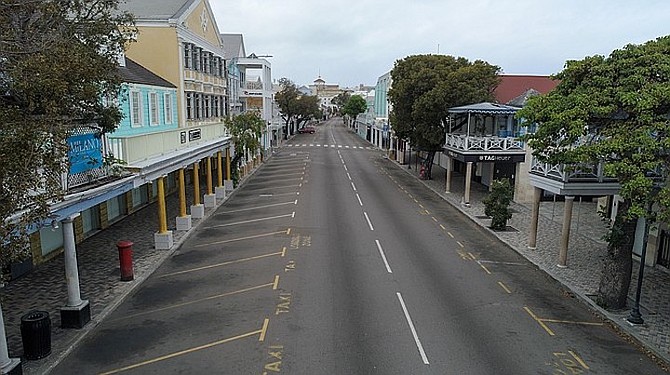
    For nearly 12 months, a downtown Nassau retail business has grappled with a revolting, recurring problem: repeated discoveries of suspected human waste dumped on its property, pushing staff to clean up the hazardous mess again and again. The operation’s leader is now speaking out, demanding a stronger law enforcement presence in an overlooked section of the city’s central district.

    Michelle Palamino, general manager of local sporting goods outlet Hoffer Sport, told reporters the unsanitary issue has persisted through months of her team’s attempts to block trespassers from accessing vulnerable parts of the property. Both Palamino and police investigators suspect a homeless individual is responsible for the ongoing incidents, though no person has been identified or caught in the act to date.

    The problem first emerged in a secluded side corner of the business’ lot. Palamino explained that the spot became a gathering point after an adjacent property installed fencing to push vagrants off its own land. To resolve the issue, Hoffer Sport’s owner paid to erect a new barrier blocking off the corner — but the trespassing and waste dumping simply shifted to the store’s front entrance, leaving the business no better off.

    So far, the impact on customers has been minimal: employees arrive early each day to clean the site before the store opens to the public. But that routine has taken a significant toll on staff morale, with workers growing increasingly fed up after months of cleaning up offensive, unsanitary messes that never stop coming.

    This is not the first trouble the business has faced with trespassing and vandalism connected to vagrancy in the area. Palamino recalled past incidents including a shattered store window, and an altercation where a person threw drinks at the shop’s glass facade after being told they could not sort through the business’ trash bins. That individual was later arrested on separate charges, and Palamino emphasized she does not believe he is linked to the current waste dumping problem.

    When Palamino brought the issue to police, officers told her the department is already stretched thin addressing widespread vagrancy-related concerns across downtown Nassau. The general manager stressed she is not anti-homeless, noting that unhoused people have frequented Bay Street for decades, and most who enter her store are completely non-disruptive. Most homeless visitors interact politely with staff and leave without incident, she said, and she does not take issue with their presence as long as they do not damage or soil her business’ property.

    Palamino acknowledged that city officials have carried out notable beautification projects in downtown Nassau in recent months, including adding public murals and renovating derelict, fire-damaged buildings. But she questioned whether local leaders have properly assessed sanitation and public order issues outside of the busy main tourism corridors that draw most visitor attention. For her, the clear solution is more regular police patrols in her corner of the city center — an area she says has been seemingly forgotten by local authorities.

  • Jamaicans among 17 naturalised citizens set to be stripped of US citizenship

    Jamaicans among 17 naturalised citizens set to be stripped of US citizenship

    WASHINGTON D.C. – The U.S. Department of Justice has launched denaturalization proceedings against 17 recently naturalized American citizens, a group that includes two Jamaican nationals, alongside individuals from Trinidad and Tobago and Haiti. All of the people targeted are accused of serious criminal offenses committed during the statutory period when they were required to prove good moral character to qualify for citizenship, as well as fraudulently concealing their illegal activity during naturalization processing.

  • Central America on alert as Tropical Storm Cristina approaches

    Central America on alert as Tropical Storm Cristina approaches

    As Tropical Storm Cristina churns toward the Central American coastline, four countries in the region have activated emergency protocols and halted daily activities Tuesday, bracing for the storm’s forecast heavy downpours, flash flooding and life-threatening mudslides.

    El Salvador, one of the first nations in the storm’s projected path, has rolled out widespread precautionary measures. The country’s Ministry of Education has shuttered all primary, secondary schools and higher education institutions for both Tuesday and Wednesday, citing elevated risks of landslides, widespread flooding and other storm-related hazards that could endanger students and staff. Thirty-five kilometers south of the capital San Salvador, in the coastal department of La Libertad, all fishing vessels have been ordered to stay anchored in port, where rough, powerful waves already began lashing shorelines ahead of the storm’s full arrival. Dozens of seafront retail businesses and the local seafood market have also locked their doors early, as owners and workers evacuated to safer inland areas.

    Luis Alonso Amaya, director of El Salvador’s civil protection agency, confirmed that authorities have prepped 180 emergency shelters across the country, ready to accommodate residents forced to leave low-lying or high-risk areas ahead of three consecutive days of projected heavy precipitation.

    Neighboring countries have also followed suit with their own emergency preparations. In Guatemala, national officials reported that the most intense rainfall is expected to hit the country’s Pacific coastline, the central Altiplano highlands and river valleys in eastern regions of the country. In Nicaragua, co-president Rosario Murillo has publicly urged all residents to avoid coastal areas entirely, noting that heavy rain has been steadily intensifying across the country since Sunday, raising baseline flood risks even before Cristina’s arrival. In Honduras, the country’s emergency management agency has issued formal storm alerts for nine at-risk regions, urging locals to make final preparations before conditions deteriorate.

    Early Tuesday, the U.S. National Hurricane Center (NHC) based in Miami released its latest update on the storm, reporting that Cristina was moving northward at 6 kilometers per hour, with sustained maximum winds of 65 kilometers (40 miles) per hour as it closed in on the Central American coast. Through Thursday morning, the NHC projects the storm will drop 4 to 8 inches of rain across much of the region, with isolated coastal areas of Nicaragua, Honduras, El Salvador and Guatemala seeing accumulations as high as 12 inches.

    “This rainfall may produce life-threatening flooding and mudslides, especially in areas of steep terrain,” the NHC emphasized in its official bulletin. The agency also warned that coastal flooding driven by storm surge remains a possible threat in zones hit by onshore winds from the cyclone.

    Central America has long been ranked as one of the most hurricane- and tropical storm-prone regions on Earth, due to its geographic position along the eastern Pacific and Atlantic hurricane basins, leaving it regularly exposed to seasonal storm activity that often causes widespread damage and loss of life.