分类: world

  • Bombscare at Miami airport leaves Bahamians stranded

    Bombscare at Miami airport leaves Bahamians stranded

    A significant security alert at Miami International Airport on Thursday evening plunged travel operations into chaos, resulting in extensive evacuations and leaving numerous Bahamian passengers stranded. The incident commenced shortly after 5:00 PM when airport authorities received reports of an unattended piece of luggage classified as a “suspicious item” on the departures level of a terminal.

    In response, U.S. security personnel implemented immediate emergency protocols, evacuating all individuals from the surrounding area as a precautionary measure. Eyewitness accounts described scenes of confusion and anxiety, with travelers being ushered outside the terminal as police and specialized task forces secured the vicinity.

    The disruption severely impacted Bahamasair operations. Passengers scheduled to depart from Miami faced chaotic check-in scenarios, while those aboard an arriving flight from New Providence were confined to their aircraft for approximately three hours. The flight, which had landed at 6:10 PM after a 40-minute journey, was unable to disembark its passengers until security clearance was ultimately granted around 7:40 PM.

    This delay caused a domino effect, pushing back subsequent departures. One affected traveler noted that their intended 7:45 PM departure was rescheduled for between 9:00 PM and 9:30 PM. Airport operations gradually resumed normalcy following the official all-clear confirmation. Attempts to obtain an official statement from Bahamasair regarding the incident and their contingency response were unsuccessful prior to publication.

  • Gunmen kill 11 in attack at Mexican football match

    Gunmen kill 11 in attack at Mexican football match

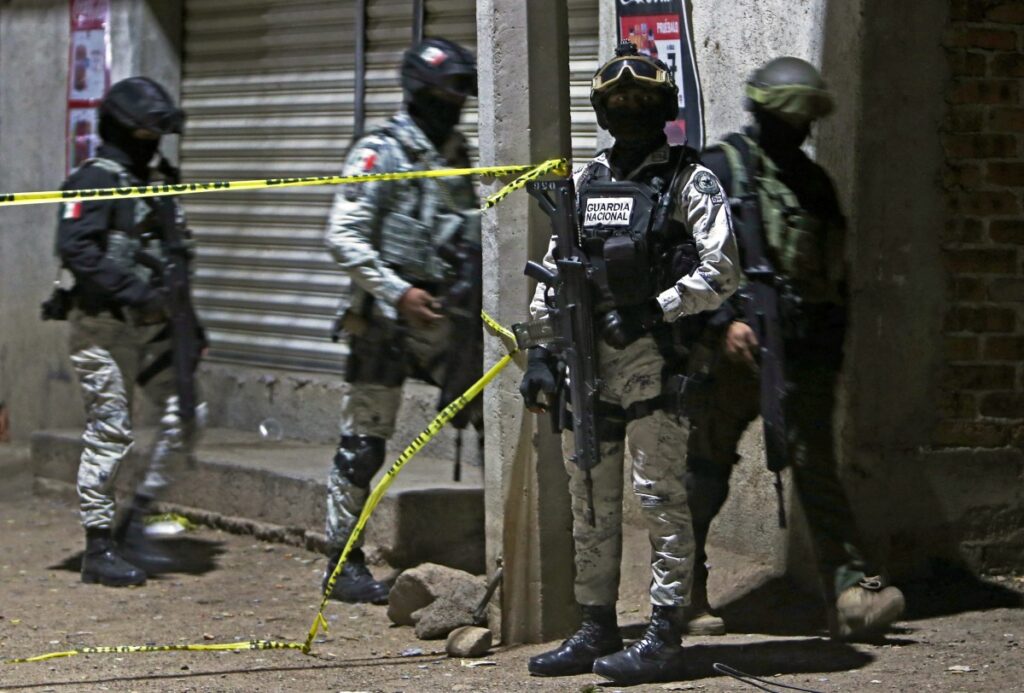
    SALAMANCA, Mexico — A community football match in central Mexico descended into horrific violence Sunday when armed assailants stormed the pitch and opened fire on spectators, leaving 11 dead and 12 wounded in a region increasingly paralyzed by organized crime. The attack occurred in Salamanca, a modest industrial city of 160,000 in Guanajuato state, immediately following a local game.

    According to municipal authorities, ten victims died at the scene while another succumbed to injuries at a medical facility. Among the wounded were a woman and a child, highlighting the attack’s indiscriminate nature. Salamanca Mayor Cesar Prieto issued an urgent plea to federal authorities for intervention, stating his community faces a ‘grave moment’ and ‘serious social breakdown’ as criminal organizations challenge governmental authority.

    The football pitch shooting represents merely the latest episode in a brutal weekend for the region. Just one day prior, authorities discovered four bags containing human remains in Salamanca. Simultaneously, six individuals were killed in two neighboring communities. These incidents follow a bomb threat last week at a local refinery operated by state oil giant Pemex.

    Despite being a prosperous industrial zone and popular tourist destination, Guanajuato consistently ranks as Mexico’s deadliest state due to relentless turf wars between criminal syndicates. Official homicide statistics attribute much of the violence to conflicts between the Santa Rosa de Lima cartel, known for oil theft operations, and the Jalisco New Generation Cartel (CJNG), one of Mexico’s most powerful criminal organizations.

    This surge in violence creates a stark contrast to claims by Mexican President Claudia Sheinbaum, who recently asserted that homicides have dropped to their lowest level in a decade under her security strategy. Many security experts remain skeptical of these official figures.

    Mexico’s prolonged security crisis, predominantly linked to drug trafficking, has resulted in over 480,000 deaths since the government initiated its military crackdown on cartels in 2006. An additional 120,000 persons remain missing, with many presumably forced into cartel service or abducted. The discovery of mass graves and dismembered remains has become tragically routine across the nation.

  • Laatste twee panda’s verlaten Japan nu relaties met China gespannen zijn

    Laatste twee panda’s verlaten Japan nu relaties met China gespannen zijn

    Tokyo’s Ueno Zoo witnessed emotional farewells Sunday as panda enthusiasts gathered for the final public viewing of twin giants Xiao Xiao and Lei Lei before their scheduled return to China this week. Their departure marks a historic moment: Japan will experience its first panda-less territory in half a century, with replacement prospects appearing dim amid deteriorating diplomatic relations between Tokyo and Beijing.

    The panda diplomacy legacy began in 1972 when China gifted the first bears to Japan following the normalization of diplomatic relations between the historically wary neighbors. These charismatic black-and-white creatures immediately captured Japanese affections, with a dozen subsequent pandas achieving national celebrity status.

    Despite the zoo’s implementation of a strict one-minute viewing limit, the final exhibition attracted massive crowds. Visitors carrying panda plush toys called the bears’ names and captured smartphone photos as the twins nibbled bamboo and roamed their enclosure. Many without reserved tickets still visited the zoo to participate in the symbolic farewell day.

    Longtime panda devotee Michiko Seki, wearing panda-print black-and-white attire, expressed satisfaction at seeing the twins healthy and feeding well. She documented the moment using the same camera purchased two years earlier to photograph their elder sister Xian Xai before her departure.

    “These animals provide immense comfort,” Seki noted. “Japan needs pandas, and I hope politicians can find some solution.”

    Beijing maintains ownership of all pandas loaned to foreign nations, including any offspring born abroad. Xiao Xiao and Lei Lei were born at Ueno Zoo in 2021.

    When questioned about potential new panda exchanges, Chinese Foreign Ministry spokesperson Guo Jiakun stated: “I know giant pandas are beloved by many Japanese people, and we welcome Japanese friends to visit them in China.”

    Japan currently faces escalating political, trade and security tensions with China. Recent remarks by Japanese Minister Sanae Takaichi regarding potential intervention in Taiwan scenarios provoked particular anger from Beijing. The relationship further strained as Japan’s consulate in Chongqing has operated without a consul for months due to China’s delayed approval of replacement diplomats.

    Economists project significant financial repercussions from the pandas’ absence. Kansai University economics professor Katsuhiro Miyamoto estimates approximately 20 billion yen ($128 million) in annual losses, warning that prolonged absence could create economic impacts measuring in tens of billions of yen.

    Panda imagery permeates Japanese culture around Ueno Zoo, appearing on confectionery, stationery, plush toys and photobooks. Local souvenir shop manager Asao Ezure considers pandas “a symbol of Ueno, a star” while expressing concern about business impacts. Despite the uncertainty, he maintains hope for their return, refusing to alter store signage featuring the twin pandas.

    The current situation represents a notable shift in China’s panda diplomacy strategy, which began with gifts to Western nations during the 1970s normalization era before transitioning to lease programs in the 1980s. Japan previously experienced diplomatic panda complications when a planned transfer to Sendai following the 2011 earthquake and tsunami was suspended during territorial disputes in 2012.

  • Massive landlslide in Pichelin completely blocks off river

    Massive landlslide in Pichelin completely blocks off river

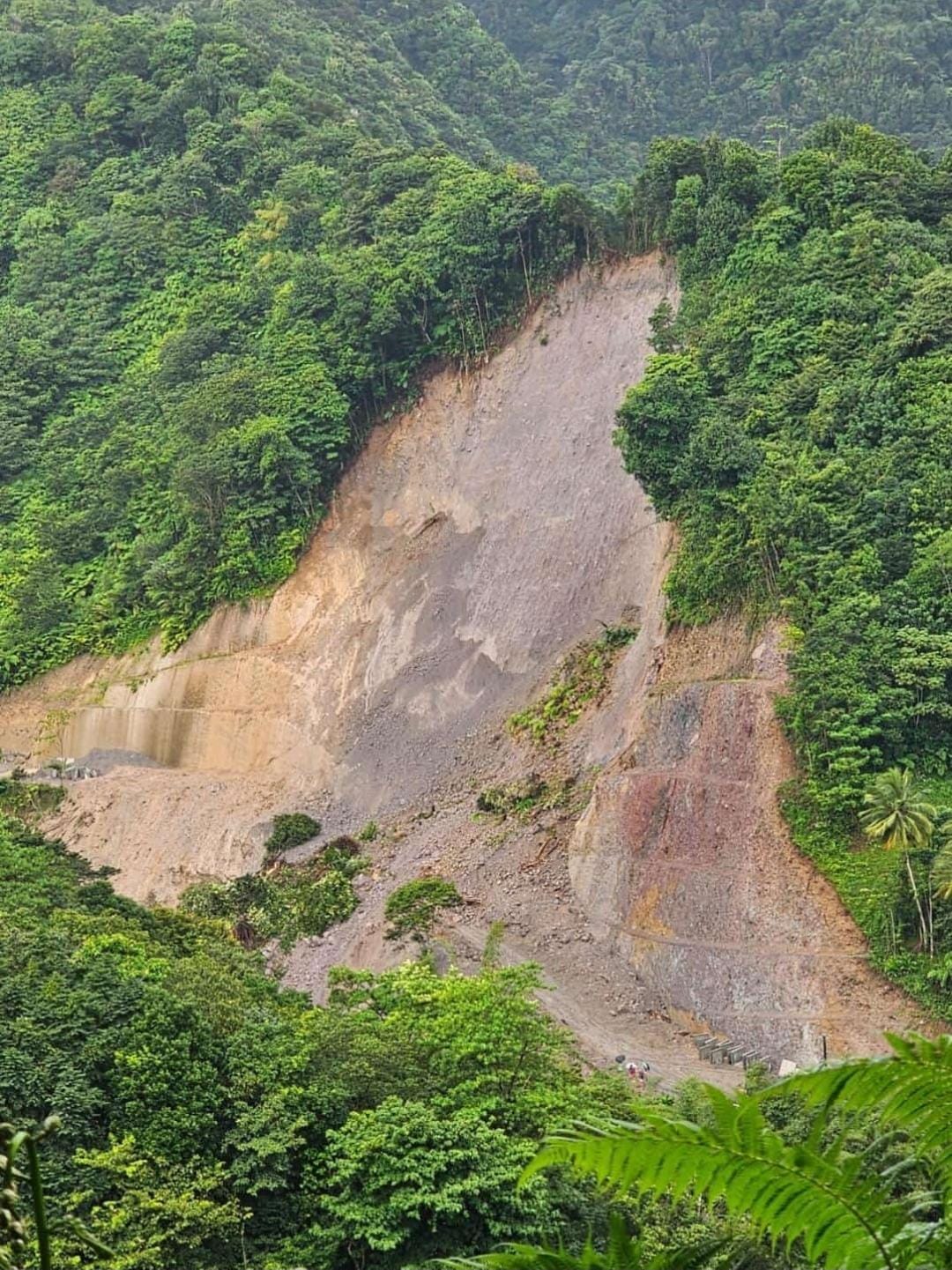
    A catastrophic geological event has unfolded in the Pichelin region, where a massive landslide has resulted in the complete obstruction of the Pichelin River. The significant displacement of earth and rock has effectively dammed the waterway, creating a substantial barrier and altering the local topography. Emergency services and geological survey teams have been dispatched to assess the stability of the area and evaluate potential downstream risks, including the danger of a sudden breach and subsequent flooding. Initial reports suggest that the landslide was likely precipitated by a combination of sustained heavy rainfall and inherently unstable slope conditions in the region. Authorities are urging residents in lower-lying areas to remain vigilant as experts work to analyze the situation and develop a mitigation strategy to safely manage the accumulated water and sediment.

  • Nearly 2,700 Haitians detained and deported in special operations

    Nearly 2,700 Haitians detained and deported in special operations

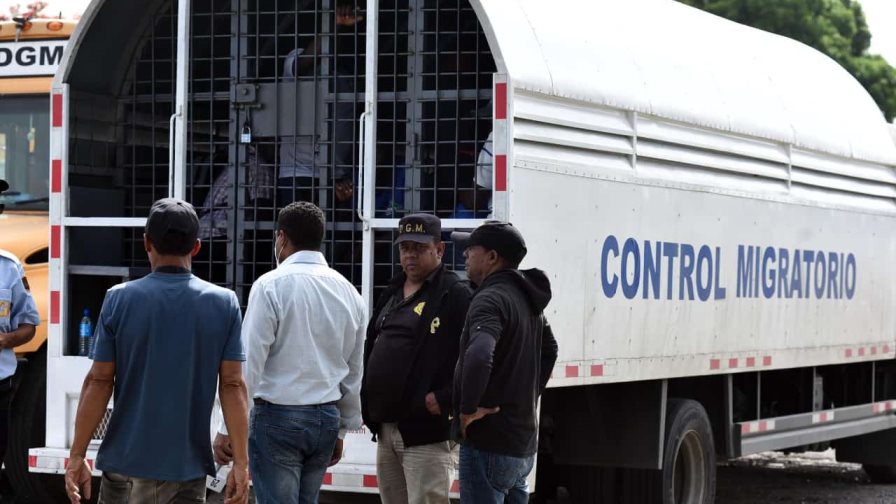
    In a sweeping nationwide enforcement action, Dominican migration authorities conducted a large-scale interdiction operation targeting irregular migration in the early hours of January 23. The General Directorate of Migration (DGM) reported the detention and/or deportation of 2,697 Haitian nationals found in violation of the country’s immigration statutes.

    The operation demonstrated significant coordination across multiple regions, with 1,222 individuals promptly repatriated through designated border checkpoints. The geographic distribution of these returns revealed concentrated activity in key border regions: Elías Piña (618), Dajabón (441), Jimaní (85), and Pedernales (78).

    Simultaneous enforcement sweeps resulted in the apprehension of 1,258 undocumented migrants across diverse operational theaters. In Greater Santo Domingo, operations targeted the districts of Villa Mella, Herrera, Villa Duarte, and the National District. The Cibao region witnessed coordinated actions in Santiago, Mao, Hermanas Mirabal, Monseñor Nouel, and Santiago Rodríguez, while southern operations focused on Barahona, Azua, and San José de Ocoa.

    Tourist zones received particular attention, with 217 foreign nationals detained in La Altagracia and La Romana provinces alone. These operations concentrated on high-traffic tourist destinations including Bávaro, Verón, and Uvero Alto, plus adjacent communities, through joint deployments combining military and police resources.

    The operational framework involved 38 rapid response agents, seven intelligence officers, inspectors, drivers, and armed forces personnel collaborating to enforce migration control in areas experiencing substantial population mobility.

    Authority involvement was distributed across multiple agencies: DGM agents directly apprehended 1,095 individuals, while military and police units accounted for 380 detainees—291 by the Army, 45 by the Specialized Corps of Land Border Security (Cesfront), and 44 by the National Police.

    The DGM emphasized in an official communiqué that all operations were conducted with strict adherence to human rights protocols and existing regulatory frameworks, while reaffirming institutional support for national security apparatuses.

  • Why did Juan Pablo Duarte die in exile?

    Why did Juan Pablo Duarte die in exile?

    On the anniversary of patriot Juan Pablo Duarte’s birth, historical revelations emerge about the tragic exile of the Dominican Republic’s principal independence architect. Despite dedicating his youth, fortune, and ultimately his life to the patriotic cause, Duarte drew his last breath far from the nation he helped create.

    Wilson Gómez, president of the Duartian Institute, provides crucial insight into the political circumstances that prevented the revolutionary leader from returning to his homeland. Historical records indicate that following Duarte’s 1864 attempt to join the Restoration War, the governing administration denied him permission to remain on Dominican soil. Instead, officials compelled his return to Venezuela under the guise of a diplomatic appointment as minister plenipotentiary.

    Gómez reveals that Duarte’s multiple exiles resulted from systematic political persecution—first in 1843 under Haitian President Charles Hérard’s repression, then in 1844 by General Pedro Santana’s actions, and ultimately by the Restoration Government’s 1864 decision. Santana particularly targeted Duarte and the Trinitarians, branding them traitors for their unwavering commitment to national sovereignty and resistance to foreign domination.

    The Dominican liberals, led by Duarte, maintained principles of political integrity, religious faith, and trust in their people that directly contradicted the conservative establishment’s agenda. Between 1844 and 1864, authoritarian regimes, corruption, and persistent insecurity created insurmountable barriers to Duarte’s reintegration into national life.

    Contrary to popular belief, Gómez clarifies that Duarte’s exile, while difficult, wasn’t marked by extreme poverty or defeat. Evidence suggests the revolutionary maintained business acumen, with his family owning property in central Caracas and living with dignity. Historical accounts document Duarte’s commercial activities along Venezuela’s eastern coasts and inland waterways, including expeditions along the Orinoco and Negro Rivers toward Brazilian borders.

    Portuguese missionary Sanjení reportedly encountered Duarte on the Rio Negro in 1857, while historians believe the patriot learned of his mother’s 1858 death and his 1848 amnesty declaration during his Venezuelan years. Despite political betrayals and capitulations, Duarte’s ideals of sovereignty continue to inspire Dominican leaders 182 years after the republic’s foundation.

  • At least 20 flights between the United States and the Dominican Republic canceled due to winter storm

    At least 20 flights between the United States and the Dominican Republic canceled due to winter storm

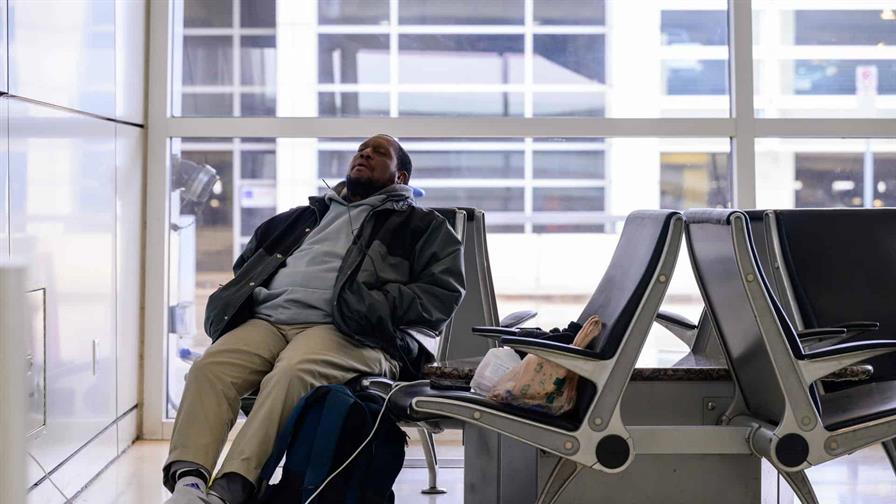
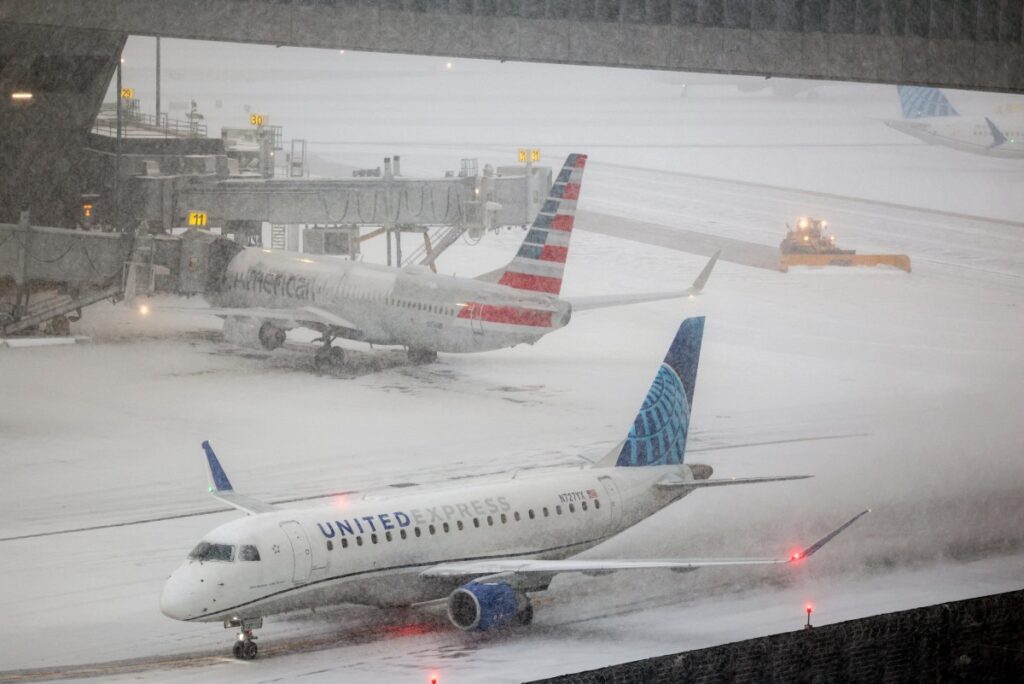
    A powerful winter storm system sweeping across the United States has triggered significant aviation disruptions, resulting in the cancellation of more than twenty flights connecting the Dominican Republic with key American cities. The severe weather conditions have primarily impacted air travel routes throughout the weekend of January 24th-25th, with lingering effects expected to extend into Monday, January 26th.

    According to data from the flight-tracking service FlightAware, the cancellations extensively affect operations at Santo Domingo’s Las Américas International Airport (SDQ) and Punta Cana International Airport (PUJ). Major carriers including JetBlue, Delta Airlines, United Airlines, and American Airlines have been forced to ground numerous flights. The most affected routes connect Dominican hubs to Northeastern US airports such as New York’s JFK and Newark terminals, Boston’s Logan International, and Charlotte.

    From Santo Domingo, canceled departures included multiple JetBlue services to JFK (JBU2510, JBU2110, JBU610, JBU1510) and Delta flights (DAL1829, DAL1942) on Sunday. United Airlines canceled its Newark-bound services (UAL1473, UAL2489). Return flights from US cities to Santo Domingo were similarly affected, with JetBlue (JBU1009, JBU509) and Delta (DAL1908) canceling JFK-originating services, and United canceling Newark-originating flights (UAL2404, UAL1984).

    Punta Cana experienced parallel disruptions, with Sunday cancellations affecting JetBlue (JBU1269, JBU1169), Delta (DAL2985, DAL2974, DAL1833), and American Airlines (AAL3043, AAL2967) on JFK routes. United canceled a Newark-bound service (UAL2122), while Boston-bound services on JetBlue (JBU496) and Delta (DAL1971) were also grounded.

    Airport operator Aeropuertos Dominicanos Siglo XXI (Aerodom) confirmed that extreme weather conditions have necessitated extending flight cancellations through Monday. Additional affected flights include Arajet services to Boston (2005) and another route (2363), Delta’s JFK service (DAL1917), multiple JetBlue flights to Boston (1830), JFK (509, 1009), and San Juan (1637).

    The Gregorio Luperón International Airport in Puerto Plata reported three cancellations for Sunday: United Airlines 1837 from Newark, JetBlue 627 from New York, and American Airlines 2242 from Charlotte.

    While Miami-bound flights from the Dominican Republic remained scheduled without cancellations, several delays were reported. Airlines are strongly advising passengers to monitor flight status directly through their carriers, as deteriorating weather conditions may prompt additional cancellations or delays in the coming hours.

  • Winter storm disrupts flights at NMIA

    Winter storm disrupts flights at NMIA

    A severe winter storm impacting the western and central United States has triggered significant flight disruptions at Jamaica’s Norman Manley International Airport (NMIA) in Kingston. Airport operator PAC Kingston Airport Limited (PACKAL) has confirmed the cancellation of at least ten JetBlue flights scheduled between Sunday, January 25, and Tuesday, January 27, 2026.

    The affected flights include multiple routes between Kingston and major US hubs. Cancellations for January 25th involve flights 110, 1759, 1760, 1360, and 759 operating on the Kingston-New York (JFK) route and return services. On January 26th, cancellations extend to flights 110, 1375 (Fort Lauderdale-Kingston), 1359, and 1759. The disruption continues into January 27th with flight 1675 from Fort Lauderdale to Kingston.

    Travelers are strongly advised to verify their flight status directly with JetBlue before heading to the airport. The airline can be contacted through its official website (www.jetblue.com) or via customer service numbers 1-800-963-3014 and 1-866-963-3014 for rebooking options and schedule updates.

    NMIA authorities are providing real-time operational updates through their social media channels on Instagram, Facebook, and X (formerly Twitter). The travel disruptions have extended beyond Kingston, with Sangster International Airport in Montego Bay also reporting several flight cancellations due to the same weather system.

  • Ghanaian minister, reconstruction team arrive in Jamaica

    Ghanaian minister, reconstruction team arrive in Jamaica

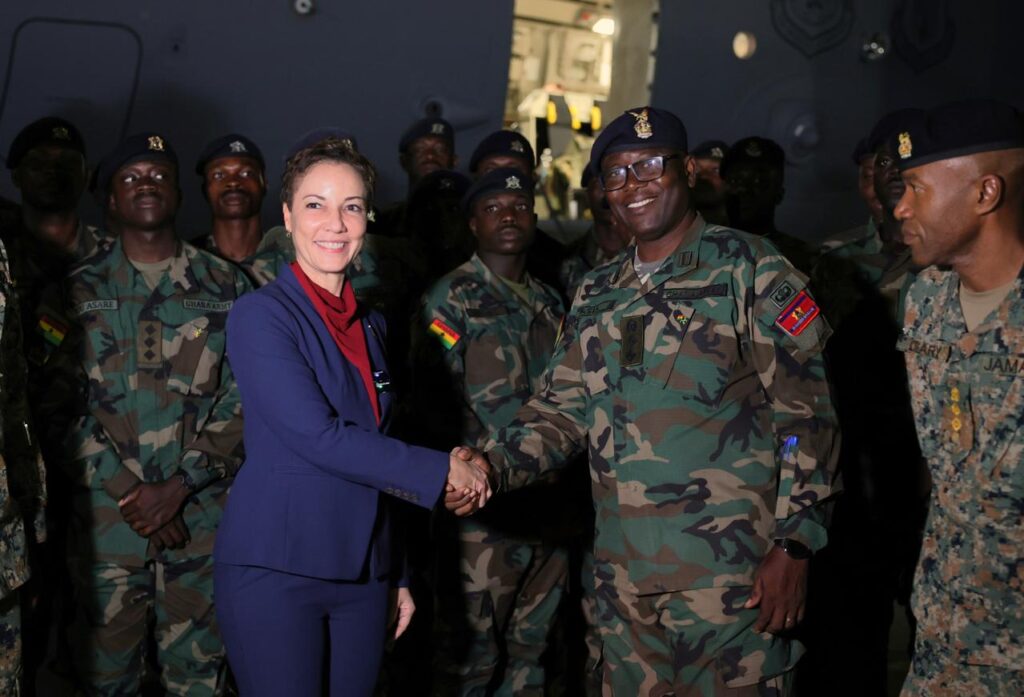
    KINGSTON, Jamaica—In a significant demonstration of South-South cooperation, Ghana has dispatched a specialized military engineering team to assist Jamaica with post-hurricane reconstruction efforts. The delegation, led by Ghana’s Foreign Affairs Minister Samuel Ablakwa, arrived in Jamaica for a multi-day official visit aimed at strengthening bilateral relations between the two nations.

    Jamaican Minister of Foreign Affairs and Foreign Trade Kamina Johnson Smith formally welcomed the Ghanaian contingent, highlighting the visit as a pivotal moment to enhance bilateral cooperation while incorporating contemporary elements into their deep historical connections. The diplomatic engagement represents a practical manifestation of international solidarity between two Commonwealth nations with shared historical experiences.

    Minister Johnson Smith emphasized the strategic importance of engaging with the reconstruction team, which is headed by Colonel Asia of the Ghana Army Engineer Reconstruction unit. The specialized military engineers bring technical expertise and operational experience to support Jamaica’s recovery from the devastating impact of Hurricane Melissa, which struck the Caribbean island last October.

    The deployment marks a notable evolution in diplomatic relations, transitioning from symbolic gestures to concrete collaborative action. The Ghanaian team’s mission focuses on providing expert recovery and rebuilding support, particularly in infrastructure rehabilitation and disaster resilience construction techniques. This initiative represents a growing trend of direct technical assistance between developing nations, bypassing traditional aid channels and establishing more equitable partnerships based on mutual respect and shared developmental objectives.

  • Israel is accused of expanding Gaza’s control despite ceasefire

    Israel is accused of expanding Gaza’s control despite ceasefire

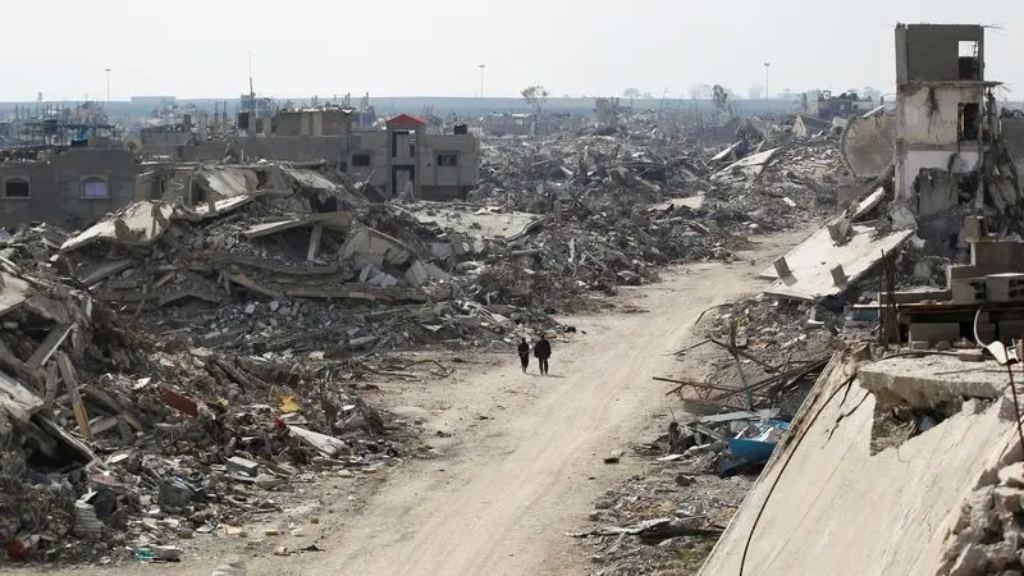
    According to local activist reports, the Israeli military has significantly expanded its territorial control within the Gaza Strip since the October 10, 2025 ceasefire implementation. Initial assessments indicated Israeli forces controlled approximately 53% of the region when the truce began, but that figure has now grown to 60% of the territory.

    The expansion encompasses substantial residential zones stretching from Rafah in the southern reaches to Beit Lahia and Beit Hanoun in the northern areas. Military operations continue particularly in the eastern sectors of Gaza City, where forces are engaged in what sources describe as systematic demolition and territorial consolidation activities.

    Analysts suggest the ceasefire period provided strategic opportunities for the Israeli Armed Forces to advance into Palestinian residential districts within the coastal enclave. This military movement occurs amid one of the world’s most densely populated environments, with over 2.2 million residents confined to approximately 90 square kilometers of land.

    The intensified military presence and ongoing operations have further exacerbated the humanitarian situation in the territory, creating additional challenges for civilian populations already facing severe resource constraints and infrastructure damage.