分类: world

  • Families of 2 Trinidadian nationals killed in strikes sue Trump administration

    Families of 2 Trinidadian nationals killed in strikes sue Trump administration

    The United States government faces a significant legal challenge as relatives of two Trinidadian nationals killed in a military operation have initiated a lawsuit in federal court. The case concerns a U.S. strike on an alleged drug-smuggling vessel off the Venezuelan coast on October 14, which resulted in the deaths of six individuals, including Chad Joseph and Rishi Samaroo.

    Legal representatives for the families filed the claim in Boston’s federal court, vehemently contesting the official narrative. One attorney characterized the incident as ‘lawless killings in cold blood; killings for sport and killings for theatre,’ suggesting a severe overreach of military authority.

    This event occurs within the context of an intensified U.S. counter-narcotics campaign in the Caribbean and Eastern Pacific. Since September, American forces have struck at least 36 vessels, resulting in over 120 fatalities. The Trump administration has publicly defended these actions as necessary measures against ‘narco-terrorists’ allegedly transporting drugs that contribute to American deaths.

    However, the legal complaint challenges the very foundation of these operations. The U.S. government has positioned its campaign as a non-international armed conflict against traffickers. Prominent legal experts, cited in the filing, argue this classification may itself violate international laws governing such conflicts, particularly concerning the use of lethal force against non-combatants.

    The lawsuit was filed under the Death on the High Seas Act, a statute permitting foreign citizens to seek redress in U.S. courts for wrongful deaths occurring in international waters. The plaintiffs—Joseph’s mother and Samaroo’s sister—maintain that the two men were engaged in legitimate fishing and farm work in Venezuela and were merely returning to their home in Trinidad and Tobago when their boat was destroyed.

    Sallycar Korasingh, Joseph’s mother, articulated a powerful critique of the operation’s morality and legality, stating that if her son was suspected of wrongdoing, the appropriate response should have been arrest and due process, not execution. The core legal argument posits that the killings constitute wrongful death because the men were not participating in military hostilities against the U.S.

    The Pentagon has thus far declined to comment on the pending litigation. This case follows a similar pattern of international legal action, including a separate petition by the family of a Colombian man killed in another U.S. strike, which was recently brought before the Inter-American Commission on Human Rights.

  • Dossier Houtexport 12: HvJ: geen recht op certificaten bij onjuiste houtopgave

    Dossier Houtexport 12: HvJ: geen recht op certificaten bij onjuiste houtopgave

    Suriname’s Court of Justice has delivered a landmark ruling establishing that the state cannot be compelled to continue issuing fraudulent or misleading timber export certifications, even when such practices were historically tolerated. The court’s decisive judgment on Tuesday overturned a previous lower court order that had mandated the government to provide phytosanitary certificates under the designation “Mora round logs” for export to India, under penalty of a SRD 1 million per hour fine.

    The Court’s central determination establishes that practices which:
    ● Violate national regulations,
    ● Breach international treaties,
    ● And deliberately contain false information
    cannot form the foundation for legal certainty or legitimate expectation.

    The judicial panel found that timber exporters knew—or reasonably should have known—that not all exported wood species were permitted for import into India, and that the “Mora” designation was specifically used to circumvent these import restrictions. In such circumstances, the Court ruled that exporters cannot claim protection under administrative law, noting both the absence of a valid application and any legal basis for their claims.

    Court spokesperson Ingrid Lachitjaran clarified that since no formal application had been submitted for phytosanitary certificates for India-bound Mora wood, there could consequently be no refusal by the state. The shipment in question had originally been destined for China, with requests made to the Ministry of Agriculture for fumigation accordingly, but was redirected to India without proper destination change procedures.

    The Court further determined that no consistent practice existed upon which exporters could legitimately rely. Investigation revealed that export documents systematically misrepresented wood species to facilitate clearance in India—a practice the Court emphatically stated cannot create legal certainty or justified trust, especially when conducted in violation of both national regulations and international treaties requiring truthful certification.

    The ruling noted that only four Surinamese wood species are permitted for import into India, while other prohibited species were exported under the collective “Mora” designation. “Those who know a practice is incorrect cannot derive justified trust from it,” Lachitjaran explained in summarizing the Court’s position.

    The judicial decision also considered that the state had announced measures against incorrect certification as early as 2022, providing a six-month transition period, with all timber exporters again formally notified in October 2025 that existing rules would be strictly enforced. The Court found the state cannot be blamed for exporters continuing to submit false information despite these warnings.

    Six timber exporting companies—Pinnacle Timber Products N.V., Green Wood World N.V., Harmony Timber N.V., Wintrip International N.V., Bakhuis Forest N.V., and Atlantic Asia Resources N.V.—were ordered to pay court costs totaling SRD 17,500. The case was heard by a panel chaired by Acting President Siegline Wijnhard, with members Alida Johanns and Jane Jansen.

    This ruling establishes a clear legal boundary: prolonged practice cannot create rights when that practice violates laws and regulations. Phytosanitary certificates may only be issued based on accurate and complete information, regardless of economic interests or previous customary practices.

  • Werkzoekenden Bangladesh gedwongen mee te vechten in Rusland tegen Oekraïne

    Werkzoekenden Bangladesh gedwongen mee te vechten in Rusland tegen Oekraïne

    An extensive investigation by the Associated Press has uncovered a disturbing pattern of systematic deception targeting Bangladeshi labor migrants who were lured to Russia with promises of civilian employment, only to be coerced into military service in Ukraine’s ongoing conflict.

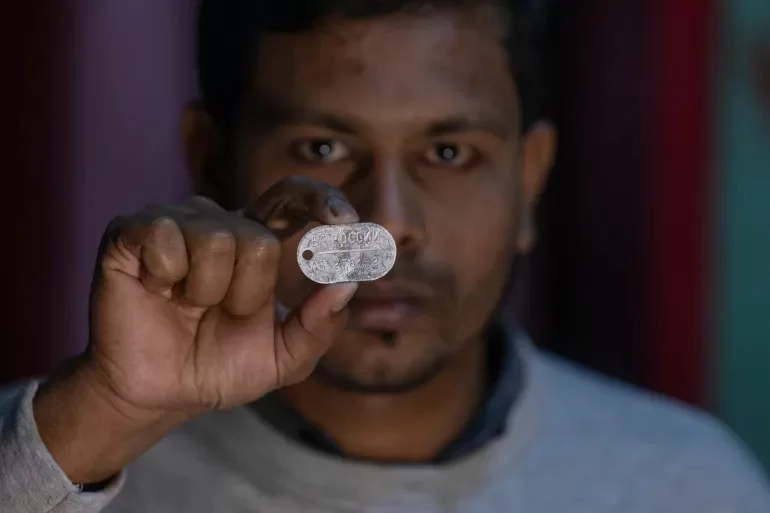
    Maksudur Rahman, a 31-year-old from Bangladesh, arrived in Russia expecting to work as a window cleaner in Moscow’s cold climate. Within weeks, he found himself on the Ukrainian frontlines after being pressured into signing Russian documents that were later revealed to be military contracts. Rahman and other Bangladeshi workers received training in drone warfare, medical evacuations, and combat techniques with heavy weaponry.

    When Rahman protested his forced conscription, he was told: “Your agent sent you here. We bought you.” The migrants faced severe threats including decade-long prison sentences and physical abuse for refusing combat duties. After seven months of compelled service, Rahman managed to escape and return to Bangladesh.

    Three additional Bangladeshi men who escaped Russian military service provided corroborating accounts of coercion, mistreatment, and threats. Their testimonies were supported by family members and verified through official documentation including visas, military contracts, medical reports, police records, and photographic evidence of injuries.

    The forced duties assigned to these conscripted migrants encompassed frontline combat operations, supply transportation, casualty evacuation, and corpse recovery. Similar deceptive recruitment practices have affected workers from other South Asian nations including India, Nepal, and Sri Lanka, with additional reports emerging from Kenya, South Africa, Jordan, and Iraq.

    Some Bangladeshi workers were specifically recruited under false pretenses of non-combat roles. Mohan Miajee, originally an electrician in Russia’s Far East, was recruited for electronic warfare but found himself in occupied Avdiivka, Ukraine, where he faced repeated physical abuse for refusing orders or making mistakes.

    Families of missing men have repeatedly contacted Bangladeshi police and government authorities demanding investigations. Salma Akdar continues to hope for news of her husband Ajgar Hussein, who departed believing he had secured laundry work. After weeks of communication, Hussein reported being forced into military training and frontline deployment, with commanders threatening detention, execution, and food deprivation for non-compliance. His final message was an emotional plea for prayers.

  • Families of Trinidadian men killed at sea file lawsuit against US government

    Families of Trinidadian men killed at sea file lawsuit against US government

    In a landmark legal challenge, the families of two Trinidadian nationals killed in a US military operation have filed a wrongful death lawsuit against the United States government. The case, lodged in a Massachusetts federal court, centers on the October 14th missile strike that killed six individuals aboard a vessel in the Caribbean.

    The plaintiffs, represented by the American Civil Liberties Union (ACLU) and the Center for Constitutional Rights (CCR), allege that the US government unlawfully targeted and killed Chad Joseph (26) and Rishi Samaroo (41) without justification. The lawsuit invokes both the Death on the High Seas Act and the Alien Tort Statute, seeking to establish legal accountability for what they characterize as extrajudicial killings.

    This legal action directly challenges the Trump administration’s justification that such military operations fall within the scope of an armed conflict against designated narcoterrorist organizations. The administration has previously asserted that drug cartels represent a non-international armed conflict scenario, thereby legitimizing the use of lethal force.

    However, the lawsuit contends there exists no such armed conflict, rendering the laws of war inapplicable. It further argues that the victims were not affiliated with drug cartels but were merely returning to Trinidad from Venezuela where they had been engaged in fishing and agricultural work.

    The case has drawn attention to the broader US military campaign in the Caribbean and eastern Pacific, which has reportedly resulted in at least 125 fatalities since September. Notably, the Trinidad and Tobago government has expressed support for these operations, with Prime Minister Kamla Persad-Bissessar previously endorsing violent measures against those involved in illegal drug trafficking.

    The plaintiffs seek punitive damages while emphasizing their primary goal of establishing legal accountability for what they describe as ‘lawless killings in cold blood.’

  • Minor earthquake felt in Jamaica

    Minor earthquake felt in Jamaica

    Residents across multiple regions of Jamaica experienced a minor seismic event during the early hours of Wednesday morning. The tremor occurred precisely at 3:47 a.m. local time, according to initial reports. While the earthquake’s intensity appears to have been relatively low, it was sufficiently noticeable to awaken some residents and prompt immediate social media activity across the island nation. The exact epicenter location and magnitude measurements remain unconfirmed at this time, with seismic monitoring agencies expected to release detailed technical data shortly. Jamaica, situated within the active seismic zone of the Caribbean Plate boundary, experiences periodic tremors due to complex tectonic interactions between the North American and Caribbean plates. Observer Online, a prominent Jamaican news outlet, has indicated it will provide comprehensive coverage as additional information becomes available from geological authorities and emergency response agencies. No immediate reports of damage or injuries have been substantiated, though standard protocol advises citizens to remain vigilant for potential aftershocks following any seismic activity.

  • China added record wind and solar power in 2025, data shows

    China added record wind and solar power in 2025, data shows

    BEIJING — China’s energy landscape witnessed unprecedented transformation in 2025, with the National Energy Administration reporting simultaneous record-breaking expansions in both renewable infrastructure and fossil fuel capacity. The world’s foremost manufacturing powerhouse added 543 gigawatts of total new energy capacity—equivalent to double Germany’s entire power generation infrastructure—as it navigates competing priorities of industrial growth and environmental commitments.

    The renewable sector achieved remarkable milestones with 315 gigawatts of new solar capacity and 119 gigawatts of wind installations, representing the largest annual additions ever recorded globally. This substantial clean energy deployment increased China’s total installed power generation capacity by 16.1% compared to 2024 levels. Energy analysts noted the physical scale of these installations would approximate 17,000 wind turbines and approximately 500 million solar panels throughout the year.

    However, parallel expansion occurred in thermal power generation, with coal and gas capacity surging by approximately 93 gigawatts—a 75% increase over 2024 additions. This substantial fossil fuel development elevated China’s total thermal power capacity by 6.3%, creating a complex energy landscape where clean energy advances coincide with persistent carbon-intensive infrastructure growth.

    Lauri Myllyvirta, lead analyst at the Centre for Research on Energy and Clean Air, characterized the deployment pace as ‘two wind turbines per hour, and solar panel surface area covering 20 football fields per hour.’ While acknowledging these renewable additions would ‘help replace power generation from fossil fuels well into next year,’ Myllyvirta warned that concurrent coal and gas plant expansions risk creating ‘plummeting utilization rates and new obstacles to clean energy integration.’

    This energy development occurs against China’s stated climate targets: peaking carbon emissions by 2030, reducing them by at least 7% by 2035, and achieving carbon neutrality by 2060. The simultaneous expansion of renewable and fossil fuel capacity reflects the challenges facing the world’s largest greenhouse gas emitter as it balances economic growth demands with environmental responsibilities.

  • Netherlands ‘insufficiently’ protects Caribbean island from climate change — court

    Netherlands ‘insufficiently’ protects Caribbean island from climate change — court

    In a groundbreaking environmental justice ruling with potential global implications, a Dutch court has determined that the Netherlands provides “insufficient” climate protection for its Caribbean territory of Bonaire. The Hague District Court delivered the landmark verdict on Wednesday, finding the Dutch government in violation of human rights for treating Bonaire residents differently from those in the European Netherlands without justification.

    The case was initiated by Bonaire residents collaborating with Greenpeace, who demanded concrete measures to shield the low-lying island from rising sea levels and climate impacts. The court ordered the Netherlands to establish binding interim targets for economy-wide greenhouse gas reductions within 18 months, marking a significant legal development in climate litigation.

    This ruling follows the recent advisory opinion from the International Court of Justice, which stated that states violating climate obligations commit unlawful acts. Legal experts note this case represents the first major test of a state’s mitigation and adaptation ambitions following the ICJ’s precedent-setting opinion.

    Despite the Netherlands’ renowned expertise in water management through its extensive system of barriers and dykes, campaigners argued the same protective measures haven’t been extended to overseas territories. Researchers from Amsterdam’s Vrije Universiteit project that up to one-fifth of Bonaire could be submerged by century’s end without intervention.

    During proceedings, Bonaire’s 27,000 residents shared compelling testimony about their daily climate struggles. Farmer Onnie Emerenciana described how previously habitable areas have become “often unbearable” due to extreme heat and rising waters.

    The court emphasized that climate impacts affect Bonaire sooner and more severely than European Netherlands, making the disparity in protection measures particularly unjust. This case establishes important precedent for climate litigation targeting governments regarding their overseas territories and could influence similar legal actions worldwide.

  • International Civil Aviation Organization Audits Antigua

    International Civil Aviation Organization Audits Antigua

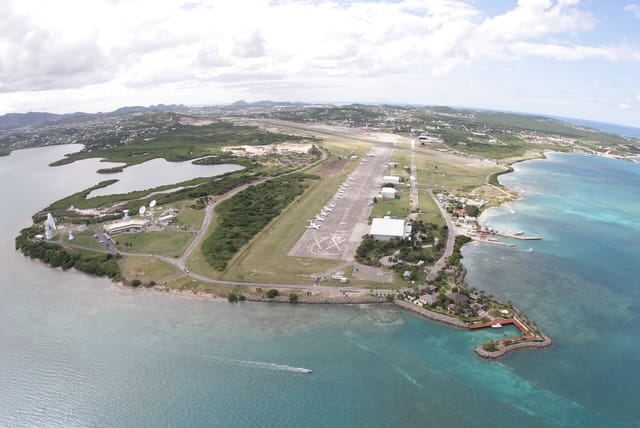
    The Caribbean nation of Antigua and Barbuda has formally initiated a comprehensive audit by the International Civil Aviation Organization (ICAO), marking a pivotal moment for its aviation sector. This evaluation arrives concurrently with a significant restructuring of the nation’s Airport Administration, which includes the imminent appointment of a new Chief Executive Officer and a cadre of trained personnel.

    The audit, conducted through direct engagement and on-site inspections by ICAO experts, is poised to identify critical operational irregularities. The collaborative initiative aims to formulate concrete measures to elevate performance standards, with the primary objective of reinstating the nation’s Category 1 safety status. A longstanding and unique challenge for the country has been the anomalous issue of dual private landownership within the precincts of its international airport—a singular situation among all ICAO member states for over two decades.

    The current administration is now positioned to actively consult with the global aviation authority on a structured, two-step procedure to resolve this landownership impediment. Previously, the government and the Airport Authority had sought ICAO’s guidance on this matter through a formal process known as ‘Registering a difference.’

    The ICAO Audit 2026 is anticipated to bring these pertinent issues to the forefront, enabling effective resolution through expert, real-time counsel. For smaller nations like Antigua and Barbuda, such audits present a vital opportunity to leverage international expertise to bolster the capabilities of local technicians, a collaboration visiting professionals are often eager to provide.

    This process represents a strategic opportunity for the nation to fully align with the core tenets of global aviation: stringent adherence to rules, reinforced regulations, and enhanced operational transparency.

  • Indian community in Antigua and Barbuda marks 77th Republic Day

    Indian community in Antigua and Barbuda marks 77th Republic Day

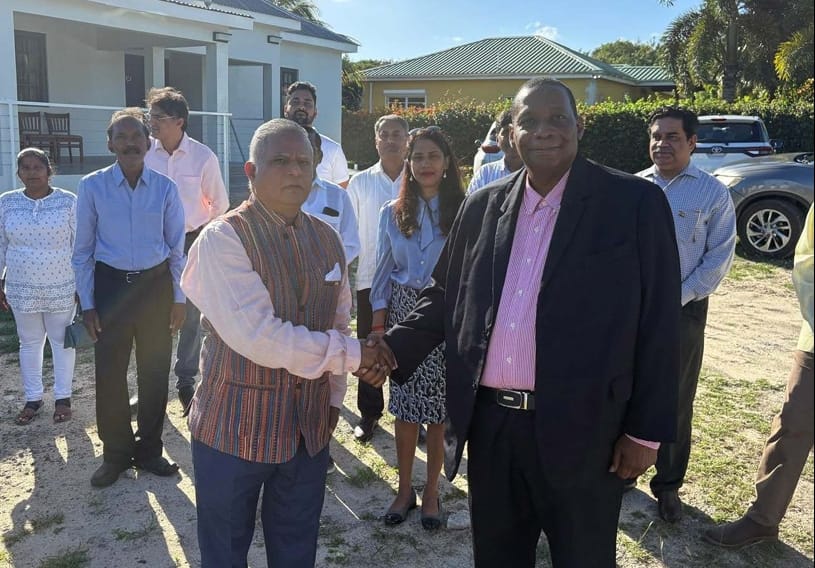
    The Indian community residing in Antigua and Barbuda has commemorated the 77th anniversary of India’s Republic Day through a ceremonial gathering that emphasized democratic ideals, communal harmony, and cultural legacy. The event saw the convergence of diaspora members, local supporters of India, and special attendees who participated in a flag-raising ritual and deliberated on the day’s profound importance.

    Republic Day, observed each year on January 26, marks the enactment of India’s Constitution in 1950, which formally designated the nation as an independent, democratic republic. During his address, India’s High Commissioner to Jamaica, Ambassador R. Masakui, emphasized the symbolic weight of the occasion, characterizing it as an opportunity to pay homage to the martyrs of India’s freedom movement and to recommit to the foundational tenets of democracy, justice, and legal governance.

    The ceremony included recitations of earlier statements from Indian dignitaries such as President Droupadi Murmu and Prime Minister Narendra Modi, each of whom underscored the resilience of India’s democratic framework and the nation’s advancements since gaining sovereignty.

    Ambassador Masakui also praised the impactful role played by the Indian diaspora in Antigua and Barbuda, emphasizing their efforts in deepening socio-cultural and economic bonds between the two nations. He urged the community to persist in serving as a conduit for bilateral collaboration, reciprocal esteem, and collective growth.

    India and Antigua and Barbuda have long enjoyed cordial relations, bolstered by interpersonal connections, academic partnerships, and expanding diplomatic dialogue. Global Republic Day observances by overseas Indian communities are widely regarded as platforms not only for celebrating national heritage but also for reinforcing common values within their countries of residence.

  • FLASH : 2 planes hit by bullets, reactions from AAN and OFNAC

    FLASH : 2 planes hit by bullets, reactions from AAN and OFNAC

    Port-au-Prince, Haiti – A severe security breach has shaken Haiti’s aviation infrastructure after two commercial aircraft sustained bullet impacts during their landing maneuvers at Toussaint Louverture International Airport on Sunday, January 26, 2026.

    In an official joint communiqué, the National Civil Aviation Office (OFNAC) and the National Airport Authority (AAN) confirmed that both aircraft, operated by ZED Airlines S.A., came under direct fire while executing their final approach. The alarming incident prompted immediate deployment of emergency and rescue services to the scene.

    Technical assessment teams are currently conducting comprehensive evaluations to determine the full extent of damage and ensure operational safety before authorizing any resumption of flights. National security authorities have been alerted and have launched a full-scale investigation to identify the perpetrators behind this dangerous assault on civilian aviation.

    The aviation authorities vehemently condemned the attack, emphasizing that such acts endanger the lives of passengers and crew members while compromising the security integrity of Haitian airspace. Emergency protocols have been activated to establish a reinforced security system around airport infrastructure.

    This critical incident has resulted in the suspension of all flights through Haiti’s sole operational international connection, significantly impacting vital transportation links including the family reunification program between Haiti and Brazil.