分类: world

  • Levenslange celstraf voor Franse anesthesist na vergiftiging 30 patiënten

    Levenslange celstraf voor Franse anesthesist na vergiftiging 30 patiënten

    In a landmark judicial ruling, French anesthesiologist Frédéric Péchier has been sentenced to life imprisonment for the deliberate poisoning of thirty patients during surgical procedures, resulting in twelve fatalities. The Besançon court established that the 53-year-old medical professional systematically adulterated intravenous bags between 2008 and 2017, intentionally inducing cardiac arrests in patients across two private clinics in eastern France.

    The victims, whose ages ranged from 4 to 89 years, required emergency resuscitation following their operations. Tragically, twelve patients did not survive despite medical intervention. The investigation into Péchier’s activities commenced after forensic analysis detected lethal concentrations of potassium in the IV solution administered to one female patient who suffered intraoperative cardiac arrest.

    Throughout the trial proceedings that commenced in September, Péchier maintained his innocence regarding all charges. The presiding judge specified that the convicted anesthesiologist must serve a minimum of 22 years before becoming eligible to petition for early release. Péchier was taken into custody immediately following the verdict, having remained free throughout the investigative period without pretrial detention.

    This case represents one of France’s most severe medical criminal prosecutions, highlighting critical vulnerabilities in healthcare safety protocols and raising profound ethical questions regarding medical professional conduct.

  • Antigua and Barbuda Assures U.S. Travellers of Uninterrupted Travel Amid Visa Reports

    Antigua and Barbuda Assures U.S. Travellers of Uninterrupted Travel Amid Visa Reports

    The government of Antigua and Barbuda has issued a formal reassurance to American travelers and tourism industry partners, clarifying that recent media coverage regarding U.S. visa procedures for its citizens has zero effect on travel to the dual-island nation. All entry and exit protocols for U.S. citizens and international visitors remain unchanged, with airports and seaports operating at full capacity without disruption.

    In an official statement, The Honourable H. Charles Fernandez, Minister of Tourism, Civil Aviation, Transportation and Investment, emphasized that “Antigua and Barbuda is open for business” and continues to welcome visitors with its renowned hospitality. The minister highlighted the destination’s world-class beaches, diverse cultural attractions, and premium service standards, confirming that tourism operations continue normally throughout the islands.

    The tourism department specifically addressed travel advisors, airlines, and industry partners, encouraging continued trip planning with full confidence. With the winter tourism season now active, authorities anticipate robust visitor numbers and extended holiday wishes to all travelers seeking the destination’s famous 365 beaches, luxury accommodations, historical sites, and culinary experiences.

    The statement concluded by reinforcing Antigua and Barbuda’s status as a secure, inviting, and dynamic destination, promising memorable experiences within its friendly communities. Travelers seeking additional information are directed to official tourism resources for the latest updates.

  • German passenger arrested at Dominican Republic Airport Las Americas with 17 Packages of suspected Cocaine

    German passenger arrested at Dominican Republic Airport Las Americas with 17 Packages of suspected Cocaine

    Authorities at Las Américas International Airport (AILA) in Santo Domingo have intercepted a major narcotics smuggling attempt, resulting in the arrest of a German citizen moments before his scheduled departure to Europe. In a coordinated multi-agency operation, the National Drug Control Directorate (DNCD) uncovered 17 packages of a white powdery substance suspected to be cocaine concealed within the passenger’s luggage.

    The suspect, identified as Thomas Petter Haag, was apprehended following a routine security screening that triggered alerts. Canine units and advanced X-ray technology detected anomalies in his baggage, prompting a thorough inspection. Under the supervision of a public prosecutor, officials opened the suitcase and discovered the illicit packages, each meticulously wrapped in transparent plastic and secured with black adhesive tape.

    In addition to the suspected narcotics, law enforcement agents confiscated three mobile phones, substantial amounts of cash in both Dominican pesos and euros, and various identification documents. The operational success was achieved through the collaborative efforts of the Public Prosecutor’s Office, the Specialized Airport Security Corps (CESAC), and the General Directorate of Customs (DGA).

    DNCD spokesperson Carlos Devers confirmed that the case has been formally transferred to the Public Prosecutor’s Office, which is preparing to request pretrial detention for Haag on charges of violating Law 50-88 governing drugs and controlled substances. The suspect remains in custody as investigations continue.

    Authorities have launched an expanded investigation to determine whether Haag operates within a sophisticated international drug trafficking network. Forensic analysis of the seized substances is currently underway at the National Institute of Forensic Sciences (INACIF) to verify the chemical composition, purity, and exact weight of the confiscated materials.

  • BDF EMT providing healthcare in Jamaica

    BDF EMT providing healthcare in Jamaica

    In a significant demonstration of regional solidarity, the Barbados Defence Force Emergency Medical Team (BDF EMT) has provided comprehensive medical treatment to 495 patients during the initial phase of Operation Helping Hands 2025 in Westmoreland, Jamaica. The operation, which commenced on December 1, represents a coordinated Caribbean response to healthcare needs following Hurricane Melissa.

    Under the leadership of Lieutenant Commander Anderson Goodridge, Officer-in-Charge of Medical Services, the Barbados-based field hospital officially began receiving patients from Savannah La-Mar Hospital on December 1. Medical services delivered between December 1-7 reached 270 patients, with an additional 225 individuals treated between December 8-10. The facility’s surgical team performed three procedures during the first week of operations, followed by two elective surgeries.

    Commander Goodridge reported that the medical team treated patients across all demographic categories, including male, female, and pediatric cases, while providing specialized care through orthopedics, gynecological, pediatric, surgical, and medical clinics. ‘The government and people of Jamaica have received the BDF EMT with gratitude, warmth and hospitality, and they have shown a deep appreciation for our attendance here in Jamaica,’ Goodridge stated.

    Dr. Walter Alleyne, Director of Medical Services with the second rotation of the BDF EMT, outlined the six core services provided by the field hospital: outpatient and inpatient clinics, pharmacy services, laboratory diagnostics, psychosocial support services for staff, and Central Sterilising Supply Department operations. Dr. Alleyne, who coordinates medical services between the Savannah La-Mar Hospital and the BDF EMT, expressed admiration for the dedication of the Barbadian medical team, noting they frequently performed roles beyond their assigned responsibilities.

    The BDF EMT holds the distinction of being the only WHO-accredited field hospital in the hemisphere, formally recognized by the World Health Organization for providing emergency response and care in disaster scenarios. Operation Helping Hands 2025 represents an unprecedented collaboration of medical professionals from across the Caribbean region, including participants from Cayman Islands, Grenada, Trinidad, Guyana, St. Maarten, Suriname, British Virgin Islands, Saint Lucia, St. Kitts, Belize, Miami, Jamaica, and Barbados.

  • The point at which the chain of history was reassembled

    The point at which the chain of history was reassembled

    Beneath the overcast skies of December 1956, a pivotal moment in Cuban history unfolded within a remote clearing known as Cinco Palmas. Following the devastating ambush at Alegría de Pío and subsequent days of scattered retreat through Oriente’s sugarcane fields, Fidel Castro arrived not with a formidable army but with what would become the foundational core of revolutionary perseverance.

    At midnight, amidst Mongo Pérez’s palm-studded cane field, the sound of approaching footsteps signaled a long-awaited reunion. The Castro brothers—Fidel and Raúl—embraced with restrained emotion, their meeting charged with both the anguish of recent days and the ferocity of survival. From this historic encounter emerged a brief yet monumental exchange that would define their revolutionary trajectory.

    ‘How many rifles do you have?’ Fidel inquired. Raúl’s response came: ‘Five.’ With characteristic determination, Fidel declared, ‘And I have two, seven! Now we will win the war!’

    This statement represented far more than blind optimism—it constituted a strategic assessment that with this nucleus of moral fortitude, tactical intelligence, and mountainous terrain, achieving victory remained entirely possible. It embodied Fidel’s most crucial lesson: never surrender, even when confronting extreme adversity.

    The subsequent days validated this conviction as expeditionaries including Efigenio Ameijeiras and Ramiro Valdés joined the original group, soon followed by local campesinos who collectively formed the embryonic Rebel Army. By December 25, this strengthened contingent—now better armed and fortified with unwavering resolve—commenced its definitive advance into the Sierra Maestra.

    This moment exemplified the Cuban Revolution’s extraordinary capacity for regeneration. Cinco Palmas thus transcended its geographical significance to become the foundational moment of an enduring principle: victory awaits not perfect conditions but emerges through collective determination and unwavering will.

  • U.S. Air Force establishes temporary air base at Las Américas International Airport

    U.S. Air Force establishes temporary air base at Las Américas International Airport

    In a strategic demonstration of rapid deployment capabilities, specialized units from the United States Air Force have successfully established a temporary air operations base at Las Américas International Airport (AILA) in Santo Domingo, Dominican Republic. The operation saw personnel from the 921st Contingency Response Squadron and the 621st Contingency Response Wing utilize runway 17-35 to create a functional airfield under contingency conditions.

    The 921st Contingency Response Squadron took the lead in conducting comprehensive assessments of the airport’s infrastructure, subsequently conditioning the facilities for immediate operational readiness. Their expertise in rapidly activating airfields in challenging environments enabled the seamless arrival and deployment of military aircraft, personnel, and essential cargo.

    Complementing these efforts, the 621st Contingency Response Wing provided integrated operational support encompassing multiple critical domains. Their contributions included meteorological services, perimeter security protocols, logistical coordination, and specialized air traffic control operations. This multi-faceted support framework ensured the safe and efficient functioning of the temporary installation throughout the duration of the operation.

    These specialized units represent the Air Force’s premier rapid response teams, specifically trained and equipped to establish operational airfields in austere or potentially hostile environments where existing infrastructure may be compromised or nonexistent. The successful execution at AILA demonstrates the continuing evolution of military contingency response capabilities in the Caribbean region.

  • Historic Swing Bridge Secures $28M Upgrade Thanks to Japan

    Historic Swing Bridge Secures $28M Upgrade Thanks to Japan

    In a significant bilateral development, the Governments of Japan and Belize have formalized a $28 million Belize dollar agreement to reconstruct the iconic Belize City Swing Bridge—the last manually operated swing bridge in Central America. The funding, provided through Japan International Cooperation Agency (JICA), marks a major milestone in cultural preservation and climate-resilient infrastructure development.

    The ceremonial signing occurred in Belize City with Japanese Ambassador H.E. Kenichiro Tanaka and Belize’s Foreign Minister Francis Fonseca exchanging notes, while Prime Minister John Briceño signed alongside JICA’s Chief Representative Hiromi Nai. The project represents one of the most substantial preservation investments in Belize’s recent history, targeting a structure originally installed in 1923 that has become both functional infrastructure and cultural artifact.

    Prime Minister Briceño emphasized the project’s dual significance: “We are preserving a rich cultural relic while anticipating the harsh realities of construction in a flood-prone area. Although the new bridge won’t mechanically swing, its identity remains intact—connecting our past with future priorities of public safety, economic continuity, and climate resilience.”

    Infrastructure Minister Julius Espat contextualized the bridge within the broader George Price Rehabilitation Project, noting that planning began immediately after the current administration took office in 2021. The Swing Bridge constitutes the fourth segment of this comprehensive infrastructure initiative.

    JICA’s regional representative Hiromi Nai, operating from El Salvador, highlighted the project’s alignment with Japan’s development priorities: “This grant agreement commemorates JICA Belize’s 26th anniversary while advancing our focus on climate resilience. Our commitment extends beyond infrastructure to human resource development and agricultural industry promotion.”

    Belize City Mayor Bernard Wagner celebrated the agreement as “the convergence of vision, partnership, and political will,” describing the bridge as “the beating heart of downtown Belize City” that connects both geographic communities and historical eras. During the anticipated two-year construction period, traffic will be rerouted via a temporary bridge at Hyde’s Lane and North Front Street.

    The project represents a sophisticated balance between historical preservation and modern engineering, ensuring this symbol of national pride will continue serving Belizeans for generations while withstanding environmental challenges.

  • CARICOM SG applauds Jamaica’s continued involvement in region post-Hurricane Melissa

    CARICOM SG applauds Jamaica’s continued involvement in region post-Hurricane Melissa

    At the 56th Community Council of Ministers meeting in Georgetown, Guyana, CARICOM Secretary-General Dr. Carla Barnett commended Jamaica for maintaining strong regional engagement while navigating complex recovery operations following Hurricane Melissa’s devastating impact. The Category Five hurricane struck Jamaica on October 28 with sustained winds reaching 185 mph, creating significant challenges for the island nation.

    Jamaican Foreign Minister Kamina Johnson Smith presided over the December 16 meeting, where Dr. Barnett expressed solidarity with Jamaica’s reconstruction efforts. Minister Johnson Smith detailed the hurricane’s severe consequences, noting it represented both the strongest hurricane to directly hit Jamaica and the first Category Five storm in the nation’s recorded history.

    The Foreign Minister expressed profound gratitude for the regional support system, specifically acknowledging personnel deployments, technical assistance through CARILEC for electricity restoration, and ongoing reconstruction work by the Guyana Defence Force in Westmoreland. “The support has been overwhelming. The goodwill has been heartwarming,” Johnson Smith stated, emphasizing how CARICOM’s unified response demonstrates the community’s strength and cohesion.

    Minister Johnson Smith connected Hurricane Melissa’s destruction to broader climate change vulnerabilities affecting the Caribbean region, particularly noting its occurrence following Hurricane Beryl’s earlier impact. She stressed the urgent necessity for comprehensive climate action and resilience-building initiatives, including advocacy for climate justice.

    Looking toward 2025, Secretary-General Barnett outlined CARICOM’s strategic priorities, highlighting climate change and climate finance as central concerns alongside ongoing challenges related to crime and violence, health systems, and the situation in Haiti. Additional focus areas include implementing the CARICOM Single Market and Economy (CSME), advancing information and communication technology including artificial intelligence, ensuring food and nutrition security, promoting youth development, and strengthening foreign relations.

    Dr. Barnett reaffirmed the Secretariat’s commitment to enhancing operational efficiency and aligning strategic initiatives with the Revised Treaty of Chaguaramas to deepen economic integration throughout the region amidst evolving global challenges.

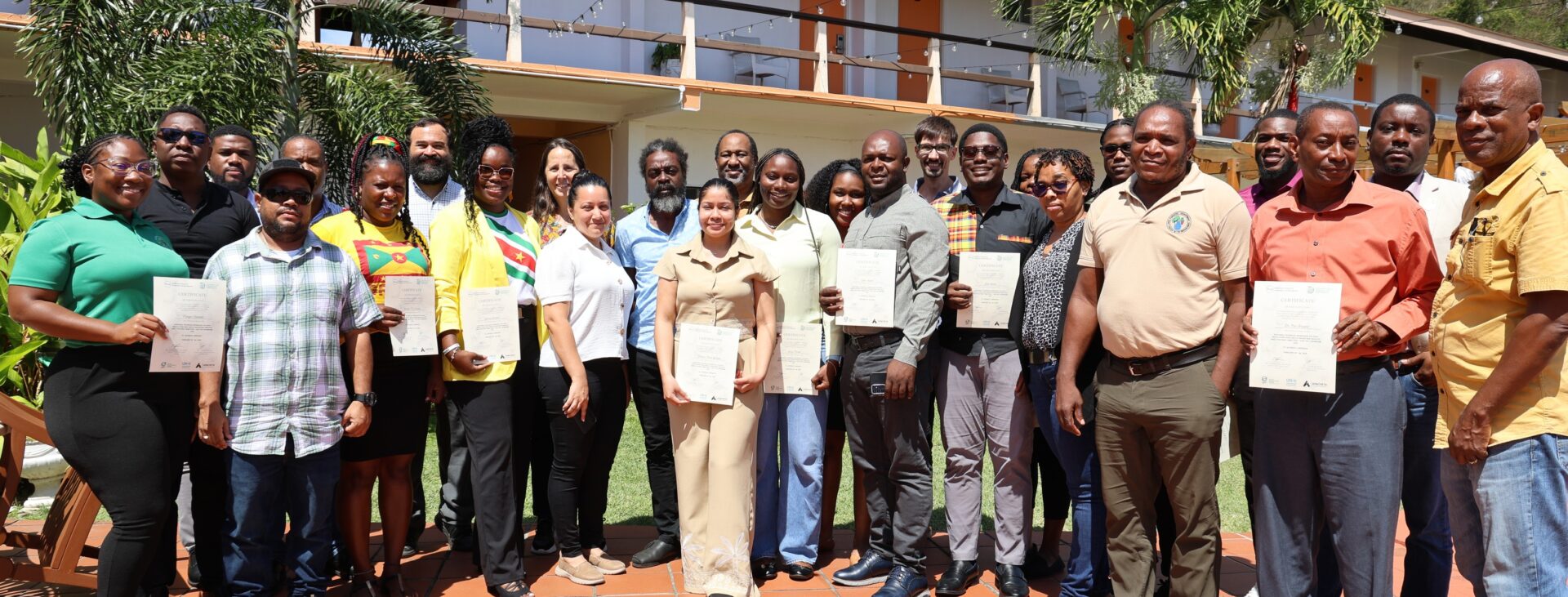
  • Dominica National Conservation Trust Fund announces first grant recipients under conservation fund

    Dominica National Conservation Trust Fund announces first grant recipients under conservation fund

    In a historic move for environmental conservation, Dominica’s National Conservation Trust Fund (DNCTF) has officially launched its inaugural grant program, selecting two pioneering projects that merge ecological preservation with gender equality. The December 11th signing ceremony marked a transformative moment in Caribbean conservation financing, channeling support through the Gender Smart Facility—a specialized program under the Caribbean Biodiversity Fund’s CORE Project implemented with Global Affairs Canada.

    The selected initiatives, led by the Inter-American Institute for Cooperation on Agriculture (IICA) and the Anse Kouanari Tourism Association (AKTA), represent a dual approach to sustainable development. IICA’s project addresses Dominica’s dependency on imported livestock feed by establishing climate-resilient forage production systems at the Central Livestock Farm. Through distribution of drought-tolerant Brachiaria and Clitoria plant varieties to small-scale farmers, particularly those in the Dominica Livestock Cooperative and National Association of Youth in Agriculture, the project aims to reduce feed costs by up to 60% while rehabilitating degraded lands.

    AKTA’s initiative tackles the critical shortage of native plant species essential for reforestation and pollinator habitat restoration. The program will provide comprehensive training in plant propagation and nursery management to rural farmers, with special emphasis on women and youth participation. This approach not only addresses ecological needs but creates sustainable livelihood opportunities in marginalized communities.

    Dr. Rhonda Linton, CEO of DNCTF, emphasized the significance of these grants: ‘These first two grants represent a significant moment for Dominica’s conservation landscape. By funding projects that are both community-led and scientifically grounded, DNCTF is ensuring that conservation financing reaches the people and ecosystems that need it most.’

    The Gender Smart Facility specifically targets eight Caribbean nations, ensuring conservation and climate adaptation efforts actively promote women’s empowerment and inclusion of marginalized groups. Nayari Diaz, lead of the CORE Project, noted that ‘these projects restore ecosystems and challenge traditional barriers that have kept women out of agricultural decision-making and environmental leadership.’

    Canada’s support through Global Affairs Canada was highlighted by Ena Cimic, Second Secretary at the High Commission of Canada to Jamaica: ‘When women have equal opportunities in agriculture and environmental management, everyone benefits. This results in better-protected ecosystems, more resilient communities, and expanded economic opportunities.’

    These groundbreaking initiatives establish DNCTF as Dominica’s primary mechanism for financing biodiversity conservation, effectively connecting communities, government agencies, and international donors to foster enduring environmental and socio-economic resilience across the nation.

  • Haitian merchants block Pedernales border to protest new customs measures

    Haitian merchants block Pedernales border to protest new customs measures

    PEDERNALES, DOMINICAN REPUBLIC – Cross-border commerce between Haiti and the Dominican Republic ground to a halt on Tuesday as Haitian merchants staged a blockade at the Pedernales frontier crossing. The protest erupted in response to controversial new trade measures implemented by recently appointed customs collector Lancer García.

    Demonstrators strategically positioned a Haitian truck across the border passageway, effectively suspending all movement of goods and people between the two nations. The merchants allege that García has abruptly altered long-established trade protocols, including imposing previously unheard-of taxes that they claim severely undermine cross-border commercial activities.

    The administrative changes have extended beyond trade policies, affecting customs personnel as well. Multiple veteran employees have been replaced with new staff since García’s assignment to the Pedernales border terminal, creating additional institutional instability.

    Security forces from the Specialized Corps for Land Border Security (Cesfront) have maintained a heightened presence in the area, successfully preventing any significant violent outbreaks despite the tense standoff. Authorities continue to closely monitor developments to ensure the situation does not escalate further.

    This appointment represents García’s third border assignment amid ongoing controversies. Previously transferred from Puerto Plata to Dajabón following disputes with employees and political figures, he subsequently clashed with Haitian merchants in Dajabón over a 2.5% tax hike that ultimately prompted his reassignment. His replacement in Dajabón by attorney Julio Alejo this week has already contributed to restored calm at that northern border crossing.