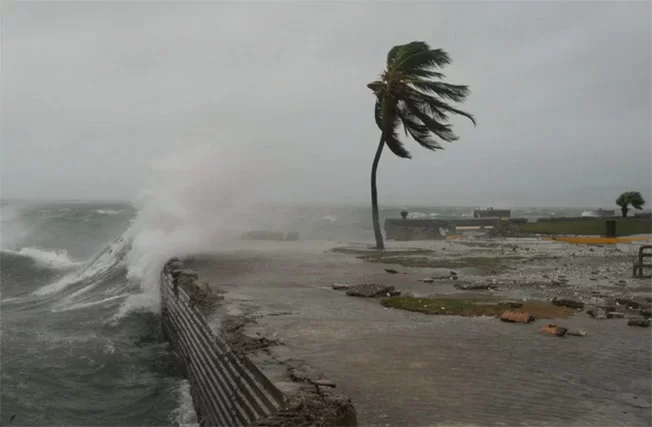
Hurricane Melissa, an exceptionally powerful Category 5 storm, wreaked havoc on Jamaica this Tuesday, leaving a trail of destruction in its wake. With wind speeds reaching up to 300 kilometers per hour, the hurricane caused severe damage to infrastructure, power grids, and homes. Thousands of residents were forced to evacuate as large parts of the island were left without electricity and communication. Authorities reported widespread flooding in coastal areas due to storm surges and dangerously high sea levels. Local media also indicated that hospitals and emergency shelters sustained significant damage, prompting rescue services to declare a humanitarian crisis. Although Melissa has since weakened to a Category 4 hurricane, it remains extremely dangerous and is now moving toward Cuba and the Bahamas, where emergency plans have already been activated. The Caribbean Community (Caricom) expressed deep concern over the situation in Jamaica and emphasized its readiness to coordinate relief efforts. The organization warned that the impact of Melissa could be long-lasting and called for international support for recovery and rebuilding. Meteorological experts have identified Melissa as one of the most severe hurricanes to hit the Caribbean this century, with the full extent of the damage in Jamaica expected to become clearer in the coming days.
分类: world
-

FLASH : Alert level rises, 5 departments in red, 2 in orange
Hurricane Melissa, now a Category 5 storm, continues to wreak havoc across the Caribbean, with Haiti and neighboring nations bracing for severe impacts. As of October 29, 2025, the National Oceanic and Atmospheric Administration (NOAA) reported that Melissa’s center was located near latitude 20.3°N and longitude 76.1°W, with maximum sustained winds of 185 km/h and gusts reaching even higher speeds. The hurricane was moving westward at 12 mph (19 km/h), with a projected path that would take it across eastern Cuba, the southeastern Bahamas, and near Bermuda by late Thursday.
-

Jamaica Declared Disaster Area After Hurricane Melissa Devastation
KINGSTON, Jamaica — In the wake of Hurricane Melissa’s catastrophic onslaught, Prime Minister Andrew Holness has officially designated Jamaica a disaster area. The Category 5 storm, which struck the island with ferocious intensity, has left a trail of widespread devastation and severe flooding in its wake.
Hurricane Melissa made landfall on Jamaica’s southern coast early Tuesday, unleashing relentless torrential rains and winds surpassing 175 mph. The storm later exited near Trelawny on the northern coast, leaving behind a landscape of destruction.
Local Government Minister Desmond McKenzie revealed that the disaster declaration was based on recommendations from the Office of Disaster Preparedness and Emergency Management. Reports of extensive damage have emerged from several parishes, including Clarendon, Manchester, St. Elizabeth, and Westmoreland.
McKenzie further confirmed that the hurricane’s impact has been exacerbated by severe flooding and multiple landslides, which have rendered numerous roads impassable and isolated several communities. “By late Tuesday, many areas remained cut off due to rising floodwaters and debris,” he stated.
Meteorologists predict that Hurricane Melissa’s eye will continue to move away from western Jamaica by Tuesday evening, with its trajectory shifting toward southeastern Cuba overnight. The storm’s aftermath has left the nation grappling with the immense challenge of recovery and rebuilding.
-

Ceasefire Fails: Israel Orders “Powerful” Strikes on Gaza
The fragile ceasefire between Israel and Hamas has shattered as Israel initiated a series of airstrikes on Gaza following Prime Minister Benjamin Netanyahu’s directive for “immediate, powerful” military action. Both sides have accused each other of breaching the US-mediated truce, escalating tensions in the region. Netanyahu’s office asserted that Hamas had violated the ceasefire agreement by returning remains that did not belong to any of the 13 hostages held in Gaza. Israeli Defence Minister Israel Katz vowed that Hamas would face a “heavy price” and emphasized that Israel would retaliate “with great force.” The sound of fighter jets over Jerusalem and renewed strikes near Gaza City have plunged residents into fear and uncertainty. Hamas-run civil defence officials reported at least two fatalities and four injuries in the latest attack. Hamas condemned Israel’s escalation, claiming it would obstruct ongoing efforts to retrieve bodies and postponed the handover of another deceased hostage. The conflict traces back to the Hamas-led attack on southern Israel on October 7, 2023, which resulted in the abduction of 251 people and the deaths of approximately 1,200 Israelis. Since then, Israel’s military campaign has reportedly claimed over 68,500 Palestinian lives, according to the Hamas-run health ministry.
-

Black River Hospital Suffers Devastating Damage from Hurricane Melissa in Jamaica
In the wake of Hurricane Melissa’s relentless assault on Jamaica, the Black River Hospital in St. Elizabeth has suffered catastrophic damage, leaving the critical healthcare facility inoperable. The Category 5 hurricane, with its record-breaking winds and storm surges, tore apart the hospital’s roof, collapsed multiple walls, and submerged the compound under floodwaters littered with debris. As conditions rapidly worsened, medical staff and patients were forced to evacuate, facing perilous rising water levels and hazardous flying debris. Authorities confirmed that the hospital, a lifeline for thousands in Jamaica’s southwest region, is now non-functional. Emergency teams are scrambling to relocate patients to nearby facilities, despite ongoing challenges such as widespread power outages and impassable roads. Hurricane Melissa continues to batter the island, unleashing destructive winds and torrential rainfall, which have caused widespread devastation. Rescue and recovery efforts are severely hindered by blocked roadways, downed power lines, and extensive flooding, leaving communities in dire need of assistance.
-

Roofs Torn Off as Super Hurricane Melissa Hits Jamaica
Super Hurricane Melissa, a catastrophic Category 5 storm, struck near New Hope, St Elizabeth, on Tuesday, unleashing ferocious winds reaching up to 185 mph (295 km/h). The storm caused extensive devastation across the region, with videos capturing roofs torn from buildings, including St Elizabeth Technical High School, and debris scattered everywhere. Residents in St Elizabeth, Westmoreland, Hanover, and St James were advised to stay indoors, even during the brief calm of the storm’s eye. The U.S. National Hurricane Center reported that Melissa’s central pressure of 892 millibars ties it with Hurricane Dorian (2019) and the 1935 Labor Day Hurricane as the strongest Atlantic landfalls ever recorded. The Office of Disaster Preparedness and Emergency Management highlighted widespread structural damage, blocked roads, and downed power lines. Emergency teams are prepared to initiate rescue and recovery operations as soon as conditions permit. Melissa is projected to move off Jamaica’s north coast later Tuesday, maintaining its extreme danger as it heads toward the Cayman Islands and southern Bahamas.
-

US carries out strikes on four vessels in Eastern Pacific, killing 14
The US military has executed three targeted strikes on four vessels in the eastern Pacific, reportedly used for narcotics trafficking, resulting in 14 fatalities and one survivor. Secretary of War Pete Hegseth announced the operations, stating they were conducted under President Trump’s directive. The vessels, operated by groups labeled as Designated Terrorist Organizations (DTOs), were intercepted along known drug trafficking routes. Intelligence indicated the boats were carrying narcotics. The strikes occurred in international waters, with no US personnel harmed. US Southern Command (USSOUTHCOM) initiated search-and-rescue protocols for the survivor, with Mexican authorities coordinating the rescue. Hegseth emphasized the strikes as part of a broader campaign against drug trafficking networks, equating these groups to terrorist organizations like al-Qaida. He vowed to track, network, and eliminate such threats. The operations mark a significant escalation in US military action against transnational criminal groups, raising legal and ethical questions about the use of lethal force outside declared war zones. Concerns have also emerged regarding regional implications, particularly with Mexico’s involvement in the rescue. Pentagon publications and social media have shared visuals of the strikes, reinforcing claims of the vessels’ ties to DTOs. The administration asserts these intelligence-driven operations aim to disrupt organizations linked to rising narcotics-related deaths in the US. Reactions from other governments and international bodies remain pending, with analysts awaiting further details and independent verification.
-

Melissa makes landfall in southwestern Jamaica with winds of 185 mph
Hurricane Melissa, one of the most powerful storms ever recorded in the Atlantic Basin, has made a devastating landfall in southwestern Jamaica near New Hope. With maximum sustained winds reaching an unprecedented 185 mph (295 km/h) and a central pressure plummeting to 892 mb (26.34 inches), the hurricane has created an extremely dangerous and life-threatening situation. Authorities have issued urgent warnings for residents to remain sheltered as the eye of the storm passes, emphasizing that winds will intensify rapidly once the eye moves on. The safest measures include staying in an interior room without windows, avoiding areas prone to falling trees, and using mattresses or helmets for additional protection. The storm’s current location is approximately 25 miles southeast of Negril, Jamaica, and 145 miles south of Guantanamo, Cuba, moving north-northeast at 9 mph (15 km/h). The next update will be provided at 2:00 PM EDT (18:00 UTC).
-

Hurricane Melissa Slams Jamaica as Historic Category 5 Storm
On October 28, 2025, Hurricane Melissa, a historic Category 5 storm, made landfall in Jamaica with sustained winds reaching 185 mph, marking one of the most powerful Atlantic hurricanes ever recorded. The National Hurricane Center confirmed the storm’s intensity, issuing urgent warnings of catastrophic winds, life-threatening storm surges, and severe flooding. The United Nations described Melissa as “the storm of the century,” emphasizing the unprecedented nature of the disaster for Jamaica, which had never before faced a direct hit from a Category 5 hurricane.
Tragically, at least seven hurricane-related fatalities have been reported across the Caribbean, including three in Jamaica during storm preparations, three in Haiti, and one in the Dominican Republic. In Haiti, thousands of individuals already displaced by gang violence are now confronting flooded makeshift shelters, exacerbating the humanitarian crisis.
As Melissa continues its destructive path, Cuba is next in line to face the storm’s wrath, with severe weather conditions expected to impact the Bahamas and the Turks and Caicos Islands. Bahamian authorities have issued mandatory evacuation orders for residents in low-lying areas, cautioning that emergency assistance will be unavailable until the storm passes. The Disaster Risk Management Authority warned of imminent hurricane conditions, including dangerous storm surges and torrential rainfall, expected to hit the Bahamas and Turks and Caicos by Wednesday.
The Caribbean region braces for further devastation as Hurricane Melissa underscores the escalating threat of extreme weather events in the era of climate change.
-

Melissa: 5th most powerful Atlantic hurricane recorded, 3 dead, 13 injured in JA preparations
Hurricane Melissa has emerged as one of the most formidable storms in Atlantic history, now ranked as the fifth most powerful on record. According to The New York Times, the hurricane is approaching landfall as a Category 5 storm, boasting sustained winds of 185 miles per hour—merely five miles shy of the record set by Hurricane Allen in 1980. This unprecedented intensity has triggered flash flooding and storm surges, prompting urgent warnings from officials. Desmond McKenzie, Jamaica’s disaster response coordinator, emphasized the gravity of the situation, stating, ‘Jamaica, this is not the time to be brave. Don’t bet against Melissa. It is a bet we can’t win.’ The hurricane’s eye wall, with its ferocious winds, poses a severe threat, potentially causing ‘total structural failure’ and widespread power and communication outages, as reported by the hurricane center on Monday. Tragically, at least three fatalities and thirteen injuries have already been linked to storm preparations. The Jamaica Observer noted that two deaths resulted from falling trees, while one individual was electrocuted. Injuries were primarily caused by accidental falls from ladders and roofs during preparation efforts. Fueled by the unusually warm Caribbean waters, Melissa is expected to maintain its destructive force as it moves through the region. Meanwhile, the World Food Program has pre-positioned 450 metric tons of food in Haiti, a significantly reduced stockpile due to donor focus shifting to crises in Gaza and Ukraine.