分类: world

  • Captain America Anchors Briefly in Belizean Waters

    Captain America Anchors Briefly in Belizean Waters

    In a routine maritime procedure, the Mexican-flagged offshore supply vessel ‘Captain America’ has entered Belizean waters for a brief regulatory stopover. According to the Belize Port Authority, the unusual visit stems from Mexican maritime regulations requiring vessels to depart national waters and register at a foreign port before returning home.

    The distinctive vessel, whose name references the popular Marvel superhero, anchored temporarily in Belize on November 27, 2025. Belizean authorities confirmed they would conduct standard boarding procedures for inspection before granting clearance for the ship’s return journey to Mexico.

    This operation represents standard international maritime practice rather than commercial activity. The Belize Port Authority emphasized that the visit poses no concerns, serving purely as a legal formality under maritime regulations. Such administrative stops are common in global shipping operations, though rarely attract public attention unless vessels bear distinctive names like ‘Captain America.’

    The incident highlights how international maritime regulations occasionally bring foreign vessels to unexpected locations for brief technical stops, demonstrating the complex administrative framework governing modern shipping operations.

  • Mexican-Flagged Vessel “Captain America” to Make Brief Visit to Belize

    Mexican-Flagged Vessel “Captain America” to Make Brief Visit to Belize

    In a routine maritime procedure, the Mexican-flagged offshore supply vessel ‘Captain America’ is scheduled for a brief regulatory stop within Belizean territorial waters. The Belize Port Authority (BPA) confirmed the vessel’s temporary presence stems from compliance requirements under Mexican maritime regulations, which mandate that vessels periodically exit and re-enter national jurisdiction.

    The vessel, identified by IMO number 9526382, primarily operates within Mexico’s offshore sector. According to the BPA’s official statement, this visit represents a standard administrative formality rather than a commercial operation. During its stay, the ship will remain anchored in a pre-designated zone while Belizean authorities conduct mandatory verification and clearance protocols.

    The Port Authority emphasized that the ‘Captain America’ remains prohibited from engaging in any commercial activities, cargo operations, or crew changes during its Belizean stopover. This procedural visit follows established international maritime practices and will not disrupt regular port operations or maritime traffic. Upon completing the necessary clearance procedures, the vessel will immediately depart for Mexican waters.

    This incident highlights the complex regulatory framework governing international maritime operations, where vessels must occasionally make foreign port calls solely for administrative compliance purposes rather than commercial objectives.

  • ICJ to Decide Guatemala Bid in Sapodilla Case

    ICJ to Decide Guatemala Bid in Sapodilla Case

    The International Court of Justice (ICJ) has concluded three days of landmark hearings examining Guatemala’s unprecedented request to intervene in the separate maritime sovereignty case between Belize and Honduras concerning the disputed Sapodilla Cayes archipelago. Held from November 24-26 at the Peace Palace in The Hague, these proceedings could establish significant precedents for how the world court manages interconnected territorial disputes.

    Guatemala’s legal representatives petitioned the Court for non-party intervenor status, asserting that their nation’s longstanding territorial claim against Belize creates a substantive legal interest in the outcome of the Belize v. Honduras proceedings. They contended that participation is essential to safeguard what Guatemala characterizes as protected legal rights pertaining to the Sapodilla Islands.

    Honduras mounted a vigorous challenge to this proposition, maintaining that neither the ICJ Statute nor established procedural norms authorize such intervention in a distinctly separate case. Honduran delegates warned that admitting Guatemala would effectively introduce an entirely new dispute into the proceedings and represent an improper utilization of the intervention mechanism. They emphasized that Guatemala retains full opportunity to present Sapodilla-related arguments within its own ongoing case against Belize.

    Belize adopted a judicially strategic position, focusing arguments on the Court’s fundamental duty to ensure orderly and expeditious administration of justice. Belizean representatives advocated for coordinated management of the two parallel cases—Guatemala v. Belize and Belize v. Honduras—to facilitate comprehensive resolution of all outstanding regional territorial issues. They underscored that intervention remains discretionary rather than automatic, requiring strict adherence to procedural rules and prudent exercise of judicial authority to prevent unnecessary delays.

    The Court has now entered private deliberations ahead of issuing its ruling on Guatemala’s application. The Sapodilla Cayes case originated with Belize’s filing on November 16, 2022, addressing sovereignty over the small island chain persistently administered by Belizean authorities. Guatemala submitted its intervention petition nearly one year later on December 1, 2023. Simultaneously, both nations continue litigating the broader territorial, insular, and maritime dispute initiated through their Special Agreement—ratified by popular referenda and formally lodged with the ICJ in June 2019.

    Belize’s delegation featured ICJ Agent His Excellency Assad Shoman, accompanied by members of Belize’s international legal consortium and officials from the Office of the Agent.

  • Suriname zoekt nieuwe economische koers op zee tijdens UNIDO-top

    Suriname zoekt nieuwe economische koers op zee tijdens UNIDO-top

    At the UNIDO General Conference in Riyadh, Suriname’s Minister of Economic Affairs, Entrepreneurship and Technological Innovation Andrew Baasaron presented his nation as an emerging strategic partner for countries and corporations investing in sustainable maritime development. Rather than focusing on national policy measures, Minister Baasaron emphasized Suriname’s blue economy as a collaborative zone where foreign expertise, regional innovation, and local entrepreneurship could mutually reinforce one another.

    The minister extended formal invitations to businesses, research centers, and multilateral institutions to establish partnerships with Suriname that combine economic growth with environmental conservation. He specifically highlighted opportunities in marine and riverine biodiversity applications, noting potential in novel biotechnological concepts ranging from pharmaceutical extracts to sustainable biomaterials.

    Suriname seeks to modernize its fisheries sector through partners who can introduce advanced systems, traceability technologies, and international best practices. This modernization effort aims to meet global sustainability standards while maintaining market access. Similarly, the aquaculture sector welcomes joint ventures developing innovative, environmentally friendly production models focused on high-value species with low ecosystem impact.

    The minister also outlined ambitions for eco- and river-tourism, inviting investment in nature-friendly tourist infrastructure that positions local communities—including Indigenous and Tribal peoples—as full economic participants rather than mere stakeholders.

    Infrastructure modernization formed another key pillar, with Suriname seeking technical and financial partners for digitalization, climate-resilient port facilities, and restoration of natural defenses like mangroves. Minister Baasaron concluded by framing Suriname’s blue economy as an international agenda—a framework for partnerships that help build a carbon-neutral, resilient economy while establishing Suriname as a proactive regional player connecting innovation, sustainability, and economic progress through oceanic and riverine resources.

  • Syria Highlights Fidel’s legacy

    Syria Highlights Fidel’s legacy

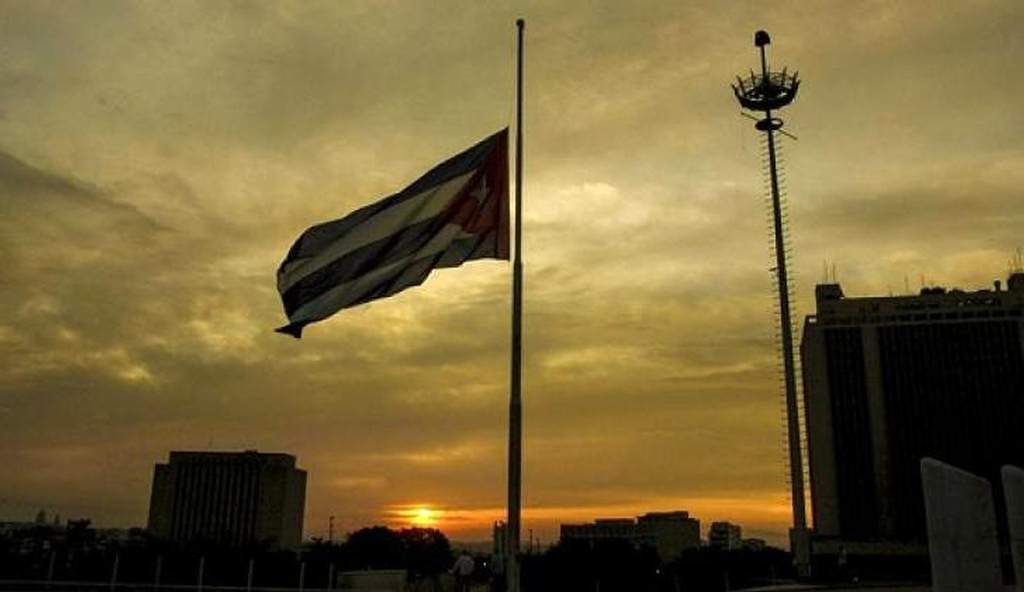
    In a significant diplomatic gathering, Syrian and Cuban representatives convened to commemorate the profound legacy of the late Cuban revolutionary leader Fidel Castro, focusing on his pivotal role in fostering bilateral relations and advancing Global South solidarity.

    The assembly highlighted the remarkable outpouring of admiration from the Syrian populace following Castro’s passing, noting how his visionary leadership continues to resonate across international boundaries. Participants examined Castro’s strategic diplomacy that significantly strengthened Cuban-Syrian ties while simultaneously reshaping the Caribbean nation’s relationships with developing countries worldwide.

    A particularly poignant moment came with the reading of an official statement from the Association of Syrian Graduates of Cuban Universities, which delivered an emotional tribute to the Commander’s enduring influence. The document emphasized how Castro’s principles of social justice, equality, and international cooperation left an indelible mark on generations of Syrian professionals educated in Cuba.

    The declaration recalled Cuba’s steadfast support for Syria and other Global South nations during their most challenging historical periods, asserting that Castro’s ideological framework remains vibrantly alive among Syrian professionals who studied on the island. The Association further reaffirmed its commitment to perpetuating Castro’s vision by continuing to strengthen fraternal bonds between the two nations, inspired by the leader’s conviction that global justice, peace, and human dignity can only be achieved through international unity and mutual solidarity.

  • Diaz-Canel sends condolences to China for death toll on a fire

    Diaz-Canel sends condolences to China for death toll on a fire

    Cuban President Miguel Díaz-Canel has publicly expressed his nation’s solidarity with China following a devastating residential fire in Hong Kong that has resulted in massive casualties. Through his official X (formerly Twitter) account, the Caribbean leader conveyed profound sorrow regarding the tragic incident.

    Díaz-Canel’s message specifically extended heartfelt condolences to the families and friends of those who perished in the blaze. This diplomatic gesture follows similar sentiments expressed by Cuban Foreign Minister Bruno Rodríguez, who earlier communicated messages of support and encouragement to both Chinese authorities and citizens.

    The fire erupted at a high-rise residential building in Hong Kong’s Tai Po district, culminating in one of the territory’s most severe fire disasters in recent history. According to the latest statistics released by the Hong Kong Fire Services Department on Thursday, the catastrophe has claimed 65 lives with approximately 70 individuals sustaining injuries. Rescue operations continue as hundreds remain unaccounted for, suggesting the death toll may further escalate.

    Emergency response teams have been working tirelessly at the disaster site since the fire broke out, facing challenging conditions to extinguish flames and locate survivors. The incident has prompted preliminary investigations into building safety standards and emergency response protocols within Hong Kong’s densely populated urban areas.

  • COP30 again sounds climate alarm

    COP30 again sounds climate alarm

    BELEM, BRAZIL – The recently concluded COP30 United Nations Climate Summit has reignited global concerns about the accelerating pace of environmental degradation, with small island developing states (SIDS) including Trinidad and Tobago expressing particular alarm about climate impacts. Delegates from vulnerable nations highlighted the interconnected crises of ocean system disruption, biodiversity collapse, increasing natural disasters, and food insecurity that collectively threaten human welfare worldwide.

    Despite decades of international environmental conferences dating back to the 1992 Rio Earth Summit, global responses remain critically inadequate. Observers consistently identify insufficient funding and lack of political commitment as primary obstacles to implementing meaningful climate action.

    Trinidad and Tobago’s delegation, led by the Minister of Planning, Economic Affairs and Development, emphasized the necessity for coordinated action across all levels, with particular focus on climate financing mechanisms. The minister outlined national mitigation efforts including electric vehicle promotion, residential solar water heater installation, transition to green hydrogen energy, and implementation of a National Adaptation Plan.

    A compelling case was made for accelerated forest development as a cost-effective climate strategy. Forests serve as the planet’s primary terrestrial carbon sinks, working in tandem with oceanic systems to maintain atmospheric balance through carbon sequestration. Trinidad and Tobago maintains significant forest coverage spanning approximately 25% of its land area, providing critical ecosystem services including watershed protection, wildlife conservation, ecotourism opportunities, rural employment, and public health benefits.

    However, these vital ecosystems face persistent threats from unauthorized development, illegal squatting, and unregulated quarrying activities that have left thousands of hectares degraded and abandoned without restoration efforts.

    Global reforestation initiatives offer promising models for emulation, including Africa’s Great Green Wall project aiming to restore 100 million hectares across 11 nations, Brazil’s Amazon rainforest restoration efforts, and similar programs in Australia and India. Such investments in preventive conservation rather than costly recovery represent economically prudent pathways, with potential carbon credit revenues providing additional financial incentives for developed nations to support these initiatives.

    Collaboration between governmental forestry agencies, civil society organizations, and private sector stakeholders will prove essential to preserving Trinidad and Tobago’s environmental legacy for future generations.

  • Guyana sends more emergency relief supplies to Jamaica

    Guyana sends more emergency relief supplies to Jamaica

    GEORGETOWN, Guyana — Demonstrating regional solidarity, the Guyanese government has mobilized its second major consignment of critical emergency supplies destined for hurricane-ravaged Jamaica. The shipment, which set sail from the AFS Shipping Wharf at Friendship aboard the vessel MV Falk on Thursday, represents a coordinated effort between national agencies and private sector partners.

    This humanitarian initiative follows the recent diplomatic visit of Guyana’s President Dr. Mohamed Irfaan Ali to Jamaica, where he joined other CARICOM leaders in assessing the aftermath of Hurricane Melissa. The relief cargo includes essential reconstruction materials such as lumber and zinc sheeting sufficient to repair approximately 200 damaged roofs. Additionally, the shipment contains vital living supplies including mattresses, water storage tanks, and substantial quantities of rice.

    Notably, the mattresses and water tanks were produced locally by Guyanese manufacturers A&F Foam Factory and Lion Tank, highlighting domestic industrial capability while supporting international relief efforts. Colonel Nazrul Hussain, Director General of Guyana’s Civil Defence Commission (CDC), emphasized the deeper significance of the mission: “This endeavor transcends material assistance—it embodies regional solidarity and enables Jamaican families to reconstruct their livelihoods with dignity.”

    In a further display of support, a specialized team of engineers from the Guyana Defence Force will be deployed to Jamaica to provide hands-on assistance with roof reconstruction upon the supplies’ arrival. The MV Falk, originally chartered by Barakat Timbers & Trading Company Ltd for commercial transport, was leveraged by the government to accelerate delivery through available cargo space.

    With an estimated transit period of six days, this shipment forms part of an ongoing commitment, as authorities confirm a third shipment of food and construction materials is scheduled for departure within the next fortnight.

  • Declaration of The Peoples’ Summit towards COP30

    Declaration of The Peoples’ Summit towards COP30

    BELÉM DO PARÁ, BRAZIL – From November 12-16, 2025, the historic We, the Peoples’ Summit convened in the heart of the Brazilian Amazon, culminating in a powerful declaration that represents months of preparation and the collective voice of over 70,000 participants from diverse global movements.

    The unprecedented gathering brought together indigenous communities, traditional peoples, peasants, quilombolas, fishermen, extractivists, shellfish gatherers, urban workers, trade unionists, homeless populations, babassu coconut breakers, terreiro peoples, women, LGBTQIAPN+ communities, youth, Afro-descendants, elders, and representatives from forest, rural, peripheral, marine, river, lake, and mangrove regions worldwide. Their unified mission: to build a just, democratic world centered on the principle of ‘buen vivir’ or ‘good living’ for all humanity.

    The Summit’s declaration identifies capitalism as the fundamental driver of the escalating climate emergency, asserting that the current mode of production directly causes environmental destruction through its relentless pursuit of profit. The document condemns transnational corporations in collusion with Global North governments as primary beneficiaries of this system, specifically naming mining, energy, arms, agribusiness, and Big Tech industries as major contributors to the planetary crisis.

    A significant portion of the declaration addresses geopolitical conflicts, expressing unequivocal solidarity with Palestine against what participants term ‘genocide perpetrated by the Zionist state of Israel.’ The document also condemns US imperial expansion in the Caribbean through military operations like ‘Southern Spear,’ and stands with resistance movements in Venezuela, Cuba, Haiti, Ecuador, Panama, El Salvador, Colombia, Democratic Republic of Congo, Mozambique, Nigeria, Sudan, and emancipatory projects in the Sahel and Nepal.

    The Summit rejected market-based climate solutions, warning that financialized programs like the Task Force on Fossil Fuels (TFFF) perpetuate harmful practices without addressing root causes. Instead, delegates demanded transformative approaches including land demarcation for indigenous territories, popular agrarian reform, agroecology, and climate justice centered on ancestral knowledge and popular participation.

    Key demands include: complete demilitarization and redirection of military spending to climate recovery; fair compensation for losses and damages from destructive projects; feminist justice recognizing care work as essential labor; a just energy transition that respects national sovereignty; and climate financing mechanisms independent of IMF and World Bank influence.

    The declaration concludes with a call for strengthened international organizing against common enemies of humanity, invoking the spirit of popular internationalism with the rallying cry: ‘Peoples of the world: Unite!’

  • Grenada to host Connected Caribbean Summit 2025

    Grenada to host Connected Caribbean Summit 2025

    Grenada will serve as the host nation for the pivotal Connected Caribbean Summit 2025 (CCS2025), scheduled from December 1-5 at the Radisson Grenada Beach Resort in Grand Anse. This high-level gathering will bring together over 200 senior leaders from Caribbean nations and the international community under the unifying theme “Catalysing Caribbean Transformation.

    The summit represents a decisive shift from conventional conferences, positioning itself as an action-oriented working session dedicated to accelerating tangible regional progress. Core focus areas include economic resilience, digital innovation, justice system reform, governance strengthening, educational modernization, and financial inclusion—all identified as critical enablers for sustainable development and inclusive growth throughout the Caribbean region.

    CCS2025 will convene an unprecedented assembly of regional power brokers including heads of government, chief justices, utility regulators, corporate CEOs, international investors, development partners, and civil society representatives. The explicit objective is to transcend dialogue and initiate concrete implementation strategies across three priority areas: scaling financial investment and inclusion mechanisms, addressing escalating crime and security challenges, and enhancing digital and climate resilience capabilities.

    The summit architecture features several innovative components:

    The CCS Leadership Alliance will facilitate closed-door and plenary sessions among government leaders and regional institutions to coordinate action on shared development objectives.

    A dedicated Justice Forum will spotlight comprehensive approaches to modernizing judicial organizations, improving operational efficiency, and expanding citizen access to legal services.

    CCS MasterClasses will deliver high-level instruction on artificial intelligence, cybersecurity, and digital transformation led by international and regional experts specifically tailored for senior executives.

    The NextGen Forum will create a unique platform for Caribbean youth to engage directly with regional leaders and gain exposure to emerging career opportunities.

    An Innovation Showcase will exhibit Grenadian and regional technological solutions addressing Caribbean-specific challenges.

    The program will culminate in a Cultural Gala hosted by the Grenadian government, highlighting national culture and investment potential while providing curated networking opportunities.

    Prime Minister Hon. Dickon Mitchell emphasized Grenada’s commitment to regional cooperation through hosting this event, stating: “We look forward to welcoming leaders, experts and investors to our shores to work with us on practical solutions that benefit our citizens and our region.”

    Bevil Wooding, CCS2025 convener and Executive Director of the Caribbean Agency for Justice Solutions, reinforced the action-focused nature of the summit: “We are convening the leaders and institutions that have both the responsibility and the authority to act—so that ideas discussed in Grenada swiftly translate into concrete programmes, partnerships and investments across the Caribbean.”

    The summit will feature global broadcasting capabilities and a dedicated media center to facilitate press briefings, interviews, and real-time coverage. Media organizations seeking accreditation or interview arrangements are directed to contact the CCS Secretariat, with additional information available at connectedcaribbean.org.