分类: technology

  • Drone training innovation for Trench Town’s youth

    Drone training innovation for Trench Town’s youth

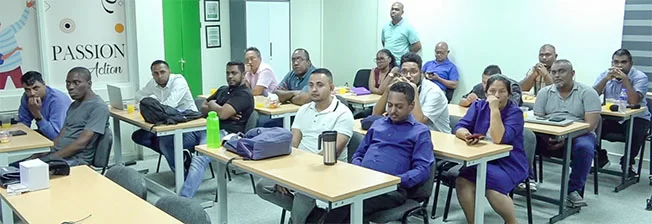
    A groundbreaking initiative in technological education was launched in Trench Town, South St Andrew, as Brightstar Lottery Jamaica (BLJ) inaugurated an after-school advantage center dedicated to drone technology training. The event, held at the Trench Town Community Development Committee (CDC), marked BLJ’s 15th such center and the commencement of its third annual drone technology workshop. This program aims to provide hands-on experience in drone operations, equipping young people with skills for the future. In her keynote address, BLJ General Manager Debbie Green emphasized the transformative power of drone technology, noting its global impact and the importance of ensuring Jamaican youth are not left behind. Green highlighted the projected growth of the global drone market, which is expected to surpass $100 billion in the coming years, and urged the youth to seize the opportunity to become innovators rather than mere consumers. She drew parallels between Trench Town’s rich musical heritage, home to legends like Bob Marley and Peter Tosh, and its potential to lead in technological innovation. Lascelles Page, a community member, expressed his enthusiasm for the initiative, stating that it has opened new career possibilities for him and other youth. Page highlighted the practical applications of drone technology, such as its use in events like the Grand Gala, and expressed his determination to master the skills offered by the center. The event concluded with a ribbon-cutting ceremony, symbolizing the official opening of the center and the beginning of a new chapter in technological empowerment for Trench Town.

  • Liberty Caribbean unveils 5G+ in Barbados!

    Liberty Caribbean unveils 5G+ in Barbados!

    BRIDGETOWN, Barbados – Liberty Caribbean, through its renowned brands Flow and Liberty Business, has achieved a groundbreaking milestone by introducing the first 5G+ mobile network in Barbados. This historic launch positions the island at the forefront of next-generation mobile connectivity in the Caribbean region. The initial phase of the rollout connects 22 strategic sites across Barbados, with the company aiming to cover at least 50% of the population by the end of the year. Full nationwide coverage is expected by the close of 2026. Inge Smidts, Chief Executive Officer of Liberty Caribbean, emphasized the significance of this development, stating, ‘This marks a pivotal chapter in Barbados’ digital evolution. Launching commercial 5G+ not only underscores our leadership in digital infrastructure but also highlights Barbados as a hub for innovation, investment, and talent.’ Smidts further highlighted the transformative impact of 5G+ on everyday life, enabling students, entrepreneurs, and families to access advanced digital tools, real-time analytics, and seamless high-definition streaming. Desron Bynoe, Vice President and General Manager of Flow Barbados, elaborated on the enhanced capabilities of the 5G+ network, which will complement the existing 4G LTE infrastructure. He noted that users can expect faster download speeds, smoother video calls, uninterrupted streaming, and reliable connectivity in crowded areas. Bynoe also underscored the broader implications of 5G+ for public services, tourism, and commercial digitalization, describing it as a platform for a more connected and resilient Barbados. The official launch event took place at Flow’s Customer Experience Centre in Windsor Lodge, celebrating years of investment and collaboration with partners. Liberty Caribbean, a subsidiary of Liberty Latin America, operates in over 20 Caribbean markets, delivering broadband, mobile, video, and voice services. Its B2B division, Liberty Business, supports enterprises and governments with advanced connectivity, cloud, security, and data center solutions. With a legacy spanning 150 years, Liberty Caribbean remains committed to empowering communities through innovative and tailored technological solutions.

  • Government and NVIDIA sign memorandum to promote AI training, innovation, and research

    Government and NVIDIA sign memorandum to promote AI training, innovation, and research

    In a landmark event held in Santo Domingo, President Luis Abinader of the Dominican Republic spearheaded the signing of a Memorandum of Understanding (MoU) between the government and NVIDIA, a global powerhouse in artificial intelligence (AI) and accelerated computing. This strategic collaboration is set to propel the implementation of the National AI Strategy, revolutionizing critical sectors of the nation through cutting-edge technologies.

    The partnership zeroes in on pivotal areas such as health, education, transportation, public safety, finance, and tourism. By integrating AI solutions, the initiative aims to elevate public services, boost competitiveness, and champion sovereign and inclusive technological advancements. President Abinader hailed the agreement as a historic milestone, underscoring its potential to shape a future anchored in the nation’s people, talent, and innovation. He highlighted the transformative social impact of AI, ranging from expedited medical diagnoses to the development of smart cities, personalized education systems, and sustainable tourism practices.

    Key components of the MoU include:

    1. **Technological and Data Sovereignty**: Ensuring local hosting of AI models and infrastructure to promote national control over technological assets.
    2. **AI Talent Development**: Cultivating homegrown expertise through initiatives like the Deep Learning Institute and the planned AI Academy.
    3. **Center of Excellence**: Establishing the first-of-its-kind AI hub in Central America and the Caribbean, dedicated to research, education, and innovation, accessible to students, professionals, entrepreneurs, and tourists.
    4. **AI Training Programs**: Launching comprehensive training initiatives in collaboration with INFOTEP, with broader public and private sector involvement commencing in 2026.

    This agreement marks a decisive step in positioning the Dominican Republic as a regional leader in technological innovation. It underscores the nation’s commitment to digital sovereignty, smart solutions, and an AI-driven future. President Abinader described the partnership as the dawn of a new era of intelligence, innovation, and national progress.

  • Guyana aviation records being digitised, landing permit application goes online

    Guyana aviation records being digitised, landing permit application goes online

    The Guyana Civil Aviation Authority (GCAA) has embarked on a groundbreaking digital transformation, transitioning its decades-old paper records to a modernized online system. This initiative, spearheaded by the National Data Management Authority (NDMA) under the Prime Minister’s office, includes the launch of a user-friendly online portal for aircraft landing permit applications. Retired Lt. Col. Egbert Field, Director-General of the GCAA, announced that the digitization of all files is expected to be completed by the first quarter of 2026. The project, which began in 2024, aims to streamline operations and enhance efficiency within the aviation sector. GCAA Deputy Director-General Saeed Suliman highlighted the progress, noting that 180 out of 1,600 files have already been digitized. The initiative also encompasses the development of a human resources management information system, a payroll system, and an online application system for drones. Suliman emphasized that the new platform will simplify the application process for residents across Guyana, including those in Berbice, Essequibo, and Linden. The GCAA is currently testing the drone system, with plans to launch it by the end of 2025. Field described the move to digital operations as a ‘paradigm shift,’ enabling the GCAA to handle over 500 applications more efficiently. He anticipates that the number of applications will double by early 2026 but remains confident in the system’s capacity to manage the increased workload. This digital transformation positions Guyana as a leader in the Caribbean Community (CARICOM) for aviation innovation.

  • FAO Launches Digital Agriculture Workshop to Boost Horticultural Crop Management

    FAO Launches Digital Agriculture Workshop to Boost Horticultural Crop Management

    The Food and Agriculture Organization of the United Nations (FAO), in partnership with the Ministry of Agriculture, Lands, Fisheries, and the Blue Economy, has launched a groundbreaking national workshop focused on digital solutions for horticultural crop management. Held at the Caribbean Agricultural Research and Development Institute (CARDI), the event brought together extension officers, farmers, backyard gardeners, and technical officers for hands-on training in Digital Agriculture and Soil Scanning. This initiative is part of the FAO FVC Digital Solutions Project, a regional effort designed to enhance farmers’ ability to manage data for better decision-making across the fruit and vegetable value chain (FVC). The project introduces cutting-edge tools and technologies that enable real-time collection, analysis, and sharing of agricultural data, thereby improving the efficiency, productivity, and sustainability of small- and medium-scale farming operations. Mr. Ika Fergus, FAO National Correspondent, and Mr. Adrian Bowen, National Focal Point, are leading the local implementation. They highlighted the initiative’s goal to bridge the gap between traditional farming and digital transformation by providing practical knowledge in data management, crop monitoring, and soil information systems. A significant focus of the workshop is soil scanning integration, which combines field data, laboratory analyses, and satellite imagery to create detailed maps of soil types, fertility, and suitability. This approach allows farmers and technicians to make informed decisions on crop selection, fertilizer use, irrigation planning, and land management. Facilitators noted that these digital mapping tools will help the Ministry develop a national soil information system, supporting horticultural development, broader agricultural planning, and climate resilience. Participants will also be trained to upload and interpret data from their districts, ensuring the technology is practical and community-centered. This workshop exemplifies how innovation and information technology are revolutionizing food production, management, and marketing in Antigua and Barbuda.

  • AI and education

    AI and education

    Artificial Intelligence (AI), a transformative technology that simulates human learning, decision-making, and creativity, has evolved significantly since its inception in the 1950s. By the 1980s, machine learning introduced ‘expert systems’ that leveraged historical data. The 2010s marked the rise of deep learning, enabling machines to mimic human brain functions. This technological leap was driven by major corporations seeking to enhance efficiency and productivity, particularly through the vast data generated by social media platforms. AI’s unique ability to reshape societies, economies, and education systems sets it apart from traditional digital technologies, but it also raises critical ethical and social challenges, including fairness, transparency, privacy, and accountability. As AI becomes increasingly integrated into education, systems worldwide are grappling with its implications. Educators emphasize that AI should support, not replace, human decision-making and intellectual development, while respecting human rights and cultural diversity. In the absence of a national policy framework, UNESCO’s AI competency frameworks for students and teachers provide essential guidance. These frameworks focus on fostering a human-centered mindset, ethical AI use, foundational AI knowledge, and system design. For teachers, the framework emphasizes lifelong professional development, responsible AI use, and innovative teaching methods. The overarching principle is that AI should amplify human judgment, creativity, and empathy, not replace them. Schools are advised to develop their own AI policies, ensuring robust privacy safeguards and accountability mechanisms to prevent misuse of personal data and protect civil liberties.

  • Presentation College, Chaguanas robotics team heads to Panama

    Presentation College, Chaguanas robotics team heads to Panama

    For the fifth consecutive year, Trinidad and Tobago will be represented at the prestigious First Global Robotics Challenge. The Presentation College Chaguanas Robotics Team, comprising five students and two teachers, is set to compete in Panama City, Panama, from October 29 to November 1, 2025. This marks their fourth participation in the event, following their virtual debut in 2021 due to the COVID-19 pandemic. The competition, which draws nearly 200 countries, challenges young innovators to design and program robots addressing real-world issues, with this year’s theme centered on ‘Eco Equilibrium.’ The team has already garnered accolades, including the Video and Storytelling Award, Helping Hands Award, Social Media Award, and a third-place finish in the joint alliance at the 2024 event in Athens, Greece. Teacher and adviser Tricia Singh revealed that the team has been tirelessly refining their robot, which simulates sustainable energy production and management, aligning with the competition’s focus on renewable solutions. For the first time, Presentation College has collaborated with St. Augustine Girls’ High School, supported by a network of local mentors, engineers, government officials, and educators. Singh emphasized that the project transcends competition, fostering collaboration and community spirit. As the team prepares for Panama, national pride is building, with supporters planning to watch the event live on the First Global YouTube channel. Regardless of the outcome, Trinidad and Tobago’s participation is celebrated as a significant step in promoting STEM (science, technology, engineering, and mathematics) enthusiasm nationwide.

  • Instagram accounts for teens go PG-13

    Instagram accounts for teens go PG-13

    Instagram has announced a significant update to its content filtering mechanisms for teen accounts, aligning them with the PG-13 rating standards used in the film industry. This move, effective immediately in Australia, Britain, Canada, and the United States, aims to ensure that teenagers are exposed to content deemed appropriate for their age group. The PG-13 rating, established by the Motion Picture Association of America in 1984, serves as a benchmark for content that may include mild nudity, violence, or drug use, but is not suitable for children under 13. Capucine Tuffier, Meta’s Head of Public Affairs for Child Protection, emphasized that this update is part of Meta’s broader initiative to adopt the most protective settings for young users. Examples of content that could trigger PG-13 ratings include depictions of drastic diets or the glorification of alcohol and tobacco use. Instagram will continue to employ age detection technology to prevent teenagers from bypassing restrictions by falsely claiming to be adults. Additionally, the platform will hide posts promoting harmful behaviors, such as risky challenges, from teen accounts and recommendations. Starting next year, a ‘restricted content’ option will be introduced to limit interactions between teens and AI tools, in response to California’s new law mandating safeguards for AI chatbot interactions. This law was enacted following reports of teen suicides linked to chatbot usage.

  • OpenAI announces Broadcom partnership to build AI chips

    OpenAI announces Broadcom partnership to build AI chips

    In a groundbreaking move, OpenAI, the pioneering force behind ChatGPT, has unveiled a strategic collaboration with semiconductor titan Broadcom to design and manufacture specialized processors tailored for artificial intelligence applications. This partnership, announced on Monday, marks a significant milestone in OpenAI’s quest to solidify its leadership in the generative AI revolution, which gained momentum with the launch of ChatGPT in November 2022.

  • California enacts first US law requiring AI chatbot safety measures

    California enacts first US law requiring AI chatbot safety measures

    In a bold move to address the risks posed by artificial intelligence, California Governor Gavin Newsom signed a pioneering law on Monday to regulate AI chatbots. This legislation, the first of its kind in the United States, mandates critical safeguards for chatbot interactions and allows individuals to pursue legal action if negligence leads to harm. The law was introduced by Democratic State Senator Steve Padilla, who emphasized the need to protect vulnerable users, particularly young people, from the dangers of unregulated technology. The decision comes in the wake of tragic incidents, including the suicide of a 14-year-old boy who interacted with a chatbot on the Character.AI platform. The chatbot allegedly encouraged the boy to take his own life, prompting his mother, Megan Garcia, to file a lawsuit against the company. Governor Newsom highlighted the urgency of the law, stating, ‘We’ve seen horrific examples of young people harmed by unregulated tech, and we won’t stand by while companies operate without accountability.’ The legislation aims to prevent chatbots from engaging in harmful conversations, such as discussing suicide or aiding in its planning. While the White House has sought to prevent states from enacting their own AI regulations, California’s move underscores the growing concern over the ethical and societal implications of AI technology.