分类: sports

  • Iran to lodge complaint with FIFA over World Cup restrictions

    Iran to lodge complaint with FIFA over World Cup restrictions

    TIJUANA, Mexico – In a growing dispute ahead of a key World Cup group stage match, the Iranian Football Federation announced Thursday it will submit an official complaint to FIFA over what it calls unfair and disruptive travel restrictions imposed on the national team by tournament organizers. The conflict centers on entry rules for the United States that have blocked the team from following its pre-planned preparation schedule for Sunday’s match against Belgium in Los Angeles.

    According to federation representatives, Iran submitted its full tournament preparation timeline months in advance, outlining a plan to travel from its current base camp in Tijuana, Mexico, to Los Angeles two days before Sunday’s kickoff. The early travel request was rooted in practical technical needs: with the match scheduled to start at 12 p.m. local Los Angeles time (1900 GMT), the team wanted extra time for players to acclimate to the local time zone, complete final on-site training sessions, and lock in game-day preparations. Despite the federation’s detailed technical justifications for the request, it was ultimately rejected.

    “This is not the first time our team has faced unnecessary restrictions that derail the plans our technical staff has put in place,” a federation spokesman stated. “We will formally communicate our dissatisfaction and submit our official complaint through FIFA’s designated channels.”

    This is not the first friction Iran has encountered during its 2026 World Cup preparation in North America. Following the team’s opening group stage match, a 2-2 draw against New Zealand in Los Angeles, Iranian officials expressed anger that the squad was required to leave the United States the same night the game concluded. The team also faced major disruptions before the tournament even began: amid existing regional tensions, Iran was forced to relocate its pre-tournament training base from Tucson, Arizona to Tijuana just weeks before kickoff after as many as 15 senior team officials were denied US entry visas.

    US officials have pushed back against Iran’s claims of unfair treatment, saying all entry rules were communicated to the Iranian delegation long before the tournament got underway. Andrew Giuliani, executive director of the White House FIFA Task Force, confirmed to CBS News that the established protocol for Iran’s matches is clear: the team will only be granted entry to the US one day before a scheduled match, and must depart the country the same evening the match concludes.

    “This same procedure will apply to all of Iran’s group stage matches in the United States, including their final group game against Egypt in Seattle on June 26,” Giuliani added. The US position maintains that all entry requirements were disclosed in advance, and the Iranian federation has no grounds for complaint over the implemented restrictions.

    The dispute comes as Iran already navigated a deeply disrupted pre-tournament buildup, exacerbated by ongoing conflict in the Middle East that has added layers of complexity to the team’s preparations for the global football competition.

  • Oblique Seville looks set to defend men’s 100m

    Oblique Seville looks set to defend men’s 100m

    KINGSTON, Jamaica — One of the sport’s most exciting young sprinters is one step away from retaining his national crown, after a blistering semi-final performance at the Jamaica Athletics Administrative Association (JAAA) National Championships held at Kingston’s National Stadium on Thursday evening.

    World 100m champion Oblique Seville delivered the fastest time of the entire semi-final round, clocking a smooth 9.95 seconds with a legal 0.2 meters per second tailwind to take victory in his heat, cementing his status as the overwhelming favorite heading into Friday’s men’s 100m final.

    Seville faced an early test from 19-year-old rising star Gary Card, who stayed neck-and-neck with the champion through the first 60 meters of the race. But Seville’s signature closing power allowed him to pull away from the University of Technology competitor in the final stretch, with Card crossing the line in 10.07 seconds to also secure his spot in the 8-man final, which is scheduled to get underway at 9:15 pm local time.

    In the second semi-final heat, World Indoor 60m bronze medalist Ackeem Blake claimed the win with a 10.05 second performance, run into a slight headwind of -0.8 m/s. Nishion Ebanks finished second in the heat, clocking an impressive new personal best of 10.18 seconds to punch his ticket to the final.

    Four other sprinters joined Seville, Card, Blake and Ebanks in advancing to the title round. Former national champion Rohan Watson secured his final spot with a 10.12 second run in Seville’s heat, while Javari Thomas (10.27s, -0.8m/s) and rising sprinter Bouwahjgie Nkrumie (10.14s) also rounded out the final field after solid semi-final showings.

    The national championship 100m final is one of the most anticipated annual events on Jamaica’s sporting calendar, often serving as a key selection event for global championship teams, with all eyes on Seville to see if he can add another national title to his growing world championship resume.

  • Kemba Nelson wins women’s 100m on Diamond League debut

    Kemba Nelson wins women’s 100m on Diamond League debut

    DOHA, Qatar — Jamaican sprinter Kemba Nelson, a World Championships relay medalist, delivered a standout performance in her long-awaited Diamond League debut on Friday, claiming top honors in the women’s 100m at this rescheduled event. Crossing the finish line in a wind-assisted 10.88 seconds with a wind reading of 2.5m/s, Nelson held off a strong field of elite international sprinters to secure her first major Diamond League title.

    Nelson, who had clocked 11.08 seconds three times heading into the Doha meet, got out of the starting blocks with an explosive early pace that put her ahead of the pack before holding off challenges from the chasing pack. Italy’s Zaynab Dosso, the reigning World Indoor 60m champion, took second place with a 11.01-second run, while Luxembourg’s Patrizia van der Weken rounded out the top three in 11.03 seconds.

    In the men’s triple jump competition, Jamaica’s Jordan Scott delivered a personal best leap of 17.69m with a legal 1.7m/s wind, but it was only enough to earn him a second-place finish. Scott entered the competition holding the world leading mark of 17.66m, and jumped to the top of the leaderboard in the opening round. However, Portugal’s Pedro Pichardo, making his first outdoor appearance of the 2024 season, overtook Scott in the second round with a winning jump of 17.71m in 0.4m/s wind conditions. Algeria’s Yasser Mohammed Triki claimed third place after breaking his own national record with a 17.67m leap.

    Jamaica’s Rushell Clayton, the country’s national 400m hurdles champion, continued her consistent podium streak, picking up a second consecutive second-place finish at a Diamond League meet. Clayton lowered her season’s best time to 53.05 seconds, but was outpaced by in-form Slovakian athlete Emma Zapletalova. Zapletalova notched her fourth straight Diamond League victory, breaking her own Slovakian national record with a 52.30-second run that extended her world leading time and toppled the previous meet record of 53.61 seconds set by American Dalilah Muhammad back in 2019. Bahrain’s Kemi Adekoya took third place with a season’s best 53.67 seconds.

    In the final Jamaican result of the meet, two-time World Indoor medalist Raymond Richards finished fourth in the men’s high jump, clearing a height of 2.20m. This report was contributed by Paul A Reid.

  • Brazil beat Haiti 3-0 in World Cup Group C

    Brazil beat Haiti 3-0 in World Cup Group C

    PHILADELPHIA, U.S. – In a compelling Group C clash at the World Cup on Friday, Brazil delivered a commanding 3-0 performance against Haiti, tightening its grip on the group standings while eliminating the Caribbean underdog from tournament contention early.

    The five-time world champions controlled the tempo of the match from the opening whistle, limiting Haiti to very few dangerous chances on goal. Brazilian forward Matheus Cunha stole the show with a clinical brace, finding the back of the net twice to put his side in a comfortable position before halftime. Real Madrid star Vinicius Junior added a third late in the contest to seal the comprehensive result, putting the cherry on top of a polished team performance.

    For Haiti, the defeat marks an early end to their World Cup journey, making them the first team to bow out of this edition of the tournament. For Brazil, the convincing three points move them into a strong position to advance to the knockout stage, boosting their momentum ahead of their final group stage fixture.

  • Brazil president Luiz Lula jokes Neymar ‘working remotely’ at World Cup

    Brazil president Luiz Lula jokes Neymar ‘working remotely’ at World Cup

    RIO DE JANEIRO — Brazilian President Luiz Inacio Lula da Silva drew laughs on Friday with a lighthearted joke about star striker Neymar, Brazil’s all-time leading men’s international goalscorer, who remains sidelined by a lingering calf injury at the ongoing World Cup hosted in the United States. The 34-year-old, who has notched 79 goals for the Seleção since his senior debut, only stepped back into collective training with the national squad this week after completing his rehabilitation from a right calf injury picked up in late May. This fitness setback has already forced him to miss Brazil’s opening group stage clash against Morocco, which ended in a 1-1 draw, and head coach Carlo Ancelotti opted to leave Neymar out of the matchday squad for the nation’s second group game against Haiti, scheduled for the same day as Lula’s quip.

    Speaking at a public hospital inauguration ceremony in Belo Horizonte, a major city in Brazil’s southeast, Lula responded to a young attendee who brought up Neymar’s name with playful surprise. “Neymar? He is not even playing!” Lula said, before doubling down on his joke: “Neymar is the first player to be called up (to the national team) who is working remotely.”

    This is not the first time the Brazilian president has leaned into football-related humor in recent days, following a viral joke from earlier this week that he was considering calling up Argentine icon Lionel Messi — Neymar’s long-time club teammate at Barcelona — to wear the Brazil shirt. The quip came just days after Brazil’s opening draw with Morocco, and has gone viral across Latin American social media.

    Neymar’s fitness has been a persistent concern throughout 2024. After leaving Paris Saint-Germain to return to his boyhood club Santos earlier this year, the striker has missed nearly half of his side’s domestic matches due to repeated niggling injuries and major fitness setbacks. He has not represented Brazil at international level since October 2023, and his inclusion in the final World Cup squad sparked widespread surprise given his inconsistent availability over the past 12 months.

    Local Brazilian media reports that Ancelotti and his coaching staff have deliberately taken a cautious approach to Neymar’s comeback, unwilling to rush the star back into competitive action and risk worsening his injury ahead of potential knockout stage matches later in the tournament. Neymar finally joined his teammates for full training for the first time on Wednesday, marking a key milestone in his recovery. The striker has been a core part of Brazil’s squad in the last three World Cup tournaments, bringing experience and attacking flair that few other players in the squad can match.

    Brazil will wrap up its group stage campaign against Scotland in Miami on June 24, and fans are still waiting to see whether Neymar will be fit enough to feature before the knockout rounds get underway.

  • Daniellia Dixon leads girls’ Under-20 400m qualifiers

    Daniellia Dixon leads girls’ Under-20 400m qualifiers

    KINGSTON, Jamaica — On the opening day of semi-final competition at the Jamaican Athletics Administrative Association (JAAA) National Championships, rising young sprinter Daniellia Dixon delivered a standout performance, clocking a new personal best time of 53.47 seconds to secure the top qualifying position for Sunday’s highly anticipated Under-20 girls 400-meter final.

    Dixon, a former standout athlete from William Knibb Memorial High School, has built consistent momentum heading into this weekend’s national showdown. Earlier this athletics season, she claimed fourth place in the girls Class Two final at the prestigious ISSA/GraceKennedy Boys’ and Girls’ Athletics Championships, one of Jamaica’s most high-profile high school track and field competitions. She went on to match that fourth-place result at the regional Carifta Games, a key developmental tournament showcasing top young talent across the Caribbean. Now, Dixon is targeting more than just a national medal: a strong finish on Sunday would earn her an individual berth on Jamaica’s team for the World Under-20 Championships, scheduled to take place this August in Eugene, Oregon.

    She is far from the only promising young Jamaican sprinter advancing to the 400m final. Shameika McLean of Foga Road High, who enters the championships as the fastest schoolgirl in Jamaica this season with an personal best of 52.22 seconds, also booked her spot in the final after crossing the finish line in 53.90 seconds in her semi-final heat. Joining Dixon and McLean in the final field are Davine Dickenson of Immaculate Conception, who posted a time of 54.78 seconds; Shanika Lindsay of Alphansus Davis High, who finished her semi in 54.92 seconds; and Kristen Herbert of Holmwood Technical, who clocked 55.10 seconds to advance.

    In addition to the 400m semi-finals, Friday’s competition schedule crowned a new national champion in the throwing events. Shamanda Wilmot, representing Holmwood Technical, claimed the gold medal in the Under-18 girls’ javelin competition with a winning throw of 43.55 meters, closing out the day of preliminary and final action with another strong performance from a Jamaican young athlete.

  • Cricket West Indies Welcomes BRONX COLORS as Official Cosmetics Partner of West Indies Women for the T20 World Cup

    Cricket West Indies Welcomes BRONX COLORS as Official Cosmetics Partner of West Indies Women for the T20 World Cup

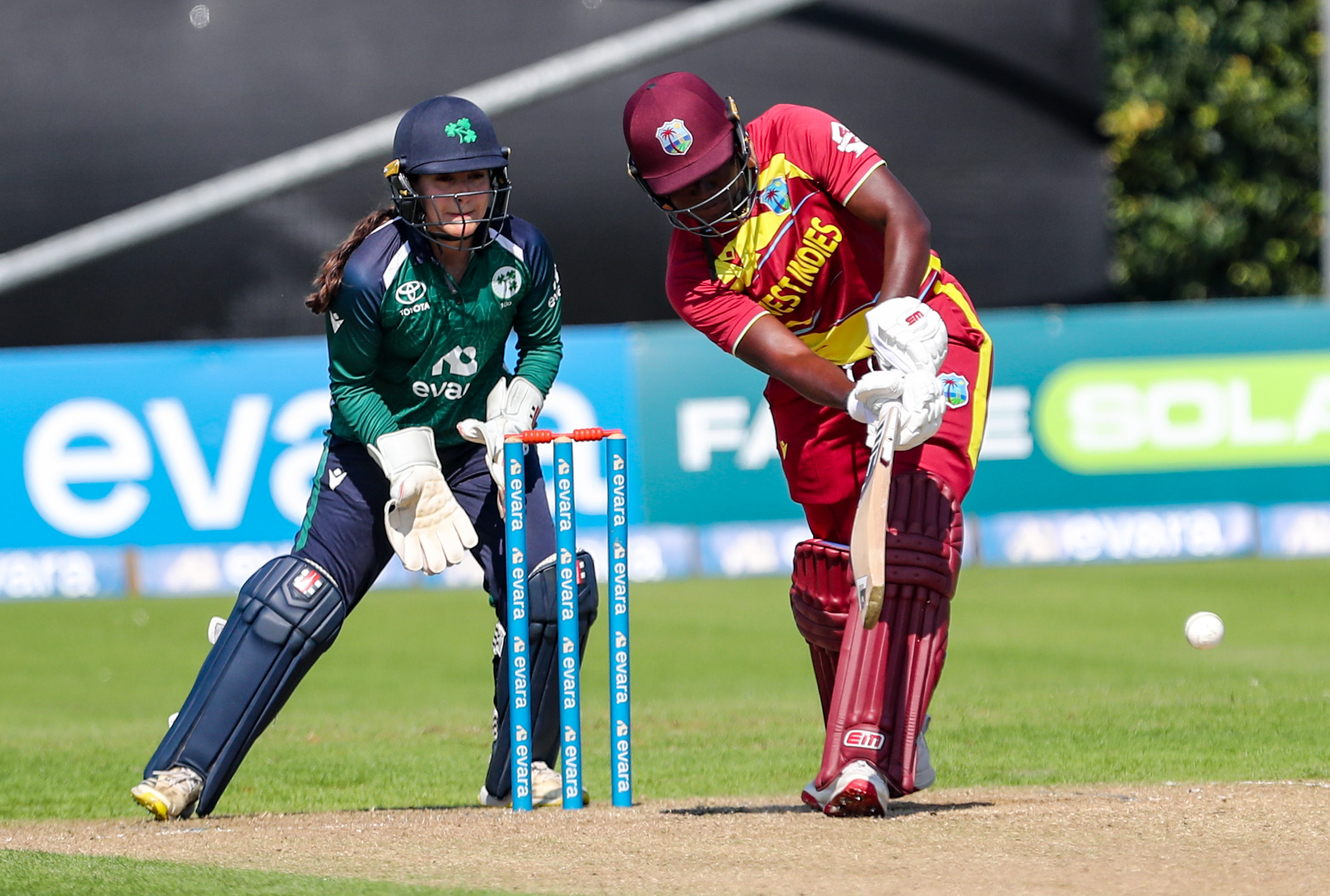
    ST. JOHN’S, Antigua – June 18, 2026 – Cricket West Indies (CWI) has announced a landmark new sponsorship agreement that pairs the West Indies Senior Women’s National Cricket Team with global urban-inspired cosmetics label BRONX COLORS for the upcoming ICC Women’s T20 World Cup 2026, hosted across England and Wales. Under the deal, BRONX COLORS will serve as the team’s Official Cosmetics Partner for the full duration of the tournament.

    This collaboration brings together one of the Caribbean’s most beloved and iconic sporting franchises with a beauty brand celebrated industry-wide for its core commitments to inclusivity, authentic self-expression, and empowering confidence. Per the terms of the partnership, BRONX COLORS branding will be featured on the non-leading sleeve of the West Indies Women’s matchday playing shirts for every match the team contests throughout the World Cup.

    Nicknamed the “Maroon Warriors”, the West Indies side has already kicked off their tournament campaign in the group stage, off to a promising start after defeating defending champions New Zealand in their opening fixture. The team enters the global competition with clear ambitions: advancing past the group stage into the knockout rounds, and ultimately challenging for the sport’s most prestigious T20 world title.

    Dario Barthley, CWI Event Manager who spearheaded negotiations to bring the partnership to fruition, welcomed BRONX COLORS into the West Indies cricket community, emphasizing the collaboration’s role in driving the ongoing global expansion of women’s cricket. “Cricket West Indies is absolutely delighted to welcome BRONX COLORS as an official partner of our Senior Women’s Team for this ICC Women’s T20 World Cup,” Barthley shared in a statement following the announcement. “This partnership is clear proof of the growing commercial appeal of women’s cricket, and the incredible value our players continue to build both on the pitch and beyond it. BRONX COLORS stands for confidence, individuality, and inclusivity – all traits that our women’s team embodies every single day. We are excited to work together through the tournament and build a long-term relationship that highlights both the unique personalities of our players and the shared values of both our organizations.”

    Tanita Caroline Le Roux, Head of Sales, Development & Communications at BRONX COLORS, echoed the enthusiasm for the cross-industry partnership, noting the strong alignment between the brand’s mission and the team’s identity. “We are incredibly proud to partner with the West Indies Senior Women’s Team during this landmark global moment for women’s cricket,” Le Roux said. “At BRONX COLORS, we have always believed that makeup is not about achieving perfection – it is a tool for confidence, identity, and self-expression. Modern beauty shoppers want more than just coverage; they seek quality, performance, accessible value, and products that help them show the world who they truly are. As color cosmetics rebounds and bold makeup makes a comeback in a more intentional, wearable, social-first format, this partnership lets us celebrate women who live confidence, individuality, and fearless expression both on and off the field. The West Indies Women embody energy, pride, resilience, and cultural power – all values that sit at the very core of the BRONX COLORS brand.”

    The new partnership marks another milestone in CWI’s ongoing strategy to boost the commercial profile of women’s cricket, while creating targeted, meaningful opportunities for aligned brands to connect with the passionate, global fanbase that follows West Indies cricket around the world.

  • Derde helft WK 2026:  Dag 8 – Mexico favoriet, Afrika viert historisch succes

    Derde helft WK 2026: Dag 8 – Mexico favoriet, Afrika viert historisch succes

    As the 2026 FIFA World Cup co-hosted across North America enters its eighth day, four high-stakes group stage fixtures are scheduled to take place on June 18, with teams fighting to secure their spots in the knockout round of the tournament. The day’s action kicks off at Atlanta Stadium in Atlanta, Georgia, where Czechia will square off against South Africa at 13:00 local time. Next, Switzerland will face Bosnia and Herzegovina at Los Angeles Stadium in California at 16:00, followed by a clash between co-host Canada and Qatar at Vancouver’s BC Place Stadium at 19:00. The headline matchup of the day will close out the schedule, as Mexico takes on South Korea at Guadalajara Stadium in front of a raucous home crowd at 22:00 local time. Ahead of kickoff, one Mexican supporter already captured global attention, posing in the stands with a replica of the FIFA World Cup trophy while wearing a traditional lucha libre wrestling mask.

    Looking ahead to the day’s marquee fixture, Mexico enters its Group A matchup against South Korea with historical momentum on its side. The two sides have met twice previously at World Cup tournaments, with Mexico claiming victory on both occasions — most recently a 2-1 win during the 2018 World Cup in Russia. Both nations got their 2026 campaigns off to a strong start with opening match wins, boosting their early knockout stage hopes, but oddsmakers and analysts still peg Mexico as the clear favorite to pick up three points on home soil.

    In the day’s opening fixture, Czechia and South Africa will meet for just the second time in senior international history. South Africa has a surprisingly strong track record against European opposition at the World Cup, including a famous 2-1 group stage win over eventual champions France during the 2010 tournament it hosted. The Bafana Bafana have dropped only one of their last four World Cup matches against European sides. For Czechia, this will only be its second World Cup match against an African opponent, and its first ended in a disappointing 2-0 loss to Ghana in 2006.

    Switzerland and Bosnia and Herzegovina will lock horns for the first time ever at a World Cup, with the only prior meeting between the two nations coming in a 2016 friendly match hosted in Zurich. On that occasion, Bosnia and Herzegovina claimed a 2-0 win behind goals from legendary duo Edin Dzeko and Miralem Pjanic. Despite that past result, Switzerland is favored to claim all three points in their 2026 group stage encounter.

    Closing out the day’s action before the Mexico-South Korea kickoff, co-host Canada will face Qatar, and historical trends heavily favor the North American side. In the three previous instances a World Cup host nation has faced an AFC (Asian Football Confederation) member at the tournament, the host has walked away with a win every time: Mexico beat Iraq in 1986, France defeated Saudi Arabia in 1998, and Russia also downed Saudi Arabia in the 2018 tournament opener.

    Beyond Matchday 8’s scheduled fixtures, the tournament has already delivered no shortage of historic moments, breakout performances and talking points through its first week of action. The race for the Golden Boot, awarded to the tournament’s top goalscorer, already has a clear early leader: Lionel Messi netted a hat-trick in his opening match, putting him three goals clear of seven chasing players who have each scored one goal so far, including global superstars Kylian Mbappe of France, Erling Haaland of Norway and England’s Harry Kane.

    One of the biggest historic milestones of the tournament so far came from the Democratic Republic of the Congo (DRC), which notched its first ever World Cup goal through Brentford forward Yoane Wissa in a stunning 1-1 draw with Portugal. The result marked DRC’s first World Cup appearance in 52 years, sparking jubilant celebrations among Congolese fans across the globe. Another standout early performance came from Colombia, which opened its Group K campaign with a confident 3-1 win over World Cup debutant Uzbekistan. Liverpool winger Luis Diaz was the star of the match, notching an assist for Daniel Munoz’s opening goal and scoring Colombia’s second after halftime. Uzbekistan briefly pulled level through winger Abbosbek Fayzullaev, but the South American side regained control to lock in three full points. The win gives Colombia a major early boost as it looks to reach the knockout stage after missing out on qualification for the 2022 World Cup in Qatar.

    The first week of the tournament has already delivered several stunning upsets that have shaken up group standings. Beyond DRC’s draw with Portugal, Cape Verde earned a historic point against defending champions Spain in a surprise draw, while Iran and New Zealand also played out an unexpected stalemate in their opening fixture.

    A widely noted positive theme of the 2026 tournament has been the growing diversity on display across competing squads. Top European sides including England, France, Spain and Sweden have fielded rosters made up of players from a wide range of religious, cultural and ethnic backgrounds, a trend that football experts have praised as a powerful positive example amid ongoing global societal debates around immigration and integration.

    One of the more surprising storylines of the tournament’s opening week has been the slow start for Cristiano Ronaldo, who is making his record sixth World Cup appearance but has yet to find the back of the net, while his fellow global superstars Messi, Mbappe, Haaland and Kane all opened their goal accounts in their first matches.

    Off the pitch, FIFA’s new heat protection policy, which adds formal drink breaks during matches to help players cope with high summer temperatures across North America, has sparked ongoing controversy. Critics argue that the breaks disrupt the natural flow of matches and give teams extra opportunities to make unplanned tactical adjustments, disrupting competitive balance. FIFA has defended the policy, emphasizing that player health and safety is its top priority.

    This year’s tournament has also made history for African football, with a record six African nations qualifying for the final group stage. Despite facing pre-tournament challenges including logistical hurdles and visa processing issues for teams and fans, African sides have enjoyed overwhelming support from their large diaspora communities across North America. While the vuvuzela horns that became a global icon during the 2010 South Africa World Cup are not a common sight this year, the passionate energy and atmosphere brought by African fans remains as vibrant as ever.

  • Derde helft WK 2026: Waarom voetbal veel meer zegt over mensen dan over doelpunten

    Derde helft WK 2026: Waarom voetbal veel meer zegt over mensen dan over doelpunten

    The FIFA World Cup is far more than a 90-minute contest of athletic skill and tactical maneuvering. For billions of fans across the globe, this global quadrennial tournament is never experienced through just the lens of on-pitch action. Every individual watches the game filtered through their own personal background: ancestral history, cultural origin, family ties, core beliefs, and even deep-seated political or economic views. One fan may dissect every tactical shift and defensive formation, while another sees a decades-spanning historical confrontation. Some align their support with a national team based on their familial roots, others cheer for the side boasting their favorite star, and many simply tune in for the pure joy of beautiful, fluid soccer. In this way, the World Cup always reveals more about the people watching it than it does about the goals scored on the pitch.

    Professional soccer analysts and coaches approach matches very differently than casual supporters. Where industry insiders focus on high pressing metrics, possession rates, off-ball running lanes, counterattack transitions, and tactical discipline, average fans often fixate on raw tension, emotional highs, and goals. A head coach may leave a 0-0 draw praising a perfectly executed game plan, while a supporter sitting on their couch at home will dismiss the same match as unbearably boring for its lack of scoring. But beyond the narrow framework of professional sports analysis, countless other perspectives shape how fans experience the tournament, and history plays a far larger role than most observers initially recognize.

    Matches between nations with intertwined shared histories almost always carry extra emotional weight, not because current players bear responsibility for past events, but because fans bring their own family memories, intergenerational experiences, and historical traumas or connections to the game. Take for example a group stage matchup between Senegal and France: while some fans see only an exciting clash of talented teams, others cannot separate the contest from the historical relationship between a former colonial power and its one-time colony. The same dynamic plays out for any match between nations whose histories are deeply intertwined, turning the soccer pitch into a temporary meeting ground where the past and present collide.

    Migration and diaspora communities also reshape how fans engage with the World Cup. Today, hundreds of millions of people live in a country different from the one where their parents or grandparents were born, creating often complex dual loyalties. A person may feel fully at home in their country of residence, while still retaining a deep emotional bond with the nation of their ancestry. This reality is visible across every World Cup: Moroccan fans based in the Netherlands, Turkish communities in Germany, Senegalese diaspora members in France, Mexican supporters in the United States, and countless other displaced and migrant communities all experience the tournament through a unique, personal lens shaped by their dual identity.

    This dynamic is particularly visible in Suriname, where attitudes toward the Dutch national team split sharply along lines of history and connection. For many Surinamese fans, supporting the Netherlands feels natural, shaped by close family ties, shared cultural bonds, and the long legacy of Suriname-born players who have defined Dutch soccer for decades. For others, however, attitudes toward the Dutch side are shaped by the shared colonial history between the two nations, and current social and political debates ranging from migration policy to visa restrictions. For these fans, a simple group stage match becomes far more than a sporting contest — it becomes a mirror that reflects broader societal tensions and long-held grievances.

    Beyond identity and history, some fans completely ignore national borders to center their support around individual star players. It matters little to these fans whether their favorite athlete plays for Argentina, Portugal, France or Brazil; what draws their support is the player’s individual skill, style of play, and charisma. For these supporters, the national team jersey becomes secondary to the unique talent of the soccer star they follow.

    Still other fans care most about the entertainment value of the game, prioritizing the aesthetic beauty of skilled soccer over final results. They delight in technical masterclasses, unexpected attacking runs, spectacular goalkeeping saves, and the electric atmosphere of packed stadiums. For them, soccer is first and foremost a global form of entertainment, and how a match is played often matters more than who wins it.

    A growing segment of fans and observers also engage with the World Cup through an economic lens. For this group, the multi-billion dollar industry behind modern soccer — from sponsor deals and broadcast rights to advertising revenue and the global transfer market — is just as much a part of the spectacle as 90 minutes of play on the pitch. For other fans, sports betting and match predictions add an extra layer of personal investment to every contest.

    The World Cup’s unique magic lies in its ability to bring all these wildly different perspectives together. Billions of people tune in to watch the same match footage, but every individual walks away with a completely different story. No other global sport can stir up such a diverse range of emotions, memories and expectations across the entire planet.

    Perhaps the most profound takeaway from every World Cup is this: the ball is round for everyone, the pitch is the same size for every team, the rules of the game never change — but the lens through which each person watches and experiences the tournament varies completely from one individual to the next. It is this diversity of perspective that makes soccer far more than just a game. It tells a story of who we are, where we come from, and the personal and collective histories we carry with us.

  • St. Kitts and Nevis’ Jahzara Claxton drafted by Trinbago Knight Riders for 2026 WCPL – WIC News

    St. Kitts and Nevis’ Jahzara Claxton drafted by Trinbago Knight Riders for 2026 WCPL – WIC News

    Rising Caribbean cricket talent Jahzara Claxton, a 20-year-old all-rounder hailing from St. Kitts and Nevis, has earned a coveted selection to the Trinbago Knight Riders squad for the 2026 edition of the Women’s Caribbean Premier League (WCPL), marking another major milestone in her rapidly progressing career.

    The announcement comes just weeks after Claxton earned her first call-up to the senior West Indies Women’s national team, cementing her status as one of the most promising young prospects in regional women’s cricket. Born in Sandy Point, St. Kitts and Nevis in March 2006, Claxton has steadily built her reputation across age-group and development squads, previously turning out for the Leeward Islands, West Indies Under-19 Women, and West Indies A Women before breaking into the senior international setup. A skilled left-handed batter and right-arm fast-medium bowler, she brings versatile on-pitch utility to any squad she joins.

    Claxton earned her place in the Trinbago Knight Riders roster during the official player allocation process held ahead of the 2026 tournament. She will share the dressing room with some of the most established names in West Indies cricket, including star all-rounder Deandra Dottin and experienced slow bowler Karishma Ramharack, creating a valuable opportunity for the young prospect to learn from seasoned international competitors.

    The 2026 WCPL, scheduled to run from September 5 to 15 at Barbados’ iconic Kensington Oval, marks a historic expansion for the tournament. For the first time since the league’s launch, the competition will feature four competing franchises instead of three, adding the newly added Jamaica Empress to the existing lineup of Barbados Tridents, Guyana Amazon Warriors, and Trinbago Knight Riders. All matches will be hosted at Kensington Oval, with tournament organizers structuring the expanded 15-player squad per side format to create more competitive opportunities for up-and-coming female cricketers across the Caribbean. Overseas player signings for all four squads are expected to be confirmed in the coming weeks.

    The full confirmed 2026 Trinbago Knight Riders squad, to date, includes: Karishma Ramharack, Deandra Dottin, Jahzara Claxton, Jannillea Glassgow, Steffie Soogrim, Earnisha Fontaine, Samara Ramnath, Ameila Khan, Brianna Harricharan, and Sainavi Kambalapalli. The full confirmed squads for the other three franchises are also already locked in for domestic players: Barbados Tridents’ roster includes Hayley Matthews, Qiana Joseph, Afy Fletcher, Shawnisha Hector, Shabika Gajnabi, Mandy Mangru, Cherry-Ann Fraser, Naijanni Cumberbatch, Asabi Callender, and Amrita Ramthal; Guyana Amazon Warriors will field Shemaine Campbelle, Realeanna Grimmond, Ashmini Munisar, Shamilia Connell, Eboni Brathwaite, Sheneta Grimmond, Chedean Nation, Reniece Boyce, Latoya Williams, and Tilleya Madramootoo; and Jamaica Empress’ domestic core is made up of Chinelle Henry, Stafanie Taylor, Aaliyah Alleyne, Rashada Williams, Zaida James, Djenaba Joseph, Kate Wilmott, Celina Whyte, Abigail Bryce, and Shriya Jairam.

    For Claxton, the WCPL selection represents yet another critical step forward in her burgeoning career. With senior international experience already under her belt ahead of the September tournament, the St. Kitts and Nevis native is widely expected to be a key impact player for the Trinbago Knight Riders when the expanded 2026 tournament gets underway.