分类: sports

  • Domestic women’s T20 cricket gets underway

    Domestic women’s T20 cricket gets underway

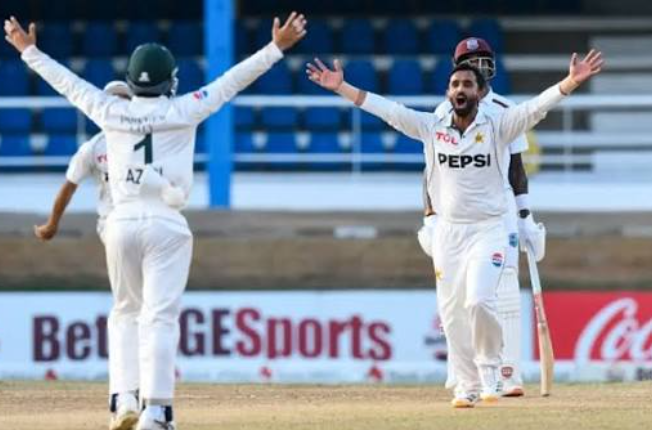
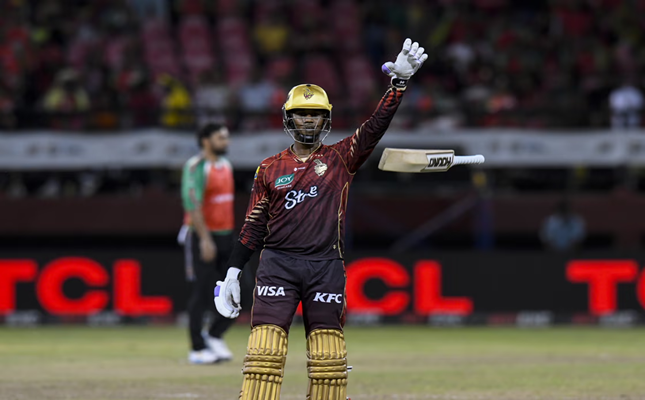
    After a multi-year hiatus for local elite women’s cricket in Saint Lucia, competitive action finally returned on Saturday, July 4, as the first matches of the island’s new Women’s T20 Tournament got underway at the La Fargue Playing Field, hosted in the district of Choiseul. This 2024 edition marks the first official local women’s cricket tournament held on the island since 2021, bringing much-anticipated competitive play back to emerging female cricketers across the country.

    The opening fixture of the tournament drew a lively local crowd for a hotly contested west coast derby between host side Choiseul and nearby district Laborie. In a rain-shortened 15-over per side format, Laborie won the toss and elected to bat first, posting a competitive total of 101 runs for the loss of 8 wickets. The innings was anchored by a standout individual performance from batter Skyy Smith, who remained unbeaten at the crease with a half-century off 43 deliveries, smashing six boundaries and one maximum over the rope to carry her side’s total. Choiseul’s spin bowler Swaylin Williams turned in a dominant performance with the ball, claiming three Laborie wickets for just eight runs across her three overs, putting the hosts firmly in control heading into their run chase.

    A key source of Choiseul’s success came from unforced errors by Laborie, which conceded 34 extra runs through no-balls, wides and other deliveries that gifted free runs to the host batting line-up. Though Choiseul lost early wickets, an unbroken late-wicket partnership between Roylin Cooper and Alicia Herman steered the side across the finish line with overs to spare. Cooper finished unbeaten on 23 runs off 18 deliveries, including two fours, while Herman contributed a steady 22 runs off 29 balls. Choiseul reached the required 102 runs for the loss of just three wickets in 12.2 overs, securing a seven-wicket victory in the opening derby.

    The second opening match of the tournament saw the Saint Lucia National Cricket Association (SLNCA) Development XI face off against South Castries, in another 15-over contest that went down to the final over. The Development side batted first and put up an imposing total of 147 runs for the loss of seven wickets, powered by a sensational opening partnership from star batters Namiah Marcellin and Natalia Phillip. Marcellin top-scored for the side with 60 runs off 44 deliveries, hitting seven fours and one six, while Phillip provided explosive support with 41 runs off just 26 balls, including five fours and a six.

    In response, South Castries’ chase got off to a flying start thanks to a quickfire innings from West Indies international player Nerissa Crafton, who led the line with 35 runs off only 16 deliveries, knocking three fours and two sixes before being dismissed. With Crafton back in the pavilion, South Castries’ batting order struggled to maintain the required run rate, even as Krushner Joseph turned in a strong all-round performance for the side, claiming two wickets for 21 runs across three overs and taking a sharp catch in the field. Though the Development XI conceded an uncharacteristic 46 extra runs, the team’s leading stars Marcellin and Phillip delivered with the ball as well as the bat, each claiming two wickets. Marcellin notched two wickets for just seven runs in 1.5 overs, while Phillip took two wickets for 24 runs across three overs and completed a run out to cap her all-round performance. South Castries were bowled out for 140 runs in 14.5 overs, falling just seven runs short of the target and giving the Development XI its first win of the tournament.

  • Saint Lucia earn six medals at ANOCES Athletics

    Saint Lucia earn six medals at ANOCES Athletics

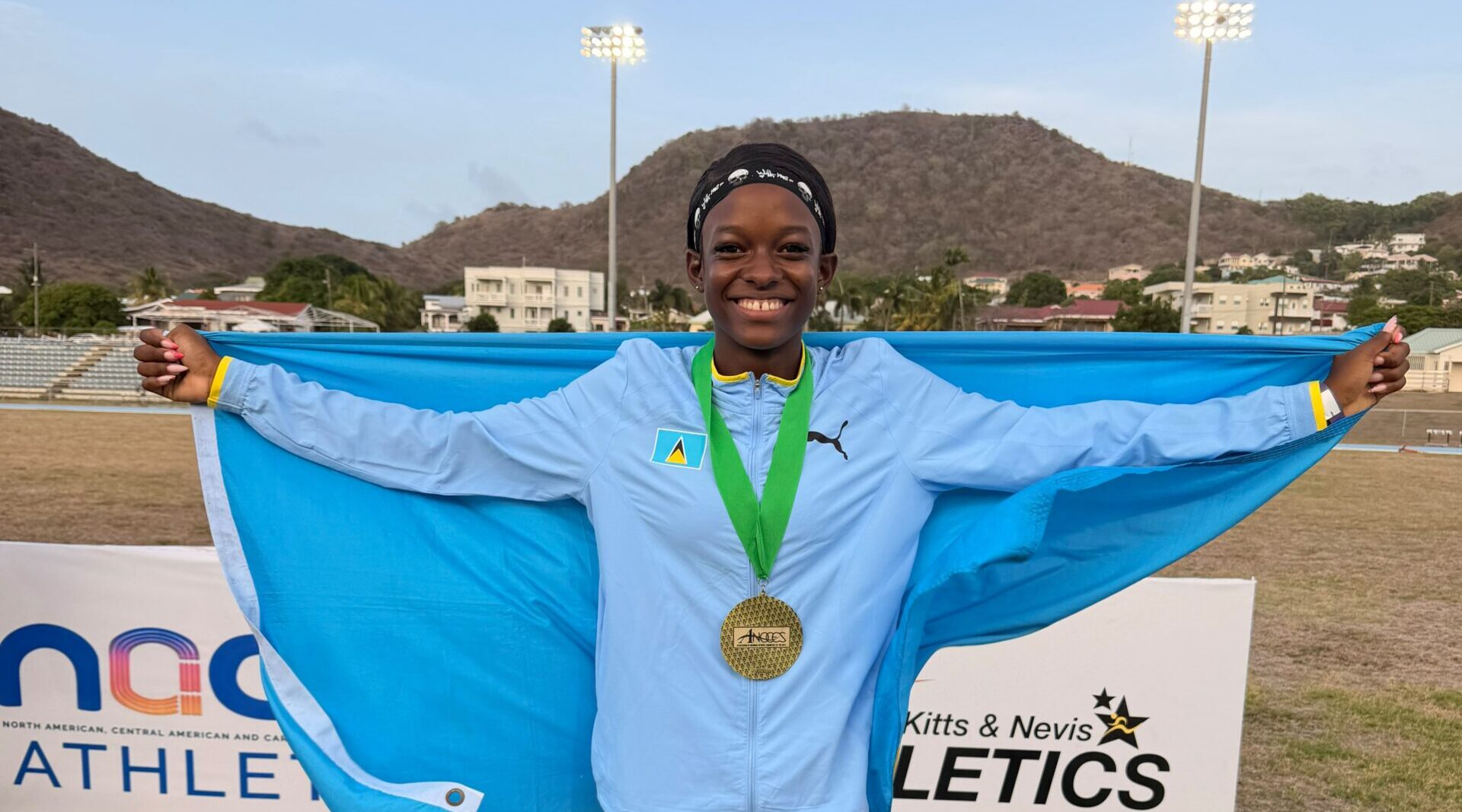
    Against all odds, a six-athlete delegation from the Caribbean island nation of Saint Lucia delivered a standout performance at the 2026 ANOCES Athletics Championships, securing six total medals including three golds to cap an unforgettable weekend of competition in Basseterre, St Kitts & Nevis. Held 4–5 July at the Kim Collins Athletic Stadium, the regional meet brought together top track and field talent from across the Organisation of Eastern Caribbean States (OECS), organized by the Association of National Olympic Committees of the Eastern Caribbean. Out of nine competing nations, Saint Lucia – with one of the smallest rosters in the entire field – claimed seventh place overall in the team standings, an achievement made all the more impressive by its dominant individual results.

    Leading the charge for Saint Lucia was 17-year-old sprint phenom Jady Emmanuel, a native of Laborie who already carried a reputation as one of the Caribbean’s rising young stars following her double gold win at the 2025 CARIFTA Games. Emmanuel did not disappoint, shattering both the venue record and her own personal best to take gold in the women’s 100m final with a blistering time of 11.39 seconds. Held directly to a final on Sunday, the race saw Emmanuel outpace second-place finisher Geolyna Dowdye of Antigua & Barbuda (11.47) and bronze medalist Soniya Jones (11.64) to claim the top spot. With a legal +0.7 m/s tailwind backing her run, Emmanuel’s time ranks as the 10th fastest ever posted by an Under-18 female sprinter globally this year. The result also punched her ticket to next month’s World Athletics Under-20 Championships in Eugene, Oregon, marking a major career milestone for the teen talent. Prior to this meet, Emmanuel held Saint Lucia’s existing national Under-18 100m record with a 11.50-second run posted in 2025.

    Emmanuel was far from the only Saint Lucia athlete to stand atop the podium at the championships. Joy Edward, a thrower competing for the University of Charleston, claimed the women’s shot put gold in dominant fashion. On her very first attempt, Edward launched the shot 14.56m – a mark that would ultimately hold up for gold. Though the result fell short of her own national record of 15.63m, Edward was the only competitor in the field to record a throw over 14 meters, hitting the 14-meter benchmark on four of her six total attempts.

    Rounding out Saint Lucia’s three gold medals was 400m runner Hannah Charles, who trains in Jamaica. Running from Lane 5, Charles crossed the finish line in 54.86 seconds, finishing well clear of silver medalist De’Cheynelle Thomas, a former CARIFTA champion representing host nation St Kitts & Nevis, to take the top spot.

    The island’s medal haul began on the opening day of competition, when Naya Jules claimed Saint Lucia’s first medal of the meet with a bronze-winning throw of 41.98m in the women’s javelin. Two silvers were added to the team’s total on the final day of competition. Khailan Vitalis, who is set to represent Saint Lucia at both the upcoming Commonwealth Games and Central American and Caribbean Games, took silver in the men’s sprint hurdles, finishing in 14.43 seconds behind winner Tejaun Webbe of host St Kitts & Nevis, following a late non-start from Grenada’s Kyle Nedd that left the field undersubscribed. In the men’s 100m, Stephan Stephen earned silver after entering the final as the top qualifier. Stephen clocked 10.37 seconds in the preliminary round to lead the field, before running 10.41 seconds from Lane 4 in the final to finish second behind Jaleel Croal of the British Virgin Islands, who took gold in 10.19 seconds.

    In the final team rankings, host St Kitts & Nevis claimed first place with 180 total points, followed by Antigua & Barbuda in second with 171 points. St Vincent & the Grenadines took third with 134 points, just edging out the British Virgin Islands (130 points) for the podium spot. Despite sending just six competitors, Saint Lucia amassed 70 total points to secure seventh place in the final standings, turning a small roster into one of the meet’s most talked-about successful campaigns.

  • Derde helft WK 2026: Kaapverdië verloor van Argentinië, maar won de wereld

    Derde helft WK 2026: Kaapverdië verloor van Argentinië, maar won de wereld

    Against all odds, a tiny African island nation of just over 590,000 people achieved a feat this World Cup that many global football powerhouses can only dream of: capturing the affection and admiration of millions of fans around the world. This is not a story of lifting the biggest trophy in world sport, but of how first-time World Cup qualifier Cape Verde turned a knockout-stage clash against defending champions Argentina into a global moment that stretched far beyond the 90 minutes on the pitch.

    Cape Verde’s 2026 World Cup run was historic from the start. For the first time in the nation’s history, the tiny archipelago off the coast of West Africa qualified for football’s biggest tournament. In a stunning debut, they advanced straight through the group stage to the knockout round, setting up a blockbuster round of 16 match-up against Lionel Messi’s Argentina, the defending World Cup champions.

    Few gave the untested Cape Verde side a chance against the tournament favorites, but they defied every expectation. The underdogs pushed Argentina to the absolute brink, forcing the reigning champions to dig deep to secure a narrow 3-2 victory. After the final whistle, Argentina head coach Lionel Scaloni openly acknowledged that his side had fought an incredibly tough battle to earn the win. Messi himself, a global icon of the sport, sought out Cape Verde goalkeeper Vozinha to personally praise his performance, telling the keeper the entire nation should be proud of what their team had accomplished.

    Praise for Cape Verde poured in from across the global football community. Former stars Thierry Henry and Zlatan Ibrahimović called the side heroes, hailing them for putting on such an impressive display for their country. International media outlets immediately ranked Cape Verde as one of the most beloved surprise stories of the entire tournament.

    Beyond the pitch, the run carries deep meaning for Cape Verdean diaspora communities thousands of kilometers from the island nation. In Rotterdam, Netherlands, often called the “tenth island” of Cape Verde due to its large, generations-old Cape Verdean community, the connection to the national side ran especially deep. The first Cape Verdean migrants arrived in the port city as sailors in the 20th century, many settling permanently to build new lives; today, tens of thousands of people of Cape Verdean descent call Rotterdam home. That diaspora history was directly represented on the pitch: five of Cape Verde’s World Cup squad were born in Rotterdam, and another six were born elsewhere in the Netherlands. For local residents, that meant cheering for Cape Verde felt like cheering for a second home team. Local cafes and event spaces were packed to capacity during the Argentina match, with fans of all ages cheering nonstop through the full 90 minutes and extra time. When the final whistle ended their run, disappointment was nowhere to be found – only overwhelming pride. This squad was about more than football: it represented a shared history of migration, perseverance and cross-continental connection.

    One player who emerged as a global fan favorite was 40-year-old goalkeeper Josimar Dias, better known by his nickname Vozinha. The veteran keeper turned in a string of spectacular saves throughout the group stage and the tense knockout clash with Argentina. Despite Cape Verde’s elimination, international media hailed Vozinha as one of the tournament’s biggest breakout stars, with many analysts ranking him as the best goalkeeper of the entire knockout round.

    When the squad returned home to Praia, Cape Verde’s capital, they were greeted with a celebration fit for world champions. Thousands of fans lined the roads from the airport and packed the terminal, singing, dancing, waving national flags and cheering as if the team had lifted the World Cup trophy. To many observers, this reaction might seem unexpected for a team eliminated in the first knockout round. But the moment underscores a core truth of sport: success is not always measured by trophies.

    For a small nation that long flew under the radar on the global football stage, this World Cup run meant far more than a handful of matches. Millions of people around the world learned of Cape Verde not for its tropical beaches and tourism, but for the courage, skill and resilience of its national team. The story of Cape Verde’s 2026 World Cup run also highlights the deeper stories football can tell: stories of migration and identity, of communities separated by thousands of kilometers that still feel connected as one, of young people born in Rotterdam, Lisbon or Boston who proudly wear the shirt of their parents’ homeland. It also reminds the world that winning is not always measured in goals or trophies.

    Argentina left the pitch with the win, but Cape Verde left with something far more precious: global respect, widespread admiration, and a permanent place in the hearts of millions of football fans across the world.

  • Column: Het WK als spiegel van het leven

    Column: Het WK als spiegel van het leven

    For weeks now, the entire world has had one eye fixed firmly on the FIFA World Cup, a global quadrennial spectacle that stretches far beyond the boundaries of a simple sporting tournament. Across 90 minutes of play, under bright stadium lights and in the living rooms of millions of fans, the World Cup tells a universal story of hope, resilience and grit — themes that resonate more deeply than ever at a moment when global stability feels increasingly fragile.

    For billions of Brazilian football fans, the national team’s early exit in the round of 16 hit harder than most could have expected. For decades, Brazil was synonymous with beautiful, fluid football and an aura of invincibility that left opposing teams trembling before they even stepped onto the pitch. While the last three World Cup squads have not lived up to that legendary standard, the unwavering passion of the players and the Brazilian people for the beautiful game and their dream of lifting the trophy remains undimmed. This is the core power of sport: it is never only about triumph. It is about persistence, about getting back up after defeat, and about holding onto belief even when the odds are stacked against you.

    If you look beyond the green grass of the tournament pitches, the World Cup’s meaning grows even richer. In Gaza, a region torn apart by months of war and crippling uncertainty, Palestinian fans celebrated Morocco’s historic victories with unbridled joy. Amid the destruction and chaos of daily life, that moment of shared celebration offered a rare breath of peace, a small sliver of joy to hold onto when hope feels scarce. For Gaza’s people, this World Cup became a beacon, a quiet reminder that even in the deepest darkness, light can still break through.

    The Iranian national team also arrived at the tournament carrying an extraordinary weight, facing immense obstacles and widespread doubt on their road to Qatar. Yet they stepped onto the global stage as heroes, welcomed home with open arms regardless of their final results. Their journey is a powerful testament to perseverance and national pride, proof that sport can transcend political divides and break down barriers. For the Iranian team and their supporters, the World Cup was never just a series of matches — it was a symbol of hope and shared unity.

    Even tiny Cape Verde, a small island nation with barely half a million people, turned the global football spotlight into a stage to prove that courage and determination matter far more than size or global reputation. The underdog side pushed powerhouse Argentina to the absolute limit, turning unknown players into household names and putting their small nation firmly on the global football map. This World Cup has reinforced a timeless truth: respect and recognition are not reserved only for the world’s sporting giants. They belong to every team and every person brave enough to dream big and fight for their goal.

    At the same time, this tournament has also been a farewell. For a generation of the world’s biggest football superstars, this is their final appearance on the sport’s biggest global stage. Cristiano Ronaldo chases one last shot at glory with Portugal, while Lionel Messi dances his final World Cup tango with Argentina, bringing a passion to the pitch that will inspire generations of players to come. Neymar’s dream of leading Brazil to a sixth World Cup title crumbled early, a harsh reminder that even the biggest stars face the inherent vulnerability of sport. Meanwhile, Luka Modric continues to inspire his team and his country with tireless dedication, a beacon of experience and strength in a rapidly changing football landscape.

    These iconic players, who turned childhood dreams into global legend, are now confronting the quiet reality that their time on the world’s biggest stage is slowly drawing to a close. This makes the World Cup a beautiful paradox: it gives rising new stars a platform to shine, while also bidding farewell to the legends who defined the game for a generation, clearing the way for a new era. It reminds us that all dreams are vulnerable — they can come true, but they can also fall apart. And it is exactly that vulnerability that makes the beautiful game so deeply human, so universally relatable to people across every corner of the globe.

    In an era where war, poverty and uncertainty have become daily reality for billions of people around the world, this World Cup has shown that joy, hope and connection can be found anywhere: on the pitch, in packed stadiums, and in the hearts of millions of fans across the world.

    Brazil’s early fall, Morocco’s unexpected triumph, Iran’s defiant heroes and Cape Verde’s fearless underdog run are all chapters in this larger story. It is a story that reminds us that football is never only about winning or losing. It is about holding onto belief, and never stopping dreaming. In these divided, uncertain times, it is hope that binds us together, it is hope that pushes us forward, and it is the persistence to keep going that lets us prevail — both on the football pitch, and off it.

  • Derde helft WK 2026: Engeland overleeft Mexicaanse storm en rekent af met Azteca-trauma

    Derde helft WK 2026: Engeland overleeft Mexicaanse storm en rekent af met Azteca-trauma

    Sunday night at the 2026 FIFA World Cup delivered one of the most dramatic and emotionally charged matches in tournament history, as Thomas Tuchel’s England side fought tooth and nail to seal a 3-2 round of 16 victory over host nation Mexico at a roaring Estadio Azteca, booking their spot in the quarterfinals despite playing more than 30 minutes with 10 men. For England, the win was far more than just a place in the final eight: it closed a painful 40-year chapter in the nation’s football history, written at the very same stadium. It was at the 1986 World Cup that England fell to Argentina in a legendary quarterfinal clash at Azteca, where Diego Maradona scored both the infamous “Hand of God” goal and the iconic “Goal of the Century” – a defeat that has stood as one of the most bitter disappointments in English football ever since. This time, England left Mexico City with their heads held high, exorcising the ghosts of 1986.

    The match got off to a chaotic, physical start, with Declan Rice picking up a yellow card after just 60 seconds of play. England struck twice in quick succession just before halftime, putting themselves in a strong position early. Jude Bellingham opened the scoring in the 36th minute after a brilliant build-up from Bukayo Saka, and doubled the Three Lions’ lead barely two minutes later, tapping home a pinpoint cross from captain Harry Kane. Mexico did not fold, however, and Julián Quiñones cut the deficit in half right before the halftime whistle, giving the sold-out home crowd a spark of hope.

    The momentum looked set to swing completely in Mexico’s favor just after the break, when English defender Jarell Quansah was shown a straight red card in the 54th minute, forcing Tuchel’s side to play out the remaining 36 minutes plus stoppage time a man down. Against all odds, England extended their lead just six minutes later, as Harry Kane found the back of the net to make it 3-1.

    Mexico kept pressing, and Raúl Jiménez narrowed the gap to 3-2 in the 69th minute, turning the final stretch into a relentless siege on England’s goal. What followed was a masterclass in resilient, gutsy defensive football. For the final half hour of regulation time plus an astonishing 11 minutes of stoppage time, England barely crossed the halfway line, with every outfield player dropping behind the ball to protect their lead. There were no more attacking forays: every challenge, every aerial duel, every single second on the clock became a fight for survival.

    Match statistics highlight just how one-sided the late pressure was: England mustered only five total shots on goal across the entire 90-plus minutes, while Mexico launched 19 attempts on target or toward goal. Wave after wave of Mexican attack crashed against England’s defensive line, but goalkeeper and backline held firm time after time, with every last-ditch save celebrated as fiercely as a goal by the drained English players.

    For Mexico, the defeat is yet another devastating disappointment, crushing the host nation’s long-held dream of finally breaking through to the World Cup quarterfinals for the first time in decades. Buoyed by a raucous crowd of nearly 90,000 passionate fans that turned Estadio Azteca into a roaring sea of supporters, hope ran higher than ever that this would be the year El Tri broke their decades-long quarterfinal curse. Since reaching the quarterfinals as host nation back in 1986, Mexico has failed to advance past the round of 16 in every World Cup they have entered – a drought that remains unbroken even on home soil in 2026.

    When the final whistle blew, tears flowed across the stadium for Mexico. Fans hugged each other and wept in the stands, while Mexican players collapsed exhausted on the pitch, their World Cup journey over before the knockout stage’s final eight. England celebrated their hard-won victory with quiet composure, well aware that they had not only claimed a quarterfinal ticket but also laid to rest a shadow that had hung over English football for 40 years. For Mexico, there was only the painful, familiar conclusion: the quarterfinal curse still holds.

  • Sports : 3 Grenadiers from the World Cup visit Haiti

    Sports : 3 Grenadiers from the World Cup visit Haiti

    In a moving display of national pride and unity, Haiti officially welcomed three of its star World Cup Grenadiers back to home soil Sunday, July 5, with an official greeting organized at Cap-Haïtien International Airport. Acting on instructions from Prime Minister Fils-Aimé, a high-level inter-ministerial delegation traveled to the northern airport to extend a warm, official welcome to national players Duckens Nazon, Martin Expérience, and Josué Duverger, who helped represent Haiti on the 2026 FIFA World Cup global stage.

    The welcoming delegation included senior government and local officials: Tourism Minister Stéphanie Smith, Tourism Ministry Director General Sinedie Saintil Dupuy, Youth and Sports Ministry Chief of Staff Innocent Joseph, Minister of Youth, Sports and Civic Action (MJSAC) Pythagore Dumas, Cap-Haïtien Mayor Michel St. Croix, Cap-Haïtien District Deputy Delegate Rulz Angrand, and Haitian National Police Departmental Director Divisional Commissioner Ernst Bouquet Dorfeuille. Youth Ambassador and prominent influencer Ariana Milagro Lafond also joined the event to show public support for the returning athletes.

    All attendees gathered to share gratitude and public support for the three players, turning the airport arrival into a landmark moment of shared patriotic unity for the Caribbean nation. Speaking on behalf of MJSAC, Minister Pythagore Dumas emphasized that the Haitian state owes deep thanks to the athletes, who carried the nation’s flag with honor and distinction throughout the 2026 World Cup tournament. Dumas reaffirmed that the Grenadiers serve as critical role models for young Haitians across the country, adding that their standout performances on the global pitch have strengthened the ministry’s commitment to expanding youth sports development and nurturing emerging homegrown athletic talent.

    In her official remarks to the crowd and the players, Tourism Minister Stéphanie Smith called on all Haitian citizens to follow the Grenadiers’ example, urging “all the sons and daughters of the Nation to become Ambassadors of our heritage, builders of trust, and agents of territorial recovery.” Smith extended warm personal thanks to the three players on behalf of Prime Minister Fils-Aimé and the entire Haitian government, before presenting the athletes with commemorative plaques honoring their historic World Cup appearances.

  • Dowdye, Jones Win Silver and Bronze in OECS 100m Final

    Dowdye, Jones Win Silver and Bronze in OECS 100m Final

    The 2026 OECS Track and Field Championships delivered a historic moment for Antigua and Barbuda’s athletics program on Wednesday, as sprinters Geolyna Dowdye and Soniya Jones climbed the women’s 100 meters podium together at St. Kitts’ Kim Collins Athletics Stadium. Dowdye clocked an impressive 11.47 seconds to claim the silver medal, while Jones followed just behind with a personal-best-equaling 11.65 seconds to take bronze, wrapping up a dominant final performance from the Caribbean nation’s rising sprint stars. The gold medal ultimately went to Saint Lucia’s Jady Emmanuel, who edged out the competition with a winning time of 11.39 seconds to top the results sheet.

    What made the occasion even more meaningful for Antigua and Barbuda was the presence of the country’s own sprint legend Daniel “Bakka” Bailey, who had the honor of placing the medals around the two young athletes’ necks during the official ceremony. Bailey, whose 10.19-second men’s 100m OECS Championship record set back in 2014 still stands unbroken more than a decade later, received a standing ovation from the crowd as he congratulated the new generation of sprint talent on their achievement. The dual medals marked an important addition to Antigua and Barbuda’s overall medal count at this year’s championships, reinforcing the country’s strong showing across all track and field disciplines throughout the week-long competition and highlighting the success of its youth athlete development programs.

  • Maliek Francis Breaks National and Stadium Records to Win OECS Javelin Gold

    Maliek Francis Breaks National and Stadium Records to Win OECS Javelin Gold

    At the Organization of Eastern Caribbean States (OECS) Track and Field Championships hosted in St Kitts and Nevis, Antigua and Barbuda’s star thrower Maliek Francis delivered a career-defining performance that cemented his place in the region’s athletics history. Francis dominated the men’s javelin competition, launching the implement to a stunning 66.11 metres to secure the top spot on the podium.

    This extraordinary winning throw was more than just enough to claim gold: it rewrote two existing records in one go. First, it knocked out the long-standing Antigua and Barbuda national javelin record that had stood for 12 years. The previous mark of 65.70 metres was set by Oraine Brown at the 2012 NACAC Under-23 Championships held in Mexico, and Francis’ effort surpassed it by more than 40 centimetres.

    Beyond the national record, Francis’ throw also claimed the new stadium record at the Kim Collins Athletics Stadium, the host venue of the 2026 championships. He overtook the previous venue best of 60.40 metres set by Abijah Nemdhari, improving the mark by a substantial 5.71 metres.

    The historic win adds a sixth gold medal to Antigua and Barbuda’s overall tally at this year’s championships, and stands out as one of the most impressive and significant achievements in field athletics from the Caribbean nation in over a decade. Coaches and athletics analysts across the region have already hailed Francis’ performance as a breakthrough moment for Antigua and Barbuda track and field, highlighting the rising talent coming out of the small island nation.

  • Derde helft WK 2026: Noorwegen kikkert recordkampioen Brazilië eruit: 1-2

    Derde helft WK 2026: Noorwegen kikkert recordkampioen Brazilië eruit: 1-2

    The 2026 FIFA World Cup has delivered one of its most shocking early upsets, as European underdog Norway pulled off a sensational 2-1 victory over five-time tournament champions Brazil in Saturday night’s Round of 16 clash, eliminating the South American powerhouse before the quarter-final stage. Two late goals from Manchester City superstar Erling Haaland proved the difference for Norway, while a last-gasp penalty converted by Neymar deep into stoppage time came too late to force extra time for Brazil.

    Going into the match, Brazil entered as heavy favorites, with widespread expectations that the Seleção would dominate the dangerous but untested Norwegian side and progress to the last eight as they have done in most major tournaments. Norway had turned in a solid, unspectacular campaign through the group stage, but few predicted they would overthrow one of the global game’s most decorated nations. The first half delivered end-to-end action, with clear chances falling to both sides, and Brazil went into the break level at 0-0 after squandering an early penalty opportunity.

    Brazil started the match far below their expected level, which let Norway seize control of the tempo of play from the opening whistle. As early as the third minute, the Norwegians finished off a rapid counterattack, but the goal was ruled out for offside – a warning sign Brazil failed to heed. In the 12th minute, Kristoffer Ajer brought down Matheus Cunha in the penalty area. Referee Ismail Elfath of the United States initially waved away appeals, but after a VAR review, he awarded Brazil a spot kick. Midfielder Bruno Guimarães stepped up to take the crucial kick, but his effort from 12 yards was saved, leaving the match scoreless. Cunha missed another clear opening in the 24th minute, hesitating on the ball and wasting a promising break before he could get a shot or cross away.

    After the hydration break, Brazil came close to opening the scoring after a neat one-two between Gabriel Martinelli and Rodrygo, but Norway’s goalkeeper reacted quickly to turn the shot away for a corner. In first-half stoppage time, Arsenal star Martin Ødegaard threatened, and Martinelli just missed connecting with a deep through ball in the final seconds of the half, sending the ball harmlessly over the goal line to keep the deadlock intact going into halftime.

    Norway emerged from the locker room far the stronger side after the break, pushing Brazil back deep into their own half and pinned the favorites under sustained pressure. Looking to turn the tide of the match, Brazil manager Carlo Ancelotti introduced teenage sensation Endrick in the 57th minute. Just 60 seconds later, Vinícius Júnior played Endrick through on goal one-on-one with Norway goalkeeper Ørjan Nyland, but the young forward blazed his effort off target, wasting what would be one of Brazil’s best clear chances of the second half.

    Norway went close to breaking the deadlock in the 66th minute, when Ajer found Haaland unmarked in the box with a wide cross, but the striker just missed getting a touch on the ball. Nine minutes later, another Norwegian attacking move forced Brazil goalkeeper Alisson Becker into a sharp save to push the effort away for a corner. In the 79th minute, Haaland made the breakthrough: he outjumped Brazil defender Gabriel Magalhães to meet a cross inside the six-yard box, powering a header past Alisson to put Norway up 1-0.

    After falling behind, Brazil threw everything forward in a desperate search for an equalizer, and nearly forced an own goal from a Norwegian defender, but Nyland was alert to make a vital save to keep his side ahead. Haaland put the result seemingly beyond doubt in the 90th minute, firing a crisp low strike from outside the penalty area past Alisson to double Norway’s lead to 2-0.

    In the final seconds of stoppage time, Brazil was awarded a second penalty after Casemiro was fouled in the box. Substitute Neymar converted the spot kick to cut the deficit to 2-1, but the final whistle blew immediately after the restart. Norway held on for the historic upset, booking their place in the World Cup quarter-finals and sending five-time champions Brazil crashing out of the tournament in the Round of 16.

  • CARICOM Road Run/Walk celebrates Caribbean unity as Dominica delivers strong performances

    CARICOM Road Run/Walk celebrates Caribbean unity as Dominica delivers strong performances

    On Sunday, July 5, the coastal town of Gros Islet, Saint Lucia played host to the 19th edition of the CARICOM Road Run/Walk, a landmark regional athletic event that brought over 250 competitors spanning 15 Caribbean countries and territories together. Held as an official pre-meeting activity for the 51st Regular Meeting of the Conference of Heads of Government of CARICOM – running July 5 to 8 under the chairmanship of Saint Lucia Prime Minister and CARICOM Chair Philip J. Pierre – the event served as both a celebration of Caribbean athletic excellence and a demonstration of cross-border regional unity.

    Competitors ranging from professional elite athletes to amateur recreational runners took to the course, with standout performances from athletes across the bloc. In the highly competitive Elite 10K Men’s division, Jamaica’s Garfield Gordon claimed the top spot and the prestigious CARICOM Chairman’s Trophy, followed by Odida Parkinson of Guyana in second and Kamar Thomas of Antigua and Barbuda in third. For the Elite 10K Women’s category, Barbados’ Carlie Robinson took home the CARICOM Secretary-General’s Trophy and first place honors, with Attoya Harvey of Guyana and Alexia John of Trinidad and Tobago rounding out the top three positions.

    Representing the Commonwealth of Dominica, which officially dispatched its team through the national Ministry of Sports, two athletes delivered strong results that cemented the country’s growing profile in regional distance running. Curvin Leatham crossed the Elite 10K finish line in an impressive 37 minutes and 24 seconds, securing 7th place overall out of 309 competing athletes. In the Local 10K division, Raedian Felix posted a time of 43 minutes 25 seconds to earn 10th place among 65 runners, further boosting Dominica’s solid showing at the event.

    In opening remarks ahead of the award ceremony, Saint Lucia’s Minister for Education, Youth Development, Sports and Digital Transformation Kenson Casimir – speaking on behalf of Prime Minister Pierre – framed the event as far more than a simple athletic competition. “This run/walk is more than a race. It is a celebration of health, discipline, unity, community spirit, and Caribbean friendship,” Casimir said. “It reminds us that CARICOM is not only about the meetings of Heads of Government, policy discussions and regional decisions. CARICOM is about people. It’s about athletes, our families, young people, our communities, and the shared Caribbean identity that connects us across borders. Today, every participant has contributed to that spirit. You are part of something meaningful. You have helped demonstrate the strength, energy and togetherness of our Caribbean Community.”

    Beyond unity and athletic achievement, the event also advanced a critical public health priority for the Caribbean bloc. CARICOM Secretary-General Dr. Carla Barnett highlighted that the Road Run/Walk aligns with the community’s ongoing campaign to address the sharp rise of non-communicable diseases (NCDs) across the region by encouraging regular physical activity and healthy lifestyle habits.

    “Across our Community, we have a very high incidence of non-communicable diseases, and we know that healthier lifestyles make it easier for us to manage these conditions and to prevent them,” Barnett explained. “Our numbers are on the high side in terms of the incidence of hypertension, diabetes and heart disease. I encourage everyone in the Community to continue to be active, to exercise and to live active lifestyles.”

    The ceremony saw top honors presented by key regional leaders: Minister Casimir awarded the CARICOM Chairman’s Trophy and other elite men’s prizes, while Secretary-General Barnett presented the Secretary-General’s Trophy to the top female elite competitor. In attendance for the event were CARICOM Deputy Secretary-General Dr. Armstrong Alexis, along with three Assistant Secretaries-General covering key portfolios: Alison Drayton for Human and Social Development, Elizabeth Solomon for Foreign and Community Relations, and Dr. Wendell Samuel for Economic Integration, Innovation and Development, alongside other senior CARICOM and Saint Lucian government officials.

    The strong performances from Dominica’s Leatham and Felix added to the spirit of regional excellence that defined the 2024 event, underscoring the country’s ongoing commitment to expanding sports development and advancing public health priorities across the Caribbean Community.