分类: sports

  • Lawes called up for ODI series, Hetmyer opts out

    Lawes called up for ODI series, Hetmyer opts out

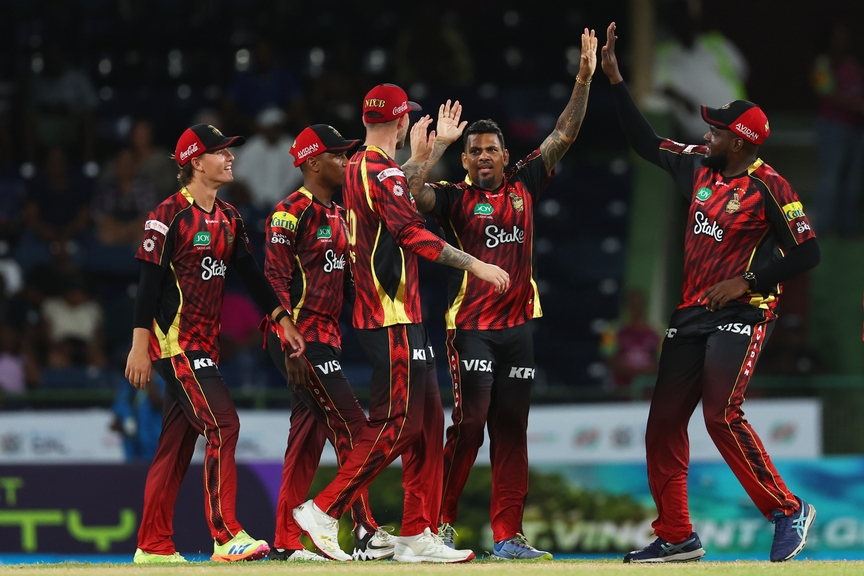
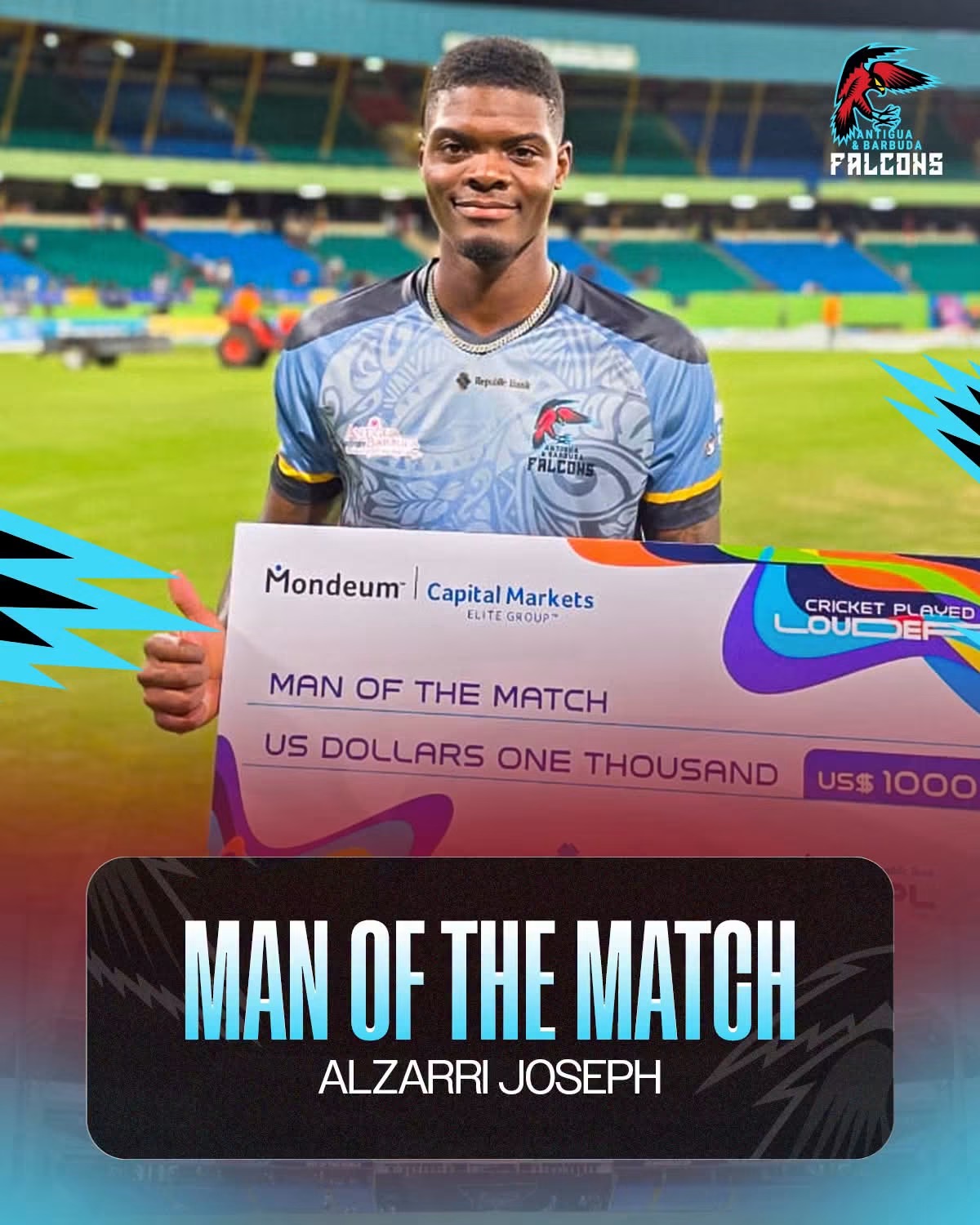
    After a standout performance at the 2024 ICC Under-19 World Cup earlier this year, emerging wrist spinner Vitel Lawes has earned his first call-up to the West Indies senior men’s One Day International squad for the upcoming five-match home series against New Zealand. The 15-man squad named by Cricket West Indies includes Lawes for the opening three fixtures of the series, which will be split across venues in Guyana and Barbados.

    Cricket West Indies announced the squad composition in an official media release, noting that the young spinner has already integrated with the senior setup, having joined the team’s pre-series preparatory camp ahead of the New Zealand clash. To support Lawes’ transition to international senior cricket, former player and current development coach Nikita Miller has been temporarily added to the team’s management group for the first three matches of the tour.

    While the addition of the highly touted young spinner brings a fresh boost to West Indies’ spin bowling options, the squad will have to navigate two notable absences for the series. All-rounder Shamar Springer has been forced to withdraw from the entire contest following the passing of his mother, and experienced all-rounder Keemo Paul has been named as his direct replacement in the full squad. Additionally, explosive top-order batter Shimron Hetmyer will not feature for the regional side, after he received a pre-approved No Objection Certificate to fulfill his playing commitments in Major League Cricket in the United States.

    For West Indies, the series against New Zealand carries significant weight as the side continues its preparations for the 2025 ICC 50-over World Cup. Currently, Daren Sammy’s side sits outside the automatic qualification positions for the tournament, after a rain-disrupted home series against Sri Lanka last month in Jamaica ended in a 1-0 series defeat for the hosts.

    Head coach Daren Sammy emphasized the high stakes of every remaining fixture ahead of the World Cup, noting: “Every series we play from here on leading up to the 50 Over World Cup, we view them as must-win scenarios. The matches against New Zealand provide the best opportunity for us to continue our improvement as an ODI unit while winning more matches for the people of the Caribbean.”

    Sammy added that Lawes’ inclusion is part of the team’s long-term strategic plan to build depth ahead of the global tournament: “The inclusion of Vitel Lawes is strategic as we continue our long-term vision of exposing players who can complement the team in conditions that best suit their skill sets.”

    The full 15-member squad for the opening three matches of the series is: Shai Hope (Captain), Ackeem Auguste, John Campbell, Keacy Carty, Roston Chase, Matthew Forde, Justin Greaves, Amir Jangoo, Alzarri Joseph, Shamar Joseph, Vitel Lawes, Gudakesh Motie, Keemo Paul, Sherfane Rutherford and Jayden Seales.

  • THE GREAT ESCAPE

    THE GREAT ESCAPE

    Defending FIFA World Cup champions Argentina have written another stunning chapter of tournament folklore, pulling off one of the most dramatic late comebacks in modern World Cup history to defeat Egypt 3-2 and secure their place in the competition’s quarterfinals. Trailing by two goals with just 11 minutes of regular time remaining on the clock, Lionel Messi’s side refused to accept defeat, rallying to score three unanswered goals and snatch an improbable victory that has sent shockwaves through the tournament.

    For the vast majority of the round-of-16 clash in Kansas City, Missouri, it appeared the 39-year-old Messi’s sixth and potentially final World Cup campaign would end in heartbreak. Egypt got off to a dream start in the 15th minute, when defender Yasser Ibrahim beat Argentina center-back Lisandro Martinez to a looping cross from Marwan Attia, nodding the ball into the bottom corner of the net to open the scoring. Just moments later, Argentina was handed a golden chance to level the score after Egypt’s Haissem Hassan brought down Nicolas Tagliafico inside the penalty box, earning a penalty for the defending champions. Messi stepped up to the spot in front of a stunned crowd, but Egypt goalkeeper Mostafa Shobeir pulled off a spectacular save diving to his left — marking Messi’s second failed penalty attempt of the tournament, following a miss against Austria in the group stage. The first half would bring more frustration for Argentina: Messi saw a long-range effort strike the post, and Shobeir made another close-range stop to deny Julian Alvarez, keeping Egypt’s lead intact going into halftime.

    Egypt thought they had doubled their advantage early in the second half, when striker Mostafa Zico finished off a lightning counter-attack. However, video assistant referee review ruled out the goal after confirming a foul in the build-up to the score, cutting short Egypt’s celebrations. Zico would not be denied in the 67th minute, though, when he converted a second similar counter-attack chance to put Egypt up 2-0, leaving Argentina on the brink of elimination. At that point, Argentina’s hopes of becoming the first back-to-back World Cup winners since Brazil in 1958 and 1962 looked all but over.

    What followed was a display of resilience that has become synonymous with Argentina’s World Cup identity. Center-back Cristian Romero kickstarted the comeback in the 79th minute, nodding home a header from a set piece to cut Egypt’s lead to 2-1. Four minutes later, Messi found the back of the net to level the score. The goal marked Messi’s eighth of the 2026 tournament and extended his record as the World Cup’s all-time leading goalscorer to 21 career tournament goals. With the match tied at 2-1 and regulation time expiring, Enzo Fernandez scored the dramatic winner in stoppage time, completing one of the most remarkable comebacks in World Cup history.

    Following the final whistle, an emotional Messi was seen in tears, as Argentine players and staff celebrated the extraordinary win. Midfielder Fernandez, who scored the decisive goal, paid tribute to the team’s never-say-die attitude after the match. “We have a phenomenal group, a group that never gives up no matter the difficulties and adversity. We’re always together,” Fernandez said. “Four years have passed since Qatar, and we’ve come to enjoy another World Cup — and we want to win it again. That’s what we’re aiming for.”

    Striker Julian Alvarez echoed those sentiments, noting that Argentina’s national character drove the late fightback. “The heart of Argentinians is always something that pushes, that we keep going no matter what, that we give everything until the end. And honestly, with the score 2-0, we looked a bit beaten,” Alvarez said. “There was little time left, but we always manage to get something more by fighting until the end.”

    Argentina manager Lionel Scaloni said he was overwhelmed by his team’s performance, adding: “I’m so emotional. What a group of players, brother.”

    This is far from the first time Argentina has produced a heroic late comeback on the World Cup stage. The side claimed a 3-2 victory over West Germany in the 1986 final, and fought to a 3-3 draw before winning a penalty shootout against France to claim the 2022 Qatar World Cup title. Just one round prior in this tournament, Cape Verde pushed Argentina to the brink before the defending champions claimed a 3-2 extra-time win. Tuesday’s comeback against Egypt has already been ranked as even more dramatic than those prior iconic matches.

    Argentina will next face Switzerland in the tournament’s quarterfinals this Saturday in Kansas City.

  • Football : Everything you need to know about World Cup ticketing and the role of the FHF

    Football : Everything you need to know about World Cup ticketing and the role of the FHF

    Amid growing public questions surrounding access to 2026 FIFA World Cup match tickets, the Haitian Football Federation (FHF) has released an official public statement to clear up confusion, laying out the dual ticketing structures established by FIFA and defining exactly what responsibilities the federation holds in the overall process.

    FIFA’s framework for 2026 World Cup ticketing splits distribution into two fully separate, independent systems, the FHF confirms. The first pathway is open to the general public and Haitian national team supporters, operated entirely directly by global soccer’s governing body through FIFA’s own official ticketing portal. Under this system, the FHF has no involvement whatsoever in sales processing, payment collection, or ticket distribution to individual fans. The federation’s only function here is to validate official fan group affiliations with FIFA, following strict protocols set by the tournament organizer. The FHF also confirmed that the widely reported $60 starting ticket price referenced in multiple local publications applies exclusively to this FIFA-managed public sales system, with all financial transactions processed directly between buyers and FIFA, no third parties or federation intermediaries involved.

    The second ticketing pathway is the institutional allocation reserved exclusively for participating national member associations like the FHF. This allocation follows a fixed timeline of requests, approvals, and payments, all contained within FIFA’s official ticketing window for participating nations. Contrary to some circulating rumors, these tickets are not provided for free; the FHF must purchase its allocation directly from FIFA through the official member association ticketing program. The allocation is designated solely to cover institutional needs tied to Haiti’s participation in the tournament, including tickets for the national team delegation, players, coaching and support staff, club representatives, institutional partners, official guests, and other members of the Haitian football community. All steps of this process – from initial request to validation, invoicing, payment, and final ticket issuance – are completed through FIFA’s official ticketing portal, following the governing body’s strict administrative protocols. Every ticket allocated to the FHF is ordered, invoiced, paid for, and issued by FIFA, with every step logged in FIFA’s official systems to ensure full traceability for every ticket the federation acquires.

    To reinforce transparency, the FHF emphasized that every ticket in its institutional allocation goes through a fully documented, rigorous administrative process that includes written ticket requests submitted to FIFA, formal allocation confirmations, official FIFA invoices, proof of FHF payment, FIFA ticket issuance, and final distribution to pre-approved beneficiaries. The federation also issued a clear warning: it has not authorized any individual or third-party organization to sell 2026 World Cup tickets on its behalf outside of FIFA’s official, publicized channels.

    Outlining its core role in the overall process, the FHF explained that its responsibilities begin and end with acquiring tickets for the Haitian football community per FIFA’s rules and distributing those tickets to the pre-approved beneficiaries. Once distribution is complete, the federation has no practical or legal authority to control how individual ticket holders use their tickets. Any subsequent resale, transfer, or circulation of a ticket after distribution falls entirely under the responsibility of the ticket holder, and cannot be interpreted as official involvement or endorsement from the FHF. The federation added that it stands ready to cooperate fully with FIFA and any other competent regulatory authority if specific, verifiable information emerges that warrants an investigation.

    The statement also noted that since the FHF was placed under the oversight of a FIFA-appointed Normalization Committee, it has adhered to strict global standards of governance, transparency, and accountability. Multiple independent oversight mechanisms are already in place: these include periodic management and compliance audits carried out by independent firms commissioned by FIFA, annual independent external financial audits, and regular public publication of financial statements in line with the federation’s transparency commitments.

  • Windies break 23-year drought with Test series win over Sri Lanka

    Windies break 23-year drought with Test series win over Sri Lanka

    On Tuesday, the West Indies secured a place in their cricketing history books, claiming their first Test series victory against Sri Lanka in over two decades after a predictable tame draw closed out the second Test at Antigua’s Sir Vivian Richards Stadium. The 1-0 series triumph marks the Caribbean side’s first win over Sri Lanka in a Test series since 2003, following their dominant innings-and-217-run victory in the opening match of the tour.

    Chasing an unlikely win that would have levelled the series, Sri Lanka came out of the gates batting aggressively on the final day of play. Resuming their second innings at 92 for two with an overall lead of just 142 runs, the visitors faced an uphill battle from the first ball. Overnight batters Dinesh Chandimal and Kamindu Mendis pushed the score along by 26 additional runs in six overs before West Indies pace bowler Jayden Seales broke the partnership, with Anderson Phillip pulling off a juggling catch at mid-off to dismiss Mendis for 44.

    Chandimal continued to lead the charge for quick runs, notching his 37th Test half-century along the way. However, his innings came to an end on 71 from 107 balls, courtesy of a spectacular diving catch by Kavem Hodge at backward point off Alzarri Joseph’s bowling, leaving Sri Lanka 156 for four. Skipper Dhananjaya de Silva added a rapid 34 runs off as many balls before he was caught at long off attempting to clear the boundary off offspinner Roston Chase. Nine runs later, paceman Anderson Phillip claimed another wicket, Kusal Mendis caught at gully, pushing the visitors to 197 for six.

    Sonal Dinusha compiled a brisk 28 off 26 balls before being run out, and Hodge followed up with the wicket of Isitha Wijesundara for 10, leaving Sri Lanka reeling at 227 for eight as the lunch break approached. In a surprising tactical move, the visitors chose not to declare their innings at lunch, when they stood at 231 for eight for an overall lead of 281 runs. Instead, they batted on to extend their lead to 301 runs, eating up valuable overs in the process before finally declaring shortly after lunch at 251 for nine.

    That set the West Indies a nominal target of 302 runs from 60 overs to win, but the home side had no incentive to chase the victory: a draw would be enough to lock in their historic series win. Openers John Campbell and Brandon King showed no interest in pursuing the challenging target, instead prioritising solid defence to avoid losing wickets. The pair carried the West Indies to 65 without loss by the tea break, effectively confirming the match would end in a draw.

    A brief rain shower after tea further delayed play, wiping an hour off the scheduled playing time, and when play resumed at 4:30 p.m., the outcome was already certain. Once both Campbell and King reached unbeaten half-centuries, the two captains agreed to call the game off, with the West Indies closing on 109 for no loss. Following the match, all-rounder Justin Greaves was named both Player-of-the-Match and Player-of-the-Series for his consistent performances across the two Tests.

  • Derde helft WK 2026: Zwitserland overleeft Colombia in strafschoppenreeks

    Derde helft WK 2026: Zwitserland overleeft Colombia in strafschoppenreeks

    VANCOUVER, July 7 – In a tense, dramatic 2026 FIFA World Cup round of 16 clash that tested every ounce of both teams’ mental fortitude, Switzerland pulled off a memorable penalty shootout victory over Colombia on Wednesday, booking their spot in the tournament’s quarterfinals for the first time in 72 years. After 120 minutes of cagey, goalless soccer that showcased starkly contrasting game plans, the European side held their nerve from the spot to secure a 4-3 shootout win, setting up a highly anticipated quarterfinal clash with Argentina on July 12 in Kansas City.

    From the first kickoff, Colombia controlled the tempo of the match, deploying smooth, technically sharp passing to consistently press Switzerland’s organized defensive block. Veteran playmaker James Rodriguez, widely expected to be making his final World Cup appearance, dominated the midfield, constantly probing for openings and driving his side forward. However, the South American side struggled to turn their territorial and possession advantage into clear-cut scoring chances, thanks largely to Switzerland’s disciplined, well-drilled defensive structure that cut off creative passing lanes and neutralized Colombia’s attacking threats.

    Swiss goalkeeper Gregor Kobel delivered a standout performance, making several crucial saves to keep his sheet clean, including a spectacular stop on a close-range strike from Gustavo Puerta that would have put Colombia ahead. The match remained intensely physical but fragmented throughout regulation time, with both sides reluctant to commit too many players forward for fear of conceding a decisive late goal, as the noise of thousands of cheering Colombian supporters filled the Vancouver stadium.

    Extra time opened up the game slightly, with both sides creating their best opportunities of the night. Colombia came closest to breaking the deadlock when Jaminton Campaz found himself one-on-one with Kobel, only to miscontrol the ball completely and waste the golden chance. Switzerland brought on substitute Zeki Amdouni, who had just returned from a long-term injury, to inject fresh energy into their tiring side, helping the European outfit withstand Colombia’s late pressing offensive. Neither side could find a winner in the additional 30 minutes, sending the clash to a nerve-wracking penalty shootout to decide who advanced.

    The shootout became a test of mental strength, and it was Switzerland who showed unflappable calm under extreme pressure. Ruben Vargas opened the scoring with a cool finish, before Luis Diaz equalized for Colombia with a confident strike. After Manuel Akanji missed Switzerland’s third penalty, the side’s subsequent takers converted all their attempts, while Colombia squandered their own opportunity when defender Davinson Sanchez sent his shot wide of the post. Vargas stepped up to take the decisive final penalty, rolling the ball calmly into the back of the net to seal the historic win for Switzerland.

    The final whistle sparked jubilant celebrations among the Swiss squad and their supporters, while Colombia was left heartbroken, with players and fans openly devastated by the early exit. For James Rodriguez, the result likely brings a bittersweet end to his World Cup career, after a tournament that saw the playmaker deliver a series of standout performances. This result also makes tournament history: six of the eight 2026 World Cup quarterfinalists are European nations, marking the highest number of European quarterfinalists at a World Cup hosted outside of Europe since 1994. Argentina remains the only South American nation still in the competition, and will now face Switzerland in their quarterfinal showdown.

    While Colombia produced the more attractive, attacking soccer and created more dangerous opportunities over 120 minutes, Switzerland’s win was a testament to the power of tactical discipline, mental resilience, and cohesive teamwork. Not the most high-scoring or spectacular match of the tournament, but certainly one of the most memorable for its tension and dramatic finale, Switzerland’s victory writes a new chapter in the nation’s World Cup history, as they continue their unlikely deep run in the 2026 tournament.

  • Team Saint Lucia in SKN for ECVA volleyball

    Team Saint Lucia in SKN for ECVA volleyball

    The Eastern Caribbean Volleyball Association (ECVA) has launched its revamped flagship age-group beach volleyball championship this week, bringing top young talent from across the region to the picturesque shores of Frigate Bay, St Kitts & Nevis. In a key adjustment to the tournament structure, the 2026 iteration has shifted from the Under-21 age category — its classification for the previous three years — to an Under-20 format, opening new competition opportunities for emerging junior players.

    Eleven Caribbean territories are competing in this zonal title clash, running from July 10 to 12 in Basseterre, with all play adhering to the latest official competition rules set by the International Volleyball Federation (FIVB). Among the contenders is Saint Lucia, which is fielding both men’s and women’s teams hungry to claim top honors at the regional event.

    On the men’s side, Saint Lucia’s pairing features Peter Emmanuel, a returning experienced player who earned a silver medal at the 2021 U21 Championship, and new partner Lindan Clarke. Emmanuel previously took second place at the same host venue last June alongside former teammate Rio Victor, and he will carry that regional competition experience into this year’s tournament. For the women’s draw, Saint Lucia is represented by Abigail Evans and Aryanna Desir, who are aiming to follow in the footsteps of the nation’s 2025 championship-winning duo Ericka Gaspard and Clio Phillip and bring home another ECVA title.

    Leading Saint Lucia’s delegation is head coach Terry Verdant, who is not only guiding his team but also participating in a specialized coaching education program organized jointly by ECVA and the North, Central America and Caribbean Volleyball Confederation (NORCECA). The tournament itself is co-hosted by the St Kitts Amateur Volleyball Association (SKAVA), ECVA, and NORCECA, with backing from the Association of National Olympic Committees of the Eastern Caribbean States (ANOCES), FIVB, and the St Kitts and Nevis Olympic Committee (SKNOC).

    With matches scheduled across the full day each day of the event, spectators and tourists have abundant access to watch high-caliber junior beach volleyball in one of the Eastern Caribbean’s most scenic coastal locations. ECVA officials framed the 2026 championship as a dual-purpose milestone: a critical development platform for the next generation of Caribbean volleyball talent, and a catalyst to grow local sport tourism in St Kitts & Nevis.

    ECVA President Glenn Quinlan emphasized the long-term value of the annual regional competition in a statement, noting that events like this U-20 championship act as essential stepping stones to move promising athletes from grassroots play to elite international competition. “Each edition strengthens our programmes, exposes our players and coaches to higher standards of competition, and helps to build a sustainable future for volleyball throughout the Eastern Caribbean,” Quinlan explained.

  • CueSports takes pool into schools

    CueSports takes pool into schools

    Barbados’ leading cue sports governing body, CueSports Barbados, is rolling out a targeted grassroots effort to grow the sport among the nation’s youth, anchored by two connected programs: CueConnect and the Pool in Schools initiative. The organization marked a key milestone this week with the handover of a fully outfitted pool table to Grantley Adams Memorial School, a secondary school located in St. Joseph. This donation makes the institution the first educational partner to receive specialized equipment under the new program.

    Daniel Hinds, president of CueSports Barbados, explained that the school-focused initiative grows out of the organization’s long-term vision to embed cue sports in Barbados’ educational landscape, while nurturing sustainable national growth for the discipline. The idea for expanding into schools first took root in 2022, when one of the organization’s members, Davi Davis, launched a youth team called Young Bloods. The team, which remains active today, creates space for young players to compete in local CueSports-sanctioned events, particularly team-format tournaments.

    Building on the success of Young Bloods, the organization worked to formalize a pathway into schools, Hinds said. The connection to Grantley Adams Memorial School came through CueSports Barbados Vice President Sonia Mayers, an alumnus of the institution, who facilitated a meeting with school principal Major Andrew Skeete to pitch the program.

    Major Skeete welcomed the donation and emphasized the excitement among the school’s student body. “We want to express our sincere gratitude. We are a school of firsts and we thank you,” he said in remarks following the handover. “I can assure you the boys and girls will be at school early to put it to good use and we will be looking after it.”

    Unlike one-off donation projects, the Pool in Schools pilot at Grantley Adams Memorial is designed as a sustainable, long-term program, Hinds noted. Before regular student coaching begins, the organization will host a two-day training workshop for two of the school’s teachers in August, covering core pool fundamentals, proper game etiquette, and program management. The goal of the upskilling is to build local capacity at the school, so that school staff can run ongoing sessions independently after the initial launch phase. Following the workshop, CueSports Barbados coaches will lead structured training sessions for participating students at least twice a month to support skill development.

    Looking ahead, CueSports Barbados has already begun laying groundwork to expand the initiative to four additional secondary schools across Barbados: Deighton Griffith Secondary School, Ellerslie Secondary School, Graydon Sealy Secondary School, and St. Leonard’s Secondary School. Hinds stressed that the organization is prioritizing careful, incremental expansion to ensure every participating school has the resources and support to sustain the program long-term.

    For Hinds and the CueSports Barbados team, the initiative is far more than a simple equipment donation. It represents a deliberate investment in young Barbadians, opening new recreational and competitive opportunities for youth, and securing the long-term future of cue sports across the country.

  • Bienvenue à Chalon volleyball, Tevin St Jean

    Bienvenue à Chalon volleyball, Tevin St Jean

    After turning in a standout performance in Croatia’s top volleyball circuit, Saint Lucian talent Tevin St Jean is embarking on the next chapter of his peripatetic professional career, signing with Volley Ball Club Chalon-sur-Saône (VBCC) to become the latest addition to their 2026-2027 roster. The 30-year-old, who hails from the coastal Saint Lucian town of Soufrière, will make his debut in France’s competitive League B this coming season, marking the 11th different club he has joined over the course of his 10-year professional journey.

    St Jean is the fourth new recruit signed by VBCC ahead of the new season, arriving from Croatian side MOK Marsonia (Muški Odbojkaški Klub Marsonia), where his standout form earned him the honor of being named the league’s best middle blocker. Standing at two meters tall, the middle hitter brings a wealth of international experience to his new side, having previously plied his trade across top clubs in Greece, Romania, and Portugal. Beyond his European club commitments, St Jean has also shone on the regional stage, claiming the Best Middle Blocker award at the Caribbean Games during his career.

    For VBCC, which is heading into its second consecutive season competing in the second tier of French professional volleyball, the signing of St Jean is viewed as a pivotal boost to the squad’s prospects. The club finished 11th in the league standings last season, and management has made clear it will rely heavily on the Saint Lucian’s skill and experience to climb the table in the upcoming campaign. In an official statement shared across the club’s social media channels, VBCC highlighted the athlete’s key strengths: “Explosive, powerful in the attack and very effective on the block, he will be a strong plus value in our team to achieve our goals next season.”

    St Jean’s career also carries regional significance, as he is just one of three active professional volleyball players hailing from the small Caribbean island nation of Saint Lucia. He follows in the footsteps of the country’s first pro volleyball export, Julian Bissette, who is currently competing in his 13th professional season and has built a career spanning 12 clubs across four different countries.

  • Stern John steps down as Saint Lucia’s football head coach

    Stern John steps down as Saint Lucia’s football head coach

    After four years at the helm of Saint Lucia’s national men’s football program, former star forward Stern John has formally resigned from his position as head coach, the Saint Lucia Football Association (SLFA) confirmed in an emailed statement released Tuesday.

    The 49-year-old, who hails from Trinidad and Tobago, leaves behind a decorated playing career that cements his legacy as one of CONCACAF’s greatest finishers. As the all-time leading goalscorer across the Confederation of North, Central American and Caribbean Association Football, John earned 100+ caps for Trinidad and Tobago’s national side, the Soca Warriors, and played a pivotal role in securing the country’s historic 2006 FIFA World Cup qualification — the only time the nation has reached the tournament to date.

    John took over the reins of the Saint Lucia men’s national team, nicknamed the Piton Boyz, in 2021, and his four-year tenure delivered a mixed record of on-pitch results. Across 25 matches in charge, John’s side secured 12 wins and three draws against opponents including 2026 World Cup qualification contenders Curaçao, Grenada, and Barbados, as well as international sides San Marino, St Maarten. The campaign was also marked by high-profile losses, including two defeats to Haiti, and dropped results against Azerbaijan, Cuba, Puerto Rico and Guadeloupe.

    A major focus of John’s tenure was restructuring the national team’s player pool to boost competitiveness. He made the controversial but proactive decision to call up multiple foreign-born and overseas-based players, including experienced defender Terell Thomas and dynamic striker Caniggia Elva, to add depth and quality to the squad. At the same time, he prioritized nurturing young domestic talent, handing valuable senior international opportunities to emerging local players like Eymani Butcher and Yanic Noel.

    Despite these structural changes, a sustained five-match losing streak dating back to October 2024 ultimately led to John’s departure. The SLFA’s president Lyndon Cooper released an official statement thanking the outgoing coach for his service, emphasizing the association’s gratitude for his commitment to growing the Saint Lucian game.

    “On behalf of the Executive Committee and the entire Saint Lucia Football Association, I wish to express our sincere appreciation to Stern John for his dedication, professionalism, and commitment to the Men’s National Team,” Cooper said. “Representing one’s country in any capacity is an honour, and we are grateful for the time, energy, and expertise he invested in advancing our football programme.”

    Cooper added: “Stern John is a true icon of Saint Lucian football. His achievements as an international player brought immense pride to our nation. Throughout his tenure, he conducted himself with professionalism, integrity, and an unrelenting desire to see Saint Lucia succeed regionally and internationally. On behalf of the Executive Committee and the entire football fraternity, I extend our heartfelt gratitude for his invaluable service and wish him every success in the next chapter of his career.”

    While Cooper noted the association is disappointed by John’s choice to step down, it has fully accepted his resignation and respects his decision. Looking ahead, the SLFA’s Executive Committee has already launched the process to find an interim technical leader, and will begin a formal search to appoint a permanent new head coach in the coming weeks. The association has reaffirmed its long-term goal of building a sustainable, competitive national football program that supports emerging talent and grows the sport across Saint Lucia for generations to come.

  • New initiatives as Barbados prepares to host the CPL

    New initiatives as Barbados prepares to host the CPL

    As the kickoff of Barbados’ hosting stint for the 2025 Caribbean Premier League (CPL) draws near, national sports authorities have confirmed that all preparations are proceeding according to schedule, with a packed slate of community-focused, cricket development, and public health initiatives set to run alongside the tournament’s on-field action.\n\nYouth, Sports and Community Empowerment Minister Charles Griffith gave the update following a high-level coordination meeting at his ministry’s Sky Mall Haggatt Hall headquarters, where he joined CPL Chief Executive Officer Pete Russell and members of the local organizing committee to review final logistics. This year, all 16 matches set to be held in Barbados will take place at the iconic Kensington Oval, with play getting underway on September 5 and the tournament culminating in the CPL final on September 20.\n\nBeyond the competitive matches, Griffith has expressed strong approval for the suite of new community programs CPL is rolling out across the island, many of which are designed to nurture grassroots cricket talent and expand access to public health resources. On September 10, a special charity exhibition match will be staged in partnership with the Tridents Trust, with the dual goal of raising public awareness for both breast and prostate cancer, two of the most common cancers affecting Caribbean communities.\n\nTo nurture the next generation of Barbadian cricket talent, the ministry is partnering with the Franklin Stephenson Academy to host a four-day cricket clinic running from September 7 to 10. The clinic will offer specialized coaching to 100 young aspiring grassroots players, giving emerging talent access to professional guidance that many would not otherwise receive.\n\nFor casual fans eager to engage with the sport outside of match days, CPL will roll out interactive virtual cricket experiences across high-foot-traffic locations around Barbados. A portable professional batting simulator will be set up at sites including Bridgetown’s Independence Square and Freedom Park, allowing fans of all ages to test their skills against virtual bowling attacks and enjoy interactive cricket fun ahead of the tournament’s biggest matches.\n\nPublic health will also take center stage through a regional wellness initiative launched in partnership with national health ministries and local non-governmental organizations. Free health screening for blood pressure, cholesterol, breast cancer, and prostate cancer will be available to all ticket holders at tournament venues, a program aligned with the public health mantra that “prevention is better than cure,” as Russell emphasized. Russell added that CPL’s planning team has already completed full coordination with Kensington Oval Management Incorporated to integrate the screening services seamlessly into venue operations for the duration of the Barbados leg.\n\nTo celebrate the Caribbean’s rich cricketing legacy, a CPL Hall of Fame induction dinner will be held on September 15 at Bridgetown’s Hilton Hotel. This year’s event will honor two new inductees from across the region, plus will feature a special lifetime achievement award for Barbadian national hero and cricket legend Sir Garfield Sobers, in recognition of his unparalleled contributions to the sport globally.\n\nPlans are also in final development for additional youth outreach, which will see CPL players visit local primary and secondary schools across Barbados for interactive engagement sessions, giving young fans the chance to meet their sporting idols and inspire the next generation of Caribbean cricket stars.\n\nSpeaking after the coordination meeting, Griffith said he was confident that Barbados would deliver a safe, successful, and memorable leg of the 2025 CPL, highlighting the collaboration between national authorities and CPL leadership to make the tournament beneficial for both cricket fans and the wider Barbadian community.