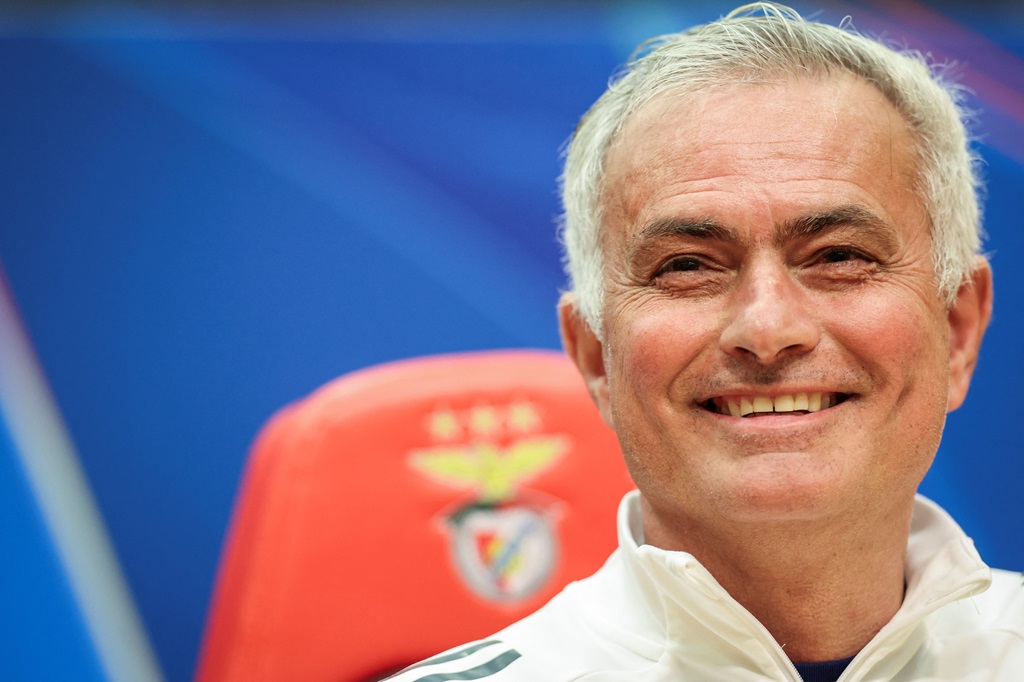
LISBON, Portugal — On the eve of a critical Champions League play-off confrontation, Benfica manager Jose Mourinho publicly addressed mounting speculation regarding a potential return to Real Madrid. The Portuguese coach, who previously helmed the Spanish giants from 2010 to 2013, emphatically stated his capacity to decline any approach from Madrid president Florentino Perez.
The two European powerhouses are set for a high-stakes showdown at Benfica’s Estadio da Luz on Tuesday, with the second leg scheduled at Madrid’s Santiago Bernabeu the following week. This encounter marks a swift reunion after Mourinho’s Benfica secured a 4-2 victory against Alvaro Arbeloa’s squad during the Champions League group phase in January.
When questioned by journalists about his willingness to reject potential overtures from Perez, Mourinho responded with unequivocal clarity: “Can you say no? Yes. Yes you can.” The 63-year-old tactician acknowledged his “great friendship” with the Madrid president and enduring connections with the club, but swiftly redirected focus to his current contractual obligations.
Mourinho revealed his unique contract with Benfica contains a mutual break clause specifically designed during the club’s presidential election period in November 2025. “The only thing that exists is that I have another year on my contract with Benfica,” Mourinho emphasized. “It’s a special contract because it was signed in an electoral period to protect a hypothetical new president.”
Despite his evident affection for Real Madrid, Mourinho expressed strong competitive intentions for the upcoming match. “I would very much like to eliminate Real Madrid from the Champions League,” he stated, while simultaneously offering praise for opposing coach Arbeloa: “I would like Alvaro to win La Liga and for Alvaro to stay at Madrid for many years. He’s a coach with a lot of capability.”
Real Madrid’s squad approaches the contest with heightened determination, according to midfielder Eduardo Camavinga. “We want to play a great game with the spirit of revenge,” he declared, referencing their previous defeat. “Losing a game like that was tough for our fans.”
Manager Arbeloa maintained tactical ambiguity regarding star forward Kylian Mbappe’s availability, noting: “Kylian came with us, he will train and tomorrow you will see if he plays or doesn’t.” The French international has been managing knee discomfort that limited his participation in Madrid’s recent victory over Real Sociedad.