分类: society

  • Police Detain ‘Yellowman’ Ahead of Protest, Motive Disputed

    Police Detain ‘Yellowman’ Ahead of Protest, Motive Disputed

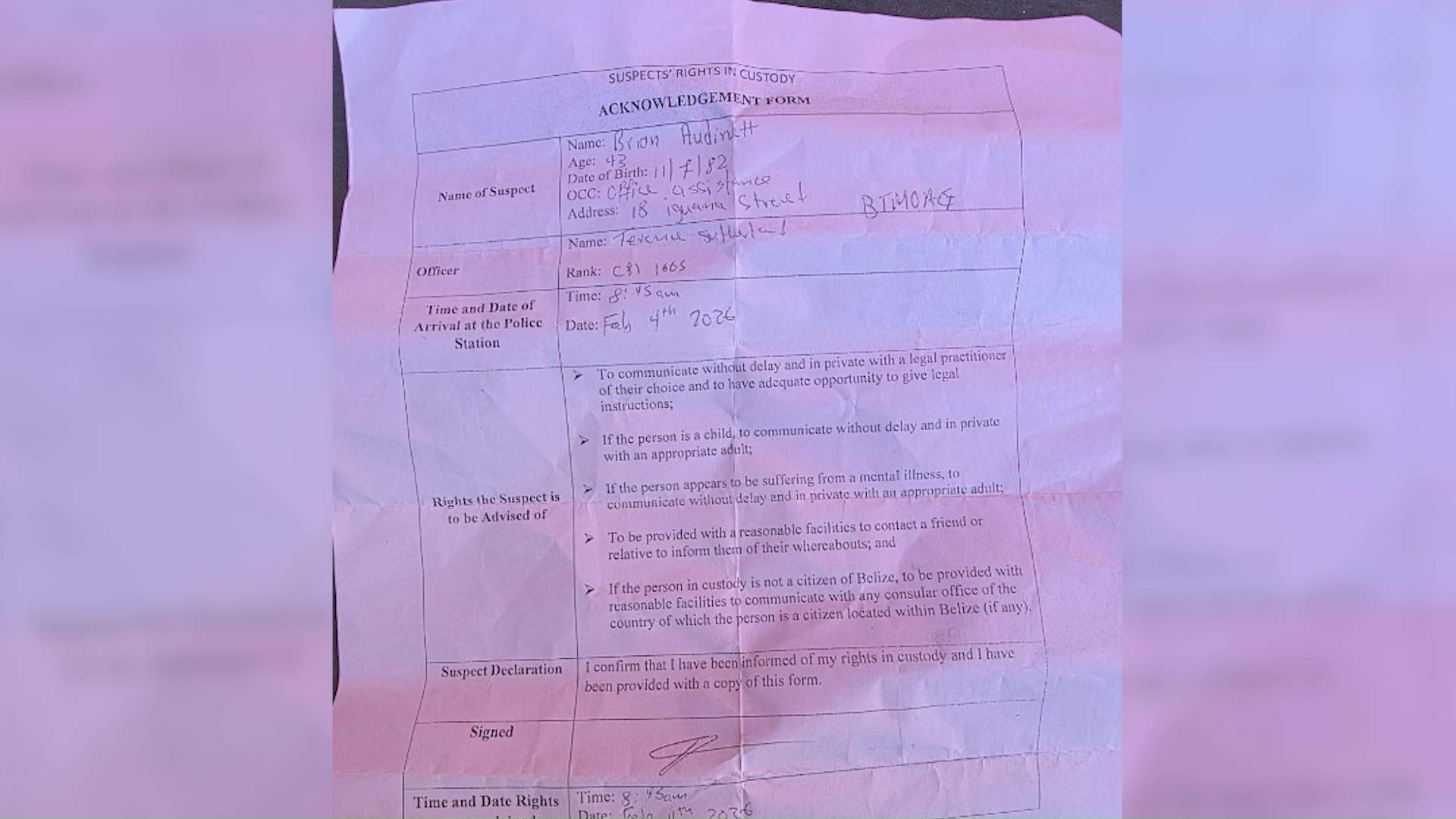
    BELIZE CITY – Tensions escalated in Belize on February 4, 2026, when police authorities detained prominent activist Brian “Yellowman” Audinett hours before a scheduled public demonstration. The controversial apprehension occurred in the Mesopotamia Division, with Audinett subsequently transported to Queen Street Police Station where he remained detained throughout the morning.

    The incident has ignited a sharp legal and political confrontation between law enforcement and civil rights advocates. Attorney Orson Elrington, representing Audinett, asserts that his client was targeted solely based on his alleged gang affiliations rather than concrete evidence of wrongdoing. Elrington provided detailed accounts indicating Audinett was coordinating protest participation from his constituency when police initiated contact and subsequent detention.

    Contradicting this narrative, Police Commissioner Dr. Richard Rosado presented an entirely different justification for the detention. According to Rosado, Audinett had been disseminating text messages explicitly inciting violence, prompting what he characterized as a necessary law enforcement response. The Commissioner emphasized the police department’s theoretical support for lawful protest while maintaining that Audinett’s actions crossed legal boundaries.

    The conflicting accounts have raised questions about police transparency and protest rights in Belize. Investigators from the GI3 unit, led by Officer Sutherland, are conducting an ongoing investigation into the alleged inflammatory messages. Legal experts note the case highlights the delicate balance between maintaining public order and protecting civil liberties, particularly regarding pre-protest detainments.

    Audinett’s detention period and potential charges remain uncertain as investigations continue. The situation has drawn attention to police protocols regarding protest organization and the evidentiary standards required for preventive detention in potentially volatile situations.

  • Unions Protest at SSB Headquarters, Draw Line from Party Politics

    Unions Protest at SSB Headquarters, Draw Line from Party Politics

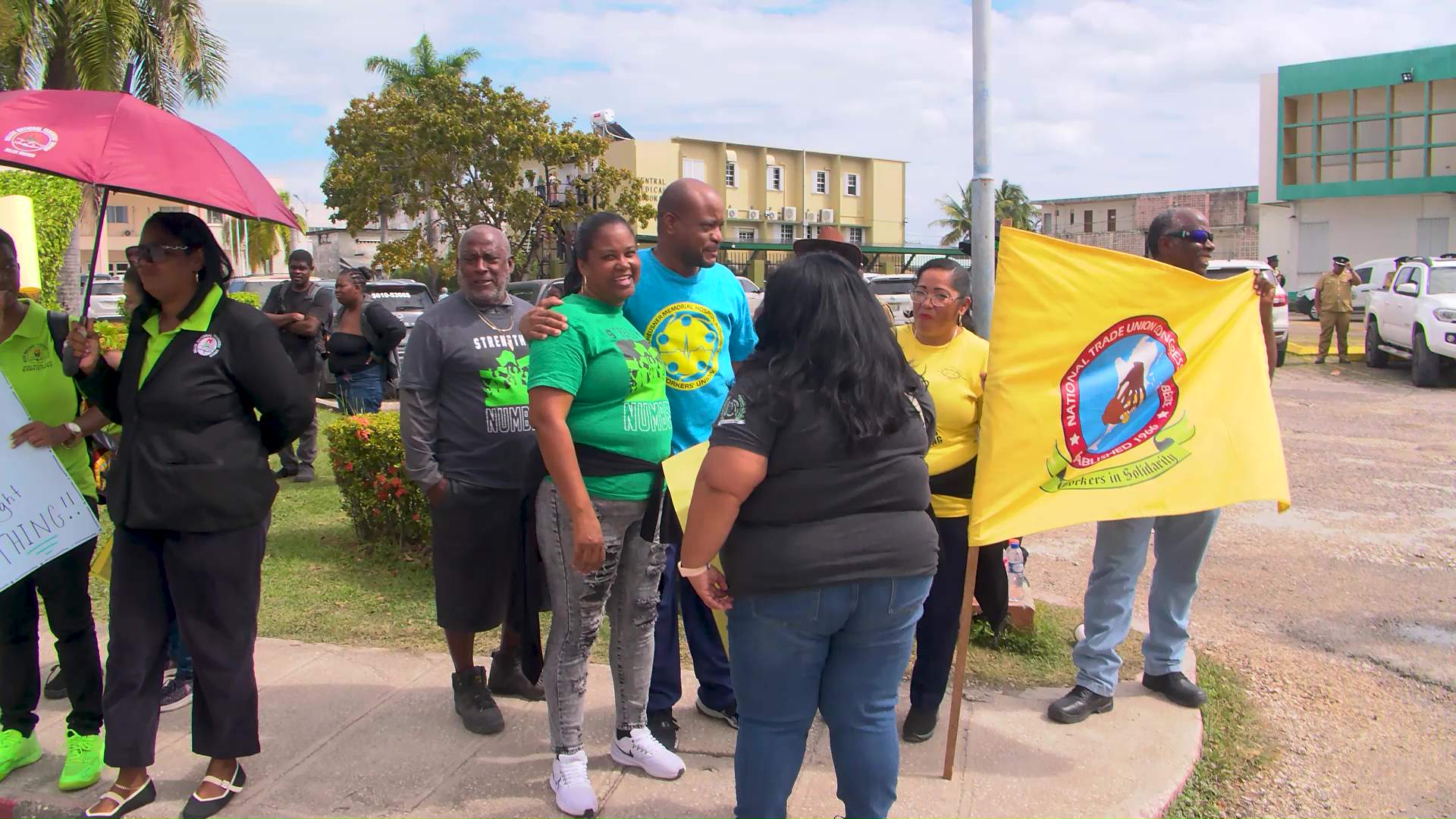
    BELIZE CITY – In a significant display of labor mobilization, Belize’s National Trade Union Congress (NTUCB) staged an unsanctioned protest outside the Social Security Board headquarters on February 4, 2026, despite being denied official permission by authorities. The labor action occurred alongside but deliberately separate from a demonstration organized by the opposition United Democratic Party (UDP), creating a complex tableau of dissent.

    Union leaders emphasized their demonstration focused exclusively on worker rights and transparency regarding management of Social Security funds, explicitly distancing themselves from political party agendas. NTUCB President Ella Waight asserted the protest represented workers’ constitutional rights, stating, “We need to ensure there is public consultation. Citizens must understand the risks and benefits to make sober decisions.”

    The protest gained substantial momentum with participation from multiple influential unions, including the Belize Communications Workers for Justice and the powerful Belize National Teachers’ Union (BNTU). BNTU President Nadia Caliz characterized their involvement as a calculated response to growing discrepancies in Social Security management, noting, “When you know your power you don’t rush. It’s the silence that is deadly.”

    Tensions escalated when UDP supporters moved toward the Social Security Board compound, which union leaders said endangered workers inside the building. Waight condemned this development as unacceptable, stating it prevented Social Security Board employees from joining the protest due to safety concerns.

    The demonstration highlighted broader opposition to the proposed Speednet acquisition and unresolved severance payments for former Belize Telecommunications Limited employees. Emily Turner of the Communications Workers emphasized the connection: “If BTL already owes a debt to its former employees, it needs to settle it before any acquisition.”

    Support extended beyond traditional labor circles, with healthcare workers, youth representatives, and professionals joining the action. Andrew Baird, past president of the Karl Heusner Memorial Hospital Authority Union, called it “a matter of national interest,” while youth representative Ashley Langford emphasized the protest’s significance for future generations of workers.

    Union leaders concluded by reaffirming their commitment to non-political worker advocacy, insisting their demands centered on transparency, consultation, and protection of worker contributions to the Social Security system.

  • Family Alleges Ambush in Fatal La Democracia Shooting

    Family Alleges Ambush in Fatal La Democracia Shooting

    A devastating shooting in La Democracia village has left a family in mourning and raised questions about longstanding internal conflicts. Twenty-one-year-old Paul Smith Jr., a figure previously known to law enforcement, was fatally shot on Tuesday in what relatives describe as a premeditated ambush.

    The incident occurred shortly after Smith engaged in a heated argument with his girlfriend. According to eyewitness accounts, armed assailants emerged from nearby bushes and opened fire. Smith sustained multiple gunshot wounds to his chest, abdomen, and arms. Despite being rushed to Karl Heusner Memorial Hospital alongside his injured companion Tyrece Allen, Smith succumbed to his injuries during treatment.

    Smith’s cousin, Tamara Gillett, provided a harrowing account of the incident: “We heard the gunshots from inside our house. When we rushed outside, we learned our cousin had been shot. Initially we hoped the injuries were minor, but then we received the devastating news that he had died.”

    The deceased had a complex history with the judicial system. Previously charged with offenses ranging from firearms possession to attempted murder, Smith had been acquitted in 2024 for the 2022 killing of La Democracia resident Tyreak August. Following his release from Belize Central Prison less than six months ago, his attorney Ronell Gonzalez had encouraged Smith to pursue a positive path forward.

    Family members acknowledge Smith’s troubled past but maintain that his death resulted from internal family tensions rather than random violence. Gillett revealed: “This was a family issue that escalated unnecessarily. There had been previous attempts on his life—they shot his mother, shot another cousin, and even burned down his sister’s house.”

    Despite his controversial background, relatives remember Smith’s positive qualities. Cousin Angel Estrada reflected: “Regardless of everything, we knew his goodness. We’re not saying he was perfect, but we recognized his value as a person.”

    Law enforcement officials have detained multiple suspects for questioning, though no formal arrests have been made as investigations continue. The case highlights ongoing concerns about violence resolution and the complex social dynamics within communities.

  • Mother And Daughter Charged in Punta Gorda Cocaine Bust

    Mother And Daughter Charged in Punta Gorda Cocaine Bust

    A Punta Gorda mother and her teenage daughter are confronting severe narcotics charges following a targeted police operation that uncovered a significant cache of crack cocaine. Law enforcement officials executed a search warrant at a Cerro Road residence on Tuesday, leading to the apprehension of 47-year-old Cheryl Garbutt and her 18-year-old daughter Kailah Bahadur.

    During the systematic search of the property, investigators discovered substantial evidence of drug distribution activities. The most critical find was a plastic bag containing exactly 100 individually wrapped parcels of crack cocaine, meticulously sealed in foil. The total weight of the confiscated narcotics exceeded 15 grams, indicating potential intent for street-level distribution rather than personal use.

    Police authorities emphasized the gravity of the charges, noting that both women now face accusations of possession of controlled substances with intent to supply—a charge that carries significantly heavier penalties than simple possession. The operation demonstrates law enforcement’s continued focus on disrupting local drug distribution networks.

    Following their arrest, both suspects were processed and remain in custody as the investigation continues. The case has drawn attention to intergenerational drug involvement and the challenges faced by communities combating narcotics trafficking. Legal experts suggest the charges could result in substantial prison sentences if convictions are secured, particularly given the organized nature of the packaging and quantity of drugs involved.

  • Police Intercept Fisherman with Unlicensed Firearm

    Police Intercept Fisherman with Unlicensed Firearm

    Authorities in Belize City have detained a local fisherman following an intercepted attempt to dispose of an unlicensed weapon during a police patrol operation. The incident unfolded on Monday morning around 10:00 AM along Riverside Street, where motorcycle officers observed 24-year-old Kyle Cadle traveling by bicycle. According to official reports, Cadle abruptly altered his course upon noticing the police presence, accelerating into a nearby residential property in an apparent evasion attempt. Law enforcement personnel pursued the suspect and witnessed him discarding an object adjacent to a zinc fence. Subsequent investigation of the area yielded a concealed firearm accompanied by a magazine containing eight 9mm live rounds. Cadle was taken into custody without further incident and now faces formal charges of possessing both an illegal firearm and ammunition without appropriate licensing. The case highlights ongoing efforts by Belizean authorities to combat the circulation of unregistered weapons in urban communities.

  • Health : Drinking water crisis in Haiti

    Health : Drinking water crisis in Haiti

    Haiti is confronting an escalating drinking water emergency that now poses severe threats to public health and national stability, according to alarming assessments from the Ecological Intervention Group Écovert-Haiti. The organization has issued urgent warnings about systemic failures in water resource management that have brought the nation to a dangerous tipping point.

    The crisis stems from multiple compounding factors: widespread pollution of water sources, complete regulatory breakdown, and the unchecked expansion of the bottled water industry. Haiti’s water resources—from natural springs to underground aquifers—are experiencing massive contamination due to absent environmental protection policies, degradation of watersheds from unregulated agricultural practices, and inadequate sanitation infrastructure that allows fecal matter and chemical residues to infiltrate groundwater systems.

    Compounding these challenges, the plastic sachet and bottled water industry has proliferated without oversight since the 2000s. This unregulated sector has become Haiti’s primary source of plastic pollution, clogging urban drainage systems and coastal areas while exacerbating flood risks and waterborne disease transmission.

    Écovert-Haiti highlights the catastrophic failure of Haiti’s National Directorate of Drinking Water and Sanitation (DINEPA), which serves only 20% of the population’s drinking water needs in metropolitan areas. This institutional collapse has forced households and government institutions alike to depend on tanker trucks and unregulated private suppliers whose water quality remains questionable.

    The environmental group expressed astonishment at recent statements from Commerce and Industry Minister James Monazar, who denounced contaminated water consumption while overseeing two regulatory bodies—the Directorate of Quality Control and the Haitian Bureau of Standards—that have remained inactive for over two decades.

    In response to this multidimensional crisis, Écovert-Haiti has proposed a five-point emergency plan: immediate implementation of adopted quality standards, rigorous land-use policies to protect water recharge areas, strengthened oversight of water treatment companies, national restoration of aquatic ecosystems, and formal recognition of drinking water as a fundamental human right requiring transparent governance.

  • Bullet Tree Falls Gets Upgraded Community Centre

    Bullet Tree Falls Gets Upgraded Community Centre

    The rural community of Bullet Tree Falls has officially unveiled its comprehensively rehabilitated community center following an extensive nine-month renovation initiative completed in February 2026. The infrastructure enhancement project, which commenced in April 2025, transformed the facility with critical upgrades including modernized bathroom fixtures, energy-efficient windows and doors, complete electrical system rewiring, structural roofing improvements, and comprehensive interior and exterior repainting.

    During the inauguration ceremony, officials emphasized the center’s profound significance beyond its physical structure. “For generations, this establishment has transcended being merely concrete and steel. It has served as the foundational venue where memories were forged and life milestones celebrated—hosting innumerable community assemblies, quinceañeras, wedding receptions, birthday festivities, family reunions, and events that unified us as one collective,” stated Chebat, highlighting its role in fostering social cohesion.

    Addressing inquiries regarding tourism fund allocation for the project, Mahler provided justification: “I frequently face scrutiny for initiatives such as this—questioning why tourism resources are directed toward a community center. My consistent response remains: ‘This is not an investment in a facility; it is an investment in the community itself. It is an investment in our people.’”

    The celebratory event featured cultural performances, including traditional music by the Los Hijos del West marimba ensemble, alongside participation from local schoolchildren who led the national anthem and ceremonial prayer.

    Beyond its primary function as a hub for cultural programming and community activities, the newly upgraded center will additionally operate as a designated emergency hurricane shelter, enhancing regional disaster preparedness infrastructure.

  • Follow through on post-Beryl recovery projects, fishers say

    Follow through on post-Beryl recovery projects, fishers say

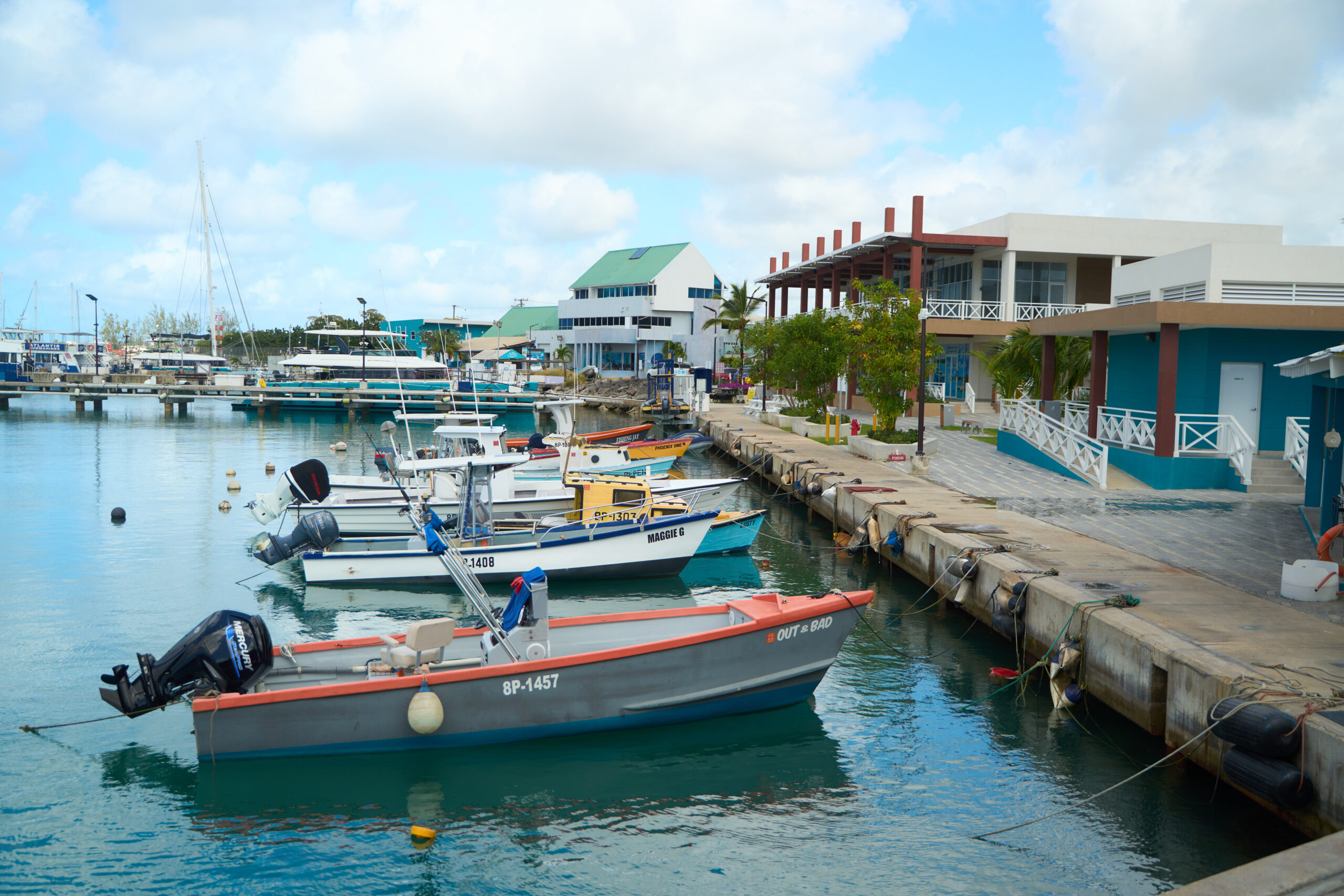
    With Barbados’ general election approaching on February 11, the island’s fishing communities are calling for sustained government commitment to post-Hurricane Beryl recovery efforts and the completion of critical infrastructure projects vital to their industry’s survival.

    Moonesh Dharampaul, Head of the Black Fin Fleet, emphasized to Barbados TODAY that the fishing sector has established a productive working relationship with current authorities and hopes this partnership will strengthen following the formation of a new administration. The industry suffered catastrophic damage during the 2024 hurricane season, forcing fisherfolk to implement gradual rebuilding measures while developing strategies to mitigate future storm impacts.

    Among the most pressing needs identified are proper haul-out facilities at key landing sites. “We urgently need completion of the ongoing breakwater project,” Dharampaul stated. “Additionally, we require functional haul-out facilities and slipways that enable fishermen to quickly remove vessels from water when storms approach.”

    Significant progress is underway through the Fisheries Division’s development of a national policy governing Fish Aggregating Devices (FADs). These artificial floating structures attract pelagic fish species and substantially increase catch volumes, though their deployment requires careful regulation to balance economic benefits with environmental considerations and spatial conflicts.

    “The Fisheries Division is currently drafting a FAD policy,” Dharampaul confirmed. “We’re collaborating closely with Coastal Zone Management on economic zone spatial planning, and anticipate positive outcomes.” He stressed that meaningful consultation with fishing professionals must remain central to policy development processes, ensuring practical industry experience informs regulatory frameworks.

    Dharampaul elaborated on FAD technology’s dual nature: while significantly enhancing fishing efficiency by creating underwater aggregation points that attract larger fish, Barbados’ unique tidal conditions present substantial anchoring challenges. “This is precisely why establishing a proper regulatory mechanism is crucial,” he explained.

    Another priority involves finalizing a specialized commercial fishing insurance policy. Through collective negotiation, industry representatives have secured reduced premium rates, potentially dropping from 3% to between 2.2-2.5% through group participation. Dharampaul also highlighted the need for a dedicated commercial fishing policy that acknowledges the diverse scale of fishing operations, unlike existing marine policies focused primarily on charter and recreational vessels.

    Recent improvements to ice distribution infrastructure at Bridgetown market—including new compressors and additional ice machines—were acknowledged as critical advancements for food security. “Where we previously serviced two to three boats daily, we can now accommodate six to eight,” Dharampaul noted, while emphasizing ongoing coordination with government officials to ensure these gains are maintained and expanded.

  • Deep clean’: BUT wants mandatory annual industrial cleaning at all schools

    Deep clean’: BUT wants mandatory annual industrial cleaning at all schools

    The Barbados Union of Teachers is advocating for a systemic overhaul of school maintenance protocols, demanding mandatory industrial cleaning across all educational institutions at least once annually. Julian Pierre, the union’s vice president and chair of its occupational safety committee, emphasized that reactive measures are insufficient to address persistent environmental health concerns disrupting academic activities. His comments follow the temporary closure of St. Ambrose Primary School, where additional ventilation work is underway after industrial cleaning resolved a severe cockroach infestation. While acknowledging improvements in the Ministry of Educational Transformation’s maintenance program—including off-hours and vacation-period work—Pierre highlighted the critical challenge of aging infrastructure. Many school facilities exceed forty years of service, requiring comprehensive preventative maintenance beyond current efforts. Pierre proposed implementing a rotational cleaning schedule distributed across Easter, summer, and Christmas breaks to prevent overwhelming resources during summer months. He further stressed the necessity for inter-ministerial coordination, particularly involving health authorities for environmental checks beyond school buildings themselves. Key concerns include water quality monitoring, vegetation management, and systematic pest control through regular baiting protocols. Although recognizing the efforts of the Education Technical Management Unit, Pierre insisted that true industrial cleaning standards must be consistently enforced, moving beyond superficial disinfection to address deep-seated infrastructure challenges in Barbados’ educational system.

  • Woman Fined $2K for Jaguar Skin Possession

    Woman Fined $2K for Jaguar Skin Possession

    In a significant enforcement of wildlife protection laws, a Belizean woman has been convicted and penalized for possessing protected jaguar remains. The case concluded this week in the Court of Belize with Lidear Lino pleading guilty to charges filed in August 2025 under the country’s Forests Act.

    The judicial outcome resulted in a substantial fine of BZ$2,000 (approximately US$1,000) for the offense of possessing wildlife derivatives without proper authorization. The Belize Forest Department, which led the prosecution, emphasized that no circumstances permit civilians to retain protected wildlife components.

    Following the verdict, forestry officials issued a stark reminder that Belizean law prohibits possession of any wildlife parts—including skins, teeth, feathers, nests, eggs, or other biological derivatives—without explicit permission. Violators potentially face penalties reaching BZ$10,000 under current legislation.

    The Forest Department publicly acknowledged collaborators in the successful prosecution while urging citizens to actively participate in conservation efforts. “We encourage all Belizeans to play an active role in protecting wildlife and to discourage illegal trade,” read an official statement, highlighting the ongoing commitment to combat wildlife trafficking through both enforcement and public education initiatives.