分类: society

  • Festivals Commission Seeks Volunteers for Carnival Parade Marshal Programme

    Festivals Commission Seeks Volunteers for Carnival Parade Marshal Programme

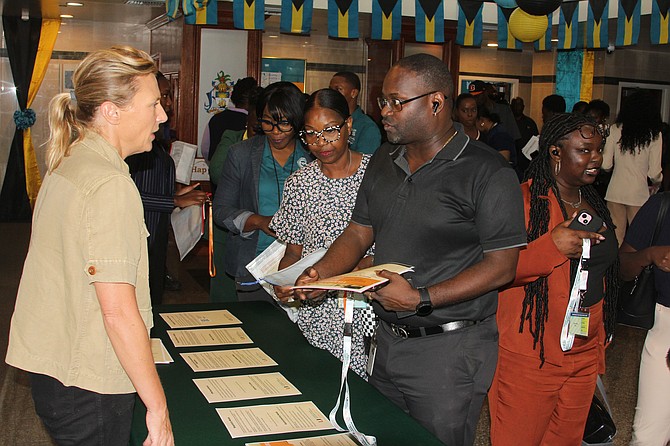
    As the highly anticipated annual Carnival celebrations approach Antigua and Barbuda, the official Festivals Commission has launched a public recruitment drive seeking dedicated community volunteers to fill the critical role of parade marshals. Applications for the unpaid position opened earlier this year and will close strictly on June 15, giving interested locals and eligible participants just weeks to submit their completed forms. The commission has emphasized that parade marshals form the backbone of public safety and operational efficiency for the island nation’s biggest annual cultural event, making this volunteer opportunity a core part of delivering a successful Carnival experience for attendees and performers alike.

    The core mandate of the selected volunteers centers on upholding safety standards, preserving orderly flow of activities, and preventing disruptions across all parade routes. According to the official recruitment notice released by the commission, marshals will take on a range of key responsibilities: managing crowd movement, overseeing the steady progression of parade contingents, providing direct assistance to event participants, and relaying any on-site incidents to the central event organizing team. Beyond routine crowd management, volunteers will also serve as a first line of emergency support, with a mandate to report urgent incidents quickly and help establish clear, safe access routes for first responders when emergency situations arise.

    A key priority for the 2024 parade team is enforcing boundary rules to protect both spectators and performers. The commission notes that marshals will play an indispensable role in ensuring audiences remain behind designated viewing barriers, preventing dangerous overcrowding along narrow stretches of the route, and guaranteeing that musical bands and performance groups maintain safe, appropriate spacing as they progress through the parade course. To ensure consistent, professional performance from all volunteers, the commission has outlined clear operational guidelines all marshals must follow throughout their shift. These include remaining highly visible and alert at all times, maintaining open, clear communication with event attendees, and staying within their pre-assigned zones unless explicitly repositioned by a supervisory official.

    A formal code of conduct has also been published to set expectations for volunteer behavior. The code strictly prohibits the consumption of alcohol or use of recreational drugs while on duty, and requires all marshals to interact with every participant and spectator with professional courtesy and respect. All serious security-related concerns must be escalated immediately to on-site supervisors or local law enforcement officials, rather than being handled by volunteers independently.

    In exchange for their time and commitment, all successful applicants will receive full support from the commission. This includes mandatory pre-event training to prepare volunteers for their duties, official photo identification and branded apparel to ensure they are easily recognizable to the public, complimentary meals and refreshments during their shift, and the opportunity to gain hands-on practical experience in event management and public safety operations. The commission has also issued a note of guidance for volunteers prioritizing their own well-being, urging all recruits to stay hydrated throughout outdoor shifts, wear weather-appropriate clothing and comfortable footwear, and report any personal health or safety concerns to organizers immediately.

    Individuals interested in contributing to this year’s Carnival celebrations have been reminded to submit their fully completed application forms directly to the Antigua and Barbuda Festivals Commission before the June 15 deadline to be considered for the role.

  • Missing Cruise Passenger Found Dead After Days-Long Search In St Kitts

    Missing Cruise Passenger Found Dead After Days-Long Search In St Kitts

    A weeks-long search for a missing cruise passenger in St. Kitts and Nevis has concluded in tragedy, with local law enforcement confirming the 33-year-old hiker was found dead earlier this month. The incident has thrown a spotlight on the hidden risks of unguided solo adventure travel in remote, challenging terrain across popular Caribbean tourism destinations.

    The victim, identified by authorities as Wang Zyuan, a Chinese national, had embarked on a solo hike up Mount Liamuiga, one of the island nation’s most iconic natural attractions, on May 27. According to official police reports, Wang set out on the trail without a local guide, a common choice for independent tourists drawn to the mountain’s dramatic landscapes. Later that same day, the hiker managed to contact local emergency services to report he had become disoriented and lost in the island’s rugged mountain terrain. But shortly after that initial call, all communication with Wang cut off, prompting authorities to launch a large-scale, multi-day search operation across the volcanic slopes.

    Search teams composed of local police, park rangers, and emergency response personnel combed the dense rainforest and uneven volcanic terrain of Mount Liamuiga for several consecutive days before locating Wang’s remains on June 1. Law enforcement officials confirmed the discovery in official public statements but have not yet released any details surrounding the potential cause of death. Investigations into the exact circumstances of the hiker’s death remain active and ongoing, with authorities noting that additional information will be released to the public only once forensic and investigative processes are complete.

    As a dormant stratovolcano and one of the highest peaks in the entire St. Kitts and Nevis archipelago, Mount Liamuiga draws thousands of adventure-seeking tourists every year. Visitors flock to the trail to experience lush tropical rainforest, otherworldly volcanic landscapes, and sweeping panoramic views of the Caribbean Sea from the mountain’s summit. However, the popular hiking route is not without its hazards: large stretches of the trail are physically strenuous, with unmarked or uneven terrain that can prove extremely difficult to navigate for hikers unfamiliar with the local landscape, especially if they venture out alone.

    This tragic incident has reignited longstanding safety discussions around unregulated solo adventure tourism. Travel safety experts consistently advise hikers exploring remote mountain or wilderness areas to hire experienced local guides, carry reliable satellite navigation and communication equipment, and share their detailed planned route and expected return time with hotel staff or local contacts before setting out. In remote regions like the slopes of Mount Liamuiga, factors including unpredictable tropical weather shifts, limited cellular coverage, and rough, unforgiving terrain can drastically slow and complicate rescue efforts, even when search teams are deployed quickly after a hiker is reported missing.

    At this stage, local authorities have not shared additional details on whether any specific contributing factors, such as hazardous weather or terrain-related accidents, are being examined as part of the ongoing investigation. For now, the investigation remains focused on piecing together the events of what began as a casual cruise excursion, ending in an unexpected tragedy that serves as a reminder of the importance of adventure travel safety.

  • Demolition of old pavilion at Beausejour Playing Field commences 4 June

    Demolition of old pavilion at Beausejour Playing Field commences 4 June

    Grenada’s Ministry of Youth and Sports has formally announced plans to launch the demolition of the outdated pavilion at Beausejour Playing Field, with work set to commence on Thursday, June 4, 2026. The scheduled demolition comes after a series of inclusive consultations with residents from Happy Hill, Beausejour, Brizan and all surrounding nearby communities, marking a community-centered approach to local infrastructure improvement.

    As a core component of broader planned upgrades to the area’s sporting and recreational infrastructure, all public and private activities at the Beausejour Playing Field facility will be put on hold indefinitely starting ahead of the demolition, with no set timeline for resumption released at this stage. Throughout the demolition and subsequent construction phase, the ministry has issued a formal call for local residents to adhere strictly to posted safety protocols, a measure designed to protect both community members and the construction crews working on the site.

    The public consultation hosted in Beausejour gave local stakeholders and everyday residents a platform to voice their perspectives, questions, and concerns about the project. According to the ministry, the overwhelming majority of participating community members expressed clear support for the improvement initiative, aligning with longstanding calls for better recreational amenities in the area.

    The Ministry of Youth and Sports has reaffirmed its ongoing commitment to upgrading the region’s public recreational infrastructure, with the overarching goal of creating a modern, accessible space that better meets the growing sporting and leisure needs of local residents of all age groups. Officials have also urged community members to keep up to date with project developments via official government channels, and to continue following all safety guidance throughout the duration of the work.

  • Dr. Cuthwin Lake Remembered as a Builder of Modern Healthcare in Antigua

    Dr. Cuthwin Lake Remembered as a Builder of Modern Healthcare in Antigua

    On Wednesday, hundreds of mourners gathered to pay their final respects to Dr. Cuthwin Leonard Lake, a pioneering Caribbean surgeon and beloved public servant, during an official funeral service. In a moving, heartfelt eulogy, his son George Lake walked attendees through the extraordinary trajectory of his father’s life, from his humble 1930 birth in Anguilla to his decades-long legacy that transformed healthcare across Antigua and Barbuda and the entire Leeward Islands region.

    After completing his education across St. Kitts, Canada, and England, Dr. Lake was recruited by the administration of Antigua and Barbuda’s founding Premier V.C. Bird to serve as the nation’s first chief surgeon, launching a career that would touch the lives of countless underserved communities. Beyond his well-documented mastery of surgical practice, George Lake highlighted the late doctor’s multifaceted personality: he was a gifted athlete who stood out in swimming, cycling, and football, an avid equestrian who spent early mornings at the local racetrack, and a talented amateur musician whose singing and piano playing anchored family gatherings.

    Known for his uncompromising standards, Dr. Lake earned the playful nickname “Brutus” from hospital staff who grew accustomed to his demanding approach to care. But George Lake emphasized that this rigor never came from cruelty; it grew out of his deep, unwavering commitment to medical excellence and prioritizing patient well-being above all else.

    A core thread of the tribute centered on Dr. Lake’s lifelong dedication to expanding access to specialized care across remote Caribbean islands. Long before modern medical infrastructure connected the region, he regularly traveled to neighboring Leeward Islands communities at his own cost to perform life-saving procedures for patients who would otherwise have nowhere to turn for treatment. George shared vivid anecdotes from his father’s early career: when emergency surgery was needed in Anguilla before the island had consistent electrical power, local villagers would line the rural airstrip with their cars and turn on their headlights to guide incoming planes in for a safe landing, while operating room nurses held kerosene lamps above the surgical table to illuminate procedures.

    In one of the service’s most intimate moments, George opened up about a life-altering personal experience that revealed his father’s skill and courage: when he suffered a devastating shattered leg in a childhood accident, no orthopedic specialist was available on the island, so Dr. Lake performed the high-stakes surgery himself. Years later, George learned that his father had privately feared he would need to amputate the limb, but spent hours meticulously cleaning every fragment of debris from the wound to save it—a gamble that ultimately succeeded.

    Beyond his transformative work in medicine, Dr. Lake also played a quiet but critical role in Antigua and Barbuda’s early political history, serving as one of V.C. Bird’s most trusted personal advisors. During periods of political upheaval, he was forced to leave the island temporarily, but Bird personally insisted on his return after a change in government, telling George’s mother at the time, “Antigua needs Dr. Lake. We need him desperately.”

    Dr. Lake’s commitment to service extended far beyond the walls of formal hospitals too. Local patients who could not afford to pay for care would crowd into his home office seeking treatment, and Dr. Lake almost never turned them away. Instead of demanding cash payment, he often accepted whatever small goods families could offer: homegrown vegetables, farm livestock, and other handmade produce in lieu of fees.

    After retiring from his chief surgeon role in Antigua, Dr. Lake did not step back from public service. He spent years living and working in Nevis, where he mentored a new generation of young doctors and continued delivering care to local communities alongside his family members.

    In closing his eulogy, George Lake urged attendees to remember his father not for the professional titles and formal achievements he accumulated over his career, but for his inherent character and lifelong devotion to lifting up others. “He was my Caesar,” George told the gathered mourners. “Let the good and great things that Doc did live after him.”

  • Urgent Blood Donation Appeal Issued for Anouchka Prince

    Urgent Blood Donation Appeal Issued for Anouchka Prince

    A urgent community-wide call has gone out for eligible blood donors to step forward to support Anouchka Prince, a resident of Mount St. John’s, as medical teams work to secure the sufficient blood supply required for her ongoing treatment.

    Organizers of the appeal have specified that donors with blood types A+, A-, O+, and O- are particularly needed at this critical time. In public statements accompanying the appeal, organizers emphasized that every single donation carries the power to change outcomes, noting that voluntary blood donations remain one of the most life-saving interventions available in modern healthcare.

    Any community member who is willing to donate blood or wants to get more details about the appeal and donation process is asked to reach out directly via the contact number 772-1588. The appeal remains open as organizers continue working to meet the patient’s blood needs, and all eligible members of the public are strongly encouraged to offer their support to help Prince get the care she requires.

  • Antigua and Barbuda to Host Third National Climate Outlook Forum

    Antigua and Barbuda to Host Third National Climate Outlook Forum

    Against a backdrop of growing global climate instability, the twin-island nation of Antigua and Barbuda is taking intentional, collaborative action to strengthen its defenses against climate shocks. The Antigua and Barbuda Meteorological Service (ABMS), fully funded by the national government, has announced it will convene the Third National Climate Outlook Forum (NCOF-3) on June 4, 2026. The day-long event will run from 8:30 a.m. to 3:30 p.m. at the Royalton Antigua Hotel, located in Five Islands Village, St. John’s.

    Centered on the theme “From Observation to Action: Climate Services for a Resilient Tomorrow,” NCOF-3 will gather a diverse cross-section of experts and sector stakeholders. Attendees will include leading meteorologists, climate scientists, academic researchers, agricultural specialists, utility network managers, disaster risk reduction strategists, urban and regional planners, and key decision-makers from climate-vulnerable sectors spanning agriculture, energy, tourism, public health, water resource management, and disaster mitigation. This interdisciplinary gathering is designed to break down silos between research, policy, and on-the-ground action.

    The core objective of the forum is to reinforce cross-sector collaboration and expand the country’s ability to deliver timely, trustworthy, and actionable climate data and early hazard warnings to communities and institutions across the nation. Dale Destin, Director of the Antigua and Barbuda Meteorological Service, emphasized that the recurring National Climate Outlook Forum remains a foundational pillar of the country’s work to build national climate resilience and deliver on the promise of early warning access for all populations.

    “This year’s forum builds on the incremental, meaningful progress we have achieved in previous years, and it reaffirms our long-standing commitment to producing climate information that is timely, contextually relevant, and usable for decision-makers at every level,” Destin explained. “By convening all key stakeholders in one space, we aim to deepen collaborative ties, boost the country’s capacity to address the intensifying challenges posed by climate variability and long-term climate change, and launch a new era of improved weather, climate, and tsunami services for Antigua and Barbuda. This transformation will elevate national preparedness and strengthen our collective ability to withstand climate shocks.”

    Since its launch, the NCOF has functioned as a critical national platform for sharing and debating projections for upcoming seasonal climate patterns, evaluating how shifting conditions will impact key economic and social sectors, and co-developing tailored climate services that support evidence-based decision-making, proactive disaster risk reduction, and long-term adaptive resilience building. This national initiative aligns directly with global priorities, including the United Nations Early Warning for All Initiative and the World Meteorological Organization (WMO) Global Framework for Climate Services, underscoring Antigua and Barbuda’s commitment to advancing accessible, relevant, and effective climate services for all segments of society.

    As a core national public institution, the Antigua and Barbuda Meteorological Service is mandated to deliver critical weather, climate, marine, and tsunami monitoring and advisory services across the country. As the national authoritative body for meteorology and the central coordinating hub for national meteorological early warning systems, ABMS forms the backbone of the country’s disaster resilience infrastructure. It delivers accurate, timely, and actionable information to government agencies, private sector businesses, local communities, and the general public, generating substantial, measurable economic benefits for the nation. By enabling proactive disaster loss avoidance and improving operational efficiency across key sectors, ABMS estimates its services deliver annual economic value equivalent to up to 6% of the country’s gross domestic product, translating to roughly XCD 200–400 million (USD 74–150 million) in avoided costs each year.

    Through its forecasting, early warning, climate service, and hazard monitoring programs, the service plays an irreplaceable role in protecting lives, livelihoods, private property, and critical national infrastructure, while advancing core national goals of disaster risk reduction and climate resilience. Its services underpin the operation of key economic sectors including civil aviation, maritime transport, the blue economy, tourism, agriculture, water resource management, public health, energy, and emergency management, making a major contribution to national safety, economic stability, and long-term sustainable development.

  • Youth Leader Peetron Thomas Appointed Sustainable Development Goals Coordinator for the Americas

    Youth Leader Peetron Thomas Appointed Sustainable Development Goals Coordinator for the Americas

    A rising young voice from Antigua and Barbuda is stepping into a key regional leadership role to advance global sustainable development goals. Next Generation Global Connect (NGGC), a worldwide non-profit organization driven entirely by young leaders focused on empowering youth changemakers and accelerating progress on sustainable development, has named Peetron Thomas, a well-known Antiguan youth leader and development advocate, as its new Sustainable Development Goals (SDGs) Coordinator for the Americas region.

    In this newly assumed regional position, Thomas will oversee and support cross-regional initiatives spanning North America, Central America, South America, and the Caribbean, all aligned with the United Nations’ 17 Sustainable Development Goals. His core duties will center on nurturing strategic cross-sector partnerships, mobilizing and engaging grassroots youth leaders across the hemisphere, amplifying the reach of high-impact sustainable development projects, and deepening collaborative efforts across the region to tackle pressing social, economic, and environmental challenges that disproportionately impact marginalized communities.

    Founded to connect young change agents across every inhabited continent, NGGC currently builds networks of young leaders across Africa, the Americas, Europe, Asia, and the Middle East. Its programming focuses on five core impact areas: climate action, equitable quality education, technological and social innovation, leadership development, and inclusive sustainable community growth. Unlike many traditional global development organizations, NGGC centers youth leadership by providing a dedicated platform for young people to drive meaningful contributions to global development agendas, while designing and scaling homegrown solutions to challenges facing their own local communities.

    Thomas’ selection for this regional role comes as a recognition of his long track record of demonstrated commitment to youth empowerment, community-led development, and measurable social impact across the Caribbean. In his new position, he will lead efforts to expand NGGC’s regional footprint across the Americas, while working to remove barriers to greater youth participation in initiatives that advance equitable, sustainable, and inclusive development across the hemisphere.

    Leadership at NGGC has welcomed Thomas’ appointment, issuing a statement expressing full confidence that Thomas’ combination of on-the-ground leadership experience, deep regional connections, and lifelong passion for public service will deliver significant advances to the organization’s core mission. The organization notes that his work will strengthen ongoing efforts to meet UN SDG targets across every corner of the Americas region. As the regional SDGs Coordinator, Thomas is widely expected to play a transformative, pivotal role in mobilizing thousands of young people, forging durable cross-border and cross-sector partnerships, and driving on-the-ground projects that deliver lasting, measurable positive impact across the entire western hemisphere.

  • Police disrupt PoS peace walk

    Police disrupt PoS peace walk

    On a recent afternoon in Port of Spain, a grassroots initiative to confront rising gang violence ended in police confrontation and multiple arrests, highlighting a tense clash between community activism and public order regulations under a state of emergency.

    Organized by the local group Peace Foundation TT, the peace walk was conceived as a response to a surge in brutal gang-related killings, including the recent deaths of two children in separate incidents in Belmont and Morvant. Fed up with ongoing bloodshed across Trinidad and Tobago’s communities, organizers called on residents to gather on Piccadilly Street dressed in white, to march through nearby neighborhoods and call for cross-community unity and an end to violent crime. The event was scheduled to kick off at 3 p.m., but law enforcement had advance notice and moved quickly to deploy a large contingent of uniformed police officers, supported by Defence Force soldiers, to the area ahead of the start time.

    The Trinidad and Tobago Police Service (TTPS) confirmed after the incident that no formal application for the public gathering had been submitted, a requirement under the country’s current state of emergency regulations. Senior Superintendent Raymond Thom explained to reporters that without an approved application, authorities had no way to assess the size of the crowd, the scope of the march route, or the intentions of participants, making it necessary to divert resources to manage the unauthorised assembly. Thom stressed that law enforcement fully supports the goal of ending gang violence and building community peace, but noted that the unpermitted status of the event forced officers to redirect time and personnel away from existing anti-crime operations to respond. “We have to prepare to protect the public. We have no idea about the magnitude, or how large the crowd would be, the number of persons that will be gathering and exactly what is the intent,” Thom said, rejecting claims that the large police deployment was an excessive overreaction.

    As participants began to assemble, officers moved through the crowd ordering attendees to disperse and return to their homes. The heavy police presence kept many prospective participants away, according to organising team member Lynelle Gaskin. She told reporters shortly after 3 p.m. that many people who had planned to attend had opted to stay away after seeing the large law enforcement deployment. “I feel it is just how the officers are around that they are not coming around as yet,” Gaskin said, adding that she remained hopeful more people would join the event. She emphasized that community residents are exhausted by constant violence and are eager to build unity and connection between neighbourhoods long divided by gang rivalry.

    Despite the police order to disperse, a large group of around 200 participants did proceed with a truncated march, walking through the Mango Rose, Duncan Street, and St Paul Street communities before returning to the original gathering point on Piccadilly Street, where they were again ordered to leave by officers. One of the event’s lead organisers, Kendal Lewis, called the walk a partial success, saying “We got about 60% of what we wanted to get done.”

    The confrontation turned heated when an argument broke out between police and one woman who had attempted to join the gathering. The woman was heard telling officers she was only searching for her sister, repeating, “I am not rioting,” as bystanders called on officers to leave her alone. Two female officers pinned the woman against a nearby parked car before handcuffing and arresting her. As of yesterday evening, police had not announced whether the woman would face formal charges. In addition to her arrest, two men who were standing near the assembly area were taken into custody on suspicion of robbery, police confirmed to reporters.

    Among the participants was prominent local activist and businessman Fuad Abu Bakr, who said he saw a promotional flyer for the event and chose to attend because he fully supported the mission. “I believe in it 110%. I thought it was essential for me as a citizen, as someone who is very familiar with this community as well, to come and try to be a part of an initiative as such. That is what this is supposed to be about,” he said, noting that despite the standoff, officers had behaved respectfully toward participants.

    Homeland Security Minister Roger Alexander, who attended the event to speak with community members, defended the police response, rejecting claims that the deployment of officers and soldiers was excessive. He emphasized that the government shares the community’s frustration with unregulated gang violence and the loss of innocent lives, including children. “We, as a Government, we’re not interested in gangs and having no conversation about gangs. I am willing to have a conversation with law-abiding citizens who have seen enough bloodshed and the lives lost of people, both old and young, including of children, on the nation’s streets to crime and violence that has no meaningful meaning at all,” Alexander said. He added that if organizers follow the formal process to register future events, the government is open to sitting down with law-abiding activists to discuss actionable changes to reduce violence across the country.

    The confrontation comes as Trinidad and Tobago continues to grapple with persistently high rates of gang-related homicide, prompting widespread public calls for both government action and grassroots community intervention to curb bloodshed.

  • Man to be tried for murder over chopping death in Glen

    Man to be tried for murder over chopping death in Glen

    A fatal dispute rooted in a conflict over a plumrose has led to a Glen resident being ordered to face a murder trial at the country’s highest criminal court, court documents confirmed this week.

    Deondre McDonald, who was 27 at the time of the alleged incident, stands accused of murdering 21-year-old Ronaldo Andrews Adams, also a resident of Glen, in the East St. George community on May 14, 2025.

    Chief Magistrate Colin John made the ruling to commit the case to the High Court during a paper committal proceeding held at the Serious Offences Court on Monday. A paper committal is a procedural step in criminal justice that allows a magistrate to review whether sufficient evidence exists to advance a case to a higher court for trial, rather than holding a full preliminary hearing with live witness testimony. During this process, the magistrate reviews written witness statements alongside representatives from both the prosecution and the defense to assess the strength of the case against the accused.

    With the committal now complete, McDonald’s murder trial will proceed to be scheduled and heard by the High Court in due course.

  • ‘Shrek’ caught in clothing he wore to steal

    ‘Shrek’ caught in clothing he wore to steal

    A resident of Kingstown has been handed a concurrent five-month prison sentence after pleading guilty to two counts of trespassing with intent to commit theft, caught by law enforcement wearing the exact clothing captured on the victim’s security cameras.

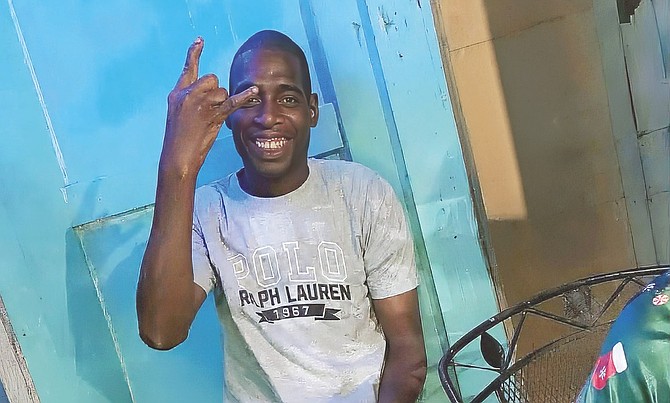
    The defendant, Jamel Miller, also known by the alias Shrek, entered his guilty plea before Senior Magistrate Tammika McKenzie at the Kingstown Magistrate’s Court during a hearing held on May 27. Court documents outline two separate offenses that Miller committed on the private property of Shenice Williams, a 33-year-old therapist residing in McKies Hill. The first incident took place on April 29, and the second occurred nearly a month later on May 22, with Miller entering Williams’ fenced yard on both occasions with the intention of carrying out a theft.

    Court records detail the long sequence of troubling events that led to Miller’s eventual capture. Starting in January of this year, Williams began noticing consistent damage to her vehicle, which she parked on her private driveway. The unexplained scratches quickly left her on edge, and the situation escalated when she heard unexpected knocking on her bedroom window one night. Following the incident, Williams reported feeling too unsafe to sleep in her own home.

    Williams’ property is secured by a five-foot wire perimeter fence, two metal entry gates, and a network of closed-circuit security cameras that are linked to her mobile phone, allowing remote access to live and recorded footage. On the morning of April 29 at approximately 7 a.m., Williams received an alert from her camera system on her cell phone. Pulling up the recorded footage, she identified a slim, dark-skinned male wearing a red shirt, long trousers, and slippers who had entered her property at 2:45 a.m. that same day.

    A second unauthorized entry was captured on May 22. That night, around 11 p.m., Williams was at a local bar in Richmond Hill when she received another security alert. Checking the remote footage, she spotted the same individual, again wearing a red shirt paired with white pants and carrying a red-and-black backpack, exiting her yard. She immediately contacted the Saint Vincent and the Grenadines Police Force to file a report. Patrol officer PC1090 Williams led a team of officers to the property shortly after the call, but the intruder had already left the area by the time they arrived.

    The following morning at 8:30 a.m., Williams provided the recorded CCTV footage to investigating officers. The footage was distributed across local patrol units, and Miller was quickly identified as the person captured on camera. Law enforcement apprehended Miller on White Chapel Road in central Kingstown, transporting him to the headquarters of the Criminal Investigation Department for formal processing. After being informed of the charges against him and read his official police caution, Miller was interviewed in the presence of PC871 Lewis.

    When officers showed Miller the CCTV footage, they immediately noticed he was wearing the exact same red shirt and white pants that he had on during the May 22 intrusion captured on camera. Miller did not deny his involvement, confessing that he was the person seen in the recordings and providing a voluntary written statement to investigators admitting his guilt.

    In her final sentencing ruling, Senior Magistrate McKenzie ordered a five-month prison term for the first trespassing charge and a three-month term for the second offense. The sentences are set to run concurrently, meaning Miller will serve a total of five months behind bars beginning from the date of his conviction.