分类: society

  • Who Tore Down Calcutta’s Christmas Tree?

    Who Tore Down Calcutta’s Christmas Tree?

    The tranquil community of Calcutta Village has been shaken by a deliberate act of destruction targeting its central Christmas tree during the early hours of December 30, 2025. According to eyewitness accounts, the meticulously decorated tree—adorned with ornaments contributed by local residents—stood intact at approximately 3:00 a.m. but was discovered demolished less than sixty minutes later.

    Village Chairperson Alex Tzub expressed profound dismay at the incident, confirming that significant portions of the tree structure were fractured and numerous decorative elements were either shattered or forcibly dispersed across the vicinity. Despite the damage, Tzub affirmed the community’s determination to restore the display symbolizing seasonal unity.

    This episode represents the latest within an escalating sequence of vandalism incidents troubling the village. Tzub highlighted preceding criminal activities including targeted attacks on vehicle windshields and glass doors near the community center, indicating a persistent pattern that has evaded resolution due to insufficient evidence or eyewitness testimony.

    The village leadership is urgently appealing to residents for collaborative vigilance and information regarding these destabilizing acts. Tzub emphasized that such events tarnish the reputation of the entire community beyond its administrative bodies, stressing the necessity of collective action to identify perpetrators and prevent further occurrences in the traditionally peaceful locality.

  • Reflections on faith, rest, work as Old Year’s Night approaches

    Reflections on faith, rest, work as Old Year’s Night approaches

    As the final hours of the year approach, Barbados showcases a rich tapestry of traditions and personal philosophies surrounding Old Year’s Night celebrations. Across the island nation, residents are preparing to welcome the new year through distinctly different yet equally meaningful approaches that reflect their values, circumstances, and outlooks on life.

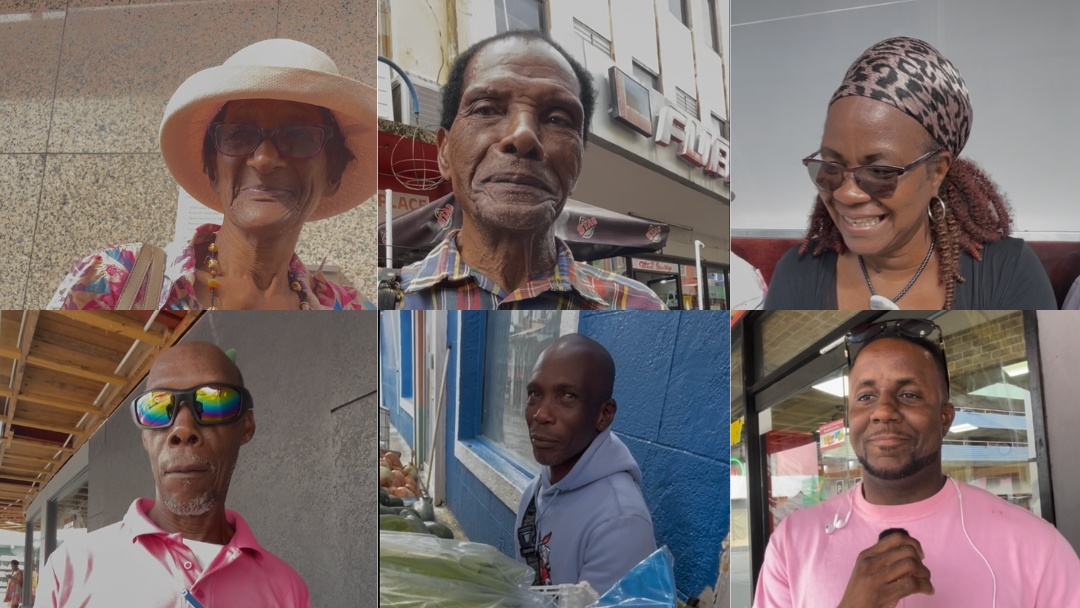
    For many Barbadians, religious observance forms the cornerstone of their year-end activities. Arla Daniel represents those who prioritize spiritual connections, describing her plans to attend services at All Saints Anglican Church in St. Peter after sharing a meal with her congregation. She emphasizes the transformative atmosphere of the ‘fully lit’ church, where admission fees grant participants a memorable visual and spiritual experience to conclude the year surrounded by community.

    In contrast, numerous islanders embrace a more spontaneous approach to the occasion. Roger Carter exemplifies this perspective, expressing his philosophical acceptance of life’s uncertainties by deliberately avoiding structured plans. His attitude reflects a broader sentiment that meaningful moments cannot be scheduled, preferring to let the evening unfold organically rather than conform to societal expectations.

    Home-centered celebrations provide comfort and practicality for many residents. Vincent Taylor and Anderson Barnes both advocate for domestic tranquility, with Taylor planning to enjoy spiritual music while welcoming what he hopes will be a peaceful new year. Barnes reinforces this perspective, noting the annual recurrence of the celebration makes extravagant observances unnecessary, choosing instead to appreciate Christmas purchases in the comfort of his home.

    The economic realities of modern life shape another dimension of Barbadian year-end traditions. Jerome Wilkerson openly prioritizes productivity over celebration, stating plainly that his primary objective is to ‘work and make money.’ His pragmatic approach—planning to potentially celebrate only after securing earnings—highlights how financial considerations influence cultural practices.

    Family connections and tempered optimism emerge as additional themes in Barbados’s year-end landscape. Eugene Joseph plans to combine parental bonding with modest celebrations, intending to share quality time with children while hopefully witnessing fireworks displays. Her acknowledgment of upcoming challenges demonstrates a characteristically Bajan resilience—approaching difficulties with calm determination rather than apprehension.

    This spectrum of traditions, from deeply spiritual to resolutely practical, illustrates how Barbadians across demographic and philosophical lines find personal significance in the transition between years, blending cultural heritage with individual circumstances to create meaningful rituals.

  • Transport unions end dispute and move forward with 27 de Febrero Corridor

    Transport unions end dispute and move forward with 27 de Febrero Corridor

    SANTO DOMINGO – In a landmark development for Dominican Republic’s public transportation, a coalition of major transport associations has formally presented a unified operating agreement to the National Institute of Transit and Land Transportation (Intrant). The agreement, submitted on Tuesday, paves the way for the long-stalled 27 de Febrero Transport Corridor to commence operations in the coming year.

    The breakthrough was achieved through collaboration between the National Transportation Federation New Option (Fenatrano), the Association of Car Owners of 27 de Febrero (Asoprocavefe) under Juan Hubieres’ leadership, and transport operator Pedro Gómez. This memorandum of understanding effectively resolves a multi-year conflict that had paralyzed the infrastructure project, marking a significant step toward modernizing the nation’s transit systems.

    Hubieres clarified that the current submission implements an accord originally established in June between Fenatrano, Asoprocavefe, and the transport collective represented by Pedro Marcelino Gómez Morel. This resolution eliminates internal disputes and ongoing legal challenges that previously obstructed progress. The formalization of this agreement ensures no further impediments to the government’s scheduled corridor initiatives for the upcoming period.

    Pedro Gómez celebrated the consensus as a pivotal moment for the sector, highlighting how the resolution ends years of discord while creating mutual benefits for all operators and fostering sustainable growth in public transportation. The parties confirmed that the operating license for the 27 de Febrero Corridor will be registered under the current consortium of operators, including Asoprocavefe, Sitraur R-1, Aspchopicma, and Asochotrece.

  • Increased garbage, careless acts hampering SSA efforts

    Increased garbage, careless acts hampering SSA efforts

    Barbados is confronting a severe waste management crisis in the aftermath of the festive season, with systemic operational strains and widespread public non-compliance overwhelming the island’s sanitation services. The Sanitation Service Authority (SSA) reports a perfect storm of challenges: a dramatic surge in post-Christmas waste volumes, persistent improper disposal practices, and critical bottlenecks at the Mangrove landfill’s transfer system.

    Public Relations Officer Carl Alff Padmore detailed the multifaceted nature of the emergency. Commercial hubs including Bridgetown, Warrens, Speightstown, and the tourist-heavy food center of Oistins experienced particularly severe accumulation. The emerging commercial zone at Six Roads further compounded pressure on collection routes. The situation has resulted in significantly slowed collections, forced vehicle withdrawals from service, and left numerous communities only partially serviced.

    A critical issue remains the dangerous non-compliance from both businesses and residents. Padmore highlighted ongoing violations in Bridgetown’s business community, where merchants continue improperly disposing of cooking oil and failing to collapse cardboard boxes. The consequences turned hazardous in Vauxhall Gardens, Christ Church, where a resident’s disposal of engine oil in a household bin soiled workers’ clothing and contaminated collection equipment, forcing suspension of services for half the community.

    Operational capacity is stretched to its limits with nearly 50 trucks deployed islandwide. Household waste, normally averaging three to four bags, ballooned to 15 bags per household during Christmas. Transfer delays at the Mangrove Solid Waste Management Centre have created a debilitating domino effect; a process typically taking 15-30 minutes now faces extensive delays due to congestion, crippling turnaround times for trucks needing to service additional communities.

    Illegal dumping and unsecured loads on private vehicles exacerbate the crisis, with recent incidents on St Stephen’s Hill and Cave Hill leaving debris that obstructed traffic flow. Padmore urgently directed citizens to use designated facilities correctly: Mangrove for household/garden waste, Bagatelle for metals and appliances, and Lonesome Hill for slaughterhouse byproducts.

    The environmental implications are severe. Illegal dumping in gullies and drains risks critical infrastructure damage and increased flooding by blocking waterways. This also creates ideal breeding conditions for mosquitoes, presenting a public health risk.

    With 2026 on the horizon, the SSA is advocating for a fundamental behavioral shift. Padmore emphasized that embracing recycling, waste reduction, and proper disposal methods is essential to alleviate pressure on the landfill and mitigate escalating environmental consequences. He concluded with a poignant reminder: ‘If we are kind to nature… then nature will be kind to us.’

  • Traffic arrangements: Springs, St George

    Traffic arrangements: Springs, St George

    The Royal Grenada Police Force has announced comprehensive traffic management measures that will be enforced during New Year’s Eve celebrations. These regulations will take effect from 7:00 PM on December 31, 2025, through 1:00 AM on January 1, 2026, to ensure public safety and facilitate smooth traffic flow during the holiday period.

    One-way traffic systems will be implemented on key roadways to manage vehicle movement efficiently. Motorists traveling on Belmont Public Road will be required to move exclusively from the Kirani James Boulevard intersection toward the Paddock area. Similarly, Springs Minor Road will maintain one-directional traffic flow heading toward the Belmont district.

    Specific areas will be designated as no-entry zones for all vehicular traffic. Access restrictions will apply to Belmont Public Road at its junction with Paddock Public Road, while Springs Minor Road will be closed at its intersection with Belmont Public Road.

    Parking accommodations have been carefully arranged to prevent congestion. Public vehicles will be prohibited from parking along Springs Minor Road entirely. However, authorized parking will be permitted on the left-hand side of Belmont Public Road in the direction of Paddock.

    The Royal Grenada Police Force emphasizes the importance of public cooperation with these temporary measures, which are designed to maintain order and safety during the New Year’s celebrations. Motorists are advised to plan their routes accordingly and comply with all posted signage and police directives.

  • ATTORNEYS’ CALL: Employers told to re-examine disciplinary practices after CCJ ruling

    ATTORNEYS’ CALL: Employers told to re-examine disciplinary practices after CCJ ruling

    A landmark Caribbean Court of Justice (CCJ) decision has triggered urgent calls for Barbados employers to overhaul workplace disciplinary practices, with legal experts warning that procedural fairness and contractual compliance are no longer optional. The ruling in Massy Stores (Barbados) Limited v Forde [2025] has established stringent new standards for employee discipline that could expose companies to significant legal liability if ignored.

    Legal attorneys Katriel Pile and Maya L. Kellman, who conducted a comprehensive analysis of the precedent-setting case, emphasize that the court’s decision fundamentally reshapes employer obligations regarding employee misconduct proceedings. The case originated from a dispute where Massy Stores bypassed its own disciplinary procedures to summarily dismiss an employee, prompting judicial scrutiny of whether such actions constituted lawful termination.

    The CCJ’s ruling clarified that while summary dismissal remains justified for repudiatory breaches of employment contracts, employers cannot automatically resort to immediate termination without considering contextual factors. The court established that mere misconduct warranting dismissal doesn’t necessarily justify bypassing progressive disciplinary measures when other considerations are present.

    Pile and Kellman identify several critical principles emerging from the ruling: contractual incorporation of disciplinary procedures creates binding obligations regardless of employee tenure; suspension without pay requires explicit contractual authorization; and employers must demonstrate proportionality in sanctions considering mitigating circumstances and historical practices.

    Perhaps most significantly, the attorneys note the ruling establishes that procedural fairness requirements apply to all employees beyond probationary periods, dismantling the common misconception that short-service employees lack protection against unfair dismissal claims. The decision also introduces what legal experts describe as a ‘humanizing patina’ approach, recognizing that not every rule violation justifies termination and employers must account for human fallibility in workplace contexts.

    The legal analysis concludes that effective discipline now requires balancing rule enforcement with lawful, proportionate implementation that acknowledges workplace realities. Failure to adopt these standards could expose employers to claims for lost wages, breach of contract allegations, and significant reputational damage.

  • Three Antiguans Named in King’s New Year Honours

    Three Antiguans Named in King’s New Year Honours

    In a prestigious recognition of outstanding contributions to national development and Commonwealth service, three distinguished Antiguans have been named in King Charles III’s New Year Honours list. The announcement was formally made by Governor General Sir Rodney Williams, with Buckingham Palace confirming the awards that will be formally presented at upcoming investiture ceremonies.

    The honorees include Janey Howell, appointed Officer of the Order of the British Empire (OBE) for her extensive philanthropic work; Dr. Gabriella Poppy Valentine Howell, named Member of the Order of the British Empire (MBE) for her contributions to cultural preservation and education; and Assistant Commissioner of Police Desmond Dinard, recipient of the King’s Police Medal (KPM) for exemplary service in law enforcement.

    Sir Rodney Williams emphasized that these awards reflect the nation’s core values of “dedication to duty, generosity of spirit, and commitment to the welfare of others.” He noted that the achievements of these individuals not only bring national pride but also serve as inspiration for future generations.

    Janey Howell’s recognition comes after decades of voluntary service in heritage preservation, including significant contributions to the Heritage Trust of Antigua and Barbuda and instrumental support for the Government House museum project. Her humanitarian efforts during the COVID-19 pandemic further demonstrated her commitment to community welfare.

    Assistant Commissioner Dinard received honors for his remarkable four-decade career in policing, beginning with his joining the force in 1982. His contributions span crime prevention initiatives, professional training programs, and enhancing public safety through both frontline and leadership roles.

    Dr. Howell was acknowledged for her leadership in cultural heritage and education, particularly her work in restoring The Great House Antigua as a heritage tourism destination and her involvement in the Government House Museum redevelopment project. Her charitable endeavors extend to healthcare, education, and environmental conservation.

    The Governor General highlighted that these honors underscore the international respect earned by Antiguans and Barbudans through their dedicated service. Further details regarding the formal investiture ceremonies will be announced in due course.

  • Several Archeological Sites Across Belize Defaced

    Several Archeological Sites Across Belize Defaced

    Belize’s archaeological authorities have issued a forceful public warning following a series of vandalism incidents at protected historical sites, with the ancient Mayan complex of Xunantunich becoming the latest target of destructive graffiti tagging. The Institute of Archaeology emphasized that such acts inflict permanent damage on the nation’s cultural heritage and violate strict preservation laws.

    Dr. Melissa Badillo, Director of the Institute of Archaeology, expressed profound disappointment at the recurring vandalism despite ongoing educational initiatives. “It is deeply disheartening to witness visitors engaging in such destructive behavior,” Dr. Badillo stated. “We maintain continuous awareness programs with schools, tour operators, local communities, and researchers precisely to prevent these occurrences.”

    The Institute highlighted the severe legal consequences for damaging protected monuments, including fines reaching $75,000 Belize dollars or imprisonment for up to five years. Dr. Badillo acknowledged the challenges of monitoring visitor behavior, particularly in high-traffic tourist areas, while emphasizing the shared responsibility of both local and international visitors.

    “We’ve documented incidents involving both Belizean citizens and foreign tourists,” Dr. Badillo noted. “Our message is unequivocal: this destructive behavior is universally unacceptable and carries serious legal ramifications.”

    The Institute urges all visitors to respect site regulations, follow guidance from archaeological rangers and certified tour guides, and immediately report any suspicious activity to help preserve Belize’s irreplaceable archaeological treasures for future generations.

  • Dominican man in Antigua pleads for help amid life-threatening cancer battle

    Dominican man in Antigua pleads for help amid life-threatening cancer battle

    A 61-year-old Dominican native who has resided in Antigua and Barbuda for over two decades now confronts a severe health crisis in isolation. Zophar ‘Tupac’ Andrew, who originally migrated seeking improved economic prospects, received a prostate cancer diagnosis approximately twelve years ago and currently requires urgent surgical intervention estimated at EC$6,000—a sum he cannot possibly afford.

    Andrew’s situation is compounded by his complete lack of official documentation in Antigua. Without a passport, Social Security identification, or medical benefits coverage, he finds himself systematically excluded from formal assistance programs. His health deterioration has progressively diminished his capacity for self-sufficiency and employment.

    In a candid reflection, Andrew acknowledged his past lifestyle choices: ‘I initially achieved financial success but squandered resources on reckless pursuits. I once perceived myself as invincible, but my circumstances have dramatically reversed.’

    Despite approaching multiple religious institutions for support, he received only spiritual consolation rather than tangible aid. His familial connections remain in Dominica, but relatives lack the financial means to assist, while in Antigua, he faces complete isolation.

    Currently occupying a small unauthorized wooden shelter on agricultural property in Jennings, Andrew sustains himself through minimal subsistence farming. However, even this basic survival mechanism becomes increasingly challenging as his physical capabilities decline.

    Remarkably, Andrew maintains resilient determination, explicitly stating he seeks not sympathy but merely an opportunity to survive. Having contributed to Antiguan society through decades of labor, he now appeals to the community for support during his most critical struggle.

    Potential supporters may contact him directly at 1-268-723-3379. While he has received minor provisions of food and essentials, the substantial financial requirement for life-saving surgery remains unmet.

  • Family of Ten Left Homeless After Early Morning Fire

    Family of Ten Left Homeless After Early Morning Fire

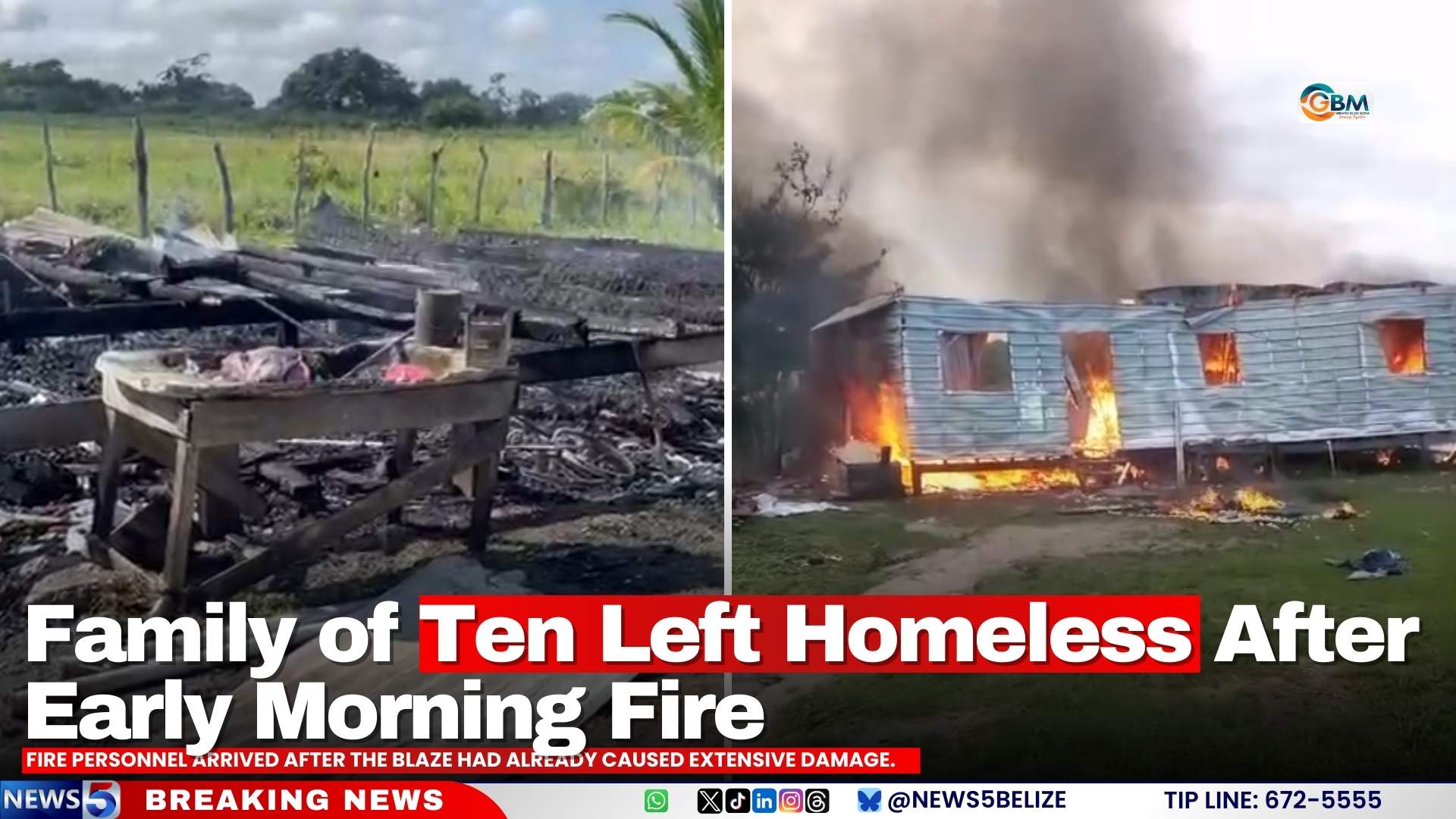
    A devastating early morning fire has left a ten-member family homeless in Guinea Grass Village, Orange Walk, destroying their residence and all personal possessions. The blaze erupted approximately at 6:00 AM on December 30, 2025, when resident Jose Mejia, 25, awoke to the smell of smoke and discovered flames emerging from an unoccupied bedroom.

    Mejia recounted the rapid escalation of the emergency in a telephone interview, describing his frantic efforts to evacuate nine other family members including multiple young children and a 45-year-old father-in-law. Despite the swift spread of the fire, all occupants managed to escape with only minor injuries reported, including a slight burn to Mejia’s foot sustained during the rescue operation.

    The family attributes the fire’s origin to an electrical malfunction involving an outlet on a structural post. Fire department personnel arrived after the structure had sustained extensive damage, preventing salvage of any belongings. Mejia described attempts to rescue clothing and other items that were ultimately consumed by the advancing flames.

    The household, comprising children ranging from four to fifteen years old alongside young adults, now faces complete destitution. With no possessions remaining, the family has issued a public appeal for assistance as they confront the overwhelming task of rebuilding their lives. Community members wishing to provide support may contact the family at +501 656-2143 or +501 606-0666.