
The United Workers Party (UWP) has expressed profound sorrow over the passing of Julius Timothy, a distinguished businessman and former politician, who passed away earlier this morning. In an official statement released on their Facebook page, the UWP National Executive Committee conveyed heartfelt condolences to Timothy’s family and friends. The statement highlighted Timothy’s unwavering dedication to the nation and his tireless commitment to the people of Dominica. ‘We extend our deepest sympathies to his loved ones during this difficult time. Julius Timothy’s contributions to our country will not be forgotten. May his soul rest in eternal peace,’ the party remarked. Timothy’s legacy as a public servant and entrepreneur has left an indelible mark on Dominica’s socio-political landscape.
分类: society
-

New Student Deportment Policy draws praise, criticism
The Ministry of Education in Saint Lucia has introduced a groundbreaking Student Deportment Policy this academic year, marking the culmination of years of extensive consultations with educators, administrators, students, parents, and other stakeholders. The policy aims to harmonize the maintenance of school appearance standards with the freedom for students to express their identities without facing discrimination. Central to the policy is a framework that establishes clear expectations for student deportment across school communities, ensuring consistency and fairness in its application. While the guidelines address uniforms, jewelry, and general appearance, the most notable change pertains to hairstyles. The new rules permit students, particularly young men, to wear longer hair, dreadlocks, and interlocked styles, provided they maintain cleanliness and avoid obstructing others’ views. This shift represents a significant departure from past practices that often marginalized students with natural or culturally significant hairstyles, particularly those from Rastafarian and Afrocentric backgrounds. The Iyanola Council for the Advancement of Rastafari (ICAR), a key participant in the policy consultations, hailed the move as long overdue, recalling decades of discrimination faced by Rastafarian students. Aaron Alexander, ICAR’s president, praised the policy as a historic correction to colonial-era biases, emphasizing the importance of embracing natural hair as a symbol of cultural identity. Rahym Augustin-Joseph, Saint Lucia’s first Rhodes Scholar and a prominent student leader, welcomed the policy as a step forward but called for further refinement to include more Afrocentric hairstyles and ensure equitable implementation. He stressed the need for transparent enforcement mechanisms and student representation in decision-making processes to prevent bias. Augustin-Joseph also highlighted the importance of addressing disciplinary measures and the language used in the policy to avoid perpetuating historical inequalities. The policy has sparked broader discussions about balancing tradition and inclusivity in education, with advocates urging a reckoning with the colonial roots of many societal norms. While the policy is seen as a progressive step, its success will depend on its practical application and the ongoing commitment to fostering a more inclusive educational environment.
-

‘I was hog tied and beaten for trespassing’
A 46-year-old man, Kino Wood, broke down in court as he described a harrowing ordeal after trespassing on a property in Sandilands Village on October 15. Wood, who works with the Urban Renewal Programme, claimed he entered the property to deal with a family emergency, citing heavy rain and a delayed bus as reasons for taking a shortcut. However, he alleged that the property owners subjected him to a brutal assault, including being hog-tied, beaten, and stomped on the chest. Wood also claimed his boots and clothes were removed and thrown across the road. He showed the court bruises and a bump on his head, recounting how he feared for his life during the incident. Wood denied stealing $5.50 from the complainant’s car, insisting it was his own money for bus fare. Prosecutor Kendrick Bauld disputed Wood’s account, stating the complainant saw him searching her vehicle and called the police, who found him at the scene and arrested him after discovering the missing money. Wood, who pleaded guilty to the theft charge, expressed remorse and vowed to change his life. Magistrate Abigail Farrington placed him on two years’ probation, warning that further offenses could result in a $50 fine for trespassing and a three-month prison term for theft.
-
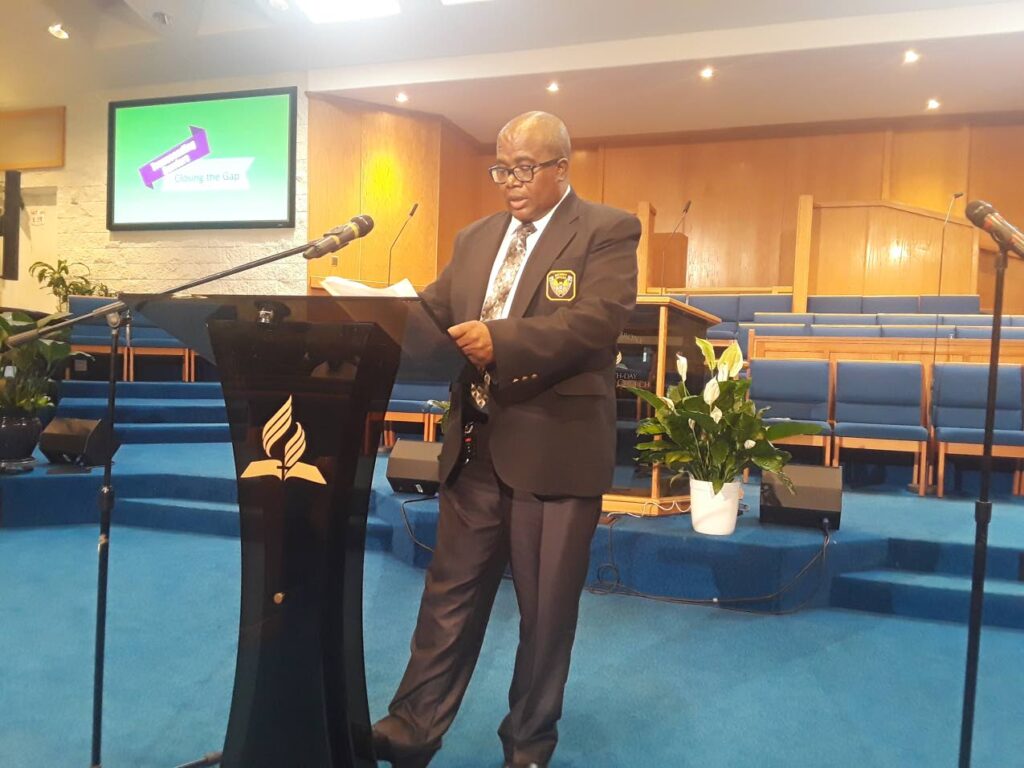
‘Even the simplest infraction’ could bring jail time in the US, immigration attorneys warn
In New York, immigration attorneys are issuing urgent warnings to Jamaicans eligible for U.S. citizenship about the severe repercussions of incarceration, even for minor offenses. This caution was a central theme at a recent forum organized by the Ex-Correctional Officers Association of Jamaica and the North Bronx Seventh-day Adventist Church. The event aimed to raise awareness about the consequences of imprisonment, particularly for young people, as the Trump Administration intensifies its crackdown on illegal immigration. Immigration attorney Shane R. Brown highlighted that the U.S. has the world’s largest incarcerated population, with 1.9 million people behind bars. New York alone has an average daily prison population of over 16,000, with systemic issues like mandatory sentencing laws and racial disparities contributing to the high numbers. Brown emphasized that African American and Hispanic individuals are disproportionately represented in the prison system. Maurice Maitland, another immigration attorney, warned that even minor offenses such as traffic violations, disorderly conduct, or marijuana use—legal in some states but not federally—can lead to deportation. Social worker Carmeta Albarus pointed out that inadequate parental supervision often leaves Jamaican youth vulnerable to the criminal justice system. She noted a recent surge in deportations, with monthly flights doubling. Immigration attorney Winston Tucker urged eligible Green Card holders to apply for citizenship promptly, citing increasing complexity in the process. He also highlighted the benefits of citizenship, including voting rights. Ronnie Hammick, president of the Ex-Correctional Officers Association, stressed the need for community efforts to prevent incarceration, emphasizing its emotional and financial toll.
-
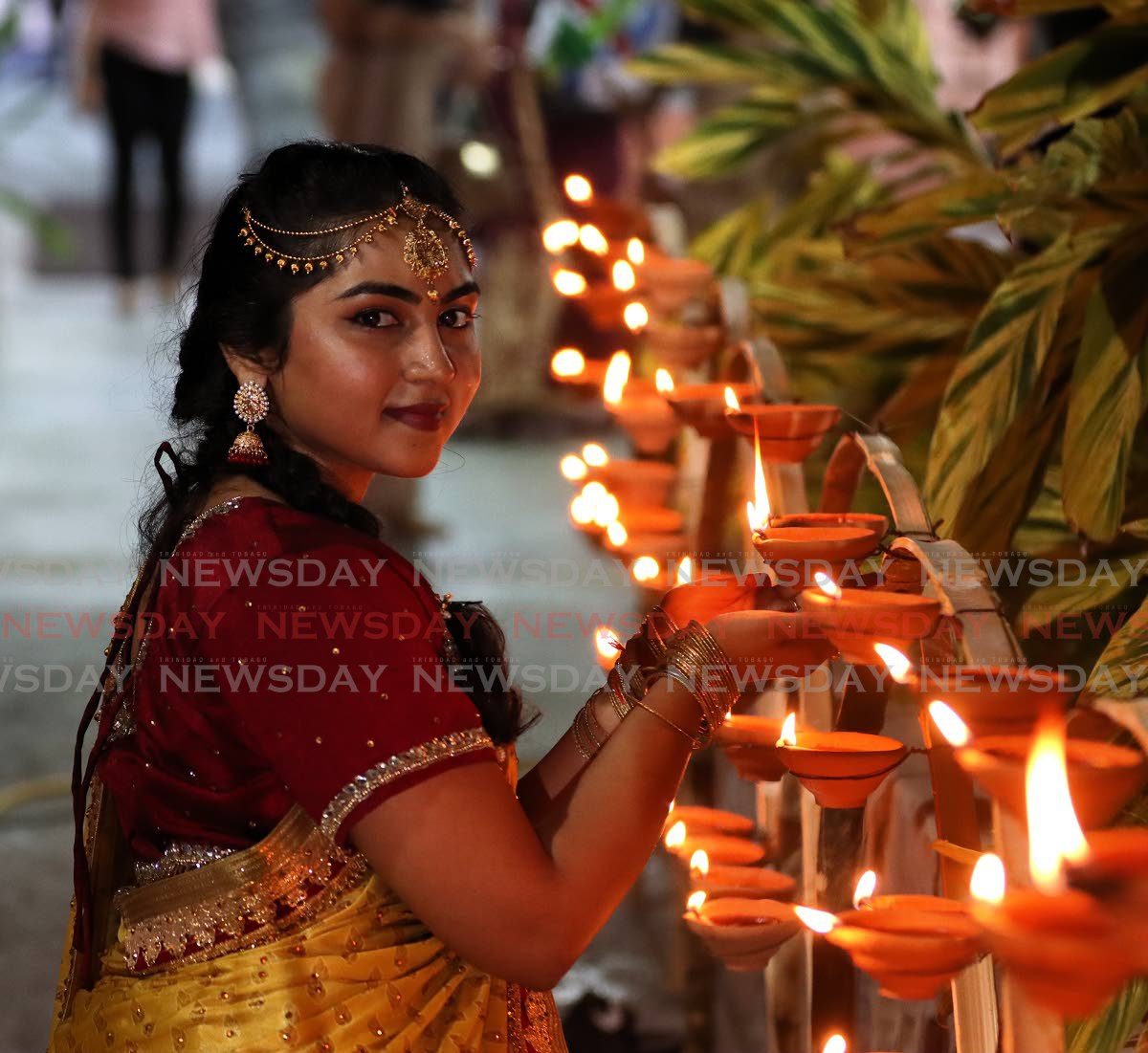
Acting President: Reflect on the spiritual meaning of Divali
Acting President Wade Mark delivered a heartfelt national message in honor of Divali, the Festival of Lights, urging citizens to embrace the spiritual and communal significance of the celebration. Speaking on October 11, Mark highlighted the festival’s core themes of light triumphing over darkness, unity, and compassion. He emphasized that Divali, which commemorates the return of Lord Rama and Mother Sita to Ayodhya after 14 years of exile, symbolizes resilience, duty, and the enduring strength of family and community bonds. Mark described the lighting of deyas (oil lamps) as a powerful tradition that serves as a reminder of the ability of even a single light to dispel darkness. He encouraged citizens to embody this light by fostering love, understanding, and peace in their communities. The acting president also noted the widespread celebrations across the nation, with thousands illuminating their homes and businesses while offering prayers to Mother Lakshmi, the goddess of wealth and prosperity. Mark called for both personal and national transformation, urging citizens to reflect on values such as freedom, integrity, truth, and justice. He emphasized that Divali’s true essence lies not only in lighting physical lamps but also in keeping one’s spiritual light radiant. Mark concluded his message by extending warm greetings on behalf of President Christine Kangaloo and his family, wishing the Hindu community and the nation a joyous and holy Divali. ‘May the joy and peace of Divali fill all homes throughout the nation. Shubh Divali!’ he said.
-
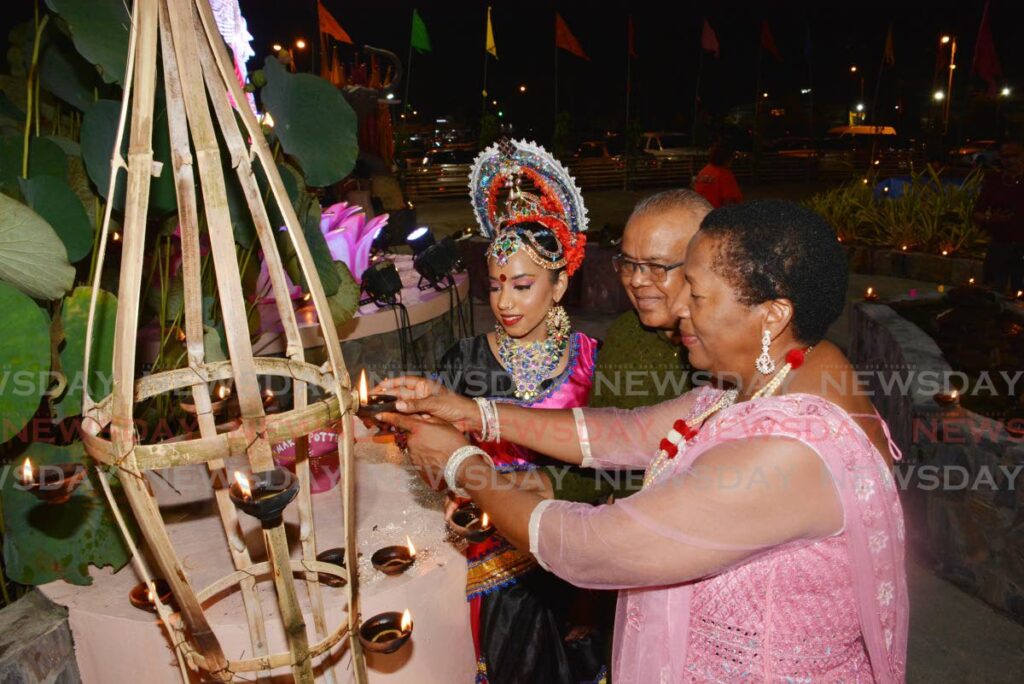
Opposition Leader: Strenghten the bonds of unit this Divali
Opposition Leader Pennelope Beckles recently participated in the Divali Nagar celebrations in Chaguanas, Trinidad and Tobago, on October 16, lighting a deya alongside National Council of Indian Culture president Surujdeo Mangroo and dancer Samara Mohammed. In a heartfelt statement issued on October 19, the eve of Divali, Beckles described the festival as one of the most sacred and auspicious occasions on the Hindu calendar, extending warm greetings to the Hindu community and the nation at large. She emphasized the spiritual significance of Divali, highlighting its themes of light overcoming darkness, knowledge dispelling ignorance, and righteousness triumphing over evil. Beckles underscored the festival’s role in fostering unity, compassion, and hope, particularly during challenging times. She called on leaders to act with integrity, communities to show compassion, and citizens to be beacons of light for one another. As Arima MP and Opposition Leader, Beckles reaffirmed her commitment to building a nation rooted in fairness, justice, and opportunity for all. She concluded by wishing for the divine blessings of Mother Lakshmi to bring peace, prosperity, and purpose to every home, guiding the nation toward a future filled with justice, compassion, and hope.
-
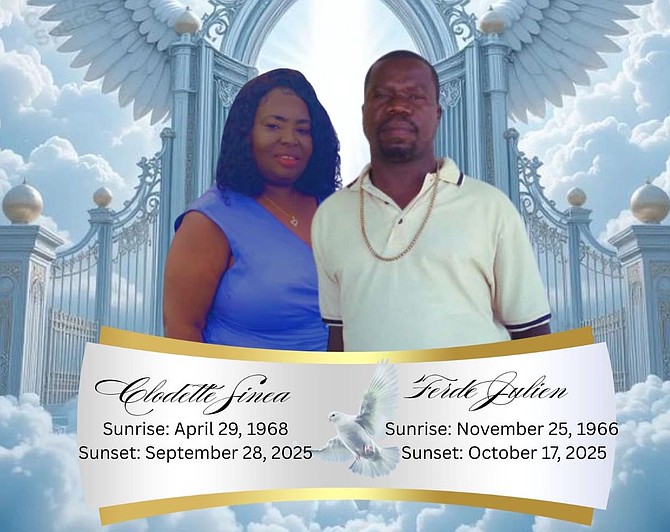
Father-of-four killed in car crash just weeks after wife died
A devastating double tragedy has struck a family in Eleuthera, Bahamas, after 58-year-old Ferde Julien, a father of four, was killed in a car crash on Friday night, just weeks after the death of his wife. The incident occurred on Queen’s Highway when Julien, reportedly returning home after socializing, collided with a tree. Police discovered him unresponsive and severely injured in his extensively damaged vehicle. His nephew, Ervin Bain, described the loss as a profound blow to the family, who were still grieving the recent passing of Julien’s wife. ‘The loss of two parents is something many people have never experienced, making the coping process incredibly difficult,’ Bain told The Tribune. Julien, a carpenter originally from Haiti, had moved to Eleuthera five years ago for work and had aspirations of purchasing land to build a home for his family. He was known for his quiet, loving nature and deep devotion to his family. The crash has raised concerns about road safety in the area, with family members citing poor road conditions and inadequate street lighting as potential contributing factors. The family plans to meet with police officials to seek further clarity on the circumstances of the accident. This tragedy marks the 51st traffic fatality in the country this year, according to The Tribune’s records.
-

London police to stop probing ‘non-crime hate incidents’
In a significant policy shift, London’s Metropolitan Police announced on Monday that they will no longer investigate ‘non-crime hate incidents,’ following widespread criticism over the arrest of comedy writer Graham Linehan for anti-transgender social media posts. The decision comes after Police Commissioner Mark Rowley emphasized the need for clearer guidelines on handling offensive online content, particularly in cases that do not constitute criminal offenses. Linehan, known for creating popular shows like ‘Father Ted’ and ‘The IT Crowd,’ was detained at Heathrow Airport in September over three posts on X (formerly Twitter), which authorities initially claimed incited violence. The UK’s policing watchdog had previously recommended halting the recording and investigation of such non-criminal hate incidents. The Met’s spokesperson stated that the new policy would provide ‘clearer direction for officers’ and allow them to focus on criminal investigations. While non-crime hate incidents will still be recorded, police will no longer pursue them unless they involve clear risks of harm or disorder. Prosecutors also confirmed on Monday that they would take ‘no further action’ against Linehan, who had been accused of inciting violence through his posts. One of the controversial posts read, ‘If a trans-identified male is in a female-only space, he is committing a violent, abusive act. Make a scene, call the cops, and if all else fails, punch him in the balls.’ Linehan, who denies separate harassment charges related to abusive posts against a transgender woman, vowed to hold the police accountable for what he described as an ‘attempt to silence and suppress gender-critical voices.’ The arrest sparked a heated debate on free speech, with figures like tech billionaire Elon Musk, author JK Rowling, and hard-right politician Nigel Farage criticizing the UK’s approach. Prime Minister Keir Starmer echoed concerns, urging police to prioritize ‘the most serious issues.’ Rowley noted that ambiguous laws have left officers ‘between a rock and a hard place,’ forcing them to record non-criminal incidents as crimes when reported. The move reflects broader tensions in the UK over free speech, particularly in light of recent arrests of individuals supporting proscribed groups like Palestine Action.
-
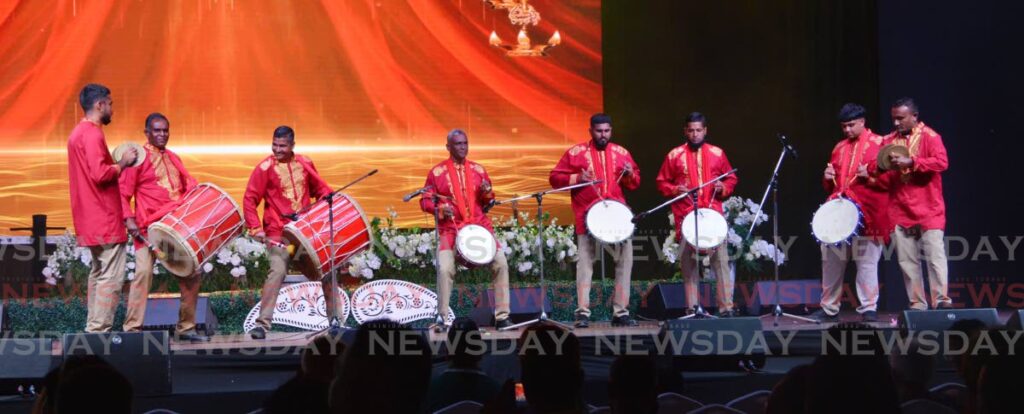
Divali a time of love, unity, peace
As the world marks Divali on October 20, 2025, this vibrant Hindu festival continues to illuminate hearts and homes across Trinidad and Tobago (TT). Known as the Festival of Lights, Divali, or Deepavali, holds profound cultural and spiritual significance, celebrated with immense enthusiasm not only in India but globally. The festival derives its name from the Sanskrit words ‘deepa’ (light) and ‘avali’ (a row), symbolizing a row of lights that dispel darkness and ignorance. In TT, the festival is referred to as Divali, reflecting the local linguistic adaptation. The celebration is marked by the lighting of deyas—small clay oil lamps—adorning homes, streets, and public spaces, alongside the use of firecrackers and akashadiwas (large lamps). Divali is steeped in rich mythology, with legends such as Lord Rama’s return to Ayodhya after defeating Ravana and the marriage of Goddess Lakshmi to Lord Vishnu. Lakshmi, the goddess of wealth, is worshipped during the festival, with devotees chanting mantras and performing pooja to seek her blessings. In TT, the festival is a time for community bonding, with families cleaning their homes, sharing vegetarian meals and sweets like barfi and kurma, and creating elaborate light displays using bamboo frames. The nine-night Divali Nagar in Chaguanas is a cultural highlight, showcasing Indo-Trinidadian heritage through food, music, and dance performances. Recognized as a national public holiday, Divali fosters unity, peace, and love, encouraging people to come together and celebrate their shared humanity. As Nigel Seenathsingh, a San Fernando resident, eloquently expressed, ‘May the light and philosophy of Divali guide us to become the best that we can be, uniting us to make TT the best, safest, and most united country in the world.’ On behalf of his family, he extends warm wishes for a Shubh Divali 2025.
-
Divali as spiritual experience
In a recent letter to the editor, Dr. Errol Narine Benjamin reflects on the contrasting approaches to cultural celebrations in Trinidadian schools, particularly focusing on the Divali festival. Dr. Benjamin begins by praising the Divali celebration at Presentation College in San Fernando, a traditionally conservative Catholic school. He highlights the event’s inclusivity, noting the presence of religious symbols like Goddess Lakshmi and Hanuman, as well as the spiritual ambiance created by lighted deyas. The principal and staff emphasized the festival’s inclusiveness, and students’ portrayal of the Ramayana added depth to the celebration, making it meaningful for the multicultural nation.
However, Dr. Benjamin contrasts this with a recent statement from the Presbyterian Board, which declared that only Christian celebrations would be allowed in their schools. While the board suggested that students would be ‘taught’ about other festivals like Divali in the classroom, they explicitly ruled out shared spiritual experiences. Dr. Benjamin finds this stance deeply ironic, given the historical context of Naparima College, which has roots in the East Indian community. Early Canadian missionaries in Trinidad actively assimilated elements of East Indian culture, even adapting hymns and choruses into local languages to further their missionary work.
Dr. Benjamin expresses disappointment at the board’s ‘exclusivity,’ arguing that Divali, with its rich spiritual heritage, should not be reduced to a mere classroom lesson. He urges the Presbyterian Board to take inspiration from Presentation College’s inclusive approach, which celebrates cultural diversity while fostering spiritual unity.