分类: society

  • Dominican Republic showcases gastronomy and culture in France

    Dominican Republic showcases gastronomy and culture in France

    The Dominican Republic achieved remarkable success at the international cultural and commercial exposition ‘Flavors of the World 2025’ in southern France, significantly enhancing its global profile through an immersive showcase of national assets. Under the leadership of Consul General Ana Emilia Báez Santana, the Dominican delegation transformed the event into a strategic platform for presenting the country’s diverse cultural heritage, tourism potential, artistic excellence, and musical traditions while simultaneously forging new economic partnerships.

    The European debut of the Dominican Ballet, directed by cultural manager Héctor Farías, emerged as a spectacular centerpiece with its vibrant performance of traditional Dominican folklore. Attendees numbering over 900 experienced an authentic sensory journey through the republic’s offerings, including traditional culinary specialties, live musical performances, premium tobacco displays, and Ron Barceló rum tastings. The event solidified its status as a premier destination for genuine cultural exchange, with each national pavilion providing unique opportunities for cross-cultural engagement and discovery of global culinary traditions.

    This institutional presence in southern France successfully advanced the Dominican Republic’s strategic objectives of promoting its tourism sector, gastronomic excellence, cultural wealth, and investment opportunities to an international audience, creating valuable pathways for future economic and cultural collaboration.


  • SOVA:  Alleen beëdigd en ingeschreven advocaten mogen in Suriname optreden

    SOVA: Alleen beëdigd en ingeschreven advocaten mogen in Suriname optreden

    The Suriname Bar Association (SOVA) has issued a definitive clarification regarding legal service provision within the country, emphasizing that only attorneys formally sworn in by the Court of Justice and registered on the official tableau possess the authority to offer legal services. This statement comes in response to the recent establishment of a foreign law firm’s branch in Suriname.

    According to the nation’s Advocatenwet (Attorney Act), legal practitioners must meet three critical criteria: fulfill statutory educational requirements, receive formal swearing-in by the Court of Justice, and maintain active registration on the official tableau. The admission process involves soliciting advisory opinions from both the Prosecutor General and SOVA, with swearing-in ceremonies conducted only after positive recommendations and thorough verification of all qualifications. Any legal activities performed without proper tableau registration constitute a violation of Surinamese law.

    Foreign attorneys face additional regulatory hurdles. Regardless of their international qualifications, they cannot practice law in Suriname until completing the local admission process, including Court-administered swearing-in and official registration. Until fulfilling these requirements, they are prohibited from offering legal services or client representation.

    The legislation does provide limited exceptions for attorneys from countries with which Suriname maintains agreements on free movement of persons and services. These visiting lawyers must register with the Court and may only operate in collaboration with a locally registered Surinamese attorney. They cannot present themselves as fully licensed advocates and must strictly adhere to activities specified in their registration documentation.

    Legal consultants operate outside the Advocatenwet’s scope and consequently face no oversight from the Attorney Disciplinary College. This regulatory gap exposes citizens to heightened risks, as these consultants cannot perform functions exclusively reserved for licensed attorneys and operate without proper disciplinary safeguards.

    The Bar Association urges citizens to verify legal representatives’ credentials through SOVA’s official website, which maintains the complete registry of authorized practitioners. While Surinamese attorneys operate under clear disciplinary frameworks, foreign practitioners and consultants lack equivalent accountability mechanisms.

    SOVA reaffirmed its commitment to protecting both citizens’ legal rights and the integrity of the legal profession, vowing to ensure all foreign firms establishing local operations comply fully with Surinamese statutory requirements.

  • TAMCC Council update on negotiations with Grenada Public Workers’ Union

    TAMCC Council update on negotiations with Grenada Public Workers’ Union

    The T A Marryshow Community College (TAMCC) Council has provided the Grenadian public with a comprehensive update regarding its ongoing negotiations with the Grenada Public Workers’ Union (GPWU), marking a significant development in the institution’s labor relations history.

    Upon assuming leadership in August 2022, the current council inherited substantially strained industrial relations at the college. Demonstrating decisive action, the new administration successfully restored stability by resolving outstanding disputes and implementing salary increases totaling over EC$12.3 million for all TAMCC employees, covering the period from 2017 to 2024.

    In a groundbreaking move toward sustainable labor harmony, the council initiated negotiations for institution-specific Collective Bargaining Agreements (CBAs), diverging from previous practices that extended broader public sector agreements to the college. This strategic shift represents the first instance where TAMCC will establish tailored agreements addressing its unique operational requirements.

    After months of intensive negotiations, the TAMCC Negotiating Team developed comprehensive CBAs for 2025 and 2026-2028, which received council approval before submission to Cabinet for final consideration. The Cabinet has subsequently called for additional dialogue between TAMCC and the unions, expressing particular concerns regarding specific agreement components that require resolution before finalization.

    The negotiation process encountered increased tension when GPWU issued a November 26, 2025 communication demanding formal CBA signing by December 3 and insisting on specific December deadlines for retroactive salary payments and increases. The council responded by reminding the union of its president’s prior written agreement (dated September 10, 2025) to a structured three-phase approval process involving sequential endorsement by the Negotiating Team, TAMCC Council, and Cabinet before formal ratification.

    Documentary evidence confirms that GPWU President Daisy Hazzard and TAMCC Negotiating Team Chair Learrie Barry jointly acknowledged completion of negotiations and committed to the established approval protocol. Despite current tensions, the council maintains a conciliatory posture, proposing new meeting dates with GPWU and emphasizing the necessity of compromise to achieve mutually acceptable resolutions.

    Through an open letter from the Council Chair, TAMCC has maintained transparency with its employees regarding the negotiation status, reaffirming institutional commitment to resolving matters in the best interests of both the college and the nation.

  • Dominican government activates holiday security plan

    Dominican government activates holiday security plan

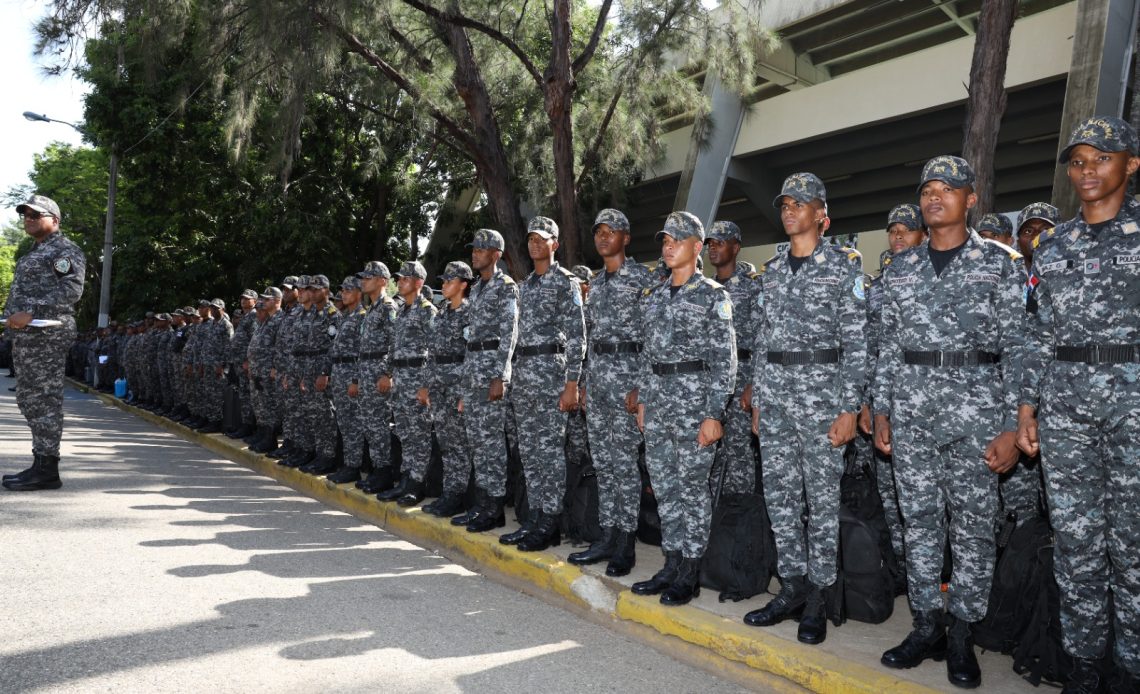
    The Dominican government has announced a significant expansion of its annual holiday security initiative, deploying twice as many personnel as last year’s operation. Interior and Police Minister Faride Raful revealed that the enhanced security plan will commence on December 3, 2024, and continue through January 10, 2025, with police and military units maintaining heightened visibility nationwide.

    Dubbed ‘Operativo Garantía de la Paz en Navidad’ (Operation Christmas Peace Guarantee), this year’s initiative builds upon last year’s deployment of 19,000 National Police and Armed Forces members. The comprehensive security framework will implement round-the-clock preventive measures, intelligence monitoring, and investigative operations across major transportation corridors, tourist destinations, and residential areas.

    Strategic patrols will focus on crime prevention targeting theft, public nuisance violations, and traffic incidents. The General Directorate of Traffic Safety and Land Transport (Digesett) will implement special measures to regulate holiday travel flow and prevent accidents as thousands of citizens embark on seasonal journeys.

    A multi-agency collaboration brings together numerous institutions including the Attorney General’s Office, Public Health and Environment ministries, National Drug Control Directorate (DNCD), State Economic Dining Halls, municipal authorities, and the Emergency Operations Center. Supplementary support will come from the 911 emergency system, Civil Defense, Dominican Red Cross, and Fire Departments, creating an integrated safety network throughout the festive season.

  • Unitedville Families Say Water Trucks Are No Solution to Ongoing Crisis

    Unitedville Families Say Water Trucks Are No Solution to Ongoing Crisis

    The community of Unitedville Village is grappling with a severe and protracted water shortage that has left households without reliable running water for several weeks, escalating long-standing frustrations among residents. Many report that the crisis has actually persisted for months, characterized by dry taps, contaminated water supplies, and inexplicably rising utility bills despite the lack of service.

    Local authorities have implemented a stopgap measure involving water trucks dispatched by the village Water Board to distribute potable water for filling containers and storage vats. However, residents overwhelmingly reject this as an inadequate solution. “This reliance on water trucks is completely insufficient and unsustainable. Our community requires functional running water infrastructure, not temporary deliveries,” one exasperated citizen remarked. The situation has become so dire that local schools have been forced to cancel sessions due to the water scarcity.

    This is not an isolated incident for Unitedville; historical reports from as early as 2021 document similar water shortage complaints, indicating a chronic infrastructural failure.

    Julius Espat, Area Representative for Cayo South, provided technical insight into the problem. He confirmed that while a secondary pump is currently operational, drawing water from the river, the community’s rapid expansion has critically outpaced the capacity of the existing reservoir. Despite drilling approximately 20 boreholes in search of a new water source, only one well is currently productive.

    Espat indicated that a new reservoir is essential, with plans being developed in phases. A formal budget proposal is expected, and if approved in the upcoming annual budget, construction could commence as early as March of next year.

    In a parallel development, Valentino Shal, CEO of the Ministry of Rural Transformation, reported progress on replacing a recently burnt-out pump and motor, with installation anticipated imminently.

    Amid the widespread discontent, a dissenting voice emerged on social media, criticizing the complaints and urging proactive individual measures like purchasing large storage containers. Nonetheless, the severity of the crisis is underscored by reports of residents resorting to buying water for cooking and bathing in local creeks. Neither official could provide a definitive timeline for a permanent resolution to Unitedville’s water woes.

  • Still No Motive For Murder of Eric Reyes

    Still No Motive For Murder of Eric Reyes

    Belize City confronts a deepening crisis of violence against vulnerable populations following the tragic shooting death of 15-year-old Eric David Reyes. The teenager became the third fatality in a violent week that has shaken the nation, with authorities struggling to identify motives or suspects in the case.

    According to police reports, Reyes was cycling home along Park Street shortly after 10 p.m. when an unidentified assailant approached and opened fire, fatally wounding the youth. Assistant Superintendent of Police Stacy Smith confirmed that investigative efforts have yielded no clear motivation for the brutal attack, explicitly ruling out gang connections despite the troubling pattern of violence.

    ‘Current evidence does not indicate Reyes’ involvement in gang activities, nor does it suggest this tragedy resulted from gang rivalry,’ Smith stated during a press briefing. The police official highlighted the victim’s challenging personal circumstances, revealing that Reyes resided with his paraplegic mother and sibling under conditions that limited optimal supervision.

    The killing has sparked broader concerns about societal protection for vulnerable demographics. Smith contextualized the incident within a disturbing pattern that also claimed the life of 61-year-old Wayne ‘Pie Bwai’ Myles just days earlier. ‘A society’s greatness is measured by its treatment of the elderly and the young,’ she emphasized, questioning whether Belize was failing these fundamental tests of civilization.

    Law enforcement authorities have issued a public appeal for information that might advance the investigation, urging community members to come forward with any relevant details. The back-to-back killings of both a minor and senior citizen have intensified scrutiny on public safety measures and social support systems throughout the Belize District.

  • Former Justice Lisa Shoman Backs Legal Challenge on Stop-and-Search Rights

    Former Justice Lisa Shoman Backs Legal Challenge on Stop-and-Search Rights

    A contentious legal battle is unfolding in Belize following a highway confrontation between attorney Tiffany Cadle and customs officials, drawing support from prominent legal experts including former Justice Lisa Shoman. The incident occurred along the Philip Goldson Highway when Cadle, traveling with her elderly mother, drove past a checkpoint near Sandhill that she deemed operated beyond legal authority.

    Cadle documented the encounter through Facebook Live, alleging customs officers initiated an unauthorized pursuit after she questioned their jurisdictional authority at what appeared to be a customs-only checkpoint. The pursuit culminated with officers allegedly cutting off her vehicle and conducting a search that yielded only traditional holiday items—a black cake and bottles of rum popo.

    The Customs and Excise Department defended its actions as part of a multi-agency operation involving police, defense forces, and immigration authorities targeting smuggling and transnational crime. Officials asserted their legal authority extends beyond traditional ports of entry.

    The confrontation has evolved into a significant constitutional challenge, with former Justice Lisa Shoman publicly endorsing Cadle’s position. Shoman referenced the landmark 2020 case Greg Nunez and Bryton Codd v. Attorney General of Belize, which established that law enforcement must demonstrate reasonable suspicion before conducting stops and searches. The court in that case deemed arbitrary stops unconstitutional violations of personal liberty and freedom of movement.

    Shoman emphasized that random checkpoints without individualized suspicion fail to meet legal standards, placing the burden of justification on law enforcement rather than citizens. The emerging legal challenge threatens to redefine the boundaries of search authority and constitutional protections in Belize, potentially affecting how multiple agencies conduct joint operations nationwide.

  • Water outages in Wallhouse under investigation by DOWASCO

    Water outages in Wallhouse under investigation by DOWASCO

    The Dominica Water and Sewerage Company Limited (DOWASCO) has issued a formal apology to residents of Wallhouse following a series of frequent and prolonged water service interruptions. The utility company has launched a comprehensive investigation to diagnose the root cause of the persistent supply issues.

    Kimani St Jean, Public Relations Officer for DOWASCO, confirmed that technical teams are conducting extensive assessments across the water distribution network. “We are actively investigating the underlying cause of these interruptions,” St Jean stated. “Our teams have performed multiple system evaluations and will continue technical monitoring until we identify and resolve the core problem.”

    The investigation includes detailed monitoring of the supply network leading to storage tanks and thorough examinations of the distribution infrastructure. DOWASCO has committed to maintaining transparent communication with the affected community throughout the diagnostic process, promising to share updates as new information becomes available.

    St Jean expressed gratitude to Wallhouse residents for their patience during the service disruptions, acknowledging the inconvenience caused by the unreliable water supply. The company has assured consumers that restoring consistent and reliable water service remains their highest priority as they work to implement permanent solutions to the infrastructure challenges.

  • Public Warn Against Purchasing Stolen Items

    Public Warn Against Purchasing Stolen Items

    The Royal Police Force of Antigua and Barbuda has issued a formal public advisory, strongly cautioning residents against the purchase of suspected stolen merchandise. This warning comes amid a concerning surge in property-related crimes across the islands, with law enforcement directly linking the illicit market for stolen goods to the increasing frequency of break-ins and larcenies.

    Recent criminal patterns indicate a troubling trend where high-value items, including household appliances and electronics, are being systematically pilfered from private residences. The police administration’s strategic communications office (STRATCOM) revealed that these items are believed to be rapidly circulating within local underground markets, creating a persistent cycle of crime.

    Emphasizing the serious legal ramifications, authorities have highlighted Section 241 of the nation’s Larceny Act, which explicitly criminalizes the knowing reception or purchase of unlawfully obtained property. Individuals convicted under this statute face severe penalties, including potential imprisonment for a term of up to a decade.

    The police are appealing to those currently engaged in this illegal trade to cease all activities immediately. Simultaneously, the force is mobilizing community support, urging citizens to maintain heightened vigilance and to report any overtly suspicious sales activities or individuals attempting to offload items under dubious circumstances.

    To facilitate information sharing, the public is encouraged to contact the Criminal Investigations Department directly at 462-3913. For those preferring absolute anonymity, tips can be submitted through the confidential Crimestoppers hotline at 800-TIPS (8477).

  • Rupununi woman fined, jailed for online harassment

    Rupununi woman fined, jailed for online harassment

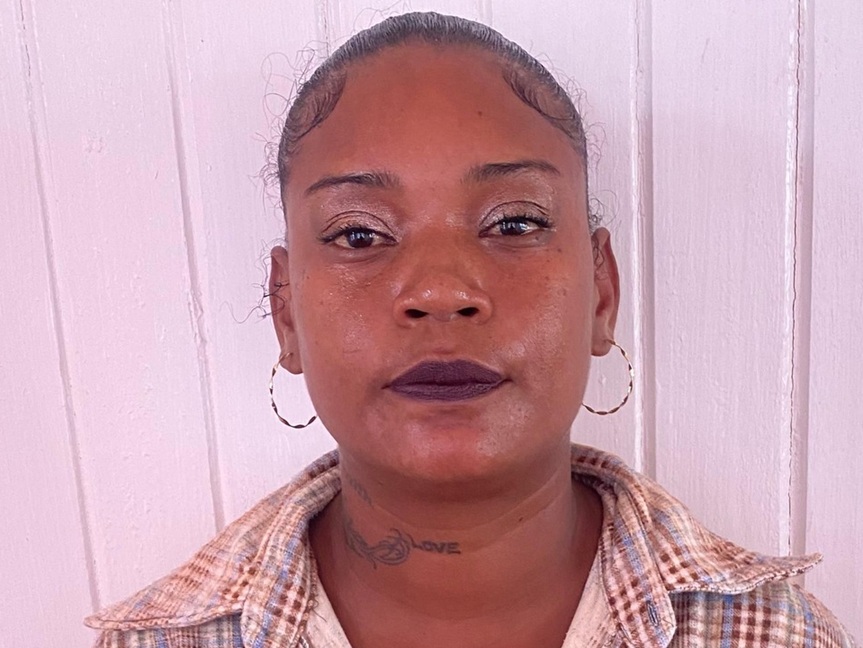
    In a landmark ruling underscoring the serious consequences of digital misconduct, a 34-year-old ambulance driver from Tabatinga, central Rupununi has been convicted under Guyana’s Cybercrime Act. Lorian Toney faced the Lethem Magistrate’s Court on Tuesday, December 2, 2025, where she pleaded guilty to using computer systems to intentionally humiliate, harass, and inflict substantial emotional distress upon victim Maxine Hendricks.

    The Guyana Police Force confirmed that Magistrate Omadatt Chandan delivered a stringent sentence combining both financial and custodial penalties. Toney was ordered to pay a substantial fine of GY$1 million (Guyanese dollars) alongside a one-year prison term. This case represents one of the most significant enforcements of the country’s cybercrime legislation to date.

    According to official police statements, the investigation began following a formal complaint about targeted online harassment. Law enforcement authorities arrested Toney on September 25, 2025, after establishing evidence that she systematically used digital platforms to conduct a campaign of emotional abuse against Hendricks.

    The ruling demonstrates Guyana’s increasingly robust approach to combating digital harassment and protecting citizens from online victimization. Legal experts suggest this judgment could establish important precedents for future cybercrime prosecutions in the Caribbean nation, particularly regarding the appropriate sentencing thresholds for digital harassment offenses that cause demonstrable emotional harm to victims.