分类: society

  • Tips turn tide on crime

    Tips turn tide on crime

    Jamaica’s forensic investigative agencies are experiencing a remarkable surge in public cooperation, with citizens proactively delivering crucial intelligence through diverse channels ranging from anonymous letters to direct office visits. This unprecedented flow of information has become instrumental in building legally sound cases against financial and organized criminals.

    Dennis Chung, Chief Technical Director of the Financial Investigations Division (FID), revealed that tips frequently arrive during active investigations, with motivations ranging from genuine civic concern to preemptive self-protection. “Many individuals operate under the false assumption that their clandestine activities remain secret,” Chung noted during the Jamaica Observer Monday Exchange. “In reality, people consistently approach us with information about these activities across all cases.”

    The high-profile investigation into Stocks and Securities Limited (SSL) particularly catalyzed public participation, triggering a substantial increase in informational leads. While acknowledging that some tips stem from personal agendas without merit, Chung emphasized that most contributions undergo rigorous evaluation. “We conduct thorough interviews and assess each tip’s validity,” he explained. “Those without substance are redirected to legal counsel, while credible information initiates formal investigations.”

    Supplementing public tips, financial institutions provide monthly suspicious transaction reports that frequently reveal unusual monetary activities, often unbeknownst to subjects under investigation. Chung stressed the FID’s meticulous approach to preserving its 90% conviction rate and avoiding reputational damage or litigation through methodical evidence collection.

    Colonel Desmond Edwards, Director General of the Major Organised Crime and Anti-Corruption Agency (MOCA), attributed his agency’s effectiveness to substantial public trust. Significant operations consistently generate increased information flow, enhanced since their 2022 partnership with Crime Stop. Edwards receives approximately 2-3 anonymous letters monthly alongside digital submissions and in-person information sharing.

    Nigel Parke, MOCA’s Senior Director of Legal and Prosecutorial Services, emphasized the agency’s robust evidence testing process aligned with the Director of Public Prosecutions’ requirements for “sound, cogent, strong evidence” before initiating proceedings.

    Both agencies report minimal challenges in witness cooperation, with most informants providing witness statements once assured of security through comprehensive witness protection programs. Between 2018-2025, MOCA conducted 245 operations resulting in 256 arrests, 240 charges, and 200 convictions. The FID’s 2025 efforts seized $164.1 million cash plus substantial assets, with courts ordering confiscations exceeding $33 million and US$35,000.

  • WATCH: ‘I may never get a bone, but justice will serve’

    WATCH: ‘I may never get a bone, but justice will serve’

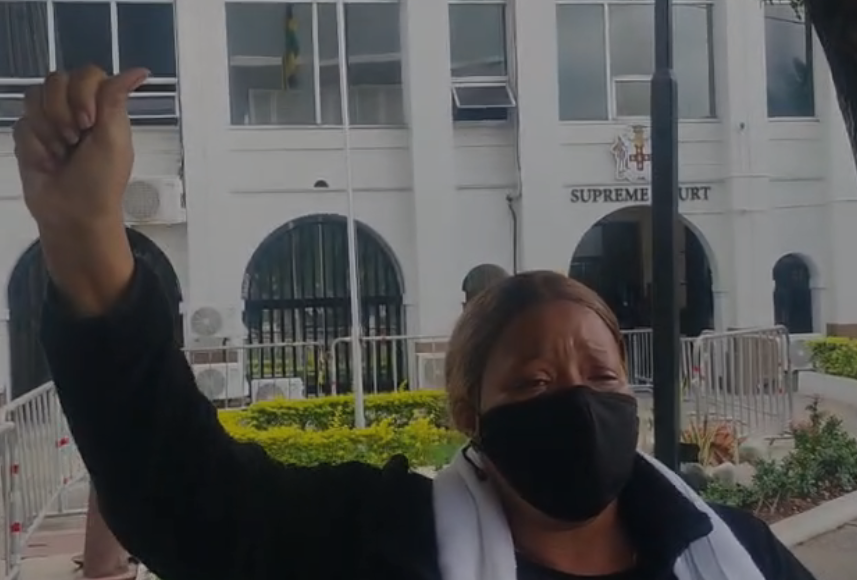
    KINGSTON, Jamaica — In a emotionally charged courtroom development that has captured national attention, Constable Noel Maitland has been found guilty of murder and preventing the lawful burial of his girlfriend, Donna Lee Donaldson, who vanished in July 2022. The verdict delivered Thursday at the Home Circuit Court marked a pivotal moment in a case that has highlighted issues of gender-based violence and police accountability in Jamaica.

    The conviction came after extensive deliberation by the jury, which determined Maitland’s culpability in the disappearance and presumed death of the 24-year-old victim, whose body has never been recovered. The case centered on Donaldson’s last known whereabouts at Chelsea Manor Apartments in St. Andrew, where the accused police officer resided.

    Sophia Lugg, the victim’s mother, responded to the verdict with tearful gratitude, addressing supporters and media outside the courthouse. ‘To all my Jamaican people, to each and everyone all over this world, thank you very much for standing with me,’ Lugg declared. ‘The verdict has passed and victory belongs to us.’

    When questioned about Maitland’s emotional display upon hearing the verdict, Lugg offered a philosophical perspective: ‘Tears are a language for even the murderers. God understands, he knows why he cries.’

    The Director of Public Prosecutions, Claudette Thompson, described the outcome as ‘bittersweet,’ noting that while justice had been served, the verdict confirmed the tragic reality of Donaldson’s fate. ‘It is not a moment for us to rejoice,’ Thompson stated. ‘It is acceptance that the jurors returned the correct verdict.’

    Lugg vowed to continue seeking answers about her daughter’s final resting place while expressing gratitude to Jamaica’s justice system, the Office of the Director of Public Prosecutions, and the jury members who participated in the proceedings.

  • 287 new constables to strengthen JCF’s operations

    287 new constables to strengthen JCF’s operations

    KINGSTON, Jamaica — In a significant boost to national security capabilities, Jamaica is deploying 287 newly graduated police constables to operational duty. The officers, comprising Batches 161 and 162, were formally recognized during a passing out parade and awards ceremony at the National Police College of Jamaica in Twickenham Park on Wednesday.

    Prime Minister Dr. Andrew Holness addressed the graduating class, emphasizing their critical role as ambassadors of law, order, and public trust during a challenging security landscape. “You have chosen a path that demands courage, discipline, integrity, and service above self,” Holness stated, acknowledging the nation’s ongoing struggles with violence, organized crime, cybercrime, and post-disaster recovery demands.

    The Prime Minister highlighted that this cohort represents the second group trained under Jamaica’s revolutionary competency-based curriculum—a fundamental reform transitioning policing from a technical craft to a fully professionalized discipline. This educational shift focuses on student-centered learning tailored to the competencies required for modern democratic policing.

    Holness issued a compelling charge to the new constables, urging them to build effective community relationships, wear their uniforms with pride, and embody the values instilled during training. He specifically emphasized respecting the law they enforce, modeling expected disciplines, rejecting all forms of corruption, and leading by consistent example rather than following crowds.

    Assistant Commissioner of Police Merrick Watson, NPCJ Director, reinforced these messages, advising the graduates to exercise authority wisely while serving with discipline and integrity. The ceremony concluded with pledges from valedictorians Constables Julia Khani and Bryce Gay, who committed to serving with pride, integrity, and unwavering dedication to their nation.

  • Son Remembers Sir Gerald Watt as Passionate Father, Relentless Worker in Funeral Eulogy

    Son Remembers Sir Gerald Watt as Passionate Father, Relentless Worker in Funeral Eulogy

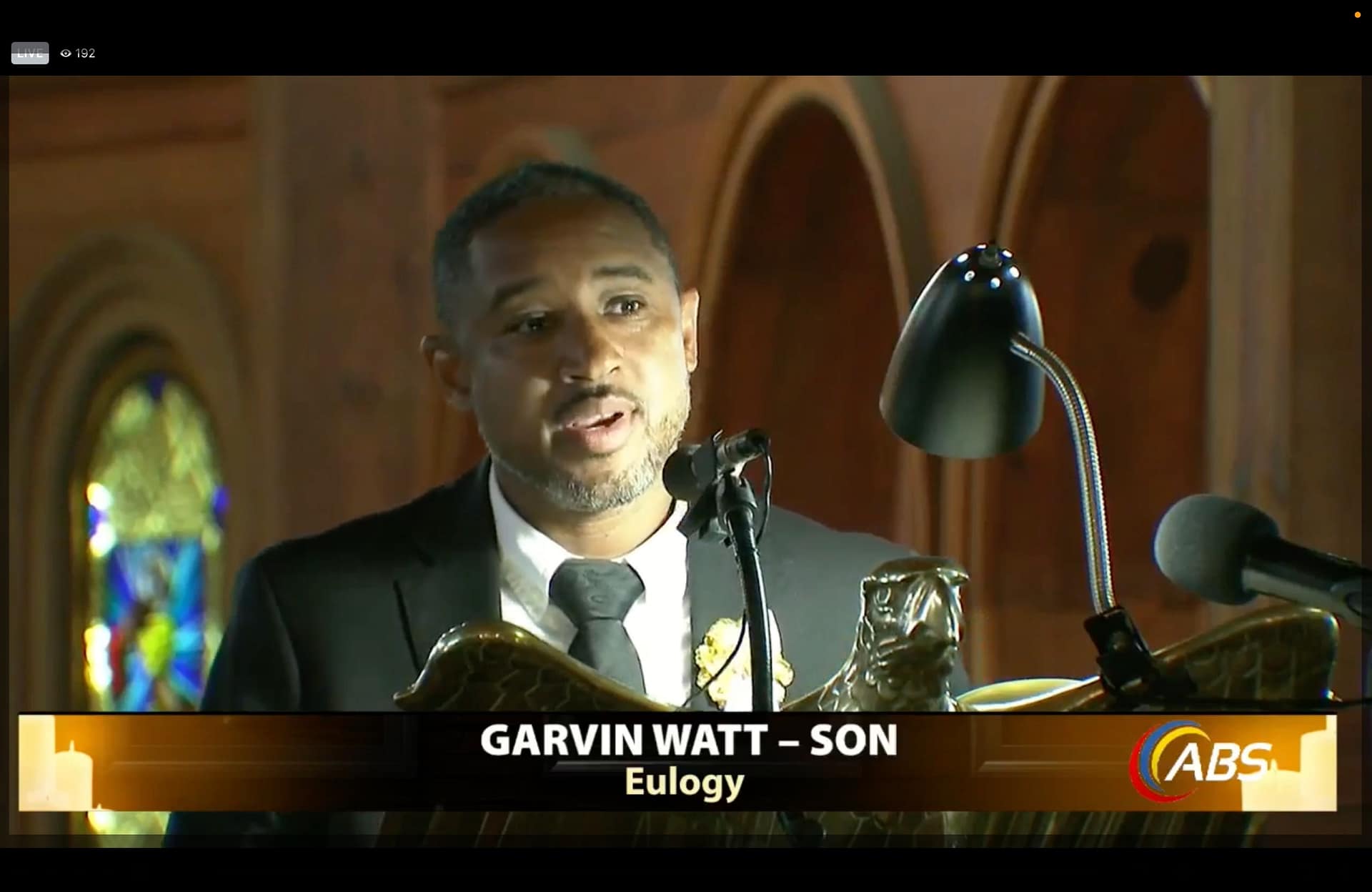
    In a heartfelt tribute during the official funeral service on Tuesday, Gavin Watt memorialized his father, the late Sir Gerald Watt KC, painting a multifaceted portrait that extended far beyond his esteemed legal career. The eulogy transformed the ceremony into a celebration of a life defined by deep passion, unwavering dedication to family, and a formidable work ethic that shaped both his home and his nation.

    Gavin Watt guided mourners through the journey of ‘Gerald Anderson Watt,’ who evolved into one of Antigua and Barbuda’s most revered legal authorities. He emphasized that passion was the central theme of his father’s existence, a driving force evident in every aspect of his life. ‘You have to have passion,’ Watt stated, ‘and I think that’s one of the things about my father that everyone here sees.’

    The personal recollections offered a rare glimpse into the private world of the public figure. Gavin recounted cherished childhood memories of early Saturday mornings spent watching western films and cricket with his father before Sir Gerald departed for work. These moments, he revealed, were sacred windows into his father’s personal joys—lifelong passions that persisted regardless of cricket match outcomes.

    Beyond the gentle moments, the eulogy also illuminated Sir Gerald’s strong character and sharp wit. Gavin shared anecdotes of family disagreements where his father would deftly defuse tension with his trademark humor, quipping, ‘I don’t need to argue with you — I get paid to argue.’ This blend of outspokenness and deep affection defined their relationship; a man who would quickly express displeasure but always follow with embrace and love.

    A powerful story emerged of a boating trip where Sir Gerald’s physical strength and determination were displayed when he single-handedly freed a grounded vessel. This act, Gavin explained, became a profound metaphor for his father’s approach to life’s obstacles: ‘It showed me his determination — that if needed, he would move mountains to get things done.’

    Concluding his remarks, Gavin Watt expressed profound gratitude for his father’s enduring influence on family, friends, and Antigua and Barbuda’s society. His final words resonated through the ceremony: ‘I love you. I miss you. And I will carry you in my heart the rest of my days,’ cementing Sir Gerald Watt’s legacy as both a national icon and a beloved patriarch.

  • Bar president sounds alarm on lack of criminal lawyers in Antigua (VIDEO)

    Bar president sounds alarm on lack of criminal lawyers in Antigua (VIDEO)

    The Antigua and Barbuda Bar Association has sounded alarm bells over a critical shortage of criminal lawyers, with its president Dr. Lenworth Johnson warning that the nation’s criminal bar is diminishing at an alarming rate. During the official funeral proceedings for the late Sir Gerald Watt KC, the esteemed former Speaker, Johnson revealed that fewer than a handful of legal practitioners in Antigua maintain substantial criminal practices—a situation posing severe implications for the judicial system’s functionality.

    Johnson characterized criminal law as an emotionally demanding field that requires specific psychological resilience, noting that most emerging attorneys demonstrate minimal interest in this practice area. Those who initially venture into criminal law frequently withdraw after brief exposure, creating a sustainability crisis within the legal profession.

    The Bar Association president proposed collaborative engagement with Attorney General Stedroy Benjamin, himself a distinguished former criminal attorney, to develop strategic solutions. Johnson emphasized that honoring Sir Gerald Watt’s legacy would be best achieved through concrete actions to revitalize criminal law practice.

    Sir Gerald Watt’s extraordinary six-decade career served as a benchmark for professional dedication, during which he filed over 180 High Court cases and made more than 500 criminal applications—many establishing landmark legal precedents. Johnson recalled Watt’s fearless advocacy, including a notable case where he successfully sued a fellow attorney for professional negligence after a client’s claim failed due to unpleaded legal doctrines.

    The Bar Association now aims to transform this concerning trend into an opportunity for generational inspiration, seeking to channel Watt’s exemplary legacy into motivating young lawyers to embrace criminal practice.

  • Flow Antigua and Barbuda Donates Laptops to JCI Antigua

    Flow Antigua and Barbuda Donates Laptops to JCI Antigua

    ST. JOHN’S, ANTIGUA – In a strategic move to enhance youth development initiatives, telecommunications provider Flow Antigua and Barbuda has donated two laptop computers to Junior Chamber International (JCI) Antigua. The technological contribution was formally presented to JCI Antigua President Collet Gordon and Secretary General Akilah Anderson during a ceremony on January 21, 2026.

    The equipment donation represents a significant enhancement to JCI Antigua’s operational infrastructure, directly supporting the organization’s administrative functions and community outreach programs. This technological infusion will enable more efficient execution of youth leadership projects throughout the nation.

    Wayne Hull, Country Manager of Flow Antigua and Barbuda, emphasized the company’s dedication to community development during the handover ceremony. “Our support for organizations like JCI Antigua demonstrates Flow’s commitment to initiatives that actively shape our communities,” Hull stated. “These devices will substantially strengthen JCI’s capacity to empower emerging leaders and generate tangible social impact.”

    JCI Antigua, established in 1960, possesses a distinguished legacy of advancing youth empowerment and leadership development. The organization has consistently worked toward community betterment through various programs and initiatives over its six-decade history.

    President Collet Gordon expressed profound appreciation on behalf of JCI Antigua’s leadership and membership. “This technological contribution arrives at a pivotal moment in our operational evolution,” Gordon noted. “These resources will dramatically improve our Secretariat’s efficiency as we continue our mission of cultivating the next generation of community leaders.”

    The partnership between Flow Antigua and Barbuda and JCI Antigua exemplifies how corporate-social organization collaborations can effectively drive national progress through targeted technological support and capacity building.

  • Why Gros Islet’s traffic problems won’t disappear overnight

    Why Gros Islet’s traffic problems won’t disappear overnight

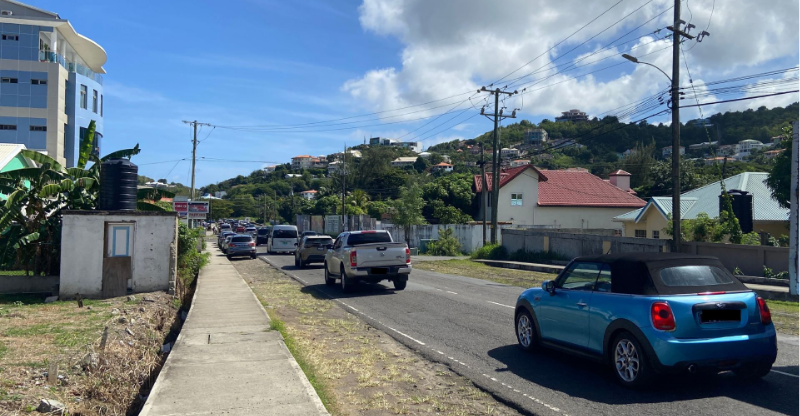
    Residents along the Gros Islet to Castries corridor in Saint Lucia have grown accustomed to severe traffic congestion as part of their daily commute, but significant infrastructure improvements are poised to transform their travel experience. Prime Minister Philip J. Pierre recently announced that major highway reconstruction will likely commence within the first half of this year, bringing both temporary disruptions and long-term solutions.

    The comprehensive road improvement initiative encompasses two major projects totaling approximately $33 million in international funding. The centerpiece involves a three-kilometer upgrade transforming the Monchy to Gros Islet highway into a dual carriageway, featuring four modern roundabouts and four pedestrian bridges, financed through a $20 million OPEC Fund loan. Simultaneously, a $13 million Kuwait-funded project will expand the Choc Bridge to Marisule segment into a dual carriageway complete with enhanced drainage systems, culverts, and a new roundabout at the Marisule junction.

    Engineering experts note that strategic preparatory work has already been underway to mitigate construction impacts. Kurt Harris, President of the Association of Professional Engineers of Saint Lucia, highlighted that the deliberate widening of alternative routes like Vieux Secreux Road over the past decade will provide crucial alternatives during main highway construction. “People will have alternatives to come off the highway but still be able to get into the Castries area,” Harris told St. Lucia Times.

    The current traffic crisis has forced permanent adjustments to daily routines, with some northern residents leaving as early as 7 a.m. for essential errands in Castries. Bus drivers on the island’s busiest route have attempted adaptations through community shortcuts, though these detours have sparked safety concerns among residents and passengers alike.

    Harris explained the technical rationale behind the improvements: “The biggest challenge with the traffic on the Gros Islet highway is the number of right turns. From Union, you have at least 40 right turns before reaching Gros Islet. Each right turn breaks the traffic flow, requiring stops in both directions.” The engineered solution involves medians and roundabouts to minimize these disruptive maneuvers while increasing overall traffic capacity.

    While the government has not released a detailed construction timeline, officials acknowledge that temporary inconveniences are inevitable. Harris concluded: “Part of development is temporary inconvenience for improvement. Persons need to understand there will be inconveniences, so you try to mitigate them, but they may not be eliminated completely during construction.”

  • Healing of the Nation!!

    Healing of the Nation!!

    In a significant legislative development, Grenada’s Parliament has demonstrated unified concern for youth welfare while addressing cannabis decriminalization. During deliberations on the Drug Abuse (Prevention and Control) Amendment Bill on January 20, 2026, both government and opposition representatives reached consensus on relieving young people from criminal records for simple possession charges.

    Dr. Neals Chitan, an international crime reduction specialist who previously advised St. Kitts-Nevis on cannabis legislation in 2019, acknowledges the plant’s medicinal properties while emphasizing concerning neuroscientific findings. ‘Credible research indicates potentially devastating effects on the developing adolescent brain,’ notes Dr. Chitan, who holds a PhD in Social and Behavioural Sciences.

    The parliamentary discussion highlighted a paradigm shift toward addressing root causes rather than symptom management. Legislators recognized that emotional distress—stemming from dysfunctional homes, parental expectations, peer pressure, and various traumas—often drives youth toward marijuana’s temporary euphoria.

    Dr. Chitan warns of cyclical dependency: ‘The psychoactive effect temporarily rescues users from misery, but the subsequent crash leaves them craving another joint, creating an open door to addiction.’

    Instead of chemical relief, Grenada is pursuing substantive emotional health solutions. The Ministry of Mental Health and Religious Affairs is partnering with experts to launch a nationwide 2026 Emotional and Mental Health Community Empowerment Campaign across all 16 communities in Grenada, Carriacou, and Petite Martinique.

    This initiative represents what Dr. Chitan identifies as ‘true healing’—teaching evidence-based strategies to address trauma sources rather than masking symptoms. The approach aligns with modern medical practice’s increased emphasis on prevention before prescription, despite allegations of pharmaceutical conspiracies.

    The comprehensive program aims to create emotionally resilient youth through mental health empowerment, ultimately fostering productive citizens with winning attitudes beyond temporary chemical relief.

  • J W Fletcher wins $7K in GFNC’s High School Snack Attack

    J W Fletcher wins $7K in GFNC’s High School Snack Attack

    In a celebration of youthful innovation and nutritional excellence, J W Fletcher Catholic Secondary School claimed top honors at the Grenada Food and Nutrition Council’s High School Snack Attack Competition on January 15, 2026. The triumphant team secured a $7,000 prize alongside a commemorative plaque for their outstanding performance.

    The competition, hosted at the Ministry of Finance Conference Room within Grand Anse’s Galleria Mall, showcased five secondary schools competing through culinary creativity and entrepreneurial vision. Fletcher Catholic’s winning entry, ‘Fruity Fusion Gummies,’ distinguished itself through exceptional presentation, strategic branding, and market-ready execution. The product featured 100% natural flavors and sweeteners, packaged in environmentally conscious orange-and-white recyclable containers bearing prominent ‘Product of Grenada’ labeling.

    GFNC CEO Lydia Browne characterized the event as profoundly rewarding, noting: ‘The demonstrated innovation and camaraderie exceeded expectations. Several products exhibit strong potential for commercial development beyond school environments to broader Grenadian markets.’

    The initiative aimed to transform youth perspectives on food—emphasizing creativity, cultural significance, and health benefits while promoting local agriculture and national identity. Students received guidance from educator Kaylee Redhead and GFNC mentor Masha Benjamin-Hunte, with team members Joshua Williams-James, Tai Alexander, Amaiyah Charles, John Hazzard, and Grace Charles delivering a professionally energetic sales pitch.

    Judging criteria encompassed ingredient quality, taste profiles, nutritional value, market viability, and production feasibility. The evaluation panel included Nekisha McDonald (Ministry of Finance), Amiesha Persaud (Grenada Bureau of Standards), TAMCC culinary faculty Rosamond Francis and Raquesha Peters, plus student judges Heavenly Primus and Tariq Noel.

    Adding democratic engagement, primary students from Grand Anse Private Academy and Calliste Government School served as impartial taste-testers. Presentation Brothers’ College secured the People’s Choice Award through combined paper ballot and digital QR code voting, earning an additional $1,000. Bishop’s College placed third with $1,500, while Grenada Boys’ Secondary School and Grenada Seventh-day Adventist Comprehensive School participated as finalists.

    The competition reinforces Grenada’s commitment to strengthening food security through youth engagement and nutritional education, aligning with GFNC’s ‘Eat Local’ initiative to enhance national food sovereignty.

  • IN PICTURES: Happening Now- Official Funeral For Sir. Gerald Watt KC

    IN PICTURES: Happening Now- Official Funeral For Sir. Gerald Watt KC

    The Eastern Caribbean nation of Antigua and Barbuda is observing a day of solemn remembrance as it bids an official farewell to one of its most distinguished legal minds, the late Sir Gerald Watt KC. The state-sanctioned funeral, currently in progress, is drawing a confluence of the nation’s highest dignitaries, judicial figures, and citizens united in grief and respect.

    Sir Gerald Watt’s legacy is etched into the very fabric of the region’s jurisprudence. His career, spanning several decades, was marked by an unwavering commitment to justice and legal excellence. He served with immense distinction as a former President of the Senate and as a long-serving Speaker of the House of Representatives, roles in which he was revered for his profound integrity, sharp intellect, and masterful command of parliamentary procedure. His contributions extended beyond the legislature into the courtroom, where he was a formidable and highly respected King’s Counsel, shaping landmark cases and mentoring generations of legal professionals.

    The official funeral ceremony, imbued with full state honors, reflects the magnitude of his service to the nation. The proceedings include solemn tributes, a gun salute, and the draping of the national flag over his coffin, symbolizing the country’s deep gratitude. Eulogies from the Prime Minister, the Leader of the Opposition, and the Chief Justice are highlighting his pivotal role in strengthening the nation’s democratic institutions and his profound personal impact on all who knew him.

    This event transcends a mere funeral; it is a national moment of reflection on the values of service, principle, and dedication that Sir Gerald Watt embodied. His passing signifies the loss of a foundational pillar in the Commonwealth’s legal community, but his extensive work and ethical standards leave an indelible blueprint for future leaders in law and governance.