分类: society

  • Millions in Building Materials Being Distributed to Needy Households Across Antigua

    Millions in Building Materials Being Distributed to Needy Households Across Antigua

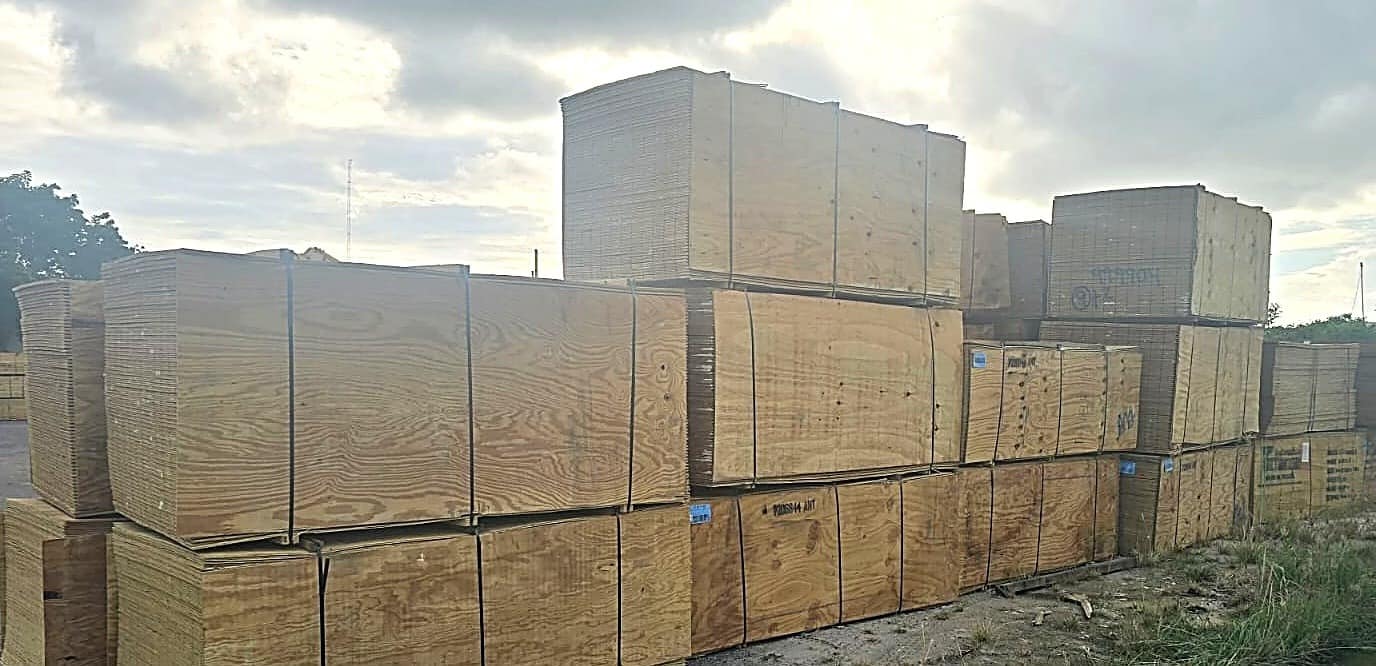
    The Antiguan government’s Housing Assistance Programme for Improvement (HAPI) has commenced its operational phase with the inaugural delivery of construction materials to a qualifying homeowner in English Harbour. This landmark distribution occurred on Friday, marking the tangible start of a national initiative designed to enhance living conditions for vulnerable citizens.

    Minister of Social and Urban Transformation, Rodan Turner, personally oversaw the logistical operations from the central storage facility, supervising the loading and dispatch of lumber. Concurrently, St. Paul’s Member of Parliament, E. P. Chet Greene, was present in the community to witness the delivery firsthand and engage with the recipient.

    The first beneficiary, Mrs. Sebastian, has been formally recognized as meeting the program’s criteria, which prioritizes assistance for senior citizens, individuals with disabilities, and households confronting significant financial challenges. In an emotional response, Mrs. Sebastian expressed profound gratitude, stating, ‘I extend my deepest thanks to Mr. Greene for his advocacy with the government. Without this assistance, I lacked the necessary funds to undertake these critical repairs for my family, including my children and grandchildren. My trust in his commitment has been fulfilled.’

    MP Greene characterized the initiative as arguably the administration’s most crucial social welfare intervention to date. He emphasized its targeted approach, noting, ‘This program stands as one of the most impressive and vital undertakings by the government, directly addressing the pressing needs of our most vulnerable populations.’

    Minister Turner confirmed that his ministry is implementing rigorous monitoring protocols throughout the distribution chain to guarantee efficient and transparent delivery of materials to all approved applicants. This effort forms a key component of a larger governmental strategy aimed at systematically upgrading substandard housing in economically disadvantaged communities across the nation.

    Government officials have announced that this delivery is the first of many, with subsequent distributions planned as the program expands its reach islandwide in the coming weeks.


  • STATEMENT: President National Beekeepers Cooperative Society on introduction of the Food Safety Bill 2026

    STATEMENT: President National Beekeepers Cooperative Society on introduction of the Food Safety Bill 2026

    In a significant development for food safety regulation, Dominica’s National Beekeepers Cooperative Society Ltd has issued strong endorsements for the newly proposed Food Safety Bill 2026. The organization’s president, Mr. Kevin James, has publicly applauded parliamentary discussions addressing honey adulteration concerns, characterizing the legislative attention as demonstrating “serious commitment to protecting public health and the integrity of our local food industries.”

    The Cooperative has taken an unequivocal stance against honey adulteration practices, asserting that such fraudulent activities undermine consumer confidence and disadvantage legitimate beekeepers who maintain quality standards. Mr. James emphasized that honey represents both an economic asset and a natural product with significant nutritional and medicinal value, warranting robust regulatory protection.

    The proposed legislation establishes comprehensive frameworks including a national Food Safety Service, mandatory licensing for food businesses, and certification requirements for food handlers. Enhanced inspection protocols and enforcement mechanisms form core components of the bill, alongside systems for product traceability, recall procedures, and emergency response coordination.

    Industry representatives believe these measures will not only combat food fraud and misleading labeling but also strengthen market confidence in locally produced honey. The Cooperative has pledged collaborative engagement with government agencies and stakeholders to ensure effective implementation of the new regulatory regime, aiming to eliminate threats to industry integrity while supporting sustainable growth in the beekeeping sector.

    This legislative initiative emerges amid growing global concerns about food authenticity and safety standards, positioning Dominica to address these challenges through strengthened regulatory frameworks and industry partnerships.

  • 15 Youth Leaders named to 2026 UN Advisory Group for Barbados and Eastern Caribbean

    15 Youth Leaders named to 2026 UN Advisory Group for Barbados and Eastern Caribbean

    In a significant move to amplify youth voices in regional development, fifteen emerging leaders from across the Eastern Caribbean have been selected to join the 2026 United Nations Youth Advisory Group (YAG). This strategic appointment reinforces the UN’s dedication to positioning young visionaries at the core of sustainable development initiatives throughout the sub-region.

    The newly formed cohort, marking the fifth installation of this initiative, represents a diverse cross-section of nations including Anguilla, Antigua and Barbuda, Barbados, the British Virgin Islands, Dominica, Grenada, St Kitts and Nevis, St Lucia, and St Vincent and the Grenadines. These dynamic individuals, aged between 18 and 30, bring substantial expertise across critical development areas including climate action, mental health advocacy, gender equality, disability inclusion, educational reform, food security, crime prevention, and indigenous rights protection.

    UN Resident Coordinator for Barbados and the Eastern Caribbean Simon Springett emphasized the transformative potential of youth engagement, stating: ‘Our youth represent both our present and future. We’ve merely scratched the surface of what young people can contribute to governmental and international institutions. Their increased involvement is crucial for driving meaningful transformation.’

    Rianka Chance of St Vincent and the Grenadines returns for her third term, assuming the role of Chair. She articulated the group’s ambitious vision: ‘I envision the YAG evolving into a unifying force across Barbados and the Eastern Caribbean—propelling collaboration, advancing the Sustainable Development Goals, and ensuring inclusive youth engagement at all decision-making levels. Our objective extends beyond participation to actively shaping policies, influencing systems, and leading sustainable change locally, regionally, and globally.’

    The selection process adhered to the UN’s Leave No One Behind principle, ensuring substantial representation from marginalized and underserved youth communities. This year’s cohort includes advocates working on indigenous identity recognition and social justice, alongside young leaders with notable accomplishments at national and international levels.

    Throughout their one-year mandate, YAG members will serve as UN Youth Advocates, collaborating with other ambassadors to implement critical policy frameworks including the Youth Development Strategy for Barbados and the Eastern Caribbean, the UN Multi-Country Sustainable Development Cooperation Framework, and respective Country Implementation Plans. Their engagement will encompass advocacy campaigns, outreach initiatives, and regional forums aimed at advancing the 2030 Agenda for Sustainable Development.

    The United Nations anticipates productive collaboration with these emerging leaders to drive inclusive, youth-centered development outcomes across the Eastern Caribbean region.

    2026 YAG Country Representatives:
    – St Vincent and the Grenadines: Rianka Chance (Chair)
    – Anguilla: Melissa Edwards
    – Antigua and Barbuda: Amelia Williams and Shaquan O’Neil
    – Barbados: Kalan Alleyne and Jovanaa Ifill
    – British Virgin Islands: Angeleah Cupid
    – Dominica: Loik Charles and Emmana Jeffers
    – Grenada: Kerri-Ann Marrast, Zinzee Noel, and Raheem Smith
    – St Kitts and Nevis: Hasani McDonald
    – St Lucia: Davianne Alexander and Ethan Leandre

  • HAPI Coordinator Hails Arrival of Largest-Ever Shipment of Building Materials

    HAPI Coordinator Hails Arrival of Largest-Ever Shipment of Building Materials

    The Home Assistance Programme for the Indigent (HAPI) has achieved a significant milestone with the arrival of its largest-ever construction materials shipment, marking a pivotal moment in the program’s expansion efforts. This substantial delivery, comprising eleven truckloads of lumber and galvanized materials, enables the initiative to dramatically scale its operations from individual projects to simultaneously constructing five homes.

    Prime Minister Gaston Browne characterized this delivery as “the single largest amount of building material to be imported in the country at any given point,” emphasizing that this represents merely the beginning of ongoing annual procurement efforts. The massive shipment arrives as HAPI transitions from its original repair-focused model to including complete new home construction for structures deemed beyond rehabilitation.

    Programme Coordinator Inspector Veldon Raggette revealed that 111 homes have been completed since the program’s inception, with three currently underway. The selection process prioritizes need rather than application order, with households containing more children receiving accelerated consideration. “It goes by priority,” Raggette explained. “The more children involved, the quicker HAPI gets activated.”

    A distinctive aspect of the program involves its workforce composition, which primarily consists of inmates from His Majesty’s Prison working alongside volunteers. Raggette described this collaboration as “two second chances” – providing prisoners with skill development opportunities while simultaneously offering vulnerable families improved living conditions.

    Beyond physical construction, HAPI incorporates comprehensive social support through partnership with the Social Protection Board. Raggette emphasized the importance of counseling services, noting that without proper support, “it’s just a new building to be destroyed in two, three years.”

    The program requires applicants to either own their property or provide notarized permission from landowners. Constructed homes meet reinforced structural standards designed to withstand hurricane conditions, with Raggette asserting they build “the strongest wooden house in Antigua and Barbuda” through bolting, strapping, and clipping techniques.

    With identified needs across communities including Five Islands, Grays Farm and Villa, HAPI continues its expansion with Raggette affirming: “HAPI is here to stay.” Families living in unsafe conditions are encouraged to apply through the Social Protection Board.

  • Antigua and Barbuda Launches Clean Seed Sweet Potato Initiative

    Antigua and Barbuda Launches Clean Seed Sweet Potato Initiative

    Antigua and Barbuda has embarked on a transformative agricultural initiative with the inaugural convening of its Clean Seed Sweet Potato Committee this week. This landmark assembly represents a critical advancement for the nation’s root crop industry, operating under the regional Next Generation Sweet Potato Project framework.

    The newly formed committee brings together a coalition of technical experts from the Ministry of Agriculture, private sector representatives, and specialists from the Caribbean Agriculture Research and Development Institute (CARDI). Their primary mission is to establish a comprehensive clean seed system that will guarantee local farmers reliable access to certified disease-free planting materials. This foundational work is projected to significantly increase agricultural productivity, bolster national food security measures, and enhance climate resilience within the farming sector.

    During the inaugural session, committee members meticulously defined project objectives, delineated organizational responsibilities, and formulated strategic approaches for expanding domestic clean seed production capabilities. The nation has already assembled a diverse genetic portfolio comprising six distinct sweet potato varieties—Black Rock, Hurricane, King Crown, Mandela, Catch Me, and Big Red. These specimens will undergo advanced tissue culture processing through the United States Department of Agriculture (USDA) to ensure complete pathogen elimination.

    The committee has established a framework for regular meetings to monitor implementation progress, coordinate specialized training programs, and facilitate knowledge exchange among stakeholders. This ongoing oversight mechanism ensures that project benefits will effectively reach agricultural producers and communities across the nation.

    This four-year regional initiative is implemented by the Inter-American Institute for Cooperation on Agriculture (IICA) with substantial funding from multiple international partners including the Food and Agriculture Organization (FAO), the International Treaty on Plant Genetic Resources for Food and Agriculture, and the European Union. The project simultaneously operates in Antigua and Barbuda, Jamaica, and St. Lucia, representing a coordinated effort to modernize root crop agriculture and establish sustainable food systems throughout the Caribbean region.

  • COE places three provinces on red alert due to heavy rains

    COE places three provinces on red alert due to heavy rains

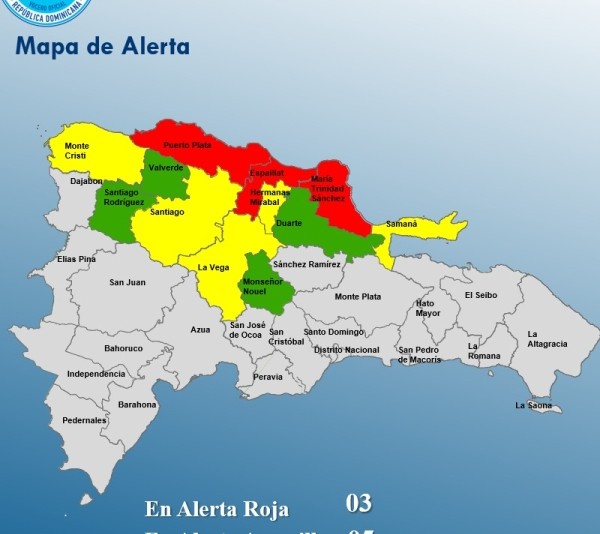
    The Dominican Republic’s Emergency Operations Center (COE) has implemented a tiered alert system across multiple provinces in response to deteriorating weather conditions affecting the nation. A comprehensive three-tier warning structure has been activated, placing three provinces under red alert—the highest level—while maintaining five additional regions under yellow alert and four under green alert status.

    Meteorological data from the National Institute of Meteorology (INDOMET) indicates that a slow-moving frontal system is currently advancing toward the northwestern sector of the island, positioned near the southern Bahamas. This weather pattern continues to generate unstable atmospheric conditions nationwide, resulting in persistent precipitation and associated meteorological phenomena.

    Weather authorities have issued specific warnings regarding continued heavy rainfall, intermittent thunderstorms, and potentially damaging gusty winds. These conditions are expected to predominantly affect provinces along the Atlantic coastline, the Cibano Valley region, northeastern territories, border areas, and the Central Mountain Range.

    The provinces elevated to red alert status include:
    – Espaillat
    – María Trinidad Sánchez
    – Puerto Plata

    Areas under yellow alert comprise:
    – Santiago
    – Hermanas Mirabal
    – Monte Cristi
    – Samaná
    – La Vega

    Emergency management officials have issued critical safety recommendations for residents in affected regions. The COE specifically advises against crossing rivers, streams, or ravines with elevated water levels and has prohibited recreational activities at beaches and swimming areas throughout alerted provinces.

    Maritime restrictions have been implemented along the Atlantic coastal stretch from Manzanillo Bay to Cabo San Rafael, where operators of small, fragile, and medium-sized vessels are instructed to remain in port due to hazardous wind conditions and turbulent seas. Notably, the Caribbean coast remains exempt from these navigation restrictions at present.

    The COE maintains continuous monitoring of evolving weather patterns and has committed to updating alert levels as conditions develop throughout the ongoing meteorological event.

  • Higüey Mayor says “therians” will not be allowed in public spaces

    Higüey Mayor says “therians” will not be allowed in public spaces

    HIGÜEY, LA ALTAGRACIA – Municipal authorities in Higüey have implemented a controversial ban targeting individuals identified as “therians” from accessing public spaces. Mayor Karina Aristy announced the restrictive measure on Tuesday during the inauguration ceremony for the reconstructed Bible Park in the La Malena sector.

    The mayor’s declaration occurred before an audience comprising municipal officials, city council members, community leaders, and religious representatives. Aristy directly addressed circulating reports about the presence of such groups nationwide, stating unequivocally that they “are not welcome” within municipal boundaries.

    Aristy grounded her position in what she characterized as a necessary defense of Higüey’s core values and cultural identity. She formally designated the municipality as “a town of faith and of hardworking men and women,” emphasizing that preserving these principles represents a shared responsibility between local government and residents.

    The political endorsement for this measure was visibly demonstrated through the presence of church representatives and City Council members who witnessed the announcement. As of current reporting, no official responses have been issued by organizations associated with therian communities or by higher-level government authorities regarding the municipality’s stance.

    This development raises significant questions regarding public accommodation policies and municipal authority to restrict access based on identity expression. The incident highlights ongoing tensions between traditional community values and emerging subcultural identities within contemporary society.

  • New Line 2C extension of Santo Domingo Metro begins operations

    New Line 2C extension of Santo Domingo Metro begins operations

    Santo Domingo has entered a new era of urban mobility with the operational launch of the Line 2C metro extension this Wednesday. This transformative infrastructure project specifically targets enhanced transportation efficiency in Santo Domingo Oeste, with particular benefits for Los Alcarrizos municipality residents.

    President Luis Abinader, speaking at Tuesday’s inauguration ceremony, emphasized the project’s dual impact on both temporal and economic aspects of daily commuting. “This new section will substantially decrease journey durations and alleviate transportation expenses for thousands of capital-bound commuters,” the president declared during the official proceedings.

    The newly activated segment stretches 7.3 kilometers and features five strategically positioned stations: Pedro Martínez (Manoguayabo), Franklin Mieses Burgos (Monumental Avenue), 27 de Febrero (kilometer 13), Freddy Gatón Arce (kilometer 14), and Pablo Adón Guzmán at the gateway to Los Alcarrizos. The extension has been engineered for full interoperability with Santo Domingo’s comprehensive public transit network.

    To facilitate public familiarity and promote ridership, transportation authorities have implemented a complimentary service model throughout the inaugural week of operations.

    Projections from official sources indicate the extended line will accommodate approximately 150,000 daily passengers, ultimately serving a population base exceeding one million residents. A significant ancillary benefit will be the alleviation of chronic congestion along the Duarte Highway, the metropolitan region’s principal traffic artery.

    This metro expansion constitutes a critical component of the Integrated Transportation System of Santo Domingo, a holistic urban mobility framework incorporating metro, aerial cable car, and dedicated bus corridor infrastructure designed to promote sustainable transit solutions throughout the capital region.

  • Leisure : Did you know ?

    Leisure : Did you know ?

    HaitiLibre’s Quiz platform has launched an enlightening series titled “Did you know?” focusing on obscure professions and general knowledge. The inaugural piece spotlights the highly specialized and little-known craft of campanistry—a profession dedicated to the preservation of bell heritage.

    A campanist is a master artisan specializing in the installation, restoration, and maintenance of bells and their associated accessories. This multidisciplinary role demands expertise across several technical domains: mechanics for managing swing systems, electrification for automating bell functions, and structural engineering to assess the integrity of belfries supporting immense bronze weights. These craftsmen frequently operate within historic monuments, repairing monumental clock mechanisms and tuning intricate chimes to acoustic perfection.

    Beyond technical proficiency, the campanist serves as an acoustic conservator, ensuring that bell ringing respects local traditions and architectural integrity. This passion-driven profession requires a unique combination of skills: freedom from heights, operational autonomy, and a profound reverence for historical preservation.

    Working literally between heaven and earth, campanists perform essential conservation work that sustains the auditory heritage of cities and villages across centuries. Their work preserves what the article poetically terms “the voice of our communities.”

    The feature originates from educational materials accompanying Quiz-HaitiLibre’s expert-level challenges. The platform offers dozens of free, registration-free games available in both French and English, with three difficulty tiers across diverse topics including specialized professional knowledge. New content is added monthly to this educational initiative.

  • Clash Over Open Justice as Court Weighs Closed‑Door Trial for OJ Elrington

    Clash Over Open Justice as Court Weighs Closed‑Door Trial for OJ Elrington

    A significant judicial confrontation regarding transparency in legal proceedings erupted in Belize’s High Court today, centering on the controversial sexual assault case against prominent attorney Orson ‘OJ’ Elrington. Justice Nigel Pilgrim presided over heated arguments between prosecution and defense teams regarding whether the trial should be conducted behind closed doors.

    The prosecution, led by DPP Cheryl-Lyn Vidal, advocated for excluding the public, citing Section 6(9)(a) of Belize’s Constitution which permits courtroom closure when publicity might harm justice administration. Vidal emphasized the need to protect the complainant from retraumatization when recounting intimate details, arguing that media exposure would effectively create ‘a trial within the courtroom and one by the public’ that could compromise evidence quality.

    Defense counsel Wilfred ‘Sedi’ Elrington, a former Attorney General, mounted a vigorous opposition to closed proceedings. He characterized open justice as a fundamental constitutional principle deeply embedded in Commonwealth legal tradition. The defense contended that since allegations had already entered public discourse, damaging the defendant’s reputation, the public deserved to witness how these claims withstand cross-examination scrutiny. Elrington warned that secrecy could foster public suspicion and undermine judicial credibility, particularly given the defendant’s public profile.

    The defense proposed alternative protective measures including witness anonymity, physical screens, and controlled questioning techniques that would preserve transparency while addressing witness vulnerability concerns.

    Justice Pilgrim has postponed his ruling until Friday morning, first requesting the prosecution to formally present the complainant’s position on the matter by Thursday noon. This approach ensures the victim’s perspective receives equal consideration alongside the defendant’s rights in this landmark decision that may establish precedents for balancing transparency against victim protection in Belize’s judicial system.