分类: society

  • PHOTOS: Road Works Underway in Golden Grove Extension

    PHOTOS: Road Works Underway in Golden Grove Extension

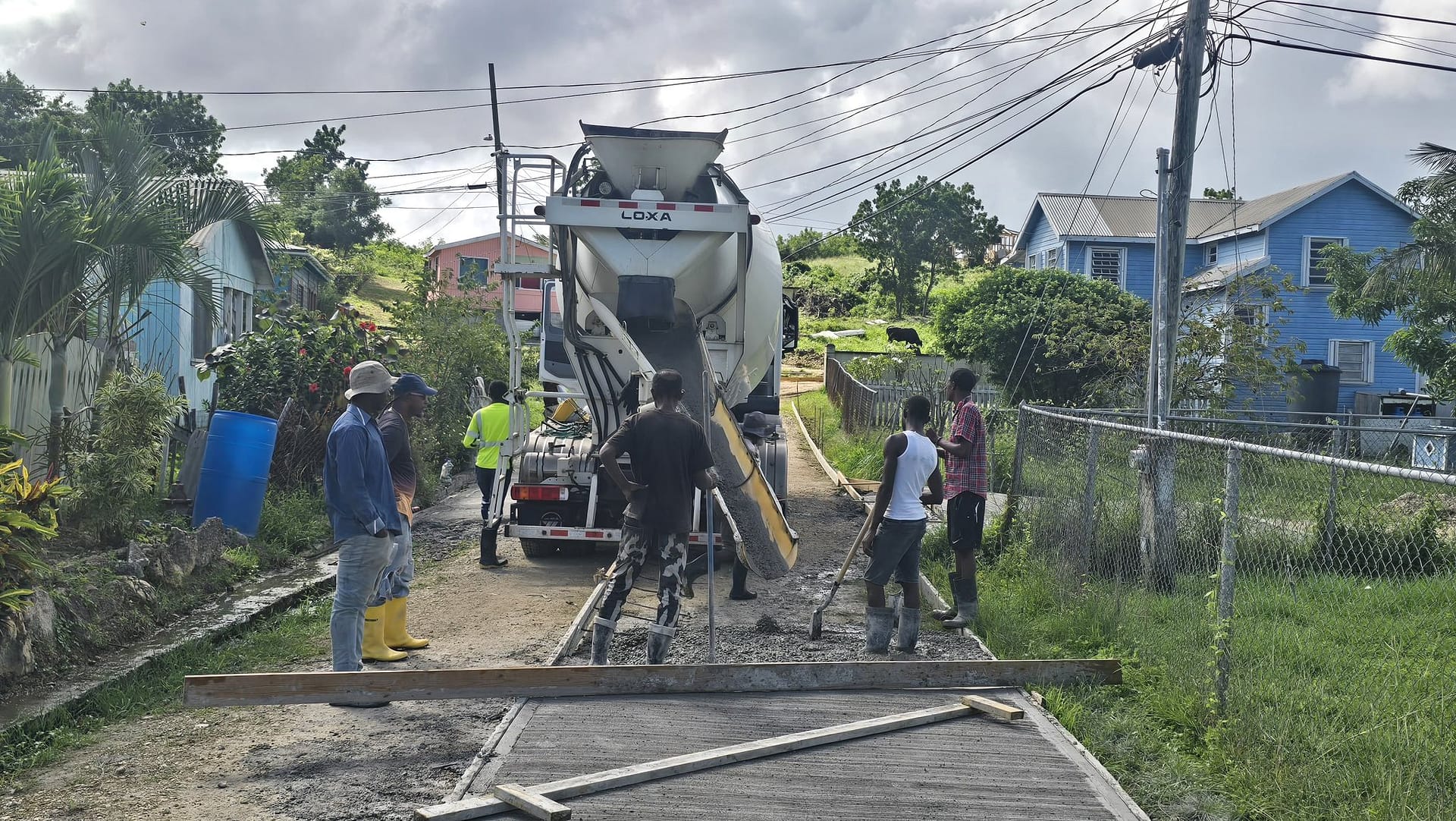
    Transport authorities have issued a public advisory for motorists and local residents regarding ongoing infrastructure maintenance along the Golden Grove Extension corridor. The road rehabilitation initiative, currently in its active phase, necessitates heightened vigilance from all commuters traversing this sector.

    Officials from the Department of Public Works confirmed the project involves comprehensive resurfacing and safety enhancements, part of a broader municipal infrastructure upgrade program. While specific timelines remain fluid, project coordinators estimate completion within the coming fortnight, weather conditions permitting.

    The construction zone features reduced speed limits, temporary traffic control measures, and periodically altered lane configurations. Transportation analysts suggest these necessary improvements will ultimately enhance road safety and traffic flow, though short-term inconveniences are inevitable.

    Commuter advocates recommend exploring alternative routes during peak travel hours where feasible. Emergency service providers have been notified of the temporary traffic pattern changes to ensure uninterrupted response capabilities throughout the construction period.

    Real-time traffic updates are available through the city’s official transportation mobile application and variable message signs positioned along approaching thoroughfares. The public works department emphasizes that all scheduled work complies with contemporary safety standards and environmental regulations.

  • Shortcomings of trade unions

    Shortcomings of trade unions

    A critical examination of trade union efficacy reveals systemic challenges in organizational communication and global advocacy. While skeptics frequently accuse unions of prioritizing narrow, parochial concerns over broader national and international developments, this perspective often lacks substantiated evidence. However, the conspicuous silence of many unions regarding proposed governmental policies inadvertently lends credibility to these criticisms.

    Within the Caribbean region and beyond, a significant communication deficit persists among trade unions operating across various territories. Struggling unions frequently fail to alert their regional counterparts about ongoing challenges, creating isolation that severely impedes their ability to mobilize support during crises. This fragmentation highlights the urgent need for establishing robust communication networks to foster meaningful solidarity.

    The absence of cohesive communication structures raises fundamental questions about inter-union collaboration mechanisms. Those unions affiliated with regional or international bodies typically seek support from these organizations during emergencies, yet this approach remains inadequate without stronger grassroots connections among neighboring unions.

    Experts emphasize that information sharing and experience exchange significantly enhance membership confidence and strengthen both individual and collective union actions. Despite this, many local unions neglect their public visibility, failing to leverage media platforms to promote their agendas effectively.

    Union leadership must prioritize highlighting workers’ suffering, rights violations, and systemic hardships while advocating for decent work conditions, social protection frameworks, and sustainable employment opportunities. Crucially, unions must articulate positions on political issues and policy decisions affecting workers across social, economic, and political dimensions.

    Global political leaders who command media attention often address labor-related matters indirectly, yet their primary focus remains centered on power dynamics rather than substantive issues like collective bargaining, worker organization, or labor protection.

    There is growing consensus that trade union leaders at international, regional, and local levels must adopt more visible and assertive stances regarding critical issues including worker displacement, refugee crises, labor migration, imprisonment of union leaders, forced labor practices, and human trafficking. Additional pressing concerns demand attention, particularly gender pay disparity and workplace inclusion for persons with disabilities.

    Most alarmingly, numerous governments worldwide have ratified the eight core ILO Conventions while simultaneously implementing labor policies that contradict these commitments. Trade unions must acknowledge their own complicity in this predicament, having permitted political elements to co-opt their messaging under the pretext of representing working-class interests. Substantial evidence indicates that political actions frequently diverge from rhetorical commitments and worker expectations.

  • A Caribbean Christmas message: The gift we give our children

    A Caribbean Christmas message: The gift we give our children

    As Barbados enters the festive season, the traditional celebrations of gift-giving, family gatherings, and culinary delights like great cake and sorrel take on deeper significance. Beyond the surface-level merriment, this period serves as a profound national moment for collective reflection and recommitment to core values that define the Barbadian identity.

    The season illuminates a crucial dichotomy among the nation’s youth: while many children experience Christmas with joy and security, others confront less visible challenges including poverty-induced household strains, community instability, overwhelming educational difficulties, and unexpressed emotional burdens. This contrast underscores the necessity for expanded communal support systems, emphasizing that national strength emerges from mutual care and protection.

    Child development transcends private upbringing, representing instead a collaborative national project requiring four interdependent pillars: parental nurturing of respect and resilience, educational adaptation to individual learning needs, student commitment to academic excellence, and governmental provision of essential resources for struggling families. This integrated approach ensures no child remains marginalized.

    Education stands as Barbados’ most transformative legacy—an engine of independence, democratic foundation, and bridge between present circumstances and future possibilities. Its value manifests through multiple dimensions: personal empowerment through critical thinking skills, financial security via improved employment prospects, poverty cycle interruption across generations, and enhanced community health literacy and civic participation.

    Parental modeling represents perhaps the most valuable Christmas offering—the cultivation of fearless yet respectful confidence. Children absorb ethical standards through observed behavior when adults choose integrity over convenience and kindness over anger. Simultaneously, parents must balance cultural traditions of respect with encouraging children to develop assertive self-advocacy skills, creating cycles of empowered communication.

    Governmental responsibility extends beyond funding to encompass modernized educational standards, competitive teacher compensation aligned with international models like Singapore and Scandinavia, targeted family communication about education’s value, and inclusive policies ensuring equitable access. Teachers serve as frontline interpreters of national values, with influence stretching far beyond classroom instruction.

    This Christmas issues a communal call to action: reaffirm foundational values of kindness, responsibility, and fairness through practical support for vulnerable neighbors, encouragement for children, appreciation for dedicated educators, and assistance for resource-limited parents. Every child deserves recognition of their inherent worth and potential for greatness.

    The season’s ultimate blessing would bring household peace, parental strength, educator rest, student courage, and national unity—carrying into the new year a renewed commitment to the children who will shape Barbados’ future. The true Christmas spirit manifests not in receiving, but in giving to the nation’s most precious resource: its youth.

  • Sagicor Brings Christmas Magic to New Orleans and Chapman Lane Communities

    Sagicor Brings Christmas Magic to New Orleans and Chapman Lane Communities

    Sagicor Life Inc recently illuminated the holiday season through a vibrant Christmas celebration for families and children from the New Orleans and Chapman Lane communities in St. Michael, Barbados. The event, held at the New Orleans Police Community Outpost, attracted over 150 participants who enjoyed an afternoon of music, entertainment, and festive camaraderie.

    This gathering represents a strategic component of Sagicor’s ongoing support for the Learning in Harmony Homework Programme, an educational partnership with the Barbados Police Service. The initiative delivers academic lessons, mentorship opportunities, and comprehensive support for youth in surrounding neighborhoods.

    Sergeant Wendell Weeks, Coordinator of the Homework Programme, expressed profound inspiration at the community response. “The exceptional turnout surpassed our expectations,” Weeks noted. “Witnessing such enthusiastic participation from children and parents reaffirms the programme’s vital role in community development. Corporate partnerships like ours with Sagicor amplify our impact beyond what we could accomplish independently.”

    Paul Inniss, Executive Vice President and General Manager of Sagicor Life Inc (Barbados), emphasized the company’s philosophical commitment to community investment. “Christmas fundamentally embodies unity, generosity, and mutual support—values that this event perfectly captures,” Inniss stated. “By investing in our youth and communities, we contribute to shaping more promising futures. Our collaboration with the Barbados Police Service creates environments where children feel recognized and empowered throughout the year, truly embodying the seasonal spirit.”

    The celebration featured recreational activities, gift distributions, and meaningful community engagement, highlighting the tangible benefits of corporate-community partnerships. Sagicor continues to dedicate resources to initiatives that empower Barbadian youth, strengthen community connections, and generate sustainable social impact.

  • Voorzitter Politiebond bekritiseert structurele problemen korps

    Voorzitter Politiebond bekritiseert structurele problemen korps

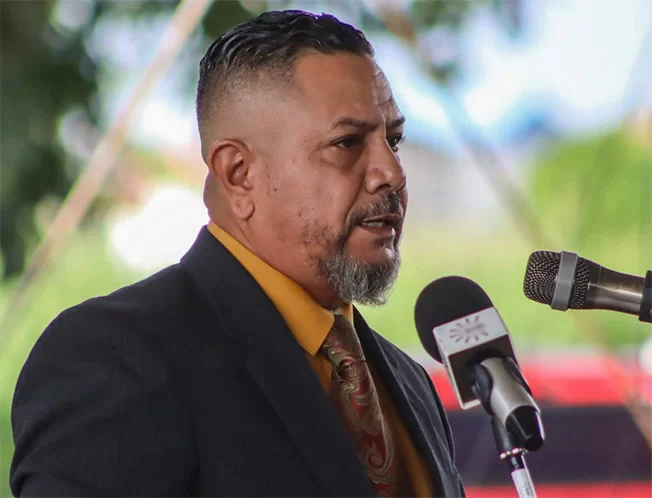
    In a striking address during Friday’s police promotion ceremony, Suriname Police Union Chairman Chief Inspector Revelino Eijk delivered a powerful critique of the deteriorating working conditions and legal protections within the Suriname Police Force (KPS). While congratulating newly promoted officers, Eijk emphasized that structural deficiencies within the corps demand immediate attention rather than continued neglect.

    Eijk articulated that promotions represent more than mere rank advancements—they signify recognition of dedication, discipline, professionalism, and loyalty to both the police force and Suriname. He stressed that promotions constitute earned rights under legal frameworks rather than organizational favors, bringing not only expanded authority but greater responsibilities, including exemplary conduct within the corps and toward society.

    The union leader highlighted policing as a vocation rather than conventional employment, noting its inherent risks to personal safety and sacrifices in private life. Consequently, appreciation, fairness, and clear career trajectories become essential components for officer retention and morale. Transparent and equitable promotion processes, according to Eijk, fundamentally contribute to motivation, trust, and organizational cohesion.

    Eijk expressed particular concern for officers who met service duration, performance, and evaluation criteria yet were overlooked for promotions. He asserted that a professional police corps can only function effectively when every member feels recognized and valued.

    The Police Union chairman positioned his organization as a constructive partner in collaborations with KPS, the Ministry of Justice and Police, and other unions, though emphasizing this cooperation isn’t unconditional. Agreements must be honored, and decisions affecting officers’ legal status must adhere to proper governance principles. Eijk noted that trust is increasingly undermined by broken commitments and inadequate communication.

    Eijk detailed critical operational shortcomings: inadequate training programs despite high policing standards, severe shortages of uniforms, equipment, patrol vehicles, computers, and other essential resources. Multiple police facilities operate in disrepair with substandard sanitation and unhygienic conditions.

    Financial protections for officers raised additional concerns. Promotion-related financial resolutions frequently experience prolonged delays, deferring monetary recognition. When back payments eventually occur, significant portions are withheld through taxation, transforming promotions into financial burdens rather than rewards for some officers. Eijk revealed that some officers have retired without receiving their entitled financial benefits.

    Eijk further criticized investigative procedures against officers accused of criminal offenses or duty violations, noting these processes often lack diligence and proper administrative principles in disciplinary actions. He referenced a recent judicial ruling that vindicated an officer dismissed in 2013 after twelve years, requiring full reinstatement with back pay.

    All these issues, Eijk concluded, revolve around a central concept: trust. Trust in the organization, agreements, and leadership isn’t automatic but must be earned and maintained. The Police Union urges authorities to address these challenges as systemic problems requiring structural solutions rather than isolated incidents. Investing in personnel, resources, training, and proper legal status constitutes essential prerequisites for sustainable security and professional policing.

  • Govt to ‘phase’ restoration of historic Carnegie Library

    Govt to ‘phase’ restoration of historic Carnegie Library

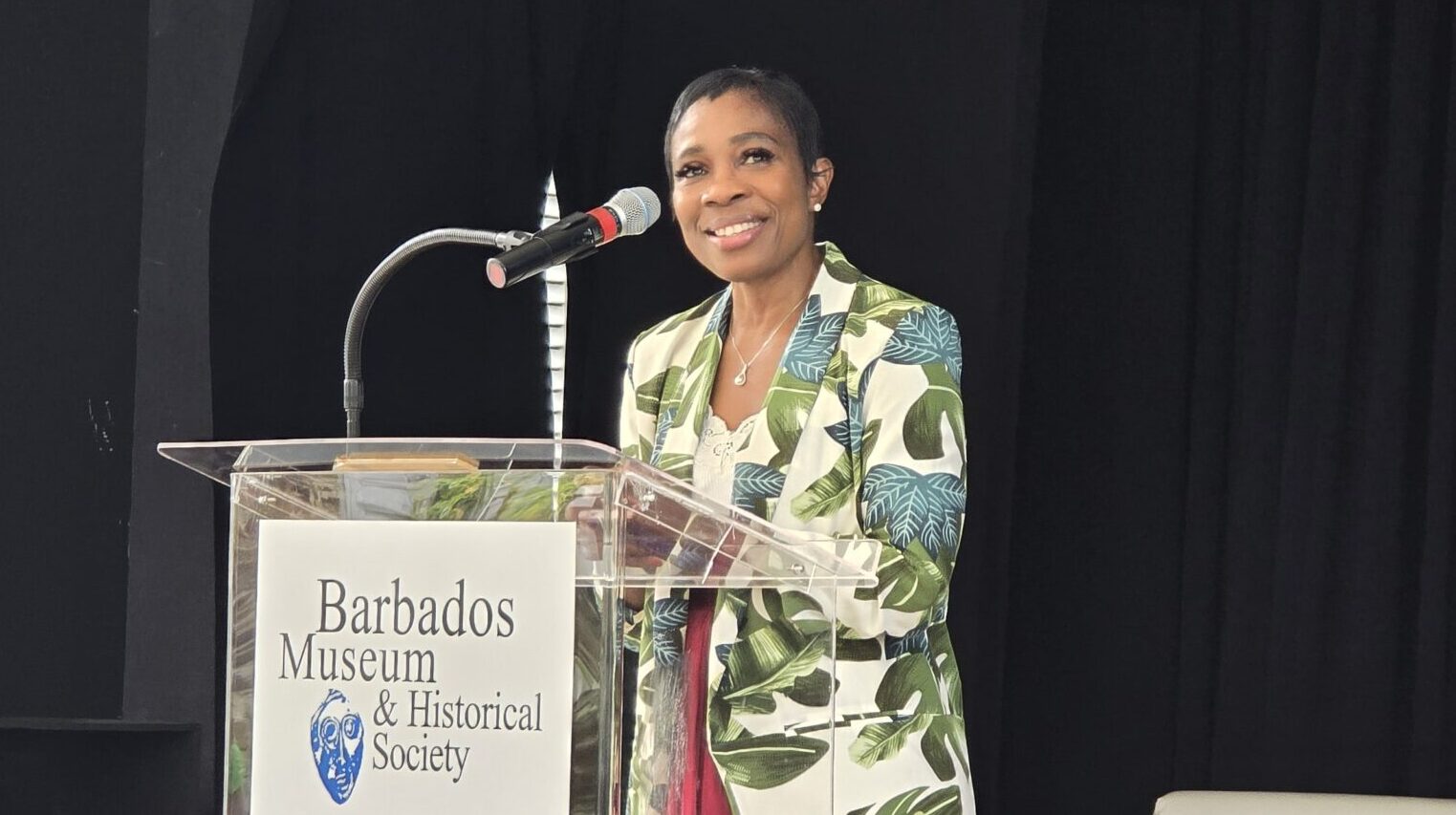
    After nearly two decades of closure, Barbados’ iconic Carnegie Library in Bridgetown is set for a comprehensive restoration, Culture Minister Senator Dr. Shantal Munro-Knight announced. The century-old landmark, which has remained shuttered since 2006 due to structural deterioration, will undergo phased reconstruction that blends historical preservation with modern sustainability features.

    The minister revealed the government has allocated approximately $2 million for initial design and structural stabilization work, though she acknowledged this represents ‘a drop in the bucket’ compared to the project’s total anticipated costs. The restoration will address critical issues including complete roof replacement and reinforcement of load-bearing walls while maintaining the building’s original architectural integrity.

    In collaboration with Barbados Tourism Investment Incorporated (BTII), the Ministry of Culture is developing plans for a state-of-the-art facility that will incorporate sustainable design elements, improved public spaces, and modern amenities. The redesigned library will feature café areas, open public spaces, and environmental considerations such as natural lighting optimization.

    Senator Munro-Knight emphasized the library’s dual role as both cultural landmark and community sanctuary, noting that libraries serve as ‘safe spaces’ for residents regardless of their personal circumstances. The restoration initiative forms part of broader government efforts to preserve Barbados’ built heritage, alongside ongoing work to establish a National Art Gallery at The Garrison.

    Originally constructed between 1903-1906 through a gift from Scottish-American philanthropist Andrew Carnegie, the Coleridge Street building was the first and largest Carnegie library in the English-speaking Caribbean. Carnegie’s global library initiative supported over 2,500 libraries worldwide, with several established throughout the Caribbean region.

    The minister appealed for public and private sector partnerships to help fund the ambitious restoration, describing the project as vital to preserving Barbados’ cultural identity while creating functional community spaces for future generations.

  • Deaf advocate calls for greater access to education and interpreters

    Deaf advocate calls for greater access to education and interpreters

    Scott Williams, Vice-President of the Barbados Horizon Deaf Charity (BHDC) and a prominent disabilities advocate, is spearheading a movement to transform educational accessibility for the deaf community in Barbados. His campaign emphasizes two critical pillars: the urgent need for more qualified interpreters and the fundamental integration of deaf-led sign language instruction within the national school system.

    Drawing from his personal experience of becoming deaf in childhood, Williams highlights a significant flaw in current educational approaches. His initial exposure to sign language came through hearing instructors who, despite their good intentions, lacked the intrinsic cultural and experiential understanding that only a deaf individual possesses. This gap, he argues, often leads to instructional inaccuracies and a diluted representation of the language. “With a hearing person teaching a language that is not theirs, how do you know they are teaching it correctly?” Williams questioned in an interview with Barbados TODAY. “Deaf people know our own sign language; it is our native tongue.”

    While Williams acknowledges the valuable role hearing people play in teaching English, he asserts that American Sign Language (ASL) instruction must be led by those for whom it is a first language. His vision includes placing deaf educators and teacher’s assistants in classrooms to ensure linguistic accuracy and cultural authenticity, moving beyond token inclusion to meaningful representation.

    However, Williams clarifies that his advocacy extends far beyond school-aged children, pointing to a pervasive lack of educational access for deaf individuals at all life stages in Barbados. He encourages the public to overcome communication barriers by learning basic sign language or even utilizing simple gestures. “Move your hands, use gestures… It’s easy. It doesn’t have to be complicated,” he advised, emphasizing that effort, not perfection, fosters connection.

    Education is merely one facet of a broader struggle. Williams identifies a suite of interconnected challenges plaguing the deaf community, including severe shortages in interpreter services, rampant employment discrimination, and financial insecurity. The BHDC is actively working to devise solutions, though Williams notes a critical absence of governmental support thus far.

    A profound part of his mission is to dismantle pervasive social stigmas that hinder true inclusion. He rejects the perception of deaf and disabled people as charity cases, stating, “They perceive us as if we can’t do things… We don’t need to have that because we’re deaf.” He frames the disabled community as “one big family” facing similar barriers.

    Williams’s final appeal is for concrete action, particularly in employment and funding. He calls on employers to actively hire qualified individuals with disabilities and for investors to support their entrepreneurial dreams. “If they have a dream, it should be supported. We don’t want any more discrimination,” he stated, underscoring the urgent need for tangible change in a landscape where job access for deaf Barbadians remains critically limited.

  • Governor-General Confers Faithful and Meritorious Service Awards at Investiture Ceremony

    Governor-General Confers Faithful and Meritorious Service Awards at Investiture Ceremony

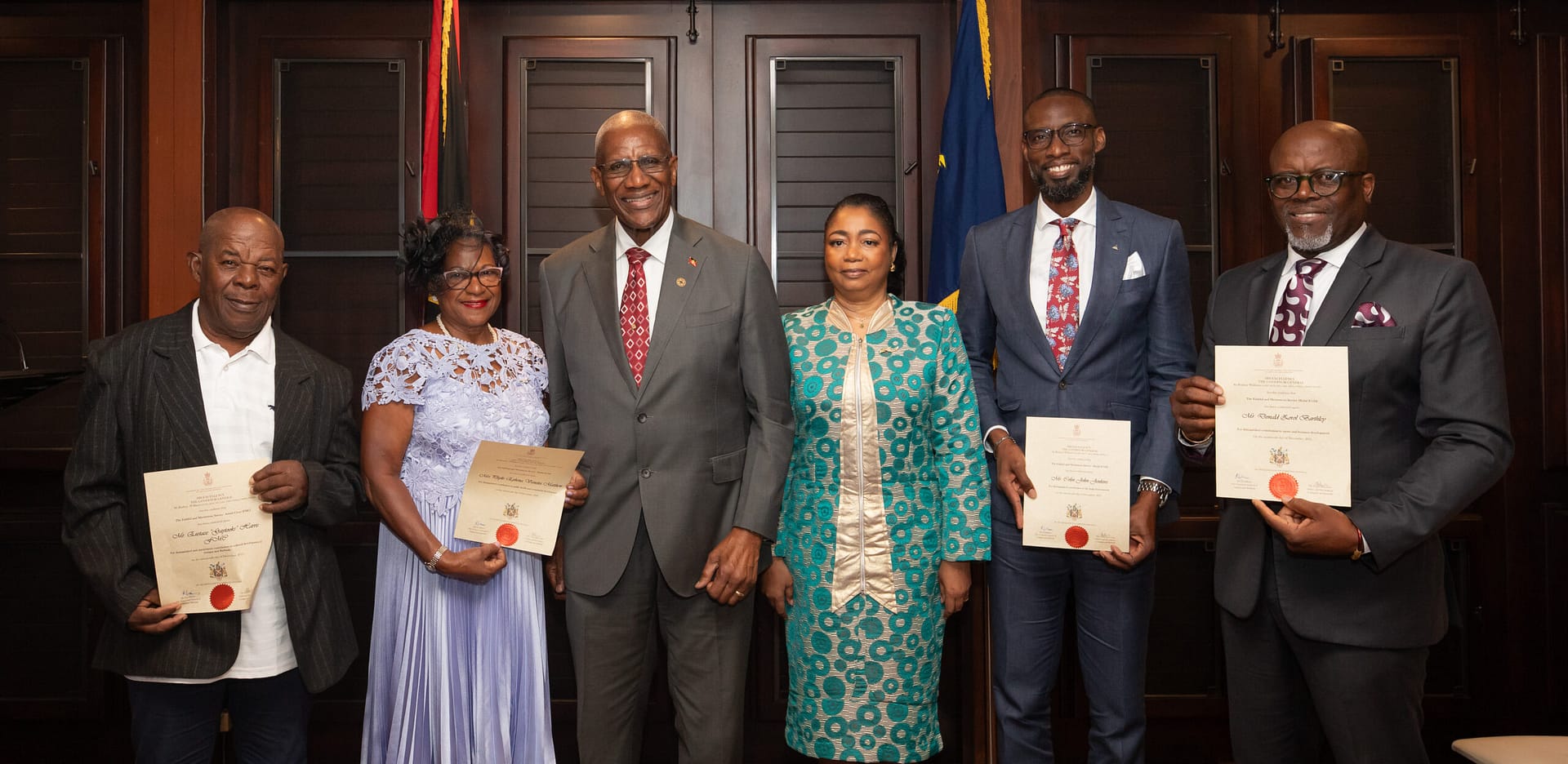
    In a dignified ceremony at Government House, His Excellency Sir Rodney Williams, Governor-General of Antigua and Barbuda, presented the Governor-General’s Faithful and Meritorious Service Awards to four exceptional citizens who have made transformative contributions to national development. The investiture ceremony celebrated decades of dedicated service across multiple sectors including cultural preservation, public health, architectural innovation, and sports development.

    The honored recipients included Mr. Eustace ‘Gaytooks’ Harris, recognized for his six-decade commitment to elevating the steelpan as both a national treasure and international symbol of Antiguan and Barbudan cultural identity. Mrs. Phylis Ephena Vanetta Matthew was celebrated for her distinguished work in public health and community development, particularly through nursing leadership and advocacy for marginalized populations.

    Mr. Colin John Jenkins received honors for his pioneering contributions to sustainable architecture and climate-resilient infrastructure development. Mr. Donald Zorol Barthley was acknowledged for his groundbreaking leadership in both sports administration, particularly within West Indies cricket, and business entrepreneurship with significant youth mentorship components.

    Governor-General Williams emphasized that these awards, established by Warrant in 2015, complement the National Honours system by recognizing exemplary service that might otherwise remain unacknowledged. The program specifically aims to encourage sustained excellence and commitment to nation-building while affirming the value of long-term dedicated service.

    The awards framework includes four distinct grades of recognition: the Faithful and Meritorious Service Cross, and the Faithful and Meritorious Service Medal in Gold, Silver, and Bronze classifications, each reflecting varying levels of achievement and service duration. His Excellency noted that nominations typically originate through community applications, highlighting how exceptional service often occurs without public visibility unless formally brought forward by organizations or institutions.

    Concluding the ceremony, the Governor-General and Lady Williams extended holiday greetings and expressed aspirations for a unified and productive 2026 marked by continued national progress and community service.

  • Antigua and Barbuda to Pay Outstanding Public Sector Wages From Covid Period

    Antigua and Barbuda to Pay Outstanding Public Sector Wages From Covid Period

    The government of Antigua and Barbuda has unveiled a definitive roadmap to reimburse public sector employees for income disruptions experienced throughout the Covid-19 pandemic. This initiative directly addresses longstanding grievances over unpaid wages, reduced hours, and mandatory leave without pay that affected numerous civil servants during the national emergency.

    In an official directive, all permanent secretaries across government ministries have been mandated to spearhead the claims process. Their primary responsibility involves the comprehensive collection and rigorous validation of compensation claims from eligible personnel. The administration has set a firm submission deadline of December 31, 2025, for all documented claims to be filed through the appropriate ministerial channels.

    Following the verification phase, the National Treasury Department will assume responsibility for processing the validated financial claims. The government projects that the actual disbursement of funds will commence in January 2026, providing a clear timeline for affected workers awaiting restitution.

    This compensation program represents a significant component of the government’s broader strategy to mitigate the severe financial hardships precipitated by pandemic-related restrictions. Officials are strongly encouraging all eligible public servants to adhere to the announced deadline to facilitate seamless processing and ensure timely receipt of payments. This development is anticipated to receive widespread approval from labor unions and public sector advocates who have consistently lobbied for resolution of these outstanding salary issues.

  • Temporary closure: Licensing and Inspection centre, Dusty Highway

    Temporary closure: Licensing and Inspection centre, Dusty Highway

    The Royal Grenada Police Force (RGPF) Traffic Division has announced a scheduled temporary closure of its primary Motor Vehicle Inspection Center located along Dusty Highway in St. George. The facility will suspend operations commencing Monday, December 22nd, 2025.

    Regular services at the Dusty Highway location are scheduled to recommence on Monday, January 5th, 2026, at 8:00 AM. To ensure continuity of essential vehicle inspection services during this two-week period, the RGPF has established an alternative operational center.

    From December 22nd, 2025, through January 4th, 2026, mandatory vehicle inspections will be conducted at the Traffic Department headquarters on The Carenage in St. George. The temporary facility will maintain operational hours from 8:00 AM to 4:00 PM daily to accommodate public needs.

    Police authorities have issued a formal apology for any disruptions this necessary temporary relocation may cause to motorists and vehicle owners. The RGPF simultaneously expressed gratitude for the public’s anticipated cooperation and understanding during this transitional period, emphasizing their commitment to maintaining road safety standards.

    The Office of the Commissioner of Police confirmed these operational changes as part of scheduled maintenance or administrative improvements, though specific reasons for the temporary closure were not detailed in the public announcement.