分类: society

  • More than 600 homeless people receive Easter treat from Kiwanians

    More than 600 homeless people receive Easter treat from Kiwanians

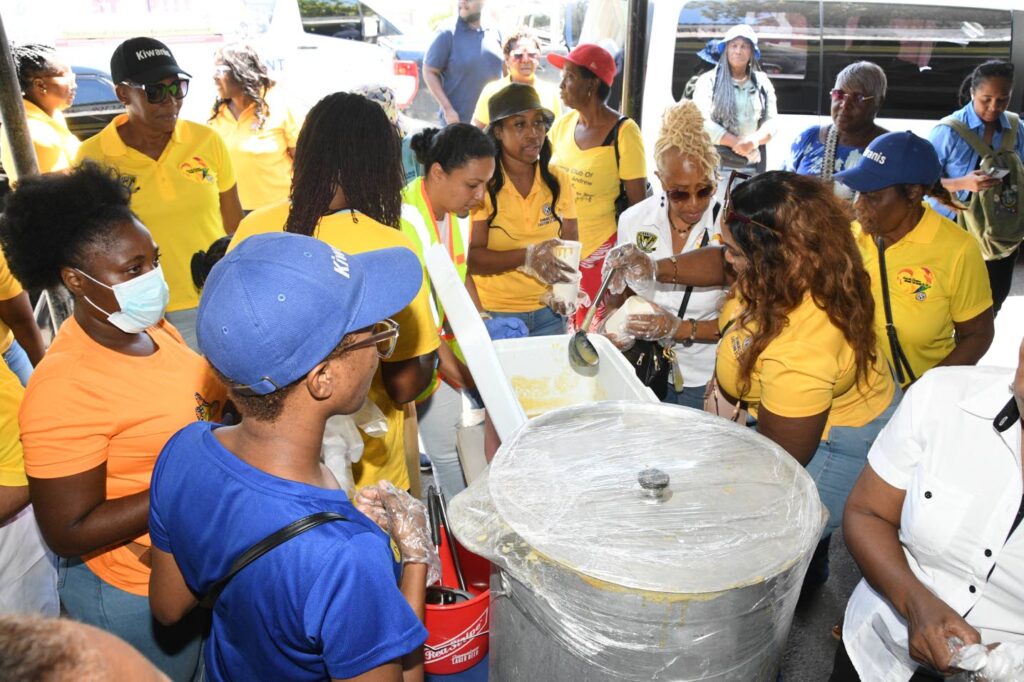
    On the Easter holiday Monday, hundreds of vulnerable people across Kingston and St Andrew received a heartfelt boost of holiday cheer through a large-scale community outreach initiative organized by Kiwanis Club Division 23 East. The club’s annual Easter Breakfast for the Homeless program brought together a coalition of local businesses, municipal authorities and medical providers to deliver hot meals, traditional holiday food and free healthcare services to more than 600 people living in shelters and on the streets of the Jamaican capital.

    Volunteers and organizers began their work before dawn, with teams fanning out across multiple districts of the city to reach people wherever they were. Audrey Brown, Lieutenant Governor for Kiwanis Division 23 East, shared that preparation and distribution kicked off at 5:30 am, with separate teams covering zones including Dumfries, New Kingston, Cross Roads, Papine, Liguanea, Half-Way-Tree and downtown Kingston. Every public shelter in the area was included in the outreach, with services delivered to the Desmond McKenzie Transitional Centre, the Church Street Temporary Shelter, the Marie Atkins Night Shelter and the Denham Town Golden Age Home. Brown emphasized that the effort was not limited to shelter residents – unhoused people living on city streets were also priority recipients of support.

    For many recipients, the initiative represented far more than a free meal. Fredericka, a 78-year-old resident of the Marie Atkins Night Shelter who has lived at the facility for more than a year, called the outreach an incredible comfort. “As an elderly person over 78 years old it is hard for me to go out and get these things, so when they come here it is an extreme relief for me,” she shared, expressing deep gratitude for the program. Brown added that for many of the people served, the traditional bun and cheese provided by the organizers is the only special Easter meal they will access all year. “All the clubs decided to come together and do one massive project. And it has been so fulfilling to those who are on the streets and in the shelters. Our less fortunate, at times we take them for granted — and for some, this is the only bun and cheese that they will ever have. To us, that is something that we see fit to do. It’s something that means a lot to us,” Brown said, noting the work aligns with the Kiwanis mission of “Serving children in need, one community at a time” by lifting up vulnerable members of the community.

    Beyond food support, the initiative integrated free medical care to address unmet health needs among the unhoused and low-income shelter population. Dr. Andre McDonald, chief medical officer at lead sponsor Suretime Emergency Medical Services, explained that at least 50 people received on-site medical check-ups and assistance during the outreach. He framed the holistic effort as a demonstration of a complete definition of health, noting that wellness extends far beyond physical care to include mental, social, financial and even spiritual well-being. “We are here to ensure that people are okay,” Dr. McDonald said.

    Club President Carolyn McDonald Riley credited the broad cross-sector collaboration for the initiative’s success, noting that more than 300 holiday buns were donated by participating partners. Suretime Emergency Medical Services served as the lead sponsor, covering costs for cheese and providing on-site medical and security services. Additional in-kind and financial support came from a range of local partners: Island Car Rentals donated two buses to transport volunteers and supplies across all distribution sites; the Kingston and St Andrew Municipal Corporation provided on-ground guidance and coordination at the first distribution stop; Flavor Fresh and Newtown Bakery donated all 300 plus buns for the meals; Jet Tour provided gap funding to cover costs not covered by other sponsors; and Lifespan donated bottled water for the event.

    The volunteer-led outreach has been celebrated as a powerful example of community action to address food insecurity and unmet care needs among Kingston’s most vulnerable populations ahead of the Easter holiday, with organizers noting plans to continue expanding the annual initiative in coming years.

  • ‘We have a bishop!’ Colin Reid elected Anglican shepherd of Montego Bay

    ‘We have a bishop!’ Colin Reid elected Anglican shepherd of Montego Bay

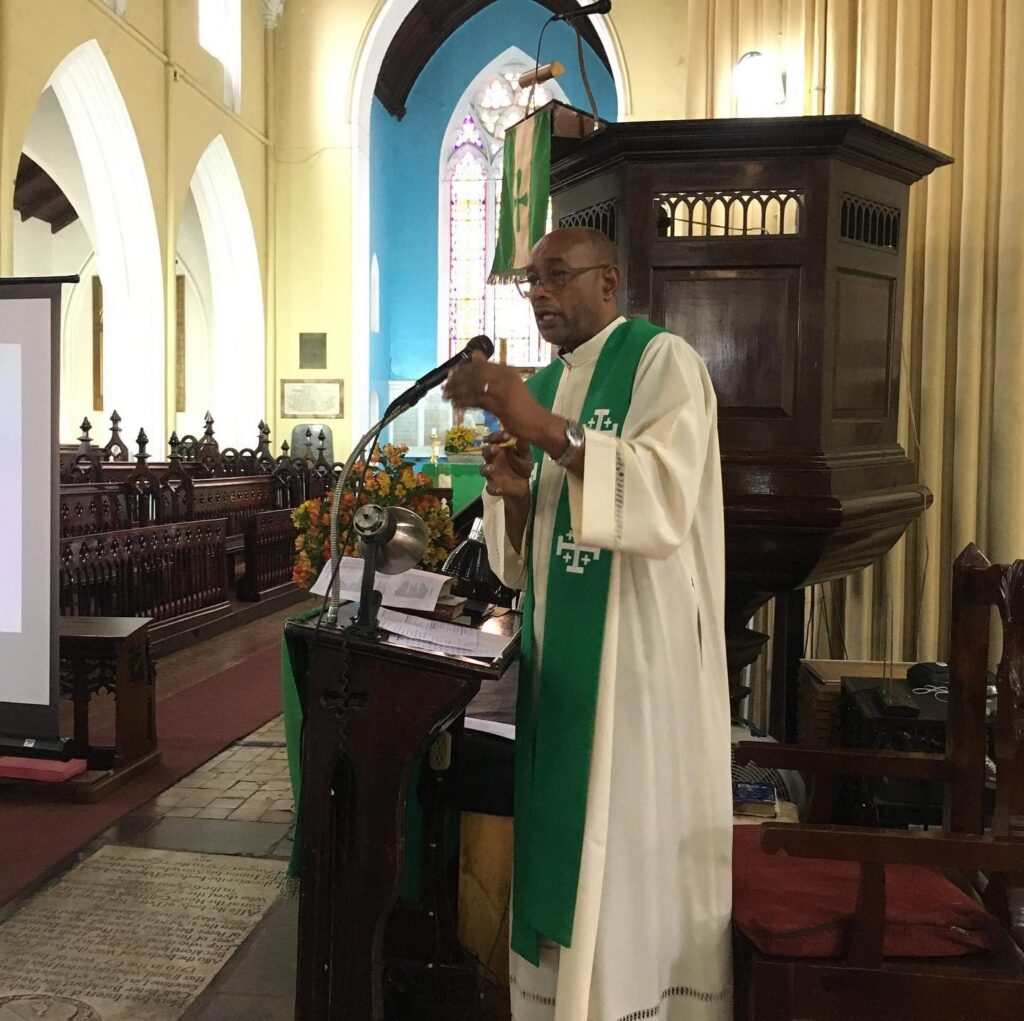
    In a landmark decision announced this Wednesday, the 155th synod of the Anglican Church in Jamaica and the Cayman Islands has voted to select the Very Rev Colin Reid as the next bishop of Montego Bay.

    Reid, who currently serves as senior Canon of the Cathedral of St Jago de la Vega in Spanish Town, secured a decisive victory in the election, earning 75 votes from participating clergy and 101 votes from lay representatives. The strong cross-faction support reflects broad confidence in his leadership within the regional church community.

    He will step into the role vacated by the Right Rev Leon Golding, who was elected Bishop of Jamaica and the Cayman Islands last year. Outside of his ecclesiastical work, Reid is a family man, married to Carol Reid, and the couple share three children together. The election marks a new chapter of leadership for the Montego Bay diocese as it prepares for Reid’s official installment in the coming months.

  • Police seize ammo in Kingston operation

    Police seize ammo in Kingston operation

    KINGSTON, Jamaica — In a targeted early-morning crackdown driven by intelligence gathered by law enforcement, Jamaican police recovered a cache of unauthorised ammunition and firearm components at an address in Kingston 2 on Wednesday.

    The operation, which unfolded between 5:30 a.m. and 7:00 a.m. at a property situated along Mountain View Avenue’s Jarrett Lane segment, uncovered five live 5.56-caliber rounds, five spent bullet casings, an M16 rifle magazine, and an M16 hand guard, according to official law enforcement updates.

    Investigative reports detail that the illicit items were concealed inside a black plastic bag, which was stashed in a hollow block cavity of an unfinished structure on the site. Despite the successful seizure, no suspects have been taken into custody as of the latest updates, and the investigation remains active.

    Law enforcement officials have highlighted that the location of the recovery is an area of repeated interest and ongoing concern for local policing teams. The neighborhood has long been tied to organized gang activity, and investigators confirmed Wednesday that the seizure is expected to hinder the operational capabilities of a local criminal group based out of Jarrett Lane.

    The find marks a significant pre-emptive win for police, who have stepped up targeted intelligence-led operations across Kingston to disrupt weapons trafficking and prevent gang-related violence before it occurs.

  • JN and partners support JCF to reduce motorcycle deaths

    JN and partners support JCF to reduce motorcycle deaths

    KINGSTON, Jamaica — As motorcycle-related road deaths continue to climb as one of the fastest-growing categories of traffic fatalities worldwide, a new targeted capacity-building program has kicked off in Jamaica to equip frontline law enforcement with the tools to reverse this dangerous trend. The three-day training focused on proper helmet regulation and evidence-based road safety practices, hosted for 27 officers from the Jamaica Constabulary Force’s (JCF) Public Safety and Traffic Enforcement Branch (PSTEB), grew out of a multi-party partnership framework signed just months earlier in June 2025.

    The program is led by the National Helmet Wearing Coalition (NHWC), an initiative run by the JN Foundation in coordination with Jamaica’s National Road Safety Council. It forms a core part of a formal Memorandum of Understanding between the JCF, the Global Road Safety Partnership (GRSP), the NHWC, and the FIA Foundation, all aligned to strengthen enforcement of national motorcycle helmet laws. Speaking at the program’s opening, JN Foundation General Manager Claudine Allen emphasized that police officers occupy a unique position of trust and respect across Jamaican communities, giving them unmatched power to drive lasting cultural change around road safety.

    Allen urged officers to leverage that community influence to cut preventable motorcycle deaths, arguing that progress in this work will not be measured by citation volumes, but by the number of lives spared from tragedy. “Every time you put on your uniform, you carry an authority that can influence behaviour,” she told attendees. “Success will not be measured by the number of tickets issued but by the number of lives saved.” Allen encouraged participants to model safe behavior themselves, engage with motorists respectfully, and maintain consistent professionalism in all enforcement interactions.

    GRSP Chief Executive Officer Dave Cliff echoed Allen’s remarks, praising Jamaica for taking bold, targeted action to address a public health crisis that impacts nations across the globe. He called the collaborative partnership with the JCF a direct, high-impact investment in saving Jamaican lives, noting that upskilling frontline officers in enforcement, communication, and technical road safety knowledge is one of the most effective interventions any country can make to reduce road fatalities. Cliff also highlighted that Jamaica’s intentional investment in training and capacity building positions the island as a regional leader among developing nations grappling with similar road safety challenges.

    PSTEB head Senior Superintendent Lloyd Darby laid out the urgent scale of the crisis motivating the new initiative, sharing stark data on decades of road deaths in Jamaica: between 2015 and 2025, more than 4,480 people lost their lives in road collisions across the country. Of those fatalities, 1,356 were motorcyclists and an additional 159 were motorcycle passengers. In 2025 alone, 111 motorcyclists died in preventable crashes.

    Darby outlined the JCF’s ambitious public safety targets: the force aims to cut total annual road deaths to fewer than 300 by 2026, a milestone that has only been hit seven times in the last 50 years. The JCF’s broader strategy includes a 50% reduction in motorcycle fatalities and a 10% drop in deaths across other road user categories, achieved through a combination of zero-tolerance enforcement of existing traffic laws, expanded public outreach, and ongoing upskilling training for officers. Darby also noted that enforcement efforts have already ramped up significantly: in the first months of 2026 alone, JCF officers have seized 786 non-compliant motorcycles, compared to 336 seizures in all of 2025.

    For officers on the ground, the training has already delivered tangible, actionable skills. Sergeant Shereen Chambers, a sub-officer leading the Metro Quick Response Team, called the program both timely and practical. “I have learnt a lot; some things I knew and some things were new,” she said. “I can now identify certified helmet elements, and I will pass this knowledge on to my juniors and to motorists I engage with daily.”

    The 27 officers who completed the initial training will go on to train fellow JCF members across the country, expanding the program’s reach exponentially. Partners involved in the initiative emphasize that the gap between formal road safety legislation and consistent on-the-ground enforcement is a key barrier to progress, and this training program is designed to close that gap. Meaningful, long-term change, they note, will depend on consistent, sustained application of the skills officers gained during the workshop.

    Closing the opening session, Allen urged trainees to carry a renewed sense of purpose forward in their work. “Your interventions may prevent tragedies you will never see. But your impact will be lasting,” she stressed.

  • Mom not told son’s leg ‘amputated’ at PMH

    Mom not told son’s leg ‘amputated’ at PMH

    A devastating medical negligence case involving a teenage Bahamian national rugby player has taken a critical turn, with the Supreme Court of the Bahamas upholding a default judgment that finds the Public Hospitals Authority (PHA) liable for damages arising from the un-consulted partial amputation of the athlete’s leg. The ruling marks the end of years of procedural delay and clears the path for a formal hearing to determine the size of the compensation package for 19-year-old (at time of ruling) Miguel Russell, who suffered life-altering complications following routine treatment for a sports injury.

    The incident dates back to when Russell, a minor representing The Bahamas in international rugby competition, sustained a dislocated knee during a match and was admitted for treatment at Princess Margaret Hospital (PMH), the country’s leading public healthcare facility. After being placed on dialysis following his initial procedure, Russell’s condition rapidly deteriorated. According to the formal claim filed against the PHA, medical staff at PMH proceeded to amputate a portion of Russell’s leg without notifying or gaining consent from his mother, who was his legal guardian at the time of the procedure.

    As his infection spread and wounds failed to heal, Russell’s family eventually arranged for specialized care in Cuba, where attending clinicians documented extensive tissue necrosis, widespread bacterial infection, and catastrophic open wounds that aligned with the young athlete’s allegations of improper care. What followed after the family filed suit was years of unexplained procedural inaction on the part of the PHA, which has drawn sharp criticism from the court.

    Court records show the initial writ of summons was first filed in December 2017, with an amended complaint submitted just two months later in February 2018. The PHA entered a formal appearance in the case in April 2018, but took no substantive steps to mount a legal defense for more than six years. Russell’s legal team finally submitted a full statement of claim in September 2024, which was served to the PHA shortly after. While the PHA acknowledged receipt of the claim the following month, it still failed to file a formal response or defense.

    By January 2025, Russell’s legal team moved for a default judgment, which was granted by the court during a March 19 2025 hearing. Notably, PHA representatives attended the hearing but made no formal objection or request for an extension of time to prepare their defense. It was only after the default judgment was entered that the PHA attempted to reverse the ruling, filing an application to set aside the judgment and revive its defense.

    In its application, the PHA claimed it had a viable defense to the negligence allegations, blaming its years-long delay on logistical hurdles in obtaining Russell’s medical records from Cuban healthcare providers. The authority also argued that Russell’s severe complications stemmed from the initial severity of his rugby injury, not negligent care, and maintained that he had received appropriate, evidence-based treatment at PMH.

    Russell’s legal team pushed back against the PHA’s claims, noting that the authority already had full access to all relevant domestic medical records and had repeatedly missed opportunities to move the case forward over the preceding six years. They argued the PHA had no substantive defense to the core allegations and had intentionally relied on delay to avoid liability.

    In her ruling, Assistant Registrar Akeira D Martin sided entirely with Russell, applying the country’s Civil Procedure Rules to evaluate whether the PHA met the legal requirements to set aside a default judgment. To successfully reverse a default ruling, defendants must demonstrate they acted promptly after the entry of judgment, provided a credible explanation for their prolonged inaction, and prove they have a genuine prospect of successfully defending the claim at trial. The PHA failed to meet all three criteria, Martin found.

    The ruling specifically notes that the PHA did not act with any urgency to request medical records, with key documentation only being requested years after the PHA first entered the case. The court also confirmed that many of the records the PHA claimed it needed were already in its possession long before the default judgment was granted. Martin further found that the PHA’s proposed defense consisted almost entirely of general denials of negligence, with no substantive response to the core claims: that Russell developed preventable bedsores during his stay at PMH, that the partial amputation was performed without required consent from his mother, and that he was never provided adequate medical guidance about his worsening condition.

    By contrast, the court highlighted that Russell’s account of events was fully supported by independent medical evidence from Cuban clinicians, whose documentation of severe infection and tissue damage aligned perfectly with his allegations of improper care. Martin emphasized that the court was not making a final ruling on the underlying negligence at this procedural stage, but found that the PHA had failed to demonstrate it had a strong enough defense to justify reopening the case. The court also refused to grant the PHA an extension of time to file a defense, dismissing the authority’s application in full and ordering the PHA to pay all legal costs incurred by Russell to date.

    With liability now effectively settled (barring a successful appeal by the PHA), the case will next move to a directions hearing for the formal assessment of damages, where the court will determine how much compensation the PHA must pay Russell for his life-altering injuries and ongoing harm. This phase of the proceedings is expected to include testimony from independent medical experts and a detailed review of the care Russell received at PMH and the progression of his condition following the initial injury.

  • Two men dead, others injured in separate Easter Monday shootings

    Two men dead, others injured in separate Easter Monday shootings

    A quiet Easter holiday in Barbados was shattered by two unconnected shooting incidents that left two men dead and multiple other people wounded, according to official police updates. Law enforcement first responded to the violence just before 7 p.m., when 911 callers reported gunfire breaking out along the popular Brownes Beach in the parish of St. Michael.

    When officers from the Hastings/Worthing Police District arrived on scene, they found an adult man unresponsive outside a local business. A responding medical examiner officially pronounced the man dead at the location, and police have not yet released his public identity as of the latest update.

    Roughly three hours later, a second violent outbreak unfolded in Oistins, Christ Church, just after 10 p.m. that same evening. Officers from the Oistins Police Station were dispatched to the scene after emergency calls about another shooting. Early investigative work has confirmed that the attack grew out of a public disturbance that erupted while a crowd of locals and visitors were gathered for a scheduled community event. When the altercation escalated, an unidentified shooter opened fire, striking three people: two men and one woman.

    One of the wounded men, who had been rushed to the Queen Elizabeth Hospital, the island nation’s leading public medical facility, by a private vehicle, died from his injuries while receiving care. He has since been formally identified by authorities as 22-year-old Raul Clarke, a resident of Gall Hill in Christ Church. The two remaining injured victims were transported to the same hospital via emergency ambulance, and they are currently receiving ongoing medical treatment for their wounds. As of the latest update, their conditions have not been publicly disclosed.

    Barbados Police Service investigators have launched parallel probes into both shooting events, and the investigations remain active and ongoing as law enforcement works to identify suspects, piece together the motives for both attacks, and gather physical and witness evidence. To speed up progress on the cases, police are issuing a public appeal for any members of the public who may have information about either incident – whether they were witnesses, found themselves in the areas around the time of the shootings, or hold any details that could help investigators – to come forward with their tips.

    Members of the public can submit information anonymously through Crime Stoppers at 1-800-8477, reach the police emergency line at 211, contact the Hastings/Worthing Police Station directly at 430-7608 or 430-7609, or reach the Oistins Police Station at 418-2612 or 418-2608. All information provided to authorities will be treated as strictly confidential, police confirmed.

  • Kentish Pentecostal Church Marks One Year Since Passing of Bishop Lester Emanuel

    Kentish Pentecostal Church Marks One Year Since Passing of Bishop Lester Emanuel

    One year ago this week, the Kentish Pentecostal community lost its long-serving spiritual leader, Bishop Rev. Dr. Lester Emanuel. On Monday, congregants and church leadership gathered to mark the somber anniversary, celebrating a life defined by 45 years of devoted ministry that transformed both the institution and the broader local area.

    In an official tribute released April 7, church leadership walked through the decades of impact Emanuel carved out during his tenure. Framed not just as a church leader but as a caring shepherd to his flock, Emanuel was credited with strengthening family bonds across the congregation and nurturing spiritual growth across multiple generations of worshippers.

    “Today, we pause not only to remember Bishop Emanuel’s remarkable journey, but to acknowledge the lasting imprint he left on every heart he touched,” the church’s official statement reads.

    Church leaders have repeatedly highlighted three core traits that defined Emanuel’s service: an unwavering commitment to his calling, a steady abiding faith that anchored the community through uncertain times, and a willingness to give sacrificially of his time and energy for others. Even a year after his passing, his influence remains palpable in the ministry he helped grow and the countless lives he mentored and supported.

    As a foundational pillar of Kentish Pentecostal Church for decades, Emanuel earned a reputation for preaching the gospel with unshakable conviction, guiding the congregation with thoughtful wisdom, and extending radical compassion to every member of his flock, from the youngest new worshipper to the longest-serving members.

    Though his voice no longer echoes from the church’s pulpit during weekly services, the institution emphasizes that his teachings and personal example continue to act as a guiding light for current leadership and congregants alike.

    “His legacy is alive in our worship, our fellowship, and the love we share as a community,” the statement added.

    The tribute was coordinated and issued by current Bishop Michael C. Butler, Sis. Bunny Butler, and the full Kentish Pentecostal Church Board. The group collectively affirmed that Emanuel’s entire life was marked by faithful, dedicated service to God, setting a benchmark for future leaders to follow.

    Moving forward, the church says it will continue to hold Emanuel’s memory in grateful esteem, noting that the strong institutional foundation he built over decades of work continues to inspire and direct all current and future work of the congregation.

  • NIA Celebrates Excellence, Honours Women Across Diverse Fields

    NIA Celebrates Excellence, Honours Women Across Diverse Fields

    CHARLESTOWN, NEVIS – April 7, 2026 – The Department of Gender Affairs under the Nevis Island Administration (NIA) has marked International Women’s Day 2026 by celebrating seven outstanding women whose work has shaped progress across multiple sectors of Nevisian society, shining a spotlight on the enduring influence of women’s leadership and community service across the island.

    Held at the scenic Malcolm Guishard Recreational Park, this year’s award ceremony carried the official theme “Rights, Justice, Action for All Women and Girls,” as a core event in the Department’s full calendar of activities to observe the global occasion. The 2026 global International Women’s Day framework centers on the theme “Give To Gain,” which encourages individuals, community groups, and institutions to contribute tangible resources, mentorship guidance, advocacy support, and time to uplift women and girls, strengthening collective commitments to closing gender equity gaps.

    Seven women received recognition for excellence in their respective professional and community spaces. Jackie Hunkins-Taylor claimed the Women in Law Award, while Sharmyn Powell took home the honor for the Finance sector. Valerie Hendrickson was recognized for her work in Agri-Processing, Noellisa Swaby for her contributions to the Circular Economy, and Dianne Hobson for her impact on Arts and Culture. The prestigious Minister’s Award went to Leander Cornelius, and Thema Ward was honored with the special Tricia Greaux Ocean Governance Award. Unlike the appointed Minister’s Award, all other honors were selected through public nomination, meaning awardees were chosen by their own neighbors and community members who have witnessed their work firsthand.

    Honourable Jahnel Nisbett, Nevis’ Minister of Gender Affairs, opened the ceremony with heartfelt congratulations to the recipients, emphasizing that public celebration of women’s work is a critical step toward advancing equity.

    “We are here to celebrate seven amazing women who have left an indelible mark on their fields,” Nisbett remarked. “With the exception of the Minister’s Award, the entire selection process was led by the general public. The people of Nevis see your work, they see the change you’ve created, and they have chosen you to be publicly celebrated. Through the Department of Gender Affairs, we are proud to serve as the platform to honor your dedication, say thank you, and present you with your honors while you are here with us, so you can truly understand how deeply valued you are by this community.”

    Feature speaker Ayana McCalman, a practicing attorney, used her address to push back against long-held harmful gender stereotypes, calling for lasting cultural change and consistent action to embed gender equity into daily life, rather than limiting progress to symbolic one-off events.

    “It is time that we write a new reality for women across our region and the world,” McCalman said. “Women are warriors, and they deserve space to lead every single day. As we celebrate these remarkable women today, let us also reflect on how we show up for the women in our own lives, not just in the month of March, not just at award ceremonies, but in the small, everyday moments. Do we show up to support them? Do we listen when they speak? Do we invest in their goals? Do we create space for them to heal, and to lead? Because empowering women is not a single annual event – it is a culture, it is an ongoing commitment, it is a choice we have to make again and again, in our homes, our workplaces, and our communities.”

    The event marked one of the NIA Department of Gender Affairs’ most visible public celebrations of women’s achievement in recent years, bringing together community members, government officials, and family to recognize the contributions of women that often go uncelebrated in public life.

  • “Environment For Everyone” campaign tackles illegal dumping and community responsibility

    “Environment For Everyone” campaign tackles illegal dumping and community responsibility

    BASSETERRE, Saint Kitts – April 7, 2026 – A nationwide environmental protection initiative is growing in traction across Saint Kitts and Nevis, as the country’s Ministry of Environment scales up its high-profile “Environment For Everyone” campaign, a multi-agency effort designed to crack down on illegal waste dumping and embed a culture of collective environmental accountability across local communities.

    Leading the push is Minister of Sustainable Development, Environment, Climate Action and Constituency Empowerment, the Honourable Senator Dr. Joyelle Clarke, who emphasized that the campaign represents a landmark cross-sector collaboration bringing together 10 distinct government and private entities. Partner agencies include the Parks and Beaches Unit, the Solid Waste Management Corporation, the S.T.E.P environmental program, His Majesty’s Prison, the Department of Public Infrastructure, the Ministry of Health, St. Kitts Electricity Company Ltd., the Traffic Department, and the Ministry of Environment itself.

    Clarke explained that the expanded campaign grows out of the nation’s popular Annual Christmas Cleanup, a long-running event that has evolved into a sustained movement that integrates public service, volunteer participation, and individual responsibility for environmental stewardship. “By uniting all these agencies under one umbrella, we are directly confronting the blight of illegal dumping that disfigures our public spaces,” Clarke noted in her remarks.

    Recent targeted cleanup operations in the Beacon Heights neighborhood laid bare the full scale of the illegal dumping crisis facing the island. Intervention teams pulled tonnes of improperly discarded large waste from public green spaces, including full-sized mattresses, broken household appliances, and accumulations of single-use plastic debris – all of which had been deliberately dumped in unauthorized areas rather than taken to official waste disposal sites.

    Clarke questioned the logic of illegal dumping practices, pointing out that Saint Kitts already offers some of the lowest official waste disposal tipping fees in the region, meaning proper disposal costs households and commercial haulers almost nothing. “Why go out of your way to offload waste illegally when disposing of it properly costs next to nothing?” she asked. The minister stressed that the act of illegal dumping imposes an unnecessary financial and ecological burden on local communities, erodes the island’s natural beauty, and undermines the country’s core tourism sector, which is branded under the national slogan “Venture Deeper.”

    “Environmental protection is not just about keeping our postcard-perfect beaches clean. It requires care for every green space, every community neighborhood, and every stretch of land across Saint Kitts and Nevis,” Clarke added.

    Backed by new regulatory authority granted under the recently passed Community Beautification and Safety Bill, the campaign is now rolling out to every electoral constituency across the federation, with organizers placing heavy emphasis on grassroots citizen participation. Central to the initiative’s core message is a simple but urgent reminder: safeguarding the islands’ natural environment is not a responsibility that falls to the government alone – it requires action from every resident.

    This report is based on an official press release from the St. Kitts and Nevis Information Service (SKNIS), distributed via SKNVibes.com.

  • Jealous man questions woman about her underwear, beats her

    Jealous man questions woman about her underwear, beats her

    A domestic violence case that unfolded in the Caribbean nation of St. Vincent and the Grenadines has concluded with a legal ruling holding an abusive partner accountable for his violent actions. 32-year-old Fidel Francois, a carpenter and mason from the Chauncey community, was handed down a sentence by Senior Magistrate Tamika McKenzie at the Kingstown Magistrate’s Court that requires him to pay EC$500 in immediate compensation to his 23-year-old former girlfriend Kittanna Codougan, also a resident of Chauncey. If Francois fails to meet the compensation requirement, he will face a five-month prison sentence.

    Francois entered a guilty plea to a charge of assault causing actual bodily harm, which was committed in Chauncey on the evening of March 20. The court heard full details of the incident and the history of the couple’s relationship, which had spanned more than nine months marked by repeated verbal and physical conflicts that were never reported to police before the March confrontation.

    The chain of events that led to the violent outburst began when the pair returned from the capital city of Kingstown and stopped at Rasto’s Bar in the South Leeward village. Codougan gave Francois money to purchase drinks as she had promised, then returned home early to begin cleaning. When Francois arrived at the residence minutes later, he was already consumed by suspicion that Codougan had been unfaithful. He confronted her, questioned what she had been doing, blocked her path when she tried to move past him, and ultimately stepped close to smell her clothing before demanding to know where she had been and whether she was wearing underwear.

    Codougan did not respond to the invasive questions and moved to the home’s porch to escape the confrontation, but Francois followed her and attempted to force her back inside. When she refused and instead walked toward the public road, Francois grabbed her, continued demanding she return inside, and escalated to brutal violence: he shoved her into a wall, punched and slapped her across multiple areas of her body, wrapped both hands around her throat, lifted her off the ground, and pressed her against the wall. After releasing her initially, Francois fled toward the road only to return and resume the assault. He then went into the home, retrieved a nail gun and attempted to power it to threaten Codougan, and when the tool failed to turn on, he returned inside and emerged carrying an axe and other tools, threatening to kill her.

    Local law enforcement from the Questelles Police Station was contacted immediately, and officers arrived within minutes to take Francois into custody. During court proceedings, Codougan told the magistrate she requested EC$5,000 in compensation, explaining that since the choking assault, she has experienced persistent depression, frequent crying spells, and ongoing pain in her neck and back. Medical evidence presented to the court confirmed Codougan suffered visible injuries including swelling, bruising, and superficial open wounds. She also told the court she no longer feels safe around Francois, and that he returned to her home after the attack and threatened to burn the property down.

    During mitigation, Francois pushed back on some details of the prosecution’s account. He admitted to smelling Codougan’s clothing, claiming he only acted after seeing another man leave the property when he returned from the bar, and said he only slapped her after she bit his shoulder. He denied choking her, lifting her, or pushing her against a wall, as well as denied threatening to burn down the home, claiming he only returned to retrieve a forgotten mobile phone. He told the court he felt regret shortly after the incident.

    Magistrate McKenzie rejected Francois’ claims of remorse, noting she found no genuine evidence of contrition in his statements and actions. She considered imposing a six-and-a-half-month prison term, but ultimately sentenced Francois to a nine-month good behavior bond set at EC$1,000, in addition to the immediate compensation order. If Francois violates the terms of his bond, he will be required to pay the full EC$1,000 immediately or serve six months behind bars.