分类: society

  • WPM working to contain smoke at Retirement Disposal site by Friday afternoon

    WPM working to contain smoke at Retirement Disposal site by Friday afternoon

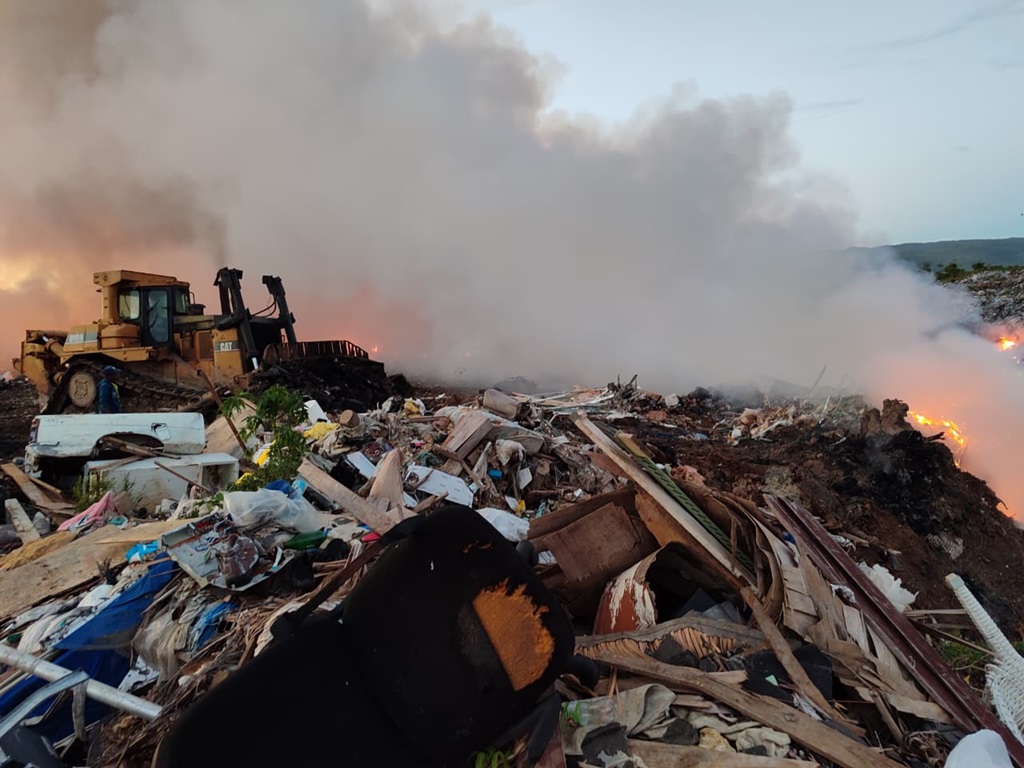
    ST JAMES, Jamaica — Western Parks and Markets (WPM), the regional operating division of Jamaica’s National Solid Waste Management Authority (NSWMA), has announced that it expects to fully eliminate persistent smoke plaguing the Retirement Disposal Site by late Friday. The incident began a week prior, when reports of an underground fire broke out at the landfill last Saturday, triggering thick smoke that drifted across multiple residential communities in the Montego Bay area. While the open flames of the fire were brought under control within days, the smoldering debris has continued to emit problematic smoke that has disrupted daily life for local residents for nearly a week.

    Speaking to local outlet Jamaica Observer Friday morning, WPM Regional Manager Dramaine Jones shared that overnight and Thursday rainfall had already dampened the last remaining active flames and reduced the volume of smoke emanating from the site. Still, he confirmed that the agency’s top priority is full elimination of the smoke nuisance by the end of Friday afternoon. Jones first laid out this timeline during a regular monthly council meeting of the St James Municipal Corporation Thursday, where he noted that containment would depend on favorable weather conditions. He told attendees Thursday that a lack of additional heavy rain would allow combined teams from WPM and the local fire department to access the affected areas fully, clearing all smoke by the close of the day.

    Jones clarified that the affected areas are two zones designated for storing construction and landscape debris collected through the NSWMA’s Debris Management Programme, plus oversized bulky waste collected from across the region. He also outlined the key challenges that have extended the cleanup and containment operation far longer than initially expected. Two consecutive afternoons of heavy rain created a dual-edged problem for response teams: while the precipitation helped extinguish open flames and dampen smoldering debris, it also left the entire work area waterlogged and extremely soft. This soggy terrain left heavy response vehicles frequently stuck when attempting to reach the center of the affected zone, slowing progress dramatically.

    To adapt to these conditions, Jones explained, WPM has adjusted its operational workflow to start work each day much earlier than usual. By starting at first light, crews can take full advantage of dry, warm daylight hours to move equipment and treat the affected areas before afternoon rains typically arrive. This shift has already yielded visible progress, Jones said, reducing the impact of smoke on nearby communities. As of Friday, crews have worked through roughly 35 to 45 percent of the one-acre affected area, and overall smoke output has dropped to an estimated 25 percent of the levels seen at the peak of the incident.

    Looking ahead, Jones confirmed that the long-term solution for the site will follow the agency’s original pre-fire plan: the entire affected area has already been graded and flattened during preparation for capping, and once the smoldering is fully extinguished, crews will simply apply a protective covering material to seal the site and prevent any future smoke or fire issues.
  • Sixteen RSS officers complete three-week international management training geared to strengthening regional community impact

    Sixteen RSS officers complete three-week international management training geared to strengthening regional community impact

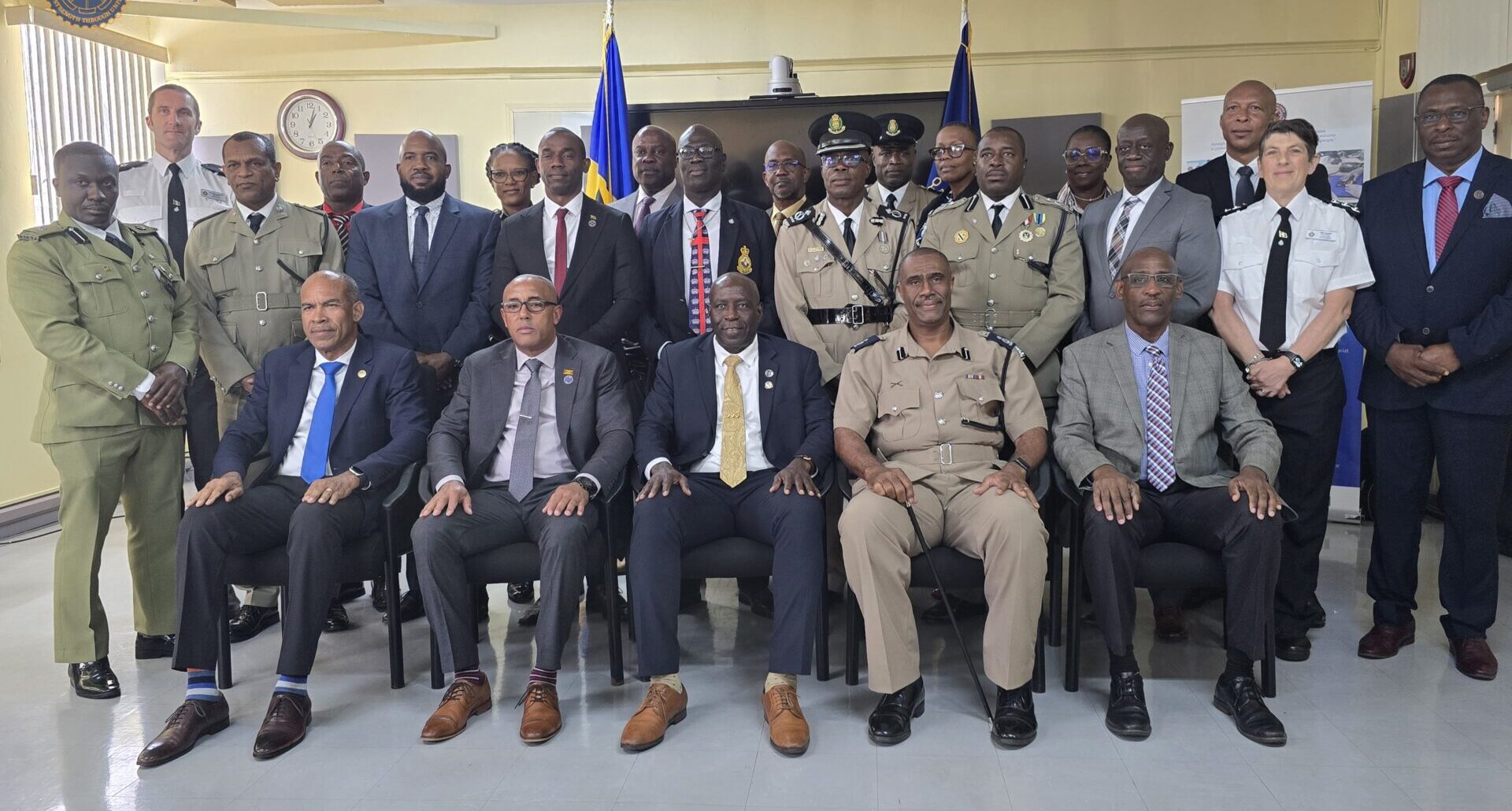
    Sixteen senior law enforcement officers from across member states of the Caribbean Regional Security System (RSS) have crossed the graduation stage this week, capping off a three-week intensive advanced leadership training program designed to elevate regional policing capabilities.

    Developed through a longstanding collaborative partnership between the RSS Training Institute and the United Kingdom’s Durham Constabulary, the International Leadership and Management (Gold) Course was specifically crafted for top-tier law enforcement personnel, including Senior Superintendents, Division Commanders, and Assistant Commissioners. The program’s core mission is to strengthen strategic leadership capacity across the region’s law enforcement agencies, equipping senior leaders to tackle evolving public safety challenges more effectively.

    The graduation ceremony, held Thursday, April 2 at RSS Headquarters, marked the formal completion of the training, with certificates awarded to all participating officers in recognition of their work throughout the program. In his address to the graduating cohort, RSS Deputy Executive Director Atlee Rodney emphasized the critical weight of the leaders’ responsibilities to communities across the region. He urged graduates to remain unwavering in their public service commitments, noting that strong leadership at the senior level is foundational to enabling both individual agencies and the RSS collective to address pressing social challenges and improve overall quality of life for regional citizens.

    Rodney also reaffirmed the RSS Training Institute’s ongoing commitment to developing practical, forward-thinking training programs and sustaining key international partnerships such as the one with Durham Constabulary, all in service of boosting regional policing capacity.

    Royal Grenada Police Force Commissioner Randy Connaught, delivering the event’s keynote address, centered his remarks on the unique complexities senior law enforcement leaders face navigating modern strategic and political landscapes. He laid out a clear framework for ethical, effective senior leadership, defined by three core pillars designed to guide officers in balancing their operational duties, constitutional obligations, and relationships with elected governments.

    “My charge to you is to master what is perhaps the most delicate and critical skill of executive leadership – managing the expectations of the political directorate… This is not about being political. It is not about partisanship. It is about managing a relationship that is constitutionally vital, operationally impactful and perpetually challenging,” Connaught told graduates. “As Gold leaders, you are no longer just guardians of public safety; you are also stewards of public trust and key advisors to the government of the day.”

    Connaught’s first pillar of effective leadership is “Educate, Don’t Just Execute.” He explained that senior officers bear a professional and constitutional responsibility to act as expert advisors, rather than just implementing politically driven policies without context. When elected officials push for quick, reactive crackdowns on complex issues such as gang violence or youth offending, Connaught said leaders should draw on the problem-solving ethos of the Durham training to provide full, transparent context. This includes walking policymakers through threat assessments, community impact considerations, and the ethical implications of policy choices, to ensure decisions deliver legitimate, long-term public safety outcomes rather than short-term political gains.

    “ You are not there to decide national policy that belongs to the government, but you are constitutionally bound to ensure that any such decision is made with the full understanding of the policing consequences. Your advice may be the difference between a politically expedient decision and a sustainable safe outcome,” he said.

    The second foundational pillar focuses on preserving institutional integrity and continuity, urging leaders to prioritize organizational memory and institutional loyalty over temporary political interests. “Integrity is your shield. Politicians come and go. Elections are cyclical. But the police service is an enduring institution. Your loyalty is not to the individual in the ministerial office, but to the office itself, to the law, and to the people you serve,” Connaught stressed.

    Connaught’s third pillar addresses one of the most persistent tensions in modern policing: bridging the gap between public and political expectations and on-the-ground operational capacity. Political campaign promises often create the public perception that police can solve complex social problems overnight, he noted, and it falls to senior leaders to act as transparent, honest brokers about what policing can deliver. “You must be able to demonstrate, with data and candor, the direct link between resources, funding, personnel, technology, wellbeing support and outcomes,” he explained.

    Concluding his address, Connaught encouraged graduates to bring the innovative, problem-focused “Durham Difference” approach back to their home agencies, particularly when engaging with political leadership.

    The ceremony also included formal recognition of the partnership between RSS and Durham Constabulary, with Deputy Executive Director Rodney presenting a token of appreciation to Chief Superintendent Ian Leech, course facilitator from Durham Constabulary.

  • Man fatally shot in Laborie

    Man fatally shot in Laborie

    A quiet pre-dawn break in Laborie was violently ruptured early this Wednesday, when a 40-year-old local man was shot and killed, leaving close relatives and neighborhood residents reeling from shock and fear.

    Family members have publicly named the deceased as Shakai Laurent, according to local accounts. Multiple sources confirm the fatal shooting unfolded at a location close to the intersection of Kennedy Highway and the Laborie Bypass.

    Multiple residents who spoke with local publication *St. Lucia Times* confirmed they were jolted awake from their sleep by the rapid crackle of repeated gunshots, a sound that quickly spread unease across the still-sleeping neighborhood.

    As of the latest updates, authorities have not released clear, verified information about what led to the shooting, leaving key questions about motives, the identity of any suspects, and the sequence of events unanswered. Community members have been left to speculate amid the information vacuum, amplifying the tension gripping the area.

    Unverified video footage circulated widely across various social media platforms captures uniformed police officers working at the crime scene, marking the official launch of a homicide investigation into Laurent’s death.

  • Dr Valda Henry to teachers: You implement reform, drive transformation

    Dr Valda Henry to teachers: You implement reform, drive transformation

    On Wednesday, the 18th Biennial Convention of the Dominica Association of Teachers (DAT) opened its doors at the St. Alphonsus Parish Hall, drawing education professionals from across the island to discuss the critical intersection of teaching and national progress. This year’s conference theme, “Teachers: The Foundation For National Development-Value Us,” set the stage for a keynote address from Dr. Valda Henry, Deputy Governor of the Eastern Caribbean Central Bank (ECCB), who delivered a powerful call to recognize and empower educators as the engine of societal change.

    In her featured address, Dr. Henry centered her remarks on the understated but indispensable role teachers play in driving systemic transformation. She told gathered attendees that teachers are far more than passive implementers of education policy – they are the active architects of a nation’s future. “At the center of all of this transformation lies who? Teachers, you,” she stated. “You are the ones who must translate curriculum into meaningful learning experiences. You bridge the gap between policy and practice. You are not just implementers of reform, you are the drivers of transformation.”

    Dr. Henry expanded on her definition of transformation, explaining that it encompasses both small, incremental progress and bold, large-scale change. She urged educators to embrace a mindset of resilience, noting that the courage to overcome challenges is a core part of being the transformation they want to see in their students and communities.

    A key point of Dr. Henry’s address focused on the urgent need for adequate investment in modern education infrastructure and teacher training. She argued that it is unfair and unrealistic to expect educators to prepare students for 21st-century careers and challenges using outdated tools, outdated training models, and obsolete curricula. If societies expect teachers to cultivate high-demand skills like digital literacy, critical thinking, and creative problem-solving in their students, they must first provide teachers with the resources, training, and support they need to build those skills themselves.

    Even as she called for systemic investment in the teaching profession, Dr. Henry also emphasized that responsibility for growth is shared between institutions and individual educators. “It is a two-way street,” she emphasized. “It is not just people investing in you, you too must invest in yourself.” She encouraged teachers to take proactive steps to update their skills and adapt to changing educational needs, reinforcing that their own professional growth directly translates to stronger national development.

    The convention comes as small island nations across the Eastern Caribbean work to adapt their education systems to shifting economic and technological trends, making discussions around teacher empowerment and investment particularly timely for the region.

  • Bepalen onderwijsagenda is een Surinaams voorrecht

    Bepalen onderwijsagenda is een Surinaams voorrecht

    For decades, Suriname’s education system has grappled with the same persistent set of challenges: burned-out, underpaid teachers, unmotivated students, stagnant literacy and numeracy skills, and slow adaptation to the demands of modern society. When compared to how little core work has changed for professions like auto mechanics and technicians, it becomes clear that systemic transformation in education has lagged far behind where it needs to be. Even as the public widely recognizes that education is the single most future-defining investment a nation can make, there remains a widespread, long-held sense that Suriname is not unlocking the full potential of its young people.

    In an era marked by cultural pessimism, widespread distrust of governance, and a tendency to frame public frustration as unconstructive outrage, one core fact stands out: Suriname currently lacks a sufficient pool of qualified education experts to drive the urgently needed systemic overhaul the sector requires. As the nation prepares for a wave of new development in coming years, this transformation could not be more critical. Drawing on decades of firsthand experience in education reform in Suriname since returning to the country in 2000, the author argues that lifting the education system to new heights requires targeted, structured policy, a clear policy framework with actionable tools, institutional strengthening, sustainable financing, ongoing dialogue with frontline education workers, and most importantly, broad buy-in from teachers, parents, and other key stakeholders. Successful reform, he emphasizes, must follow a bottom-up approach rooted in local needs.

    Innovating education is a specialized craft, not a problem that can be solved with a quick fix or silver bullet. Even the most promising policy ideas can fail without careful, thoughtful implementation. Despite these challenges, the author remains optimistic about the future of Suriname’s education sector. Having seen both the tangible successes and unintended setbacks of reform efforts over more than two decades, he argues that moving forward with a clear, locally defined, Suriname-owned reform agenda is non-negotiable.

    A core priority of this agenda is raising public education investment to at least 20% of the national budget and 10% of the country’s gross domestic product. The author acknowledges that increased funding alone is not a panacea for all systemic ills, and recognizes the extraordinary economic pressures the current cabinet faces amid an ongoing national crisis, which has created widespread financial uncertainty. Even so, he argues that strategic investment in education and a knowledge-based economy is a foundational requirement for long-term economic recovery, making a structural increase in education and research spending unavoidable.

    Currently, per-student education spending in neighboring countries is growing far faster than in Suriname, even as the challenges facing Suriname’s education system continue to grow. To address this gap, reform leaders are developing evidence-based calculations for the structural and additional investment the sector will need for future growth. Only through sustained, broad-based investment can Suriname enable earlier education access, extend learning opportunities, remove unnecessary barriers to participation, keep teaching careers attractive, unlock the full potential of every student, and support world-class research and innovation. Clear direction and intentional future-focused policy choices are essential to achieving these goals.

    The 13-pillar roadmap laid out for Suriname’s publicly funded education and research sector aims to bring the system to regional top-tier status, with undisputed quality and up-to-date curricular content anchored by evidence-based policy that draws on ongoing research into the impact of implemented reforms. The core pillars of this plan are: 1. Universal access to education and equal opportunity for all students to maximize their unique talents through intentional talent management; 2. Investment in institutional strengthening for a National Curriculum Institute to lead curriculum development, testing, and assessment; 3. Reorienting education to motivate students to reach their potential, with a balanced focus on motivation, student well-being, and academic performance by strengthening mental skill development in curricula; 4. Ensuring students at all levels receive proper recognition for both practical and theoretical skills, aligned with labor market needs and national capacity building; 5. Normalizing lifelong learning, allowing adults to access retraining and upskilling opportunities through public education providers; 6. Making education careers attractive through competitive working conditions and dedicated opportunities for professional growth for education professionals; 7. Developing knowledge networks to position Suriname as an attractive partner for international and domestic research and innovation collaboration; 8. Expanding early childhood education and care for children aged 0–4, as a strong foundational base for lifelong learning; 9. Evaluating and updating learning outcomes with continuous learning pathways across primary, secondary, vocational, and special education; 10. Building a broad, strong culture of lifelong learning across all sectors of society; 11. Driving cultural change among education professionals to build a more collaborative sector with more attractive working conditions; 12. Developing a national science policy to support world-standard research and innovation; 13. Launching a national school renovation and construction program to bring all school facilities up to top functional condition.

    This opinion piece is written by Prof. dr. Henry R. Ori.

  • Girl dies after struck by jet ski at Pigeon Point

    Girl dies after struck by jet ski at Pigeon Point

    A senseless tragedy has cut short the life of a young primary school student at one of Tobago’s most popular coastal destinations, leaving a family shattered and prompting local authorities to promise sweeping safety reviews for public beach operations.

    Seven-year-old Angelica Sadie Jogie, a resident of Barrackpore and student at San Fernando TML Primary School, was swimming with her family inside the designated bathing perimeter at Pigeon Point Beach on Wednesday when an out-of-control jet ski smashed through the safety rope and struck the group. The incident happened mid-day as the family enjoyed a day out at the Heritage Park, a top tourist and local recreation spot.

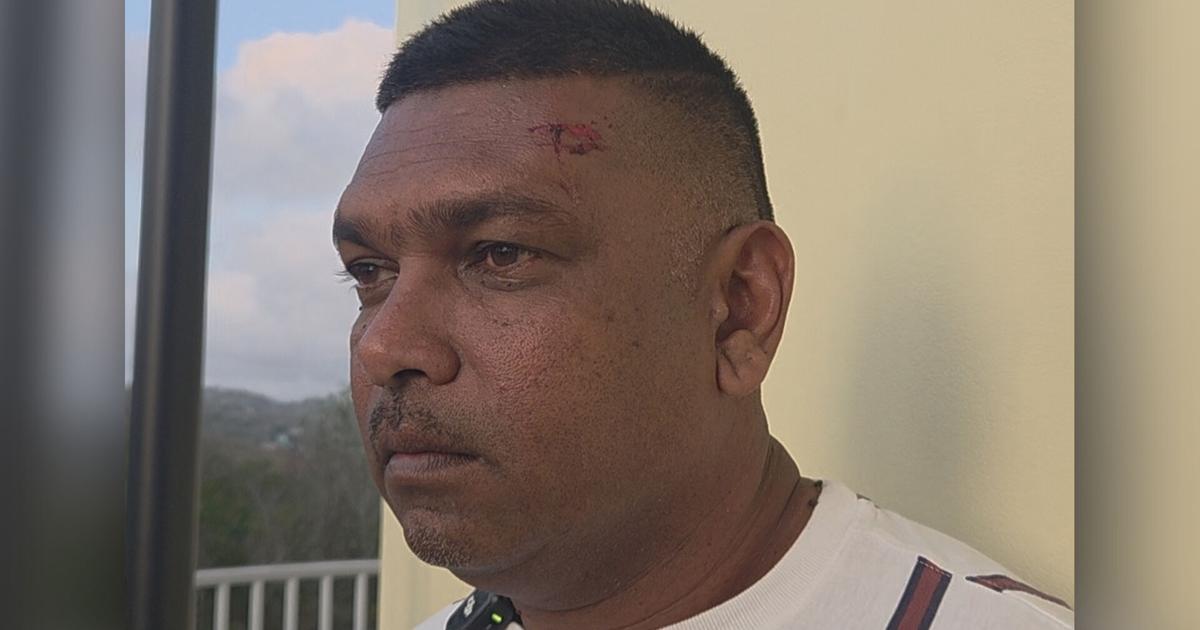
    Darren Jogie, Angelica’s uncle, who was among the group caught in the collision, recalled the chaotic moments after impact in an interview with local media outlet *Express*. “We were bathing inside the roped-off area, not even far from the boundary, and this jet ski just came out of nowhere. It hit me, it hit my brother, and it hit my niece. Two of us were knocked unconscious instantly. Sadie took the full force of the crash — her entire face was mangled,” Jogie described. The uncle himself suffered visible head injuries in the collision.

    Bystanders and family members immediately pulled the injured child from the water and administered emergency cardiopulmonary resuscitation at the scene to try to restart her pulse. She was rushed to Scarborough General Hospital for urgent medical intervention, but despite the best efforts of first responders and hospital care teams, the seven-year-old succumbed to her injuries during treatment.

    In the hours after the crash, Farley Augustine, Chief Secretary of the Tobago House of Assembly (THA), addressed the tragedy during an emergency press briefing, confirming the details of the incident and outlining the ongoing response. Authorities confirmed that immediately after the collision, the jet ski operator fled the Pigeon Point area, leaving the injured group behind. Law enforcement has already seized the abandoned watercraft, and teams from the Trinidad and Tobago Police Service (TTPS) are conducting a full manhunt to locate the operator.

    Augustine described the young girl’s death as a profoundly unfortunate incident, noting that conversations about improving safety management at Pigeon Point Heritage Park have been ongoing for years, with a stated goal of prioritizing visitor safety above all other concerns. “This collision happened in a zone explicitly cordoned off for swimmers. The jet ski breached the perimeter and hit a mother, father, and uncle, and we lost a little girl as a result,” Augustine said, extending official condolences to Angelica’s parents Arnold and Salisha Jogie and the entire extended family.

    The THA Chief Secretary added that parallel investigations are underway beyond the TTPS’s criminal probe. The local governing body is reviewing whether park staff and licensed jet ski operators adhered to mandatory safety protocols, and whether post-incident emergency response aligned with established operational standards. Augustine confirmed the Executive Council will move forward to implement stricter safety oversight for all activities at the park to prevent similar tragedies in the future.

    Shortly after the incident, THA Tourism Secretary Zorisha Hackett, Assistant Secretary Nikita Percy, and other senior local officials traveled to Scarborough General Hospital to meet with the grieving Jogie family and offer official sympathies and support on behalf of the Tobago House of Assembly. As of Thursday morning, the family remains in shock, struggling to process the sudden loss of the young girl, with no update on when the operator will be taken into custody.

  • 11 shells, two guns, self defence claimed

    11 shells, two guns, self defence claimed

    A fatal shooting has shaken the quiet community of Vistabella in San Fernando, Trinidad, claiming the life of a well-known local construction businessman and leaving investigators untangling the circumstances of a deadly confrontation between the victim and an unidentified woman early yesterday morning.

    Thirty-seven-year-old Steve Ghany, a married father of two with 11 years of marriage, was deeply embedded in his family’s multi-project construction business and was also a prominent figure in the local jet-ski community. According to initial police accounts, the conflict erupted shortly after 8:30 a.m. inside Ghany’s residential property, when a verbal argument between Ghany and the woman escalated rapidly into a physical altercation.

    After several minutes of back-and-forth struggle, law enforcement reports indicate Ghany retrieved a firearm and fired shots toward the woman, who emerged from that exchange unharmed. Investigators were later told by a Ghany family relative that the woman then seized a second weapon and returned fire, striking Ghany multiple times. He succumbed to his injuries at the scene before emergency responders could intervene.

    Crime scene processing teams recovered two functional firearms and 11 spent bullet casings from the property as key evidence. The woman involved was taken into custody at the home immediately after the shooting; she was transported to receive mandatory medical assessment before being moved to a holding facility at the Southern Division police station.

    Multiple law enforcement units, including Region Three Homicide Detectives, the Southern Division Task Force, and the San Fernando Criminal Investigations Department, have launched a full probe to map out the full sequence of events and identify what motive sparked the deadly confrontation. Attorney Prakash Ramadhar, who visited the Ghany residence to meet with family members and law enforcement shortly after the incident, declined to comment on the case when contacted by local outlet Express. “It is too early at this time to make a statement on behalf of the family,” Ramadhar said via phone.

    A Ghany family employee, who spoke to reporters on condition of anonymity, described the chaotic moments after he arrived for work yesterday. The worker said he first heard a series of loud bangs around 9:15 a.m. but did not immediately recognize the sounds as gunfire. “I went to check the work we were supposed to do today on the house, when we heard a few noises like ‘Bang! Bang! Bang! Bang! Bang!’ My son asked me if that noise was galvanise pounding. About five minutes later, a policeman came into the yard and asked me what was happening. I told him I didn’t know what was going on. It was a while after I realised that something had happened,” the employee recalled.

    The worker spoke warmly of Ghany, describing him as a fair, approachable employer who treated his staff like family. “Steve treated all of his workers very good, and he was understanding. He would call those fellas on the phone and talk to them normal. He said we were part of his family, and he trusted us, his workers,” the employee said.

    The shooting comes just months after a separate high-profile gun violence incident that rocked the Ghany family. In December 2024, Ghany’s stepmother Monica Ghany was killed in a targeted ambush, and his brother Matthew was wounded. The attack unfolded as Monica and Matthew left San Fernando General Hospital, driving along a major commuter route near the water taxi ferry terminal on their way back to the family’s San Fernando home. Gunmen in an oncoming vehicle pulled alongside and opened fire on the driver’s side of their Nissan Tiida, striking Monica multiple times in the upper body. She was pronounced dead at the scene, while Matthew survived a gunshot wound to his right hand. The attackers fled the area, and the killing remains an open, unsolved case. Monica Ghany’s husband — also named Steve Ghany — died just a few months after the ambush.

    Speaking to reporters yesterday at the formal handing-over ceremony for the new Penal Fire Station, Minister of Homeland Security Roger Alexander offered public condolences to the Ghany family, noting he had met with Steve Ghany just over the weekend during a visit to a local rifle range. “I hope the good Lord bless his soul, and that the family will be able to live again after this incident,” Alexander said, confirming that investigators are still working to piece together all details of yesterday’s shooting.

  • NY serial killer pleads guilty to Trini’s murder

    NY serial killer pleads guilty to Trini’s murder

    In a stunning courtroom twist that closed a 31-year chapter of unsolved violence, convicted serial killer Rex Heuermann has pleaded guilty to the murder of eight women, including 28-year-old Trinidadian native Sandra Costilla, in a Suffolk County, New York court. The 62-year-old Manhattan architect, a married father of two who hid a brutal double life as a predatory killer for three decades, entered the guilty plea this week, reversing his earlier not guilty plea entered ahead of his scheduled September 2024 trial.

    Heuermann, who stood 6-foot-4, began his killing spree as early as 1993, when Costilla – a migrant who had moved to the U.S. from Trinidad and Tobago at age 17 and was living in Queens at the time – became his earliest known victim. On November 20, 1993, two hunters discovered her body on New York’s Long Island in the North Sea area. Court documents detail extensive, brutal injuries: multiple sharp-force wounds to her face, torso, breasts, left thigh, and vaginal region, with her body positioned in a degrading arrangement. Heuermann confirmed in court this week that he strangled Costilla to death, the same method he used to kill all eight of his confirmed victims. He pleaded guilty to three counts of first-degree murder and four counts of second-degree murder, which includes Costilla’s killing.

    For three decades, Costilla’s case remained unsolved, until advances in forensic DNA testing connected cold case evidence to Heuermann, who was first arrested in 2023 in connection with the long-running Gilgo Beach serial killings. During the initial 1993 investigation of Costilla’s death, forensic analysts from the Suffolk County Crime Lab recovered three hair strands from her body and clothing: one from her right arm, one from a striped shirt found near her body, and a third from a white shirt. DNA testing at the time confirmed one hair came from a male suspect, and the other two from female contributors. Decades later, the Gilgo Beach Homicide Task Force retested the evidence, and in February 2024, forensic results confirmed the male hair from Costilla’s striped shirt matched Heuermann’s DNA. One of the two female hairs was even traced to a woman who lived with Heuermann shortly before Costilla’s 1993 murder, cementing the connection between the killer and the decades-old crime.

    Courtroom observers reported Heuermann spoke in a calm, matter-of-fact tone about his crimes, confirming that he dismembered some victims and bound others by the head and legs. Investigators who seized 422 electronic devices from Heuermann’s home uncovered disturbing evidence that prefigured his crimes: a handwritten planning document that noted “SMALL IS GOOD” – a reference to the fact that all eight of his known victims, including Costilla, were petite women. Another entry in the planning document read: “HIT HARDER TOO MANY HIT TO TAKE DOWN. CONSIDER A HIT TO THE FACE OR NECK NEXT TIME FOR TAKE DOWN.”

    Investigators also found a massive, decades-spanning collection of violent, bondage, and torture pornography on his devices, dating back to 1994. The content includes graphic depictions of breast mutilation, sexualized violence against women, bondage, and whipping – imagery that aligns closely with the injuries found on Costilla and two other victims. Unlike many of Heuermann’s later victims, who were sex workers, investigators have found no evidence Costilla worked in the sex trade. Unlike his later crimes, which relied on disposable burner phones to contact victims, the 1993 killing of Costilla predates widespread consumer cell phone use and social media, leaving investigators still unclear on how Heuermann first encountered his earliest victim. Heuermann is scheduled to receive his formal sentence on June 17, 2024.

  • Authorities seize 151 packages of suspected synthetic Marijuana in Azua

    Authorities seize 151 packages of suspected synthetic Marijuana in Azua

    A major coordinated crackdown on illicit drug trafficking in the Dominican Republic has yielded a significant haul, as law enforcement and military agencies intercepted a large shipment of suspected synthetic marijuana in the southern province of Azua. The multi-agency operation brought together three key Dominican institutions: the Dominican Republic Army, the National Drug Control Directorate (DNCD), and the Public Ministry, all working in tandem to disrupt smuggling networks operating in the region.

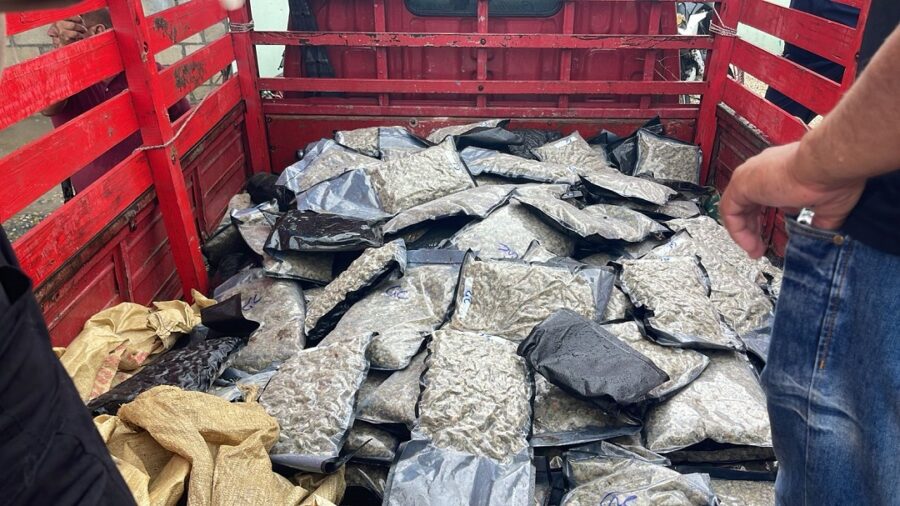
    The interception unfolded at a fixed security checkpoint located at kilometer 15 along a major transit route, where patrol officers pulled over a red Daihatsu commercial truck for a routine inspection. Initial observations suggested the vehicle was only transporting empty agricultural crates, but inconsistent information from the driver and suspicious behavior raised red flags for responding agents, prompting them to conduct a thorough secondary search.

    Upon dismantling the apparent layer of legitimate cargo, law enforcement personnel uncovered 151 individually packaged parcels of the controlled substance, concealed beneath a stack of plastic containers to avoid detection. Preliminary on-site testing and weighing put the total mass of the seized drugs at approximately 160 pounds, marking one of the larger synthetic drug seizures in the province in recent months.

    The operator of the truck, 36-year-old Henry Reyes Ferreras, was taken into custody immediately following the discovery. He is currently being held in detention and will formally face a series of drug trafficking charges under the Dominican Republic’s national drug control legislation.

    In a statement following the operation, authorities confirmed that the seized suspected narcotic substance will be sent to the National Institute of Forensic Sciences for full laboratory analysis to confirm its classification and purity. Investigations remain ongoing, with law enforcement working to trace the origin of the shipment and identify any additional co-conspirators connected to the alleged trafficking ring.

  • Acties universiteitspersoneel opgeschort na overleg met vicepresident

    Acties universiteitspersoneel opgeschort na overleg met vicepresident

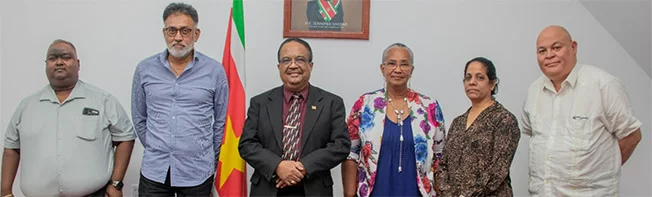
    A standoff between Suriname’s academic scientific staff and national authorities has moved toward de-escalation, after the Vakvereniging Wetenschappelijk Personeel Universiteit (VWPU), the union representing scientific staff at Anton de Kom University, agreed to suspend its industrial actions following high-level negotiations led by Surinamese Vice President Gregory Rusland. The talks, held earlier this month, brought together leadership from the university’s governing board and union representatives to address long-running grievances over working conditions and staff support that had prompted the union to ramp up protest actions in recent weeks.

    The Anton de Kom University board was led by chair Virginia Assin-Oostburg and vice chair Patrick Peneux during the discussions, while the VWPU delegation included its president Roy Badal, secretary Sunita Bipat, and treasurer Sanjeevkoemar Bisessar. Over the course of the meeting, participants thoroughly mapped out the core bottlenecks that had pushed the union to escalate its actions, centering on gaps in basic provisions for the university’s scientific workforce.

    Vice President Rusland opened the discussion by framing the issue of basic staff provisions—including competitive salaries and fair overall employment terms—as an issue that cannot be addressed in isolation. He emphasized that these demands are inherently tied to broader ongoing negotiations between the Surinamese government and national labor unions over working conditions for all public sector employees, a group that includes education workers alongside employees across other state-run sectors.

    Despite this broader context, Rusland confirmed that the government remains open to adopting targeted, immediate improvements to the working conditions of the university’s academic researchers and instructors. Specific measures tabled during the talks include institutional support for academic staff to purchase new work computers, upgrades to campus data connectivity and internet infrastructure, increased transportation stipends for faculty supervising students during off-site internships, and a limited end-of-year bonus to recognize additional academic workload.

    Under the terms of the preliminary agreement reached during the meeting, Vice President Rusland has ordered the university’s governing board to flesh out the full details of these proposed measures, with a final progress report due no later than this coming Friday. Once finalized, the proposals will be forwarded to relevant government authorities for coordination and final approval. The vice president’s office also confirmed that President Jennifer Simons has already been consulted on the framework, to ensure a coordinated, whole-of-government approach to resolving the dispute.

    Following the conclusion of productive talks, Rusland requested that VWPU leadership scale back its ongoing protest actions, a proposal that the union’s governing body put to a vote with its membership. The union ultimately approved the request, moving forward with a full suspension of all active industrial actions.

    Multiple participants in the meeting described the negotiations as taking place in a constructive, solution-focused atmosphere. Vice President Rusland emphasized that all stakeholders must uphold their shared social responsibility to advance progress for the country’s higher education sector. He stressed that collaborative effort is the only path to meaningful improvements for scientific staff, part of the government’s broader long-term goal of incrementally strengthening public services and working conditions for all Surinamese residents.

    Negotiations between the government and labor unions over broader public sector basic provisions remain ongoing, with no slowdown in discussions planned. Going forward, the government has committed to rolling out additional targeted measures in consultation with worker representatives as economic conditions allow. Officials also noted that the administration has already implemented a series of relief measures for workers and the general public, enacted to buffer the population against the impact of global economic shifts that have spilled over to affect Suriname’s domestic economy. The government has reiterated its commitment to mitigating these external impacts as much as possible within the country’s available fiscal resources.